German Literature Month – Week II Links

This was another great week for German Literature Month

Let me know if I missed a link.

Unformed Landscape by Peter Stamm (Tony’s Reading List)

The Cow by Beat Sterchi (Farm Lane Books)

One Hundred Days by Lukas Bärfuss (Lizzy’s Literary Life)

German Literature Month (and then she read)

The Royal Game by Stefan Zweig (Tabula Rasa)

The Sorrows of Young Werther (Still Life With Books)

A Happy Man by Hansjörg Schertenleib (Beauty is a Sleeping Cat)

Jakob von Gunten  by Robert Walser (Vapour Trails)

Sea of Ink by Richard Weihe (Iris on Books)

Reckless by Cornelia Funke (and then she read)

Bernhard Schlink Week (Reader in the Wilderness)

L’adultera by Theodor Fontane (Tony’s Reading List)

My Prizes by Thomas Bernhard (in lieu of a field guide)

The Land of Green Plums by Herta Müller (Vishy’s Blog)

Introduction GLM (Curious Incidents in the North East)

On the Edge by Markus Werner (Lizzy’s Literary Life)

Burning Secret by Stefan Zweig (everybookhasasoul)

Death in Venice by Thomas Mann (Sightly Cutural, Most Toughtful and Inevitably Irrelevant)

The Murder Farm by Andrea Maria Schenkel (A Hot Cup of Pleasure)

Eckbert the Fair by Ludwig Tiek (A Work in Progress)

Summer Lies by Bernhard Schlink (Winstonsdad’s Blog)

The Land of Green Plums by Herta Müller (Tony’s Reading List)

Summer Lies by Bernhard Schlink (Reader in the Wilderness)

Schnitzler’s Short Fiction (Wuthering Expectations)

The Post Office Girl by Stefan Zweig (The Little Reader Library)

Love Virtually by Daniel Glattauer (Leeswamme’s Blog)

The Piano Teacher by Elfriede Jelinek (A Fiction Habit)

Summer Lies by Berhard Schlink (Lizzy’s Literaray Life)

The Weekend by Bernhard Schlink (Beauty is a Sleeping Cat)

The Dead Are Silent by Arthur Schnitzler (Wuthering Expectations)

German Stories from Best European Fiction 2012 (The Reading Life)

Effi Briest by Theodor Fontane (Still Life With Books)

Loving Rilke (Tales From the Reading Room)

This Wednesday is Wunderbar (Lizzy’s Literary Life)

The Collinin Case by Ferdinand von Schirach (A Book Sanctuary)

The Beggar Woman of Locarno by Heinrich von Kleist (The Reading Life)

Here is a great resource which Mel U (The Reading Life) sent me yesterday. It has a lot of online stories, in English and German, mostly from the Rom

Bernhard Schlink: The Weekend – Das Wochenende (2008)

Old friends and lovers reunite for a weekend in a secluded country home after spending decades apart. They plumb their memories of each other and pass quiet judgements on the life decisions each has made since their youth. This isn’t, however, just any old reunion, and their conversations of the old days aren’t typical reminiscences. After 24 years, Joerg – a convicted murderer and terrorist, is released from prison on a pardon. 

Bernhard Schlink Week, hosted by Judith (Reader in the Wilderness), is part of German Literature Month. We had the option to choose either a literary  or one of the crime novels. I opted for the first. I have read The Reader a few years ago and liked it. It’s well-written, carefully constructed, thought-provoking and suspenseful. No wonder it was a bestseller. It took me a while to decide which of his novels I should read. Since I’m interested in the history of the RAF (Red Army Fraction), I felt like reading The Weekend – Das Wochenende which tells the story of Jörg, former terrorist, who is amnestied by the president, after 20 years in prison. To ease him into this transition his sister Christiane, invited the old friends to her house in the country, to spend a weekend together.

Family weekends or holidays are tropes I love because they often manage to look under the surface; taken out of their daily lives and put together, people clash and reveal their carefully hidden and often ugly feelings. To choose this setting for the homecoming of his protagonist wasn’t a bad choice but the way it was written was awfully bad. While there were a few scenes I liked and although it was a quick read, the melodramatic tone, the trite symbolism – the book starts on Friday and ends on Sunday with a “redemptive” scene in which everyone helps to carry buckets of water which flooded the cellar after a torrential rain (hello, heavy-handed allusion) – just didn’t do it for me. Add cancer, a budding love story between two elderly people who don’t need to fall in love as they are mature and therefore can skip the intro – read – jump into bed without the nervous fussing  – …

What’s really bad is that this is a book about terrorism. A terrorism which was a reaction to Germany’s post-war attempts at forgetting the past and leaving the old Nazis in prominent places. A terrorism which protested against imperialism, bigotry and hypocrisy. While initially in her first wave the RAF didn’t want to harm or kill people, the second wave became much more aggressive and violent and didn’t shy away from murder. Jörg is exemplary of this second wave. But nothing is shown, or discussed. There are just people with opinions, sitting together, eating and discussing. Each character serves as a vehicle expressing the one or the other opinion on terrorism.

The German newspaper critics hated this book. The readers on amazon like it. I don’t always agree with critics but in this case I have to. This is a book written like a corny genre novel and the only thing interesting about it is the topic but it’s not treated well. I don’t know any more than before reading it. Jörg says that there was a war on and that it was normal that people got killed in a war. On the other hand he is crying over getting old and being ill…. A sentimental man who pretends he doesn’t care that he killed people? That doesn’t work for me.

The book was published in 2008, just half a year after Brigitte Mohnhaupt was amnestied, while Christain Klar was not. It’s ok to be topical in novels but this book makes me think Schlink wanted to exploit something.

At the end of the year we write our Best of lists. I always add one or two worst of books, books that I found so bad that in some cases they infuriated me. The Weekend will be on the list. It’s insufferably botched.

Dickens in December

As you know, this year marked the 200th birthday of Charles Dickens. When I reviewed The Dickens Dictionary this summer Delia (Postcards from Asia) had the wonderful idea to dedicate the last month of the year to Dickens and celebrate him in different ways. We decided we will read and review one or several of his novels in December, host a readalong and a watchalong and at least two giveaways. Because Christmas isn’t far, it seemed a good idea to choose  A Christmas Carol as our readalong title. It’s a short novel and online copies are available for free. The readalong will take place on Friday 21 December. We will send out questions one week in advance, you can either use those or just post a review.

The weekend of 14/15 December is dedicated to movies based on Dickens’ novels. You are free to choose whatever you like, just post your review either on Saturday or Sunday.

I hope that many will feel tempted to join us. I’m really looking forward to this. I had a list of authors I wanted to read for the first time this year and Dickens was one of them. I’ve only read A Christmas Carol so far. I decided that I will read Great Expectations and re-watch the movie starring Gwyneth Paltrow.

Here is the detailed program of the event

Book reviews – You can choose any Dickens book you like, even books inspired by his work like Lynn Shepherd’s Tom-All-Alone’s are an option. Non-fiction on Dickens is welcome too. We will collect and add all your reviews on a page dedicated to the event. Date: 1 December – end of month.

Watchalong: You can choose any movie based on a Dickens novel. Date: 9 – 15 December

Giveaway: There will be two giveaways during 16-21 December. One will be on this, the other one on Delia’s blog.

Readalong: We decided to read A Christmas Carol.  We will send a couple of questions to those who participate. If you don’t like that approach, just post a review or your impressions and join the discussion. Date: Friday 21 December

Wrap up post: At the end of the month, the event will be wrapped up and a post containing all the links of the participants will be posted on our blogs.

Please consider joining Delia and me.

Anyone who wants to join, please grab a badge and sign up in the comment form. Tell us whether you will also read along, so we can send you the questions. There is no need to tell us which books and movies you will choose but you can do so in an intro post.

I would like to thank Delia for the idea, for co-hosting and for the lovely badge which she has designed. The title of the event is inspired by Roof Beam Reader’s Austen in August.

Here is Delia’s intro post.

Hansjörg Schertenleib: A Happy Man – Der Glückliche (2005)

Hansjörg Schertenleib is a Swiss author who received a lot of praise for his novels. Das Zimmer der Signora (The Room of the Signora) which has not been translated is one of the most famous. I’ve read Das Regenorchester (The Rain Orchestra), which has equally not been translated and which I liked a lot. He has written many more.

This Studer, the main protagonist in  Schertenleib’s airy novella A Happy ManDer Glückliche, is a jazz trumpeter and known for his somewhat enigmatic smile which puzzles and annoys those who meet him equally. Why does this man smile constantly? Is it possible to be this happy all the time?

This Studer is indeed happy most of the time. He loves his wife of twenty years just like he did when he met her, he loves jazz and his career as trumpeter and all the  joys this offers, like the trip to Amsterdam of which the novella tells us. Since This is not only of a sunny disposition but quite chatty and likable, he has many friends, one of them lives in Amsterdam and has invited him for a couple of concerts.

In the evening the friends play at a club, during the day This wanders the streets of Amsterdam, explores the city and has an uncanny encounter with a homeless man and his dog, an encounter which reminds him of something that happened in  his childhood and which shows that even this sunny man has some hidden darkness to hide.

What makes A Happy Man special is the narrative technique which reminded me of much older novels. There is a narrator who guides us into and out of the story, like a camera man, telling us to look at This now, to watch him and to leave him alone again in the end. I was afraid at first this would make for heavy reading but in the central part of the story, the narrator is in the background, just makes some comments occasionally.

I deliberately called this novella ‘airy’. ‘Breezy’ would have been apt as well. It’s like the dessert île flottante (floating island), which consists of floating egg white. If you have ever had that dessert, you will know what I mean. Fluffy, but not too sweet. And so is this novella; charming but not too cute. No literary heavyweight, that’s for sure, just a pleasant read. And if you like jazz, you might enjoy this even more.

German Literature Month – Week I Links

What an incredibly successful Week I of German Literature Month this was. 

I think I’ve added all the links but let me know if one has escaped my attention.

Introduction to GLM (Tony’s Reading List)

Introduction GLM (Obooki’s Obloquy)

The Fury by Paul Heyse (The Reading Life)

Five from the Archive: Contemporary German Literature (Lizzy’s Literary Life)

Brigita and Rock Crystal by Adalbert Stifter (Tony’s Reading List)

German Literature Recommendations II – 89 Shorty Story and Novella Writers You Should Read (Beauty is a Sleeping Cat)

Introduction to GLM (The Little Red Reader Library)

Introduction GLM (A Fiction Habit)

Introduction to GLM (Vishy’s Blog)

Introduction to GLM (AJ Reads)

From the Diary of a Snail by Günter Grass (Winstonsdad’s Blog)

The Journey to the Harz by Heinrich Heine (Obooki’s Obloquy)

Introduction to GLM (Everybookhasasoul)

What not to drink when reading Matthias Politicky (Lizzy’s Literary Life)

Dyning by Arthur Schnitzler (Winstonsdad’s Blog)

Lieutnat Gustl and Fräulein Else by Arthur Schnitzler (Beauty is a Sleeping Cat)

The Collini Case by Ferdinand von Schirach (The Little Red Reader Library)

Introduction to GLM (Tabula Rasa)

German Literature – A Short Introduction by Nicholas Boyle (Vishy’s Blog)

Confusion by Stefan Zweig (His Futile Preoccupations)

Maybe This Time by Alois Hotschnig (Winstonsdad’s Blog)

Sea of Ink by Richar Weihe (The Prrish Lantern)

Love and Intrigues by Friedrich Schiller (Tony’s Reading List)

Two Poems Based on Folklore (Tabula Rasa)

Literature and War Readalong – Gert Ledig (Beauty is a Sleeping Cat)

Translation Duel – Death in Venice by Thomas Mann (Lizzy’s Literaray Life)

The Fairy Tale by J.W. von Goethe (A Work in Progress)

The Pigeon by Patrick Süskind (Vishy’s Blog)

Next World Novella by Matthias Politycki (A Fiction Habit)

Prague German Writers: A List – A Guest Post by literalab (Beauty is a Sleeping Cat)

Prague German Writers (literalab)

Goethe’s Hermann and Dorothea and Heinrich Heine’s Germany. A Winter’s Tale (Tony’s Reading List)

Seven Years by Peter Stamm and EIBF report (everybookhasasoul)

The Reader by Bernhard Schlink (Vishy’s Blog)

Prague German Writers – Franzy Werfel’s A Palee-Blue Ink in  a Lady’s Hand – A Guest Post by literalab (Beauty is a Sleeping Cat)

Prague German Witers – Franz Werfel (literalab)

The Golden Pot by E.T.A. Hoffmann (Obooki’s Obloquy)

In Free Fall (aka Dark Matter) by Juli Zeh (Still Life With Books)

The Corrections by Thomas Bernhard (Winstonsdad’s Blog)

This Wednesday is Wunderbar (Lizzy’s Literary Life)

Prague German Writers – Franz Werfel: Pale-Blue Ink in a Lady’s Hand – A Guest Post by literalab (Michael Stein)

This is the second in the series of guest posts from literalab on Prague German writers. Part I – The introduction – can be found here. 

So, without further ado, and in no particular order, here is the first of what will inevitably be an incomplete list of Prague German writers and some of the books they wrote:

1 – Franz Werfel

During his lifetime Werfel (1890-1945) was Prague’s leading literary star, the one whose fame allowed him to leave his provincial hometown behind for the intellectual and cultural bright lights of Vienna. Initially famous as a poet and playwright, Werfel’s current revival is based on his prose, specifically his 1933 international bestseller about the Armenian genocide The Forty Days of Musa Dagh and 1941 novella Pale Blue Ink in a Lady’s Hand, both published by Godine in 2012.

Though Musa Dagh had been translated into English and has been reprinted periodically since the 30s it suffered from cuts of up to 25% of the original novel, cuts that weren’t even made to appease Turkish political pressure (though that was present at the time and helped prevent a Hollywood adaptation) but to fit the work for this adaptation that wasn’t made and for the Book-of-the-Month club. The new edition is the first time the novel has appeared in English in its entirety.

I’d like to highlight the lesser-known novella because Werfel is sometimes criticized for writing long and long-winded novels – in other words for being the anti-Kafka, the opposite of the writer who was so sparing of his adjectives and adverbs. Yet Pale Blue Ink is a masterpiece of concision, and with a lot of recent discussion on the value and nature of the novella, it’s a prime example of a literary form (not just a short novel or a long short story) that at its best contains both the sweep of a long novel as well as the kind of precision in dramatic moments or individual lines typical of the best short stories.

The book opens with Austrian bureaucrat Leonidas Tachezy and his rich and beautiful wife, whose life of empty elegance reflects the Vienna of the 30s they live in. Unfortunately, for both the couple and the city, this smooth surface is only an illusion everyone pretends to believe in at a precipitously high cost. For Tachezy it’s a letter from his past that shatters his present life, though to what degree it will break he spends a great amount of effort trying to determine. An affair is one thing, actually not all that uncommon, but as the details of the letter get drawn out and as Tachezy is forced to confront his self-image Werfel subtly shifts the grounds of the book from ballrooms and boudoirs to Gestapo jail cells in a way that the impact is far stronger than if he had confronted the Nazis head-on.

Pale Blue Ink takes place within a single day and possesses a singular intensity in its focus on a letter and the specific long-ago relationship with a Jewish woman it recalls to the protagonist. Yet the novella’s reach is immense, bringing in Tachezy’s past and modest upbringing, Viennese high society, its government bureaucracy and the darkness of neighboring Nazi Germany.

In achieving the economy of the novella Werfel makes powerful use of leitmotifs that recur with particular characters or to drive home certain themes. Tachezy’s wife Amelie is obsessed with retaining her youthful beauty and the descriptions of her eyes become increasingly haunting and elaborate throughout the book. As a student Tachezy inherited a tuxedo from a Jewish fellow boarder who committed suicide, and this tuxedo likewise goes on to carry a dark, symbolic weight.

The best part of Pale Blue Ink is how unbalanced you are kept reading it, not knowing from one moment to the other just what type of story it is – a love story, a psychological portrait, a society novel, an early Holocaust book – and whether the main assumptions of the protagonist (and reader) are true or not.

Thanks a lot, Michael for this review.

The subsequent posts in the series will either be featured on this blog during German Literature Month or on literalab. I’ll add the links in any case. 

Here is part I of the series: Introduction and Werfel and Kafka (literalab)

Prague German Writers: A List – A Guest Post by literalab (Michael Stein)

I’m so pleased to have a few guest posts for you from one of the blogs I admire the most. literalab is my go-to blog for Central and Eastern European fiction. Michael is an American expat living in Prague. He is a journalist and writer and has written for different European and American magazines. His posts have always something completely new to offer. Either because the writers are new to me, or because the angle from which he writes about them is unusual. For German Literature Month he has written a few guest post on Prague German writers. We kick off today with an introduction, tomorrow I’ll feature one of his reviews. You will see, there are far more Prague German writers than Kafka to be discovered or re-discovered. The posts wich will follow are part of a series. I’ll feature a few, the following will be posted on literalab in the upcoming weeks. 

As the number of early 20th century German-language writers such as Joseph Roth and Stefan Zweig get “rediscovered” and belatedly translated into English there is the impression that the deep literary mines of the era might have dried up and all that’s left are the correspondence and diaries of those same writers, or perhaps a new translation of Kafka’s second-grade homework or some of his miscellany that will inevitably come out of the recently litigated manuscript stash in Tel-Aviv.

That impression is, of course, wrong, and one of the sources of the many German-language writers still left to be read, re-published and even translated for the first time happens to be the same source as those contentious manuscripts and the posthumously famous “prophet of the 20th century” who wrote them in the first place – Prague.

Recently, Prague German writers have finally been getting rediscovered to a certain degree, though generally without getting profiled in the New Yorker like Joseph Roth or shredded in the London Review of Books like poor Stefan Zweig (the exception is Ruth Franklin’s New Yorker profile of H.G. Adler, unavailable online.) I have written about a recent exhibition on Prague’s Forgotten German Writers at Readux and a number of the writers I’ll list have been republished or published for the first time in English only this year.

This will be a totally unsystematic list, consisting of writers I love and have read and reread, writers I haven’t read in a long time and some I haven’t gotten around to reading yet at all. I wanted to put them all there to show the variety of Prague’s now vanished literary scene.

These writers suffered from some very stark and evident wrongs – they grew up in an atmosphere of nationalist intolerance, and with many of them Jewish, experienced Czech nationalism at first as harshly, if not more harshly, than its German counterpart. Later, they experienced more severe repression, exile, and privation.

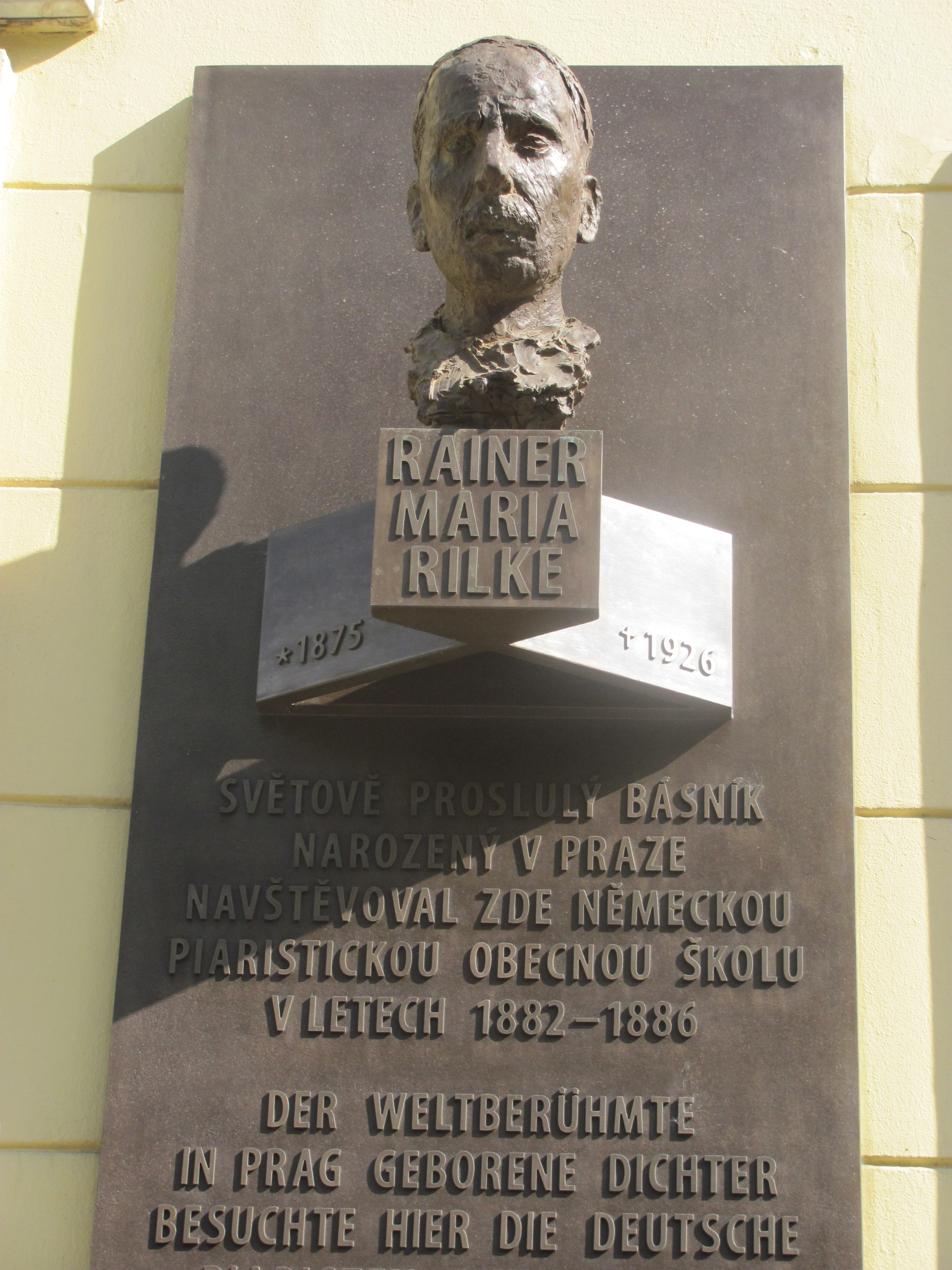
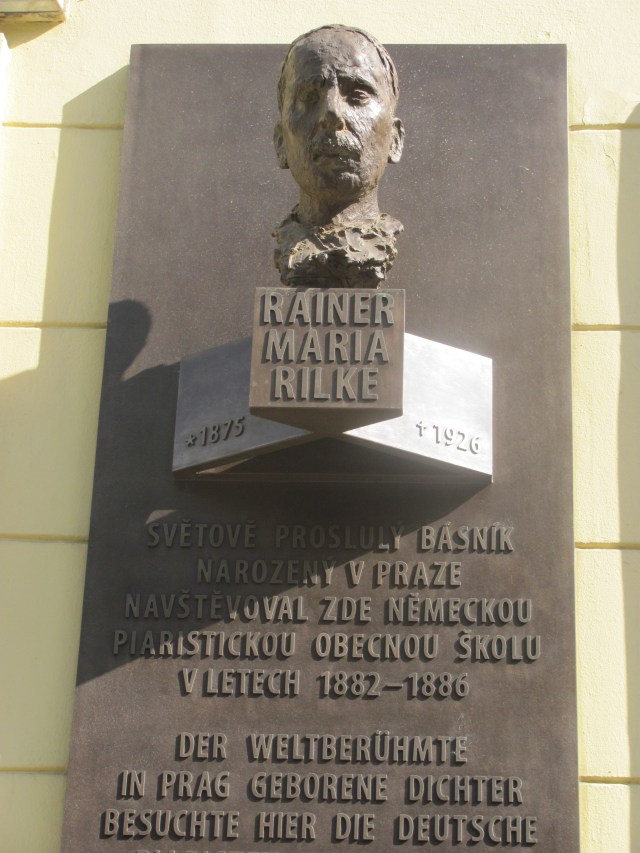
One ironic result of Nazism’s defeat, in combination with the Holocaust, was that their language was erased from their homeland. This meant that Prague German writers became almost unknown in their homeland, and even today putting up a public bust to a world-renowned figure like Rilke took until 2011, seemingly after all the busts of Czech choral directors and dental school founders had found there eternal homes.

Yet perhaps the darkest and most obscuring shadow for this group of writers has been that of their canonized compatriot Kafka. Their work is compared to his (even by people who haven’t read theirs) in a way that is patently unfair and which would kill off any number of other national literatures of the period if their work was put to a similarly unfair test. Kafka’s labyrinths are supposed to be a stand-in for the streets of Prague, so then why read about those actual streets? Well, I can think of any number of reasons, one of which is that Kafka’s labyrinths aren’t a stand-in for the streets of Prague.

Prague offered a fantastic starting point for its writers to go in a multitude of directions, Kafka included, but where he uses a sparse prose style to delve into layers of symbolic meaning, Leo Perutz, for example, makes use of the city’s rich history and myth, whereas writers like H.G. Adler and Hermann Grab ventured into entirely different realms of modernist writing, often being compared to Joyce and Proust respectively.

Thanks a lot, Michael, for this great contribution. Tomorrow I will post the sequel,  the first name on the list of Prague German writers. The list will be continued in the upcoming weeks and will either be featured on this blog or on literalab