Literature and War Readalong 2015 – Mini Edition

Literature and War Readalong 2015

For some of you it may come as a surprise that next year’s Literature and War Readalong contains only four titles, but I felt we needed a change. That’s why I chose only four books, from four different countries, focussing on three different wars. The list should appeal to those interested in international literature, books by prize winners, novels on international conflict, modern classics, books that have been made into movies and a lot more.
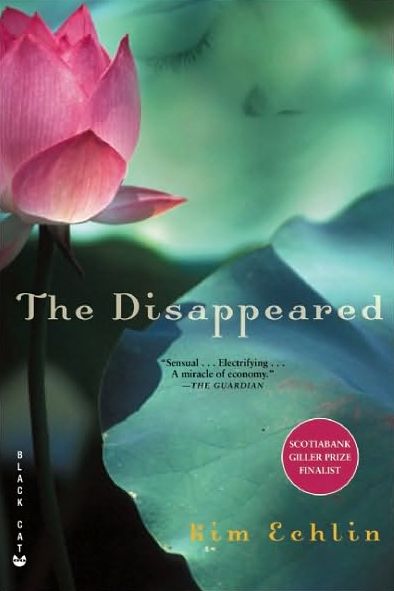
The Disappeared

March, Tuesday 31 2015

The Disappeared by Kim Echlin (Canada 2009), War in Cambodia, Novel, 336 pages.

Here’s the blurb:

After more than 30 years Anne Greves feels compelled to break her silence about her first lover, and a treacherous pursuit across Cambodia’s killing fields. Once she was a motherless girl from taciturn immigrant stock. Defying fierce opposition, she falls in love with Serey, a gentle rebel and exiled musician. She’s still only 16 when he leaves her in their Montreal flat to return to Cambodia. And, after a decade without word, she abandons everything to search for him in the bars of Phnom Penh, a city traumatized by the Khmer Rouge slaughter. Against all odds the lovers are reunited, and in a political country where tranquil rice paddies harbour the bones of the massacred, Anne pieces together a new life with Serey. But there are wounds that love cannot heal, and some mysteries too dangerous to know. And when Serey disappears again, Anne discovers a story she cannot bear.

Haunting, vivid, elegiac, The Disappeared is a tour de force; at once a battle cry and a piercing lamentation, for truth, for love.

Literary fiction of the highest order, this is an unforgettable novel set against the backdrop of Cambodia’s savage killing fields.
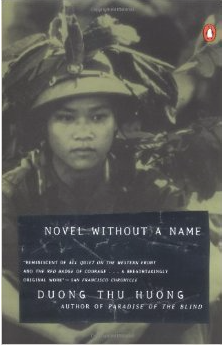
Novel Without A Name.
May, Friday 29 2015

Novel Without a Name – Tiêu thuyêt vô dê by Huon Thu huong (Vietnam 1995), War in Vietnam, Novel, 304 pages.

Here is the blurb:

Vietnamese novelist Huong, who has been imprisoned for her political beliefs, presents the story of a disillusioned soldier in a book that was banned in her native country.

A piercing, unforgettable tale of the horror and spiritual weariness of war, Novel Without a Name will shatter every preconception Americans have about what happened in the jungles of Vietnam. With Duong Thu Huong, whose Paradise of the Blind was published to high critical acclaim in 1993, Vietnam has found a voice both lyrical and stark, powerful enough to capture the conflict that left millions dead and spiritually destroyed her generation. Banned in the author’s native country for its scathing dissection of the day-to-day realities of life for the Vietnamese during the final years of the “Vietnam War, ” Novel Without a Name invites comparison with All Quiet on the Western Front and other classic works of war fiction. The war is seen through the eyes of Quan, a North Vietnamese bo doi (soldier of the people) who joined the army at eighteen, full of idealism and love for the Communist party and its cause of national liberation. But ten years later, after leading his platoon through almost a decade of unimaginable horror and deprivation, Quan is disillusioned by his odyssey of loss and struggle. Furloughed back to his village in search of a fellow soldier, Quan undertakes a harrowing, solitary journey through the tortuous jungles of central Vietnam and his own unspeakable memories.

Fateless

September, Wednesday 30 2015

Fateless – Sorstalanság by Imre Kertész (Hungary 1975), Holocaust,  Novel, 272 pages.

Here is the blurb:

The powerful story of an adolescent’s experience of Auschwitz by Holocaust survivor and Nobel Prize winner, Imre Kertész.

Gyuri, a fourteen-year-old Hungarian Jew, gets the day off school to witness his father signing over the family timber business to the firm’s bookkeeper – his final business transaction before being sent to a labour camp. Two months after saying goodbye to his father, Gyuri finds himself assigned to a ‘permanent workplace’, but within a fortnight he is unexpectedly pulled off a bus and detained without explanation. This is the start of his journey to Auschwitz.

On his arrival Gyuri finds that he is unable to identify with other Jews, and in turn is rejected by them. An outsider among his own people, his estrangement makes him a preternaturally acute observer, dogmatically insisting on making sense of everything he witnesses.
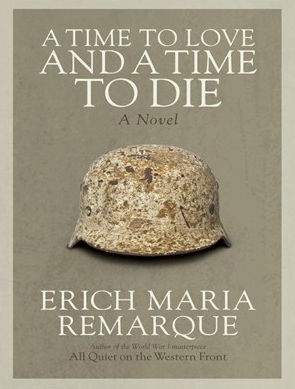
A Time To Love and a Time to Die

November, Friday 27

A Time to Love and a Time to DieZeit zu leben und Zeit zu sterben by Erich Maria Remarque (Germany, WWII, Novel, 384 pages.

It’s interesting to note that the German title isn’t as corny as the English one. It means “A Time to Live and a Time to Die” not Love and Die.

Here is the blurb:

From the quintessential author of wartime Germany, A Time to Love and a Time to Die echoes the harrowing insights of his masterpiece All Quiet on the Western Front.

After two years at the Russian front, Ernst Graeber finally receives three weeks’ leave. But since leaves have been canceled before, he decides not to write his parents, fearing he would just raise their hopes.

Then, when Graeber arrives home, he finds his house bombed to ruin and his parents nowhere in sight. Nobody knows if they are dead or alive. As his leave draws to a close, Graeber reaches out to Elisabeth, a childhood friend. Like him, she is imprisoned in a world she did not create. But in a time of war, love seems a world away. And sometimes, temporary comfort can lead to something unexpected and redeeming.

“The world has a great writer in Erich Maria Remarque. He is a craftsman of unquestionably first rank, a man who can bend language to his will. Whether he writes of men or of inanimate nature, his touch is sensitive, firm, and sure.”—The New York Times Book Review


I will anounce each title with some additional information about six weeks before the discussion date. I hope you like the choices and will join me whenever you can.
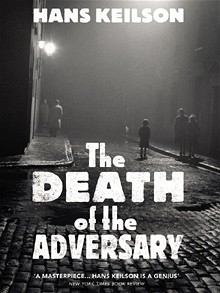
Hans Keilson: The Death of the Adversary – Der Tod des Widersachers (1959) Literature and War Readalong November 2013

Death of the Adversary

I wish it hadn’t happened but it did. I couldn’t finish Hans Keilson’s novel The Death of the AdversaryDer Tod des Widersachers. Not because I ran out of time but because – frankly – I hated it. I hate parables and books that whiff of Kafka (and are not Kafka) and  . . . If  you want to write about Nazism and the rise of Hitler, why don’t you mention it. Why does Hitler have to be referred to as “B”? Why is it never stated that the narrator is Jewish . . . It’s obvious, of course, but the way this is handled is just annoying.  Ilse Aichinger does a similar thing in her novel Herod’s ChildrenDie grössere Hoffnung, but it never feels like mannerism, it’s powerful, expressive and chilling.

I’ve read about 2/3 of The Death of the Adversary and there were passages I thought masterful but they had nothing to do with Nazism and/or oppression but were mainly taken from either childhood or young adult memories. There is a story in which the narrator tells how he forged stamps. This was psychologically subtle. There are other instances in which we see that Keilson’s observations are the result of his being a psychiatrist.

The book’s central story tells how a young Jewish boy first learns about his adversary “B”, a man who slowly rises to political power. His power can be felt in the growing number of followers and how they accept his theories and apply his laws and rules, which first lead to exclusion of the Jews, and then to their persecution. I don’t see what is gained in calling Hitler “B”. Did he want to show the universality of evil? He wanted to show the banality of it, which becomes obvious when he sees the man. And the way he treats the adversary as a recurring motif, showing that he is  s much on the inside as on the outside  . . .  Most of the time, I agree, things are not black or white but I don’t want this concept applied to Hitler and Nazism.

There is also a parable-in-the-parable – the story of the elks and the wolves, which I found particularly ambiguous. Elks were living under the best conditions, however they were not striving but dying. Why? Because there were no wolves. In order to live they would have needed adversaries.

I almost always finish books because some stories need every single passage to become a whole. Given that The Death of the Adversary is not only a parable but a disjointed book – I wouldn’t really call it a novel -,  I’m pretty sure, the end wouldn’t have made me think differently. From what I’ve seen so far, Keilson might be a good writer but he’s not a novelist.

I know that I’m one of a very few who didn’t like this book. But I really didn’t and although I’m sure that Comedy in a Minor Key is different – I’m not going anywhere near Keilson’s fictional work  for a while.

Other (favorable) reviews

Lizzy (Lizzy’s Literary Life)

Mel u (The Reading Life)

*******

The Death of the Adversary was the eleventh book in the Literature and War Readalong 2013. The next is the Vietnamese novel The Sorrow of War aka Thân phận của tình yêu by Bao Ninh. Discussion starts on Monday 30 December, 2013. Further information on the Literature and War Readalong, including the book blurbs can be found here.

Literature and War Readalong November 29 2013 Meets German Literature Month: Death of the Adversary – Der Tod des Widersachers by Hans Keilson

Death of the Adversary

This months readalong title Death of the Adversary aka Der Tod des Widersachers by Hans Keilson is also part of German Literature Month. Keilson was an interesting figure. A German/Dutch novelist and psychiatrist who is most famous for his WWII novels. Born in 1909 in Germany, Keilson, who was Jewish, emigrated in 1936 to the Netherlands where he stayed until his death in 2011. During the war he was part of the Dutch Resistance. In his work he tried to analyse and illustrate the psychological, political and cultural aftermath of WWII.

Here is the book blurb

1930s Germany; the shadow of Nazism looms. Pictures of the new dictator, ‘B.’, fill magazines and newspapers. Our hero is ten when his world begins to change dramatically. Suddenly, the other children won’t let him join in their games. Later, he is refused a job on a shop-floor. Later still, he hears youths boasting of an attack on a Jewish cemetery. Both hypnotised and horrified by his enemy, our hero chronicles the fear, anger and defiance of everyday life under tyranny.

Written while Hans Keilson was in hiding during World War II, this novel is a powerful account of what he outlived. Painful, trenchant and streaked with dark humour The Death of the Adversary is a rediscovered masterpiece.

And the first sentences

For days and weeks now I have thought of nothhing but death. Though I am normally a late riser, I get up early every morning now, calm and uplifted, after a night of drealess sleep. I feel all my powers string and ready within me, as they have not been for a long time. I welcome the day which brings me once again the thought of death.

*******

The discussion starts on Friday, 29 November 2013.

Further information on the Literature and War Readalong 2013, including all the book blurbs, can be found here.

Vasily Grossman: Everything Flows (1961) Literature and War Readalong October 2013

Everything Flows

Would you inform on people to save your own life? Sign papers knowing very well it will send people to the Gulag? Would you? If you are like me, you are unable to answer this question. You will hope that you wouldn’t but how can you be sure. It didn’t take a lot for people to be sent to the camps. Anything would make the state suspect subversiveness.Some were sent because others signed a paper, some were sent because they didn’t sign papers. According to the afterword Grossman did precisely that, he signed a paper which served to arrest a group of doctors. He must have felt guilty all of his life, resented his own weakness. Exploring why people would do such a thing, is one of the themes in Everything Flows. It’s not always out of fear or cowardice.

A friend of Ivan Grigoryevich is responsible that he is sent to the Gulag for thirty years. He is released after Stalin’s death in 1953. At first he visits his cousin Nikolay, in Moscow. Nikolay is a scientist who has made a remarkable career, due to some extent to his betrayal of others. When he sees Ivan again, he’s incapable of showing compassion of listening to Ivan’s story. All he does is talk about his own hardships. How very cynical. No deprivations endured outside can be compared with what those in the camps had to go through. These are poignant scenes, which show the selfishness and faulty thinking of so many, the struggle between a bad conscience and the aim to refuse any responsibility. Ivan then moves on to Leningrad where he hopes to meet a former lover. He meets Anna Sergeyevna instead and shares a room with her and her little son. Her husband has been sent to a camp. She blames herself for having taken part in the Terror famine of 1932-3.

The story of Ivan is the only coherent storyline. It is interrupted by stories of other people and many non-fiction parts – on the terror against the Ukrainians, on Lenin and Stalin, on their terror regimes, on the way the Soviet Union worked. This made me wonder often whether Everything Flows can really be called a novel. Where is the borderline? How much non-fiction elements can a book contain and still be called fiction? Grossman didn’t see the publication of Everything Flows and it is possible he would have altered it, still, according to the afterword, it’s finished the way it is. He would not have removed the nonfiction parts, although it seems obvious that they were added to the manuscript later.

Until WWII Grossman was loyal to the Soviet state but after having witnessed the war, having been in Stalingrad, that changed completely. From then on he was focussing in his work on writing about everything as truthfully as possible, on not embellishing and buying into the state’s way of distorting the truth. This cost him almost everything and I’m surprised he was never sent to the Gulag himself. One of his most traumatic experiences was when his novel Life and Fate was confiscated. What further contributed to his critical view of the Soviet state was Stalin’s antisemitism.

In his best parts Everything Flows is an amazing testimony of compassion and humanity. In other parts it is a masterful depiction of the human condition and an open criticism of totalitarianism. Some of the non-fiction parts were a bit heavy going, as I was not familiar with many of the names and with Soviet history in general. I think he rendered the atmosphere of being unfree and the paranoia very well.

I’d like to read a biography of Grossman. He served 1000 days during WWII, was present in Stalingrad and his The Hell of Treblinka was the first eyewitness account and was used during the Nuremberg trials. Has anyone read the Gerrard’s biography The Life and Fate of Vasily Grossman or Grossman’s The Writer at War?

Other reviews

Andrew Blackman

Danielle (A Work in Progress)

Silver Seasons (Silver Threads)

*******

Everything Flows was the tenth book in the Literature and War Readalong 2013. The next is the WWII novel Death of the Adversary aka Der Tod des Widersachers by German writer Hans Keilson. Discussion starts on Friday 29 November, 2013. Further information on the Literature and War Readalong, including the book blurbs can be found here.

Alexander Baron: There’s No Home (1950) Literature and War Readalong September 2013

There Is No Time

Alexander Baron was once known as the great British novelist of WWII, but since then he’s been somewhat forgotten. Three of his novels are “war novels”.  There’s No Home is one of them. For a novel about WWII it’s surprisingly peaceful and deals with a lesser known aspect of the war. When the allies invaded Sicily, and drove back the Germans to the Italian mainland, some of the troops were granted a few months of peace and quiet during which they lived among the Sicilian civilians.

There are different POV characters in the novel, but the main story focuses on Sgt Craddock. He’s the type of soldier liked by everyone, superiors and inferiors alike. He’s married with a little kid. Being away from home, first in combat and now in this eerie state of peace among the Sicilian civilians makes home seem like another world, a world far more foreign than Sicily. When he meets Graziella, falls in love with her and lives with her, almost as if they were husband and wife, only with far more openness and directness than he’s ever known with his wife, his own life in England moves farther and farther away.

The love story between Craddock and Graziella, is the only coherent story line, the rest is made of anecdotal episodes, either about civilian life or things that happen among the soldiers during the time in Sicily. The war and the fighting are far away, but eventually, they have to move on, go back to fighting and leave everything that has become dear to them.

It’s easy to see that Baron wrote from his own experience. Only someone who spent time in Italy, among Italians would be able to capture so many details, render such lifelike scenes. In the afterword we read that Baron was “adopted” by an Italian family while in Sicily, visited them often, ate with them. Most soldiers, not only those who had an Italian lover, formed close relationships with the population.

The book describes some of the absurdity of war, but it’s toned down. During this time of rest, the absurdity is felt the most in the treatment of deserters. It’s no coincidence that we have three deserters in this novel. A British, soldier, an Italian and a German one. Their treatment is very different.

I liked the way this book was written a great deal. It’s written in such a precise but effortless style, you barely notice you are reading, it felt much more like watching a movie. I appreciated that Baron chose a topic that may seem marginal to the war but that was interesting and rendered with great warmth. I suppose you could read his three war books like a trilogy, each showing another aspect of what Baron experienced during the war. After having read this novel on civilians and soldiers in repose, I’d like to read one of his other novels, From the City From the Plough, telling the story from the POV of an infantryman in combat.

Other reviews

You can find some quotes from the book on Danielle’s blog

Danielle (A Work in Progress)

*******

There’s No Home was the ninth book in the Literature and War Readalong 2013. The next is the post-war novel Everything Flows  by Russian writer Vasily Grossman. Discussion starts on Monday 28 October, 2013. Further information on the Literature and War Readalong, including the book blurbs can be found here.

Literature and War Readalong September 30 2013: There’s No Home by Alexander Baron

There Is No Time

I discovered Alexander Baron’s There’s No Home  thanks to Guy who read an article about this forgotten author a while back.

Reading the beginning of the afterword I’m astonished he was forgotten. John L. Williams writes the following.

Alexander Baron was, arguably, the great British novelist of the Second World War, and for a while he was also the most popular. The three books in which he covered the conflict  –There’s No Home, From the City, From the Plough, and The Human Kind– received glowing reviews and sold in vast numbers on their first appearance on the bookstands and in book club editions.

That these titles have receded from view, rather than becoming established classics – on a par with, say, the wartime books of Evelyn Waugh, Graham Green e or Olivia Manning – seems as mysterious as it is unjust. Perhaps it is due with Baron’s concern with the infantryman’s point of view, rather than the officer class. Or perhaps it is that Baron’s style is so effortlessly simple and unsensational that it is easy to overlook the virtuosity of the writing.

This certainly puts me in the mood to pick up the book and discover this author for myself.

Here are the first sentences

This is not a story of war but of one of those brief interludes in war when the almost-forgotten rhythms of normal living are permitted to emerge again, and when it seeps back into the consciousness of human b wings – painfully, sometimes heartbreakingly – that they are, after all human.

*******

The discussion starts on Monday, 30 September 2013.

Further information on the Literature and War Readalong 2013, including all the book blurbs, can be found here.

Jan Terlouw: Winter in Wartime – Oorlogswinter (1972) Literature and War Readalong June 2013

Winter in Wartime

Dutch author Jan Terlouw’s award-winning novel Winter in Wartime  (Oorlogswinter), which has been made into a movie, is a book for YA. It tells the story of 15-year old Michiel and is set during the hunger winter, in the Netherlands in 1944.

Michiel lives in a Dutch village with his parents, older sister and younger brother. His father is the mayor of the village. Like the rest of the Netherlands, their village is occupied by the Germans. It’s obvious for everyone that the war will come to an end soon and that the Germans are losing it. However, instead of giving up, they intensify their hostile activities; they search houses, arrest, torture and shoot people.

The village is divided, some are collaborating, some are suspected to collaborate, while others are in the resistance. Michiel’s parents are anti-German; they are good people who try to help those who have less, as much as possible. Every night they open their doors to distant relatives, people on the run, displaced persons, provide shelter and food for one night. Uncle Ben who is in the resistance is one of the regulars.

Michiel has an outsider position. He isn’t really a child anymore but doesn’t seem old enough for resistance work. When Dirk, an older boy who has joined the resistnace, asks him to deliver a letter, should he not return from a mission, Michiel feels honoured.

That same day his father and a group of other people is arrested because someone has killed a German soldier. Some of the men who are arrested will be hanged. When Dirk doesn’t return and Michiel fails to hand over the letter, he opens it and discovers that Dirk has been hiding a wounded British pilot. What should he do now? Who will help him? Is there anyone he can trust? That’s what you will discover if you decide to read Winter in Wartime.

Towards the end of the book (p. 121) Michiel remembers something his father said

Michiel often thought of something his father once said: “In every war dreadful things happen. Don’t think that it is only the Germans who are guilty. The Dutch, the British, the French, every nation has murdered without mercy and perpetrated unbelievable tortures in times of war. That is why, Michiel, you shouldn’t allow yourself to be misled by the romance of war, the romance of heroic deeds, sacrifice, tension and adventure. War means wounds, sadness, torture, prison, hunger, hardship, and injustice. There is nothing romantic about it.”

This short paragraph is central and summarises the theme of the book. The novel looks exactly into this and tests it. While the story confirms that war is horrible, it still shows that heroism is possible. There will always be courageous and kind people in every war, people who will try to stay good and do good.

This is a book for young people and I was very interested to see how WWII would be handled. In all the resistance books and movies torture plays an important role. How would that be handled for children. I’d say Terlouw did a great job. He was explicit but not gruesome. Not for one second we think it may not have been as bad but still he isn’t too explicit.

Books for children and YA always have a message. A lot of that message is captured in the quote above but there is another central theme, which is illustrated too – not every German was bad. No people is bad as a whole.

I think Terlouw’s book is well done, it captures he Netherlands during the winter of 44 very well. The hunger, the masses of  fleeing people, the occupation, the suspicions, all this is well drawn. The tone isn’t depressing as the end of the war is in sight. Horrible things happen still but there is a lot of hope.

I saw the movie a few years ago that’s why I possibly didn’t like the novel as much as I would have if I hadn’t known the story already. It isn’t one of my favourite readalong titles but it’s still well worth reading and, as a children’s book, I’d say, it’s excellent.  Don’t miss it if you’re interested in WWII, occupied Holland, the Dutch resistance, and are looking for all of these topics done in a way that is appropriate for younger readers.

Other reviews

Anna (Diary of an Eccentric)

Danielle (A Work in Progress)

Iris (Iris on Books)

Judith (Reader in the Wilderness)

Movie review

Kevin (The War Movie Buff)

*******

Winter in Wartime was the sixth book in the Literature and War Readalong 2013. The next is the novel is Children of the New World aka Les enfants du nouevau monde on the war in Algeria by Algerian writer Assia Djebar. Discussion starts on Monday 29 July, 2013. Further information on the Literature and War Readalong, including the book blurbs can be found here.