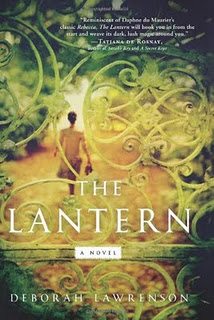
Deborah Lawrenson’s The Lantern – Group Read Week I (Parts 1 and 2)

The Lantern by Deborah Lawrenson ebook

This is the first week of Carl’s R.I.P. VI group read of Deborah Lawrenson’s The Lantern. This week’s questions have been sent by Carl. Here is the link to his post. We have been reading part one and two of the book. It’s safe to read the answers below as they do not contain spoilers. It’s too early in the book. But some of the answers can give you a good impression of whether you want to read the book or not.

The blurb calls The Lantern a novel in the vein of Rebecca. Eve, a young woman, falls in love with a complete stranger. When he asks her to come and live with her in an old beautiful house in the South of France, she abandons her life in London and follows him. The house and its surroundings are enchanting and so seems their life at first. But when Eve begins to ask questions about Dom’s first wife and discovers strange things in the old house, it all starts to change.

1.  This may seem like an obvious opening question, but what do you think of The Lantern thus far?

I am in two minds about it. There are passages that I like for their detailed descriptions and others that I do not like for the exact same reason. Sometimes water is just water. But in The Lantern you will always find a fancy description. Blue-green icy sea water. They do not eat fruit, they eat mulberries and figs and cantaloupes and probably they will taste spicy, caramel-sweet and refreshingly juicy. There is no noun that isn’t accompanied by an adjective. I find this tiring at times. I feel as if I had entered a stuffy old boudoir with too much furniture and knickknacks in it. But then again, at other times, she captures the scents, the aromas, the colors, the light and the flora of the South of France so well, that I enjoy it.

The story is interesting so far and I’m curious to find out what is going to happen next but I’m not overly keen on the characters.

2. The book appears to be following the experiences of two different women, alternating back and forth between their stories.  Are you more fond of our main protagonist’s story or of Benedicte’s or are you enjoying them both equally?

They are both interesting and I want to find out, why the book skips back and forth. One moment we are in the past with Bénédicte, then we are back with Eve. Bénédicte is the more interesting of the two because she is more mysterious. I also think that the parts that are dedicated to her are less fraught with details.

3.  The Lantern is a book filled with descriptions of scents.  How are you liking (or disliking) that aspect of the book?  How do you feel about the lavish description of scents? How are the short chapters working for you?

I like the short chapters. I also enjoy the descriptions of scent but all in all, as I said in my first answer, I think it is overdone. There is too much of it. It has an appeal but at the same time it’s overpowering. The strength of the novel is at the same time its weakness.

4.  How would you describe the atmosphere of Parts 1 and 2 of The Lantern?

Part 1 seemed almost playful, a few hints that things may not be as they seem, but there is a lot of hope, a joyous atmosphere. In part 2 there are more and more strange things going on, there are omens and signs and much more chapters focus on the past.

5.  Has anything surprised you to this point?  Anything stand out?

I’m surprised by the descriptions, how appealing and artificial they are at the same time. I’m also surprised that the story goes back and forth in time and changes between the point of view of the two women.

6.  What are your feelings about Dom in these first two sections of the story?

I simply cannot stand the guy and have no clue why any woman would follow someone who makes a secret out of his past. I wouldn’t trust him at all.

Bonus question:  Did anyone else hear “Last night I dreamt I went to Manderley again” ringing in their ears through the first sections of the book

I read that it had a lot in common with Rebecca. Maybe the storyline is similar but the writing is so completely different that I didn’t really think of du Maurier’s book.
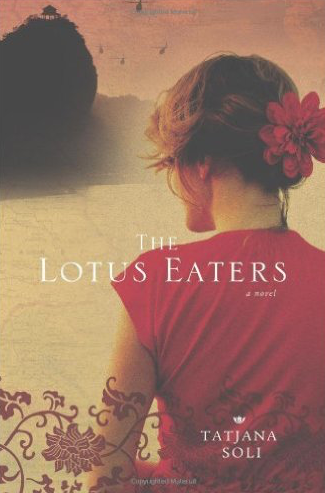
Literature and War Readalong October 28 2011: The Lotus Eaters by Tatjana Soli

lotus-eaters

Tatjana Soli’s The Lotus Eaters is another novel on the war in Vietnam that has received a lot of positive reviews. It cannot be called a classic as it only came out last year. So of all the books of this readalong it is by far the most recent. I really don’t know all that much about it and will therefore just add the blurb that should help you decide whether you’d like to read along or not.

As the fall of Saigon begins in 1975, two lovers make their way through the streets, desperately trying to catch one of the last planes out. Helen Adams, a photojournalist, must leave behind a war she has become addicted to and a devastated country she loves. Linh, her lover, must grapple with his own conflicting loyalties to the woman from whom he can’t bear to be parted, and his country.

Betrayal and self-sacrifice follows, echoing the pattern of their relationship over the war-torn years, beginning in the splendour of Angkor Wat, with jaded, cynical, larger-than-life war correspondent Sam Darrow, Helen’s greatest love and fiercest competitor, driven by demons she can only hope to vanquish.

Spurred on by the need to get the truth of the war out to an international audience, and the immense personal cost this carries, Sam and Helen’s passionate and all-consuming love is tested to the limit. This mesmerising novel carries resonance across contemporary wars with questions of love and heart-breaking betrayal interwoven with the conflict.

After having been so impressed by Tim O’Brien’s book I think I will explore more literature on the war in Vietnam in the future and I’m looking forward to read Soli’s novel.

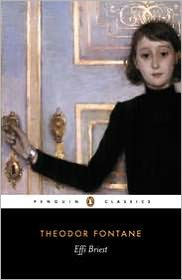
Wednesdays are wunderbar – Effi Briest Group Read Giveaway

Today we are kicking off the Wednesdays are wunderbar series which will be dedicated to giveaways. As Effi Briest is one of our readalong titles this is the first book that is given away.

The actual giveaway takes place on Lizzy’s blog. So if you are interested in winning Effi Briest and taking part in the readalong, please head over via this link and leave a comment.

Don’t miss reading one of the most wonderful German novels. With a bit of luck, you get the book version for free but you could also download it. You will find the details and more information on the readalong on Lizzy’s page.

German Literature Month – November 2011

Finally I am allowed to let you know what Lizzy and I have been planning in the background for quite a while now.

I’m happy to announce that Lizzy Siddal from Lizzy’s Literary Life and I are co-hosting a German Literature Month in November.  Ever since Iris from Iris on Books hosted her Month of Dutch Literature it’s been on our minds to do something similar for the literature of the German-speaking countries. We both share a passion for the literature of Austria, Germany and Switzerland and hope to find many like-minded and interested people to join us.

We have prepared a programme, including two readalongs and a lot of giveaways that generous publishers like Melville House, Bitter Lemon Press, Pereine Press, And Other Stories, Portobello Books and One World Classics have kindly contributed. The giveaways are international with the exception of a few which are UK only.

The official kick off will be on November first,  from then on we will post on alternating days. Lizzy will post on Tuesdays and Fridays, I will post on Mondays and Thursdays. Wednesdays, starting already in October, are reserved for giveaways. The readalongs will take place on Saturdays. Sunday will be weekly wrap up day and the time for announcing the winners of the giveaways.

The first readalong is dedicated to  Effi Briest. It will run for three weeks. Details and exact dates are given below.

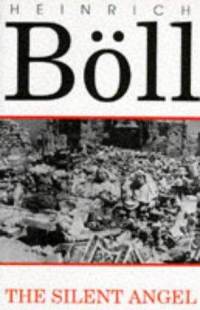
The second readalong is my monthly Literature and War Readalong that I will shift to Saturday and I have also changed the previoulsy announced title. We will read Heinrich Böll’s The Silent Angel. This book is unique for reasons that I will reveal in a later post. On a more personal note it is important to me as Böll is my favourite German author.

The programme will look as follows

Week 1 German Literature

Maybe you like Thomas Mann or you are a fan of Genazino. Now’s the time to share this.

Week 2 Crime Fiction

There are a lot of crime novels written in German out there. Whether you like it gritty or rather go for psychological suspense, you are sure to find something.

Week 3 Austria and Switzerland 

You could either read some of the 19th century Swiss classics like Gotthelf, Keller or Meyer or finally read the Roths and Zweigs you have had on your TBR pile for years.

Week 4 Kleist and Other German Classics

Kleist died 200 years ago. We are going to read some of his novellas and give away some of his books but we will also read other classics.

Week 5 Read As You Please and Wrap Up

Wrap up week is a chance to read and review whatever you like. I’ll go for something that hasn’t been translated yet.

Three Week Readalong on Saturdays  (5th chapters 1-15, 12th chapters 16 – 24 and 19th chapters 25 – 36, 280 pages)

Literature and War Readalong 2011 on Saturday 26th November

The Silent Angel (184 pages)

Giveaways

These are some of the possible titles for the giveaways. The exact titles will be announced on the giveaway days.

We will post a few times in the upcoming weeks sharing reading suggestions, as we hope that many of you will read and review with us.

The idea is that you link your posts in the comment sections of our posts. The Sunday will be wrap up day in which we will give an overview of everything that has happened through the week.

Get your copies out, enter the giveaways, or buy a few books and join us.

Feel free to use the button and spread the word.

I’m looking forward to November.

Visit the German Literature Month Page for regular updates.

Literature and War Readalong September 30 2011: The Things They Carried by Tim O’Brien

The Things They Carried  by Tim O’Brien has become a classic of American literature and the genre of “war writing”. O’Brien served in Vietnam which gives his writing a poignancy not every writer can achieve.

I’ve been looking forward to reading this since months as I am also highly interested in its form. The Things They Carried should work as a collection of short stories and as a novel.

O’Brien has written other books that are highly acclaimed like If I Die in a Combat Zone and Going After Cacciato. I chose to read The Things They Carried because I have read excerpts of the book in Francine Prose’s Reading Like a Writer that made me very curious.

Numerous novels have been written on the Vietnam war. So far I have only read Machine Dreams by Jane Anne Phillips. I got Matterhorn and the October readalong title by Tatjana Soli The Lotus Eaters on my TBR pile. Another book that impressed me, although not a novel, was Dear America – Letters Home from Vietnam.

Do you have any other suggestions?

Elsa Morante: La Storia – History (1974) Literature and War Readalong August 2011

History was written nearly 3 decades after Morante spent a year hiding from the Germans in remote farming villages in the mountains south of Rome. There she witnessed the full impact of the war and first formed the ambition to write an account of what history does when it reaches the realm of ordinary people struggling for life and bread.

La Storia aka History is the last WWII centered book of this readalong. It’s also the most ambitious, starting before the war and ending just a few years after. It describes in minute details how the schoolteacher Ida Mancuso, her two sons and the people to whom they are connected are affected by the war. La Storia looks in great detail into the impact of war on civilians. In telling this ordinary woman’s daily life we see how precariously civilians live during a war. The constant bombing, the fear, the loss of the houses or apartments, of friends and the jobs, the lack of food and clothes, rape and brutality, fear of being transpotred to a camp, all this together is part of everyday life. What civilians endure is no less harrowing than what happens on the battlefields.

Summarizing this vast canvas of a novel that is driven forward by ebullient storytelling would be quite a challenge, that is why I decided to highlight a few points.

History starts in 19** and ends …. 19**, but the core chapters focus on the years from 1941 to 1947. Before each chapter we find detailed accounts of all the important historical facts of those years. Reading this overpowered me and that was probably the aim. One horrible event follows after another and each and every single country participated in one awful event or the other. It’s a mad circle, a maelstrom that sweeps along everything and everyone and whose impact shapes, distorts and changes the life of normal people who are unable to escape this crazy frenzy.

Following the accounts of History’s furious rage, we read about the simple, childlike Ida, whose mother was Jewish. This fact fills her with constant anxiety all through the novel and even pushes her to do crazy and dangerous things. Ida is a widowed schoolteacher, the older of her boys, Nino, is a foolhardy opportunist, while the other one, Useppe, is the child she conceived when she was raped by a German soldier at the beginning of the war. In the early chapters of the novel Ida lives in modest circumstances but she has an apartment and enough food. When the war breaks out and finally comes to Rome, their house is bombed and she must flee to the countryside where she and Useppe, the little one, live in one room together with numerous other people.

Ida’s older son Nino first joins the fascist forces, later changes over to the partisans and finally becomes a criminal after the war. His “career” seems somewhat typical and I found that in creating a character like this Morante managed to capture a lot that is wrong in Italy. Opportunism and corruption are everywhere.

Focusing on Ida, we witness the ordeal of the “ordinary people”, how much they had to endure. The hunger is unspeakable. What they have to eat is hardly imaginable. Grass, cats, rats, anything. Being homeless and having no clothes is horrible. Having to fight or steal for just a little bit of bread is hard to imagine. It’s a truly harrowing account.

One of the most interesting details is the narrator. Who tells this story? To whom belongs this voice that is audible at any time, that speaks to us directly and from the heart of this novel?  Is it History speaking to us? It seems to be, as the way Morante describes people, animals and things seems to signify that everything is animated. So why not History itself? History is such a force, it seems as if it has become a being driven to destroy.

What I loved about this novel is that everyone has a voice. Useppe is as much a person as are his dogs Blitz or Bella. Their thoughts and feelings are rendered in great detail. I think in doing so she manages to emphasize that in a war everyone is equal, everyone is threatened. I also liked the detailed in the descriptions, the exuberant storytelling.

Despite all the positive aspects I also had a few problems with the novel, especially at the beginning. I didn’t like Ida. I know, it will sound mean, but she was too simple for me. She isn’t very introspective, she is almost a simpleton, still she is touching and the tragedies she endures moved me. I understand Morante’s choice for a character like this but I didn’t always enjoy it.

While reading this novel I found myself smiling a lot. Useppe’s and his dog’s thoughts are so charming in their naivety. The end of this novel moved me a lot. Without giving away too much, I can tell that it showed that there are far more victims in wars than winners, that wars still impact people long after they have ended and that history doesn’t spare anyone. There is no escaping this force that wreaks havoc in human lives.

Before closing I would like to ask a question of anyone who might have read this novel, now or at another point in time: Isn’t it dangerous to treat History like a being? Isn’t this blurring the fact that History isn’t an undefined, independent force but, in the end, it is people who harm other people?

Other reviews:

*****

History was the eight book in the Literature and War Readalong. The next one will be Tim O’Brien’s The Things They Carried. Discussion starts on Friday September 30, 2011 .

Literature and War Readalong August 26 2011: La Storia – History by Elsa Morante

The readalong book for August, La Storia or History,  is one of the most important books of Italian literature. It is also quite a substantial book, depending on the edition, it is over 800 pages long which is why I decided to post the introduction already today to give anyone who would like to read along the opportunity to do so.

I’m already on page 150 and fascinated by her writing that reminds me of Latin American literature in its exuberance. Before the individual chapters there are detailed accounts of the history of Italy. La Storia is pretty much the story of a woman, the schoolteacher Ida Ramundo, and the history of a country. Given all the atrocities Germany committed we tend to forget that there were allies like Italy. The history of Italy during WWII is  story of megalomania, bad choices and bad planning and borders quite often on the ridiculous. But there are also stories of resistance and heroism. This, however, is not the topic of this novel.

I did a bit of research and found out that a lot of this novel is based on Morante’s own life. Her mother was half Jewish and a teacher, like Morante herself.

Elsa Morante was married for quite a long time to Alberto Moravia, author of  La Noia (Boredom) and many other outstanding books.

History isn’t Morante’s only novel, she is also the writer of Aracoeli and L’isola di Arturo (Arturo’s Island).

La Storia has been made into a mini-series starring Claudia Cardinale as Ida Ramundo.