Philippe Claudel: Grey Souls – Les Âmes grises (2003) Literature and War Readalong August 2013

Grey Souls

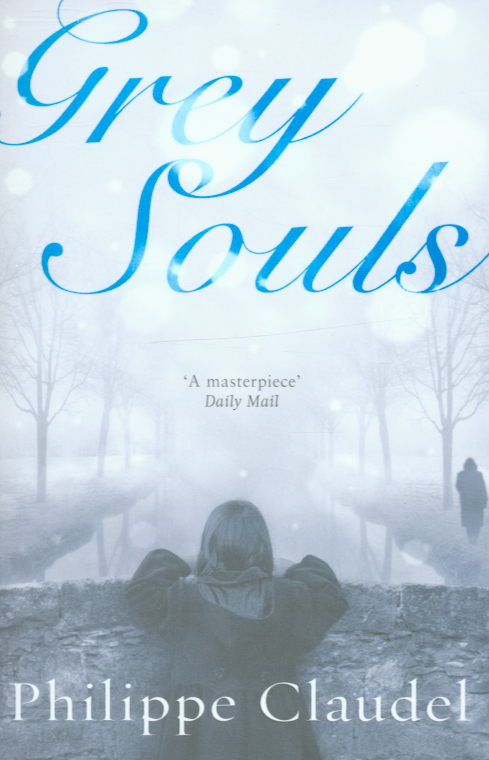
Philippe Claudel’s Les Âmes grisesGrey Souls is a crime novel set during WWI and a few years later. The narrator whose identity we do not know for a very long time, has decided, some twenty years later,  to write the account of a few tragedies that have happened during the war. He writes for his late wife who died in childbed. He could never let go of his grief and, as he says towards the end of the novel, he never really lived, he merely survived.

In a way, this survival, makes him feel his guilt even more deeply, guilt because he didn’t fight during the war. While so many men died, returned mutilated or went missing, he led a comfortable sheltered life but after his wife died, he didn’t really enjoy it anymore. He’s not the only one however to lead a sheltered life. While the war in the trenches rages and goes on for far longer than anyone suspected, the little town he lives in is spared because there is a factory and the men are needed as workers. And there are the many officials, who are spared as well.

At the beginning and at the heart of the novel lies a murder. An eight year old girl, called Belle de Jour, beautiful as a flower, is found murdered in a canal.

It’s a cold winter morning when the police and officials arrive and the girl’s body lies on a river bank, in the mud. The judge, who has been called to investigate, first eats his breakfast, without being the least bothered by the presence of the corpse. This initial scene sets the tone of the book. It’s grey and bleak. The good people die or despair, the bad go on living their unfeeling lives.

The narrative goes back and forth in time. Bit by bit, the story is unfolded. While Belle de Jour’s murder is at the heart, there are other violent deaths like the suicide of the beautiful school teacher, the narrator’s wife’s death and, much earlier than the story, the premature death of the prosecutor’s young wife.

In the beginning of the book the question “Who killed Belle de Jour?” is important, but once we know who it was the second half concentrates on the “Why?”.  At the time, a murderer was found and executed, but the narrator never believed that he was really the one. Twenty years later. still grieving and full of guilt, he starts another investigation and, this time, he finds the real culprit and his reason.

The book is dismal in tone and topic,  but highly readable and beautiful as well. I liked how the war was blended in as if it colored every aspect of the life. It is as if the novel has two layers, the people’s lives, the tragedies they encounter, the murder and beneath all that the raging war.

I read Belle de Jour’s murder and the way the little girl was discovered as a microscopic description of the war that captured, the ugliness, the absurdity, cruelty and utter senselessness.

The book also contains a profound and melancholic meditation on life and loneliness and how one single tragedy can turn a person into a living shell and lead to crime.

It takes quite a while until the reader understands that more than one murder has been committed in this book.

This was the first novel by Claudel I’ve read, but it will not be the last. It’s not cheerful but it has a strange, arresting beauty that I found wonderful.

Other reviews

Danielle (A Work in Progress)

*******

Grey Souls – Les Âmes grises was the 8th book in the Literature and War Readalong 2013. The next is the WWII novel There’s No Home by Alexander Baron. Discussion starts on Monday 30 September, 2013. Further information on the Literature and War Readalong, including the book blurbs can be found here.

Readalong – Grande Sertão:Veredas – The Devil to Pay in the Backlands by João Guimarães Rosa

GSVlogo_jpg

Last year Richard (Caravana de recuerdos) mentioned João Guimarães Rosa’s novel Grande Sertão (1956) on his blog and since I wasn’t familiar with the book but saw it was called a Brazilian Ulysses, I had to get it. I bought what seems to have been one of the last copies available in German. Sure, I could have bought it in French or English but for some reasons, I thought German might be just as good. After having read the first ten pages I think I might have been wrong. Grande Sertão is a groundbreaking work of Brazilian literature and much of that comes from the fact that it uses oral traditions to create something new. It’s what is called “Oralisierung” in German. (I couldn’t find the quivalent in English.Would it be “Oralization”?) Obvioulsy it is meant to sound like a long monologue of someone using a not very sophisticated but colorful spoken language. And that’s where I have a problem. The spoken German rendered in the translation doesn’t sound like spoken German but it seems to mimic the Brazilian. I hope I’ll get used to it.

Despite my reservations regarding the German translation, I think this is a very interesting book and when I saw that Richard (Caravana de recuerdos), Rise (in lieu of a field guide), Miguel (St. Orberose) and Scott (seraillon) co-host a readalong of the book in May I signed up immediately. At the moment there are still more hosts than participants, so you might want to consider rebalancing that a bit and sign up as well. It might not be easy to find a copy but maybe the one or the other already has one somewhere and was just waiting for the right moment. And there are libraries who might have it too.

Here’s the synopsis on wikipedia

If you’d like to sign up. Here are the intros of the hosts:

Richard

Rise

Scott

Miguel

The discussion takes place during the last week of May 2013.

Do you know the novel? Will you join?

Kevin Powers: The Yellow Birds (2012) Literature and War Readalong January 2013

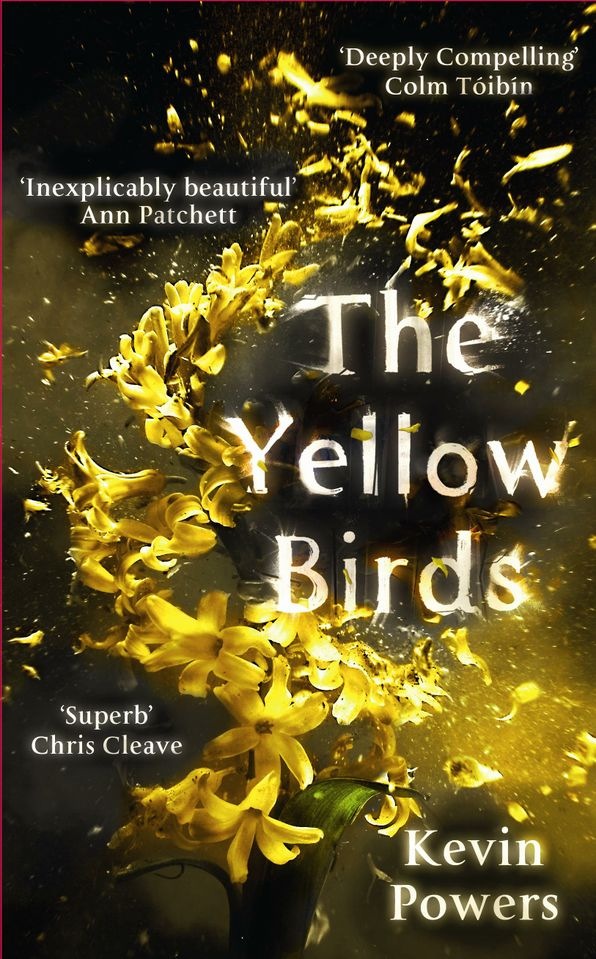
Kevin Power’s book The Yellow Birds is oddly lyrical and beautiful. Why oddly? Because it is a book about war, about killing people, about young recruits facing their own and their country’s demons, about torture and killing of innocent people, old men, women and children, animals, a book about a young man losing his best friend, about guilt, mistakes and trauma but still it is lyrical and beautiful and that is odd.

The Yellow Birds is a first person narrative. Private Bartle tells his story in chapters alternating between 2004, Al Tafar, Iraq and 2005, Richmond, Virginia, interrupted by the one or the other chapter set in other places in 2003, 2005 and 2009.

The 21 year-old Bartle joins up in 2003. He meets Murph who is only 18 then. They are trained and led by the hardened tough-guy Sgt Sterling. In 2004 they are shipped to Al Tafar, Iraq. The two young men, become attached to each other from the beginning, and once they are in Iraq, that friendship intensifies.

At the beginning of the story, the young Privates are detached. They kill because they have to kill. They are constantly under attack but that’s how it is. The heat bothers them more than the killing as such. However, the longer they stay, the more the war gets to them and finally a tragedy happens.

We know from the beginning that Murph dies but we don’t know how, we only know the circumstances must have been terrible and that Bartle feels guilty. The truth is unveiled slowly.

There is a lot I liked in this novel and a lot I didn’t. The descriptions are wonderful; we are there and see the landscape, we feel what it must have been like to fight in this terrain, the dry orchards, the city, a place swarming with soldiers and civilians, being attacked constantly without ever knowing where the enemy will come from. The horror of killing civilians and animals. I thought Powers captured this very well.

There are lyrical scenes like this

I try so hard now to remember if I saw hint of what was coming, if there was some shadow over him, some way I could have known he was so close to being killed. In  my memory of those days on the rooftop, he is half a ghost. But I didn’t see it then, and couldn’t. No one can see that, I guess I’m glad I didn’t k now, because we were happy that morning in Al Tafar, in September. Our relief was coming. The day was full of light and warm. We slept. (p. 24/25)

I had a problem with the fact that the book was much more about a friendship than about the war as such. Bartle returns traumatized. It could appear that what is traumatizing about a war is that you lose your best friends. That’s a crude simplification. It certainly makes matters worse but it’s not the only reason for PTSD.

I’ve read a lot of articles about the high suicide rates among US troops and veterans of this war, much higher, it seems, than in any other war. I would have wished that this was addressed. I would also have liked that we learned more about the war in Iraq. Surely it’s not only the terrain that makes this war different from others.

Despite my reservations, this is a beautiful book, with a surprisingly gentle atmosphere, pervaded by a floating mood. There are graphic scenes and they are hard to stomach. Each country has a predilection for certain types of torture and unfortunately we get a descriptive sample of what that is in this region.

All in all I would say, this novel is far more a moving, even heart-breaking story of a friendship under exceptional circumstances – namely during a war – than a novel about the war in Iraq. If you come to the book with these expectations, you will find a well crafted novel with many beautiful scenes and a powerful story about loss.

Other reviews

A Fiction Habit

Danielle – A Work in Progress

Exurbanis

Judith – Reader in the Wilderness

Uncertain Somewhere

Savvy Verse and Wit

TBM (50 Year Project)

Tony’s Book World

*******

The Yellow Birds was the first book in the Literature and War Readalong 2013. The next is The Flowers of War aka Jingling Shisan Chai by Chinsese writer Geling Yan. Discussion starts on Thursday 28 February, 2013. Further information on the Literature and War Readalong, including the book blurbs can be found here.
Dickens in December – Wrap up

Dickens button 01 resized

It’s a sure sign that the year is ending when we publish more wrap up posts than original posts. The end of 2012 also marks the end of Dickens’s bicentenary and of Delia and my Dickens in December event. It’s time to thank all of those who have participated and have joined in the readalong or reviewed books and movies. The links below show that the event was quite a success. I enjoyed it a lot and am glad that I have finally read one of Dickens novels. It will not be my last. A special thank you to my co-host Delia.

Thank you once more and I hope you enjoyed  it as well.

Intro Delia

Intro Caroline

Intro Post (Resistance is Futile)

Intro Post (Leeswamme’s Blog)

Intro Post (50 Year Project)

Intro Post (Rikki’s Teleidoscope)

Intro Post (Page 247)

Intro (Books Speak Volumes)

Dickens in December Begins Today (Beauyt is A Sleeping Cat)

Intro (Too Fond)

Dickens in December Start (Postcards for Asia)

Some Dickens for December (Kaggy’s Bookish Ramblings)

Giveaways Delia – Caroline

Classics Club December Meme – A Christmas Carol (Too Fond)

Great Expectations (Fanda Classiclit)

Bleak House (The Argumentative Old Git)

My Favorite Dickens Quote (On the Homefront)

Great Expectations (My Reading Journal)

A Tale of Two Cities (Babbling Books)

Dickens in December – A mixed bag (Lizzy’s Literary Life)

The Muppet Christmas Carol (Rikki’s Teleidoscope)

Dickens Project (Reader Woman)

A Christmas Carol – Jim Carrey Version (Beauty is a Sleeping Cat)

Great Expectations mini series (Fanda Classiclit)

The Life and Adventures of Nicholas Nickelby (2001) — (Postcards from Asia)

Oliver Twist- The Movie (Leeswamme’s Blog)

The Chimes (The Argumentative Old Git)

Dickens on Screen: David Copperfield, The old Curiosity Shop, Great Expectations (Postcards from Asia)

The Old Curiosity Shop (Tabula Rasa)

Great Expectations (Beauty is a Sleeping Cat)

A Tale of Two Cities (50 Year Project)

Three Detective Anecdotes (Cceativeshadows)

Havisham and Bleak Expectations (Lizzy’s Literary Life)

Blackadder’s A Christmas Carol (Rikki’s Teleidoscope)

Great Expectations (Lynn’s Book Blog)

A Christmas Carol BBC Version (Rikkis’ Teleidoscope)

The Pickwick Papers (Tony’s Reading List)

A Christmas Carol (Surgabukuku)

Great Expectations (50 Year Project)

A very short review A Tale of Two Cities (Leeswamme’s Blog)

Three Short Stories (Postcards from Asia)

A Tale of Two Cities (Tabula Rasa)

Dodger by Terry Pratchett and Dickens by Peter Ackroyd (Tabula Rasa)

Hard Times (Vishy’s Blog)

The Old Curiosity Shop (Kiss a Cloud)

Readalong participants

50 Year Project (TBM)

Dolce Bellezza (Bellezza)

Kaggsy’s Bookish Ramblings

Polychrome Interest (Novia)

Postcards from Asia (Delia)

The Argumentative Old Git (Himadri)

The Things You Can Read  (Cynthia)Questions and Answers

The Things You Can Read Student Comments

The View From the Palace (Shimona)

Lost in the Covers (Elisa)

Leeswamme’s Blog (Judith)

Lynn’s Book Blog

Love. Laughter and a Touch of Insanity (Trish)

A Work in Progress (Danielle)

Sandra – please see comments section

Tabula Rasa (Pryia)

Slightly Cultural, Most Thoughtful and Inevitably Irrelevant (Arenel)

My Reading Journal (Ann)

Vishy’s Blog (Vishy)

Resistance is Futile (Rachel)

Too Fond

Beauty is a Sleeping Cat (Caroline)

Michael Herr: Dispatches (1977) Literature and War Readalong December 2012

https://beautyisasleepingcat.com/wp-content/uploads/2011/11/dispatches.jpg

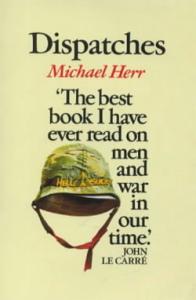
Dispatches is Michael Herr’s account of his time in Vietnam as a front-line reporter. It’s an example of what is commonly called gonzo journalism as invented by Hunter S. Thompson. The beginning reminded me of William S. Burroughs’ books like Naked Lunch or Tom Wolfe’s Electric Kool Aid Acid Test. Pure 60s writing, fragmented, high on dope and high-strung as well. Not my cup of tea anymore. I used to read this type of books as a teenager, nowadays I prefer more lyrical approaches with a stronger narrative.

What Herr tried to do in the beginning, is make the reader experience as close as possible, what it was like to be there. I thought it was difficult to follow. I lost interest more than once and couldn’t help comparing it to Tim O’Brien’s masterpiece. I’m afraid Dispatches doesn’t hold up. On the other hand it’s not fair to compare them because they are totally different. O’Brien’s novel is a blend of fiction and non-fiction with a lot of metafictional elements. Herr tries to tell it as it was. Whatever he describes, even though it is filtered through his experience, it’s still true while O’Brien embellished and made things up. Sure, we could argue that truth is relative anyway and that’s precisely what O’Brien did argue. Be it as it may, Herr didn’t consciously change anything to make it “more real”.

Dispatches consists of 6 parts and while I had problems with the first three, I really liked the last three called Illumination Rounds, Colleagues and Breathing Out. Illumination Rounds is a series of portraits of soldiers Herr met in Vietnam and shows the wide range of people. How some of them got affected so badly by the war that they didn’t want to go back home, got addicted to it, or got crazy. They are just small vignettes but I found each of them powerful. Colleagues was equally interesting. This time fellow reporters and photo journalists were at the center of the story. The most prominent ones being Sean Flynn, Erroll Flynn’s son, a photojournalist and Dana Stone, another reporter. The two men disappeared in 1970, on the Cambodian border were they were said to have been captured by communist guerillas and were never seen again. Quite a sad story, really. Both were friends of Michael Herr and while he isn’t too outspoken it is obvious that he felt deeply when he heard about their disappearance. I attached two tributes that I found on YouTube.

Breathing Out focusses on the return home and how everything just seemed so dull. Something that you see mentioned often in Vietnam accounts is that the soldiers enjoyed being there to some extent because it was so intense.

An important part of the book looks at how the journalists were treated. Many of the soldiers were glad to have them because they wanted people to know how it really was. There were some others who hated them for being there without having to but purely because they wanted to. This was precisely the reason why others admired them. It takes guts to go somewhere like that if you don’t have to. The reasons for the journalists in Herr’s account to be there were very rarely political. Some were adventurers and Vietnam was just a way to combine making money with traveling and experiencing something nobody else had experienced.

Reading this book made me wonder what this war would have been like if it had been fought in the 80s. It’s so much part of 60s culture and was so much influenced by it. What would it have been like without the pot smoking, the music, the attitude of the people?

One part that I found extremely interesting is when Herr writes that arriving in Vietnam took a lot of adjustment at first because they had all seen too many war movies and it took a while until it sank in that this were not just pictures flickering by. I always though that was a newer problem but I guess nowadays it is video games, not movies which blur the lines.

I really can’t say this isn’t a good book but I would have appreciated it more a few years ago and if I had read it some other time. In any case, it felt very authentic, very realistic, gritty but not too graphic. However if you are looking for background information on Vietnam, that’s not the book to turn to.

Other reviews

Reading Michael Herr’s Dispatches (Danielle – A Work in Progress)

Danielle (A Work in Progress)

*******

Dispatches was the last book in the Literature and War Readalong 2012. The first in 2013 is The Yellow Birds by Kevin Powers (2012), 240 pages – US – Iraq war.

Discussion starts on Monday 28 January, 2013.

Further information on the Literature and War Readalong 2013, including all the book blurbs, can be found here.

Dickens in December – A Christmas Carol – Readalong

Dickens button 01 resized

It didn’t take Delia and me very long to decide which book to choose for our Dickens in December readalong. There really couldn’t be a more fitting book to read just before Christmas than Dickens’ A Christmas Carol.

Last week we sent out a few questions. Some of you have chosen to answer them for the readalong, others wrote a review. Both is fine and all the links to the different contributions can be found at the end of my post and will help you to find the participants and visit their blogs. It’s updated regularly, so come back and check who else has contributed.

Is this the first time you are reading the story?

I have read A Christmas Carol before, I guess some 5 or 6 years ago and already knew then that I would read it again some day.

Did you like it?

I liked it very much 5 years ago that’s why I knew I would read it again. I still liked it this time around but for very different reasons. I was much more attentive this time to the moral of the story. The first time I was paying more attention to the descriptions.

Which was your favorite scene?

I have two favourite scenes or parts. One is the scene when Marley’s ghost appears. It’s quite spooky and Scrooge’s shock is shown so well. It’s also a very dark passage as there is clearly no redemption for Marley. It’s too late for him to change anything. While the whole story is about the power of change, this first part is a cautionary tale showing us that while Dickens did believe in change that didn’t mean he was an optimist who didn’t see that there were lost souls too.

The second part I liked a lot was when Scrooge first follows the second spirit. The descriptions are among the most evocative. They show Dickens’s style amazingly well.

Which was your least favorite scene?

I couldn’t think of a scene I didn’t like.
Which spirit and his stories did you find the most interesting?

I found the third spirit and how he was described, his appearance, the most interesting. He was the most ghostly but I liked the stories and what the second spirit showed Scrooge the most. These were the stories, I think, which reached Scrooge’s heart and let it melt.
Was there a character you wish you knew more about?

I would have liked to know more about Marley. Why did he become such an embittered old man?
How did you like the end?

It’s a perfect ending, Scrooge’s joy can be felt in every line and is very contagious. It’s the illustration of the belief that people can always change as long as they are still alive. And it also shows that there are good people in the world. While Scrooge has to make an effort and change, if the others were not ready to forgive him, we wouldn’t have this happy ending.
Did you think it was believable?

I think that someone can change profoundly but maybe not in such a short time.
Do you know anyone like Scrooge?

I know people with Scrooge-like traits but nobody who is as bad as he is.
Did he deserve to be saved?

Scrooge had a heart of stone but he wasn’t treating himself any better than others which I think makes a huge difference. If he had been spending a lot, living in luxury, feasting but depriving others, I would not so easily say yes to this question but given that he didn’t harm others for his own sake or actively inflict pain, I’d say, yes, the change of attitude and sentiment is reason enough for him to be saved.

Other contributions

50 Year Project (TBM)

Dolce Bellezza (Bellezza)

Kaggsy’s Bookish Ramblings

Polychrome Interest (Novia)

Postcards from Asia (Delia)

The Argumentative Old Git (Himadri)

The Things You Can Read  (Cynthia)Questions and Answers

The Things You Can Read Student Comments

The View From the Palace (Shimona)

Lost in the Covers (Elisa)

Leeswamme’s Blog (Judith)

Lynn’s Book Blog

Love. Laughter and a Touch of Insanity (Trish)

A Work in Progress (Danielle)

Sandra – please see comments section

Tabula Rasa (Pryia)

Slightly Cultural, Most Thoughtful and Inevitably Irrelevant (Arenel)

My Reading Journal (Ann)

Vishy’s Blog (Vishy)

Resistance is Futile (Rachel)

Too Fond of Books

Beauty is a Sleeping Cat (Caroline)

Literature and War Readalong December 28 2012: Dispatches by Michael Herr

https://beautyisasleepingcat.com/wp-content/uploads/2011/11/dispatches.jpg

Dispatches is a book I wanted to read  ever since it has been mentioned in the comments of other posts and after having read Tim O’Brien’s astonishing The Things They Carried. It’s the only book on the Vietnam war we are reading this year and I’m very keen on finding out how it will compare to O’Brien’s masterpiece.

Herr was a front-line reporter in the Vietnam war and has participated in the writing of movie scripts like Apocalypse Now and Platoon.

Here are the first sentences

There was a map of Vietnam on the wall of my apartment in Saigon and some nights, coming back late to the city, I’d lie out on my bed and look at it, too tired to do anything more than just get my boots off. That map was a marvel, especially now, that it wasn’t real anymore. For one thing it was very old. It had been left there years before by another tenant, probably a Fenchman, since the map had been made in Paris.

*******

The discussion starts on Friday, 28 December 2012.

Further information on the Literature and War Readalong 2012, including all the book blurbs, can be found here.