Harriet Lane: Her (2014)

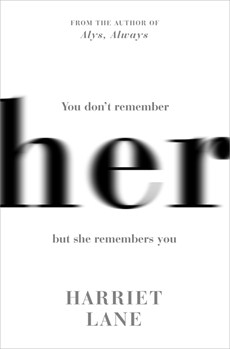
Her

Last year I read Harriet Lane’s Alys, Always and loved it so much that I had to read her new novel Her as soon as it came out. Amanda Craig calls it “Thriller of the Year” and while I might not have read enough of the books that came out in 2014 to confirm this, it’s certainly the best thriller I’ve read so far this year. Take Lucie Whitehouse’s Before We Met and one of Ruth Rendell’s psychological thrillers and you’ll end up with something like Her.

Her has a split narrative. Nina tells one half of the chapters, while Emma narrates the other half. Do you ever wonder what people truly think of you? What they might say about you behind your back? Whether they truly like you or just pretend they do? If you have, and I’m pretty sure, we’ve all wondered at some time, this book will resonate deeply with you as Nina is not so much an unreliable narrator as an unreliable character. She does tell us the truth, albeit in small doses, but she’s anything but truthful to Emma.

At the beginning of the book Nina sees Emma in the street, in London. She hasn’t seen her in years, decades even, and is pretty sure that Emma will not remember her. However, Nina remembers Emma because, all those years ago, Emma did something that Nina could never forgive.

At first Nina doesn’t do anything. She just relishes seeing Emma in a bad place, with one small demanding child and a second on the way. She’s not a young mother and the sleepless nights, the demands of motherhood, have taken their toll. She’s not as gorgeous as she once was. And she’s neither rich nor does she have a career, unlike Nina who lives a life of elegance and wealth and is a succesful painter.

Their paths cross again. This time Nina makes contact. What follows is extremely chilling. Nina befriends Emma, is helpful and kind, but we know what she really feels. Unbeknownst to Emma she manipulates, stages disasters that are just small at first but become more menacing every time.

Reading what Nina thinks and does, followed by Emma’s interpretation of the events, made me feel so uncomfortable. I couldn’t help putting myself into Emma’s place and tried to imagine what it would be like being duped like this. Creepy.

The book is extremely gripping because we constantly ask two questions: What did Emma do all those years ago? and How far will Nina go?

What makes this book even more readable is Harriet Lane’s writing. Her descriptions are fresh and elegant. The only thing that bothered me was the depiction of motherhood. I’m sure it’s stressful to have small children but to the extent this is described here?

The end wasn’t exactly what I had expected but I thought it made sense and it shed another, even darker light on Nina.

If you liked Notes on a Scandal or Ruth Rendell’s psychological thrillers, you’ll enjoy this and appreciate Harriet Lane’s lovely, elegant writing.
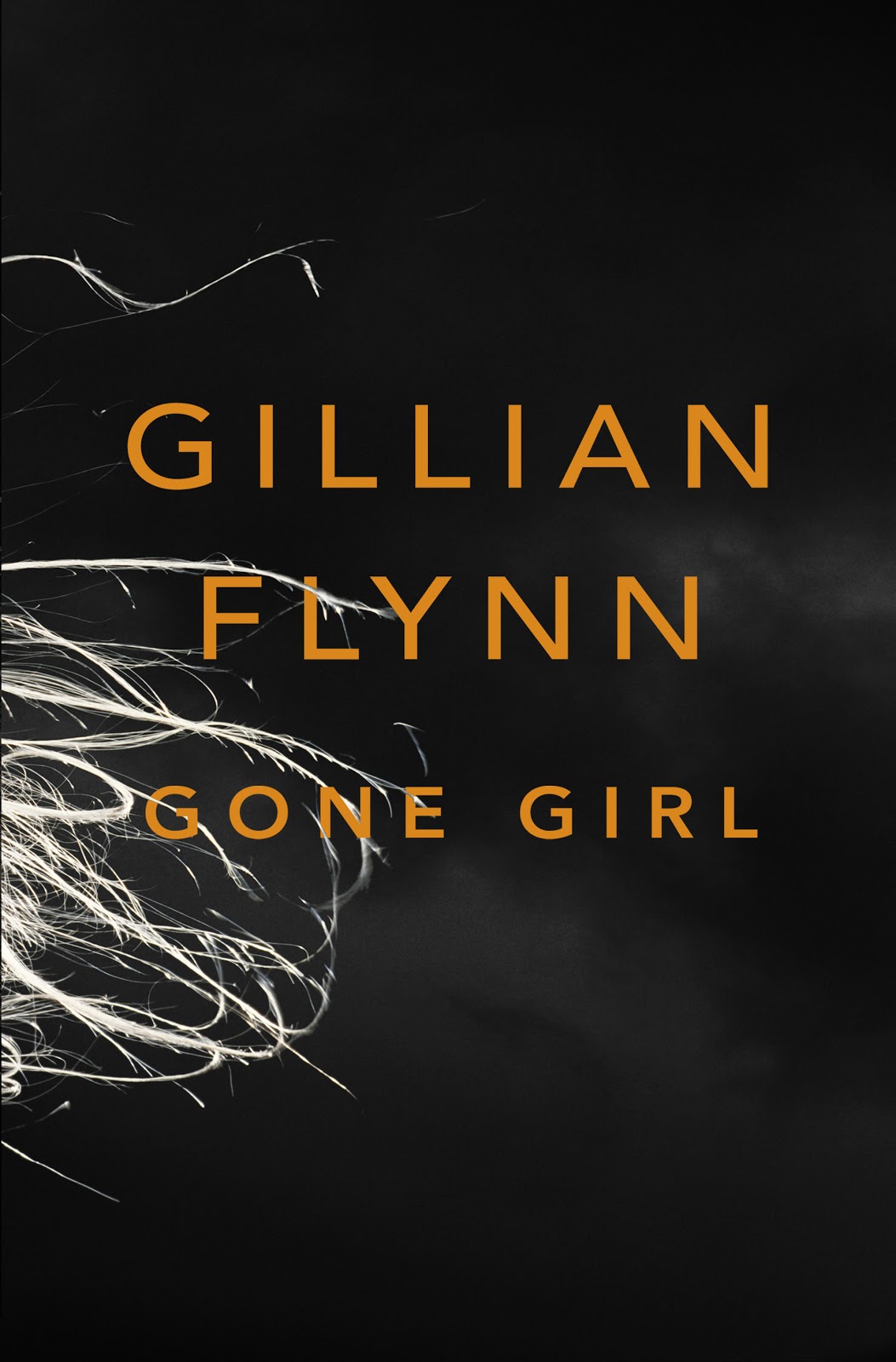
Gillian Flynn: Gone Girl (2012)

Gone Girl

So now I’m one of those who has read Gone Girl. Some bestsellers put me off because everyone reads them, others still make me want to find out what the fuss is all about. Gone Girl was one of the latter. You can’t pick up a recent crime novel without seeing a reference to Gone Girl, you can’t look at agent’s and editor’s picks without seeing it mentioned. Everyone, it seems, is looking for the next Gone Girl. Most of the time when I finally give in and read a book because of the hype, I’m disappointed. In this case it’s not as bad, but I still feel somewhat underwhelmed. Gone Girl has a major plot twist in the middle and an unexpected ending. And it is hugely manipulative, which may be the reason, why I wasn’t surprised by anything. I just felt I was led to assume one thing, while another was true. I saw the twist in the middle coming and foresaw the end. I also had the impression, I’ve read all this before, but I couldn’t come up with a book title. That’s when I realised that it has a similarity with some TV series like Damages and Breaking Bad, which I watched recently. They are both equally full of twists and turns. And I enjoyed them more.

So what’s it all about? On the day of their fifth anniversary beautiful, intelligent and witty Amy Dunne goes missing. A neighbour calls Nick at work and when he returns home, he finds his house wide open. He sees signs of a struggle in the living room and blood in the kitchen. What has happened to Amy? And why is Nick not as concerned as he should be? Police, media, neighbours, and even Amy’s parents, soon turn against Nick and suspect him to be a murderer.

The book is told by both Amy and Nick. Both are highly unreliable narrators. The only thing we know for sure is that their marriage went down the drain when they both lost their jobs and left New York, Amy’s hometown for Nick’s hometown North Carthage, Missouri. If they had only lost their jobs it would have been bad enough, but Amy, who was incredibly rich, loses most of her money. Amy’s psychologist parents are a successful writer duo. Their children’s book series Amazing Amy has earned them a fortune and made Amy into a celebrity. The only problem: the books are not as successful as they used to be. Bad investments and overspending have done the rest. Amy’s parents are broke and need Amy’s money.

Unfortunately it’s hard to write about this book in any depth without spoiling it. I’m glad I’ve read it. I can see why it appeals to many people. Gillian Flynn writes well and plots well. But from a psychological point of view, I found this unsatisfying. Both characters are described in great detail, but they didn’t come to life; they remain shallow, despicable card-board figures. When I think of the aforementioned series Damages, and the character Glenn Close plays, I see why I didn’t really appreciate Gone Girl. Glenn Close’s character is hateful and despicable, but she’s also admirable and touching. A fascinating, toxic mixture. Nick and Amy are just narcissistic ciphers.

Gone Girl is entertaining, but I don’t think it has anything pertinent to say about marriage or relationships, other than dysfunction + dysfunction = ultimate dysfunction. This was my second Gillian Flynn novel and I liked it less than the first, Sharp Objects. I’m curious to find out how Dark Places compares to these two.

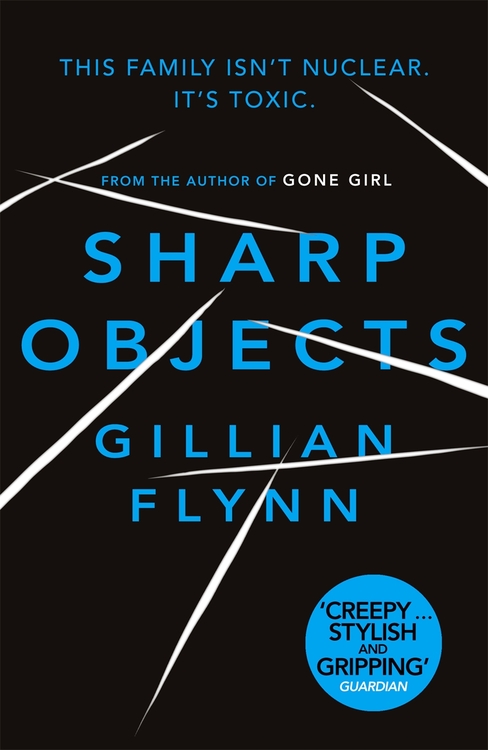
Gillian Flynn: Sharp Objects (2006)

Sharp Objects

When two girls are abducted and killed in Missouri, journalist Camille Preaker is sent back to her home town to report on the crimes. Long-haunted by a childhood tragedy and estranged from her mother for years, Camille suddenly finds herself installed once again in her family’s mansion, reacquainting herself with her distant mother and the half-sister she barely knows – a precocious 13-year-old who holds a disquieting grip on the town. As Camille works to uncover the truth about these violent crimes, she finds herself identifying with the young victims – a bit too strongly. Clues keep leading to dead ends, forcing Camille to unravel the psychological puzzle of her own past to get at the story. Dogged by her own demons, Camille will have to confront what happened to her years before if she wants to survive this homecoming.

I had a feeling I might like Gillian Flynn very much that’s why I decided not to start with her latest novel, Gone Girl, but with her first,Sharp Objects That I went out to get the second, Dark Places, right after finishing this might tell you how much I liked it. She’s an author to my taste, but I have to admit I had a few “Ew!” moments while reading it. She’s not one to shy away from describing very sick things. What I liked was the voice, the taut writing and the story as such. While I had a feeling where this was going, I was still captivated.

Two girls are abducted in Camille’s hometown. One was found dead, her teeth missing, the other is still being searched for. Camille is a journalist for a very unglamorous newspaper in Chicago and her boss thinks it might be a good idea to send her home to investigate and write a few articles that might help the paper get out of its slump and Camille to improve her career. Knowing Camille her boss may have thought that going back to the place that hurt her and face her demons might be a healing experience. It isn’t. Camille is badly equipped to deal with her past and exposing herself to her toxic family and diving deep into the shadow aspects of her hometown take their toll. The sharp objects of the title refer to many different things and one is tied to Camille’s illness. If you have seen the US cover, you know already what I’m talking about. Camille is a cutter, only she’s not happy with slicing her body, she carves words into it. Meaningful words.

Right after Camille’s arrival, the second girl is found. Her teeth are missing too. What a bizarre, yet gruesome crime. Slowly the book reveals the truth behind the crimes and the hidden secrets of Camille’s family.

I don’t read in order to find “likable characters”. Or to say it in other words – I don’t need to bond with characters at all, but I think, I liked Camille, and was, once more, surprised how many people who reviewed this mentioned how much they hated her. Why? I don’t get it. Or maybe I do. It is as if there were some mental afflictions people are more hostile towards. If you’d like to label Camille, I’d say she’s suffering from Borderline Personality Disorder, one of a few afflictions, which get a lot of negative reactions. I thought Flynn drew a very believable character and I was rooting for her. I was hoping she might be able to come out of all of this healthier and stronger.

Sharp Objects is gripping and compelling and does a few daring things, one of which is showing that perpetrators come in many different forms.

This is my fourth contribution to Carl’s RIP challenge. Don’t miss visiting the RIP review site for other Mystery/Crime/Thriller/Ghost/Dark Fantasy related reviews.

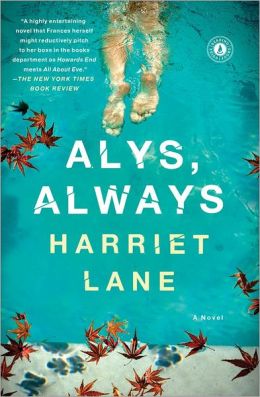
Harriet Lane: Alys, Always (2012)

Alys-Always

Litlove reviewed Harriet Lane’s first novel Alys, Always a couple of weeks ago (here) and it sounded very good. A bit like Ruth Rendell only even more literary. In any case I was curious and had to read it.

Frances drives back home to London from a visit at her parent’s house. It’s winter, cold and dark when she sees something strange on the side of the road in a forest. It’s a car accident. The driver is still alive and Frances stays with her until the ambulance arrives. She only speaks a few words with the woman but those words tell her a lot about her. She sounds like she comes from a well-off family and lives a life of ease. The choice of words, the intonation and the accent tell her all this. Frances may be a mousey looking woman but she’s highly perceptive and sharp.

A little while later the police inform her that the woman, Alys, has died. They ask her whether she is willing to talk to the family but Frances doesn’t feel up to it. She only decides to do it after discovering that the woman whose final moments she witnessed was the wife of one of the most highly acclaimed British writers.

Frances lives an invisible life. She isn’t unhappy but there is nothing that stands out. She is single, doesn’t have a lot of friends, doesn’t care for her family and her job for the book section of a big newspaper is less than fulfilling. When she is offered the opportunity to meet someone famous, she seizes it and with a cold, sly determination, she manages to use every little thing that comes her way.

I wouldn’t call Frances an unreliable narrator. On the very contrary. But she is sly. Calculating, dissecting. Everything she sees is carefully evaluated, assessed and we follow her astonished, wondering all the time what her intentions are and where they will lead her.

It’s fascinating and a bit creepy. I wouldn’t call her a likable person at all but in way she’s understandable and by the time the book ends, we’re glad we didn’t meet her or get in her way.

I wouldn’t exactly compare this novel to Notes on  Scandal but it is written in the same vein. It has also a similarity with Rendell’s A Judgement in Stone. The difference lies in the psychological believability and the writing. Alys, Always wasn’t entirely believable or rather, Frances was very believable but the people around her far less so. However, this small flaw is minimized by the writing. Harriet Lane writes beautifully and that’s why I’d say, the book is more literary than Rendell. Her descriptions are subtle and lyrical, the mood and atmosphere of the book are quiet and cool, the pace is relaxed. It’s eerie, but in a gentle way. Opening the pages and entering the world of Alys, Always is like walking through a huge stylish house in which every detail is carefully selected and arranged. There is only this slightly cool breeze coming from an open French window that makes you shiver just a tiny bit.

If I had to compare this book to a flower, I’d compare it to a white calla.

Calla

On the surface Alys, Always is a novel about a woman who knows how to exploit an extraordinary situation but underneath it says a lot about fate and narcissism. As Frances says in the novel, “listening is a dying art form” and because all of the characters in this novel are to some extent narcissistic, they want to be heard and seen and would never question that someone could be far less interested than they pretend to be.

I really hope Harriet Lane is going to write another novel as I liked Alys, Always a great deal. The writing was so beautiful, it made me re-read several passages more than twice before I moved on.

Jenn Ashworth: Cold Light (2011) Crime and Social Realism

An unsettling, darkly humorous tale of teenage girls in a predatory adult world, and a cocktail of lies, jealousy and unworldliness that leads to tragedy.

I have been looking forward to Jenn Ashworth’s new novel since I read A Kind of Intimacy at the beginning of the year (here’s the review). I had a bit of a problem not comparing the two books but once I let go of that I really liked this novel, it’s disturbing and chilling and you only find out at the very end what really happened.

Cold Light is a very appropriate title for this novel, although – as will be explained towards the end – it refers to bioluminescence.  It is a cold world in which today’s girls move and a predatory one. But is this really all that new? There is a lot that reminded me of my own coming of age. Not for anything in the world would I want to be 14 again. The competitions, the jealousy, the insecurity and the constant fighting off of boys or hoping to be noticed by them – depending on where on the good-looking scale you were positioned – was by far too upsetting. It’s all very horrible and can damage you for life. But there are other things young girls have to cope with nowadays that were not even thinkable 10-20 years ago. And today’s Britain (I’m just finishing Kat Banyard’s book The Equality Illusion and it echoes Cold Light) seems to be even worse than many other places.

Chloe is dead. Chloe will be 14 forever, 14, pretty and romantic. Since her presumed suicide 10 years ago she has become something like a cult figure. A symbol for young love and innocence. Now, ten years later, her former best friend Laura sits in front of her TV in a shabby little apartment and watches the groundbreaking ceremony for her memorial. The ceremony comes to an abrupt and macabre end when human bones are found in the damp soil. Laura nows whose bones they are and from this very first scene in the novel we know that some things must have gone seriously wrong ten years ago and we also know that there is a lot to be found out about Chloe, her ex-boyfriend who died with her and everyone else who was involved.

Laura will be watching TV all night, later joined by Emma with whom she is still in contact. They will be smoking and drinking until the early morning. Through flash backs and parts of their discussion the truth is slowly revealed. It’s the story of three friends who are jealous of one another, an older boyfriend who seems weird, a town in a state of alarm as a flasher who is getting more and more violent is chasing young girls. The three girls are only 14 yet they smoke, drink and have sex. We also hear a lot about innocent Chloe, how she exploited the obsessive best friend feelings of the others, how narcissistic and bullying she was, her delinquency and how she always got away with everything just because she was so pretty. Reading the story from Laura’s point of view we discover a lot about her family, the sadness of her childhood, about her father who seems to suffer from some kind of mental illness, her controlling mother and her obsession with Chloe that turns her into a stalker.

It’s an excellent book, disturbing and accurate and reminded me a great deal of the movie Fish Tank. I also thought of Harry Brown. Both movies paint a bleak picture of British youth. The first one also focusing on young girls being as well prey, victims and perpetrators.

Thanks again to Hodder and Stoughton who send me a review copy.

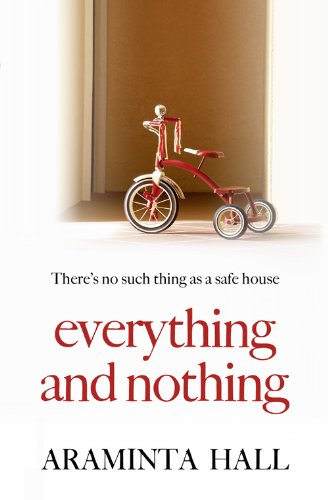
Araminta Hall: everything and nothing (2011) Social Realism and Psychological Suspense

Ruth and Christian are – just – holding their marriage together, after Christian’s disastrous affair a year ago. But chaos beckons, and when the family are suddenly left without any childcare, Agatha comes into their lives to solve all their problems. But Agatha is not as perfect as she seems and her love for the children masks a deeper secret.

I read a review of this book on Lizzy’s Literary Life and something told me I might like it. And I did. It was one of those super fast reads, a book that I could hardly put down. Really riveting. The only complaint I have is that this is labelled as a psychological thriller. Although there is a part of it reminiscent of Ruth Rendell, it is like a background story and not really very gripping. At least not for me. Still I consider this to be a real page-turner for the simple reason that it captures chaotic family life in so much detail and explores some of the questions and problems parents who work full-time would face. I often enjoy descriptions of domestic life although I don’t live anything that is even remotely comparable.

Ruth and Christian both not only work full-time but overtime many days of the week. They both have careers that seem to absorb all of their energy and when they come home in the evening they face total chaos. The place is dirty, sticky and disorderly, the little girl is screaming constantly and throws one temper tantrum after the other. The little boy, at three, still doesn’t eat properly and drinks from a bottle. The nights are nightmares too. Ruth and Christian fight and when they finally go to bed, the girl starts to scream again. She always wakes at midnight and never goes back to sleep.

At the beginning of the novel Ruth knows she isn’t capable of going on like this. She needs a new nanny. And in comes Agatha. We know from the start that something is wrong with her. She lives in daydreams and lies to her employers and to herself constantly. Something bad has happened in her past, a trauma that she cannot overcome and tries to repress with her imagination.

Family life improves considerably after she has started working for Ruth and Christian. She is super organized and makes Ruth feel deficient. To make things worse, Christian accidentally meets the woman he has had an affair with and starts seeing her for drinks.

Something bad, coming from Agatha, is lurking in the background and we know things will go very awry. But as said, this is completely toned down. I was fascinated by Ruth. Christian was not particularly interesting. Just one of those guys who thinks he has the right to have an affair when his wife is pregnant for the second time and is not that much into him during that time.  Ruth shows every sign of a severe depression and what I found interesting is the fact that this did not start right after she had the first baby but several months later. As if the bubble of enchantment that the little baby brought burst suddenly. From that moment on she struggles. I could feel the exhaustion of that woman and I know that this is very realistic. Women around me have mentioned it. If you are unlucky and have a baby that doesn’t sleep well and you need to go to work every morning… Ruth is a journalist and her work is very demanding. There is always someone waiting to jump into her position should she show signs of weakness.

I also hear the type of questioning very often that Ruth utters. Is it OK to work full-time and have children? Is it OK to have someone else looking after them? I think in the book the problem isn’t only that Ruth works full-time but that both work overtime and that she tries for too long to cope with everything else as well. She is afraid that having a nanny means defeat. And she thinks that women like Nigella Lawson are an example for the fact that it is possible to have and do it all yourself.

There is a strange fascination in seeing people at their most vulnerable, when their masks are down. That’s what made this book so riveting for me. And I think the questions it asks are very important.

I would be curious to hear from anyone who has read it.

This was Araminta Hall’s first novel. I really wouldn’t mind reading the next one too.

Ruth Rendell: A Judgement in Stone (1977)

Four members of the Coverdale family – George, Jacqueline, Melinda and Giles – died in the space of fifteen minutes on the 14th February, St Valentine’s Day. Eunice Parchman, the housekeeper, shot them down on a Sunday evening while they were watching opera on television. Two weeks later she was arrested for the crime. But the tragedy neither began nor ended there.

I discovered this novel  thanks to a suggestion from Danielle from A Work in Progress. I have read a few books of Ruth Rendell before and liked them and  I also read one she wrote under the pen name Barbara Vine but didn’t know which to read next. It is always good with prolific writers if someone can make a suggestion. I really liked A Judgement in Stone and can see why it is considered to be one of her best. It takes a very good writer to be able to captivate a reader even though the victims and the murderer are known from the very beginning. The psychological insights are absolutely convincing. Each character is so different from the other and they are all quite fascinating. Rendell adds a lot about the British class system and her description of two completely deranged women is amazing.

Because we know from the start that the main characters will be killed the book has an eery quality. It reminded me of a Greek tragedy. There is nothing to stop the course of the action.

Eunice Parchman, a middle-aged, illiterate and not very intelligent woman starts her employment with the Coverdales in summer. On Valentine’s Day she kills them. The changing of the seasons that Rendell describes with great detail adds to the feeling of the inevitable. The narrator is very present in this story, he misses no occasion to remind us, that the people he describes will meet a certain death. This reminded me of Gabriel Garcia Marquez’ Chronicle of a Death Foretold.

Eunice is not only illiterate she also lacks feelings for others. There is not the tiniest bit of empathy in this woman. Since she can’t read and sees this as a great flaw she abhors the written word and those who like to read. The Coverdales, a typical British upper class family, love to read. There are books all over their house. Eunice tries to cover up her disability as best she can and gets herself in a lot of impossible situations. One day, when running errands, she meets Joan Smith, a former prostitute who has joined some obscure Christian sect. One woman is as deranged as the other. Eunice is a cold-hearted selfish sociopath and the other a fanatic psychopath. Their alliance can only bring misfortunes.

Rendell’s  book is gripping, psychologically convincing and utterly fascinating. I’m really in the mood to read more of her books.

A Judgement in Stone has twice been made into a movie. One of them is by Claude Chabrol, La Cérémonie, starring Sandrine Bonnaire as Eunice and Isabelle Huppert as Joan.