Muriel Spark E-Book Giveaway Winner and Poll


It’s time to announce the giveaway winner of the e-book The Prime of Miss Jean Brodie by Muriel Spark courtesy of Open Road Integrated Media.

I drew the winner via random.org list generator.

The book goes to Marcus (Cinesprit).

Happy Reading Marcus!

******

The poll which I added to the last post is now at the bottom of this one.

You can still vote until the next giveaway will be announced.

Muriel Spark E-Book Giveaway and Readalong Plans for April and May

With my own Literature and War Readalong and Carl’s Once Upon a Time Challenge which has just started, April and May look like busy months but in a very good way. Since I’m quite excited about some of the events I wanted to share them with you. There are some great readalongs taking place and it would be nice if the one or the other reading this would join as well.

April Reading Along with Beauty is a Sleeping Cat

The first readalong is Frank Delaney’s Ireland which im going to read together with Mel u from The Reading Life. The choice is inspired by his Irish Short Story Month. We will read and post on it either in week 2 or 3, in April. Should you want to join us, please leave a comment on my or Mel’s blog.

Emma from Book Around the Corner is hosting a yearlong book club and I’m going to join for the next book which is Tracy Chevalier’s Remarkable Creatures. The readalong takes place on Thursday, April 26.

In May I’m going to join Bettina (Liburuak) for a readalong of Alice Walker’s The Color Purple. The readalong takes place on May 31st. Details will be announced on Bettina’s blog, beginning of May.


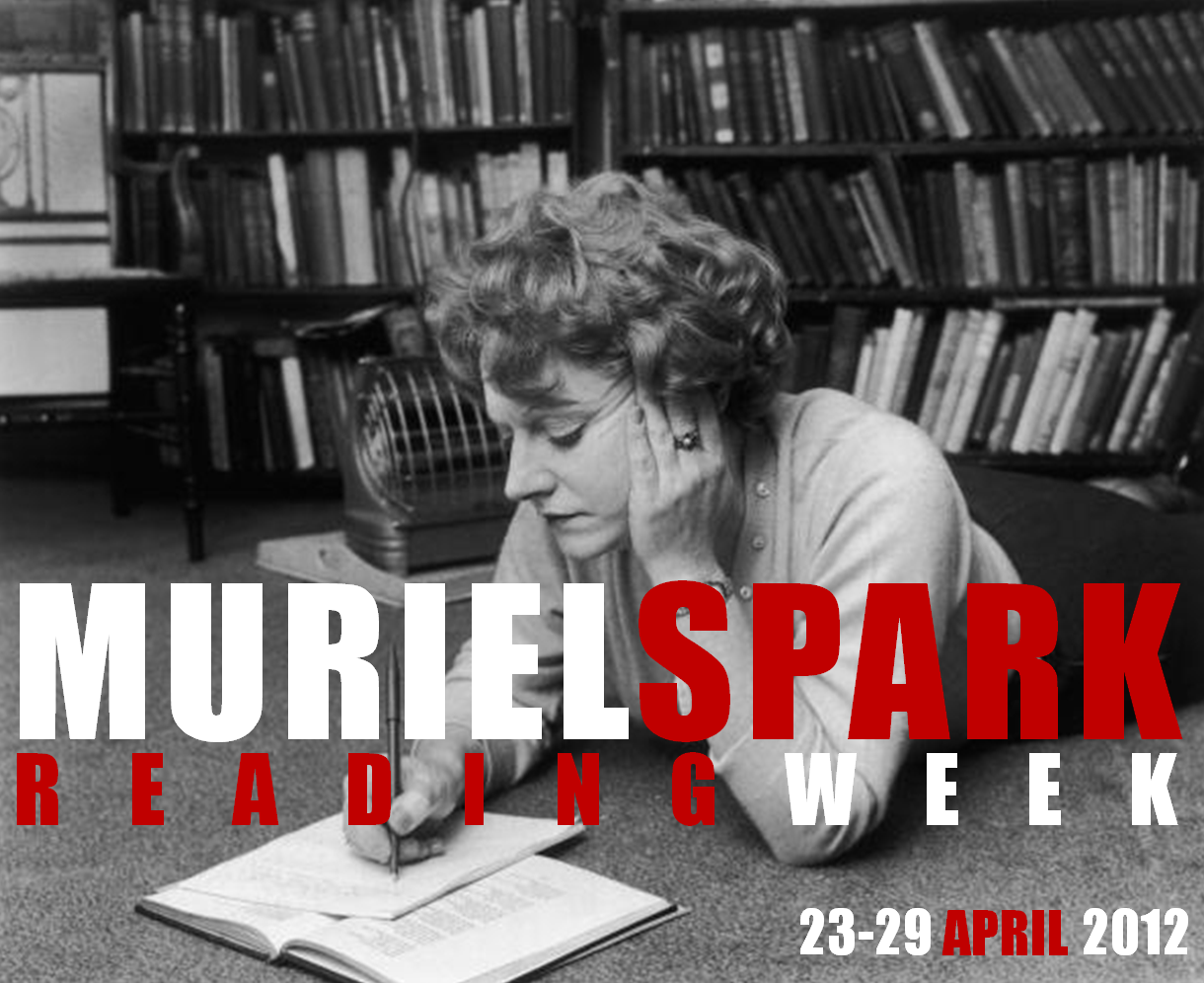
As you know, Muriel Spark week, hosted by Simon (Stuck in A Book) and Harriet (Harriet Devine’s Blog) is going to take place from April 23 – 29.

Open Road Integrated Media has just released eight of Muriel Spark’s novels and I’m very glad that I have the opportunity to give away two e-books.

The first e-book I’m giving away is the famous The Prime of Miss Jean Brodie. It’s a book I personally liked a lot.

If you would like to win this e-book, just leave a comment. The giveaway  winner will be announced next Tuesday, April 3 2012.

As I said before, Open Road Media offers two e-books. Which one will be the second book is up to you, that’s why I included a poll. Please vote for the second book you would like to be given away.

Please don’t click the category “other”. I couldn’t get rid of it but it doesn’t exist.

The book with the highest poll result will be given away next week.

The poll has been moved and can be found here

Returning to Virginia Woolf

Maybe it’s because I’m reading Alexandra Johnson’s books and Virginia Woolf is an author who is central in them or perhaps it is because of Sigrun’s (sub rosa) Virginia Woolf project which I like to follow, whatever it is, Virginia Woolf was often on my mind lately.

I have this odd habit that when I like an author a lot I try to keep at least one of his or her books for later. There are a few authors whose complete works I have read but, due to my reluctance to run out of books to look forward to, they aren’t numerous.

Virginia Woolf is one of those authors where the thought I may finally have read all she has ever written fills me with a certain apprehension. While I’m still keeping Moments of Being for later, I have finally started The Voyage Out, the only novel I hadn’t read yet.

It’s funny to return to her and finalize the reading of her novels with the first book she wrote. It feels as if I had completed a circle. I started reading Virginia Woolf with Mrs Dalloway. I didn’t know that Mrs Dalloway was a returning character. I didn’t even know that Virginia Woolf had any returning characters. But here she is, in The Voyage Out, Mrs Dalloway, in all of her “glory”. Was she always this obnoxious? Frankly, I don’t remember. What I remember of my first Virginia Woolf novel was how much I liked the style.

The Voyage Out is very different from later books but at the same time it contains so many aspects typical for Virginia Woolf”s writing. I know many people read the body of work of an author they cherish chronologically but in her case, reading backwards wasn’t a bad choice. One could too easily overread important aspects of this early novel or, as was done when it was published, dismiss it as being nothing special.

Reading The Voyage Out makes me realize once more what I like the most about her writing. Yes, the style, especially in the later novels, is fantastic, with its flow of interior monologue, the way she uses time and how she describes the passing of time. But there is something else that stayed with me forever since the day I have read Mrs Dalloway. Her writing has an exhilarating quality, an effervescent intensity of feeling that made me think of a German expression which I adore: “Champagner Wetter” or “Champagne weather”. Champagne weather is used to describe a very fresh but sunny spring morning on which the air is still cool, nature has returned to life, the first tentative, tiny leaves appear, the first blossoms can be seen. It’s already a bit warm in the sun but still chilly in the shade. It’s like drinking the first glass out of a freshly opened, nicely cooled Champagne bottle. It bubbles and goes to your head. Virginia Woolf’s novels are full of scenes conveying the mood of champagne weather.  

I will write a “proper” review once I have finished the book but I’m enjoying it too much to wait until then. So far I can see that the story is told chronologically and sequentially, nothing daring really. But there is already a very striking way of writing about people’s interior lives. One of the main themes is the role of women and the way they are treated or rather mistreated by society. Parts of the novel reminded me of E.M. Forster, others of Henry James’ Portrait of a Lady. Rachel, one of the main characters, has a lot in common with Isabel Archer. Still there are scenes which are already typically Woolf. She had a very particular way of showing the passing of time or how the interior worlds of people coexist. There is a wonderful scene towards the middle of the novel in which we see a hotel at night.  First we see it from the outside, all its windows are illuminated, the people are getting ready to go to bed. Later we approach and enter the building, brief glimpses into the various rooms draw pictures of the inhabitants. At the end of the scene, they are lying in their beds, separated only by thin walls, dreaming or just sleeping, drifting off into unknown territory, as if on a big ocean liner. It is a recurring scene really, as the book starts with the voyage on a ship.

It is possible that I will start rereading her books in chronological order when I have finished The Voyage Out and Moments of Being. My favourite of her books are Mrs. Dalloway, To the Lighthouse and Flush. I didn’t like The Years or The Waves much and can never even keep them apart. I also didn’t care for Orlando at all. Not sure why, it’s generally a favourite of many people but I remember I found reading it was painfully boring. Jacob’s Room and Between the Acts were two I liked but the memory of them is barely more than a vague impression.

I often hear people say, they are intimidated by Virginia Woolf, just like many are intimidated by Proust or James Joyce. For those who didn’t dare reading her so far, The Voyage Out and Flush are excellent starting points.

Have you read The Voyage Out or any other of Virginia Woolf’s novels? Which is your favourite?

Literature and War Readalong March 30 2012: To the Slaughterhouse – Le grand troupeau by Jean Giono

Jean Giono’s To the Slaughterhouse – Le grand troupeau is the last WWI novel of this year’s readalong. Giono is one of the great French writers, famous for books like L’homme qui plantait des arbresThe Man Who Planted Trees, Joy of Man’s Desiring – Que ma joie demeure orLe hussard sur le toit – The Horseman on the Roof which has been made into a successful movie. His books are deeply rooted in the South of France and he is often compared to Pagnol.

I try not to be too enthusiastic this time, but, let me just say, cautiously, I think, this should be a good book. At least he is an author who has never disappointed me so far and I’m even planning on (re-)reading a few of his other books this year, like Colline, Un de Baumugnes and Regain, the so-called Pan trilogy. Giono is famous for the way he describes the joy of life and that’s why I’m particularly interested to see how he treated such a bleak subject.

Here are the first sentences

Last night they watched as all the men left. It was a thick August night smelling of corn and horse-sweat. The animals were harnessed in the station-yard. The big plough-haulers had been tied up to the shafts on the carts; their solid rumps held back the loads of women and children.

The train moved off quietly in the night, spattering the willow trees with embers as it took on speed. Then all the horses started moaning together.

*******

The discussion starts on Friday, 30 March 2012.

Further information on the Literature and War Readalong 2012, including all the book blurbs, can be found here.

Literature and War Readalong February 27 2012: A Long Long Way by Sebastian Barry

In last year’s readalong we also read a WWI novel from the Irish perspective. It was one of my favourites and since I’m fond of Irish literature, I thought it would be great to add another one this year. I wanted to read Sebastian Barry’s novel A Long Long Way since Danielle (A Work in Progress) first mentioned it. WWI has a special meaning for the Irish. They were neutral during WWII, so, clearly, WWI has another importance. There were reasons why they remained neutral during the second World war which are tied to their own history. While some men, like the character Willie Dunne in this novel, fought for the Allies, other forces in the home country were about to erupt and would lead to the Easter Rising. WWI, the Irish War of Independence, followed by the Irish Civil War, cost the Irish too many lives for them to risk being dragged into WWII as well. I’m certainly simplifying but in a nutshell this was one of the reasons.

Some of what I just mentioned is the topic of Barry’s novel.

Here are the first sentences

He was born in the dying days.

It was the withering end of 1896. He was called William after the long-dead Orange King, because his father took an interest in such distant matters. On top of that, an old great-uncle, William Cullen, was yet living in Wicklow, across the mountains as they used to say, where his father himself had been reared.

I have read Sebastian Barry’s award-winning The Secret Scripture three years ago and I was one of a very few who didn’t like it. It had nothing to do with the writing as such which is great and one of the reasons why A Long Long Way was shortlisted for the Man Booker Prize in 2005. The reasons why I didn’t like it were timing and implausibility. I had just read The Vanishing Act of Esme Lennox before and the theme is the same, only I liked O’Farrell’s novel much better as it didn’t rely on implausible coincidences. Despite this unfortunate encounter I’m really looking forward to A Long Long Way and hope that some of you will join me.

Have you read Sebastian Barry?

*******

The discussion starts on Monday, 27 February 2012.

Further information on the Literature and War Readalong 2012, including all the book blurbs, can be found here.

Impressions of Bolaño’s The Savage Detectives

Caroline, in her kitchen, near the city center, Europe, January 2012. Defeat. Defeat. Defeat. I had a feeling I wouldn’t finish The Savage Detectives. 700+ pages is just a tad too long for me these days. Still, I was full of good intentions and even bought the German translation early in December thinking that if it had to be a chunky book it might be wise to read it in German and not in the Spanish original. It’s been far over a year since I’ve read my last Spanish novel and I didn’t want to tempt fate. Chunky novels have always been a huge turn off for me but these days, with so little spare time, I’m even less in the mood for a longterm reading committment.

Despite all these length related reservations and after having read the first 50 pages I thought I might finish easily. The whole of Part I was a surprisingly quick and amusing read. Admittedly, it was occasionally a bit exasperating to read the fictitious diary of a breathless, overenthusiastic and over sexed young man but it was at the same time refreshing. The reason why I didn’t manage to finish was a pure case of “wrong reader-right book ” or something like that. Listening to Juan García Madero telling the story of how he got involved with the movement of visceral realism, frantically wrote poetry and discovered the joys of sex made me feel as if I had met one of my teenage friends again. We were reading the same books as Juan Gracía; the Surrealists, Perec, Lautréamont. We were fascinated by experimental literature, the nouveau roman and anything that smelled avantgarde and nontraditional. It seems that most people who experiment with writing and literature revisit the same masters. Meeting a literary figure like Madero was almost eerie. Now, apart from not doing well with chunky books I often don’t do too well with novels about writing.  As much as I love memoirs and non-fiction books about reading and writing, I find a novel about the same topics artificial.

By the time I started part II, which consists of several dozens of short chapters, all told by another narrator who adds information and elements to the whole story, I knew I couldn’t finish. There were too many other books calling me. First Nick Hornby’s essay collection Housekeeping vs The Dirt, then I started Henry Green’s Party Going and my own readalong title Zennor in Darkness and finally I developed an obsession. All the books on my TBR pile which were written by someone named Elizabeth started calling me. First it was Elizabeth Gaskell’s Cranford, then Elizabeth Taylor’s Angel, after that Elizabeth Berridge’s Across the Common followed by Elizabeth Jane Howard’s After Julius and finally Elizabeth Bowen’s The House in Paris. I know, this sounds serious and I will have to analyze this weird obsessive compulsion at a later date. I would say the name is a pure coincidence but what is not is the size of their books, all just under 200 pages.

There is one thing that puzzled me a great deal while reading The Savage Detectives. While all these people in Bolaños novel celebrate short literary forms, like poetry, their author chose this traditional form of the long novel. Is that why part I is composed of short diary entries and part II – a 500 pages long sequence – of short chapters? To make us believe he does, after all write a short form? He is cheating, isn’t he?

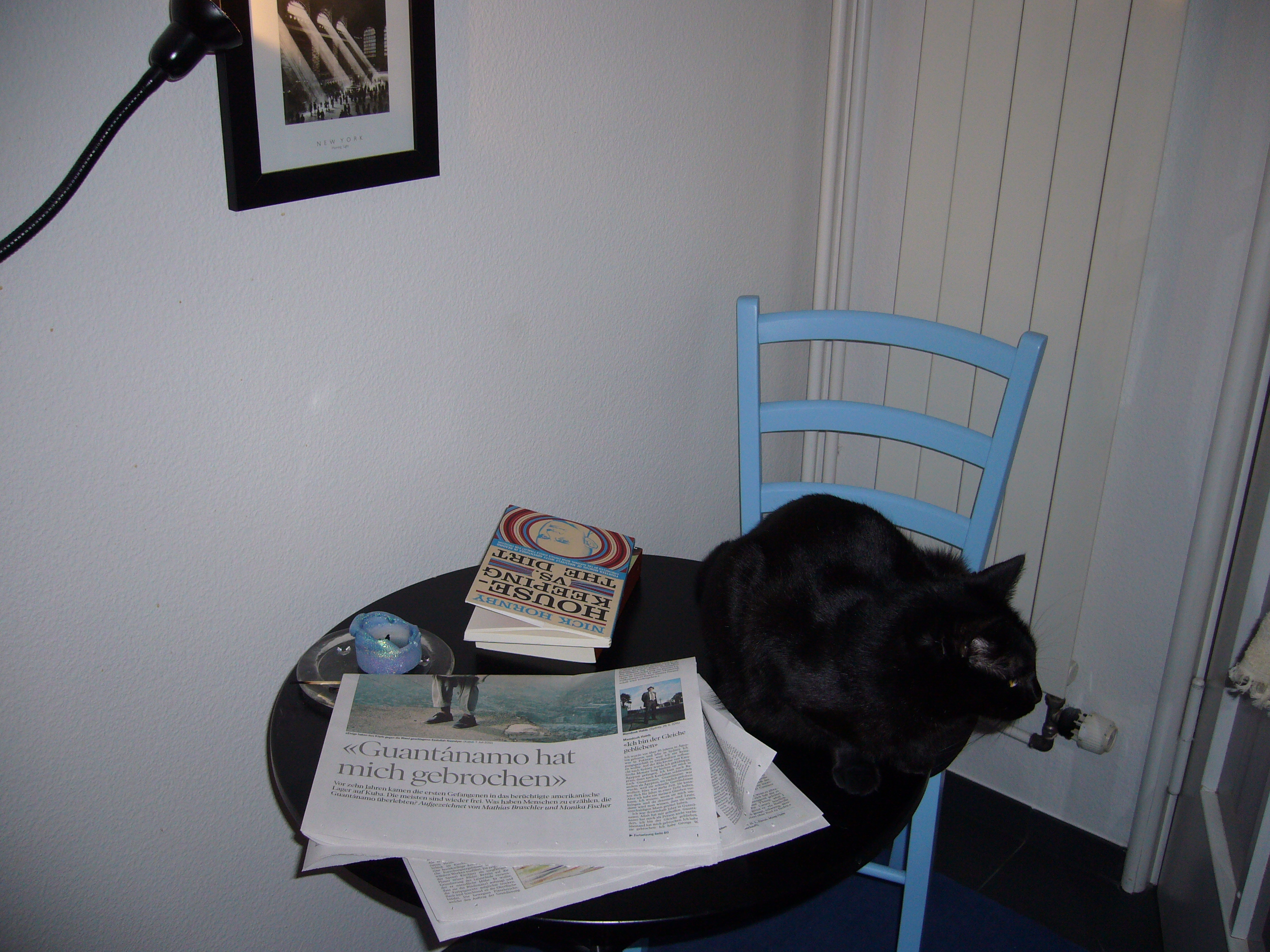
In any case, even though Mrs Cat started supervising my reading progress, I had to throw in the towel and put The Savage Detectives on the half-read chunkster pile where it’s sitting right next to Anna Karenina. A far better fate than the one that befell Dumas’ La Reine Margot. That one was disposed of.

I have not given up on Bolaño. Far from it. There are still many others of his books on my piles and one of them will be my first one in 2012. Not sure which one though. 2666, Amulet, Last Evenings on Earth or Monsieur Pain?

If you want to read a few proper reviews of The Savage Detectives, please make sure to visit the hosts of the readalong Rise and Richard and the other participants. Here is Bellezza’s post and Sarah’s.

Aussie Author Challenge 2012 – Bolaño Group Read – Henry Green Week

I discovered the  Aussie Author Challenge 2012 hosted by  Booklover Book Reviews on Tony’s Reading List. I’m not sure how many Australian authors I’ve read in my life so far, but I’m pretty sure not all that many. While browsing my piles I discovered five novels. One of them also qualifies for the War Through the Generations Challenge. Lisa from ANZ Litlovers has kindly given input and my choices seem worthy. Should you want to join the challenge, her blog offers lists where you will find a lot of reading suggestions. I have signed up for the  “beginner” level or, as the challenge terms it, “tourist”.

These are the books I’d like to read

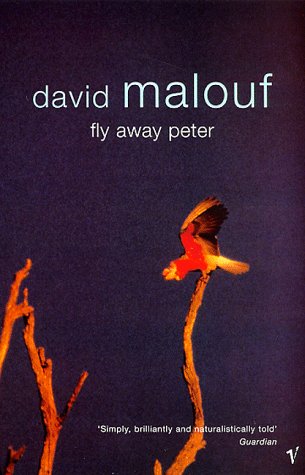
David Malouf’s Fly Away Peter

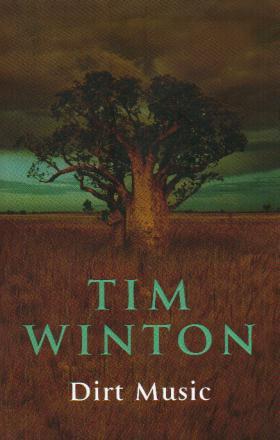
Tim Winton’s Dirt Music


Murray Bail’s Eucalyptus

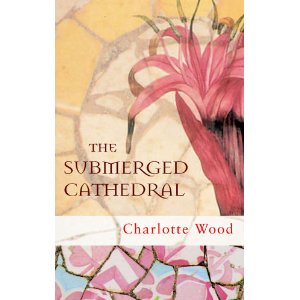
Charlotte Wood’s Submerged Cathedral (OOP?)

Helen Garner’s Monkey Grip

January is a busy month but some of the events were too good. I had to join.

I signed up for the Bolaño The Savage Detectives group read hosted by Richard and Rise last year and now is the time to start reading as the novel is on the chunky side. If you’d like to read along you better get a copy soon or you will not make it through the 770 pages in time. I have a feeling I won’t but if I mange to read 2/3 I’m already pleased with myself.

The week of January 23 sees another event coming that  I absolutely had to join. Stu from Winstonsdad’s Blog is hosting a Henry Green week. Henry Green was once thought to be one of the greatest stylists of British literature but is now almost forgotten. I have never read Henry Green and think Stu’s idea is really wonderful. Penguin has issued a tome containing three of his famous novels Loving, Living and Party Going. I’m going to read Loving.

Do you have any Aussie author suggestions?

Will you join the Bolaño group  read or Henry Green Week?