There is More to Véronique Olmi Than “Beside the Sea” or Un si bel avenir (Such a beautiful future)

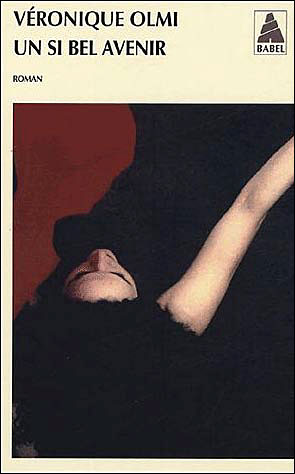
Un si bel avenir

Lucky Pereine Press decided to publish Véronique Olmi’s prize-winning novel Bord the Mer – Beside the Sea or she may still be waiting for an English translation. I’ve read the book when it came out in France in 2001. It’s an excellent but bleak account of a highly depressed mother.

Olmi has written several novels and theater plays. The one that interested me the most was Un si bel avenir which you could translate by Such a beautiful future. Set in the theater world, it tells the story of two women who meet at a time when their lives start to unravel. Elizabeth is an actress, married with two little girls. Her husband is a failed stage director. Clara is a radio journalist who is in a relationship with Boris, an actor as well. The women first meet at the premiere of one of Pascal’s plays which is a total failure. They meet again by coincidence, just after having found out that their marriages and relationships are about to end.

The friendship she describes is very rare in it’s intensity and loyalty. Two people meet when they need someone the most and open up in a way unknown to both of them. Family secrets, disappointments, dreams and fears are shared with great trust and openness.

Some of the scenes in this novel are incredibly  beautiful, some even in their absurdity like when Elizabeth and Pascal are stuck at midnight on the péripherique or when Elizabeth sits up in the middle of the night, the family is sleeping and she enjoys the peacefulness and security it means. Little does she know this is one of the last moments like this.  Another scene in which she starts to see her husband for what he really is, a failed aging guy, with a sagging ass and a secret mistress, is tragic and hilarious. She swears like a sailor using the most expressive language.

The book is an exploration of what it means to be a woman, a mother, a wife, of the different possibilities, the choices, the difficulties and pitfalls modern life has in stall.

The poignancy and immediacy with which this is written, the dialogue and interior monologue, so close to everyday language, bears the sign of a novelist who is also a successful playwright.  This dialogue and interior monologue is so authentic. At the same time there is an airiness in this writing that can describe the dark night of the soul and still let a light shine in. What I missed most in Bord de mer, the chance for transformation and hope, is present here.

I always felt that French women writers have a capacity to touch on every single detail of everyday life, from the most mundane to the most sublime and render it in a meaningful way, show us how we live now with a all the complexity there is.

As I wrote before, Un si bel avenir is about all the facets of the life of a woman, as a daughter, a wife, a lover, a mother and a friend. It is this last part that is the most accentuated. The book’s characters’ hope lies in the friendship with another woman. Romantic relationships are scrutinized, taken apart and discarded together with family ties.

I do not have such a pessimistic view of the couple, not at all. I think a lot of what is called love has not much to do with real love and that is the core problem. It seems, as if these two women show that it can be easier to live this type of love with another woman or the children, in relationships that are free of physical attraction.

I hope this books will be translated too. It isn’t flawless, there are a few breaks in the narrative towards the end which are abrupt but it has a lot of qualities, a lot to offer.

There is much more to Véronique Olmi than Beside the Sea. Although better constructed, Beside the Sea is awfully bleak. If you ever read anything else you will notice how nunaced her writing really is.

Un si bel avenir has been translated into German Eine so schöne Zukunft.

Coincidentally Emma has just reviewed Bord de merBeside the Sea. You can find her review here.
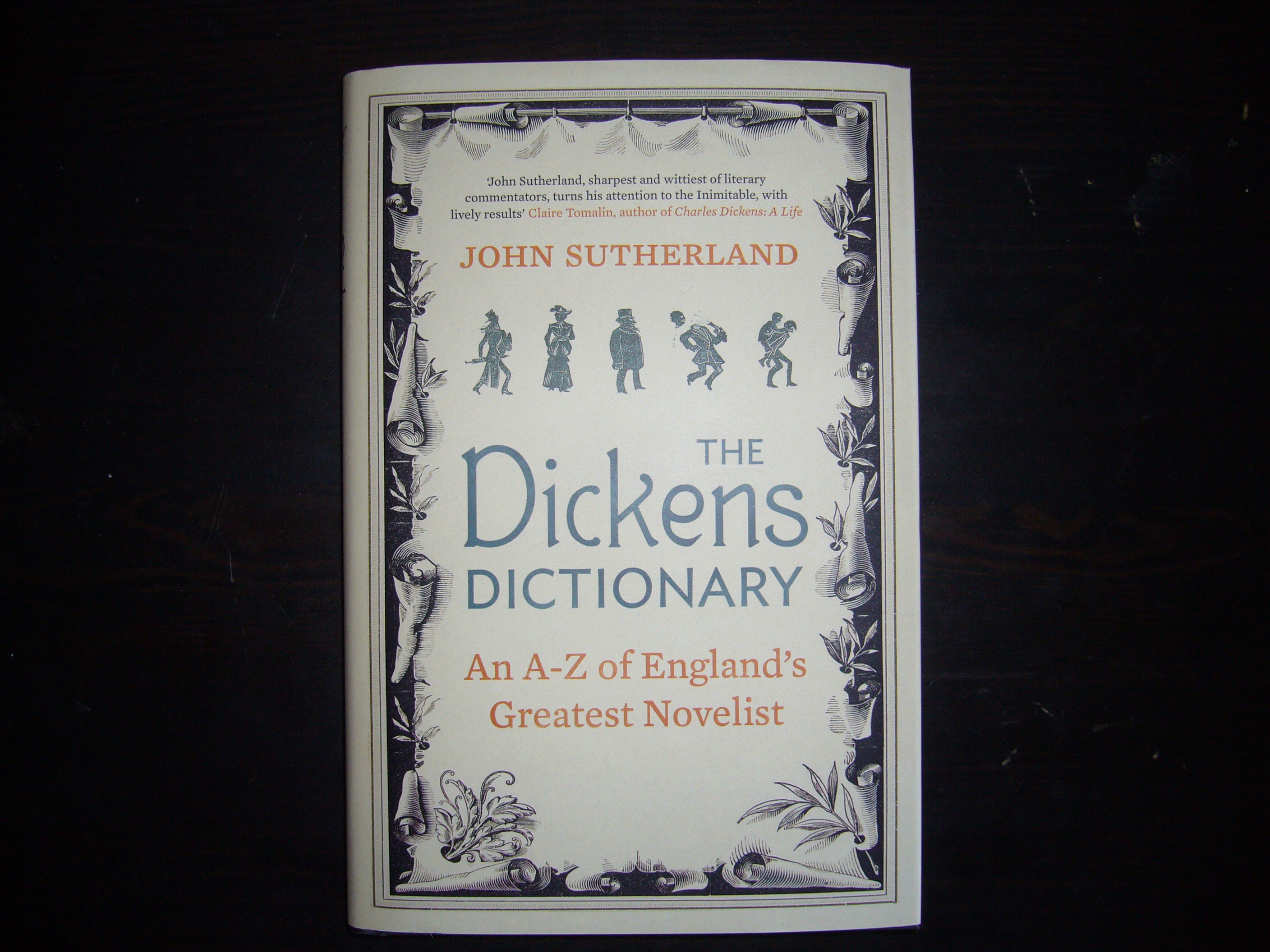
John Sutherland: The Dickens Dictionary (2012)

Although I’m one of those who has been tiptoeing around Dickens’ work for a while now without reading anything else but A Christmas Carol and part I of David Copperfield, I’m still interested in the author and the work. I also have a feeling I’m familiar with his novels without having read them because I saw the one or the other movie based on his books and because creations of great artists seem to acquire a life of their own and seem to go on living outside of the confined space of the book covers. People mention them, talk about them as if they were real people.

When I discovered The Dickens Dictionary on Mel U’s blog (here is the post) I knew I had to get it right away and since it arrived yesterday afternoon I spent many moments with it.

The author John Sutherland is a recently retired professor who has taught and published on Victorian novels. Browsing his book and reading the one and the other of the 100 collected entries, you discover not only a world of information but a book written by someone who is passionate about the subject and knows how to write about it in a way that will make you feel the urge to grab the next Dickens novel at hand. Sutherland’s aim was

When I think of Dickens I do not see a literary monument but an Old Curiosity Shop, stuffed with surprising things: what the Germans call a Wunderkammer – a chamber of wonders.

This book, taking as it’s starting point 100 words with a particular Dickensian flavour and relevance, is a tour round the curiosities, from the persistent smudged fingerprint picked up in the blacking factory in which Dickens suffered as a little boy to the nightmares he suffered from his unwise visit at feeding time to the snake-room of London Zoo.

The 100 entries cover such different subjects as Bastards, Blue Death, Candles, Cats, Child Abuse, Dead Babies, Dogs, Fog, Hands, Incest, Merrikins, Onions, Pies, Pubs, Smells, Thames…. They are all entirely fascinating.

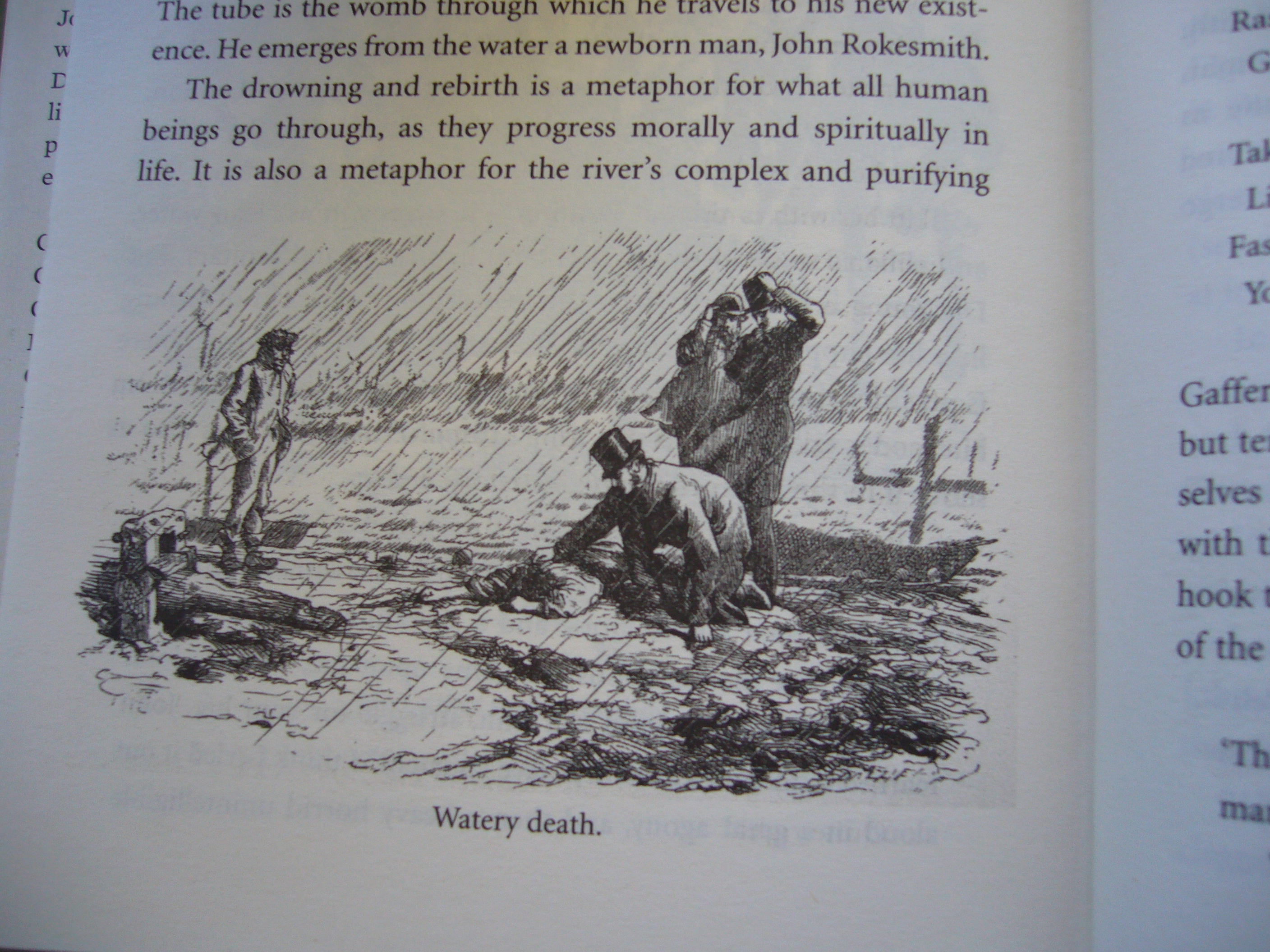
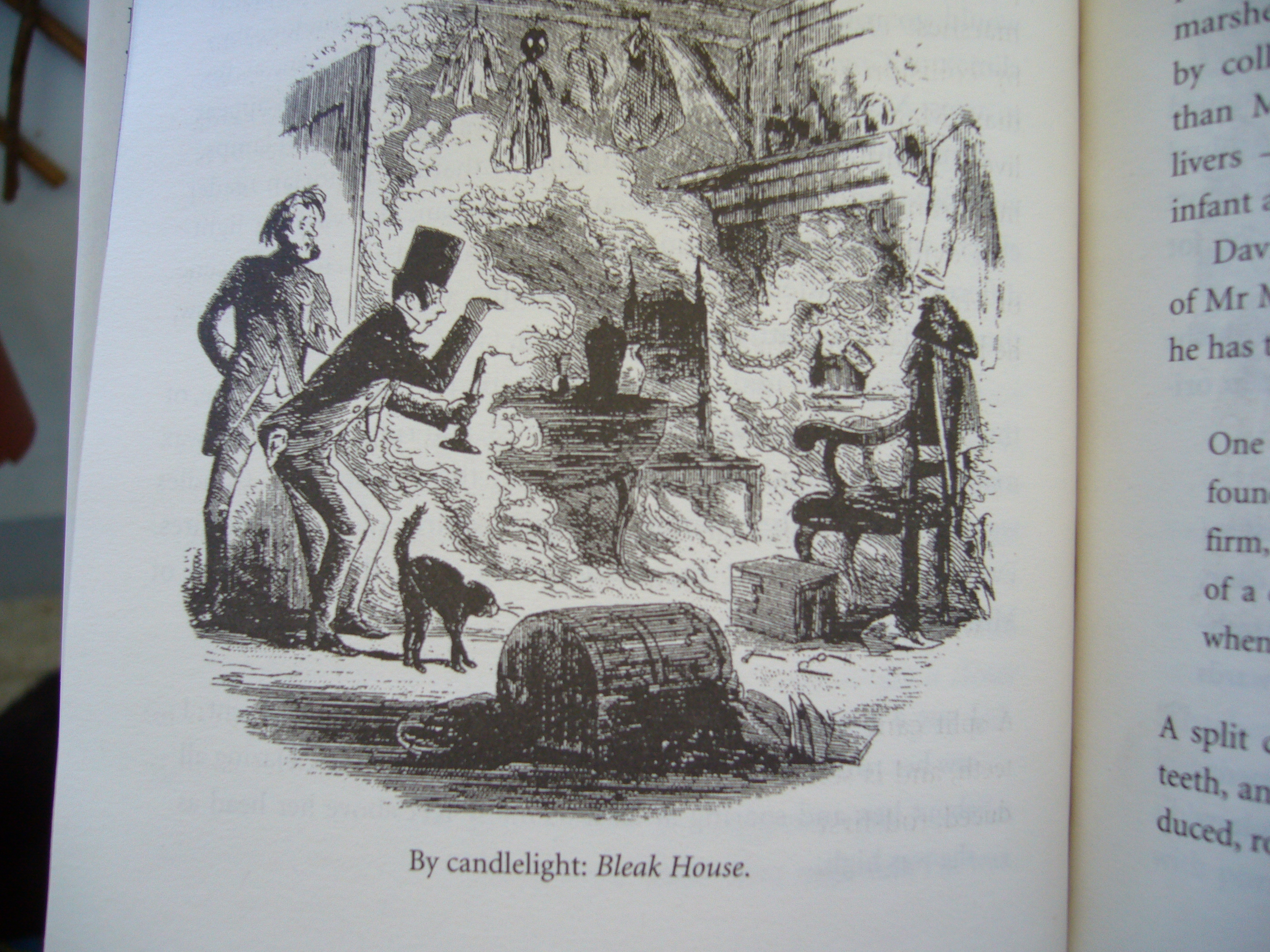
What certainly adds to the appeal of this book are the many illustrations.  There is one on almost every other page.

I also liked the many quotes Sutherland included which give a good feeling for the work. Since I have still not decided which will finally be my first Dickens, this book will help me make up my mind.

To give you an idea of the entries I chose the one called Blue Death.The title refers to the Cholera epidemic of 1848-49 during which 52,000 Londoners died. The entry explains where it came from – India 1817 – and how Dickens and most people thought it was miasmic. He referred to it in Bleak House in his description of Tom-All-Alones’s. His rival Thackeray contracted the Cholera and might have died if Dickens hadn’t sent his own physician.

The Dickens Dictionary is a great introduction to Dickens, it contains quotes and references of the various novels, anecdotes from Dickens life, historical facts of Victorian London and a whole range of other “curiosities”.

As I said, I still don’t know which should be my first Dickens. Which one would you recommend?

Antonio Tabucchi Week 17 – 23 September 2012 – The Giveaway Winner

Random org has decided who has won

Pereira Maintains

In the sweltering summer of 1938 in Portugal, a country under the fascist shadow of Spain, a mysterious young man arrives at the doorstep of Dr Pereira. So begins an unlikely alliance that will result in a devastating act of rebellion. This is Pereira’s testimony.

The book goes to Bettina (Liburuak).

I hope you will like it.

Please send me your address via beautyisasleepingcat at gmail dot com.

For those who want to know more about Tabucchi Week and want to join, here are the details.

Antonio Tabucchi Week September 17 – 23 2012 and Giveaway

Ever since Stu’s Henry Green Week I wanted to host something similar for an Italian author and my first choice was always Antonio Tabucchi. He is one of the finest Italian writers and one I admire a lot.

Sadly what should have been a tribute to a living author has now turned into a commemoration as Tabucchi died earlier this year.

Tabucchi was a novelist, short story writer and academic. One striking feature was his love for Portugal, the Portuguese language and Fernando Pessoa. He didn’t only teach Portuguese literature at the university but he lived in Portugal (as a reaction among other things to Italian politics), wrote a novel in Portuguese and translated Pessoa.

He is one of the rare authors not writing in English who has been extensively translated. While I will read him in Italian, all those who would like to join can choose from a variety of other languages. He is available in English, French and German and most probably also in Spanish and Portuguese.

Tabucchi’s Indian Nocturne is one of my all-time favourite books. It has been made into a movie. I just read and reviewed Sogni di Sogni – Dreams of Dreams – a collection of imagined dreams attributed to famous writers, musicians and artists. But there are others that I want to re-read or discover for the first time like Tristano muore. Una vita.

If you have never read anything by this author I would suggest you start with one of his more famous novels like Pereira Maintains (Sostiene Pereira) or Indian Nocturne (Notturno Indiano). If you like short stories you may enjoy the beautiful collection of fictitious letters It’s Getting Later All the Time. If you go for quirky and inspiring, Dreams of Dreams may be the thing. But there are more.

Requiem: A Hallucination

Little Misunderstandings of No Importance

The Missing Head of Damasceno Monteiro

And in Italian (and other translations) only

Tristano muore. Una vita

Il tempo invecchia infretta

Il filo dell’orizzonte

In order to motivate you to join I’m giving away one copy of one of his most famous novels which has also been made into a movie with Marcello Mastroianni.

Pereira Maintains

In the sweltering summer of 1938 in Portugal, a country under the fascist shadow of Spain, a mysterious young man arrives at the doorstep of Dr Pereira. So begins an unlikely alliance that will result in a devastating act of rebellion. This is Pereira’s testimony.

The giveaway is open internationally. If you would like to win this book, just leave a comment. The only condition is that you take part in Tabucchi Week. What you will read is up to you, it doesn’t have to be the book you won.

The winner will be announced on Friday August 17 2012.

The Canadian Book Challenge 6

I was hoping to find a Canadian Literature Challenge. These days I’m very interested in literature written in English outside of the UK and the US. The Canadian Book Challenge seemed just the thing I was looking for. I came across the challenge on Gavin’s blog Page 247.

The host is John Mutford from The Book Mine Set. His blog is dedicated to Canadian literature. If you are interested here’s the sign up post with all the details you need to know. In theory the idea is to read 13 books. It sounds like a lot but interpreting what John writes I would say it doesn’t seem as if you must reach that number. Aim for it, if you read less, it’s not the end of the world, if you read more, all the better.

I have a lot of Canadian literature on my book piles and have read quite a few authors in the past. Authors writing in English and in French. I asked and if you’d like to join, you can choose books written in English or French as long as the author or the topic is Canadian.

I know that I usually do not stick to my book lists but I still keep on making them. Possible choices for this challenge are

A Map of Glass by Jane Urquhart. Urquhart isn’t an easy writer but she is a fascinating one who writes beautifully.

Margaret Atwood’s Lady Oracle. Atwood is another immensely fascinating author I have meant to return to. I loved Cat’s Eye and Surfacing and some of her short stories.

The Birth House by Amy McKay. I haven’t read this author yet but everyone who read this novel was impressed.

The Stone Angel by Margaret Laurence is a book I discovered not too long ago on Danielle’s blog (A Work in Progress). It sounded like another Canadian must-read.

I would like to read the one or the other novel by Nancy Huston and some other Canadian authors writing in French.  Since I recently discovered Louise Penny’s Canadian crime series, I’ll certainly read one of those as well.

Are you joining? Do you have any Canadian literature suggestions?

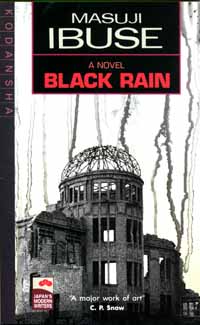
Literature and War Readalong July 30 2012: Black Rain – Kuroi Ame by Masuji Ibuse

When I saw Black Rain mentioned by Gary (The Parrish Lantern) on Rise’s blog (in lieu of a field guide) last year, I knew I wanted to include this book in this year’s readalong. Last year we read Marguerite Duras’ Hiroshima Mon Amour and I’m really curious to find out how this horrible event will be treated by a Japanese author. John Hersey’s Hiroshima and Ibuse’s Black Rain are said to be the most important novels on the horror of Hiroshima.

Here are the first sentences

For several years past, Shigematsu Shizuma, of the village of Kobatake, had been aware of his niece Yasuko as a weight on his mind. What was worse, he had a presentiment that the weight was going to remain with him, unspeakably oppressive, for still more years to come.

*******

The discussion starts on Monday, 30 July 2012.

Further information on the Literature and War Readalong 2012, including all the book blurbs, can be found here.

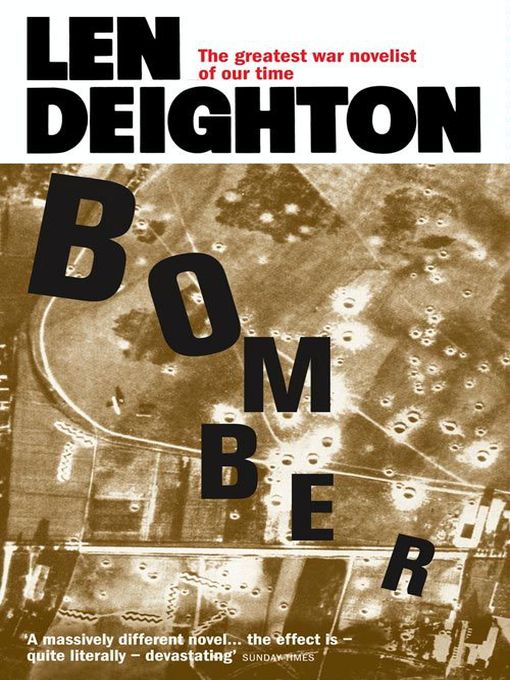
Literature and War Readalong June 29 2012: Bomber by Len Deighton

The last two titles in the readalong were both about the Blitz and the bombings of the British cities seen from the perspective of civilians. Bomber shows another point of view. Set in summer 1943 it tells the story of an Allied air raid from the point of view of all of the participants, in the air and on the ground, covering 24 hours. It has been praised for its detailed descriptions and documentary style and from what I read so far, it seems very well done. I have to thank Kevin (The War Movie Buff) for pointing it out.

Here are the first sentences

It was a bomber’s sky: dry air, wind enough to clear the smoke, cloud broken enough to recognize a few stars. The bedroom was so dark that it took Ruth Lambert a moment or so to see her husband standing at the window. “Are you alright, Sam?”

“Praying to Mother Moon.”

She laughed sleepily. “What are you talking about?”

“Don’t you think I need all the witchcraft I can get?”

“Oh, Sam. How can you say that when you…” She stopped.

“He supplied the words: “Have come back safe from forty-five raids?”

Should you want to join you will have to start early. With 527 pages it is by far the longest book of this readalong.

*******

The discussion starts on Friday, 29 June 2012.

Further information on the Literature and War Readalong 2012, including all the book blurbs, can be found here.