Nicci French: Waiting for Wednesday (2013)

Waiting for Wednesday

If you follow this blog you know I’m a fan of crime writing duo Nicci French. Having read the first two in the Frieda Klein series and spotting number four on the shelves of a local bookshop, I had to finally read Waiting for Wednesday. I really like this series, despite the fact that this is the weakest of the three. It’s an in-between book, a warm up for what will come next. That doesn’t mean it’s not gripping, it’s just that there are two plot-lines, which run parallel, and Frieda isn’t really part of the main plot, but investigating something else.

The book starts strong. Ruth Lennox, a middle-aged housewife with an untarnished reputation and a slightly perfectionist streak when it comes to housekeeping, is found brutally murdered. Her smallest daughter, Dora, finds her when she comes back from school. Why would anyone want to kill a perfect mother and wife, a model neighbour? Maybe she isn’t as exemplary as everyone believes? DCI Karlsson investigates this murder, unfortunately not with the help of psychotherapist Frieda Klein, but with another therapist, Hal Bradshaw,  who hates Frieda’s guts. Although Karlsson is told not to use Frieda’s help, he goes to see her anyway, as he senses the assigned therapist is pompous and useless.

Like in the other books of the series, Frieda’s private life takes a lot of space. Her last case with Karlsson has left her wounded and somewhat traumatized. I can’t reveal too much because that would spoil book number two. In any case, she’s not safe. Or will not always be safe and she knows that.

Her home is Frieda’s refuge. She loves her small house in London, but in this book she hardly ever has it to herself, as it’s invaded by friends and family and finally even by the family of the murdered woman because her niece, Chloë, is friends with the oldest boy.

While Karlsson and his team feverishly investigate the murder, Frieda’s rival, psychotherapist Hal Bradshaw, plays a dirty trick on her, trying to discredit her and some other therapists. A minor thing someone mentions in this charade, makes Frieda look for a girl who has gone missing a while ago. During her investigation, her path crosses with that of a journalist who has spent his whole life investigating the cases of missing girls.

It’s typical for Frieda that she puts herself at risk, so, once again, she makes a narrow escape – that’s not a spoiler as book 4 is already out and we know she’ll survive. Frieda’s love life has gained more importance as well, although her boyfriend Sandy lives in New York.

The book switches from the Ruth Lennox case to Frieda’s investigations and her life. Since Nicci French are excellent at what they do, the book felt seamless. It may not have been as gripping as the last, but it sure put me in the mood to grab the next one right away.

I would recommend this book if you like the series, but I’m not so sure how well it works when you haven’t read the first two. Starting with this one isn’t a good option as book two would be seriously spoilt.
Here’s Guy’s take on the novel. 

Donal Ryan: The Spinning Heart (2012)

The Spinning Heart

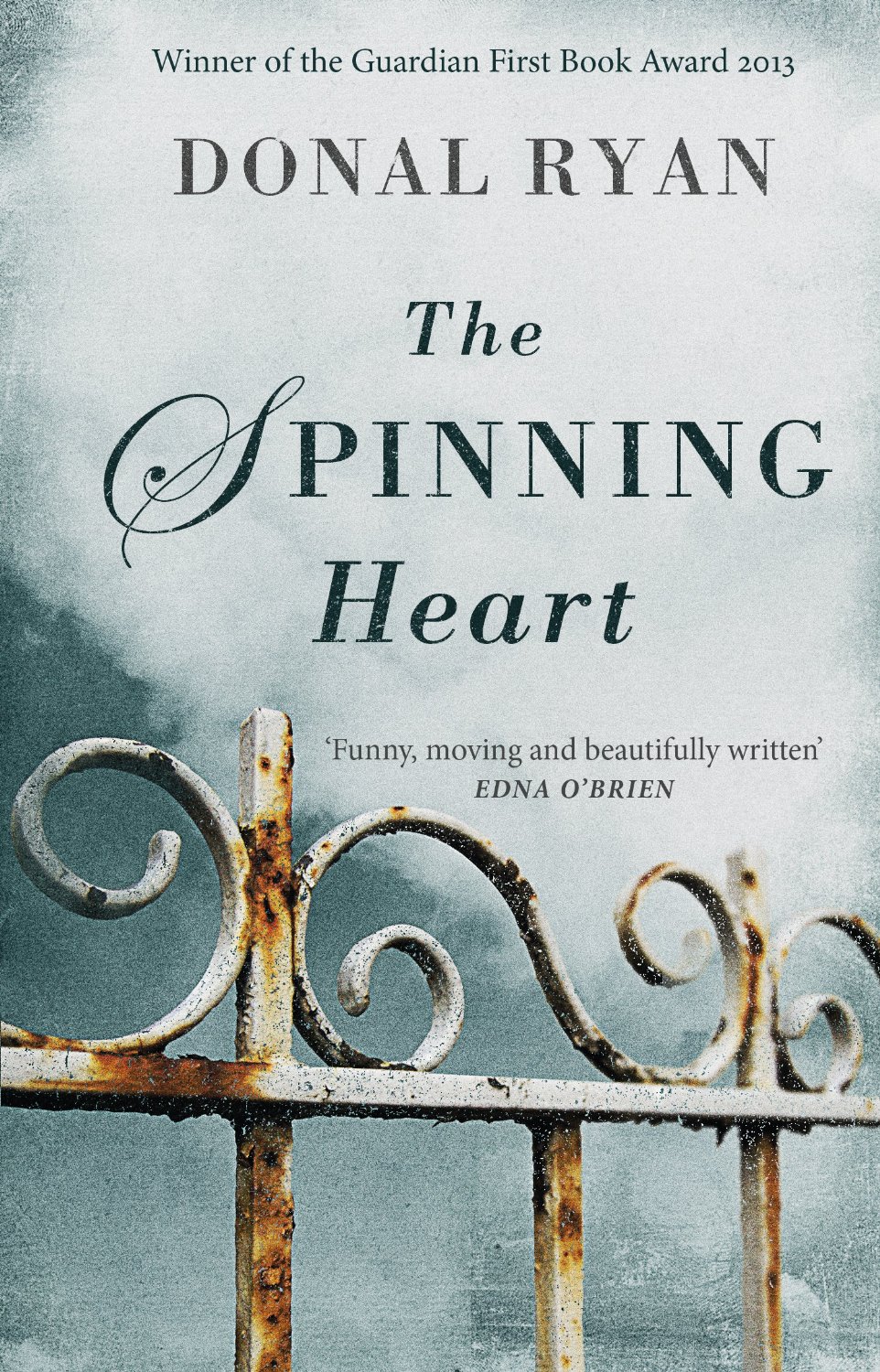
Irish writer Donal Ryan’s first book  The Spinning Heart is less a novel than a chorus. A chorus of 21 voices telling, stating, deploring, accusing and confessing things that are on their mind, things they want to commit or have committed, things they should have done or could have done. While each of them gives us a slice of individual life, in his or her unique voice, using their idiom or vernacular, they are linked because of the recession that has hit them hard. Most of the professional life in this small rural community was tied to the building firm of Pokey Burke who fled the country, leaving his former employees without pension or income. He’s also responsible for a ghost estate, in which one of the narrators, Réaltín, her little boy, and one elderly woman live. The other houses haven’t been finished and Réaltín’s house has a lot of shortcomings too.

The book opens with Bobby’s voice and closes with Triona, Bobby’s wife. In between are the 19 others. Former workers of Pokey, his father and many more. What struck me the most was that every chapter really sounded as if a person was talking to us. The voices are each so intimate and distinctive. Some focus on the present moment and the recession, some go way back. What we read paints an astounding portrait of Irish society, the things that have been the same for decades, like the weight of the Catholic Church, and those that have drastically changed, like the economy. Some voices are shocking, some are heartbreaking, some belong to very young children, some to old people, most to those who have been the most affected by the recession- people between 18 and 60+.

While all these lives have been marked by Pokey and his real estate fraud, there are also two thin plot lines which link all the people: the abduction of Réaltín’s boy and the murder of Bobby’s father. With these to plots the book transcends the economy theme and encompasses more universal topics like family and relationships.

The Spinning Heart is an amazing piece of writing and I’m not surprised Donal Ryan won the guardian First Book Award. Creating 21 distinctive voices is an achievement but to tell 21 touching life stories and to capture a whole country even more so.

Harriet Lane: Her (2014)

Her

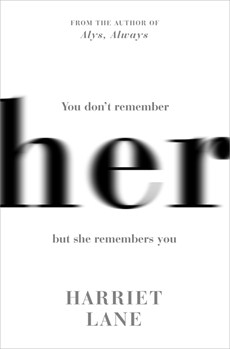
Last year I read Harriet Lane’s Alys, Always and loved it so much that I had to read her new novel Her as soon as it came out. Amanda Craig calls it “Thriller of the Year” and while I might not have read enough of the books that came out in 2014 to confirm this, it’s certainly the best thriller I’ve read so far this year. Take Lucie Whitehouse’s Before We Met and one of Ruth Rendell’s psychological thrillers and you’ll end up with something like Her.

Her has a split narrative. Nina tells one half of the chapters, while Emma narrates the other half. Do you ever wonder what people truly think of you? What they might say about you behind your back? Whether they truly like you or just pretend they do? If you have, and I’m pretty sure, we’ve all wondered at some time, this book will resonate deeply with you as Nina is not so much an unreliable narrator as an unreliable character. She does tell us the truth, albeit in small doses, but she’s anything but truthful to Emma.

At the beginning of the book Nina sees Emma in the street, in London. She hasn’t seen her in years, decades even, and is pretty sure that Emma will not remember her. However, Nina remembers Emma because, all those years ago, Emma did something that Nina could never forgive.

At first Nina doesn’t do anything. She just relishes seeing Emma in a bad place, with one small demanding child and a second on the way. She’s not a young mother and the sleepless nights, the demands of motherhood, have taken their toll. She’s not as gorgeous as she once was. And she’s neither rich nor does she have a career, unlike Nina who lives a life of elegance and wealth and is a succesful painter.

Their paths cross again. This time Nina makes contact. What follows is extremely chilling. Nina befriends Emma, is helpful and kind, but we know what she really feels. Unbeknownst to Emma she manipulates, stages disasters that are just small at first but become more menacing every time.

Reading what Nina thinks and does, followed by Emma’s interpretation of the events, made me feel so uncomfortable. I couldn’t help putting myself into Emma’s place and tried to imagine what it would be like being duped like this. Creepy.

The book is extremely gripping because we constantly ask two questions: What did Emma do all those years ago? and How far will Nina go?

What makes this book even more readable is Harriet Lane’s writing. Her descriptions are fresh and elegant. The only thing that bothered me was the depiction of motherhood. I’m sure it’s stressful to have small children but to the extent this is described here?

The end wasn’t exactly what I had expected but I thought it made sense and it shed another, even darker light on Nina.

If you liked Notes on a Scandal or Ruth Rendell’s psychological thrillers, you’ll enjoy this and appreciate Harriet Lane’s lovely, elegant writing.

Gabriel Chevallier: La Peur – Fear (1930) Literature and War Readalong June 2014

Fear

Most of the books we read for the Literature and War Readalong are historical novels, written by people who do not have any experience of war. But I always try to make sure to include at least one novel or memoir written by someone who had first-hand experience. Gabriel Chevallier’s Fear – La Peur is one of those. Like his narrator Jean Dartemont, Chevallier was a simple soldier during WWI. He served from 1914 to the end of the war. In 1915 he had a small break because he was wounded but was sent back to the front-line after his recovery. Reading his account it sounds like a miracle that anyone could survive this long under such circumstances. Given the title of this novel it may also come as a surprise that its author returned highly decorated. He was awarded the Croix de Guerre and the Chevalier de la Légion d’honneur.

Most of the time reading La Peur felt like reading a memoir and I suppose most of it is autobiographical. What drew me in from the beginning was the voice. I hope they were able to capture this unique and powerful voice in the English translation. A voice that mentions everything, denounces everything, and lets us get as close to the war in the trenches as possible without having been there.

The book hasn’t a plot as such, it’s more an episodic account of Dartemont’s experience of WWI and his thoughts. Not for one second does he think the war is noble, nor does he ever strive for glory. He sees right through most of the cowardly and sadistic officers and he speaks openly. Not always though. Sometimes he’s just too baffled to speak his mind like when an elderly man asks him on his leave whether they are having fun. Those at home think it’s all a great adventure, just like most of those who signed up early on.

Dartemont who was a student didn’t sign up for “gloire et patrie” (glory and homeland), he signed up because he wanted to see. He’s a very curious person, that’s probably why he never averts his eyes, no matter how scared he is. In the beginning he’s just like a participant observer. At first he’s far from the most intense fighting but once he’s seen his first battle, the first dead people and horribly wounded, fear is his constant companion.

I don’t think I’ve ever read anything quite like this. Not for one second are we led to believe that going to war is heroic. It might very well be one of the most openly anti-war books I’ve ever read. Free of any sentimentality, free of any attempt to make us swallow the bitter pill by telling some touching story. It’s just one man’s account of the most horrible things one can experience.

The parts that shocked me the most are not the gruesome descriptions of the wounded and the dead but those that show how utterly ill prepared most of the attacks were. And how incapable and idiotic most of the high command was. How can you expect to win a battle when the enemy is dug in and your soldiers are just running into open fire? No wonder there were some battles in which there were 50,000 to a 100,000 dead and wounded within two hours. All this led to the mutinies of 1917. Of course it wasn’t much better on the British side. Unfortunately many officers were not only useless but petty and sadistic, mean-spirited and small-minded, and managed to turn even times of rest into nightmares.

Seeing how scared Dartemont was all through the war, and how long he stayed in the trenches, I was wondering why he wasn’t shell-shocked. I think he must have had an extremely strong character. Unlike so many, he never looks away, not even when he’s scared. He’s always aware that any moment could be his last, that he could end up maimed for life from one second to the other. This extreme awareness, paired with a strong character, seems to have helped him stay sane through the madness.

As awful and detailed as many of the description were, I liked reading this, because I liked the narrator’s voice so much. Staying this matter of fact in such mayhem is admirable.

I’m not surprised this book went out of print in France when WWII broke out. It’s as powerful as it is subversive. Chevallier rips off the masks of all those who pretend war is noble.


Other reviews

 Guy (His Futile Preoccupations)

Judith (Reader in the Wilderness)

*******

Fear – La Peur is the sixth book in the Literature and War Readalong 2014. The next book is the WWI novel The Lie by Helen Dunmore. Discussion starts on Monday 28 July, 2014. Further information on the Literature and War Readalong 2014, including the book blurbs can be found here.

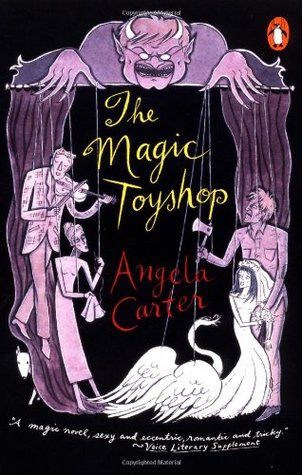
Angela Carter: The Magic Toyshop (1967)

The Magic Toyshop

I’m often tempted to skip the summary when reviewing a book, because, most of the time, the story as such doesn’t tell you a lot about a book. This is especially true in the case of Angela Carter. Her second novel The Magic Toyshop is no exception. It tells the story of a young girl, 15 year-old Melanie, who loses her parents the day after exploring the nightly parental garden in her mother’s wedding dress. She and her two siblings are then sent to her maternal Uncle Philip, a toy maker. At her uncle’s house she meets her Aunt Margaret and her aunt’s two brothers Finn and Francie. One is a painter, the other one a fiddler. It’s a very strange household. Creepy, joyless and fearful when her uncle is around; excentric and exuberant when he’s out. There’s a strange attraction between Finn and Melanie and one night, in the ruin of a magical garden, he kisses her. Melanie is confused by this because she doesn’t really fancy Finn. Additionally they have to hide their attraction because their uncle hates affection and emotions; he only lives for and through his toys and puppets. The grand finale is set in motion when Melanie has to play Leda in a cruel version of Leda and the Swan. Finn not only refuses to play along, but he takes revenge. Will the inhabitants of the sinister uncle’s house be able to free themselves or will they continue to be puppets in his hands?

A summary like this doesn’t tell you anything about the lush richness of the writing or what it feels like to enter an Angela Carter novel. Reading The Magic Toyshop is like entering an antiques shop or a shop with vintage clothes. You move from one beautiful garment to the next, from one arresting object to the following, only instead of objects and clothes you find sentences and images, allusions to fairy tales and myths, all woven into a shimmering tapestry. I felt like walking around in a stuffy room; in one corner I saw Bluebeard, in the next Red Riding Hood, and, over there, in a corridor, I spotted Dickens. Uncle Philip is like Bluebeard but he’s also a counter piece to the many bad stepmothers in fairy tales. He decidedly plays the role of a very bad step-father.  He’s an illustration of Carter’s play with gender clichés and tropes. Why does it always have to be the step mother who is vicious and vitriolic? In The Magic Toyshop the older women are positive, maternal figures. The older man is wicked and the younger are dreamy and wild.

The amazing thing in Carter’s writing is, that in spite of its complexity, it is very accessible and even entertaining. You can read The Magic Toyshop without being aware of the subtext, the allusions and references and still enjoy it. But, of course, she’s an author who makes you want to pick up books on her writing. It makes it so much richer, when you know what she is referring to or what she deconstructs.

Before I end this somewhat disjointed review (we have a heat wave currently and it’s hard to concentrate) I’d like to mention two more elements and maybe someone else can tell me how to interpret them:

Dirt – Dirt plays an important role in this novel. Melanie comes from a rich, elegant environment and everyone is clean at all times. Not so in Uncle Philip’s household where it’s hard to find warm water or soap and the people and their clothes are filthy. I remember from other stories that dirt is important but I’m not sure what meaning it has.

Incest – There’s open incest and incestuous moments in the novel. This is also a recurring theme.

The Magic Toyshop has been made into a movie which you can watch on YouTube. Angela Carter was fascinated by cinema and has twice contributed to the scripts of her own stories. This may be one of the reasons why anyone can enjoy her work – it’s always very visual.

This is my first review for Angela Carter week, co-hosted with Delia (Postcards from Asia).

PLEASE ADD YOUR OWN REVIEWS TO THE MR LINKY HERE

ACW badge 2-2

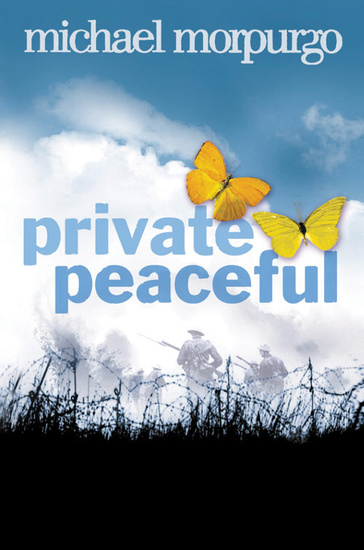
Michael Morpurgo: Private Peaceful (2003) Literature and War Readalong May 2014

Private Peaceful

British author Michael Morpurgo is one of the most appreciated writers for Children. He was the UK Children’s Laureate from 2003 to 2005 and Writer in Residence at the Savoy Hotel in 2007. He won many prizes for his fiction.

Tommo Peaceful is the narrator of Private Peaceful. He begins his story at five past ten in the evening, after everyone else has left him. He awaits the next day with anxiety but he doesn’t want any company or distraction. He wants to spend the night thinking about his life. The chapters are all given a specific time and each intro to the chapter describes briefly Tommo’s surroundings and his state of mind. After the intro Tommo tells us in flashbacks his story, from the idyllic childhood in the English countryside to the trenches of WWI.

Tommo is one of three boys. At the age of nine his father dies in an accident and Tommo feels responsible for his death. Although he and his older brother Charlie are very close, he never mentions what happened in the woods, the day their father dies. They have an older brother Big Joe who had Meningitis as a child. He can’t go to school and is easily agitated but they are still very fond of him.

Their father’s death marks a transition from a carefree life to a life of some hardship. They are at the mercy of the Colonel in whose cottage they live. The cottage is tied to a function and after the death of the father, who was the forester, they would have to leave. The Colonel’s estate is big and many people and families work for him and so Tommo’s mother is offered a position at the big house, and they can stay in the cottage.

The years go by and there is happiness and heartache in equal measures. When WWI breaks out, they don’t think they are affected. Tommo is only 16 and Charlie, who is two years older, doesn’t think of volunteering but in the end they are forced. Although Tommo is too young, he doesn’t want to abandon Charlie and pretends he’s older. Finally they are shipped to France together. From there they move on to Belgium and stay near Ypres for the following months.

They don’t see any action at first but eventually they come under heavy fire. From then on we get an impression of everything that was typical or important during WWI: trench warfare, mustard gas, rats, rain, mud, high numbers of casualties among men and horses, arbitrariness of orders, sadism of the high command, absurdity of it all . . . While it’s usually key to show but not tell, Morpurgo often tells but doesn’t show. He stays away from graphic descriptions or anything that you could call gruesome. We still get the horror because we see how it affects Tommo. Most of the time, we just don’t get to see what he sees. I think that’s a great way to go in a Children’s book.

What works particularly well in the book is the contrast between the childhood and teenage years and the war scenes. Morpurgo takes a lot of time to introduce us to his characters and to make us care for them. While some of the secondary characters are a bit stereotypical, the main characters Charlie and Tommo are well-developed. Their relationship is very close and they would give everything for each other.

As I wrote in the introduction to this month, I was particularly interested to see how a Children’s author would handle a WWI book from the point of view of a soldier. I think Michael Morpurgo did an admirable job. I’m sure, children will get a good impression for the particularities of WWI. And they will care for the characters and feel deeply about the end. For an adult reader who has read some very similar books for adults – Strange Meeting and How Many Miles to Babylon come to mind – it was not exactly a huge revelation, but in spite of that, I found the twist at the end harrowing.

Other reviews

Danielle (A Work in Progress)

 Judith (Reader in the Wilderness)

*******

Private Peaceful is the fifth book in the Literature and War Readalong 2014. The next book is the WWI novel Fear – La Peur by Gabriel Chevallier. Discussion starts on Friday 27 June, 2014. Further information on the Literature and War Readalong 2014, including the book blurbs can be found here.

Deirdre Madden: Molly Fox’s Birthday (2008)

Molly Fox's Birthday

It’s been a while since I’ve read a book by a new-to-me author and felt like reading everything she’s ever written. I have Guy to thank for the discovery of Irish writer Deirdre Madden. When he reviewed her novel Time Present and Time Past (here’s the link) I knew right away this would be a book I’d love to read. When I looked at her other novels Molly Fox’s Birthday tempted me even more.

Molly Fox’s Birthday is set in Dublin and tells about one day in the life of the narrator, a playwright and best friend of Molly Fox. Molly is a much-admired, famous theatre actress. She’s spending some time away from Ireland and she and her friend swap apartments. While the narrator stays in Dublin, Molly will be staying at her apartment in London.

The narrator has just started a new play and tries to overcome a severe case of writers’ block. Instead of writing, she spends the day thinking back on her life and her friendship with Molly and their mutual best friend Andrew. One little thing leads to another, one thought leads to the next. While not a lot happens during that day – the narrator goes shopping, Andrew drops in, a stranger rings the doorbell – we see the richness of a complex life unfold. A life that is as much rooted in Irish history as in the love for theater and acting. The different elements all lead to an in-depth exploration of many other themes: religion, friendship, family, acting, reality, dreams, authenticity.

I liked how she shows the world of the theater from different sides. The side of the playwright, the side of the actor, the view from a fan, and how she draws parallels. Her own brother is a priest and a lot of what he’s doing, when preaching, is acting as well. One strand of thoughts circles around how much any person acts and how much someone can ever know an actor. Until the end of the book, Molly stays an enigma. Just like she hates celebrating her birthday, she hates talking about her feelings and withdraws into her acting if someone comes too close. This doesn’t mean Molly doesn’t reveal herself. Her apartment which is carefully decorated allows a glimpse into her soul.

While the narrator thinks about this, we realize that one of the reasons why Molly, Andrew and the narrator are such close friends, is that they share this reservation. As rich and detailed as their inner lives are, they are not very explicit people and are interested in what is left unsaid, maybe more than in what is said. In the end, when someone like Molly decides to talk – it can always be to reveal something or to hide even more. She may always play a role. But that’s true of many people, only actors are much better at selling the idea of themselves they want others to buy.

It’s hard to do a book like this justice because it’s so complex and multi-layered. And because I loved it so much.

A few quotes may help to give you a better impression.

There are forms of communication that drive people apart, that do nothing other than confirm distance. But there are also instances when no connection seems to be made and yet something profound takes place, and this was just such a moment.

My hunger for the stage at that time was intense in a way I now find somewhat alarming. I watched plays with the kind of voracity with which small children read books; with the same visceral passion, the same complete trust in the imagination which is so difficult to sustain throughout the course of one’s whole life.

Here is one of Molly’s fans telling the narrator why the theater and someone like Molly who brings so much authenticity to the stage is important in her life.

You’re locked into this iron routine, cooking and shopping and cleaning, saying things to people and them saying things back to you, and none of it meaning anything, all of it pointless. Maybe it has to do with getting older, I don’t know, I feel like I’m sleepwalking through the years, but I want to wake up. Reality, you know? Why is it so hard to find? And why do so many people not seem to notice this? Why don’t hey care? Yes, I did go to see The Duchess, and all of this was very much on my mind that particular evening. I was worn down with it all, I felt stultified. And then the play – well, Molly Fox in particular, she was electrifying. All that dullness, that unreality I’m talking about, she blew a whole through it with language, with that voice of hers; i wa like an explosion going of in your soul.

Of course, since this book is the story of one day, set in Dublin, and one of the main protagonists is called Molly, we are reminded of Ulysses. I didn’t try to dig deeper, but the connection seems pretty obvious.

Molly Fox’s Birthday is a wonderful celebration of the interior life, art, theatre, friendship and it’s an exploration of how daily life, despite the struggles, doesn’t have to turn into something dull and devoid of authenticity. There’s always meaning, you just have to look for it.