Deborah Lawrenson’s The Lantern – Group Read Week III (Part 5)

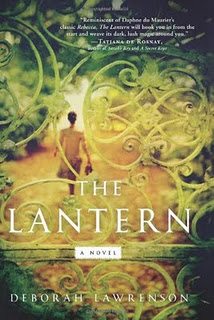
The Lantern by Deborah Lawrenson ebook

This is the last week of Carl’s R.I.P. VI group read of Deborah Lawrenson’s The Lantern. This week’s questions have been provided by Heather. Here is the link to the other posts.

Looking back on the novel, I would say this was a very mixed bag for me. I was really curious to read the end for many reasons. I wanted to know how it all tied up and I also thought that I could only say whether I really liked the book once I finished it.

Those who have not read the book at all, shouldn’t read the answers. They contain spoilers.

1. Now that it’s all said and done; what did you think of the book? Did you see the ending coming?

It was a mixed bag. I liked some parts a lot but after having finished I must say, I didn’t like the end at all. The story of the bones was too predictable, the missing girls a bit of a plump red herring and Rachel’s end was far from realistic.

2. What do you think of the characters? Lawrenson took us on a twisty little ride there, I had trouble deciding who was good and who wasn’t for a while there! What do you think of Dom? Of Sabine? Rachel?

I still think Dom was an insufferable character and what he says about Rachel’s death doesn’t even have to be true. Rachel was a troubled mind but we never really know why she became the way she is.

3. Pierre was such a conflicted character. In the end, do you think he killed Marthe and Annette, or did the fall to their deaths because of their blindness?

I’m pretty sure, he killed them. It goes well will all the other cruelties he committed.

4. The book is being compared to Rebecca and Daphne du Maurier’s writing. Do you think the book lives up to that description?

I didn’t see Rebecca in it at all. It’s decidedly not in the same league.

5. Did you have any problems with the book? Narration? Plot? The back and forth between two different characters and times?

I had a huge problem with the police procedurals and the cancer story. They just didn’t sound realistic. This book overflows with descriptions and details but all we get is the word “cancer”. That’s too easy. To feel at least a little bit realistic, we should have heard what type of cancer. Colon cancer, pancreatic cancer, non-small cell lung cancer, leukemia, glioblastoma… What did she have? I think you get the drift. If you can’t call a tree a tree but tell your readers it’s a fig, it’s a pine, it’s a …. then you should be a bit more explicit than that when it comes to an illness like cancer, especially when the person dies of it. This was not believable for me and spoilt the ending of the book.

6. Do you think Lawrenson tied both stories together well in the end? Is there anything she could/should have done differently?

The best part is Bénédicte’s story. I like that ending very well but, as said before the solution to the “serial killer” and Rachel’s end felt wrong, like a cheap trick.

7. One problem I had with the novel is the reliability of the narrators. Do you think any of them were telling the truth? Which ones?

I think Bénédicte and Eve are probably the only truthful ones. Dom’s story could be true or not.

Jenny Erpenbeck, Clemens Meyer and Berlin City-Lit Giveaway -The Winners

It’s finally Sunday again and here are our three lucky winners drawn by random.org list generator.

The winner of Clemens Meyer’s short story collection All the Lights, courtesy of And Other Stories, is

Rise from in in lieu of a field guide

Jenny Erpenbeck’s Visitation which we give away courtesy of Portobello Books has been won by

neer from A Hot Cup of Pleasure 

City-Lit Berlin, a contribution from Oxygen Books goes to

John (I think your site isn’t up and running yet?)

Happy reading, Rise, neer and John!

Please send me your contact details via beautyisasleepingcat at gmail dot com.

The giveaways are part of Lizzy and my German Literature Month in November.

The next giveaway will take place on Wednesday 26 October.

Btw. Those who won can participate again. 🙂

Wednesdays are wunderbar – Jenny Erpenbeck, Clemens Meyer and Berlin City-Lit Giveaway

Today we have a double giveaway. One on Lizzy‘s blog (that will be posted around 18.00 UK time) and the other one here. The giveaways are part of our German Literature Month in November.

Lizzy is giving away Pereine titles  (Next World Novella, Portrait of The Mother as A Young Woman and Maybe This Time) and two copies of Berlin City-Lit (see below). Her giveaway is UK only.

I’m very happy to be able to offer you three great book choices.

The first is Clemens Meyer’s short story collection All the Lights, courtesy of And Other Stories. Meyer started as a very young author and since he has entered the literary scene he has received a lot of praise.

Fifteen stories, laconic yet full of longing, from the young star of German fiction.’ GQ ‘The best crafted, toughest and most heart-rending stories in Germany.’ Spiegel ‘Respect to him. He’s the real deal.”

A man bets all he has on a horserace to pay for an expensive operation for his dog. A young refugee wants to box her way straight off the boat to the top of the sport. Old friends talk all night after meeting up by chance. She imagines their future together…Stories about people who have lost out in life and in love, and about their hopes for one really big win, the chance to make something of their lives. In silent apartments, desolate warehouses, prisons and down by the river, Meyer strikes the tone of our harsh times, and finds the grace notes, the bright lights shining in the dark.

The second book is Jenny Erpenbeck’s Visitation which we give away courtesy of Portobello Books. I’m sure you have seen the one or the other review of this book. It was a huge success in Germany and is now equally appreciated everywhere else.

`This haunting novel beautifully dramatises how ordinary lives are affected by history’

By the side of a lake in Brandenburg, a young architect builds the house of his dreams – a summerhouse with wrought-iron balconies, stained-glass windows the color of jewels, and a bedroom with a hidden closet, all set within a beautiful garden. But the land on which he builds has a dark history of violence that began with the drowning of a young woman in the grip of madness and that grows darker still over the course of the century: the Jewish neighbors disappear one by one; the Red Army requisitions the house, burning the furniture and trampling the garden; a young East German attempts to swim his way to freedom in the West; a couple return from brutal exile in Siberia and leave the house to their granddaughter, who is forced to relinquish her claim upon it and sell to new owners intent upon demolition. Reaching far into the past, and recovering what was lost and what was buried, Jenny Erpenbeck tells an exquisitely crafted, stealthily chilling story of a house and its inhabitants, and a country and its ghosts.

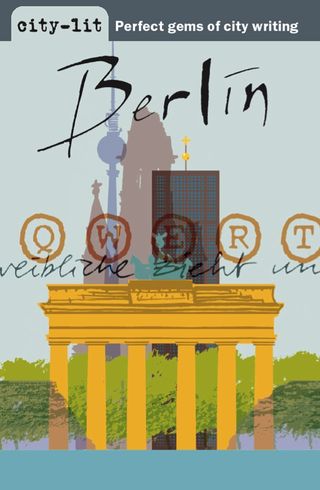
The third book is a contribution from Oxygen Books. You can win a copy of City-Lit Berlin. An anthology of stories set in Berlin. There are a lot of interesting authors included. Many German ones but also others.

If you would like to win one of those books, or enter for more than one, please let me know which ones you would like. Ideally you would read and review the book that you win.

Don’t forget to visit Lizzy’s Literary Life if you are located in the UK. She will post this evening (18.00 UK time).

The giveaway is open internationally, the books will be shipped by the editors. The winners will be announced on Sunday 23 October 20.00 – European – (Zürich) time.

Deborah Lawrenson’s The Lantern – Group Read Week II (Parts 3 and 4)

The Lantern by Deborah Lawrenson ebook

This is the second week of Carl’s R.I.P. VI group read of Deborah Lawrenson’s The Lantern. This week’s questions have been sent by Kailana. Here is the link to the other posts.

This week we read part 3 and 4 of the book. I’m still in two minds about the novel as a whole. There are passages I like and others I don’t but overall I enjoyed parts 3 and 4 much more than parts 1 and 2. They were more mysterious and creepier and I really wanted to know how the book ends that’s why I already finished it but I will not spoil it for those who haven’t read part 5 yet.

Those who have not read the book at all, shouldn’t read the answers. It wasn’t possible to avoid spoilers.

1. The title of this book is The Lantern, and a lantern makes an appearance in both of the stories. In Benedicte’s past, it had a meaning, but what do you think the lantern signifies in her future and in Eve’s story?

For me the lantern is one of the most creepy elements, together with the slender figure Eve sees several times at a distance but who disapears every time she gets closer. The discovery of the bones in the pool was quite creepy as well. At one point I thought it might be Dom who was carrying the lantern and trying to confuse and scare Eve.

2. Carl mentioned scents in last weeks questions, but they have been addressed even more in these sections. What significance do you think scents have in this story overall?

Scents are powerful triggers for memory. A scent can open up a door to a long forgotten past. That seems to be the function of the scents in the novel. For Bénédicte the scents and especially the perfume Lavande de Nuit are tied to Marthe, for Eve, I think, they will forever be her link to the first summer with Dom. And, finally, they capture the essence of the South of France, this very essence that Marthe tried to recreate with her perfume.

3. What do you think of the combining storyline of Marthe? She connects Benedicte, Eve, and Rachel. What do you think will be revealed about this connection in the next sections?

Marthe’s story is the one that fascinates me the most. The other characters in the story seem to feel the same. They are all equally fascinated by her. Her disappearance echoes Rachel’s story.

4. Now that things are beginning to move along, what do you think of the characters? Are any standing out for you? Do you particularly like any? Dislike any?

Of course I totally dislike Pierre. Dom is still without any interest to me. Eve is not very fascinating either but I’m interested in Bénédicte, Marthe and, more surprisingly in Rachel. I also start to feel pity for Rachel. I wonder if Dom ever really understood her. It seems she had issues but usually this type of issues does have an origin. Nobody becomes this obnoxious and dishonest without a reason.

5. What do you think really happened to Marthe and Annette? What do you think the significance of the bones in the pool are to the story? Especially now that it has been revealed that Rachel is also dead.

I was pretty sure they had been killed by Pierre but I didn’t see a connection with Rachel.

6. Do you have any other things you think are significant to talk about? Are there any other predictions to be made for the last two sections of the book?

I’d rather not answer this as I already finished the book.

7. Lastly, what do you think of this book overall? Other than for the read-along, why are you reading it? Is it meeting your expectations?

It’s different from what I expected. I thought I would like the story Eve – Dom – Rachel best but now I realize I’m far more interested in the triangle Marthe – Bénédicte – Pierre. During parts 3 and 4 it met my expectations. I didn’t mind the descriptions anymore and, as I said before, I really wanted to find out the ending and rushed right through the final pages.

Deborah Lawrenson’s The Lantern – Group Read Week I (Parts 1 and 2)

The Lantern by Deborah Lawrenson ebook

This is the first week of Carl’s R.I.P. VI group read of Deborah Lawrenson’s The Lantern. This week’s questions have been sent by Carl. Here is the link to his post. We have been reading part one and two of the book. It’s safe to read the answers below as they do not contain spoilers. It’s too early in the book. But some of the answers can give you a good impression of whether you want to read the book or not.

The blurb calls The Lantern a novel in the vein of Rebecca. Eve, a young woman, falls in love with a complete stranger. When he asks her to come and live with her in an old beautiful house in the South of France, she abandons her life in London and follows him. The house and its surroundings are enchanting and so seems their life at first. But when Eve begins to ask questions about Dom’s first wife and discovers strange things in the old house, it all starts to change.

1.  This may seem like an obvious opening question, but what do you think of The Lantern thus far?

I am in two minds about it. There are passages that I like for their detailed descriptions and others that I do not like for the exact same reason. Sometimes water is just water. But in The Lantern you will always find a fancy description. Blue-green icy sea water. They do not eat fruit, they eat mulberries and figs and cantaloupes and probably they will taste spicy, caramel-sweet and refreshingly juicy. There is no noun that isn’t accompanied by an adjective. I find this tiring at times. I feel as if I had entered a stuffy old boudoir with too much furniture and knickknacks in it. But then again, at other times, she captures the scents, the aromas, the colors, the light and the flora of the South of France so well, that I enjoy it.

The story is interesting so far and I’m curious to find out what is going to happen next but I’m not overly keen on the characters.

2. The book appears to be following the experiences of two different women, alternating back and forth between their stories.  Are you more fond of our main protagonist’s story or of Benedicte’s or are you enjoying them both equally?

They are both interesting and I want to find out, why the book skips back and forth. One moment we are in the past with Bénédicte, then we are back with Eve. Bénédicte is the more interesting of the two because she is more mysterious. I also think that the parts that are dedicated to her are less fraught with details.

3.  The Lantern is a book filled with descriptions of scents.  How are you liking (or disliking) that aspect of the book?  How do you feel about the lavish description of scents? How are the short chapters working for you?

I like the short chapters. I also enjoy the descriptions of scent but all in all, as I said in my first answer, I think it is overdone. There is too much of it. It has an appeal but at the same time it’s overpowering. The strength of the novel is at the same time its weakness.

4.  How would you describe the atmosphere of Parts 1 and 2 of The Lantern?

Part 1 seemed almost playful, a few hints that things may not be as they seem, but there is a lot of hope, a joyous atmosphere. In part 2 there are more and more strange things going on, there are omens and signs and much more chapters focus on the past.

5.  Has anything surprised you to this point?  Anything stand out?

I’m surprised by the descriptions, how appealing and artificial they are at the same time. I’m also surprised that the story goes back and forth in time and changes between the point of view of the two women.

6.  What are your feelings about Dom in these first two sections of the story?

I simply cannot stand the guy and have no clue why any woman would follow someone who makes a secret out of his past. I wouldn’t trust him at all.

Bonus question:  Did anyone else hear “Last night I dreamt I went to Manderley again” ringing in their ears through the first sections of the book

I read that it had a lot in common with Rebecca. Maybe the storyline is similar but the writing is so completely different that I didn’t really think of du Maurier’s book.


Wednesdays are wunderbar – Effi Briest Group Read Giveaway

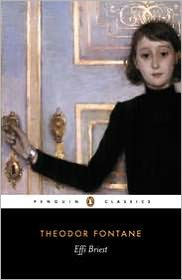
Today we are kicking off the Wednesdays are wunderbar series which will be dedicated to giveaways. As Effi Briest is one of our readalong titles this is the first book that is given away.

The actual giveaway takes place on Lizzy’s blog. So if you are interested in winning Effi Briest and taking part in the readalong, please head over via this link and leave a comment.

Don’t miss reading one of the most wonderful German novels. With a bit of luck, you get the book version for free but you could also download it. You will find the details and more information on the readalong on Lizzy’s page.

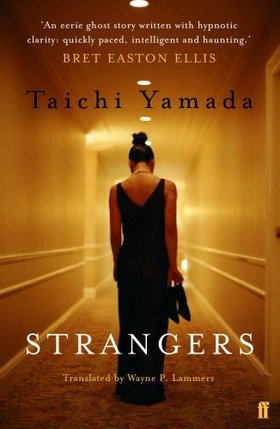
Taichi Yamada: Strangers – Ijin-tachi to no Natsu (1987)

A disconcerting, yet deeply satisfying novel: a wonderful study of grief and isolation, a moving expression of our longing for things we have lost and are unable to have again.

I’ve read about Strangers last year on Novroz’ blog (here is the review) and wanted to read it ever since. It’s a ghost story and as such a perfect choice for Carl’s R.I.P. challenge. But it is also so much more than just a ghost story. It’s a truly wonderful book with a haunting atmosphere, a melancholy depiction of solitude and loneliness with a surprisingly creepy ending.

I often think that the problem some people have with ghost stories is that they take them literally and if they do not believe in the possibility of an afterlife, they do not want to read them. But ghost stories can also be read as purely symbolical. Loneliness, longing and grief can affect a person deeply. Lonely children often start to talk with imaginary friends and also older people can start to talk to themselves which is actually rather a conversation with someone who is not present than a discussion with oneself.

I used to live in a huge apartment building for a while and remember that it could feel strange being awake at night when everyone else was obviously sleeping. All the lights were turned off, there were no noises. Coming home at night and seeing the building from afar, like a big ocean liner, with all the lights on, was also quite special.

Strangers starts in a building just like that. A huge apartment building on Tokyo’s noisy Route 8 where constant traffic keeps you awake and the density of the exhaust fumes forbids the opening of the windows. Most of the apartments are offices. Harada, a fortysomething TV script writer, has stranded here after his divorce. At first he can hardly sleep. The traffic noise is overpowering but after a few weeks he gets used to it. One night, despite the noise outside, he feels an intense loneliness. It seems as if he was the only person in this big building.  He finds out that there is only one other person, a woman, staying at the house at night. Everyone else leaves the place and lives somewhere else.

One night the woman, Kei, knocks on his door and wants to drink a bottle of champagne with Harada but he refuses. He regrets it and invites her a few days later. She is a beautiful woman but with a terrible burn mark where her breasts should be. While they start dating, Harada visits Asakusa, the downtown district in which he used to live with his parents. His parents died when he was very young. He never returned to the place but all of a sudden something attracts him magically. Many of the houses have been destroyed and replaced by modern ugly buildings. While walking around Harada meets a man who looks exactly like his dead father at the time of his death. He follows him to his house and there is his mother, she too is still young and looking exactly like she did before she died.

Harada knows that he shouldn’t return to see his parents but he cannot help himself. He has to go back again and again. His friends start to tell him that he is looking bad. Kei wants him to stop seeing them. He can’t and we understand why.

Something closely akin to the wonderful sense of security I’d felt at such times as a child had descended on me that night in Asakusa. I coul recall no such moments in all the years since my parents had died.

Yamada managed to write a ghost story that is at the same time an eerie tale and a realistic portrayal of loneliness, grief and the search for a meaning in life. Harada is at a turning point in his life. He has a hard time finding jobs, his wife got most of his money after the divorce, his son doesn’t want to see him, most women are not interested in a man like him. Falling in love with Kei seems not so much a choice as inevitable. They are both scarred in different ways. Meeting his dead parents is what infuses his days with meaning and warmth until he starts to pay a prize for it.

What did it amount to, anyway, this life I led? Busying myself with random tasks that popped up one after another, enjoying the moments of excitement each little sir brought before it receded into the distance, yet accumulating no lasting store of wisdom from any of it.

Strangers is an excellent ghost story and a melancholic depiction of the loneliness that living in a big city like Tokyo can bring. I really loved this book. I could hardly put it down and at the same time I didn’t want it to end.