Nicci French: Secret Smile (2004)

I really like Nicci French or I wouldn’t have picked the third book in such a short time. The last two I have read were the first two installments of the new series, Blue Monday and Tuesday’s Gone. Both were really good books. Unfortunately that’s not exactly the case here. Secret Smile has a lot of what I truly like about Nicci French but it’s painfully unbelievable. Still, call me weird, I liked it.

The story, if one doesn’t want to spoil the book, is told in a few sentences. Miranda has been dating Brendan for three weeks when she catches him reading her diary. She immediately ends the relationship. In a way she is relieved because he annoyed her. He was far too obtrusive and possessive. Brendan takes the break up very badly, still she manges to get rid of him. Or so she thinks. A few weeks later he is introduced to her as her sister’s new boyfriend. She is quite shocked and the idea to have to see him regularly really bothers her but on top of that Brendan pretends that he ended the relationship.

What follows is at first manipulation, then pure psychological terror. This premise as such isn’t unbelievable but what is unbelievable is the fact that Miranda doesn’t try to clarify right away who broke up with whom and when she does, nobody believes her anymore.

I always find it annoying when a whole plot relies on one person’s silence, a silence at that which isn’t realistic but has to be maintained in order to get the plot moving. If you can forgive this major flaw or if it is in character with you – let’s say you’re the type who always speaks up too late – then you might not find this unbelievable and would enjoy the book because I think there are a lot of really appealing elements in it. Nicci French is really good at creating atmosphere. The change of seasons is captured well and there are a lot of scenes in which Miranda is on her own and they are all nicely created. Plus she is an interesting character. She is independent, attractive, makes a living as a decorator, all things which work quite well.

Despite the fact that there are unrealistic elements, Secret Smile was a page turner and I really wanted to find out how it would end. Surprisingly the end is different from what I expected which was a pleasant surprise.

As you can see, a mixed bag, but still an enjoyable, quick read.

This is my first contribution to Carl’s R.I.P. VII. Here are the links to the posts of the other participants.

How Gruesome Does A Realisic Account Have To Be? – On Jeanette Winterson’s The Daylight Gate (2012)

A visit to a book shop on Friday evening led me to Jeannette Winterson’s latest book The Daylight Gate. It was in the fantasy section and from the description I gathered it was a book on the trial of the Lancashire Witches in 1612, the most famous of the English witch trials. Why this book was in the fantasy section wasn’t entirely clear to me as witch trials are a historical fact and hardly fantastic. Maybe it was because of the way it was written?

I’ve always been interested in the topic of the trials of witches. Interested and horrified. And I often pick up novels on the subject. In the past I’ve read Eveline Hasler’s amazing but untranslated Anna Göldin. Letzte Hexe (Anna Göldin. Last Witch) on the last witch trial in Switzerland, in 1782. The way the book was told is amazing because it reads like an old trial report. It’s sober and very impersonal which created an eerie feeling of realism. Maryse Condé chose an entirely different approach for her I, Tituba, Black Witch of Salem – Moi Tituba, sorcière noire de Salem. That’s a novel I didn’t only find fascinating but really loved. It’s tragic but beautiful as well. A third novel which many people like but I found dry and unappealing was Erika Mailman’s The Witch’s Trinity.

I was keen to find out how Jeanette Winterson would treat this subject. It seems that content-wise The Daylight Gate is very close to Robert Neill’s Mist Over Pendle. Pendle Hill in Lancashire was said to be the home of witches. While there may be a similarity content-wise, there certainly is none in the execution.

Maybe the fact that it was in the fantasy section misled me. While I didn’t expect a fantasy novel as such, I most certainly wasn’t prepared for something this gruesome. This was by far the most gruesome book I’ve ever read. It’s really not for the faint of heart and it literally made me sick. For someone who is used to read accounts on war this is an intense reaction and it really made me wonder if the book had to be this gruesome to be realistic? Witches are frequent figures in fantasy novels and fairy tales. They can be black or white but some romantic ideas may often be tied to them. Maybe Jeanette Winterson wanted to prevent any idealization or romantic notions. While there are a few instances of magic in the novel – mostly linked to the figures of John Dee and Edward Kelley – the focus is on fanaticism. There is nothing romantic in women and men being persecuted by zealots. Women and Catholics alike were hunted by King James’ henchmen. King James, a fervent  and fanatic protestant, who believed he was attacked by witches, hunted and executed numerous men and women. And had them tortured. And this is the gruesome part, as the torture scenes are described in great detail.

Not only are we served detailed descriptions of torture but of incest and rape as well. Children are sold to their own father. Many a poor woman’s only chance at survival is to sell her body. Often they received not only food but many negative things in exchange. They got pregnant or contracted a disease. The scenes in the dungeons are hard to take as well. The dirt, the festering and oozing wounds, the stink…

To call the world of The Daylight Gate bleak would be an understatement. This is a dark, very dark and disturbing book. Finishing it felt like coming up for air after having been under water and deprived of oxygen.

Was there anything to like in this book?  Yes, I liked the story of Alice Nutter, a rich woman who acquired her fortune through the invention of a magenta dye. An independent and strong woman. Beautiful and free. She was convicted together with 12 other women and men. She seems to serve as proof that it wasn’t about witchcraft but that at the core of those trials was hatred. Hatred against poor people and women.

While I see why Jeannette Winterson chose this approach, I’m not sure it had to be this gruesome. A little less show but tell would have been my preference here. If we had read “He was emasculated” would we not have gotten the picture? Did we need to read how it was done in a page long, detailed description? We get a full blow. No room for romantic notions here, fanaticism and ugliness are laid bare.

To be honest, I could have done without reading this. As well written as it was, as much as I was fascinated by the story of Alice Nutter, I cannot understand how a writer can let loose such utter ugliness. If you know and like Jeanette Winterson, just bear in mind, this might be her most disturbing work.

What do you think? How gruesome should a realistic account of torture and pain be?

Mary Lawson: The Other Side of the Bridge (2006)

At the end of my introductory post to the Canadian Book Challenge I asked for recommendations and pburt mentioned how much she liked Mary Lawson’s books. That’s how I decided to read The Other Side of the Bridge.

We cannot experience everything in our life. Especially not the past, nor a way of life which is very different from our own. Luckily one of the many functions of literature is to help us experience other times and places. Reading this novel makes it possible to travel back in time, to a place and a way of life long gone; rural Ontario between 1930 to 196o, a harsh inhospitable place which drives strangers and young people away.

The novel tells two parallel but linked stories and moves back and forth in time. It starts in the 30s with the story of the brothers Arthur and Jake. Arthur is the reliable one. Stocky and solid. He wants to become a farmer just like his father. Jake who is much younger, is the good-looking one, the favourite of his mother. But Jake is also inherently mean. A manipulative bully with a sadistic streak which he manages to hide behind his good looks and alleged charm. Only Arthur seems to know about his brothers true nature. One day, on a bridge, fate strikes and sets in motion a tragedy which cannot be stopped anymore.

The second story line starts in the 50s and is told from the point of view of young Ian, the son of the local doctor. Because he is secretly in love with Laura, Arthur’s beautiful wife, he offers to help Arthur every Sunday on the farm.

The blurb states that the novel bears a resemblance to 19th century novels of provincial life. That’s not a bad comparison. But more than that it also reminded me of Greek myths in which you can see the doomed heroes move towards their destruction. The worst thing in the myth of Oedipus for example isn’t so much that he sleeps with his mother and kills his father – although that is certainly very bad – but that his father thought he could prevent this tragedy which had been predicted and through this very attempt at preventing it, he finally provokes it. While The Other Side of the Bride is no story of incest, it has a similar dynamic as Oedipus’ story. There will be a tragedy. We know it.  And no matter how much the people try to prevent it, it will happen anyway. But other than in greek myths, and that’s where Mary Lawson meets Ian McEwan, there is atonement too.

Everything that I said so far has more to do with the plot. The story tells a tragedy and how it happens but that is just one layer of the book and not even the one I liked best as I found it a bit too predictable. What I really liked about this book is the writing which is amazingly beautiful and contains many passages like this one:

It was September, the worst time of the year as far as Arthur was concerned – endless months of school ahead, cooped up in one stuffy schoolroom at a too-small desk, while outside the maple flamed red and gold and the air was clear and pure as spring water. Inside was the leaden boredom, outside was the sharp tang of wood smoke and the urgency of shortening days. You could smell the winter coming. You could see it in the transparency of the light and hear it in the harsh warning cries of the geese as they passed overhead. Most of all you could feel it. During the day the sun was still hot but as soon as it dipped down behind the trees the warmth dropped out of the air like a stone.

Somewhat later in the book there is this passage in which Ian and his friend Peter sit together

They sat on in silence, or almost silence; if you listened closely you could just hear a faint thrumming from thousands of wings. Beyond the dragonflies the sun was sinking slowly, casting its rays across the lake, and on the other side, everything, as far as the eye could see, was slowly dissolving into the haze.

Ian thought, If I love to be a hundred years old, I always remember this.

Apart from the central story of a tragedy, The Other Side of the Bridge is an excellent depiction of the Canadian home front during WWII. It shows the way Canada was affected by huge losses, how most of the young men didn’t return and many of those who did were maimed for life. The book would have been a worthy candidate for my readalong.

Through Ian’s story it is also a coming-of age tale and a look at the life of a country doctor in an isolated place like rural Ontario where the winters are so incredibly harsh that most foreigners and many natives flee the place.

I must admit I didn’t connect with the characters and their stories, I didn’t feel I could identify with any of them, but I’m glad I discovered Mary Lawson. Her writing is beautiful and the way the people and the place come to life is astonishing. They emerge from the pages and seem to be walking around before your very eyes. The way she writes about Canada is very nostalgic and at times I was wondering if the writing wasn’t to a large extent fuelled by homesickness as she seems to be living in England by now. I any case I want to read her first novel Crow Lake soon.

This review is my first contribution to the Canadian Book Challenge 6

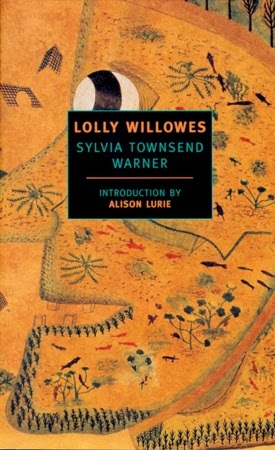
Sylvia Townsend Warner: Lolly Willowes (1926)

Lolly Willowes is a twenty-eight-year-old spinster when her adored father dies, leaving her dependent upon her brothers and their wives. After twenty years of self-effacement as a maiden aunt, she decides to break free and moves to a small Bedfordshire village. Here, happy and unfettered, she enjoys her new existence nagged only by the sense of a secret she has yet to discover. Finally that secret will set Lolly Willowes free.

Danielle (A Work in Progress) has an interesting series called Lost in the Stacks in which she introduces us to authors who have been forgotten or are not read much anymore. One of these authors was Sylvia Townsend Warner as you can read here: Lost in the Stacks – Sylvia Townsend Warner. Danielle mentioned that some of her novels are re-issued by NYRB or Virago and one of the titles Lolly Willowes looked especially interesting. And what a find it was. Not only does the novel tell the story of a unique and independent character but it is a lovely and very feminist book.

Until not too long ago the spinster was a character which could frequently be found in novels. I’ve read more than one novel containing either a spinster or which was about a spinster. They were mostly tragic and often infuriating. The way society treated these unmarried women who were clearly seen as a failure was not only condescending but very often exploitive. As Sarah Waters says in her excellent introduction to the Virago edition of Lolly Willowes, we can see the book to some extent as a re-write of older “spinster novels” like W.B. Maxwell’s The Spinster of this Parish (1922) and F.M. Mayor’s The Rector’s Daughter (1924). As the title of Townsend Warner’s book indicates, the topic has undergone a great change in her novel. The spinster has a name, she is no longer a helpless, independent appendage. Apart from being one woman’s story, the book contains also a subtle reflection on the times, just before and after WWI. The role of the spinster changed considerably after WWI. With so many young men gone, these unmarried elderly women were now seen even more as a useless burden.

Laura, called Lolly, Willowes lives with her father until the age of 28. When he dies her family assumes she will be better off living with her married brother and his family in London instead of staying in the country on her own. The loss of her father is a great tragedy for Lolly. She who lost her mother at an early age, loved living with her father and being relatively independent. She  was never interested in men or getting married. A quiet, introspective life, dedicated to her hobbies, botany and brewery, was all she ever wished for.

She disliked going out, she seldom attended any but those formal parties at which the attendance of Miss Willowes of Lady Place was an obligatory civility; and she found there little reason for animation. Being without coquetry she did not feel herself bound to feign a degree of entertainment which she had not experienced, and the same deficiency made her insensible to the duty of every marriageable young woman to be charming, whether her charm be directed towards one special object or, in default of that, universally distributed through a disinterested love of humanity.

Still she doesn’t make a fuss and follows her brother and his wife and stays with them for several decades. She doesn’t like it there, her sister-in-law is too well-organized, too strict, in other words too boring. She relies completely on her husband, never contradicts him and never seems to spend time on her own. In these surroundings Lolly undergoes a transformation which starts to alarm her more and more over the years.

Or rather, she had become two persons, each different. One was Aunt Lolly, a middle-aging lady, light-footed upon stairs, and indispensable for christmas Eve and birthday preparations. The other was Miss Willowes , ‘my sister-in-law Miss Willowes’, whom Caroline would introduce, and abandon to a feeling of being neither light-footed nor indispensable.

Before WWI breaks out, the Willowes spend all their summer months in the country. Lolly loves these stays and the memory of the beauty of the country side and her reception for everything related to the senses – scents, colors, aromas – open a door in her soul and offer an escape route. She often sits in front of the fire in London and dreams of being in the country on her own. This character trait gives the author the opportunity to include beautiful and evocative descriptions like this one.

At certain seasons a fresh resinous smell would haunt the house like some rustic spirit. It was Mrs Bonnet making the traditional beeswax polish that alone could be trusted to give the proper lustre to the elegantly bulging fronts of tallboys and cabinets. The grey days of early February were tinged with tropical odours by great-great aunt Salome’s recipe for marmalade; and on the afternoon of Good Friday, if it were fine, the stuffed foxes and otters were taken out of their cases, brushed and set to sweeten on the lawn.

After WWI, the society has undergone serious changes. Lolly feels restless. The children of her brother do not really need her anymore and she wants to leave. Finally she wants what her heart has been desiring since years; live in the country on her own. Her relatives are shocked. Her brother has to confess that he has lost a lot of her money due to reckless investments and she cannot afford the house she wanted. Nevertheless, nothing can hold Lolly back, she leaves anyway.

The second half of the novel is dedicated to Lolly’s life in the country. The village she has picked is very mysterious and slowly Lolly undergoes a transformation and becomes a witch. It may sound as if we were entering the realm of the fantastic here and to some extent we do, but the Satan we meet in this book, has more in common with Bulgakov’s Satan than with some fantasy figure.

I’m glad I discovered this wonderful novel. It has freshness and vivacity, is clever and witty and the descriptions are detailed and atmospheric, the portraits of the society and the people are true to life and Lolly is a very endearing character, an illustration of the importance of “a room of one’s own” and the right of women to live an independent life, even outside of society and without a man. It’s certainly one of the rare novels in which a being considered to be a useless burden on society shows that she doesn’t need society in order to live a truly happy and  fulfilled life.

Have you read this or any other of Sylvia Townsend Warner’s novels?

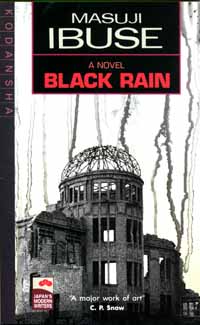
Masuji Ibuse: Black Rain – Kuroi Ame (1969) Literature and War Readalong July 2012

Reading Masuji Ibuse’s Black Rain was an intense experience. Beautiful and horrifying. In all honesty though I have to say the horror prevailed and I have to contradict those who say it’s not depressing. For sure, Ibuse isn’t a manipulative writer, he doesn’t strive for emotional reactions in his readers, but still, I couldn’t help being affected by what I read as no amount of toning down – something Ibuse has been accused of – can minimize the atrocity of what people had to endure on August 6 1945, in Hiroshima and the days and months that followed the bombing.

I think one hast to call Black Rain a documentary style novel. In order to write the book Ibuse has used real diaries and notes of victims and incorporated them in his book. Additionally the descriptions are so detailed and often matter-of-fact that the book reads in parts like a non-fiction account.

The main story is the story of Shigematsu Shizuma’s niece Yasuko. She would like to get married but a marriage is endangered as there are rumours that she got in the Black Rain after the bombing of Hiroshima and suffers of radiation sickness. Shigematsu himself is afflicted by a mild form of radiation sickness which he tries to fight by eating as healthily as possible and with mild exercise and a lot of rest. At the beginning of the novel which starts a few months after the bombing, Yasuko shows no signs of sickness at all. In order to help his niece and to prove that she didn’t get in the Black Rain and is not ill, Shigematsu starts transcribing his niece’s and his own diary covering the days before and after the bombing. The diaries are meticulous and incredibly detailed accounts of those days. The novel moves back and forth between the diary entries of August 5 – 15 and the present in which the entries are copied.

I have seen pictures of Hiroshima and read a few things but never anything like this book which was absolutely overwhelming in its details and the way it captured human suffering. The descriptions always move back and forth between individual and collective experiences. There were descriptions of people who had only mild burns and some whose whole body was an open wound. Some died in agony, some in grotesque positions. There were descriptions which showed how some people afflicted by radiation sickness a few days or weeks later died suddenly while others agonized for months. Towards the end there is a real account of a doctor who served in the infantry and was almost directly under the bomb when it exploded. It was unbearable to read about the suffering he went through.

I was surprised to see what an important element food is in the book. We read detailed accounts of what food was available during the war, how it was prepared and how they had to substitute a lot. Food is also one of the major elements in a successful treatment of radiation sickness. It was fascinating and sad to read.

What shocked me more than anything else, more than the descriptions of the wounded humans and animals and the ensuing total chaos, was the utter helplessness which was expressed in the way how they spoke about the bomb. They had no clue what had happened. They knew it was something unheard of,  never used before, but they didn’t know anything specific. What were the effects? Were burns the only thing or would there be more to come later? How did you treat radiation sickness? Days later they find out what had hit them.

“The name of the bomb had already undergone a number of changes, from the initial “new weapon” through “new-type bomb” to “special high-capacity bomb.” That day I learned for he first time to call it an “atomic bomb”.

The confusion and helplessness of the people is terribly sad. Even more when you read how they started to realize that even people who were not in Hiroshima on August 6, but part of rescue teams who came later, all died. This meant that each and every person who had been in Hiroshima on the 6th or came later would have to wait, sometimes for months, to be sure they were not affected by radiation.

After having read all this you will probably wonder why I called this book “beautiful”. I thought it was beautiful because the way Ibuse describes the Japanese culture, Japanese sensibilities, the descriptions of the food, the habits, some customs and many details of things we are not familiar with is full of beautiful moments like this description of Shigematsu’s childhood.

As a boy, Shigematsu had seldom come to the flat rock to play, but he had often been to play under the ginkgo tree at Kotaro’s place. When the frosts came and the ginkgo tree began to shed its leaves, the roof of Kotaro’s house would be transformed into a yellow roof, smothered with dead leaves. Whenever a breeze sprang up, they would pour down from the eaves in a yellow waterfall, and when it eddied they would swirl up into the air – up and up to twice, three times the height of the roof – then descend in yellow whirlpools onto the road up the slope and onto the oak grove.

Of course the same culture which had such a lot of beauty was also trapped in a destructive system of total obedience which is mentioned more than once in the novel. It takes a masterful writer to be able to convey so much insight into a culture and render a tragedy the way he did it. While Black Rain was not an easy book to read and has to be absorbed in small doses, I think it’s an outstanding book.  Without ever accusing anything or anyone Ibuse shows drastically that in the case of Hiroshima the end didn’t justify the means.

Other reviews

Danielle (A Work in Progress)

Judith (Reader in the Wilderness)

Rise (in lieu of a field guide)

Older reviews

Mel U (The Reading Life)

Gary (The Parrish Lantern)

The review is my first contribution to Bellezza’s Japanese Literature Challenge 6.

*******

Black Rain was the seventh book in the Literature and War Readalong 2012. The next one will be Aaron Applefeld: The Story of a Life – Sippur chajim. Discussion starts on Friday August 31, 2012.

Ferdinand von Schirach: The Collini Case – Der Fall Collini (2011)

After having liked both short story collections Crime (here) and Guilt (here) by Ferdinand von Schirach it was only a matter of time until I’d get to his first novel The Collini CaseDer Fall Collini. It has been published in Germany end of last year and is due out in English in a few weeks.

Ferdinand von Schirach is one of Germany’s most prominent defence lawyer’s. And he is the grandson of Baldur von Schirach who was convicted of being a war criminal. Given this family history it’s not surprising his new book has a WWII theme. But it wouldn’t be a Ferdinand von Schirach book if it was only about a war crime.

It’s not easy to write a decent review about The Collini Case without giving away too much. Collini is a 6o-year-old Italian who has been living in Germany for a long time. One day – and this is not a spoiler as it happens on the first pages – he enters a hotel room pretending to be a journalist and brutally kills the 80-year-old business tycoon Hans Meyer. He then waits patiently until he is arrested.

Leinen is a young lawyer. The Collini case is his very first case. While there is no doubt that Collini has murdered Meyer, finding out why he did so is important as it can determine the sentence. Unfortunately Collini doesn’t want to speak. This makes it hard for the young lawyer and there are other adversities which make it even harder.

Von Schirach said in an interview that he doesn’t think of himself as a crime writer as the “who did it” doesn’t interest him at all. He wants to know why. And so it’s not surprising that the novel entirely focuses on the question why a spotless man like Collini committed a gruesome murder.

What fascinated me and most readers of von Schirachs’s stories was the fact that they were all based on true stories. Very naturally I was wondering the same here. Is it true? While it is obvious that the lawyer isn’t von Schirah in this case, the trial and the many amazing twists and turns are all based on a real case.

The case as such and how it is presented, the court room part, the look into the way Germany has dealt and still deals with its past are really interesting and I liked reading about it. Some of it left me speechless and was quite shocking. Some of it was very sad. Interestingly though that wasn’t the main appeal of this novel for me. I’ve read quite a few reviews and was surprised how much people wrote about the case and the trial only. What makes this an outstanding book in my eyes is another dimension. Without revealing too much I can say that one of the most important points of the book is the loss of memories. Imagine you find out that a person you like is not what you thought but that on the contrary has been hiding a dark and unpleasant secret. Wouldn’t that make you feel as if you’ve lost all your memories tied to that person? That’s I think one of the reasons why family secrets are so damaging. They can alter the perception of your past to such an extent that you will feel robbed of it.

Once more von Schirach has shown that he not only knows how to tell a story in crystal clear and very taut prose but that he can write interesting, thoughtful and thought-provoking books.

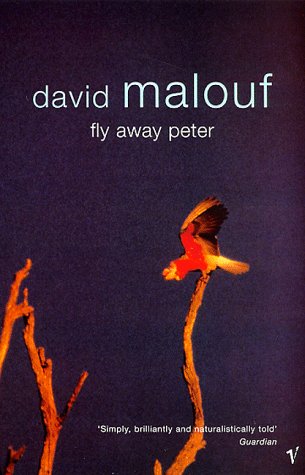
David Malouf: Fly Away Peter (1982)

There really are numerous ways to write about war. While some elements will always remain the same – especially when one of the novel’s themes are the trenches of WWII – accomplished authors, will still find a way to write something completely new. David Malouf’s Fly Away Peter is an excellent example for this.

Being an Australian writer Malouf writes about the war from the Australian perspective which works on two very different levels. One focuses on the land and nature, the other on the people. I have a feeling I would have overread a lot if I hadn’t seen so many Australian WWI movies and read Charlotte Wood’s stunningly beautiful The Submerge Catherdral (here).

It seems to be a trademark of a lot of Australian writing to emphasize the beauty and uniqueness of the flora and the fauna of the continent. Much of it must seem like paradise to the inhabitants and so it’s not surprising Malouf starts the book with the description of nature. Jim Saddler, a young Australian who has never been outside of the country, knows more than anyone about birds. He lies hidden in the marshes and watches them for hours. Ashley Crowther, another young man, but from a very different background, has returned from England where he went to university and come back to take care of his vast family estate. The marshes are part of it. When the two men meet, something almost miraculous happens. Without knowing Jim, Ashley senses the knowledge and the passion he has for birds and offers him a job. This is a dream come true for Jim, a man from a very modest background. The plan is to turn the marshes into a bird sanctuary and Jim will work there, observing, making lists.

While observing one of the rare birds, Jim meets Imogen, an English woman who arrived in Australia not long ago, and has decided to stay here. She is a photographer and earns a living with nature photography.

When the war breaks out none of the three characters thinks at frist it has a lot to do with Australia but in the end, the two men sign up. Of course Ashley will be an officer, while Jim becomes just a simple soldier.

Once in France, the tone and style of the book changes considerably. During the first half of the book, Malouf’s writing was poetic and the structure of the sentences unconventional but when he starts to describe the horror of the war, the writing, moves into the background and is more conventional.

Most of what is described from Jim’s point of view, we know from other WWI novels; the rats, the mud, the corpses, the gas. That is not new but what is new is how the earth is evoked which leads to comparisons. The rich earth of the Australian marshes produced so much beauty, here the earth swallows up everything, they all sink into it in the end.

One of my favourite war movies, Beneath Hill 60,  describes the contribution of Australian miners to WWI. Something the film directors chose to leave out, is mentioned in the book. While digging the tunnel systems beneath Hill 60 and arriving at the enemy lines, the miners discovered the skeleton of a  mammoth.

Jim is a witness of this discovery. It’s a key scene in the novel as it is an example of continuity.

It was a great wonder, and Jim stared along with the rest. A mammoth, thousands of years old. Thousands of years dead. It went back to the beginning, and was here, this giant beast that had fallen to his knees so long ago, among the recent dead, with the sharp little flints laid out beside it which were also a beginning. Looking at them made time seem meaningless. (….)

Continuity is a major theme of the book, continuity and opposites. The land and nature exist and will always exist. They are endless while humanity is not and the individual man even less so. Man creates opposites, the good and the bad, the ugly and the beautiful, the cowardly and the heroic, they all take place inside of the continuity.

The mammoth is a symbol for this and so are Imogen’s photos. At the end of the novel she thinks about how she met Jim. She captured a bird on a  photo while he captured it in his mind. The bird is long gone and so is the picture in Jim’s mind because Jim is gone, but it’s still here, as she remembers both and there is still the photo as well.

It’s hard to do justice to a book like Fly Away Peter in a short post. I hope I was able to convey the beauty and make you curious to find out for yourself. I couldn’t help but had to compare it to two other shorter WWI novels we read last year, Susan Hill’s Strange Meeting (here is the review) and How Many Miles to Babylon by Jennifer Johnston (here is the review). While the latter will always be my favourite, Fly Away Peter is excellent as well and adds another dimension. It contains a rich a meditation and philosophical exploration of WWI from an Australian perspective which is well worth reading.

Have you read David Malouf? Which is your favourite of his books?

The review is a contribution to the Aussie Author Challenge as well as to War Through the Generations.

If you’d like to read another review, Danielle hast posted about it here.