Literature and War Readalong December 30 2013: The Sorrow of War aka Thân phận của tình yêu by Bao Ninh

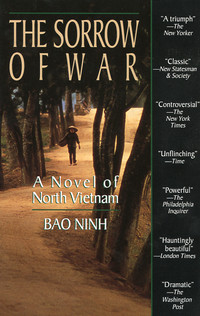
The Sorrow of War

We’ve all seen movies or read books on the war in Vietnam from an American perspective. Bao Ninh’s The Sorrow of War aka Thân phận của tình yêu is told from the other side. The author was a North Vietnamese soldier and the book is based on his experiences.  The majority of the books we’ve read this year were set far away from the frontline. With this last novel of this year’s readalong, we return to the territory of the soldier.

Here’s the blurb

Kien’s job is to search the Jungle of Screaming Souls for corpses. He knows the area well – this was where, in the dry season of 1969, his battalion was obliterated by American napalm and helicopter gunfire. Kien was one of only ten survivors. This book is his attempt to understand the eleven years of his life he gave to a senseless war.

And the first sentences

On the banks of the Ya Crong Poco, on the northern flank of the 3B battlefield in the Central Highlands, the Missing In Action body-collecting team awaits the dry season of 1976.

The mountains an jungles ae water-soaked and dull. Wet trees. Quiet jungles. All day and all night the water steams. A sea of greenish vapour over the jungle’s carpet of rotting leaves.

*******

The discussion starts on Monday, 3o December 2013.

Further information on the Literature and War Readalong 2013, including all the book blurbs, can be found here.

Lauren Kate: Teardrop (2013) Teardrop Trilogy I

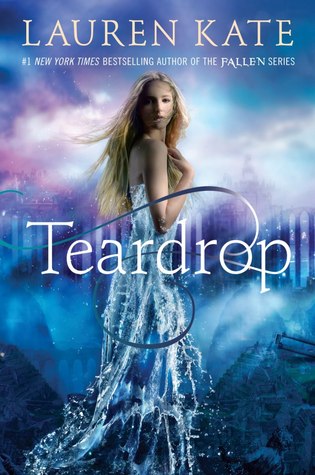
Teardrop

Seventeen-year-old Eureka won’t let anyone close enough to feel her pain. After her mother was killed in a freak accident, the things she used to love hold no meaning. She wants to escape, but one thing holds her back: Ander, the boy who is everywhere she goes, whose turquoise eyes are like the ocean. And then Eureka uncovers an ancient tale of romance and heartbreak, about a girl who cried an entire continent into the sea. Suddenly her mother’s death and Ander’s appearance seem connected, and her life takes on dark undercurrents that don’t make sense.

I’ve been interested in Lauren Kate’s Fallen series ever since I first heard about it but somehow never managed to read it. That’s why I was so pleased when I was sent a review copy of Teardrop, the first in her new YA series.

Eureka has lost her mother in an accident. A rogue wave washed over a bridge and threw the car into the ocean. Eureka who was in the car with her was miraculously saved. We know from the beginning who saved her but we don’t know why her mother had to die.

Eureka has a hard time coping. She even tries to take her own life. That her father’s second wife bullies her into going to therapy doesn’t help. Slowly Eureka loses interest in in everything and she’s angry that nobody understand that you can not just forget an accident and a loss like that.

Nobody seems able to reach Eureka, not her family, nor her friend Cat, or her best friend Brooks who changes in odd ways. But there is Ander. A guy who appears seemingly out of nowhere at every moment.

Her mother has left Eureka a strange book and a mysterious stone. She finds an old woman who is capable of translating the book which seems to date back to Atlantis.

As if Eureka’s life wasn’t difficult enough, Brooks disappears and she is followed and threatened by a group of people Ander seems to know. Questions upon question arise, the most confusing one: Why is Eureka not allowed to cry?

There were a few things I really liked about Teardrop. First of all the setting. The story is set in Louisiana, somewhere near New Iberia. I loved the descriptions, loved how Eureaka runs in the rain, the evocation of humidity and lush vegetation. I think I even liked the setting and the atmosphere far better than the characters or the story. Eureka is a girl I felt for. She is isolated in her grief and surrounded by people who have not the tiniest bit of empathy. I think that was captured well. The love story was a bit too superficial for me but maybe there will be more depth to it in later books. The story which circles around the myth of Atlantis is unique, unfortuntaley the foreshadowing that Lauren Kate uses takes away some of the surprise. The end is a cliffhanger and if book two was already out,  I’d pick it up. I really loved the setting, the importance and symbolism of water and I’m interested to see where this is going.

Thanks to Random House for the review copy

Helmut Krausser: The Great Bagarozy – Der grosse Bagarozy (1997)

the-great-bagarozy

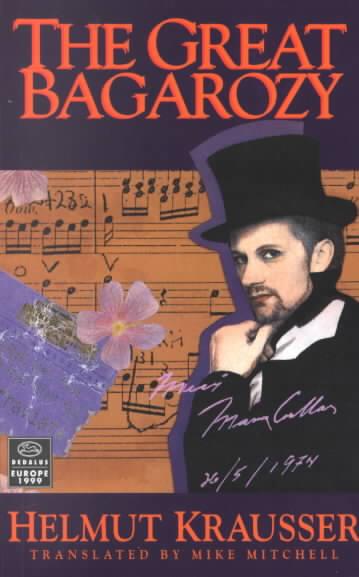
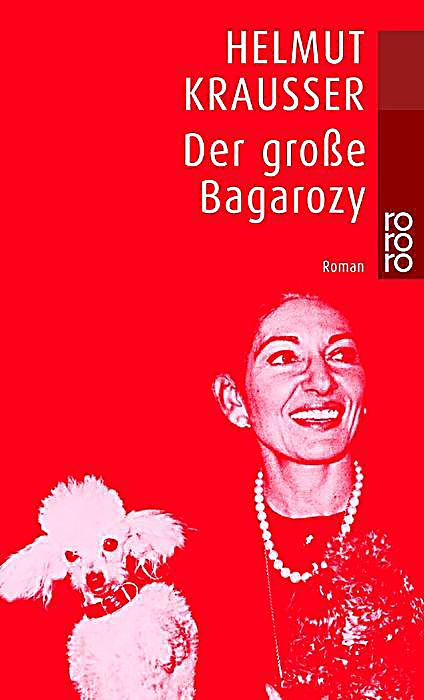
To enjoy this novel you don’t need to be a fan of Maria Callas but you should at least be interested in her life, as The Great Bagarozy – Der grosse Bagarozy is to a large extent an homage to the late Diva. (When you look at the German cover you’ll notice that they chose to make that fact obvious. Not so for the English cover.)

Cora Dulz is a psychiatrist. A very bored one and not exactly someone you’d call compassionate. She’s bored with her marriage to a cardiac tax consultant whose greatest interest is to collect morbid obituaries. There is nothing else in his life he’s this passionate about. Although some hints tell us that he likes to hire cleaning women who perform their tasks naked.

Cora is equally bored by her patients whose ailments make her either yawn or laugh. When two of them commit suicide, she fears for her practice. During this troubled time a new patient appears. Stanislaus Nagy, a man who is obsessed with Maria Callas and states to have known her very well. He pretends to be the devil himself and maintains that he has accompanied Maria during most of her life in the form of a black poodle.

Now this is a story that wakes up Cora. Not only is she interested in this new patient’s story, no, she also falls in love with him and fantasizes constantly about having sex with him. When he doesn’t turn up anymore she looks for him and ends up chasing him until she finds him on the stage of a music hall performing as The Great Bagarozy.

Kraussers novel deliberately blurs every line and confuses assumptions. Is Nagy ill? Or maybe Cora is far more obsessed than he is? Is he really the devil? Could that be?

Whether Nagy is just a devilish man playing tricks on a bored psychiatrist or whether he really is the devil is for you to find out. In any case, he pushes Cora to commit something quite horrible in the end.

I found this novel to be interesting, witty, funny, full of symbolism and extremely well-written. Krausser has a way with words, many of his sentences are worth quoting, and his descriptions are unusual like when he says the sky was the grey of poisoned doves. I’ve always been fascinated by Maria Callas. The woman and the legend and the fact that she’s actually not that good a singer but was considered, and still is considered, one of the greatest. Her life was tragic until the end. If you’re interested in her you’ll learn quite a lot about her life. I loved that Krausser chose to add the macabre obituaries Cora’s husband collects. It added a Six Feet Under feel to the story. He also chose to add many photos of Maria Callas, which add another layer. It’s interesting how her pictures seem to mirror her voice. She could be so beautiful on one photo, and look really rough on the next. When she was younger she managed to sing quite a pure soprano (especially in Tosca) but later on she was much more of a mezzo-soprano (as in Carmen), which, as far as I know, was her true voice type.

The Great Bagarozy is a funny, wicked, entertaining book and a great homage to Maria Callas.

The book has been made into a movie directed by Bernd Eichinger.

der-grosse-bagarozy-072101614

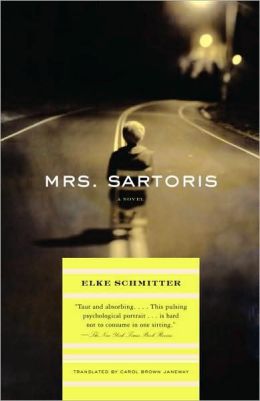
Elke Schmitter: Mrs Sartoris – Frau Sartoris (2000)

Mrs Sartoris

Part confessional, part thriller, Elke Schmitter’s explosive first novel is the story of Margaret. Jilted by a rich boyfriend when only eighteen, she finds herself many years later married, with a daughter, to Ernst, a war veteran with a penchant for routine and order. Living out her days in a small German village she is emotionally frozen, until one day she embarks on passionate affair with a married man. Planning to run away with him, she seems unaware that her plan is a fantasy that can never come true, and similarly unaware of the shocking repercussions that could result from chasing such a dream.

Why does someone commit a crime? Especially someone who isn’t really a criminal, but an ordinary person. Mrs Sartoris is an ordinary person, still, she kills someone. How that happened and who she killed is at the heart of this captivating and masterful novel.

Mrs Sartoris is a troubled woman. She drinks too much, is unhappy and once upon a time she spent a few months in a psychiatric hospital. She lives with her mother-in-law, her husband and her daughter in a small house. The only person in her life she’s truly attached to is her mother-in-law. She makes life bearable. There is no warmth between her and her husband and, as we will learn later, there are reasons for that.

The book opens with a cryptic short paragraph in which Mrs Sartoris, who tells the whole story, writes about an incident. What it is will be revealed very slowly. Small chapters on that incident change with chapters on her life. Her childhood and unhappy love story, her dreadfully boring and conventional married life, her affair with Michael.

Mrs Sartoris isn’t an entirely unreliable narrator but she’s highly deranged and depressed which clouds her judgement.

The story as such is interesting and suspenseful. And there is a twist at the end, which is very well done. But what makes this book truly masterful is the way it’s told. There are passages in the narration that I would call “litanies” in which Mrs Sartoris enumerates things. In one instance she talks about all the meaningless sentences she doesn’t want to say anymore. Reading them in rapid succession is eerie to say the least and makes the reader think how often one uses empty phrases just like that. How many meaningful conversations do we have day in and out? Another litany enumerates all the things Mrs Sartoris has never had in her life and this reveals so much bleak emptiness, it’s  chilling.

Mrs Sartoris has been compared to Mme Bovary. I don’t think I would have made the comparison if the blurb hadn’t told me to make it. Sure, there is an adultery, but other than that? Mrs Sartoris’ husband is as conventionally boring as Charles Bovary, Mrs Sartoris is lost in a dream world and her lover resembles Mme Bovary’s lover a tiny bit but that’s that. I would, if I had to, much rather compare it to Tim Parks’ Loving Roger.

Mrs Sartoris is the tightly woven story of a life, an analysis of a crime written in a chilling, and revealing style that will haunt readers for quite a while.

For another take on the novel here is Stu’s review.

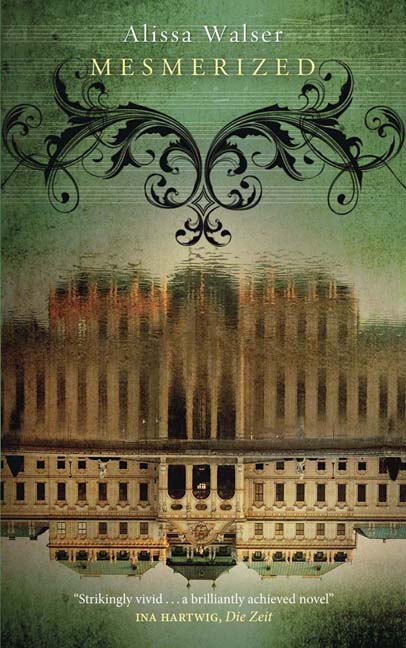
Alissa Walser: Mesmerized – Am Anfang war die Nacht Musik (2010)

untitled

I so wanted to love this book. I liked the premise, the first sentences were evocative and descriptive but then, a few pages later, I just couldn’t stand the style anymore. Admittedly, it’s artful but also quite lifeless and tedious. The whole book contains only indirect speech and a great majority of the sentences are only fragments. Very staccato and after a longer period of reading, very repetitive. I’ve read mostly positive reviews of this book on English blogs, but they were all based on the translation while I read the German original. Maybe it reads better in English? The German critics were either impressed with the style or they called it artificial.

The story as such, which is based on true events, is fascinating. It’s set in Vienna in 1777  and in Paris in 1784. Franz Anton Mesmer was one of the most famous doctors of his time. A controversial figure who invented a treatment method involving what he called “animal magnetism”, in which he applied magnets to his patients or applied some sort of energy therapy. Some of the cases were quite miraculous, the most famous being the cure of the blind musician Maria Theresia Paradis. Maria lost her sight at the age of five and it was never clear what caused it. Still she was an accomplished musician and protégée of the empress. Mesmer moves her away from her family and treats her in his hospital. After a few weeks the girl can see again. Unfortunately it affects her music. Seeing makes her less of an accomplished musician. Her parents and doctors come running and in the end, nobody really knows why, she loses her eyesight again and Mesmer is called a fraud. After these unhappy developments Mesmer flees to Paris where some see him as a charlatan, others think he’s a miraculous doctor.

The book clearly underlines that Mesmer has found a relationship between body and mind and in removing Maria from her family he indicates that the surroundings were toxic. Maria’s blindness has a lot in common with some of the hysterical symptoms Freud will describe later.

What I really liked in this book is how music and energy are paired. Nobody denies the effect of music, the wonder of it, despite the fact that you can neither touch nor see music, still most people around Mesmer, don’t believe in energy fields in the body. Mesmer is a musician as well and the bond he forms with Maria, a bond her parents and his wife equally fear and hate, is strong because they understand each other on a deeper level. They communicate through their love of music. His understanding of her personality is much more intuitive than rational and that may have been a reason why the therapy worked so well. Until the parents turned up and Maria was dragged in front of a critical public who was hoping she wasn’t cured.

There are tragic elements in the book. Many quacks tried to cure Maria before she was brought to Mesmer and some of the brutal treatments left scars on her. Even in 18th Century Austria there were a lot of physicians more interested in money than the cure of an ill person.

The translation of the title is a bit surprising. In German the book is called “In the beginning the night was music”, which is a very rich, lyrical and biblical sounding title.

If I had liked Alissa Walser’s style, which reminded me a bit of Elfriede Jelinek, I would have loved the book, but since I found it tiresome, I didn’t.

A few more positive reviews

TBM (50 Year Project) 

David (Follow the Thread)

Iris on Books

Here’s the author reading the beginning of the novel:

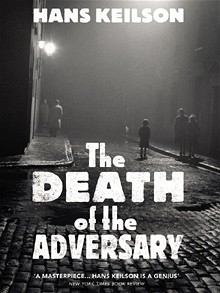
Literature and War Readalong November 29 2013 Meets German Literature Month: Death of the Adversary – Der Tod des Widersachers by Hans Keilson

Death of the Adversary

This months readalong title Death of the Adversary aka Der Tod des Widersachers by Hans Keilson is also part of German Literature Month. Keilson was an interesting figure. A German/Dutch novelist and psychiatrist who is most famous for his WWII novels. Born in 1909 in Germany, Keilson, who was Jewish, emigrated in 1936 to the Netherlands where he stayed until his death in 2011. During the war he was part of the Dutch Resistance. In his work he tried to analyse and illustrate the psychological, political and cultural aftermath of WWII.

Here is the book blurb

1930s Germany; the shadow of Nazism looms. Pictures of the new dictator, ‘B.’, fill magazines and newspapers. Our hero is ten when his world begins to change dramatically. Suddenly, the other children won’t let him join in their games. Later, he is refused a job on a shop-floor. Later still, he hears youths boasting of an attack on a Jewish cemetery. Both hypnotised and horrified by his enemy, our hero chronicles the fear, anger and defiance of everyday life under tyranny.

Written while Hans Keilson was in hiding during World War II, this novel is a powerful account of what he outlived. Painful, trenchant and streaked with dark humour The Death of the Adversary is a rediscovered masterpiece.

And the first sentences

For days and weeks now I have thought of nothhing but death. Though I am normally a late riser, I get up early every morning now, calm and uplifted, after a night of drealess sleep. I feel all my powers string and ready within me, as they have not been for a long time. I welcome the day which brings me once again the thought of death.

*******

The discussion starts on Friday, 29 November 2013.

Further information on the Literature and War Readalong 2013, including all the book blurbs, can be found here.

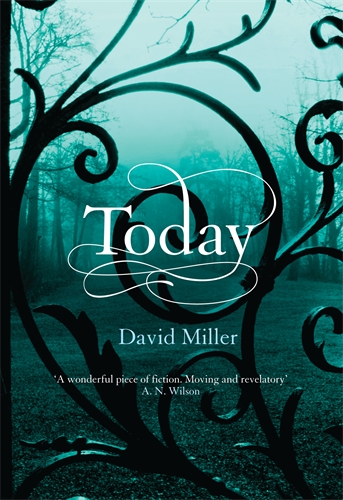
David Miller: Today (2011)

Today

August 1924. John Conrad arrives at his parents’ home on the outskirts of Canterbury, where family and friends are assembling for the bank holiday weekend. His crippled mother has been discharged from a nursing home, his brother drives down from London with wife and child. But as the guests converge, John’s father dies. Today follows the numb implications of sudden death: the surprise, the shock, the deep fissures in a family exposed through grief. But there is also laughter, fraud and theft; the continuation of life, all viewed through the eyes of Lilian Hallowes – John’s father’s secretary – never quite at the centre of things but always observing, the still point in a turning world. Today is a remarkable debut, an investigation of bereavement, family and Englishness, beautiful in its understatement and profound in its psychological acuity.

Has the question why an author chose a certain subject matter ever overshadowed your reading experience? In the case of Today that question certainly distracted me quite a bit. It’s not the first time that I’ve been asking myself this question and usually it means that I had a problem with the book. It happens mostly with books that are inspired by true events or real people, but I’ve been wondering in other cases as well.

The book starts with a dramatis personae that lists no less than 39 characters. In a novel of barely 160 pages that is a lot. Most of these characters  appear only very briefly, nonetheless, the point of view changes almost every time, sometimes even twice in one passage. That’s a lot of moving around. Despite of the great number of characters there are a few main protagonists. The most important person however, Joseph Conrad, is looming in the text but absent. We never get to see him directly. At the beginning he’s resting in his bedroom. He had an episode of something, what exactly isn’t entirely clear, but when he dies one day later, it’s obvious that he had a heart attack.

Joseph Conrad dies on the day of his youngest son’s birthday. Because of that birthday there are far more people in the house than usual. The relationships are tense and this sudden death on a day that was meant to be a day of celebrations is awkward at best.

This could have been a nervous book, with all this jumping around from one character to the next, but it’s actually very calm. I guess that’s because most of these people are shown during introspective moments. On the first day, when Conrad is resting, it rains endlessly, and the people walk around, thinking of their relationship with the famous author, or exploring how helpless they feel.

I liked reading this book, liked how it showed how disruptive and unsettling death is, but I couldn’t understand why this had to be the story of Conrad’s death. It could have been anyone. There is no real need for this story to be about a famous person to be poignant. On the very contrary. I would say, this would have been far better, if it hadn’t been about someone famous.

Because I wasn’t entirely sure what to make of this slim, lovely, but puzzling book, I looked for reviews and found two by professional critics. I must say that was enlightening for a few reasons. Both reviews were negative, and, in my opinion, overly so, but both reviews were also faulty and that in an embarrassing way. One reviewer said the book was set on Conrad’s birthday, while it was Conrad’s son’s birthday. That’s bad but the other error is really appalling. At the begging of the story, Conrad’s secretary, Lillian Hallowes finds a book on a train and starts to read it. The author isn’t named but the beginning of the book is quoted: “Except for the Malabar Caves – and they are twenty miles off – the city of Chandrapore presents nothing extraordinary.” It’s a quote from one of my favourite authors E.M.Forster, so I recognised it right away and knew from which novel it was taken. Even when you’re not familiar with his work, you’d probably assume it’s taken from a Passage to India. Not so our reviewer. He wrote that it was taken from Howard’s End. Call me narrow-minded, but I find that shameful, especially when you write such a negative review.

David Miller is the literary agent of some of the greats of British literature like Cynthia Ozick, Tim Parks, Magnus Mills, and others. Today is his first novel. It is a quiet, thoughtful book, with lovely passages. I wouldn’t say it’s a must-read but it’s nice and I enjoyed it. I’m interested to see where Miller goes from here. While Today has awkward elements, the writing is promising.