Literature and War Readalong August 31 2012: The Story of a Life – Sippur chajim by Aharon Appelfeld

I haven’t read a lot of literature written by Israeli authors which is one more reason why I was keen on including Aharon Applefeld’s The Story of a Life – Sippur chajim. But that’s not the only reason. The Literature and War Readalong is also an opportunity for me to read some highly acclaimed authors I haven’t read before. The first time I read something about Aharon Applefeld I was surprised to find out that some poeple think he is one of the finest writers alive. An exquisite writer with a sense for language and style.

The Story of a Life is a literary memoir, one of my very favourite genres. At the outbreak of WWII Aharon Appelfeld was living in Romania with his parents, middle-class Jews. His memoir tells about a boy coming-of age during one of the worst periods in history. Applefeld had to endure a lot – the loss of his mother, the ghetto, escape, traversing many countries – until he found a new home in Israel. The book tells this story. If the whole book reads like the quote below I think we are in for a treat.

Here are the first sentences

At what point does my memory begin? It sometimes seems to me as if it only began at four, when we set off for the first time, Mother, Father and I, for a vacation into the heart of the shadowy, moist forests of the Carpathians. But I sometimes think that memory began to bud from within me before that, in my room, next to the double-glazed window that was decorated with paper flowers. Snow is falling and fleecy soft flakes are coming down from the sky with a sound so faint you cannot hear it. For hours I sit and gaze in wonder, until I merge with the white flow and drift to sleep.

*******

The discussion starts on Friay, 31 August 2012.

Further information on the Literature and War Readalong 2012, including all the book blurbs, can be found here.

Nina Sankovitch: Tolstoy and the Purple Chair (2011) A Memoir

Tolstoy and the Purple Chair is a memoir I’ve been eying for a while until I finally bought it. The subtitle – My Year Of Magical Reading – obviously an allusion to Joan Didion’s memoir – annoyed me a bit but I liked the idea behind the book.

After the early death of her beloved sister, Nina tries for several years to overcome her grief and feelings of guilt when she finally comes up with a cunning idea. Reading has always been important for her and her family. Reading instructs and entertains but it can console and give hope as well. That’s how she decided that she would read one novel per day for a whole year and write about it on her blog Read All Day.

Tolstoy and the Purple Chair tells the story of that year, interweaving it with memories and stories of her family and herself. Not all the 365 books she has read in one year are described or mentioned but she writes in detail about a few which were especially meaningful. She summarizes them briefly and writes why they were important, what memories they triggered, how they helped her heal.

The list of all the 365 books can be found at the end of Tolstoy and the Purple Chair and on her blog. They don’t follow any specific order. One book led to the next and many were recommendations from family and friends and later from readers of the blog.

While I expected slightly more, I still liked reading the book. I liked her infectious enthusiasm. Each book is a world to discover and she tackles the ambitious goal with a lot of energy and passion.

Some of the books are so important because they help her explore her story or the story of her family. Harry Mulisch’s The Assault is one of them and so is Schlink’s Self’s Deception. But there are many more.

Crime novels are among her and her family’s favourite books, each member loves another writer. Nina thinks that what she loves best about them is the fact that they re-establish order. Things make sense in crime novels.

The parts in the book I enjoyed the most weren’t only those about books but those in which she describes the many little joys life has to offer. A meal with friends, a sunset, a newly planted tree, a lilac bush and the many cherished memories of her sister that make it easier to let go of her grief.

As was to be expected with a book like this I ended up with a list of books I’d like to read now.

Muriel Barbery’s The Elegance of the Hedgehog – L’élégance du hérisson

Nadine Gordimer’s Burger’s Daughter

Harry Mulisch’s The Assault

Adam Phillips and Barbara Taylor’s On Kindness

Kevin Canty Where the Money Goes

Chris Cleave Little Bee

Chimamanda Ngozi Adichie The Thing Around Your Neck

While I wouldn’t say it’s an absolute must-read, it’s a nice way to spend a few hours. I liked her voice and her stories. Just be prepared, if you don’t have as much time at hand, you might end up being a bit envious.

I have a fondness for this type of project. It doesn’t even have to be reading a book per day. There are some other 365 and similar projects like that I enjoyed reading about. Many are based on blogs or turn into blogs like the famous Julie and Julia.

Have you read about any interesting projects or self-experiments like this? And what about the books on my list, have you read any of them?

Ann Patchett: The Getaway Car (2011) A Practical Memoir About Writing and Life

In one of her wonderful Friday Five Series Jacquelin Cangro mentioned Ann Patchett’s essay The Getaway Car that is only available in e-book format. How lucky I just got a kindle for Christmas and could put it into use for the first time. I’m really grateful to Jacquelin for mentioning this essay as it may very well be one of the most wonderful pieces on writing that I have read in a long time. On some 50 pages Ann Patchett combines memoir with some advice that is useful to anyone who has ever thought of writing or who was interested in the process of writing. All the fans of Ann Patchett will love this little book as well, I’m sure. I haven’t read anything by Ann Patchett so far but I certainly will sooner or later.

There were a few elements in this book that I would like to mention, still, the take home message from this post should be – go and read it for yourself. It’s brilliant.

Ann Patchett writes about those wonderful pictures we have in our mind and as soon as we start to write them down, they start to look pale. Like pierced butterflies in display cases. What we need in order to over come the disappointment of not being able to capture our own images is forgiveness.

I believe that, more than anything else, this grief of constantly having to face down our own inadequacies is what keeps people from being writers. Forgiveness, therefore, is key. I can’t write the book I want to write, but I can and will write the book I am capable of writing. Again and again throughout the course of my life I will forgive myself.

She writes about inspiration and that one of the most important works for her was Thomas Mann’s ZauberbergThe Magic Mountain that she read when she was very young.

I think what influences in literature comes less from what we love and more from what we happen to pick up in a moment when we are especially open.

She loved it so much that all of her own novels reproduce that basic plot of

a group of strangers being thrown together by circumstances and form a society in confinement.

She also writes about writing chronologically, about chapters and pacing and writer’s block which doesn’t exist, according to her. She does write about MFA’s and whether it is possible to learn creative writing. This is especially interesting for Europeans who, I think, frown when they hear someone has taken courses in creative writing or even acquired a MFA.

Something I found valuable as well is her take on research.

As much as I love doing research, I also know that it provides a spectacular place to hide. It’s easy to convince myself that I can’t start to write my book until I’ve read ten other books, or gone to ten other places and the next thing I know a year has gone by.

Here lies the answer to why she thinks there is no such thing as writer’s block but procrastination.

It’s a short essay but it’s very well written and contains a world of valuable suggestions and stories of her own life.

Literature and War Readalong 2012

People have been announcing their challenges and events for 2012 for a while now so it was about time to let you see the list for next year’s Literature and War Readalong.

It was not easy to compile this list as the books needed to fulfill different criteria one of which was length. I didn’t want to include too many books over 300 pages. The only novel over 500 pages will make up for its length by being very readable.

The other criterion was the country. Like last year, I wanted to include books from as many different countries as possible. I know it looks as if there were more British books than anything else which is true, still I managed to include books from 8 different countries.

I will also join Anna and Serena for the War Through the Generations Challenge that is dedicated to WWI this year. My introductory post is due later this week. The first three novels in the readalong will also count for their challenge.

I have been asked whether it is possible to join but read something different. Since strictly speaking a readalong implies that people read and discuss the same book, it’s difficult but as I’m starting a Literature and War Project I thought of a good solution that will serve anyone who wants to join –  myself as well as I may be in the mood to read more than one novel focusing on war. The idea would be that anyone can join during the last week of the month and either participate in the readalong or review any other war themed book that will then be added to the project page. The objective of the page is to cover many different countries, wars, themes and even genres. For the War Through the Generations Challenge I will for example read a children’s book and maybe a crime novel set in the trenches. Next year I would also like to read a Sci-Fi novel like Joe Haldeman’s The Forever War that has been suggested by Max from Pechorin’s Journal. And finally I would like to read more non-fiction.

This year’s readalong will not always take place on Fridays but alternate between Monday and Friday depending on whether the Friday is during the last week of the month or not.

January, Monday  30

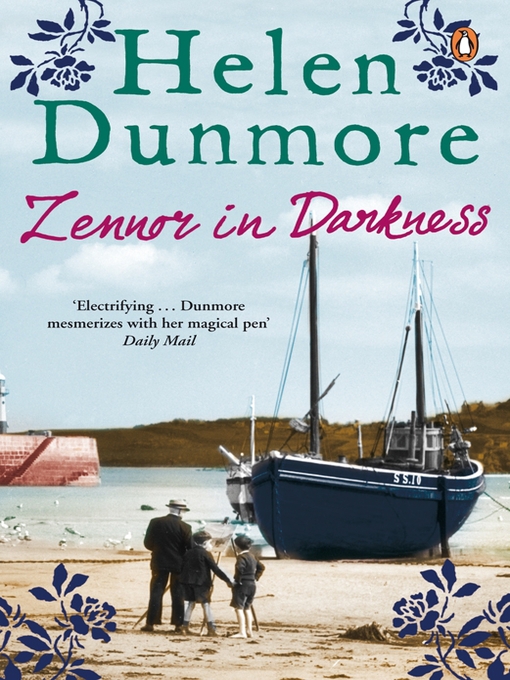
Helen Dunmore Zennor in Darkness , 320 p., England (1993), WWI

Spring, 1917 and war haunts the Cornish coastal village of Zennor: ships are being sunk by U-boats, strangers are treated with suspicion, and newspapers are full of spy-fever. Into this turmoil come DH Lawrence and his German wife Frieda, hoping to escape the war-fever that grips London. They befriend Clare Coyne, a young artist, struggling to console her beloved cousin John William who is on leave from the trenches and suffering from shell shock. Yet the dark tide of gossip and innuendo means that Zennor is neither a place of recovery nor of escape …

February, Monday 27

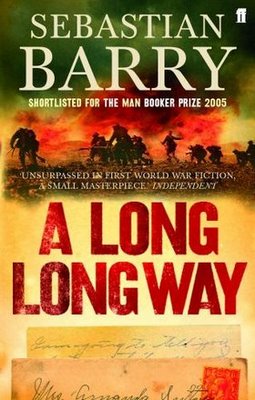
Sebastian Barry: A Long Long Way , 295 p.,  Ireland (2005), WWI

I discovered the book thanks to a comment from Danielle (A Work in Progress)

One of the most vivid and realised characters of recent fiction, Willie Dunne is the innocent hero of Sebastian Barry’s highly acclaimed novel. Leaving Dublin to fight for the Allied cause as a member of the Royal Dublin Fusiliers, he finds himself caught between the war playing out on foreign fields and that festering at home, waiting to erupt with the Easter Rising. Profoundly moving, intimate and epic, A Long Long Waycharts and evokes a terrible coming of age, one too often written out of history.

March, Friday 30

Jean Giono:  Le grand troupeauTo the Slaughterhouse 224 p., France (1931), WWI

Conscription reaches into the hills as the First World War come to a small Provençal community one blazing August. Giono’s fiercly realistic novel contrasts the wholesale destruction of men, land and animals at the front with the moral disintegration of the lonely and anxious people left behind. Yet not all is despair. The novel ends with a message  of hope.

April, Monday 30

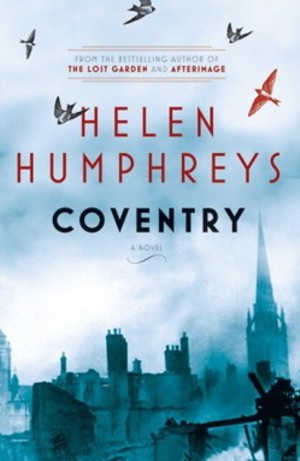
Helen Humphreys: Coventry,172 p., England (2008), WWII

Another book discovered thanks to Danielle (here)

On the night of the most devastating German raid on Coventry, two women traverse the city and transform their hearts. Harriet, widowed during WWI, is “”firewatching”” on the cathedral roof when first the factories and then the church itself are set ablaze. In the ensuing chaos she helps a young man, who reminds her of the husband she has lost, find his way back home where he left his mother.

May, Monday 28th

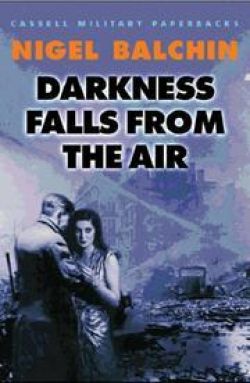
Nigel Balchin: Darkness Falls From The Air, 208 p., England (1942), WWII

I owe the discovery of Balchin to Guy (His Futile Preoccupations) who reviewed two of his books here and  here.

With ostentatious lack of concern, Bill Sarratt, his wife and her lover spend the war wining and dining expensively, occasionally sauntering out into the Blitz with cheerful remarks about the shattered night-life of London’s West End. But beneath the false insouciance lies the real strain of a war that has firmly wrapped them all in its embrace. Wit may crackle at the same pace as buildings burn, but personal tragedy lurks appallingly close at hand.

June, Friday 29

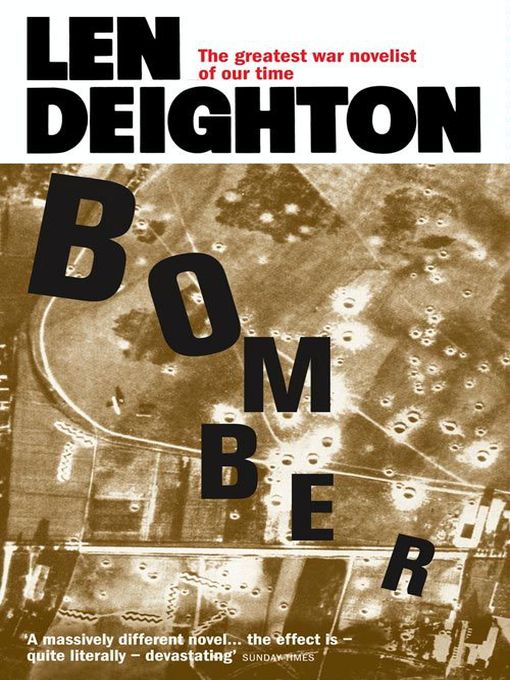
Len Deighton:  Bomber, 532 p., England (1970), WWII

This book is a suggestion from Kevin (The War Movie Buff). It is by far the longest on the list but it should be a very quick read.

The classic novel of the Second World War that relates in devastating detail the 24-hour story of an allied bombing raid.

Bomber is a novel war. There are no victors, no vanquished. There are simply those who remain alive, and those who die.Bomber follows the progress of an Allied air raid through a period of twenty-four hours in the summer of 1943. It portrays all the participants in a terrifying drama, both in the air and on the ground, in Britain and in Germany.In its documentary style, it is unique. In its emotional power it is overwhelming.Len Deighton has been equally acclaimed as a novelist and as an historian. In Bomber he has combined both talents to produce a masterpiece.


July, Monday 30

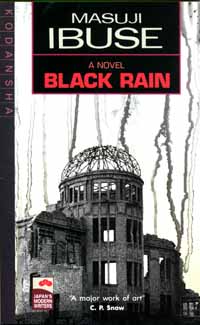
Masuji Ibuse: Black Rain – Kuroi Ame, 304 p., Japan (1969), WWII

I saw the book mentioned on Rise’s blog (in lieu of a field guide) where is was mentioned by Gary (The Parrish Lantern)

Black Rain is centered around the story of a young woman who was caught in the radioactive “black rain” that fell after the bombing of Hiroshima. lbuse bases his tale on real-life diaries and interviews with victims of the holocaust; the result is a book that is free from sentimentality yet manages to reveal the magnitude of the human suffering caused by the atom bomb. The life of Yasuko, on whom the black rain fell, is changed forever by periodic bouts of radiation sickness and the suspicion that her future children, too, may be affected.

lbuse tempers the horror of his subject with the gentle humor for which he is famous. His sensitivity to the complex web of emotions in a traditional community torn asunder by this historical event has made Black Rain one of the most acclaimed treatments of the Hiroshima story.

August, Friday 31

Aaron Applefeld: The Story of a Life – Sippur chajim, 208 p., Israel (1999), WWII

Aharon Appelfeld was the child of middle-class Jewish parents living in Romania at the outbreak of World War II. He witnessed the murder of his mother, lost his father, endured the ghetto and a two-month forced march to a camp, before he escaped. Living off the land in the forests of Ukraine for two years before making the long journey south to Italy and eventually Israel and freedom, Appelfeld finally found a home in which he could make a life for himself. Acclaimed writer Appelfeld’s extraordinary and painful memoir of his childhood and youth is a compelling account of a boy coming of age in a hostile world.


September, Friday 28

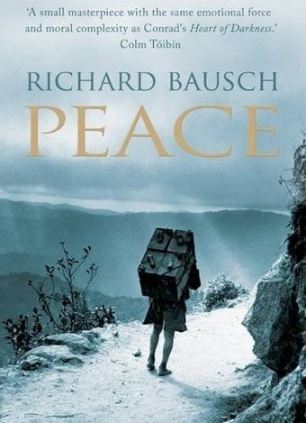
Richard Bausch: Peace, 171 p., US (2008), WWII

This was a suggestion from Sandra Rouse in a comment on one of this year’s readalong posts. 

It’s Italy, near Cassino. The terrible winter of 1944. A dismal icy rain falls, unabated, for days. Three American soldiers set out on the gruelling ascent of a perilous Italian mountainside in the murky closing days of the Second World War. Haunted by their sergeant’s cold-blooded murder of a young girl, and with only an old man of uncertain loyalties as their guide, they truge on in a state of barely suppressed terror and confusion. With snipers lying in wait for them, the men are confronted by agonizing moral choices…Taut and propulsive – Peace is a feat of economy, compression, and imagination, a tough and unmistakably contemporary meditation on the corrosiveness of violence, the human cost of war, and the redemptive power of mercy.

October, Monday 29

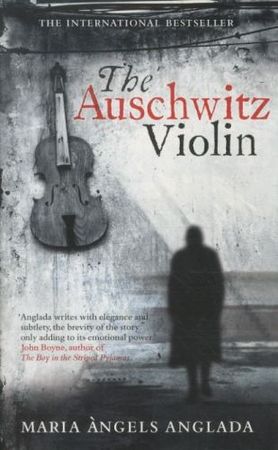
Maria Angels Anglada The Auschwitz Violin – El violí d’Auschwitz, 128 p., Spain (1994), WWII

In the winter of 1991, at a concert in Krakow, an older woman with a marvelously pitched violin meets a fellow musician who is instantly captivated by her instrument. When he asks her how she obtained it, she reveals the remarkable story behind its origin.

Written with lyrical simplicity and haunting beauty—and interspersed with chilling, actual Nazi documentation—The Auschwitz Violin is more than just a novel: It is a testament to the strength of the human spirit and the power of beauty, art, and hope to triumph over the darkest adversity.

November, Friday 30

Gert Ledig The Stalin Front  –  Die Stalinorgel , 198 p., Germany (1955), WWII

1942, at the Eastern Front. Soldiers crouch in horrible holes in the ground, mingling with corpses. Tunneled beneath a radio mast, German soldiers await the order to blow themselves up. Russian tanks, struggling to break through enemy lines, bog down in a swamp, while a German runner, bearing messages from headquarters to the front, scrambles desperately from shelter to shelter as he tries to avoid getting caught in the action. Through it all, Russian artillery—the crude but devastatingly effective multiple rocket launcher known to the Germans as the Stalin Organ and to the Russians as Katyusha—rains death upon the struggling troops.
December, Friday 28

Michael Herr: Dispatches, 262 p., US (1977) Vietnam

This novel has been suggested by at least three people. Kevin (The War Movie Buff) and Max (Pechorin’s Journal)

If you’ve seen the movies Apocalypse Now and Platoon, in whose scripts Michael Herr had a hand, you have a pretty good idea of Herr’s take on Vietnam: a hallucinatory mess, the confluence of John Wayne and LSD.Dispatches reports remarkable front-line encounters with an acid-dazed infantryman who can’t wait to get back into the field and add Viet Cong kills to his long list (“I just can’t hack it back in the World”, he says); with a helicopter door gunner who fires indiscriminately into crowds of civilians; with daredevil photojournalist Sean Flynn, son of Errol, who disappeared somewhere inside Cambodia. Although Herr has admitted that parts of his book are fictional, this is meaty, essential reading for anyone who wants to understand Vietnam.

I hope that many of you will feel tempted by the one or the other title on the list and am looking forward to great discussions. The books are all very different in tone, style and themes. As always there are a some I can hardly wait to read.

*******

How does the readalong work?

This is just a quick info for those who are new to blogging and /or the readalong.

I will review the book on a set date during the last week of the month. If you choose to read along you can either participate in the discussion in the comments page or post a review on your blog. I will add all the links to the reviews at the bottom of my posts.

The books are usually announced with some additional information or a short introduction at the beginning of the month.

*******

This post will be copied into the Literature and War Redalong 2012 page so you can find it again at any time.

Roger Rosenblatt: Making Toast (2010) A Memoir

Family tragedy is healed by domestic routine in this quiet, tender memoir. When his daughter Amy died suddenly at the age of 38 from an asymptomatic heart condition, journalist and novelist Rosenblatt (Lapham Rising) and his wife moved into her house to help her husband care for their three young children.  Building on the small events of everyday life, Rosenblatt draws sharply etched portraits of his grandchildren; his stoic, gentle son-in-law; his wife, who feels slightly guilty that she is living her daughter’s life; and Amy emerges as a smart, prickly, selfless figure whose significance the author never registered until her death.

I read memoirs for many different reasons. In some cases because of the topic but mostly because of the writing. Some of the most original and powerful writing nowadays can be found in life-writing. I’m fascinated by the diversity of memoir writing and the different approaches. The memoirs I like best are those written by writers or poets. I didn’t mind the topic of Making Toast but it isn’t why I chose to read it. I was intrigued because many reviews of Making Toast mentioned the style. I agree, it is beautifully written, very subtle, diverse and it works on many different levels. I took my time to read and savour it. You can’t really read it in one go, as every chapter, be it a few sentences long or a few pages, has another rhythm. The individual paragraphs read like micro-fiction but they still form a homogenous whole.

Rosenblatt’s daughter Amy dies unexpectedly at the age of 38. Nobody knew she suffered from an extremely rare heart disease. One morning, while working out in the basement, she collapses and dies on the spot where she is found by her eldest child. Amy was a doctor, a wife and a mother of three little children, the youngest barely one year old.

Rosenblatt and his wife Ginny decide to move in with their son-in-law Harris and the three little children. They want to help them cope with the multitude of daily tasks and duties and try to assist them in overcoming the tragic loss.

One of the core themes is how the children deal with their loss and the huge responsibility and also the strain it means for an elderly couple to take care of small children.

The book is touching, thoughtful, poetic, sad, but also beautiful and moving. Some paragraphs contain thoughts and musings, others describe scenes and anecdotes. Many chapters narrate Amy’s childhood and the past, others render everyday life and how to deal with the loss of a cherished person.

I was slightly taken aback by the unfriendly reader reviews.  Especially the German translation triggered a lot of spiteful comments. People remarked that he didn’t “mourn properly” that he sounded full of himself and they also criticized his mentioning of their wealth, that they can afford a nanny for the children and own houses.  I can’t understand these comments. Rosenblatt wrote this book in a restrained way which I found very appealing. He is neither weepy nor whining and especially not exhibitionistic, still you feel the grief in each line, you sense the bewilderment in every word. The family’s wealth doesn’t make Amy’s death any less tragic. I really don’t think Rosenblatt is self-publicizing unless you consider every personal essay or memoir to be an indecent display of someone’s life. But if so, why read it?

I found this book wonderful. It contains a lot of little endearing episodes like the one that gave the book its title, in which Rosenblatt states that the only thing he is really good at is making toast for the whole family in the morning. He describes how he gets up very early and, taking into consideration each family member’s taste, he produces a multitude of personalized breakfast toasts.

Making Toast is a book for readers and writers alike. If you like memoirs you will enjoy reading this well-written, lovely book. If you would like to write a memoir you will find this book inspiring in its original approach.

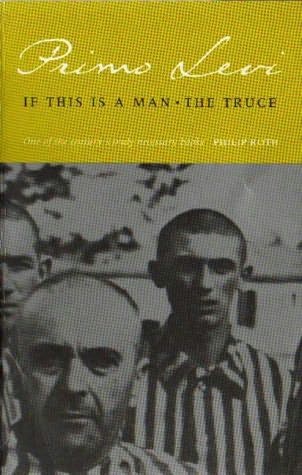
Primo Levi: If This is a Man or Survival in Auschwitz – Se questo è un uomo (1947) Literature and War Readalong June 2011

Survival in Auschwitz is a mostly straightforward narrative, beginning with Primo Levi’s deportation from Turin, Italy, to the concentration camp Auschwitz in Poland in 1943. Levi, then a 25-year-old chemist, spent 10 months in the camp. Even Levi’s most graphic descriptions of the horrors he witnessed and endured there are marked by a restraint and wit that not only gives readers access to his experience, but confronts them with it in stark ethical and emotional terms.

Survival in Auschwitz or If This is a Man was difficult to read and the images it created will haunt me for a long time. Additionally I watched Alain Resnais’ Nuit et Brouillard – Night and Fog which intensified the reading experience.

Primo Levi was part of the Italian resistance when he was captured by Fascist militia in the winter of 1943. After hearing that he is Jewish, the militia hand him over to the Nazis and he is deported to Auschwitz. It’s towards the end of the war and despite Auschwitz being an extermination camp, as they needed many people to work there, they didn’t kill as many as before which is one of the reasons why Levi survived.

Stepping off the train, the people who have been captured, are divided, sometimes arbitrarily, sometimes depending on their strength and fitness. Those who are sent to another direction than Primo Levi will take a shower and we all know what that means. The others who are kept alive, have to strip, wait in the cold for hours and are finally shaved, tattooed and stripped of their old identity. 174517 is the number that is tattooed into Primo Levi’s arm. The numbers, that are like a bar code, tell the other prisoners a lot. They can deduce where the people come from, how long they have been at the Lager. Some numbers are famous, for example the lower numbers of the first ones to arrive from Polish Ghettos. Three years after their arrival some are still alive.

Levi describes their arrival in great detail. He also tells in great detail how everything ends, how after long days of bombardment, and when it becomes obvious that the Russians are not far, the Germans abandon the camp. They leave the weakest and the sick people, like Primo Levi, behind, the others are taken along and probably shot on the way. What a struggle it was for those left behind to survive. There was no more heating and it was icy cold outside, they had no more food, no more blankets, just dirt, debris, corpses and sick and dying people.

Flanked by these two long chapters – the arrival and the end – we get to read a succession of shorter chapters that describe every aspect of the life in a concentration camp. How they are fed, always just a little bit to keep them alive, but never enough to stop the hunger. How they sleep, two men on a small bed of 70cm together. They wake all night because their bladders are weak and the others wake them, it is cold, they have nightmares. He describes what clothes they wear, how dirty and torn they are, the work they do, which is mostly forced labour of the most strenuous kind. They are always cold, hungry and extremely tired. The only time they can recuperate a little bit is when they fall ill. But falling ill is dangerous as well, should they fall too ill, they will be exterminated.

What we read is horrible and shocking but what disturbed me the most is what he wrote about the increasing inhumanity of the prisoners. People turned into monsters under these conditions. They had hardly anything and tried to take advantage, they stole and cheated and did everything for the sake of a tiny little piece of bread, some small advantage over others. Give a man a few privileges under the condition to supervise, punish and abuse others and he will do it. This trait of human nature was cunningly exploited by the Nazi’s. Levi picks a few examples and describes them in more detail than others. It’s amazing what people would do to save themselves.

There are a few men who are kind or manage to stay kind but they are not numerous at all. Levi is lucky, there is one Italian a non-Jewish prisoner, better off than he is, who helps him.

Survival in Auschwitz is impressive for many reasons. It is one of the most precious and detailed testimonies and so well written. One can really understand what it must have been like.

I have written in the introductory post that my edition is French. At the end of the book is an annex of 25 pages in which Primo Levi answers eight questions. These are questions he was often asked when he presented the book, in schools or elsewhere. Some of these questions were on my mind as well while I was reading.

I’m just going to pick those that interested me personally the most.

Did Primo Levi go back to Auschwitz after the war? Yes, he did. In the 60s but it left him surprisingly unfazed as most of the barracks he had been in did not exist anymore and large portions of the rest were transformed into a museum. It was very hard for him to see Birkenau, where the crematorium was although he wasn’t there during the war. That part was like he remembered the Lager, mud, dirt, debris.

Why was there no uprising? Levi tried to answer the question as good as he could. When they arrived, they could have done it but as they didn’t know what was going on they didn’t try. Later there were uprisings but always by political prisoners, not by Jews, which is understandable. The Jews were treated far more badly and therefore much weaker and most were not political people, they had no idea how to resist.

Was there a difference between Soviet Gulags and the German Lager? Yes, the Soviets didn’t want to exterminate the prisoners and although they were awful too – forced labour, bad conditions – it wasn’t as brutal.

The last question was by far the most fascinating. Someone asked Levi, who he would be if he hadn’t been in Auschwitz. Of course, he stated, this was a philosophical question and he added, that the only thing he knew for sure was, that without Auschwitz he wouldn’t have become a writer. The experience in the Lager triggered the urge to write. He started to write in Auschwitz and as soon as he was back, wrote this book pretty much in one go. Without Auschwitz he would have stayed a simple chemist.

This last question and some passages in the book seem to indicate how it was possible that Primo Levi survived, why he had the mental force that was needed. He wrote that he always had an interest in human psychology and that he was fascinated to watch the people and what happened around him. This also helped him to still recognize those around him as humans, although they had been stripped of everything.

It’s a difficult and depressing book but I was touched by Levi’s humanity and his voice and I know I will read more of him. A while back I watched Francesco Rosi’s movie La Tregua aka The Truce based on Primo Levi’s novel. It tells the story of his odyssey back home from the Lager to Italy. Primo Levi’s part is played by John Turturro. If you want to get a good feeling for the man Levi, this is a great starting point. It manages to convey how he became a writer. I will certainly read the book.

I’m interested to know what others thought about this book. Was it too hard to read? Did you also think that he managed incredibly well to make us feel and understand what he went through?

Other reviews

Introduction by Danielle (A Work in Progress)

*****

Survival in Auschwitz was the sixth book in the Literature and War Readalong. The next one will be Marguerite Duras’ Hiroshima mon Amour. Discussion starts on Friday July 29, 2011 .

Literature and War Readalong June 24 2011: If This is A Man aka Se questo è un uomo by Primo Levi

This month is moving very fast and the next readalong is on the 24th already. It might be good to get started if you want to join in.

Primo Levi is a writer that has been on my mind for years. I knew his story, had read about him. I have read other’s accounts of their incarceration in concentration camps. I have read excerpts of Levi’s work but never got around to read his most famous book, the autobiographical account of his incarceration in the extermination camp Auschwitz.

He was on my mind for this and because he committed suicide so late in life. Because he seems to be such a perfect example of survivor’s guilt.

I dreaded to read his account, I know it won’t be cheerful but I always wanted to read it, wanted to explore his life, to understand why he couldn’t live with the guilt of being one of a very few survivors.

Despite the sadness and the horrors he describes there is beauty in his books as he is not only a witness of dreadful times but also an accomplished writer.

Primo Levi’s book is the only nonfiction book in this readalong.

I’m reading the French translation Si c’est un homme.