Best Books 2012

Last year I had a hard time to narrow down the choices and ended up with a very long list. This year it was far easier. All in all it wasn’t such a great reading year. Still, there were 13 novels and 2 non-fiction books I found outstanding.

I added the links to my posts and a quote from my reviews.

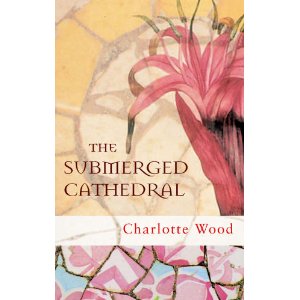
Charlotte Wood – The Submerged Cathedral

Australian author Charlotte Wood’s lyrical novel The Submerged Cathedral caught me unawares. Reading it felt at times like daydreaming. It has a hypnotic and very gentle quality that isn’t easy to put into words. It is highly symbolical and complex but still down to earth. The voice and choice of themes are so unusual, I’m really glad I discovered it on Kim’s blog last year (here).
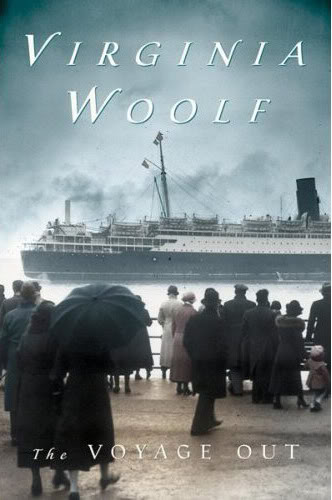
Virginia Woolf – The Voyage Out

Reading The Voyage Out makes me realize once more what I like the most about her writing. Yes, the style, especially in the later novels, is fantastic, with its flow of interior monologue, the way she uses time and how she describes the passing of time. But there is something else that stayed with me forever since the day I have read Mrs Dalloway. Her writing has an exhilarating quality, an effervescent intensity of feeling that made me think of a German expression which I adore: “Champagner Wetter” or “Champagne weather”. Champagne weather is used to describe a very fresh but sunny spring morning on which the air is still cool, nature has returned to life, the first tentative, tiny leaves appear, the first blossoms can be seen. It’s already a bit warm in the sun but still chilly in the shade. It’s like drinking the first glass out of a freshly opened, nicely cooled Champagne bottle. It bubbles and goes to your head. Virginia Woolf’s novels are full of scenes conveying the mood of champagne weather.

Robin McKinley – Chalice

What I loved so much about this book is the atmosphere. Sweet and floating, like the scent of beeswax candles. The descriptions are beautiful and following Marisol’s journey has something enchanting and almost hypnotic. The world building is exquisite. I was there in Willowsland the whole time. And Marisol is such a great character, so real. She is very insecure and has to find her way in a hostile environment but her strength and her love for her home guide her. I liked how she lived, on her own, outside of the Great House or the village, only with her bees whom she treats like pets.

Antonio Tabucchi – The Edge of the Horizon

I liked it because it’s a very melancholic story and the descriptions are wonderful. Instead of taking a trip to Lisbon it was like taking a trip to one of those typical old Italian towns with the narrow and steep alleys. The book has many descriptions of quiet moments like this one towards the end:

“When the night began to fall, he turned on the radio without turning on the light. He was smoking in the dark while looking out of the window and observing the lights in the harbor. He let time slip away. He enjoyed listening to the radio in the dark, it gave him a feeling of distance.”

Helen Dunmore – Zennor in Darkness

Dunmore conveys the soft light of the Cornish coast, the beauty of the lovely landscape, the slow pace of life. This softness is mirrored in the way she changes the point of views, blurring the edges, softening the transitions, so that it feels as if one person’s consciousness and interior monologue, was flowing gently into that of another character. Reading it made me dreamy and I felt as if I was watching a water-color come to life. I read this book very slowly. I could have finished it in a few evenings but I put it aside frequently to make it last.

Amor Towles – The Rules of Civility

This is the reason why I always look forward to new releases because ever so often you discover a new book and simply enjoy it to the extent of wanting to start all over again after finishing it. This doesn’t always have to be a book that will enter the literary canon, it can just be a novel that makes you spend a few extremely entertaining hours. Like a well-made movie.

Charles Dickens – Great Expectations

Great Expectations offered everything I expected from Dickens and so much more. The only thing I could criticize is that it was predictable and that there were a lot of coincidences which didn’t seem all that realistic but who cares. There is so much in this novel to like that I can easily forget its flaws. The characters were, as was to be expected, quirky and over-the top, much more caricatures than portraits, but drawn which such a wonderful imagination that I loved each one of them.

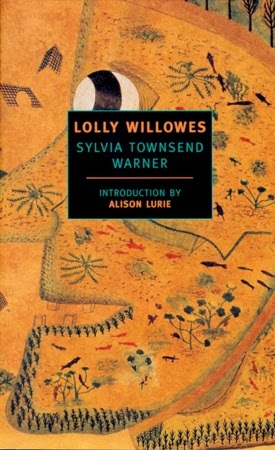
Sylvia Toswnsend Warner – Lolly Willowes

I’m glad I discovered this wonderful novel. It has freshness and vivacity, is clever and witty and the descriptions are detailed and atmospheric, the portraits of the society and the people are true to life and Lolly is a very endearing character, an illustration of the importance of “a room of one’s own” and the right of women to live an independent life, even outside of society and without a man. It’s certainly one of the rare novels in which a being considered to be a useless burden on society shows that she doesn’t need society in order to live a truly happy and  fulfilled life.

Guy de Maupassant – Bel Ami

After having read Bel-Ami, I think that he might very well be one of the best writers in any genre. It’s one of the most perfect books I’ve ever read. I couldn’t name one single flaw. As much as I like Balzac there is always this and that, minor things, sure, but still, some imperfections. Not with Maupassant. What also surprised me is that this book could have been written nowadays. The society has changed, the world has changed but the way he writes about love, sex, power, money, careers… It’s outspoken and modern.

Louise Penny – Still Life

If I could I would move to Three Pines, the small fictional village, located a few hours from Montreal, in rural Québec. It’s a small village that sounds as if it was a place where time stands still and reminded me a lot of Elizabeth Gaskell’s Cranford. Old cottages face a small village center and are surrounded by old trees and lush gardens. The place is very green and picturesque, the descriptions of it atmospheric and full of tiny details of the season. It’s the end of autumn, dead leaves are falling, it rains and the temperature is slowly dropping. A storm will come and soon it will be winter. Before the crime is solved, snow will begin to fall and a lot of the investigation will have taken place in front of a cozy fire.
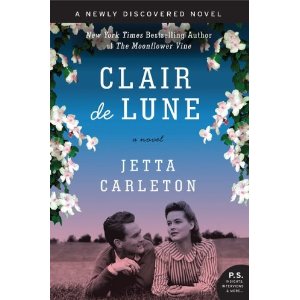
Jetta Carleton – Clair de Lune

I absolutely loved this book. I tried to slow down while reading but it was pointless, I just rushed through the pages and when I turned the last one I was quite sad. It contains such a lot of intense scenes and the most uplifting ending since I’ve read Nada last year. Since the largest part of the book is set in spring, there are a lot of wonderful outdoor scenes in which the three friends walk in the streets, stand in the rain or just stroll through the fog. There is a breathlessness and joy of life in these pages that is exhilarating. It renders the enthusiasm of young people for whom everything is a discovery, be it literature, art, music, love or friendship. At the same time there is the anxiety about war and the knowledge that the freedom and carefreeness they experience is going to end.
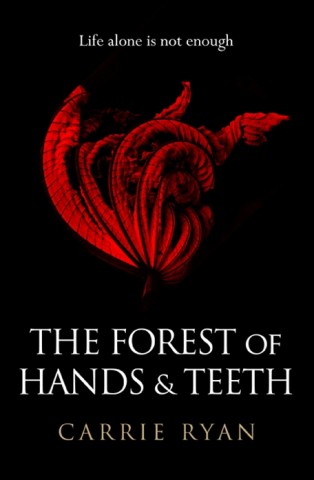
Carrie Ryan – The Forest of Hands and Teeth

I never felt like reading a zombie novel before and if it hadn’t been for Sarah’s intriguing review I wouldn’t have tried this book but I’m glad I did. It has a very special and haunting atmosphere, very captivating and oddly enthralling. The word zombies, is never used, by the way, but it’s clear from the descriptions. The Forest of Hands and Teeth is part I of a trilogy. I won’t rush to read part II and III right now but I feel like reading them some day.

Edda Ziegler – Forbidden – Ostracized – Banned

Edda Ziegler’s fantastic book on German women writers under National Socialism Verboten – Verfemt – Vertrieben (Forbidden – Ostracized – Banned) was easily my favourite read this year. I hope that some English language editor will buy the rights to this book and have it translated. It’s an introduction to the most prominent German women writers under National Socialism, a detailed historical account of the times and an analysis of publishing history.
Barbara DeMarco-Barrett

I didn” get a chance to review this yet but if you are looking for a truly original genre blend – memoir + book on writing, this may be the book for you. Or if you are one of those who keep on saying “I would write if I only had the time” – this may be for you as well. An inspiring, motivating and really lovely book on writing and the life of a writer.
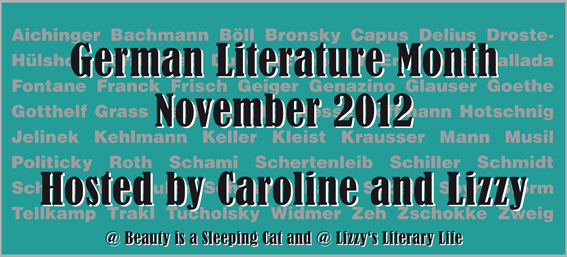
Announcing German Literature Month II – November 2012

I’m so pleased that I can finally announce that German Literature Month is returning. Mark November in your calendar and join Lizzy and me for the occasion.

While we focused on countries last year, this year we are structuring the month around genres and literary formats.

Week 1 (November 1-7) Novellas, plays and poems
Week 2 (November 8-14) Literary Novels
Week 3 (November 15-21) Genre Fiction – Crime, Fantasy, Horror, Romance
Week 4 (November 22-30) Read as you please

We chose that sequence so that Judith’s previously announced Bernhard Schlink Week (November 11-17) would span both literary novels and genre week. So if you read something by Schlink this month, you can partake in two blogging events for the price of one. Cunning, don’t you think?

2012 is also the bi-centennial of the birth of the Brothers Grimm. We can’t let it pass without a Brothers Grimm Readathon. So we’ve put that in the calendar from 22-26 November.

My Literature and War Readalong of Gert Ledig’s The Stalin Front will bring the month to a close on the 30th.

I’m looking forward to another wonderful month with lots to read, discuss and discover. Please join us.

Looking for inspiration? Why don’t you browse through last year’s discussion or the German Literature Month 2011 page. You never know what you’ll be inspired to pick up.

Like last year there will be giveaways. Additionally I’m planning on doing a series of introductory posts during October.

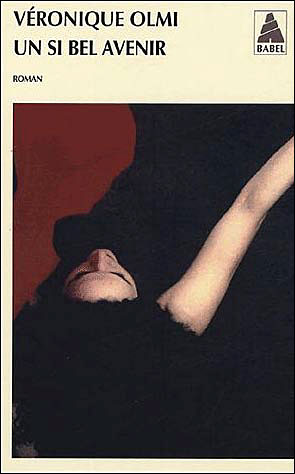
There is More to Véronique Olmi Than “Beside the Sea” or Un si bel avenir (Such a beautiful future)

Un si bel avenir

Lucky Pereine Press decided to publish Véronique Olmi’s prize-winning novel Bord the Mer – Beside the Sea or she may still be waiting for an English translation. I’ve read the book when it came out in France in 2001. It’s an excellent but bleak account of a highly depressed mother.

Olmi has written several novels and theater plays. The one that interested me the most was Un si bel avenir which you could translate by Such a beautiful future. Set in the theater world, it tells the story of two women who meet at a time when their lives start to unravel. Elizabeth is an actress, married with two little girls. Her husband is a failed stage director. Clara is a radio journalist who is in a relationship with Boris, an actor as well. The women first meet at the premiere of one of Pascal’s plays which is a total failure. They meet again by coincidence, just after having found out that their marriages and relationships are about to end.

The friendship she describes is very rare in it’s intensity and loyalty. Two people meet when they need someone the most and open up in a way unknown to both of them. Family secrets, disappointments, dreams and fears are shared with great trust and openness.

Some of the scenes in this novel are incredibly  beautiful, some even in their absurdity like when Elizabeth and Pascal are stuck at midnight on the péripherique or when Elizabeth sits up in the middle of the night, the family is sleeping and she enjoys the peacefulness and security it means. Little does she know this is one of the last moments like this.  Another scene in which she starts to see her husband for what he really is, a failed aging guy, with a sagging ass and a secret mistress, is tragic and hilarious. She swears like a sailor using the most expressive language.

The book is an exploration of what it means to be a woman, a mother, a wife, of the different possibilities, the choices, the difficulties and pitfalls modern life has in stall.

The poignancy and immediacy with which this is written, the dialogue and interior monologue, so close to everyday language, bears the sign of a novelist who is also a successful playwright.  This dialogue and interior monologue is so authentic. At the same time there is an airiness in this writing that can describe the dark night of the soul and still let a light shine in. What I missed most in Bord de mer, the chance for transformation and hope, is present here.

I always felt that French women writers have a capacity to touch on every single detail of everyday life, from the most mundane to the most sublime and render it in a meaningful way, show us how we live now with a all the complexity there is.

As I wrote before, Un si bel avenir is about all the facets of the life of a woman, as a daughter, a wife, a lover, a mother and a friend. It is this last part that is the most accentuated. The book’s characters’ hope lies in the friendship with another woman. Romantic relationships are scrutinized, taken apart and discarded together with family ties.

I do not have such a pessimistic view of the couple, not at all. I think a lot of what is called love has not much to do with real love and that is the core problem. It seems, as if these two women show that it can be easier to live this type of love with another woman or the children, in relationships that are free of physical attraction.

I hope this books will be translated too. It isn’t flawless, there are a few breaks in the narrative towards the end which are abrupt but it has a lot of qualities, a lot to offer.

There is much more to Véronique Olmi than Beside the Sea. Although better constructed, Beside the Sea is awfully bleak. If you ever read anything else you will notice how nunaced her writing really is.

Un si bel avenir has been translated into German Eine so schöne Zukunft.

Coincidentally Emma has just reviewed Bord de merBeside the Sea. You can find her review here.

Sylvia Townsend Warner: Lolly Willowes (1926)

Lolly Willowes is a twenty-eight-year-old spinster when her adored father dies, leaving her dependent upon her brothers and their wives. After twenty years of self-effacement as a maiden aunt, she decides to break free and moves to a small Bedfordshire village. Here, happy and unfettered, she enjoys her new existence nagged only by the sense of a secret she has yet to discover. Finally that secret will set Lolly Willowes free.

Danielle (A Work in Progress) has an interesting series called Lost in the Stacks in which she introduces us to authors who have been forgotten or are not read much anymore. One of these authors was Sylvia Townsend Warner as you can read here: Lost in the Stacks – Sylvia Townsend Warner. Danielle mentioned that some of her novels are re-issued by NYRB or Virago and one of the titles Lolly Willowes looked especially interesting. And what a find it was. Not only does the novel tell the story of a unique and independent character but it is a lovely and very feminist book.

Until not too long ago the spinster was a character which could frequently be found in novels. I’ve read more than one novel containing either a spinster or which was about a spinster. They were mostly tragic and often infuriating. The way society treated these unmarried women who were clearly seen as a failure was not only condescending but very often exploitive. As Sarah Waters says in her excellent introduction to the Virago edition of Lolly Willowes, we can see the book to some extent as a re-write of older “spinster novels” like W.B. Maxwell’s The Spinster of this Parish (1922) and F.M. Mayor’s The Rector’s Daughter (1924). As the title of Townsend Warner’s book indicates, the topic has undergone a great change in her novel. The spinster has a name, she is no longer a helpless, independent appendage. Apart from being one woman’s story, the book contains also a subtle reflection on the times, just before and after WWI. The role of the spinster changed considerably after WWI. With so many young men gone, these unmarried elderly women were now seen even more as a useless burden.

Laura, called Lolly, Willowes lives with her father until the age of 28. When he dies her family assumes she will be better off living with her married brother and his family in London instead of staying in the country on her own. The loss of her father is a great tragedy for Lolly. She who lost her mother at an early age, loved living with her father and being relatively independent. She  was never interested in men or getting married. A quiet, introspective life, dedicated to her hobbies, botany and brewery, was all she ever wished for.

She disliked going out, she seldom attended any but those formal parties at which the attendance of Miss Willowes of Lady Place was an obligatory civility; and she found there little reason for animation. Being without coquetry she did not feel herself bound to feign a degree of entertainment which she had not experienced, and the same deficiency made her insensible to the duty of every marriageable young woman to be charming, whether her charm be directed towards one special object or, in default of that, universally distributed through a disinterested love of humanity.

Still she doesn’t make a fuss and follows her brother and his wife and stays with them for several decades. She doesn’t like it there, her sister-in-law is too well-organized, too strict, in other words too boring. She relies completely on her husband, never contradicts him and never seems to spend time on her own. In these surroundings Lolly undergoes a transformation which starts to alarm her more and more over the years.

Or rather, she had become two persons, each different. One was Aunt Lolly, a middle-aging lady, light-footed upon stairs, and indispensable for christmas Eve and birthday preparations. The other was Miss Willowes , ‘my sister-in-law Miss Willowes’, whom Caroline would introduce, and abandon to a feeling of being neither light-footed nor indispensable.

Before WWI breaks out, the Willowes spend all their summer months in the country. Lolly loves these stays and the memory of the beauty of the country side and her reception for everything related to the senses – scents, colors, aromas – open a door in her soul and offer an escape route. She often sits in front of the fire in London and dreams of being in the country on her own. This character trait gives the author the opportunity to include beautiful and evocative descriptions like this one.

At certain seasons a fresh resinous smell would haunt the house like some rustic spirit. It was Mrs Bonnet making the traditional beeswax polish that alone could be trusted to give the proper lustre to the elegantly bulging fronts of tallboys and cabinets. The grey days of early February were tinged with tropical odours by great-great aunt Salome’s recipe for marmalade; and on the afternoon of Good Friday, if it were fine, the stuffed foxes and otters were taken out of their cases, brushed and set to sweeten on the lawn.

After WWI, the society has undergone serious changes. Lolly feels restless. The children of her brother do not really need her anymore and she wants to leave. Finally she wants what her heart has been desiring since years; live in the country on her own. Her relatives are shocked. Her brother has to confess that he has lost a lot of her money due to reckless investments and she cannot afford the house she wanted. Nevertheless, nothing can hold Lolly back, she leaves anyway.

The second half of the novel is dedicated to Lolly’s life in the country. The village she has picked is very mysterious and slowly Lolly undergoes a transformation and becomes a witch. It may sound as if we were entering the realm of the fantastic here and to some extent we do, but the Satan we meet in this book, has more in common with Bulgakov’s Satan than with some fantasy figure.

I’m glad I discovered this wonderful novel. It has freshness and vivacity, is clever and witty and the descriptions are detailed and atmospheric, the portraits of the society and the people are true to life and Lolly is a very endearing character, an illustration of the importance of “a room of one’s own” and the right of women to live an independent life, even outside of society and without a man. It’s certainly one of the rare novels in which a being considered to be a useless burden on society shows that she doesn’t need society in order to live a truly happy and  fulfilled life.

Have you read this or any other of Sylvia Townsend Warner’s novels?

On Juan Carlos Onetti’s A Brief Life – La vida breve (1950)

Picture a lazy summer afternoon. The heat is unbearable. You’re in a room with the blinds half down, lying on a bed listening to the voices of complete strangers in the apartment next door. You’re in a languid dreamy mood. Your imagination starts to invent a story based on the snippets of the conversation you hear.  After a while the lives next door seem more real than your own.

Many of the chapters in Juan Carlos Onetti’s famous novel A Brief Life capture this type of mood, describe inertia paired with a vividly active imagination. I liked this, because I like those motionless summer afternoons spend lazily doing nothing else but day-dreaming. I liked the languid and languorous feeling those chapters conveyed. Seeing the narrator Juan María Brausen captivated by his imagination was appealing but the narrator was not. I hated him big time. I rarely if ever use the word “misogynist” but I felt the narrator was exactly that. His wife has just undergone a mastectomy and the way he thinks about her, her pain, her mutilated body, is unfeeling, self-centered and lacking any kind of empathy. It just annoyed me so much that after 150 pages I stopped reading. Because life is indeed very brief, I decided to abandon this novel.

The novel is well written and parts of it had an atmosphere and a mood I liked a lot but it was also confusing at times. It constantly switches from the narrator’s real life to the invented story about a doctor living in the fictional city Santa María. From there it switches to a third narrative strand showing the narrator inventing himself a double life and visiting the woman, a prostitute, who lives next door.

I suppose if the narrator hadn’t annoyed me so much – and not only because he is misogynistic – I would have finished the book as I found the narrative technique interesting.

I was curious to see whether other people had felt the same and googled “Onetti and misogynist”. I’m not sure why I didn’t trust my own impression but I was relieved to see that it was something critics and readers had commented on very often.

Onetti was a Uruguayan writer. He is famous for his novels and his short stories. I’ve read the collection Tan triste como ella a few years back and liked the melancholic tone. Onetti fled to Spain after having spent 6 months incarcerated in a mental hospital by the military government. Onetti was married 4 times (why did that not surprise me?).

I’ve read Onetti’s novel for Spanish Literature Month hosted by Richard (Caravana de recuerdos) and Stu (Winstonsdad’s Blog). It’s part of a readalong. It will be interesting to see what others thought, if they finished it and how they liked it.

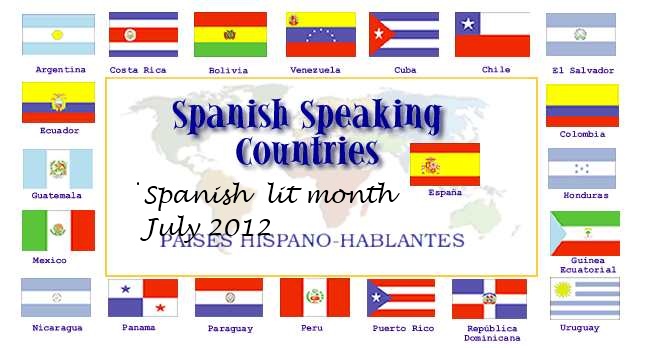
Spanish Literature Month – July 2012

There have been requests last year and then a rumour started to spread and now it’s official: July is Spanish Literature Month. Stu (Winstonsdad’s Blog) and Richard (Caravana de recuerdos) who co-host this event have organized a watchalong (Carlos Saura) and two readalongs (Juan Carlos Onetti A Brief Life and Enrique Vila-Matas Bartleby and Co.) but if you cannot make them you are free to choose whatever you like. If you want to join, just leave a comment at one of the two blogs. Here’s Stu’s intro post and here the one by Richard.

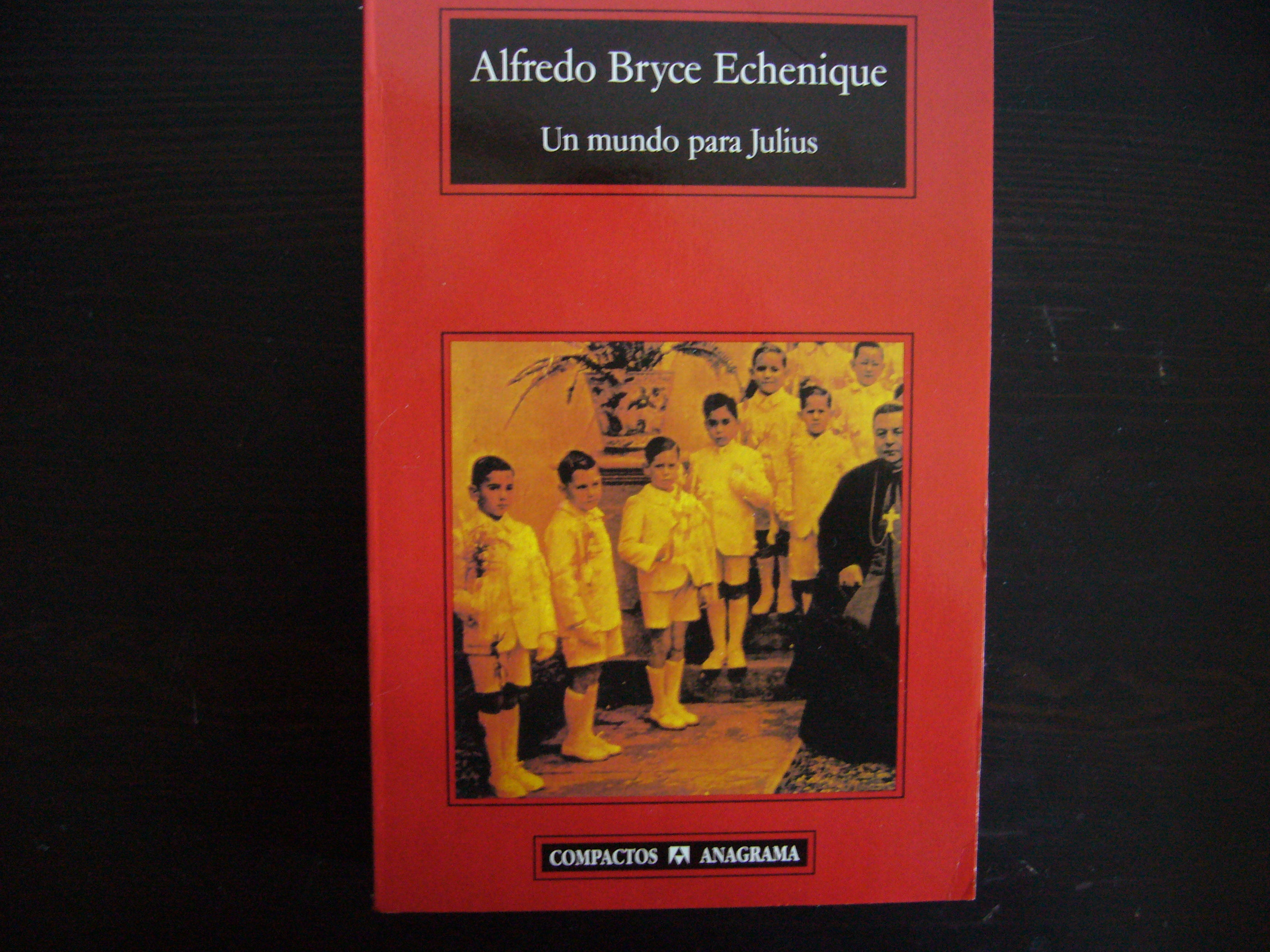
As you can see I have an idea what I would like to read. Since I may not be able to read a lot, I want at least to read one of the books I have in Spanish. A few years back I bought Un mundo para Julius by Peruvian writer Alfredo Bryce Echenique. I like books about the end of an era. They are usually lyrical, nostalgic and melancholic. This seems to be no exception.

It has been translated into English as A World for Julius.

Julius was born in a mansion on Salaverry Avenue, directly across from the old San Felipe Hippodrome.” Life-size Disney characters and cowboy movie heroes romp across the walls of his nursery. Out in the carriage house, his great-grandfather’s ornate, moldering carriage takes him on imaginary adventures. But Julius’s father is dead, and his beautiful young mother passes through her children’s lives like an ephemeral shooting star. Despite the soft shelter of family and money, hard realities overshadow Julius’s expanding world, just as the rugged Andes loom over his home in Lima. This lyrical, richly textured novel, first published in 1970 as Un mundo para Julius, opens new territory in Latin American literature with its focus on the social elite of Peru. A member of that elite, Bryce Echenique incisively charts the decline of an influential, centuries-old aristocratic family who becomes nouveaux riches with the invasion of foreign capital in the 1950s. A World for Julius, his first novel, marks the first appearance in English of this important Peruvian writer, whose Latin American postmodern fiction has won critical acclaim throughout the Spanish-speaking world.

I may end up reading something less challenging in terms of pages. Two authors I like a lot are Almudena Grandes from Spain and Maria Luisa Bombal from Chile. I still have some of their books I have not read.

Product Details

The crime novels by Teresa Solana A Not So Perfect Crime and A Shortcut to Paradise are possible choices as well.

Or another Peruvian author. I just recently got Vargas Llosa’s Death in the Andes – Lituma en los Andes.

Set in an isolated, run down community in the Peruvian Andes, Vargas Llosa’s riveting novel tells the story of a series of mysterious disappearances involving the Shining Path guerrillas and a local couple performing cannibalistic sacrifices with strange similarities to the Dionysian rituals of ancient Greece. Part-detective novel and part-political allegory, it offers a panoramic view of Peruvian society; not only of the current political violence and social upheaval, but also of the country’s past, and its connection to Indian culture and to pre-Hispanic mysticism.

I have read Juan Carlos Onetti before and liked him very much. To make sure that I really read at least something, I will join the readalong of A Brief Life. The details can be found on Richard’s and Stu’s blog.

I could suggest some other books but I think Stu and Richard are doing a great job at pointing out books you should discover.

Are you joining as well? What are you going to read? Do you have favourites of Latin American and Spanish literature?

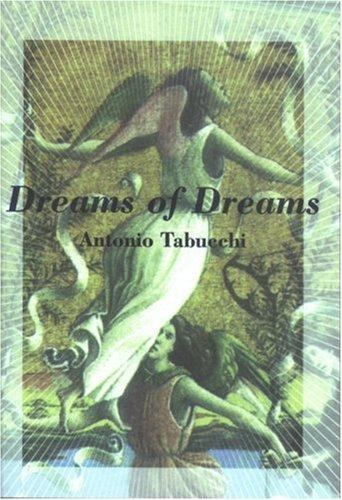
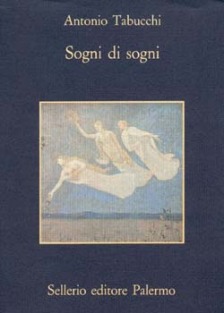
Antonio Tabucchi: Sogni di sogni – Dreams of Dreams (1992)

Elaborately imagined…mini-catalog of great artists’ dreams and the author’s interpretation of the last three days in the life of Portuguese poet Fernando Pessoa. Tabucchi’s rich language and his magical-realist charm tinge the volume with a visionary glow.

Antonio Tabucchi’s Sogni di sogni or Dreams of Dreams is a collection of sketches or short pieces, circling around the life and work of different authors, painters, musicians and other famous people. Arranged in chronological order they all tell of an imaginary dream of the person to whom the story is dedicated. At the end of the book, a short biography of each of the men gives some of the most important details about their life.

While this may not be an ideal starting point for someone who isn’t familiar with Tabucchi, it’s an amazing introduction into the Western European cultural heritage. It’s an amazing little book. To be able to write something that is equally enchanting, inspiring and instructive, is admirable. On the other hand it shows what a wonderful writer Tabucchi was. The short sketches are written in a beautiful and highly evocative prose that reminded me of the intensity of elaborate and sumptuous Persian miniatures.

If you are familiar with the men included in the book, it will enhance the experience but it’s not necessary.

To give you an idea of what Tabucchi does in this book, I’ll pick the example of Ovid. In his dream, Ovid sees himself not only loved by his emperor but transformed into a giant butterfly. Only when he stands in front of the emperor and should perform one of his poems, all that comes from his mouth is a high-pitched whistling sound. He tries to move his wings instead and perform his poem like a pantomime but this infuriates the emperor. Angered he has Ovid’s wings cut off. When they fall to the ground, Ovid knows he will die.

Hidden behind this sketch is an allusion to Ovid’s most famous work, the Metamorphoses and the whole tragic life story of one of the greatest poets of all times, who spent his last years disgraced and banned from Rome, in Tomis, on the Black Sea.

Here is the list of all of the people included in the book:

Daedalus
Ovid
Lucius Apuleius
Cecco Angiolieri
François Villon
François Rabelais
Caravaggio
Francisco Goya
Samuel T. Coleridge
Giacomo Leopardi
Carlo Collodi
R. L. Stevenson
Arthur Rimbaud
Anton Chekhov
Claude Debussy
Henri de Toulouse-Lautrec
Fernando Pessoa
Vladimir Mayakovsky
Frederico Garcia Lorca
Sigmund Freud

Sogni di sogni is highly imaginative and one of those books that opens doors. It will make you want to explore the people and works behind each chapter. It certainly made me want to read more of Tabucchi, one of the most amazing and creative Italian writers who sadly died earlier this year.

It’s often difficult to find Italian books in translation but Tabucchi is one of the rare authors who has been extensively translated. Some of the newest books are not out in English yet but most of his earlier ones are.

Have you read Tabucchi? Would you be interested in a Tabucchi week?