Jane Austen: Persuasion (1818)

Persuasion

After having read Mansfield Park and liking it so much (as you can see here) I decided to read Persuasion, which has been mentioned by so many in the comments as their favorite Jane Austen novel. The two books couldn’t be more different. I found Persuasion much more mature, more subtle, less witty, more elegant and a bit melancholic. It’s a perfect novel, there is nothing superfluous in it; the story and the characters are rounded and the way their emotions are shown is believable and very touching. There is a lot of sadness and heartache in this novel, but, since it’s an Austen novel, the good characters are rewarded. Despite of all of this, I’m not sure I prefer it to Pride and Prejudice or Mansfield Park. The earlier novels have some imperfections, but they also show an exuberance and wit, which I enjoy. From the point of view of the love story, I think Persuasion is my favourite and I like Anne Elliot and Captain Wentworth as much or even more as Elizabeth Bennet and Mr Darcy, but I missed some of the irony and playfulness of the earlier novels. On the other hand Persuasion is very subtle and I love the more urban settings, Lyme Regis and Bath, which add to its appeal.

Anne Elliot is one of three sisters who lost their mother at an early age and grew up with a silly and vain father who, on top of that, is a spendthrift. The most important things to him and his eldest daughter, Elizabeth, who is his female counterpart, are looks and titles. Being a baronet is of the utmost importance to him. The gentle and sensible Anne suffers a great deal through their coldness and superficiality and if it wasn’t for her mother’s old friend Lady Russell, who has become her mentor, she’d be bad off in a family of self-centred, pompous fools. Her younger sister Mary is not much better and at that a hypochondriac. When the novel starts the Elliots are forced to leave Kellynch Hall and find cheaper lodgings in Bath because Sir Elliot and Elizabeth have been spending far too much. The estate will be let to Admiral Croft and his wife. Mrs Croft is the sister of Captain Wentworth, the man Anne Elliot once loved and – persuaded by Lady Russell – refused to marry because he had no money and no status yet.

Eight years later Captain Wentworth is still as handsome and likable as he used to be, but he’s also very rich. Anne who has refused every suitor, soon regrets bitterly that she refused him. Captain Wentworth on his side is still hurt and resentful. He hasn’t forgotten Anne but cannot forgive her.

Persuasion is often called a “novel of second chances”, and that’s what the love story is all about, but Austen novels are always about much more than just love and marriage. Money and the criticism of a superficial society which attached too much worth to it are central themes. In Persuasion we find a similar situation as in Pride and Prejudice: a rich man with no male heir. The way this is handled is central to the society and the times in which Jane Austen lived but, thankfully, so different from now. Should Sir Elliot die, the estate would go to a distant male relative and not to one of his daughters. It seems as if the property was tied to the name only and not so much to the family. Someone who may never even have seen a house, may be living in it, while those who spent there all their lives have to move out.This is so incomprehensible for us, feels so incredibly unjust that whole series, like Downton Abbey, illustrating this practice, are sure to generate our interest.

A large part of the second story line in Persuasion focusses on this aspect. There is an heir, but he is proud and arrogant, and it is very painful for everyone to imagine he will be living in Kellynch Hall. However, since Sir Elliot is still a good-looking man, it’s not impossible that he remarries. If a younger wife would give birth to a son, the whole situation would look entirely different. While the love story is central the “hunt” for the estate and the ensuing complications are no less important.

I’ve read all of Jane Austen’s longer novels now and it’s quite fascinating to look back, to compare, find similarities, spot differences. I’m currently reading Claire Tomalin’s Jane Austen biography and it adds another layer. So much that is mentioned in Tomalin’s book can be found in the novels. I noticed that Jane Austen never describes London, but I didn’t know she’d never been there.

Nowadays I tend to jump from one author to the next, but it has a special appeal to read everything of one writer because the books are always linked and when you’ve read them all, you can see, that despite the differences, the individual books together form a whole. In Jane Austen’s case, reading all of her books, showed all of her novels are full of vivid portraits and character sketches, full of well-observed behaviour and show the many facets of romantic attachment. But while there are similarities in the themes, there is a huge difference in mood.
“The term literay fiction has been invented to torment people like me” – John Updike

P1030189

I can only speak for myself but I feel pretty much the same as Updike and mostly agree with the full quote below which is taken from an interview with Lev Grossman in Time magazine in 2006 (you can find the whole interview here)

I think America is an increasingly book-free country. In the world of my boyhood, there were books everywhere. Your piano teacher had books, and there were lending libraries everywhere–your department store had a lending library. Books are still bought, and you see them being read in airplanes, but it’s a last resort, isn’t it? And the category of “literary fiction” has sprung up recently to torment people like me who just set out to write books, and if anybody wanted to read them, terrific, the more the merrier. But now, no, I’m a genre writer of a sort. I write literary fiction, which is like spy fiction or chick lit. I was hoping to talk to America, like Walt Whitman, you know? Address it and describe it to itself.

I have seen quite a few debates circling around the questions about the end of literature and/or what “literature and literary fiction” means. Is it so-called literary fiction that is about to end? The modernist novel? Surely nobody can say that story telling will end? And what is literary fiction anyway? Isn’t that an absurd expression? For me, being a French/German native speaker the term “literary fiction” is an oddity. In French and German it is much more pragmatic. Literature is pretty much the same as what English-speaking people call literary fiction. If you want to be precise you can add “demanding”, “challenging” or “sophisticated”  or to describe the opposite “entertainment”. Or you can add a school or movement like “nouveau roman” which already excludes “genre”. But that seems to be a continental European perception.

Lately I came across a term I found even more absurd “literary genre”.  It was used for books like Jamie Ford’s Hotel on the Corner of Bitter and Sweet. In German we would call that “gehobene Unterhaltungsliteratur” , meaning sophisticated entertainment literature. It’s a term used to tell the interlocutor that you’re not exactly reading trash, but nothing too demanding either.

In his extremely interesting book Writing 21st Century Fiction (I’ll need to review that some day), literary agent and writer Donal Maass argues that “literary genre” is the thing of the moment. I’d say it’s nothing new, it’s just another word for bestseller or mainstream fiction. Because being slightly more literary than the average genre novel, without being crime/fantasy or romance,  but accessible and well constructed, has always been the recipe for bestsellers.

In any case, literature is still alive and kicking, whether genre or literary. What seems to be dying is the patience of the reader, hence the popularity of so-called “readable” fiction, which means a lot of different things like simple sentences, short paragraphs, many chapters etc. Probably one of the many legacies of TV and other newer media that can be asborbed quickly. It’s no surprise that a lot of the current bestellers have been written by MFA graduates. They are well-constructed, have a stronger emphasis on metaphors and similes and take the short attention span of the reader into consideration.

Do you agree with Updike? Do you think literature is dying? And what about the terms literary fiction and literary genre?

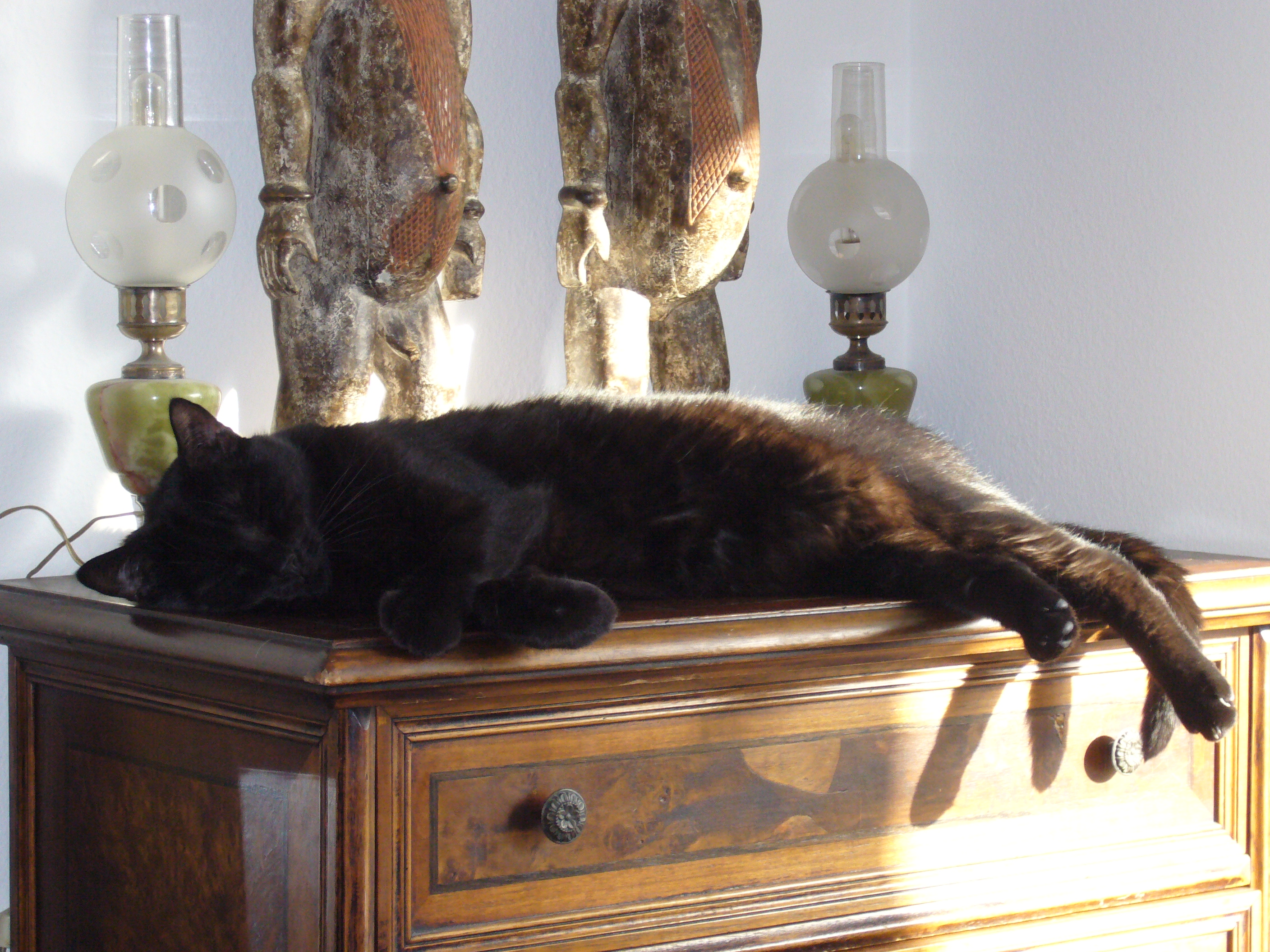
My cat, as you can see,  couldn’t care less. Maybe he has a point.

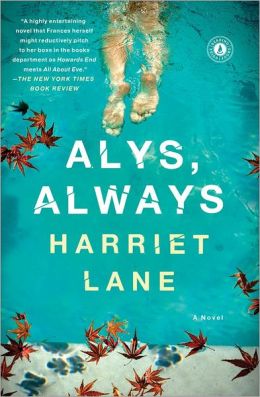
Harriet Lane: Alys, Always (2012)

Alys-Always

Litlove reviewed Harriet Lane’s first novel Alys, Always a couple of weeks ago (here) and it sounded very good. A bit like Ruth Rendell only even more literary. In any case I was curious and had to read it.

Frances drives back home to London from a visit at her parent’s house. It’s winter, cold and dark when she sees something strange on the side of the road in a forest. It’s a car accident. The driver is still alive and Frances stays with her until the ambulance arrives. She only speaks a few words with the woman but those words tell her a lot about her. She sounds like she comes from a well-off family and lives a life of ease. The choice of words, the intonation and the accent tell her all this. Frances may be a mousey looking woman but she’s highly perceptive and sharp.

A little while later the police inform her that the woman, Alys, has died. They ask her whether she is willing to talk to the family but Frances doesn’t feel up to it. She only decides to do it after discovering that the woman whose final moments she witnessed was the wife of one of the most highly acclaimed British writers.

Frances lives an invisible life. She isn’t unhappy but there is nothing that stands out. She is single, doesn’t have a lot of friends, doesn’t care for her family and her job for the book section of a big newspaper is less than fulfilling. When she is offered the opportunity to meet someone famous, she seizes it and with a cold, sly determination, she manages to use every little thing that comes her way.

I wouldn’t call Frances an unreliable narrator. On the very contrary. But she is sly. Calculating, dissecting. Everything she sees is carefully evaluated, assessed and we follow her astonished, wondering all the time what her intentions are and where they will lead her.

It’s fascinating and a bit creepy. I wouldn’t call her a likable person at all but in way she’s understandable and by the time the book ends, we’re glad we didn’t meet her or get in her way.

I wouldn’t exactly compare this novel to Notes on  Scandal but it is written in the same vein. It has also a similarity with Rendell’s A Judgement in Stone. The difference lies in the psychological believability and the writing. Alys, Always wasn’t entirely believable or rather, Frances was very believable but the people around her far less so. However, this small flaw is minimized by the writing. Harriet Lane writes beautifully and that’s why I’d say, the book is more literary than Rendell. Her descriptions are subtle and lyrical, the mood and atmosphere of the book are quiet and cool, the pace is relaxed. It’s eerie, but in a gentle way. Opening the pages and entering the world of Alys, Always is like walking through a huge stylish house in which every detail is carefully selected and arranged. There is only this slightly cool breeze coming from an open French window that makes you shiver just a tiny bit.

If I had to compare this book to a flower, I’d compare it to a white calla.

Calla

On the surface Alys, Always is a novel about a woman who knows how to exploit an extraordinary situation but underneath it says a lot about fate and narcissism. As Frances says in the novel, “listening is a dying art form” and because all of the characters in this novel are to some extent narcissistic, they want to be heard and seen and would never question that someone could be far less interested than they pretend to be.

I really hope Harriet Lane is going to write another novel as I liked Alys, Always a great deal. The writing was so beautiful, it made me re-read several passages more than twice before I moved on.

Moroccan Literature and A Blogging Break

Picture taken from www.trekearth.com

Picture of the Kashbah Aït Benhaddou taken from http://www.trekearth.com

This is just a quick post to let you know I’m taking a blogging break. I’m not sure for how long but I will certainly be back in time for the readalong at the end of the month.

Canetti

Some of you know that one of the reasons for the break is that I’m travelling to Morocco. To Marrakech to be precise. The first time I’ve been to Morocco was in part because of so many European and American writers like Paul Bowles, Elias Canetti, Esther Freud, who loved Morocco and especially Marrakech. The way they described the city made me think I would love it. At first I was disappointed as it was so different from what I had imagined but then I went back and saw the “real” Marrakech and fell in love. I wonder how it will be this time. This trip will be special as I’m travelling with someone who has been there before, someone who has never been there and someone who was born there. It will be interesting to see the city through so many different eyes. From Marrakech we will travel to Essaouira which is on the coast and stay there for a couple of days.

I’m looking forward to this trip as the temperature here is still around 6°C/42,8°F, while in Morocco it should be around 27°C/80,6°F.

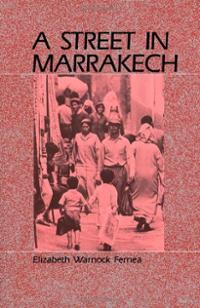
a-street-in-marrakech-elizabeth-warnock-fernea-paperback-cover-art

Another reason why I wen to Marrakech for the first time was Elizabeth Fernea. While studying at the university I took a course on travel memoirs written by cultural anthropologists. One of the titles that made a huge impression was A Street in Marrakech. I’d love to read it again. It’s a fascinating account and a well-written book that captures the magic of living in another culture and the sorrow to leave it again.

The other day I thought it was appalling that I haven’t read any Moroccan writers other than Tahar Ben Jelloun. There are so many, however not all of them have been translated. To put myself in the mood for the trip I compiled a small list.

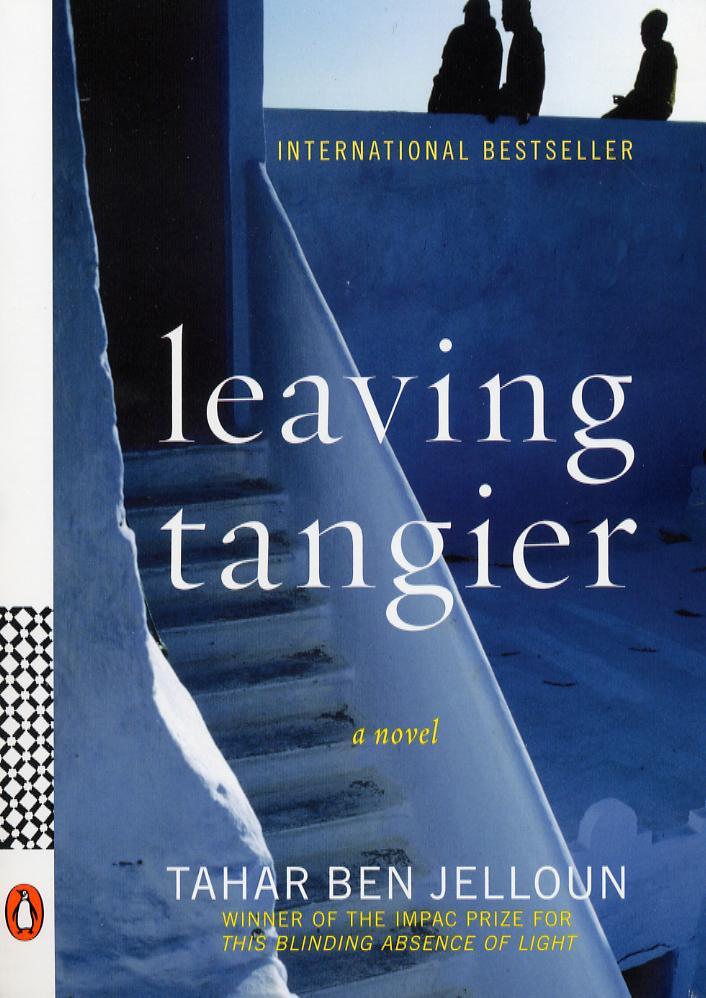
Tahar-Ben-Jelloun-Leaving-Tangier

Tahar Ben Jelloun – Leaving Tangier

Ben Jelloun is probably the most famous Moroccan writer. His books are short and lyrical. He has written a lot. Many of his books have been translated.

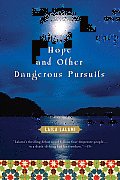
Laila Lalami

Laila Lalami Hope and Other Dangerous Pursuits

Lalami is  new to me. Her books received much praise. She lives in the US and writes in English but was born in Morocco.

For-Bread-Alone

Mohamed Choukri – For Bread Alone

Mohamed Choukri’s autobiographical novel is a classic. It has been translated by Paul Bowles. It’s an account of poverty and hardship, written in powerful prose.

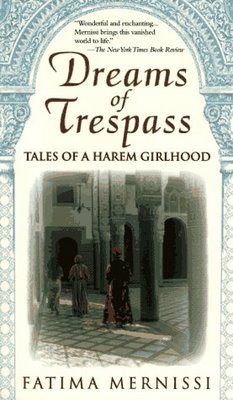
Dreams_Trespass

Fatima Mernissi – Dreams of Trespass: Tales of a Harem Girlhood

I bought this years ago but have still not read it. Mernissi writes in English. I’ve read other memoirs by women who grew up in a harem. They are worth reading as we discover a world we would otherwise never see.

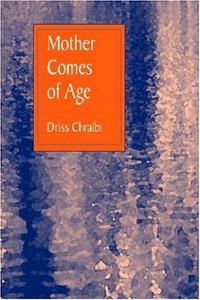
mother-comes-age-driss-chraibi-paperback-cover-art

Driss Chraibi’s novel Mother Comes of Age is another classic which I’ve bought some time ago. It is said to be one of the most important Moroccan books.

I hope this post will tempt the one or the other to pick up a Moroccan writer in the future.

I know that some of you are curious to see what books people will read when travelling or on holidays. While I have a kindle I will not go anywhere without real books. These are the candidates I’m taking with me:

Asmara

I’ve already started Asmara et les causes perdues. Jean-Christophe Rufin has won the Prix Goncourt for his novel Rouge Brésil or Brazil Red. Unfortunately Asmara hasn’t been translated.

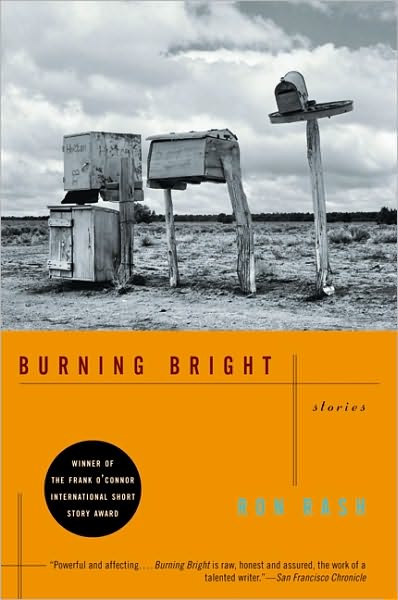
burning bright - ron rash

Ron Rash has been on my radar for a while. Before reading his novel The Cove I wanted to explore his shorter fiction. Burning Brigth has received some prestigious prizes.

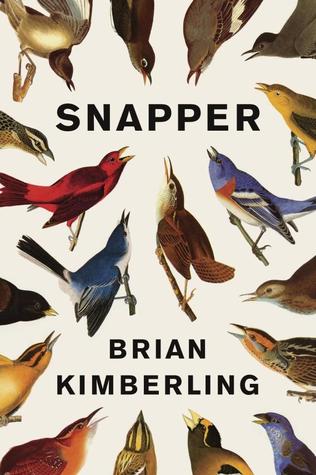
Snapper

I just received Brian Kimberling’s first novel Snapper from Random House and since it sounds so good, I’m going to read this soon.

You certainly wonder why I’m not taking any of the Moroccan books. I’m weird that way, I keep those for when I’m back.

Take care everyone. I’ll be back in a couple of weeks.

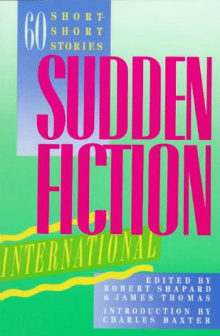
Sudden Fiction International – 60 Short Short Stories

Sudden-Fiction-International

I have always liked short stories but even more than that I like very short stories, tales that are barely one to five pages long. The success of their first edition of Sudden Fiction led the editors to the idea to do the same for international fiction that they had previously done for American Fiction. The collection Sudden Fiction International presents 60 very short stories from authors from all over the world. I’ve started to read the collection over the last few weeks and I’m amazed. It’s a fantastic collection. Not only is each and every story wonderful, it also introduces the reader to authors from many different countries. The result is rich, varied and vibrant. Reading and discovering these tales feels like it would have felt to be offered a huge collection of marbles as a child. Each of them is round and perfect but they all have another pattern, another colour, a different transparency.

In addition to the stories there is some background information on the authors provided at the end of the book. Most of the times the information is given by the respective translators.

I know that many people are reluctant to pick up short stories. They don’t know how to read them, feel they cannot immerse themselves as much as they want. I believe that the very short story could be helpful because it can be read and re-read in one sitting without too much effort.

I have read quite a few of the stories already and with the exception of Cortázar’s story, I liked them all. The two which did stand out the most so far were Buzzati’s The Falling Girl and Kawabata’s The Grasshopper and the Bell Cricket. The first is the story of a young girl which jumps from a skyscraper but falls very slowly and has enough time to talk to the people she passes by. It’s a sociological look at contemporary Italy. Kawabata’s story is a thing of rare beauty. A man sees children at night, each of them carrying a lantern in another colour. The children are looking for insects and one of them finds a grasshopper. The story offers a nostalgic look at childhood and the way time passes so quickly and dreams die too soon.

For those interested I noted a few of the authors, stories and countries they represent. Although this is the second tome, there are still quite a lot of American stories in this one and many from other English-speaking countries too.

Dino Buzzati – The Falling Girl – Italy

Yasunary Kawabata – The Grasshopper and the Bell Cricket – Japan

Colette – The Other Wife – France

Rodrigo Rey Rosa – The Book – Guatemala

Bessie Head – Looking for the Rain God – Botswana

Jamaica Kincaid – Girl– Antigua

Joyce Carol Oates – The Boy – US

Sergei Dovlatov – Katya – Russia

Feng Jica – The Street Sweeping Show – China

From Australia to Russia via the US – A Few Challenges/Events in 2013

Aussie-Author-Challenge-2013

I have decided to be less active this year when it comes to challenges, readalongs and other events but there are still a few things I want to do or rather challenges I’d like to sign up for again.

All the Australian books I read last year were wonderful books and I want to explore more Australian literature. That’s why I singed up again for The Aussie Author Challenge at Booklover Book Reviews.

These are the possible choices

Secret River

Kate Grenville’s The Secret River

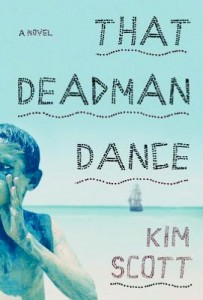
That Deadman Dance

Kim Scott’s That Deadman Dance

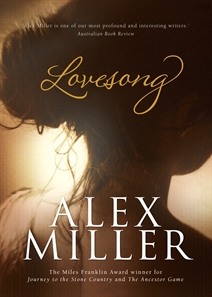
lovesong

Alex Miller’s Lovesong

American Revolution Reading Challenge 2013

I will also participate again in Anna’s and Serena’s War Through the Generations Challenge. The topic this year is the American Revolution. I haven’t read anything about this period yet and don’t know any books at all. Suggestions are very welcome.

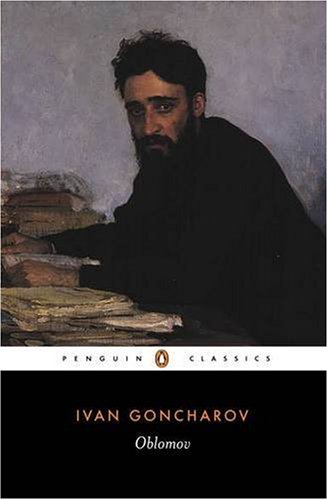
oblomov

Last but not least I’m planning on joining Richard (Caravana de recuerdos) for one or two of his 2013 Russian Reading readalong titles.

Here is the list.

Vasily Grossman’s Life and Fate (c. 1960)
 
Nikolai Gogol’s Dead Souls (1842)
 
Ivan Goncharov’s Oblomov (1859)
 
Leo Tolstoy’s Anna Karenina (1877)
 
Mikhail Bulgakov’s The Master and Margarita (c. 1940)
 
Vladimir Nabokov’s Lolita (1955)
 

Please visit Richard’s site for the details.

Dickens in December – Wrap up

Dickens button 01 resized

It’s a sure sign that the year is ending when we publish more wrap up posts than original posts. The end of 2012 also marks the end of Dickens’s bicentenary and of Delia and my Dickens in December event. It’s time to thank all of those who have participated and have joined in the readalong or reviewed books and movies. The links below show that the event was quite a success. I enjoyed it a lot and am glad that I have finally read one of Dickens novels. It will not be my last. A special thank you to my co-host Delia.

Thank you once more and I hope you enjoyed  it as well.

Intro Delia

Intro Caroline

Intro Post (Resistance is Futile)

Intro Post (Leeswamme’s Blog)

Intro Post (50 Year Project)

Intro Post (Rikki’s Teleidoscope)

Intro Post (Page 247)

Intro (Books Speak Volumes)

Dickens in December Begins Today (Beauyt is A Sleeping Cat)

Intro (Too Fond)

Dickens in December Start (Postcards for Asia)

Some Dickens for December (Kaggy’s Bookish Ramblings)

Giveaways Delia – Caroline

Classics Club December Meme – A Christmas Carol (Too Fond)

Great Expectations (Fanda Classiclit)

Bleak House (The Argumentative Old Git)

My Favorite Dickens Quote (On the Homefront)

Great Expectations (My Reading Journal)

A Tale of Two Cities (Babbling Books)

Dickens in December – A mixed bag (Lizzy’s Literary Life)

The Muppet Christmas Carol (Rikki’s Teleidoscope)

Dickens Project (Reader Woman)

A Christmas Carol – Jim Carrey Version (Beauty is a Sleeping Cat)

Great Expectations mini series (Fanda Classiclit)

The Life and Adventures of Nicholas Nickelby (2001) — (Postcards from Asia)

Oliver Twist- The Movie (Leeswamme’s Blog)

The Chimes (The Argumentative Old Git)

Dickens on Screen: David Copperfield, The old Curiosity Shop, Great Expectations (Postcards from Asia)

The Old Curiosity Shop (Tabula Rasa)

Great Expectations (Beauty is a Sleeping Cat)

A Tale of Two Cities (50 Year Project)

Three Detective Anecdotes (Cceativeshadows)

Havisham and Bleak Expectations (Lizzy’s Literary Life)

Blackadder’s A Christmas Carol (Rikki’s Teleidoscope)

Great Expectations (Lynn’s Book Blog)

A Christmas Carol BBC Version (Rikkis’ Teleidoscope)

The Pickwick Papers (Tony’s Reading List)

A Christmas Carol (Surgabukuku)

Great Expectations (50 Year Project)

A very short review A Tale of Two Cities (Leeswamme’s Blog)

Three Short Stories (Postcards from Asia)

A Tale of Two Cities (Tabula Rasa)

Dodger by Terry Pratchett and Dickens by Peter Ackroyd (Tabula Rasa)

Hard Times (Vishy’s Blog)

The Old Curiosity Shop (Kiss a Cloud)

Readalong participants

50 Year Project (TBM)

Dolce Bellezza (Bellezza)

Kaggsy’s Bookish Ramblings

Polychrome Interest (Novia)

Postcards from Asia (Delia)

The Argumentative Old Git (Himadri)

The Things You Can Read  (Cynthia)Questions and Answers

The Things You Can Read Student Comments

The View From the Palace (Shimona)

Lost in the Covers (Elisa)

Leeswamme’s Blog (Judith)

Lynn’s Book Blog

Love. Laughter and a Touch of Insanity (Trish)

A Work in Progress (Danielle)

Sandra – please see comments section

Tabula Rasa (Pryia)

Slightly Cultural, Most Thoughtful and Inevitably Irrelevant (Arenel)

My Reading Journal (Ann)

Vishy’s Blog (Vishy)

Resistance is Futile (Rachel)

Too Fond

Beauty is a Sleeping Cat (Caroline)