Len Deighton: Bomber (1970) Literature and War Readalong June 2012

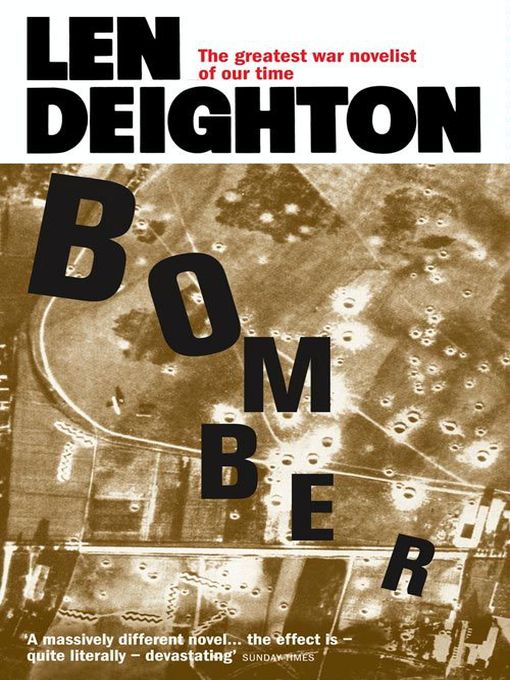
It is very rare that I abandon a book. Often I regret this persistence when I finish it anyway and have to find out that it simply isn’t good. Sometimes I’m incredibly glad I went on. Len Deighton’s Bomber was one of those. I struggled badly for 150 pages and the idea to have to go on for another 400 seemed daunting. But it was worth the effort, it really was and looking back, I have to say, how lucky this was part of my readalong or I would have given up and missed out greatly. Bomber is amazing. It’s maybe not refined and highly literary but it’s a huge achievement. Not only because it is extremely accurate and detailed but also because it’s very engaging and admirably well constructed.

Bomber is an epic. A book with a huge cast and numerous different settings and story lines. Deighton really needed 150 pages to set the scene and introduce everyone, including the different aircraft. That part was really challenging to read as there were so many names and one had to try to constantly picture a map to see where they were located. Once the set up was done, the story moved on nicely, all the different story lines were tied together, the characters had become more than just names but people with a story.

Bomber tells the story of a bombing raid that takes place on June 31st 1943. Deigthon deliberately chose a date that doesn’t exist, knowing well that his book felt so realistic and authentic that people would always end up assuming it was non-fiction.

The 31st is a full moon night and all the crews get ready for a night of bombing and fighting. The target is the city of Krefeld in Germany. The planes take off from Warley Fen, head towards Krefeld and have to try to not get shot down before they have dropped the bomb. But before they can drop a bomb

First the PFF Mosquito aircraft will mark the target with red markers. Their gear is much more accurate than anything we have, so their reds are what the Finders must look for. The Finders will put long sticks of flares over the reds. Mixed in with the Finder aircraft there are Supporters – and these are mostly crews on their first couple of trips – who are carrying only high-explosive bombs. That’s because incendiaries could be mistaken for red markers.

What you just read is part of the instruction the pilots receive before flying off. But this part is more than that, it points towards the core of the book because the tragedy of the story has it’s source in the fact that, due to many unlucky circumstances, the markers were dropped on the wrong targets and what was bombed was the small city of Altgarten. No factories, no strategic points, just civilian buildings.

The first third of the book, sets the scene, the next third describes a lot of action and how the mistake happened and the last third is describing the drama in the air and on the ground in a very graphic way. I had to swallow hard a lot of times.

What I liked is that Deighton described a wide range of German characters, from the fanatic Nazi to the likable soldier. The portraits are nuanced and we get a feel for the diversity of the people.

The British crews are equally diverse but for other reasons. There are also Canadians and Australians, upper class and lower class men, married guys and womanizers, men who just do their duty, cowards and heroes.

In the death scenes Deighton’s sympathies clearly lie with the German civilians and the British bomber crews. Each part has one or two main characters and a lot of secondary characters and the fate of the main characters is equally sad in all the parts. I cannot go into too much detail, if you want to read it, you want to find out for yourself who will survive and who will die.

I’ve read a few harrowing accounts in the past and the one or the other book has depressed me incredibly. Bomber didn’t depress me but it brought a few tears to my eyes, a thing that rarely if ever happens to me unless something sad happens to an animal.

Bomber offers an interesting mix of emotional story telling, accuracy and numbers. We are informed of everything. How many people were involved, how many died, how many were injured, how many bombs hit target, how many were jettisoned, how many missed or didn’t go off and so on and so forth. At the end of the book were also informed about each and every surviving character’s future. It’s as if Deighton wanted to answer each and every question someone reading his novel might have.

If you ever wondered what it is like to be in a city which is bombed, this book will bring you close to this experience. If you ever wondered what it is like to be in plane on a bombing raid, this book will allow you to experience this as well.  In any case, if you are interested in WWII and how it was fought in the air, this is the book you should read.

If you’d like to find out a few things about Deigthon and his other books don’t miss visiting the Deighton Dossier. It is a site dedicated to Deigthon’s work and it is done with a lot of passion.

Other reviews (I’m somewhat doubtful that there will be any)

*******

Bomber was the sixth book in the Literature and War Readalong 2012. The next one will be Masuji Ibuse’s Black Rain. Discussion starts on Monday July 30, 2012.

Nigel Balchin: Darkness Falls From the Air (1942) Literature and War Readalong May 2012

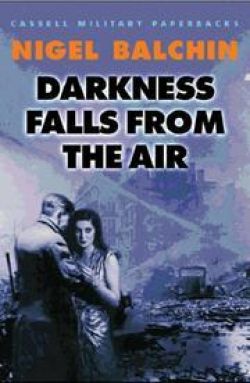
With ostentatious lack of concern, Bill Sarratt, his wife and her lover spend the war wining and dining expensively, occasionally sauntering out into the Blitz with cheerful remarks about the shattered night-life of London’s West End. But beneath the false insouciance lies the real strain of a war that has firmly wrapped them all in its embrace. Wit may crackle at the same pace as buildings burn, but personal tragedy lurks appallingly close at hand.

I have always wondered how people lived during the Blitz. How they coped with the fear, the chaos, the exhaustion and lack of sleep. I have seen a couple of movies set during WWII. Something that struck me more than once was the depiction of the Londoners during the Blitz. More than one movie showed them dancing or dining all through an air raid. Almost as if nothing was happening. I always wondered if this could have been the case. And what about the air raids that went on during the whole night? How would you cope with that? A lot of the questions I had have been answered by Darkness Falls From the Air. While I’m sure Blachin took some liberties and may have exaggerated, I think it still manges to give a good impression. It is one of the rare books that has been written during the Blitz which makes it especially interesting. Balchin worked as a psychologist for the British War Office and later as Deputy Scientific Advisor to the Army Council. Both occupations can be felt throughout the novel.

What I liked is how the main characters’ personal story, their marriage, work life and the war are interwoven.

In the beginning of the novel, the air raids aren’t as frequent at night and whenever a bomb falls down somewhere, Bill and his wife Marcia go and watch because it’s to a certain extent exciting. They do not feel threatened at all. They dine in underground restaurants and sleep in their own apartment. But the longer the war lasts, the more precarious the situation gets. People start to live in the tube and Marcia and Bill move to a hotel as their apartment house has no shelter. They still go out and dine underground and walk around the city to see the damage but it starts to become a bit less carefree. What gets to Stephen the most is the lack of sleep.

The day raids were dying down now. I suppose the pace was too hot to last. But to make up for it the nights were getting rougher than ever. The chief difficulty was to get enough sleep to keep going. Everybody was turning up at the office looking half asleep and sour as hell. I think it was this which led up to my row with Lennox. Lord knows there were enough reasons for quarreling with Lennox even if you were sleeping eight hours a night. When you got dow to an average of about three the thing was a certainty.

The narrator of Darkness Falls From the Air, Bill Sarrat, is a public servant. He must be one of the most cynical characters I’ve ever encountered in a novel. I didn’t expect this to be an amusing book but it was. Grim but funny. Passages like the one below illustrate what type a of person Sarrat is. He has an acute sense of the times he’s living in but at the same time he evades self-pity because he ultimately doesn’t take himself too seriously.

I’d decided that, what with work and Marcia and one thing and another, I was getting out of touch with the war. So I got out an atlas and Whitacker’s Almanack and so on and studied the war. That took about ten minutes. Then I tried forecasting the next bits. The last time Ted and I did that was at the beginning of the year. Ted put down that Germany would invade Switzerland, and that Japan would have a crack at Burma. I said that Germany would attack Hungary and Rumania and that Turkey would join up with us. The next morning Russia invaded Finland. An experience like that takes the heat out of you as a prophet.

The book follows three different narratives. The first is the marriage between Bill and Marcia which becomes more and more dysfunctional the longer the war goes on and the deeper Marcia entangles herself in her love affair with Stephen. The second story line centers on the depiction of life during the Blitz. The third narrative strand evolves around Bill’s occupation as a Civil Servant. The absurdity of the bureaucracy stands in stark contrast to the urgency of the matters they deal with. While “there is a war on”, they spend hours and days in useless meetings. Half of the staff is unprepared while others try to sabotage great projects out of sheer jealousy or incompetence. These parts reminded me so much of corporate life where people who have no clue will add tons of comments, questions and words of caution to a well prepared concepts just to pretend to be involved and competent. Additionally nobody wants to take a decision and those who work and think are the one’s seeing the useless people being promoted because they are in the way and no one knows how to deal with them otherwise. All this is captured by Balchin and these elements made this a very amusing book.

Blachin was, as I have mentioned, working as a psychologist and that shows in the parts dedicated to the love triangle. While I could have slapped Marcia and her vain lover Stephen, the discussions, the back and forth and Bill’s analysis of the whole story rang remarkably true.

While Darkness Falls From the Air has been called the novel of the Blitz, which it certainly is, it’s an amazing analysis of bureaucracy and a hopeless marriage. This was my first Balchin and I’m glad I discovered this author on Guy’s blog. It isn’t a flawless novel, it could have done with some editing but the voice and the tone are unique and the grim sense of  humour appealed to me a lot.

Other reviews

Danielle (A Work in Progress)

*******

Darkness Falls From the Air was the fifth book in the Literature and War Readalong 2012. The next one will be Bomber by Len Deighton. Discussion starts on Friday June 29, 2012.

Helen Humphreys: Coventry (2008) Literature and War Readalong April 2012

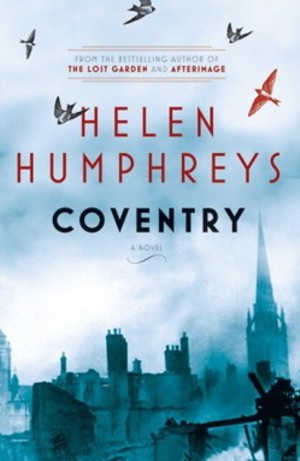
Helen Humphrey’s novel Coventry starts with a woman and a young man standing on Coventry cathedral, on November 14, 1942. Harriet and Jeremy are fire fighters. It’s an eerie night, almost beautiful.

The moon is full and bright and the ground below the cathedral is white with frost. Harriet has never seen anything so beautiful. The ground glitters like the sea and smells of earthy cold.

This is the night in which Coventry cathedral will be bombed and most of the city destroyed. But when the bombs start falling and even after most of the destruction, Harriet still sees beauty.

The leaves have burnt black on the trees. The limbs are twisted and full of clothes, caught there like strange birds in the upper branches. The clothes must have blown up there from a bomb blast.

Harriet remembers the morning of November 14. How beautiful it was, all sun, and only a little wind to remind her of autumn. It was a thursday, early closing. She had gone round to the shops before lunch, and she had felt lucky because she was first in line at the butcher’s and got sausages.

Until this evening Harriet didn’t feel touched by the war. She is disappointed by it but not devastated. She will not, as she believes, suffer like she did in the last war when she lost the man she loved.

After the brief initial chapter, the novel moves back to 1914. A young Harriet sees her husband off to war. The very same morning, after returning from the train station, she meets Maeve, and lives a moment of intense friendship with the young woman. Harriet will not see her husband again. He goes missing in the trenches. And until the night of November 1940, she will not see Maeve again either.

Unbeknownst to all of them, the young man on the roof with Harriet, is Maeve’s son. The story of the two women’s lives will unfold during the novel, interwoven with the story of this tragic night in which the three fight in parallel and together, for their survival.

Harriet has never loved again and Maeve who left Coventry shortly after having met Harriet, gets pregnant. She doesn’t even know which one of the slodiers she was seeing is the father.

Most of the chapters focus on Harriet and Jeremy who flee from the burning cathedral, roam the streets, hide in shelters, run from the bombs and burning debris. They are looking for Maeve and their houses, anxious to discover how much they might have lost. The destruction is incredible, the sight of so many dead people is terrible but it’s even more harrowing to hear voices coming out from underneath demolished houses and not be able to help, to stand by and hear them suffocate. There are many descriptions of people whose life is snatched away within a second. One moment they are talking, shaving, walking, the next moment they are gone.

Coventry is a lyrical novel, written by a poet, telling the story of a poet who is trying to make sense. Since the tragic loss of her young husband, Harriet has written condensed descriptions. They shield her from emotion, give sense. That’s what she will do in the future as well. After the terrible night in which Coventry is destroyed, she will become a poet.

While Harriet paints with words, Maeve captures everything that has happened with her pencil. Already when they met in 1914 she was drawing constantly.

I’m in two minds about this book. It’s an intense description of what it meant to be in a city undergoing such massive destruction. This is well captured, at the same time, the addition of descriptions like the ones above, hold the horrors at arm’s length. I’m interested in the depiction and description of war. How do you put it into words, how do speak about the unspeakable? I think this was one of Helen Humphrey’s intentions, to show how a poet would write and feel about this horrible night. That’s why, more than a book about Coventry’s ordeal, this was for me a book about the birth of a poet. And that’s precisely what troubles me. I’ve read other books by Helen Humphreys and liked them, but in this case I feel the writing is too lyrical and esthetic for its topic. And there is the coincidence at the heart of the story, the fact that the young man Harriet spends the night with is Maeve’s son. Unfortunately I really don’t do well with this type of coincidence.

Coventry is a beautifully written book, the novel of a stylist but some rough edges would have given it a whole other dimension that would have been more appropriate for the subject. Still, and this may seem paradoxical, it is a book I would like to read again, if only for its language. Maybe I’m not doing it justice, maybe I’m just not used to someone describing war in such a lyrical way and depicting people who are so caught in their inner lives that they seem ultimately untouched by the collective experience of destruction.

I’m very curious to see what others thought.

Other reviews

Additionally to his review Tony has written an interesting post on his hometown Coventry and the Coventry Cathedral. It’s well worth reading.

Anna (Diary of an Eccentric)

Danielle (A Work in Progress)

TBM (50 Year Project)

Tony (Tony’s Reading List)

*******

Coventry was the fourth book in the Literature and War Readalong 2012. The next one will be Nigel Balchin’s Darkness Falls From the Air. Discussion starts on Monday May 28, 2012.

Jean Giono: To the Slaughterhouse – Le grand troupeau (1931) Literature and War Readalong March 2012

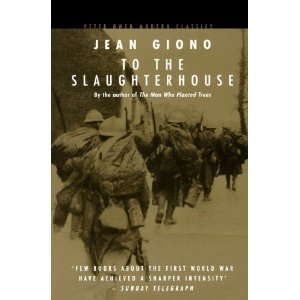
There are so many different ways to write about war. Some novels focus on the experience of the soldier, some will focus on what the civilians go through, some move back and forth between the front lines and the home front. While Jean Giono’s Le grand troupeau – To the Slaughterhouse does move back and forth, the book is still completely different from anything else that I have read so far.

Giono’s technique does need some getting used to. What he describes is equally beautiful and horrifying. The result may very well be one of the most radical anti-war books that I have read.

If you are looking for an action-driven novel, this isn’t one to turn to, Giono’s novel is far more like the description of paintings. I was reminded of Otto Dix’ WWI paintings more than once. Some of the very visual descriptions in this novel are as graphic and gruesome as Dix’ work.

The war has come to a little village in the French Provence region. All the men are drafted and go to war, leaving the women, old men, children and animals behind. Some of the men are shepherds. They have to abandon their herds. Left on their own,  the animals are endangered, they have accidents, get wounded. One day a massive herd enters the village. It’s an awful sight. So much suffering, so much pain.

Julia’s husband Joseph has gone to war, as has her sister-in-law’s young lover, Olivier. The story moves back and froth between life in the village and the men. It’s more a series of pictures than a real story. Very powerful and graphic pictures.

Giono chose to show us how war affects the body. It’s not the fighting he is interested in but what happens when someone is wounded. How the wounds fester, how the juices flow out the dead bodies. The rats which are always mentioned in WWI novels are present here as well but we see how they eat the faces of the dead men.

I had a faint feeling in my stomach for most of the time while reading but I saw what he wanted to achieve and I thought the idea was amazing. He didn’t stop at describing the horrors of the war and what it did to the bodies of the men, he described the beauty as well. The scents in the air, the taste of food, the beauty of the landscape.

There are hunting scenes and scenes of slaughter and the bodies of the dead animals resemble those of the dead and wounded men.

Human beings and animals both suffer pain, their bodies are vulnerable and frail, they can be killed and harmed and wounded and the result will be the same. At one point he goes one step farther, describing how the earth suffers too, when her body is ripped open by explosives. Giono includes the entirety of creation in his novel and shows that every being existing in this world, wants beauty, love and tenderness, shelter and food and when this is not provided, when aggression is let loose, the body is harmed, wounded and the being ultimately dies.

It’s a highly symbolical novel, with a profound message of peace. It was hard to read but I am glad I did. It really would be hard to find a more eloquent anti-war statement and a book which manages like this one, to show, that since we all, animals and human beings alike, suffer pain, we are equal. This profound message makes To the Slaughterhouse not only a plea for human rights but for animal rights as well.

Other reviews

Danielle (A Work in Progress)

To the Slaughterhouse is my fourth contribution to the War Through the Generations Challenge hosted by Anna and Serena.

*******

To the Slaughterhouse was the third book in the Literature and War Readalong 2012. The next one will be Helen Humphreys’ Coventry. Discussion starts on Monday April 30, 2012.

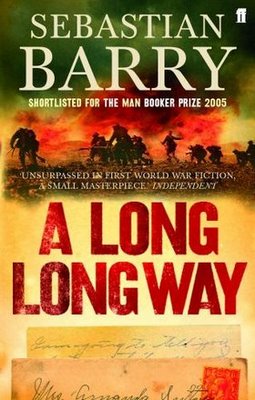
Sebastian Barry: A Long Long Way (2005) Literature and War Readalong February 2012

Sebastian Barry’s A Long Long Way is one of a few WWI novels told from an Irish perspective. Unlike How Many Miles to Babylon or many other WWI novels, its main theme isn’t class which was something I was glad for. Not that I think it wasn’t important but it has become one of the clichés of WWI literature. That and so many other elements. Luckily there aren’t all that many clichés in Barry’s novel.

Nineteen year-old Willie Dunne from Dublin volunteers in the early days of WWI. Like so many before or after him, he has no real reason, or they are at best quite vague and mostly personal. Maybe little Willie wants to prove himself and prove his father that he is worthy despite of his size. His father, a tall and imposing fellow, is a policeman. Something little Willie could never have become because he is barely taller than a midget. The army doesn’t care. They are in such great need of volunteers that they accept almost anyone.

We follow naive little Willie to Belgium where he spends his first months in the relative comfort of the rear camp, hardly seeing any fighting at all. Nothing really bad happens to little Willie and his company until one day, the soldiers see a yellow cloud hovering slowly over no-man’s-land. It takes them far too long to realize what that yellow cloud means, and only much too late, when many of them are already dying a cruel death or maimed for life, do they flee in horror. After this moment the novel takes a turn and becomes graphic and tragic and Willie loses his naivety at a breathtaking speed.

Although he sees many horrible things, it is only after his first leave to Ireland, that Willie is really affected. Not because he doesn’t fit in anymore – Barry doesn’t use this cliché either – but because Ireland is on the brink of the War of Independence and Willie, a compassionate man, is saddened to see the death of a young rebel and to realize that for the first time in his life, he doesn’t see things like his father.

Back in the trenches he tells the other Irish lads what he has seen at home. The newspapers write about it too and the British officers are aggressive and see them even more as cannon fodder than before. The longer the war lasts, the more intense the fighting in Ireland gets, the less the efforts and losses of the Irish are appreciated. In the end there are finally no more volunteers from Ireland. They do not want to fight for the enemy anymore and some would even gladly join the Germans. When Willie takes his second leave to Dublin, the aggression in the streets against his British uniform is open.

It is rare that I resent an author for his narrative technique but I do resent the way Barry wrote this novel. Furthermore I had a hard time with his style, I think it’s far from fluent and the overuse of adjectives at times was annoying. Just one example:

Now they rose up in the violent moonlight and entered bizarrely a huge field of high corn, the frail stems brushing gently against their faces, and because Willie was a small man, he had to grip the coat of the Sergeant-Major Moran in front or he would be lost, set adrift to wander for ever in this unexpected crop. The absurd bombs followed them religiously into the field, smashing all about the darkness, the stench of cordite and other chemicals obliterating the old dry smell of the corn.

As if the violent moonlight wasn’t enough, they have to enter the field bizarrely, followed religiously by absurd bombs? Admittedly, this was one of the worst passages but there were others, equally florid. This doesn’t explain why I resent him but it’s part of it. I felt tricked. This novel works like a trap door. You are lured into a devastated house which is bad enough but the moment you are inside, the carpet is pulled away from under you and the trap door opens. There is a building up of graphic scenes and an intensification of the tragedies that befall poor Willie that felt really mean. I was upset that the book had to end like it did, so absolutely depressing, without the tiniest little bit of hope or light. Don’t get me wrong, it’s not because the book describes graphic scenes, it’s because he intensifies them and accelerates it towards the end, when we do not see it coming anymore and, on top of that, has poor Willie experience one personal tragedy after the other.

With the exception of the dishonest structure, and an almost sadistic finishing off of the main character, the novel has a lot of elements that I thought well done. I haven’t read any WWI novel this eloquent on the use and the horrors of mustard gas. Nor any novel that showed the role of the priests so well. Father Buckley was my favourite character in this novel. A Catholic Priest with true compassion and a wide open heart. And I liked Barry’s choice of theme. His look at authority and its major representative, the father is very interesting. The father as a figure comes in many different forms, as the biological father, the King, the Priest. Coming to terms with authority and ultimately becoming a man and independent are important aspects. Little Willie isn’t a boy anymore at the end of the book, he is a man, with his own opinions, his own life. The book stays away from the usual criticism of high command but uncovers all sorts of hidden false authority.

A Long Long Way has been my second Sebastian Barry novel and I was also annoyed by the first. I just don’t like this type of artifice and manipulative writing that is so keen on effect.

I hope others have liked the book better. After all it has won many prizes. I’m looking forward to see what you thought.

Other reviews

Anna (Diary of an Eccentric)

Danielle (A Work in Progress)

Serena (Savvy Verse and Wit)

A Long Long Way is my second contribution to the War Through the Generations Challenge hosted by Anna and Serena.

*******

A Long Long Way was the second book in the Literature and War Readalong 2012. The next one will be Jean Giono’s Le grand troupeau – To the Slaughterhouse. Discussion starts on Friday March 30, 2012.

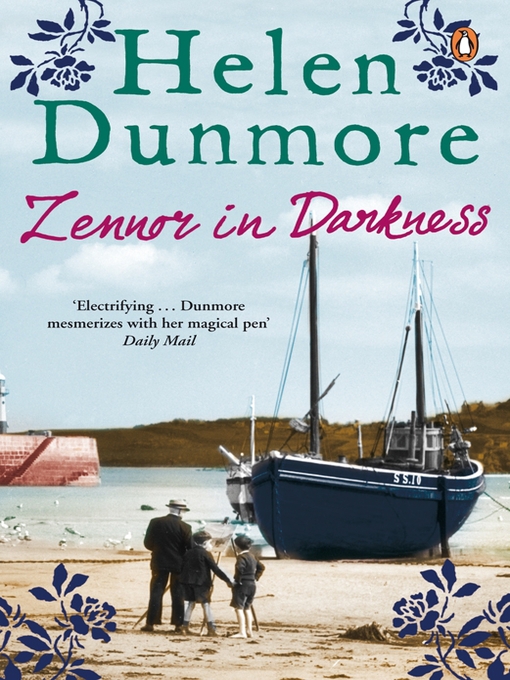
Helen Dunmore: Zennor in Darkness (1993) Literature and War Readalong January 2012

Helen Dunmore’s first novel Zennor in Darkness is set on the Cornish coast in 1917. The sound of war can be heard from afar. The first young men return from France, some of them are missing limbs, others are shell-shocked like Claire Coyne’s cousin John William. Although the war is present on every page, in the suspicions of the people, the fear that all the boys will be drafted, the noise the wind blows over from France, the scarcity of money and food, this is a novel of dreamlike beauty. Dunmore conveys the soft light of the Cornish coast, the beauty of the lovely landscape, the slow pace of life. This softness is mirrored in the way she changes the point of views, blurring the edges, softening the transitions, so that it feels as if one person’s consciousness and interior monologue, was flowing gently into that of another character. Reading it made me dreamy and I felt as if I was watching a water-color come to life. I read this book very slowly. I could have finished it in a few evenings but I put it aside frequently to make it last.

Zennor in Darkness interweaves the fictional story of Claire Coyne, and her cousin John William with the story of D.H.Lawrence and his wife. Claire lives alone with her father. Her mother who died while she was still very little was from Cornwall, while her father is an outsider, just like Lawrence. He comes from a rich Londoner family and was always seen as an intruder. Claire’s maternal grandparents, her aunts, uncles and cousins live close by. The children are a tight-knit community since they were little kids. They are so close that, although it seems logical for us, nobody suspects Claire and John William to be lovers.

The war has taken its toll, hundreds of thousands are dead and a lack in officers makes it possible for someone like John William who isn’t noble, to become an officer. He returns from France for a brief visit before he will join a training camp where he will stay a few months before being sent back to France.

Before his return Claire has befriended D.H. Lawrence. She is fascinated by him and even more so by his attractive German wife, Frieda. Not everyone is happy about their stay in Zennor. Germans are suspected to be spies and people would like to see them gone. Lawrence and his wife are happy in Cornwall. Their dream of a community of like-minded people has been shattered after Katherine Mansfield and her husband have left but still they love Cornwall and their simple life. Lawrence works in the garden, befriends the villagers. It’s not as easy for Frieda but she likes it as well. To the Lawrences Cornwall means more than just a place to stay, it is a refuge, a shelter and to watch their dream being crushed is painful.

Lawrence discovers that Claire is talented at drawing and encourages her to pursue a career. She introduces him to John William and Lawrence feels, more so than Claire, that John William hides something. One evening, when the two men walk alone in the balmy Cornish night, John William lets himself go in front of Lawrence, unable to hide the signs of shell-shock any longer.

Zennor in Darkness is a very beautiful novel and if anything it made me want to read more of Helen Dunmore. And it also made me want to return to D.H. Lawrence whose books I have abandoned for too long. I’ve always liked D.H.Lawrence, his novels, short stories, essays and letters and found that she captured him and his relationship with his wife very well. Frieda was a von Richthofen. A cousin of the famous Red Baron. Abandoning her marriage, her children and her privileges must have cost her a lot. I was always fascinated by this free spirit. The end of the book moved me. I knew the part related to the Lawrences, still it made me angry, while the fictitious story of Claire and John Williams made me sad.

What I found astonishing is the combination of beauty and horror. The descriptions of the Cornish coast, its air, light, flora and fauna alternate with passages like this one.

In Flanders the struggle for the Passchendaele Ridge continues. The poppy-blowing fields are ploughed by German and English guns, and sown with a litter of lost equipment, a seeding of blood and bone. Soon it will be autumn there too, and heavy northern rains will fall. Men will be listed missing, presumed drowned – a new classification for the lists in the newspaper. They are presumed drowned in the mud in which they live and often die. The men who came ‘right away to Blighty’ with John William will return to Flanders with their new commissions soon. Their training lasts only three months, and then they are wanted back at the Front. Hammond will die on a mission described to him by a senior officer as ‘rather a tricky bit of patrol-work’. His body will not be found. Simcox, a dozen feet to the left of him, will survive.

Ultimately however Zennor in Darkness is a novel about the difficulty to know another person. Either because you see them as strangers, or because they are too close for you and you lose all perspective. Like in real life, in many instances a stranger understands another character better than his own family, while at the same time, the community projects fear on the outsider.

In any case this was an excellent start to the Literature and War Readalong 2012.

Other reviews

Danielle (A Work in Progress)

Lizzy (Lizzy’s Literary Life)

Sarah (A Rat in the Book Pile)

Zennor in Darkness is also my first contribution to the War Through the Generations Challenge hosted by Anna and Serena.

*******

Zennor in Darkness was the first book in the Literature and War Readalong 2012. The next one will be Sebastian Barry’s A Long Long Way. Discussion starts on Monday February 27, 2012.

Literature and War Readalong 2012

People have been announcing their challenges and events for 2012 for a while now so it was about time to let you see the list for next year’s Literature and War Readalong.

It was not easy to compile this list as the books needed to fulfill different criteria one of which was length. I didn’t want to include too many books over 300 pages. The only novel over 500 pages will make up for its length by being very readable.

The other criterion was the country. Like last year, I wanted to include books from as many different countries as possible. I know it looks as if there were more British books than anything else which is true, still I managed to include books from 8 different countries.

I will also join Anna and Serena for the War Through the Generations Challenge that is dedicated to WWI this year. My introductory post is due later this week. The first three novels in the readalong will also count for their challenge.

I have been asked whether it is possible to join but read something different. Since strictly speaking a readalong implies that people read and discuss the same book, it’s difficult but as I’m starting a Literature and War Project I thought of a good solution that will serve anyone who wants to join –  myself as well as I may be in the mood to read more than one novel focusing on war. The idea would be that anyone can join during the last week of the month and either participate in the readalong or review any other war themed book that will then be added to the project page. The objective of the page is to cover many different countries, wars, themes and even genres. For the War Through the Generations Challenge I will for example read a children’s book and maybe a crime novel set in the trenches. Next year I would also like to read a Sci-Fi novel like Joe Haldeman’s The Forever War that has been suggested by Max from Pechorin’s Journal. And finally I would like to read more non-fiction.

This year’s readalong will not always take place on Fridays but alternate between Monday and Friday depending on whether the Friday is during the last week of the month or not.

January, Monday  30

Helen Dunmore Zennor in Darkness , 320 p., England (1993), WWI

Spring, 1917 and war haunts the Cornish coastal village of Zennor: ships are being sunk by U-boats, strangers are treated with suspicion, and newspapers are full of spy-fever. Into this turmoil come DH Lawrence and his German wife Frieda, hoping to escape the war-fever that grips London. They befriend Clare Coyne, a young artist, struggling to console her beloved cousin John William who is on leave from the trenches and suffering from shell shock. Yet the dark tide of gossip and innuendo means that Zennor is neither a place of recovery nor of escape …

February, Monday 27

Sebastian Barry: A Long Long Way , 295 p.,  Ireland (2005), WWI

I discovered the book thanks to a comment from Danielle (A Work in Progress)

One of the most vivid and realised characters of recent fiction, Willie Dunne is the innocent hero of Sebastian Barry’s highly acclaimed novel. Leaving Dublin to fight for the Allied cause as a member of the Royal Dublin Fusiliers, he finds himself caught between the war playing out on foreign fields and that festering at home, waiting to erupt with the Easter Rising. Profoundly moving, intimate and epic, A Long Long Waycharts and evokes a terrible coming of age, one too often written out of history.

March, Friday 30

Jean Giono:  Le grand troupeauTo the Slaughterhouse 224 p., France (1931), WWI

Conscription reaches into the hills as the First World War come to a small Provençal community one blazing August. Giono’s fiercly realistic novel contrasts the wholesale destruction of men, land and animals at the front with the moral disintegration of the lonely and anxious people left behind. Yet not all is despair. The novel ends with a message  of hope.

April, Monday 30

Helen Humphreys: Coventry,172 p., England (2008), WWII

Another book discovered thanks to Danielle (here)

On the night of the most devastating German raid on Coventry, two women traverse the city and transform their hearts. Harriet, widowed during WWI, is “”firewatching”” on the cathedral roof when first the factories and then the church itself are set ablaze. In the ensuing chaos she helps a young man, who reminds her of the husband she has lost, find his way back home where he left his mother.

May, Monday 28th

Nigel Balchin: Darkness Falls From The Air, 208 p., England (1942), WWII

I owe the discovery of Balchin to Guy (His Futile Preoccupations) who reviewed two of his books here and  here.

With ostentatious lack of concern, Bill Sarratt, his wife and her lover spend the war wining and dining expensively, occasionally sauntering out into the Blitz with cheerful remarks about the shattered night-life of London’s West End. But beneath the false insouciance lies the real strain of a war that has firmly wrapped them all in its embrace. Wit may crackle at the same pace as buildings burn, but personal tragedy lurks appallingly close at hand.

June, Friday 29

Len Deighton:  Bomber, 532 p., England (1970), WWII

This book is a suggestion from Kevin (The War Movie Buff). It is by far the longest on the list but it should be a very quick read.

The classic novel of the Second World War that relates in devastating detail the 24-hour story of an allied bombing raid.

Bomber is a novel war. There are no victors, no vanquished. There are simply those who remain alive, and those who die.Bomber follows the progress of an Allied air raid through a period of twenty-four hours in the summer of 1943. It portrays all the participants in a terrifying drama, both in the air and on the ground, in Britain and in Germany.In its documentary style, it is unique. In its emotional power it is overwhelming.Len Deighton has been equally acclaimed as a novelist and as an historian. In Bomber he has combined both talents to produce a masterpiece.


July, Monday 30

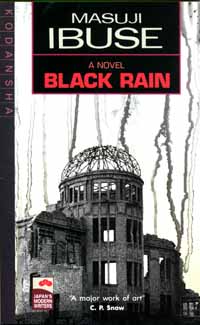
Masuji Ibuse: Black Rain – Kuroi Ame, 304 p., Japan (1969), WWII

I saw the book mentioned on Rise’s blog (in lieu of a field guide) where is was mentioned by Gary (The Parrish Lantern)

Black Rain is centered around the story of a young woman who was caught in the radioactive “black rain” that fell after the bombing of Hiroshima. lbuse bases his tale on real-life diaries and interviews with victims of the holocaust; the result is a book that is free from sentimentality yet manages to reveal the magnitude of the human suffering caused by the atom bomb. The life of Yasuko, on whom the black rain fell, is changed forever by periodic bouts of radiation sickness and the suspicion that her future children, too, may be affected.

lbuse tempers the horror of his subject with the gentle humor for which he is famous. His sensitivity to the complex web of emotions in a traditional community torn asunder by this historical event has made Black Rain one of the most acclaimed treatments of the Hiroshima story.

August, Friday 31

Aaron Applefeld: The Story of a Life – Sippur chajim, 208 p., Israel (1999), WWII

Aharon Appelfeld was the child of middle-class Jewish parents living in Romania at the outbreak of World War II. He witnessed the murder of his mother, lost his father, endured the ghetto and a two-month forced march to a camp, before he escaped. Living off the land in the forests of Ukraine for two years before making the long journey south to Italy and eventually Israel and freedom, Appelfeld finally found a home in which he could make a life for himself. Acclaimed writer Appelfeld’s extraordinary and painful memoir of his childhood and youth is a compelling account of a boy coming of age in a hostile world.


September, Friday 28

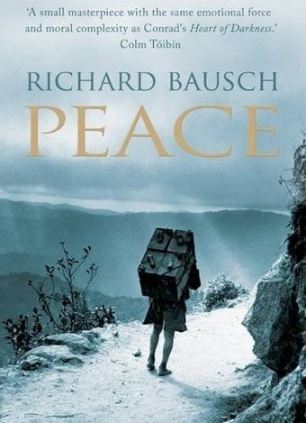
Richard Bausch: Peace, 171 p., US (2008), WWII

This was a suggestion from Sandra Rouse in a comment on one of this year’s readalong posts. 

It’s Italy, near Cassino. The terrible winter of 1944. A dismal icy rain falls, unabated, for days. Three American soldiers set out on the gruelling ascent of a perilous Italian mountainside in the murky closing days of the Second World War. Haunted by their sergeant’s cold-blooded murder of a young girl, and with only an old man of uncertain loyalties as their guide, they truge on in a state of barely suppressed terror and confusion. With snipers lying in wait for them, the men are confronted by agonizing moral choices…Taut and propulsive – Peace is a feat of economy, compression, and imagination, a tough and unmistakably contemporary meditation on the corrosiveness of violence, the human cost of war, and the redemptive power of mercy.

October, Monday 29

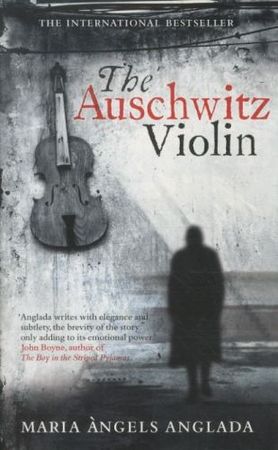
Maria Angels Anglada The Auschwitz Violin – El violí d’Auschwitz, 128 p., Spain (1994), WWII

In the winter of 1991, at a concert in Krakow, an older woman with a marvelously pitched violin meets a fellow musician who is instantly captivated by her instrument. When he asks her how she obtained it, she reveals the remarkable story behind its origin.

Written with lyrical simplicity and haunting beauty—and interspersed with chilling, actual Nazi documentation—The Auschwitz Violin is more than just a novel: It is a testament to the strength of the human spirit and the power of beauty, art, and hope to triumph over the darkest adversity.

November, Friday 30

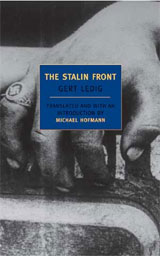
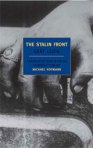
Gert Ledig The Stalin Front  –  Die Stalinorgel , 198 p., Germany (1955), WWII

1942, at the Eastern Front. Soldiers crouch in horrible holes in the ground, mingling with corpses. Tunneled beneath a radio mast, German soldiers await the order to blow themselves up. Russian tanks, struggling to break through enemy lines, bog down in a swamp, while a German runner, bearing messages from headquarters to the front, scrambles desperately from shelter to shelter as he tries to avoid getting caught in the action. Through it all, Russian artillery—the crude but devastatingly effective multiple rocket launcher known to the Germans as the Stalin Organ and to the Russians as Katyusha—rains death upon the struggling troops.
December, Friday 28

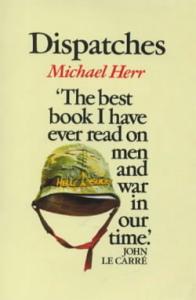
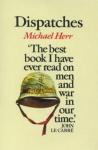
Michael Herr: Dispatches, 262 p., US (1977) Vietnam

This novel has been suggested by at least three people. Kevin (The War Movie Buff) and Max (Pechorin’s Journal)

If you’ve seen the movies Apocalypse Now and Platoon, in whose scripts Michael Herr had a hand, you have a pretty good idea of Herr’s take on Vietnam: a hallucinatory mess, the confluence of John Wayne and LSD.Dispatches reports remarkable front-line encounters with an acid-dazed infantryman who can’t wait to get back into the field and add Viet Cong kills to his long list (“I just can’t hack it back in the World”, he says); with a helicopter door gunner who fires indiscriminately into crowds of civilians; with daredevil photojournalist Sean Flynn, son of Errol, who disappeared somewhere inside Cambodia. Although Herr has admitted that parts of his book are fictional, this is meaty, essential reading for anyone who wants to understand Vietnam.

I hope that many of you will feel tempted by the one or the other title on the list and am looking forward to great discussions. The books are all very different in tone, style and themes. As always there are a some I can hardly wait to read.

*******

How does the readalong work?

This is just a quick info for those who are new to blogging and /or the readalong.

I will review the book on a set date during the last week of the month. If you choose to read along you can either participate in the discussion in the comments page or post a review on your blog. I will add all the links to the reviews at the bottom of my posts.

The books are usually announced with some additional information or a short introduction at the beginning of the month.

*******

This post will be copied into the Literature and War Redalong 2012 page so you can find it again at any time.