Literature and War Readalong September 30 2011: The Things They Carried by Tim O’Brien

The Things They Carried  by Tim O’Brien has become a classic of American literature and the genre of “war writing”. O’Brien served in Vietnam which gives his writing a poignancy not every writer can achieve.

I’ve been looking forward to reading this since months as I am also highly interested in its form. The Things They Carried should work as a collection of short stories and as a novel.

O’Brien has written other books that are highly acclaimed like If I Die in a Combat Zone and Going After Cacciato. I chose to read The Things They Carried because I have read excerpts of the book in Francine Prose’s Reading Like a Writer that made me very curious.

Numerous novels have been written on the Vietnam war. So far I have only read Machine Dreams by Jane Anne Phillips. I got Matterhorn and the October readalong title by Tatjana Soli The Lotus Eaters on my TBR pile. Another book that impressed me, although not a novel, was Dear America – Letters Home from Vietnam.

Do you have any other suggestions?

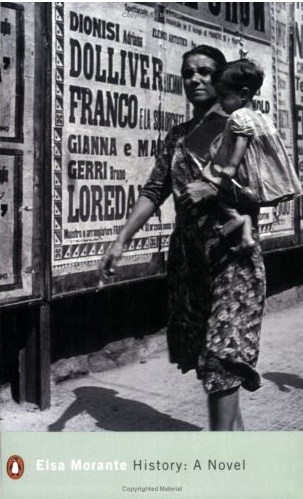
Elsa Morante: La Storia – History (1974) Literature and War Readalong August 2011

History was written nearly 3 decades after Morante spent a year hiding from the Germans in remote farming villages in the mountains south of Rome. There she witnessed the full impact of the war and first formed the ambition to write an account of what history does when it reaches the realm of ordinary people struggling for life and bread.

La Storia aka History is the last WWII centered book of this readalong. It’s also the most ambitious, starting before the war and ending just a few years after. It describes in minute details how the schoolteacher Ida Mancuso, her two sons and the people to whom they are connected are affected by the war. La Storia looks in great detail into the impact of war on civilians. In telling this ordinary woman’s daily life we see how precariously civilians live during a war. The constant bombing, the fear, the loss of the houses or apartments, of friends and the jobs, the lack of food and clothes, rape and brutality, fear of being transpotred to a camp, all this together is part of everyday life. What civilians endure is no less harrowing than what happens on the battlefields.

Summarizing this vast canvas of a novel that is driven forward by ebullient storytelling would be quite a challenge, that is why I decided to highlight a few points.

History starts in 19** and ends …. 19**, but the core chapters focus on the years from 1941 to 1947. Before each chapter we find detailed accounts of all the important historical facts of those years. Reading this overpowered me and that was probably the aim. One horrible event follows after another and each and every single country participated in one awful event or the other. It’s a mad circle, a maelstrom that sweeps along everything and everyone and whose impact shapes, distorts and changes the life of normal people who are unable to escape this crazy frenzy.

Following the accounts of History’s furious rage, we read about the simple, childlike Ida, whose mother was Jewish. This fact fills her with constant anxiety all through the novel and even pushes her to do crazy and dangerous things. Ida is a widowed schoolteacher, the older of her boys, Nino, is a foolhardy opportunist, while the other one, Useppe, is the child she conceived when she was raped by a German soldier at the beginning of the war. In the early chapters of the novel Ida lives in modest circumstances but she has an apartment and enough food. When the war breaks out and finally comes to Rome, their house is bombed and she must flee to the countryside where she and Useppe, the little one, live in one room together with numerous other people.

Ida’s older son Nino first joins the fascist forces, later changes over to the partisans and finally becomes a criminal after the war. His “career” seems somewhat typical and I found that in creating a character like this Morante managed to capture a lot that is wrong in Italy. Opportunism and corruption are everywhere.

Focusing on Ida, we witness the ordeal of the “ordinary people”, how much they had to endure. The hunger is unspeakable. What they have to eat is hardly imaginable. Grass, cats, rats, anything. Being homeless and having no clothes is horrible. Having to fight or steal for just a little bit of bread is hard to imagine. It’s a truly harrowing account.

One of the most interesting details is the narrator. Who tells this story? To whom belongs this voice that is audible at any time, that speaks to us directly and from the heart of this novel?  Is it History speaking to us? It seems to be, as the way Morante describes people, animals and things seems to signify that everything is animated. So why not History itself? History is such a force, it seems as if it has become a being driven to destroy.

What I loved about this novel is that everyone has a voice. Useppe is as much a person as are his dogs Blitz or Bella. Their thoughts and feelings are rendered in great detail. I think in doing so she manages to emphasize that in a war everyone is equal, everyone is threatened. I also liked the detailed in the descriptions, the exuberant storytelling.

Despite all the positive aspects I also had a few problems with the novel, especially at the beginning. I didn’t like Ida. I know, it will sound mean, but she was too simple for me. She isn’t very introspective, she is almost a simpleton, still she is touching and the tragedies she endures moved me. I understand Morante’s choice for a character like this but I didn’t always enjoy it.

While reading this novel I found myself smiling a lot. Useppe’s and his dog’s thoughts are so charming in their naivety. The end of this novel moved me a lot. Without giving away too much, I can tell that it showed that there are far more victims in wars than winners, that wars still impact people long after they have ended and that history doesn’t spare anyone. There is no escaping this force that wreaks havoc in human lives.

Before closing I would like to ask a question of anyone who might have read this novel, now or at another point in time: Isn’t it dangerous to treat History like a being? Isn’t this blurring the fact that History isn’t an undefined, independent force but, in the end, it is people who harm other people?

Other reviews:

*****

History was the eight book in the Literature and War Readalong. The next one will be Tim O’Brien’s The Things They Carried. Discussion starts on Friday September 30, 2011 .

Literature and War Readalong August 26 2011: La Storia – History by Elsa Morante

The readalong book for August, La Storia or History,  is one of the most important books of Italian literature. It is also quite a substantial book, depending on the edition, it is over 800 pages long which is why I decided to post the introduction already today to give anyone who would like to read along the opportunity to do so.

I’m already on page 150 and fascinated by her writing that reminds me of Latin American literature in its exuberance. Before the individual chapters there are detailed accounts of the history of Italy. La Storia is pretty much the story of a woman, the schoolteacher Ida Ramundo, and the history of a country. Given all the atrocities Germany committed we tend to forget that there were allies like Italy. The history of Italy during WWII is  story of megalomania, bad choices and bad planning and borders quite often on the ridiculous. But there are also stories of resistance and heroism. This, however, is not the topic of this novel.

I did a bit of research and found out that a lot of this novel is based on Morante’s own life. Her mother was half Jewish and a teacher, like Morante herself.

Elsa Morante was married for quite a long time to Alberto Moravia, author of  La Noia (Boredom) and many other outstanding books.

History isn’t Morante’s only novel, she is also the writer of Aracoeli and L’isola di Arturo (Arturo’s Island).

La Storia has been made into a mini-series starring Claudia Cardinale as Ida Ramundo.

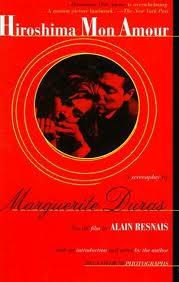
Marguerite Duras and Alain Resnais: Hiroshima mon Amour – Book and Movie (1959/60) Literature and War Readalong July 2011

How do you talk about war? How to put it into words, into pictures? How to tell and show the unspeakable, the horror, the atrocity? How much can you know about something that you have not experienced? These are but a few questions Marguerite Duras and Alain Resnais explore in the book and the movie.

Hiroshima Mon Amour is maybe the most difficult book of this readalong to write about. A summary wouldn’t do it justice. I was amazed once more how good it is, how profound and how the book and the movie seem like two different ways of exploring, with two different languages, the atrocity that we call war. What is fascinating is how they seem to converse with each other.

In 1959 a Japanese man and a French woman meet in Hiroshima. They are both a bit over thirty and happily married. They spend a night together. It is shortly before the woman’s return to France. She is an actress who has come to Hiroshima to play a nurse in a movie on peace. They make love and talk. First about Hiroshima, then about the past of the woman. They part for the day but he follows her and they spend another night together, stay awake, spend  time in a tea house. During the second night, the woman tells the man the whole story of her past in Nevers and her tragic first love. She hasn’t told anyone this story before because there was never anyone like her first lover after that until this day.

I’m glad I read the book again before watching the movie. It was interesting to see how different it is when we first imagine something and when we then see it as well.

During the initial part of the movie we hear a voice-over. The woman tells the man everything that she has seen in Hiroshima. In the news at the time, in the museum during her stay. When you read it, you see in your imagination what you have seen before in documentaries or on photos but the movie shows you how it really was and on the other hand you have the man’s voice telling you, that you have seen nothing, know nothing. There is no replacing the actual experience.

The first pictures show bodies, parts of bodies, first covered in what looks like fall out, then in sweat. This reminded me of Resnais’ documentary Night and Fog. It is the same visual language that tries to show us what violence does to the body, that tries to capture the devastation. Hiroshima Mon Amour seems also to say that war and love can be equally destructive. There is violence in aggression and in passion.

What struck me is that we do not know their names. At the end they give each other the name of the places in which their mutual tragedies happened. She calls him Hiroshima, he calls her Nevers.

One of the themes of the book and the movie is how the collective and the personal tragedies are linked. While Hiroshima and WWII stand for a collective tragedy, Nevers stands for a personal tragedy. This is one of the achievements of  Hiroshima Mon Amour. One approach in war stories or war movies is to pick one exemplary person and tell his/her story. We understand the individual far better, can identify far better with one person’s story but the large-scale of the collective should not be forgotten. Hiroshima Mon Amour is one of the rare movies/books who manages to show both and make clear that they are interdependent.

For those who have not read the book, I would say that it is a valuable addition and it is fascinating to see how they complement each other. First there is the script, including proposals by Marguerite Duras, then she adds information on what scenes Resnais finally chose, plus there is an annex in which Duras goes deeper, explores the woman’s story, gives it more density. I liked the appendix, that was mostly dedicated to the woman’s story, a lot.

There are many things that are worth discussing and I am looking forward to hear your thoughts. One question that has been on my mind since I re-watched the movie is the choice of the Japanese actor. He struck me as looking quite European. I had kept the appendix for last and was glad that Duras mentioned this choice, saying they had wanted to make a more universal statement with this. They didn’t want people to think “That’s an attractive Japanese” but “That’s an attractive man”. I was not completely happy about this. It’s a sad fact that whenever a person from another continent is casted in a European movie, the film directors think of the European taste and choose someone less typical. This is unfortunately exactly how exotism works. I think Resnais and Duras were honest in their attempt but I’m not sure it was ok.

Other reviews:

Emily (Evening All Afternoon)

Litlove (Tales from the Reading Room)

Richard (Caravana de recuerdos)

*****

Hiroshima mon Amour was the seventh book in the Literature and War Readalong. The next one will be Elsa Morante’s History. Discussion starts on Friday August 26, 2011.

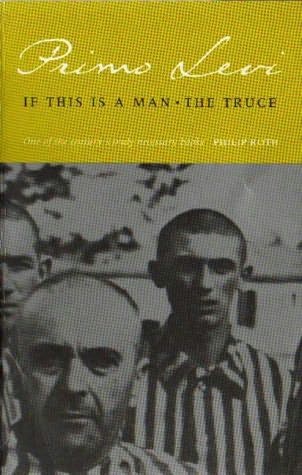
Literature and War Readalong June 24 2011: If This is A Man aka Se questo è un uomo by Primo Levi

This month is moving very fast and the next readalong is on the 24th already. It might be good to get started if you want to join in.

Primo Levi is a writer that has been on my mind for years. I knew his story, had read about him. I have read other’s accounts of their incarceration in concentration camps. I have read excerpts of Levi’s work but never got around to read his most famous book, the autobiographical account of his incarceration in the extermination camp Auschwitz.

He was on my mind for this and because he committed suicide so late in life. Because he seems to be such a perfect example of survivor’s guilt.

I dreaded to read his account, I know it won’t be cheerful but I always wanted to read it, wanted to explore his life, to understand why he couldn’t live with the guilt of being one of a very few survivors.

Despite the sadness and the horrors he describes there is beauty in his books as he is not only a witness of dreadful times but also an accomplished writer.

Primo Levi’s book is the only nonfiction book in this readalong.

I’m reading the French translation Si c’est un homme.

Literature and War Readalong May Wrap up: The Sea and Poison


Shusaku Endo’s novel The Sea and Poison proved to be a challenging read which is also reflected in the fact that some reviews will still be posted. I will of course link to them once they are done. For the time being you can always read Novroz’ review which complements my own very well.

For the time being thanks a lot for those who already participated. I know that the idea of reading about vivisection held some readers back but it isn’t a graphic book at all. Nevertheless it is a depressing book that seems to center on two major themes, one of which hospitals and their staff, the other war crimes.

What depressed me was the description of the hospital and the doctors. My late mother spent more time in hospitals than outside, so I have had my fair share of contact with doctors and most of them were not like Suguro but rather like Toda or Hashimoto. Doctors in hospitals that is. I’d like to emphasize this. Doctors who stay in hospitals after having been interns follow another agenda. A hospital in many cases isn’t much different from a Corporate Company. It’s all about results and money and hierarchy. What I didn’t know at the time of my reading is the fact that Endo suffered all his life. He was very ill, had tuberculosis and some of the treatments described in the novel in great detail were treatments he had to undergo regularly. For anyone interested in this background here is an interesting analysis.

Thanks to Kevin who did some research and added them in his comments, it became clear that the book was based on facts and that there had indeed been American POW on whom they performed vivisections. Here is the link he added to the comments section.

This leads us to the biggest problem of this book, as Kevin and Anna (Diary of an Eccentric) pointed out and which was probably the base for my doubting the incident. Why did Endo chose to describe the vivisection as if it had been performed under anesthesia when it is apparently well-known, that like in Germany, the vivisections were performed without the prisoners being anesthetized? I have no answer to this question and don’t want to start speculating.

Does anyone have an idea?

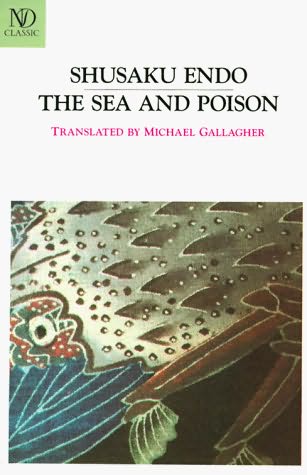
Shusaku Endo: The Sea and Poison aka Umi to dokuyaku (1958) Literature and War Readalong May

Against the backdrop of World War II, Japanese writer Endo ( Scandal ) explores the nature of morality. In this novel, originally published in Japan in 1958, the author examines the inner lives of three characters in the central drama, a grisly vivisection of an American prisoner of war, in an attempt to understand what conscience, or lack of conscience, allowed them to participate in such an atrocity.

The Sea and Poison is the first novel in this readalong that truly upset me. It’s an excellent book but so depressing and bleak, it reminded me of Kafka’s In the Penal Colony which was so far one of the most disturbing books I have ever read. I was afraid that the part on the vivisection might be too graphic but Endo is far to subtle a writer to be too explicit. The horror lies somewhere else.

The Sea and Poison is divided in three parts plus a prologue. Each part is told from another point of view, part 2 from different points of view. It is set during WWII in a hospital outside of the city of Fukuoka. Before we even hear about the planned vivisection on American prisoners of war we get to see the doctors at work. What we see is highly depressing. They do not seem guided by the love of their fellow human beings but purely because they are careerists and love power. Seldom have I read such an utterly negative depiction of doctors. This is best shown in the way they treat poor patients. They are unfriendly and heartless, whether they die or not, it doesn’t matter. It seems as if they did try to excuse this with the war as Suguro thinks:

No doubt it was a time when everybody was on the way out. If a man didn’t breathe his last in the hospital, he might well die that night in an air raid.

The central story is the vivisection which isn’t described in great detail. What is at the core is the study of the people who take part in it. “The old man”, chief surgeon Dr. Hashimoto and Dr. Asai are in charge. Dr. Toda and Dr. Suguro, two young interns, will assist, and two nurses will help as well. We do not hear much about Hashimoto’s motivations or only what Toda explains to Suguro:

“Doctors aren’t saints. They want to be successful. They want to become full professors. And when they want to try out new techniques, they don’t limit their experiments to monkeys and dogs. Suguro, this is the world and you ought to take a closer look at it. “

However we get to know Toda, the nurse and Suguro’s motivations and their stories. What is important is to underline that they could have refused. All three of them were asked whether they were willing to particpate and none of them refused.

Suguro is the only one with a conscience, still he accepts because the proposal comes at a moment of utter disillusionment. He has lost a patient and has seen how “The Old Man” lied about a patient he lost. He sees how many people are killed in air raids, how hopeless it is to help. When he is asked he doesn’t really say yes but he can’t refuse. Only at the last moment does he back off and doesn’t want to touch the patient.

The nurse has a complicated and sad life story. It seems as if there is nothing in this world for her anymore after her personal tragedy. It looks as if she was thinking “If I am miserable, why shouldn’t the others be?”

And Toda? Toda is a being without any feelings. Since his early childhood he is aware that he doesn’t care about other people, that he cannot connect. He has no empathy, no compassion. Occasionally he wonders if there is something wrong with him but at the end of the day he thinks that most people are like him.

I would like to ask you. Aren’t you too, deep down, unmoved by the death and sufferings of others? Aren’t we brothers under the skin perhaps? Haven’t you, too, lived your life up to now without excessive self-recrimination and shame? And then someday doesn’t there stir in you, too, the thought that you are a bit strange?

The questions the novel poses are manyfold and extremely interesting. One could ask whether those who do not directly kill the prisoners are as guilty as those who kill them. Is Suguro who can’t say no and watches but doesn’t touch the patient less guilty than the chief surgeon who performs the surgery?

And what about the chief surgeon? He is a man who is responsible for the death of many people. He performs a surgery and it goes wrong. He makes mistakes, people die. Is he less guilty of those deaths than of those of the American prisoners?

The type of questions this novel poses are the same that were asked in Germany after the war as well. Were those who watched and let things happen less guilty than those who took an active part? This made me think of Macbeth. Who is guiltier? Macbeth who did the killing or Lady Macbeth who had the idea?

I know it is said that this novel explores individual responsibility in wartime. I’m sure that is an important topic but I think two other things were far more important. I think this book criticises doctors and health care professionals in general, showing them as too keen on success and power, as heartless and inhuman. And it also wants to illustrate that people are selfish and mean.

I cannot say I “liked” this book but I did find it extremely thought-provoking, the writing is captivating and the character studies interesting.

I’m really looking forward to read what you thought of it.

Please read also what others wrote:

Anna (Diary of an Eccentric)

Danielle (A Work in Progress)

Gary (The Parrish Lantern)

Mytwostotinki

Novroz (Polychrome Interest)

*****

The Sea and Poison was the fifth book in the Literature and War Readalong. The next one will be Primo Levi’s If This is a Man aka Se questo è un uomo. Discussion starts on Friday June 24, 2011 .