The Winners of the Giveaway of The Sorrows of Young Werther

Thanks to Music Box Films two people will soon be able to read The Sorrows of Young Werther, Goethe’s famous first novel.

The movie Young Goethe in Love,that has just been released by Music Box Films and can be watched in cinemas in the US right now, is based on the novel and Goethe’s own story.

The winners of our giveaway are

Michelle from booksandboston and

Professor Batty from Flippism is the Key

Happy reading to both of you!

Please send me your address via beautyisasleepingcat at gmail dot com

http://www.youtube.com/watch?v=rh12UDNNM2g

Last Hurrah – Wednesdays are Wunderbar – US Only Giveaway of The Sorrows of Young Werther

Although German Literature Month is over, Wednesdays are Wunderbar has a last installment. During German Literature Month we were contacted by Music Box Films to make us aware of the German movie Young Goethe in Love which is currently shown in US theaters. The movie is based on Goethe’s early years and his first novel The Sorrows of Young Werther.

You can find the details for the movie here Young Goethe in Love.

To get you in the mood for the film, we are able to give away three copies of Goethe’s famous heartbreaking novel in the Vintage Classics Edition, courtesy of Music Box Films.

A major work of German romanticism in a translation that is acknowledged as the definitive English language version. The Vintage Classics edition also includes NOVELLA, Goethe’s poetic vision of an idyllic pastoral society.

If you would like to win one of the books, please levae a comment on this or Lizzy’s blog. Lizzy and I will collect all the entrants on both of our blogs and then draw the winners.

The giveaway is US only. The winners will be announced on Sunday 11 December – 18.00 European time.

http://www.youtube.com/watch?v=rh12UDNNM2g

German Literature Month – Final Wrap up and Hans Fallada Giveaway

It’s hard to believe but German Literature Month is already over. I enjoyed it a lot. I’ve read quite a few books I liked, I discovered many others. I’ve read a few incredibly great reviews. I also discovered some blogs that I will be following in the future.  I hope all of you did enjoy it as much as I did. Judging from the amount of posts, readalong participants and comments I think it was a success and I would really like to thank all of you for the enthusiasm and support. Including all the introductory and readalong posts we have had over 170 contributions.

Some of you have been very prolific. The three participants with the most posts are Tony (Tony’s Reading List), Emma (Book Around The Corner) and Amateur Reader – Tom (Wuthering Expectations). While Tony was focusing on novellas, Emma has read a novel for each theme and Tom has delighted us with some very funny and unusual posts on plays. I’m sorry that some of the books Emma chose where not to her liking. Thanks to the discussions with her and others I discovered that while German literature is not all “dead people and WWII”, German literature in translation could really give this impression.

I’ve seen more than one contribution that stunned me. If I had to name all the great posts I would have a hard time.

Melville House Books who have already been very generous have given us the great opportunity of a final giveaway of four books by Hans Fallada. Since we wanted this to be a bit of special giveaway, we have already chosen the winners.

We decided that we will pick four posts, each from another group of posts, and give each of the writers one of the books by Fallada.

The first book will go to the person who has written the most amazing post. When we saw this contribution we all went “Wow” and “Blimey!”

The second book will go to Lizzy’s favourite Effi Briest readalong contribution.

The third book goes to the person who wrote The Silent Angel review I liked the most.

The last book goes to the person who has written the most original post on Kleist as we considered “Kleist week” to be some sort of readalong as well.

Seeing Tony’s dedication, his creativity and his very funny re-interpretation of Kafka’s The Castle (Das Schloss – The Play Act One – Das Schloss – The Play Act Two  – Das Schloss – The Play Act Three – Das Schloss – The Play (Director’s Cut) ), it was evident from the start that he should be a winner – only Tony likes his German books to be in German and not in translation. This is why he will get his present on Lizzy’s blog. I hope it’s fine by him.

Courtesy of Melvillehouse Publishing

Hans Fallada’s

Little Man, What Now? goes to

Vishy (Vishy’s Blog) for an absolutely astonishing post that can be read like an introduction to the most important writers of German Literature German Short Stories.

Every Man Dies Alone goes to

Fay (Read, Ramble) for a wonderful interpretation of Heine’s Sea Spectre in Effi Briest On Heine’s Sea Spectre in Effi Briest.

Wolf Among Wolves  goes to

Rise (in lieu of a field guide) for having written the review of The Silent Angel that I would have liked to have written and which gives a feel for its poetical qualities The Silent Angel by Heinrich Böll.

The Drinker goes to

Richard (Caravana de Recuerdos) for his enthusiastic and unorthodox review of The Duel that involved the much-loved expression “primal ambiguities”,  the discovering of Kleist’s rock star potential and, at the same time, imitated Kleist’s meandering style.

Last but not least I have a personal giveaway title which is from an author I love and who is often compared to Fontane. Thomas Mann considered him to be one of the finest German writers ever. When I read his book Wellen I thought it felt as if Schnitzler and Fontane had met to write a book together. It’s one of my favourite books ever. The author is Eduard von Keyserling. Apart from his early novels his books have not been translated into English but I’m sure that the winner will manage to read him in German. For those interested, his books are available in German and French.

Eduard von Keyserling’s Wellen goes to

Lizzy for having been a terrific co-host.

I really wonder if it will not feel strange, all of a sudden, when I realize tomorrow that the month is really over. Hmmm… Will I feel sad? A little bit. But I’m already making new plans…

Please send me your address via beautyisasleepingcat at gmail dot com.

Please do not miss Lizzy’s wrap up and giveaway.

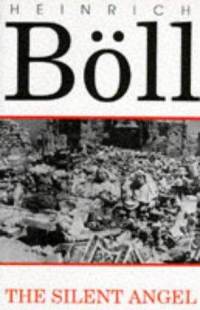
Heinrich Böll: The Silent Angel – Der Engel schwieg (1951) Literature and War Readalong November 2011 Meets German Literature Month

Written between 1949 – 1951 Der Engel schwieg  or The Silent Angel is unique in many ways. Unique for German literature but also in Böll’s work. I have already written about it in my post on Sebald’s The Natural History of Destruction. Böll’s novel, which is one of the rare to depict a German city after the massive bombings by the Allies, had to wait 40 years for its publication. For this reason many of the chapters have been re-used in other books and if you are familiar with Böll the one or the other scene or description may appear familiar. All the important themes of Böll’s work can already be found here. Criticism of post-war Catholicism, compassion with those who have nothing, with those who suffer. His books often circle around the same elements, motives and themes and although he doesn’t always use the same style, this gives the impression of a very organic work that, read in its entirety, gives an excellent panorama of Post-war Germany.

The Silent Angel is one of the most important works of the so-called “Trümmerliteratur” (the literature of the ruins). The story as such can be told in a few sentences. It’s May 8 1945. Hans, a deserter, returns from the war without a passport. He tries to find the woman of a comrade who died instead of him. While walking the bombed and destroyed city he meets a woman who lives in an appartment in a house that is almost a ruin. He feels a strong connection to her and asks her if he can stay with her. She has lost her baby in an air raid, his wife has died as well and so, like two castaways, they are stranded together in this apartment. At first they both envy those who died but slowly they find their way back to love, hope and some kind of livable future.

It isn’t said but we know that the city which is described is Köln, Böll’s hometown. The description of the despair of the people, how tired they are physically and psychologically is impressive. The way he depicts their struggle to find bread, their fight to survive in those ruins is powerful. There is one scene in which Hans tries to visit someone and to walk a distance which used to take him ten minutes, he takes an hour because of  all the debris and the rubble. As I said before, Catholicism is an important theme in Böll’s work and in this novel, in which the greed of some Catholics is shown in all its ugliness, the description of the bombed churches becomes a very significant additional meaning.

What impressed me the most apart from the descriptions of the ruined city is how tired these people are. They spend days and days on end in their beds, staring at their walls. Finding something to eat, moving about the city, coming to terms with was has happened, takes an unimaginable effort, drains them of all their energy. All they have left is exhaustion.

This must sound very depressing but Böll isn’t only a writer of despair. He describes hopelessness but his characters overcome it, they find hope and the courage to go on living. The negative people have their positive counterparts. The greedy Dr. Fischer who doesn’t care for anything but money and for whom Catholic artifacts are just collectible items finds his counterpart in the gentle priest who helps Hans. The priest is the embodiment of a pure, compassionate Catholicism.

I was wondering while reading The Silent Angel whether I thought it was well written. I think he could have improved the structure, some passages read like short stories, some elements could have been left out, all in all it feels a bit loose at times which isn’t the case in his later work. His later novels are much more condensed but Böll has a gift for description which is rare. And he represents a rare model of moral integrity, he is an author who wrote for those who have nothing, who tried to unmask hypocrisy and uncover everything that was fake and phony in post-war Germany. I don’t know all that many authors who are so humane.

I have read The Silent Angel before. It isn’t my favourite Böll novel but since it’s an excellent example of “Trümmerliteratur” it seemed a great choice for the readalong. I’m very interested to know what others thought of this book.

Other reviews

Christina (Ardent Reader)

Danielle (A Work in Progress)

Fay (Read, Ramble)

Lizzy (Lizzy’s Literary Life)

Rise (in lieu of a field guide)

Tony (Tony’s Reading List)

Wednesdays are wunderbar – Pick and Mix Classics

Since it’s classics week the giveaway will be a classic. Classics is something many people already own. In order to make sure that you can win books you do not already own One World Classics offers to two people to pick and mix any two classics from their catalogue.

Interested? Then hop over to Lizzy’s blog for details .

The giveaway is part of German Literature Month.

German Literature Month Week III Wrap-up and The Winners of the Friedrich Glauser Giveaway

When I did the wrap up for the first week I was amazed about the contributions and thought that the enthusiasm might die down further into the month. I’m glad I was wrong with this assumption. The number of reviews and the variety of authors and books that have been chosen is as great as during week I and II. I would really like to thank all of you who contributed and help making this event a huge success.

The complete links and participants list can be found HERE.

Lizzy contributed two posts, one in which Publisher’s and Authors recommend their favourite German books and the other is a review of Julya Rabinowich’s Splithead which sounds like a most unusual book.

The Magic Mountain of German Literature 3 (Publisher and Author Recommendations)

Splithead by Julya Rabinowich

I reviewed a short story collection by Peter Stamm that I liked a lot and also reviewed Vicki Baum’s classic bestseller Grand Hôtel. While it isn’t as refined as Joseph Roth’s Hotel Savoy it is still a surprisingly interesting and character driven book.

In Strange Gardens and Other Stories by Peter Stamm

Grand Hôtel – Menschen im Hotel by Vicki Baum

Danielle (A Work in Progress) reviewed The Murder Farm by Andrea Maria Schenkel which she found a fascinating and unusual crime story in the vein of Capote’s In Cold Blood.

Emma (Book Around the Corner) read Short Stories by Stefan Zweig. The stories had all a historical theme. She did enjoy it but maybe not as much as his non-historical stories.

Ted (BookeyWookey) read The Artificial Silk Girl by Irmgard Keun and liked it a lot. The review captures the frothy playful tone that covers a dark undercurrent very well. The many quotes included in the review give a good impression of the novel (a favourite of mine).

Grace (Books Without Any Pictures)  re-read The Trial by Kafka which she thinks a most unusual and absolute must-read book. She likes it better than most of his short stories.

Richard (Caravana de Recuerdos) read Doctor Faustus by Thomas Mann after having been urged by a few people. He appreciated it a lot but liked it more for its ideas than its style. His review gives an excellent impression of the many interwoven themes of this complex book.

Jackie (Farm Lane Books) came to the conclusion that neither Jelinek’s Piano Teacher nor Grass’ The Tin Drum are to her liking. On Jelinek’s the Piano Teacher and Grass’ The Tin Drum. Judging from the comments, she is far from alone.

Guy (His Futile Preoccupations) read and reviewed Where Do We Go From Here? by Doris Dörrie which seems to have been a very good read, in typical Dörrie style “With piercing wit and a generous view of human nature.” Guy also read and reviewed  The Snowman by Jörg Fauser. A cult classic of gritty German crime which – to quote Guy – “is strongest in its depiction of the seedy underbelly of life –the cheap hotels, the filthy toilets (…).  There’s an intense authenticity to these scenes, and a sour truth to Fred’s realization that he’s small-time for a reason.”

Rise (in lieu of a field guide ) underlined in his review of Rock Crystal by Adalbert Stifter how crystal clear Stifter’s prose is. A captivating story written in a flawless style, concrete and precise like poetry, as he writes.

Fay (Read, Ramble) read Poems by Rilke which impressed her or in her own words “One reading of selected poems gives a sense of striking imagery and intense artistic purpose but not enough mastery of Rilke’s art to make further commentary worthwhile. Rilke is a poet who deserves several careful readings. All I know is that the more I came to know Rilke’s voice, the better I liked him, after a hesitant start. It is a voice to listen to again.”

Rikki (Rikki’s Teleidoscope) read Maybe This Time by Alois Hotschnig in German. She writes “I read this is German and I don’t think I have ever come across a writer who writes in such a precise way and who conjured such a clear picture of what is going on.”

Scott W. (seraillon) reviewed  Beautiful Days – Schöne Tage by Franz Innerhofer. In his in-depth review he writes about the unusual combination of a seemingly cheerful title with the topic of child abuse. The book seems to be well worth reading, complex and arresting.

Priya (Tabula Rasa) liked Hotel Savoy by Joseph Roth a lot and recommends it highly.

Alex (The Children’s War) rediscovered and reviewed an old children’s classic Emil and the Detectives by Erich Kästner and reviewed A Song For Summer by Eva Ibbotson. Ibbotson’s book offers a wide variety of unusual, typical Ibbotoson characters and despite a WWII topic stays light and hopeful.

Parrish (The Parrish Lantern)  introduced a great book on German poetry, including authors like Else Lasker-Schüler as well as Jan Wagner. The Faber Book of 20th Century German Poems. He included the whole list of poets, a poem by Elke Erb and a lot of other information.

Anthony (Time’s Flow Stemmed) calls Old Masters by Thomas Bernhard a flawless book. It seems also a very interesting book and one that was echoed by two other reviews (in lieu of a filed guide and seraillon). Bernard’s character criticizes Austrian art and artists, among them Stifter. The book could be called a rant but Anthony chooses to call it a tirade.

Tony (Tony’s Reading List) What happens when someone reads Kafka’s The Castle and participates in German Literature Month? Given he is an imaginative person it might look a little bit like this Das Schloss – The Play Act One  – Das Schloss – The Play Act Two  – Das Schloss – The Play Act Three Das Schloss – The Play (Director’s Cut). Tony writes his own “Castle Play ” and adds a review of Kafka’s book.

Liz (Tortoisebook) liked the sad but beautiful  The Sorrows of Young Werther by Goethe. She says “This book is a lovely read, beautifully told and achingly heartbreaking.”

Vishy (Vishy’s Blog) reviewed the original sheep crime novel Three Bags Full by Leonie Swann which read as if “Agatha Christie had rewritten The Wind in the Willows“.

Poor Daryl (Who Killed Lemmy Caution?) was ill but is recovering. Soon we will read her review of Klausen by Andreas Meier. Review on Its Way

Week three gives us a slightly puzzled Tom (Wuthering Expectations ) who after having read Wedekind’s Spring Awakening during week II thought he had seen the height of Austrian treatment of  sexuality in plays but no – he hadn’t read the La Ronde/Der Reigen by Arthur Schnitzler yet. He was quite amused by the use of … to cover up the ongoing activities and wonders how they handled this during the play.

Effi Briest Readalong

Week III

Andrew

Caroline

Danielle

Eibhlin

Fay 

Iris

Lizzy

Tony

**************

And here are the winners of the Friedrich Glauser giveaway courtesy of Bitter Lemon Press.
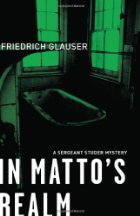
One copy each of In Matto’s Realm goes to

Neer from A Hot Cup of Pleasure and

Richard from Caravana de Recuerdos

Happy reading Neer and Richard!

Please send me your address via beautyisasleepingcat at gmail dot com.

The giveaway is part of German Literature Month.

The next giveaway will take place on Wednesday 23 November 2011.

German Literature Month – Effi Briest Group Read Week III

The picture is taken from the latest film version Effi Briest (2009) starring Julia Jentsch and Sebastian Koch as Effi and Instetten. Here is more about the movie including trailers and pictures.

This is the final week of our Effi Briest Group Read. The questions have been provided by Lizzy. Please, if you haven’t read the book, don’t read the answers. They are not spoiler free.

Why do you think Effi kept Crampas’s letters?

I was wondering exactly this the whole time. Why did she keep those letters? On the other hand it is understandable. They were probably full of flatteries and compliments that she enjoyed re-reading. Knowing Instetten it was very unlikely he would search her things. It was a pure accident that he found them. I think it clearly shows that she thought he really wasn’t too interested in her or she wouldn’t have been so careless. If she’d been married to a man who seemed to have been in love with her and very jealous, I doubt, she would have kept them.

Did Innstetten have a choice?

Yes, I really think he did have a choice. The man he called, who would be his second, advised against it as well. Hee could just have pretended he never found those letters. In the end, I believe, he doubts his own choice. If he had found out while it happened, I think one could debate, whether or not, he had a choice, but six years later…

Are there any events in this final section that make you feel outraged?  Is that how Fontane wants you to feel?

I was not outraged, it made me very sad. My feeling for Effi was stronger than a feeling of outrage. I thought it was utterly pointless. Wasted lives, for nothing else but pride.

Is there a villain in this piece?

The mother is the worst character, closely followed by Instetten. I could imagine that her decision to be so hard on Effi was because she wondered how Effi could have cheated on a husband she would have loved to have. But precisely this history between her and Instetten might have been part of the source why Instetten never really opened up to Effi. I think that a lot of social injustice could have been stopped earlier if the members of a given society didn’t tacitly endure the rules – or even reinforce them – and I find it especially horrible when mothers think their daughters or sons should go through the same experiences they had to go through, no matter how bad they were. It’s as if the mother was thinking “If I was able to endure it, you should be able too.”     

The lot of the real-life Effi, Elizabeth von Plotho, was a much happier one. Why do you think Fontane made the outcome for Effi much harder?

To prove a point, I guess. He clearly condemns the ways of Prussian society, the regulations and rules. To make it crystal clear the ending had to be more drastic.

Were you surprised by the ending?

The first time I read it I was shocked. I don’t know how I thought it would end but not the way it did. Not after such a long time. I’m outraged to think what consequences adultery had for women in these days.

Where would you place Effi in the pantheon of C19th fictional adulteresses?

I found Mme Bovary very annoying and never really had any feeling for her. In the case of Anna Karenina I thought the book was so much more about Vronsky and Lewin than about her but to a certain degree she is more tragic as she loves Vronsky. Effi doesn’t love Crampas. The tragedy in Effi is very different. I think what makes it so harrowing is that it seems so pointless. More than 6 years have passed since the affair and if Instetten hadn’t found the letters accidentally, nothing would have happened.

Do you think you would ever reread Effi Briest?

Yes, I think so. In a few years, I can see myself re-read it.