Literature and War Readalong July 29 2011: Hiroshima Mon Amour by Marguerite Duras or Alain Resnais’ Hiroshima Mon Amour

This month’s readalong is a bit special as you have the possibility to either read the book by Marguerite Duras or watch Alain Resnais’ movie. I will read the book and watch the movie. I’m not sure whether I’ll do a combined post or rather two. I suppose, I will combine it. The movie is very beautiful but it is a good idea to read the book first, it will make watching the movie easier. I’m not sure how well they managed the subtitles.

Hiroshima Mon Amour is far more than a love story, it is also a haunting, poetical look at the horror of Hiroshima and the devastation created by the bomb.

The movie is one of the great classics of French cinema. Resnais started with documentaries (Night and Fog or Nuit et Brouillard is one of them), Hiroshima Mon Amour was his first feature film.

I don’t know whether anyone has noticed but I skipped last month’s wrap up. I did that deliberately as I found that three posts per month on the same book are a bit of an overload, especially when I am the only one posting. Should there be months with more posting participants I might do it again.

Here is a scene from the movie with English subtitles.

Paris in July – 2011 or French Books, Movies, Art and Music

Paris in July is an event hosted by Book Bath and Thyme for Tea. I think it should appeal to many as you can contribute almost anything as long as it is about something French (not Paris only).

All you have to do is either read a French book, watch a movie, share a recipe, post something on French art or architecture, write a travel piece or share your favourite French music. It is up to you.

I am, as usual, tempted to contribute many things but July is my busiest month work wise, therefore I’ll try to not put the bar too high. But let me share a few plans.

Books

The July’s book for my Literature and War Readalong is Marguerite Duras’ Hiroshima mon amour. I will review the book and the movie.

I’m tempted to read and even re-read some Colette. I have never read her novel La Chatte, it would be a great choice for me. But I might also re-watch Chéri starring Michelle Pfeiffer and finally read the eponymous book as well. Zola’s Le ventre de Paris is also an option especially since there is a certain actuality to the topic as Les Halles, as I knew them all my life, are being torn down at the moment. Now these are just a few choices but my French reading pile is huge, I will certainly find something.

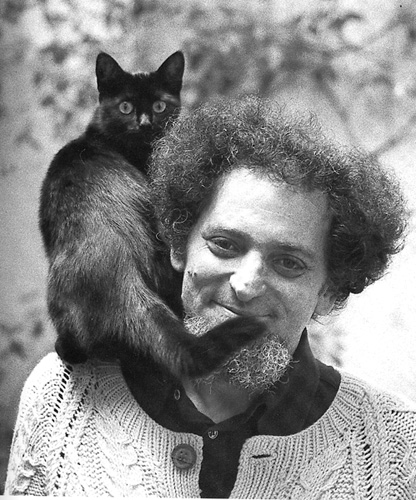
I could also imagine a post on French writers and their black cats.

Movies

I also have quite a little pile of DVDs here. I recently bought a Jean Gabin collection. I already watched Le Quai des Brumes and La Grande Illusion but there are some others that are very good. Another option is watching Les Misérables starring Gérard Depardieu. And I wanted to re watch the movie Paris, je t’aime. Despite it’s title it isn’t very clichéd.

Paris

I wanted to go to Paris in July but my workload will not allow it. Instead of that I might share a few extremely nice books on Paris that I found last year. There are a lot of themed guides around that are really interesting.

Paris: Made by Hand: 50 Shops Where Decorators and Stylists Source the Chic & Unique

Art

My favourite French painter is Gustave Caillebotte. He painted Paris like not many others. I might write in more detail about his work and background.

Music

When I think of French music, the first that comes to my mind is Air. I have all of their CD’s but I’m sure that’s not what people usually have in mind when thinking of French music. I’m also a huge fan of Edith Piaf. And there are many others that I could write about.

I hope this gives you an idea and tempts you as well. If you would like to sign up too here is the link.

Delphine de Vigan: Underground Time aka Les Heures souterraines (2009)

Everyday Mathilde takes the Metro, then the commuter train to the office of a large multi-national where she works in the marketing department. Everyday, the same routine, the same trains. But something happened a while ago – she dared to voice a different opinion from her moody boss, Jacques. Bit by bit she finds herself frozen out of everything, with no work to do. Thibault is a paramedic. Everyday he drives to the addresses he receives from his controller. The city spares him no grief: traffic jams, elusive parking spaces, delivery trucks blocking his route. He is well aware that he may be the only human being many of the people he visits will see for the entire day and is well acquainted with the symptomatic illnesses, the major disasters, the hustle and bustle and, of course, the immense, pervading loneliness of the city. Before one day in May, Mathilde and Thibault had never met. They were just two anonymous figures in a crowd, pushed and shoved and pressured continuously by the loveless, urban world. “Underground Time” is a novel of quiet violence – the violence of office-bullying, the violence of the brutality of the city – in which our two characters move towards an inevitable meeting. ‘Two solitary existences cross paths in this poignant chronicle, a new testimony to de Vigan’s superb eloquence’ 

I read a review of  Delphine de Vigan’s book on Bookaroundthecorner’s Blog and really liked the tone of it. I ‘m glad I read it. It is far from cheerful but it is an important book on an important topic.

Les Heures souterraines or Underground Time is a chillingly good novel and shockingly topical. It’s accurate in its depiction of life in a corporate setting and of  life in a big city. It’s a very timely book, a book that doesn’t shy away to speak about the ugly side of  “normal lives”.
Reading the novel feels as if we secretly observed the two main protagonists, Mathilde and Thibault, at their most intimate. We follow them during the course of one day of their life. Mathilde is a single widow with three children, Thibault lives alone as well. We seem to watch them from a bird’s eye perspective and see them roam through Paris and through their lives.

Thibault is a doctor without a practice, one who makes house calls and goes from door to door where he sees a lot of misery and distress. He just left his lover and is heart-broken. He had to admit to himself that he was the one in love, she only took advantage of him.

Mathilde works for a big corporate company. She used to like her job but a few months ago she made a tiny mistake during a meeting. She dared contradict her boss and has since then become his target.  Bit by bit he wears her down, leaves her out systematically, withdraws every important project from her. He doesn’t inform her of important meetings, sets traps in order to provoke mistakes. Mathilde is at the end of her rope. She who used to be a strong person, who survived her beloved husband’s death, who raises her children on her own, who used to be a happy and succesful woman, she is about to crack, to break down. She can’t slepp anymore, she is afraid to go to work, she thinks she suffocates.

These two people should meet, they could meet, their paths cross more than once on this day.

There are many scenes I liked a lot. One of Mathilde’s little boys knows she needs all her strength and he offer’s her one of the most coveted cards of the World of Warcraft game. I liked this because World of Warcraft is a symbol for our times. It has become so important in so many people’s lives, it is a refuge, a haven to which they can escape, where they can find solace,  another life, become another person, where they feel happier than in the “real world”.

Another scene is equally good, it is the opening of the book when we are told that Mathilde went to see a psychic. The fortune-teller tells her that she will meet someone on the 20th of May, the day on which we follow her. Both scenes show us how utterly vulnerable Mathilde is. She doesn’t know how to get out of this mess.

How is this day going to end? Is Mathilde going to overcome her difficulties? How will Thibault handle all the disasters and sadness he has to face on this day? Will they meet?

I’m afraid, if you want to find out, you will have to read this novel. Don’t hesitate, it is excellent. It was nominated for the Prix Goncourt and would have been a worthy winner. It talks about things we’d rather not talk about. The loneliness in big cities, the isolation, the struggle of modern life, the hassle to commute, the abuse of power in the work place, mobbing, the inhumanity in big companies. The novel also shows that one of the most important elements is to talk about your problems, to address them, to seek help. And you have to go to the right place. Your colleagues will not help, they are afraid, the Human Resources won’t help, they follow their own agenda. The book sadly also shows that it can be too late. People can get so tired and worn out, they simply cannot fight anymore, they despair, feel terribly ashamed and give up.

It was good to read such a well written book about things that many of us have to struggle with on a daily basis.

I’d like to add one more thing on abuse of power and mobbing. The big difference is that abuse of power is a top-down thing, while mobbing is something that is done on the same level. Both are harmful and if anyone should be ashamed, it’s the people who do it. If you want to fight it, both are equally hard to handle but I think it would be a bit easier to get help if you are a mobbing victim. Nowadays big companies have special services who deal with this kind of stuff.

Balzac: Le Colonel Chabert aka Colonel Chabert (1832/1844)

Balzac’s radiant story recounts the history of Colonel Chabert, a disenfranchised hero of the Napoleonic wars. Left for dead on the battlefield of Eylau, Chabert has spent years as an amnesiac in an asylum. The novel begins with his return to the life he left behind: only to discover that in his absence, his entire life – family, society, identity – has changed. With Napoleon deposed, France’s aristocracy has returned to power ‘as if the Revolution never occurred’. With Chabert supposedly dead, his wife is now married to a Count. Sickened by his wife’s pretence not to recognise him, and the titled society which spurns his former meritorious deeds, Chabert vows to recover his money, his reputation and his name.

A few years back I went through an intense Balzac phase reading one of his novels after the other. Still there are so many left I haven’t read and one of them was Le Colonel Chabert (or Colonel Chabert in English). I always thought it was much longer, probably because the edition I have contains other books as well. Or because of its notoriety. I think it is one of the most famous of his works.

Le Colonel Chabert is one of the books from the Scènes de la vie privée. Those who are familiar with Balzac know that the vast canvas of his work which he called La Comédie Humaine is organized in groups depending on the setting or themes.

Balzac has written an impressive amount of books. Some were serialized and written for the newspaper, like Splendeurs et misères des courtisanes, and the writing is not subtle at all. As wonderful as his plots, characters and topics usually are, his style is occasionally lacking. I was pleased to see that Le Colonel Chabert is, from a purely literary point of view, one of his best. It was published twice, first in 1832 under the name La transaction and then again in 1844.

Colonel Chabert is one of Balzac’s most tragic figures, a man who had everything and lost it all. To a certain extent the figure of Colonel Chabert whose fate is tied to that of Napoléon, also mirrors the emperor’s fate. Like Napoléon himself, he knew fame and glory and lost it all.

The novel opens on a scene of lively banter among several clerks who work for a young and promising lawyer. This scene is Balzac at his very best. With a few words he captures mediocrity. Into this setting enters a man who looks like a ghost. An old and broken man, poorly dressed, weak and ailing. When he asks to see Derville, the young lawyer, they make fun of him. And even more so when he tells them that he is the Colonel Chabert. Everybody knows that this cannot be as the Colonel has died in the battle of Eylau. His much deplored death has even been confirmed by Napoléon himself. His wife has remarried and born two children to a new husband. His fortune has been divided. The man standing in front of them cannot be the dashing looking colonel. This is an old man who seems to have seen nothing but poverty and misery.

The clerks who do not believe the old man send him away and tell him to return at one in the morning, the only hour during which the lawyer receives his clients.

When Chabert returns Derville is gruff at first but he is not only an ambitious young man, he is also very intelligent and kind-hearted. He pities the poor man and allows him to tell his story.

The Colonel who has shown Derville the deep scar on his skull, tells him how he was mortally wounded by a sabre, who almost split his skull in two. Buried under his horse who had been killed, he wasn’t trampled by the fleeing army but left unconscious. When they finally discovered him, they declared him dead and buried him. He regained consciousness later in the grave and managed to dig himself out from underneath corpses, earth and snow. This is a truly creepy scene that reminded me of an Edgar Allan Poe story.

Illustration de Le Colonel Chabert

(La bataille d’Eylau by Antoine-Jean Gros)

Ten years have passed since that episode. Ten years of suffering and erring during which the Colonel wrote to his wife a few times. Hoping to make a better marriage she pretends not to believe that he is alive. Chabert finally decides to ask for help and wants the young lawyer’s assistance in claiming back his wife and his considerable fortune.

His former wife, now the Countess Ferraud, is one of the ugliest characters of Balzac whose novels are full of greedy, vile people.

I will stop my summary here and just tell you that the outcome isn’t exactly what we expect.

I am not sure if it would be ideal to start reading Balzac with Le Colonel Chabert. I usually recommend Le père Goriot or La cousine Bette. Once you are more familiar with Balzac’s themes and characters you will realize how unique this book is. It is very short but extremely complex and a lot of allusions to French history are almost crammed into it. To fully comprehend the story it is good to know something about French history.

I’m looking forward to watch the movie one of these days as it seems to be very good as Guy Savage writes in his review of the book.

My favourite Balzac is Les illusions perdues aka Lost illusions, followed by La cousine Bette aka Cousin Bette. Which one do you like?

Colonel Chabert (Hesperus Classics)