Balzac: The Deserted Woman – La Femme abandonnée (1832)

When I read Le Père Goriot Old Goriot years ago I was fascinated by the tragic story of Mme de Beauséant. I knew Balzac had dedicated a novella to her which is included in the Scenes from Private Life. After reading one of Guy’s recent Balzac reviews, I decided it was about time to finally read the story. For those who read French you can find the story of The Deserted Woman or La Femme abandonnée in  Les Secrets de la Princess de Cadigan et autres études de femmes.

Gaston de Nueil, a young noble man, leaves Paris for Bayeux, a provincial city located in the Basse-Normandie region. His health is rather poor and he has to stay away from the capital until he recovers. Used to more interesting society than the one he finds in Bayeux, he is soon terribly bored and his imagination is set on fire by the story of the countess de Beauséant who lives like a recluse in her château in the Normandy. She is said to be a young woman of great beauty and even greater esprit who fled to Bayeux after having been abandoned by her former lover, the marquis d’Ajouda-Pinto. The separation was devastating and as she is trapped in a loveless marriage which cannot be divorced, the only way to keep at least some of her self-esteem was to withdraw from the world and dedicate her days to reading and praying.

Young, bored and curious about love, de Nueil falls in love with the unhappy countess before he has even set eyes on her. He walks in her gardens in the night, tries to catch a glimpse of her and is finally so love-sick that he decides to use a ruse in order to get access to her house.

When he finally stands before the woman he fell in love with because of her story and her reputation, he finds her even more beautiful and tragic than he expected.

The countess is 30 years old by now, while de Nueil is barely 23. She is trapped in a void, a loveless life, no contact to society, no future joy in sight. It’s not surprising that de Nueil’s infatuation moves her and finally leads her to accept him as her lover.

Writing more would spoil the story which is one of the best of Balzac’s short stories. You can read it on its own but when you are familiar with the Comédie Humaine you will like it even more. The countess is a key figure in Old Goriot and therefore important for the whole oeuvre. The story as such reminded me of many others. It bears some resemblance with Mme de Lafayette’s The Princesse de Clèves. The countess sounds just like the princesse when she first meets de Nueil. I was also reminded of  Henry James’ Mme de Mauves but most of all it reminded me of Colette’s Chéri. The end however is entirely different from all of these.

I like it when the title has a special significance, is complex and multi-layered. The title of this story seems simple but is excellent. To fully appreciate it, you will have to read the story.

As excellent as this story is, I wouldn’t recommend it to anyone who is not familiar with Balzac. I would still recommend Old Goriot as the best starting point. Paired with this novella, it would be an amazingly great introduction to Balzac’s work and convey a good feeling for the diversity of his talent. The Deserted Woman also contains all of the themes which are important in Balzac’s work such as the mechanics of society, the role of women, marriage, adultery, money and some sub-themes like the “inheritance”, the “fallen woman”, the “aging woman” etc.

I liked the story a great deal. I thought the way Balzac described how de Nueil falls in love is perceptive and uncanny at the same time. Falling in love of an idea, or ideal, may unfortunately very often be the reason for falling in love. I haven’t seen it described as eloquently very often. I think this part of the story applies to all sorts of idealisations; people falling in love with stars or other people they hardly know like people in chat rooms, internet forums or blogs.

If you’d like to read the novella in English and are interested in an overview of Balzac’s work and how it is grouped here is an excellent link The Human Comedy – La comédie humaine.

On Jacques-Pierre Amette’s Le Lac d’Or, Léo Malet’s New Mysteries of Paris and Eugène Sue’s Mysteries of Paris

Unfortunately there is no English translation of Amette’s excellent crime novel Le Lac d’Or whose title is the name of a Chinese restaurant that is an important refuge for the main character in this book and aptly indicates the setting, Chinatown in Paris. Only one of Amette’s numerous books – the Goncourt Prize winning  Brecht’s Lover  or La Maîtresse de Brecht – has been translated so far.

It’s a pity as Le Lac d’Or (2008) is a great read and it’s no wonder he has been compared to Léo Malet and Georges Simenon. Like Malet’s Fog on the Tolbiac BridgeBrouillard au Pont de Tolbiac, Amette’s novel is deeply rooted in the 13th Arrondissment. Place d’Italy, Pont de Tolbiac, Chinatown. It’s not one of my favourite arrondissements but it’s a part of Paris nonetheless. In any case, the 13th is one of those arrondissements that hasn’t any tourist appeal. It is an area with many atypically high buildings, concrete passageways, bridges and as said before, Paris’ Chinatown. But not even Chinatown is very picturesque.

At the heart of the novel is police inspector Barbey who has to investigate the murder of a prostitute. Chloë wasn’t a simple prostitute, she was a police informant and his ex lover. Why they split is not clear as they seem to have been made for each other, what is clear however is that the separation still hurts him, even some years later.

At the time of her murder Chloë was informing on a group of gangsters who regularly rented a few rooms in a hotel in the 13th. They have plenty of reasons why they would want Chloë dead. Reasons and opportunity.

The ending is not what one would expect but it isn’t completely surprising either. Amette’s strength is the description of a lesser known Paris and his likable but sad and exhausted inspector. There were a few interesting bits on the murder of a prostitute and that people think far less in terms of victim when the person who has been murdered was a prostitute. The most important aspect however is that this book is rooted in a tradition that started with Eugène Sue’s Mysteries of Paris.

The book put me in the mood to read some of the Léo Malet titles I haven’t read yet, one of which the afore-mentioned Brouillard sur le Pont de Tolbiac – Fog on the Tolbiac Bridge. Or Eugène Sue. Malet followed Eugène Sue’s famous Les mystère de ParisMysteries of Paris, calling his series the “new mysteries of Paris”. Each of his short and taut books is dedicated to another Parisian arrondissement.  I liked all of those I read. He captures the places well, the stories are interesting, the tone is unique.

If you look for a Paris-set series in English, then I’ve heard that Cara Black is quite good but I haven’t tried her yet. I think she also changes arrondissements from one book to the other.

Have you read Léo Malet or Eugène Sue? Or Amette’s Brecht’s Lover?

This post is my first contribution to Karen’s and Tamaras‘s event Paris in July.

Paris in July 2012

Paris in July was one of the events I enjoyed the most last year and I’m really glad that Karen from Book Bath and Tamara from Thyme for Tea are organizing it again.

The rules are very simple. If you’d like to join all you have to do is review a French book or movie or write about something French. Music, art, cuisine. Anything you like. It’s not a challenge so you don’t need to commit to anything. Details can be found here Book Bath and here Thyme for Tea and here is the sign up.

I’ve been reading quite a lot of French books recently which I haven’t even reviewed yet, so this is certainly something I’m going to do.

While we are free to choose any French books we like, I will focus on books set in Paris. Possible choices are

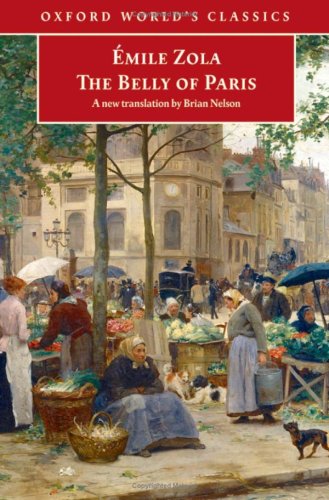
Zola’s The Belly of Paris – Le ventre de Paris

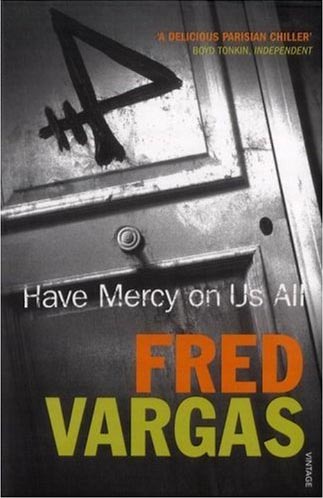
Fred Vargas’ Have Mercy On Us AllPars vite et reviens tard. You cannot go wrong with Fred Vargas. She is one of the best crime writers writing today. If you haven’t read her yet, just pick any of her books.

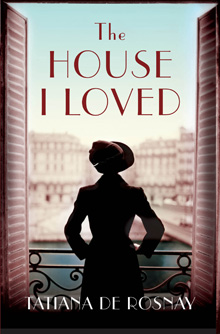
Tatiana de Rosnay’s The House I LovedRose. While she is known as a French writer, this is one of the books she has written in English. It’s a historical novel set in 19th century Paris during the time when the city was undergoing major changes.

I hope to review a movie as well but I’m not sure yet which one it will be. Maybe it’s time to re-watch the movie which is possibly my favourite French film.

I know I will not be able to be as active as last year as July is also Spanish Literature Month.

Are you going to join? Do you already know what you will read?

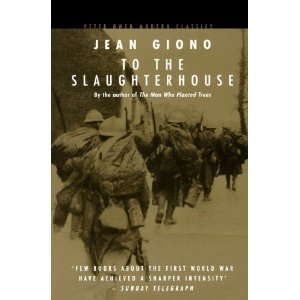
Jean Giono: To the Slaughterhouse – Le grand troupeau (1931) Literature and War Readalong March 2012

There are so many different ways to write about war. Some novels focus on the experience of the soldier, some will focus on what the civilians go through, some move back and forth between the front lines and the home front. While Jean Giono’s Le grand troupeau – To the Slaughterhouse does move back and forth, the book is still completely different from anything else that I have read so far.

Giono’s technique does need some getting used to. What he describes is equally beautiful and horrifying. The result may very well be one of the most radical anti-war books that I have read.

If you are looking for an action-driven novel, this isn’t one to turn to, Giono’s novel is far more like the description of paintings. I was reminded of Otto Dix’ WWI paintings more than once. Some of the very visual descriptions in this novel are as graphic and gruesome as Dix’ work.

The war has come to a little village in the French Provence region. All the men are drafted and go to war, leaving the women, old men, children and animals behind. Some of the men are shepherds. They have to abandon their herds. Left on their own,  the animals are endangered, they have accidents, get wounded. One day a massive herd enters the village. It’s an awful sight. So much suffering, so much pain.

Julia’s husband Joseph has gone to war, as has her sister-in-law’s young lover, Olivier. The story moves back and froth between life in the village and the men. It’s more a series of pictures than a real story. Very powerful and graphic pictures.

Giono chose to show us how war affects the body. It’s not the fighting he is interested in but what happens when someone is wounded. How the wounds fester, how the juices flow out the dead bodies. The rats which are always mentioned in WWI novels are present here as well but we see how they eat the faces of the dead men.

I had a faint feeling in my stomach for most of the time while reading but I saw what he wanted to achieve and I thought the idea was amazing. He didn’t stop at describing the horrors of the war and what it did to the bodies of the men, he described the beauty as well. The scents in the air, the taste of food, the beauty of the landscape.

There are hunting scenes and scenes of slaughter and the bodies of the dead animals resemble those of the dead and wounded men.

Human beings and animals both suffer pain, their bodies are vulnerable and frail, they can be killed and harmed and wounded and the result will be the same. At one point he goes one step farther, describing how the earth suffers too, when her body is ripped open by explosives. Giono includes the entirety of creation in his novel and shows that every being existing in this world, wants beauty, love and tenderness, shelter and food and when this is not provided, when aggression is let loose, the body is harmed, wounded and the being ultimately dies.

It’s a highly symbolical novel, with a profound message of peace. It was hard to read but I am glad I did. It really would be hard to find a more eloquent anti-war statement and a book which manages like this one, to show, that since we all, animals and human beings alike, suffer pain, we are equal. This profound message makes To the Slaughterhouse not only a plea for human rights but for animal rights as well.

Other reviews

Danielle (A Work in Progress)

To the Slaughterhouse is my fourth contribution to the War Through the Generations Challenge hosted by Anna and Serena.

*******

To the Slaughterhouse was the third book in the Literature and War Readalong 2012. The next one will be Helen Humphreys’ Coventry. Discussion starts on Monday April 30, 2012.

Madame de Lafayette: The Princesse de Monpensier – La Princesse de Montpensier (1662)

The Princess of Montpensier

I’m not a re-reader but I have read Mme de Lafayette’s La Princesse de Clèves at least four times. It is my favourite novel. For its style as well as for the story. There is something in the way Mme de Lafyette describes feelings that touches me profoundly. She wasn’t a very prolific writer. Before publishing La Princesse de Clèves (1678) she published La Princesse de Montpensier (1662) anonymously and later La Comtesse de Tende. Zaïde (1670/71) was published shortly after La Princesse de Montpensier. Although Zaïde was published under a pseudonym, it seems to be sure that it was also written by Mme de Lafayette.

Generally I’m not so much into the literature of the 19th century, I often feel that earlier writers, especially some of the French ones, are far more modern and original. This is certainly the case of Mme de Lafayette. Until a few days ago I had not read anything else by her but I bought a book called Nouvelles galantes du XVIIè siècle (it contains stories by Mme de Lafayette, Saint-Réal, Du Plaisir and Catherine Bernard) and finally read La Princesse de Montpensier.

It is a short novella but it’s as wonderful and as astonishing as her masterpiece. Her style is flawless, it is pure perfection. I particularly like her use of the passé simple and the indirect speech. The language is as fresh as a newly cut rose, it hasn’t aged one day.

Mme de Lafayette was an innovator. Before her most of the baroque novels, like d’Urfés L’Astrée, were thousands of pages long. To be this concise and precise like she was, was unheard of before. She was also one of the first to write historical fiction. The people in her books did exist, however the story is invented.

La Princesse de Montpensier is set during a very tumultuous period of French history. It starts 1566,  during the civil war in which Catholics and Protestants fought a bloody battle, and ends in 1572 at the time of the horrible massacre of the Nuit de La Saint-Barthélemy or The St.-Bartholomew’s Day Massacre.

La Princesse de Montpensier and the Duc the Guise are secretly in love with each other. They are very young and hope to get married but for political reasons her family decides otherwise and marries her to the Prince de Montpensier. This is a great tragedy for the princess. She doesn’t love her husband and when conflict breaks out she is glad to see him go to war. Montpensier leaves the Comte the Chabannes with her, not knowing how much in love the Comte already is with the princess as well.

This is a time in which women do hardly ever choose their husbands and adultery is very common. The princess is an extremely beautiful woman and it isn’t surprising that there are many men falling for her. She fights them all off until the day when she sees the Duc de Guise again. A qui pro quo and the intense jealousy of her husband accelerate the story. The end is somewhat unexpected and tragic.

I was thinking of Kleist while reading this novella and saw once more how much German changed while French has pretty much stayed the same since the 17th Century. La Princess de Montpensier is 150 years older than Kleist’s The Duel but it feels so much more modern.

I really loved this story and will soon read La Comtesse de Tende as well. I cannot believe that this was only 50 pages long, it feels as if I had read a novel, it is so rich. The five main protagonists are all equally well developed. All five of them are hurt and we feel for all of them. We know the society is to blame for their tragedy but Mme de Lafayette wouldn’t be Mme de Lafayette if she didn’t pick one particular person and blame her.

Still, if you have never read anything by her, I would recommend to start with The Princesse de Clèves but this little book is very beautiful as well.

I would love to watch Bertrand Tavernier’s movie La Princesse de Montpensier. Has anyone seen it?

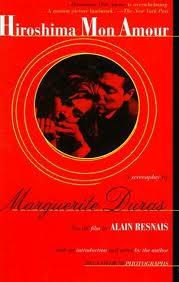
Marguerite Duras and Alain Resnais: Hiroshima mon Amour – Book and Movie (1959/60) Literature and War Readalong July 2011

How do you talk about war? How to put it into words, into pictures? How to tell and show the unspeakable, the horror, the atrocity? How much can you know about something that you have not experienced? These are but a few questions Marguerite Duras and Alain Resnais explore in the book and the movie.

Hiroshima Mon Amour is maybe the most difficult book of this readalong to write about. A summary wouldn’t do it justice. I was amazed once more how good it is, how profound and how the book and the movie seem like two different ways of exploring, with two different languages, the atrocity that we call war. What is fascinating is how they seem to converse with each other.

In 1959 a Japanese man and a French woman meet in Hiroshima. They are both a bit over thirty and happily married. They spend a night together. It is shortly before the woman’s return to France. She is an actress who has come to Hiroshima to play a nurse in a movie on peace. They make love and talk. First about Hiroshima, then about the past of the woman. They part for the day but he follows her and they spend another night together, stay awake, spend  time in a tea house. During the second night, the woman tells the man the whole story of her past in Nevers and her tragic first love. She hasn’t told anyone this story before because there was never anyone like her first lover after that until this day.

I’m glad I read the book again before watching the movie. It was interesting to see how different it is when we first imagine something and when we then see it as well.

During the initial part of the movie we hear a voice-over. The woman tells the man everything that she has seen in Hiroshima. In the news at the time, in the museum during her stay. When you read it, you see in your imagination what you have seen before in documentaries or on photos but the movie shows you how it really was and on the other hand you have the man’s voice telling you, that you have seen nothing, know nothing. There is no replacing the actual experience.

The first pictures show bodies, parts of bodies, first covered in what looks like fall out, then in sweat. This reminded me of Resnais’ documentary Night and Fog. It is the same visual language that tries to show us what violence does to the body, that tries to capture the devastation. Hiroshima Mon Amour seems also to say that war and love can be equally destructive. There is violence in aggression and in passion.

What struck me is that we do not know their names. At the end they give each other the name of the places in which their mutual tragedies happened. She calls him Hiroshima, he calls her Nevers.

One of the themes of the book and the movie is how the collective and the personal tragedies are linked. While Hiroshima and WWII stand for a collective tragedy, Nevers stands for a personal tragedy. This is one of the achievements of  Hiroshima Mon Amour. One approach in war stories or war movies is to pick one exemplary person and tell his/her story. We understand the individual far better, can identify far better with one person’s story but the large-scale of the collective should not be forgotten. Hiroshima Mon Amour is one of the rare movies/books who manages to show both and make clear that they are interdependent.

For those who have not read the book, I would say that it is a valuable addition and it is fascinating to see how they complement each other. First there is the script, including proposals by Marguerite Duras, then she adds information on what scenes Resnais finally chose, plus there is an annex in which Duras goes deeper, explores the woman’s story, gives it more density. I liked the appendix, that was mostly dedicated to the woman’s story, a lot.

There are many things that are worth discussing and I am looking forward to hear your thoughts. One question that has been on my mind since I re-watched the movie is the choice of the Japanese actor. He struck me as looking quite European. I had kept the appendix for last and was glad that Duras mentioned this choice, saying they had wanted to make a more universal statement with this. They didn’t want people to think “That’s an attractive Japanese” but “That’s an attractive man”. I was not completely happy about this. It’s a sad fact that whenever a person from another continent is casted in a European movie, the film directors think of the European taste and choose someone less typical. This is unfortunately exactly how exotism works. I think Resnais and Duras were honest in their attempt but I’m not sure it was ok.

Other reviews:

Emily (Evening All Afternoon)

Litlove (Tales from the Reading Room)

Richard (Caravana de recuerdos)

*****

Hiroshima mon Amour was the seventh book in the Literature and War Readalong. The next one will be Elsa Morante’s History. Discussion starts on Friday August 26, 2011.

Colette: La Chatte – The Cat (1933)

I’m so pleased that I actually found a picture of the old 60s paperback of La Chatte that I bought second-hand a few years ago. These old Le Livre de Poche editions have such an incredible charm.

The book is available in English as Gigi and The Cat which is very misleading as Gigi is an independent story in its own right as much as The Cat and pairing them like this sounds as if that was the book’s title. I realised this when reading the review of the two books on Literary Relish’s blog.

Reading tastes change, at least mine do, but some authors will always remain favourites. One of those authors who is special to me and has always been is Colette. She is such an accomplished writer, a masterful stylist, a great storyteller and a psychologist of superior order. She can take a story that looks simple and nondescript and turn it into a complex piece of writing, revealing the numerous layers of motives and motivations behind actions. Her descriptions of people and settings are some of the best I have read. Her vocabulary is selected and she tried to find the exact and appropriate expression at any moment. Still there is no superfluous word or unnecessary adornment in her writing.

La Chatte is no exception. It has a subject to which I relate but it is far more than the story of a relationship between a man and his cat. It is a subtle analysis of love versus passion, of marriage versus celibacy, of childhood and growing up, of change and permanence. The story also captures the dynamics of disenchantment following the recognition that one’s object of desire is flawed.

The story is simple and can be told in a few words. Childhood friends Alain and Camille are going to be married. The lively and insensitive Camille is looking forward to her new life but Alain, who has to leave behind his beloved cat and the home of a happy childhood, is not as joyful as the bride. The relationship he has with the Chartreux cat Saha is very intense and emotional. They share rituals and habits and are deeply attached to each other. The cat doesn’t like Camille and the young woman thinks her future husband is slightly silly when it comes to the animal.

The newlyweds are meant to live at the old house with its splendid garden but at first they move to a friend’s apartment while Paul’s old rooms and the family home are being transformed into a bigger apartment for them.

Paul cannot adjust to his new life and sneaks off to his parents’ house frequently. Whenever he returns the cats looks thinner and thinner. She misses him and doesn’t eat anymore. Finally he takes her with him to his new home. To make things easier for the cat and his wife, Alain tries to teach her the cat’s ways but Camille couldn’t care less.

What unfolds is a story of jealousy and hatred between Camille and Saha. It is an uneven fight, shocking at times. Most of it happens behind Alain’s back but in the end, after something horrible has occurred, he notices what is going on. Camille’s reactions to the cat and the way she treats her opens an escape route for Alain and tells him a lot about his wife that he hadn’t seen before.

I really liked Alain who is a dreamer and so unprepared  for married life. He is an only child of very rich parents and the beautiful family home is stately and imposing and so is the old garden. One of Alain’s and the cat’s biggest joys is sitting quietly on a chair, watching birds, smelling the flowers and do nothing else but contemplate their surroundings.

One wonders what motivated Alain to get married in the first place. He was so content before, enjoying a life of leisure.  He shares everything with the cat apart from a sexual relationship which seems the only reason why he let Camille sweep him away into marriage. He realizes that he doesn’t need to be married to get what he needs. He can always have girl-friends.

The deep affection he and the cat have for each other is very touching. Colette loved cats but I think the cat could be replaced by a friend or a brother, a sister, anyone with whom one wouldn’t have a sexual relationship. I think Colette also shows that love in its purest form can come from many sources.

La Chatte is a novel full of beautiful descriptions and the tension that slowly builds up between the two rivals makes this a very engrossing read.

I read Colette’s novel as a contribution to Book Bath‘s and Thyme for Tea‘s event Paris In July.