Letters From a Lost Generation – Literature and War Readalong December 2014

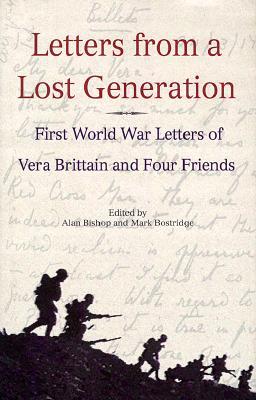
Letters From a Lost Generation

Vera to Edith Brittain

Malta, 15 December 1916

I do wonder if I shall ever see Edward again; it is very hard that we should be the generation to suffer the War, though I suppose it is very splendid to, & is making us better & wiser & deeper men & women (at any rate some of us . . .) than our ancestors ever were or our descendants ever will be. It seems to me that the War will make a big division of ‘before’ and ‘after’ in the history of the World, almost if not quite as big as the ‘B.C.’ and ‘A.D.’ division made by the birth of Christ  . . . ( . . . )

I finished reading Letters from a Lost Generation on December 22nd. Only when I put it aside and picked up Testament of Youth did I realize that Vera Brittain’s fiancé Roland Leighton was shot exactly 99 years ago and died on December 23rd 1915. When I chose the book I didn’t know about this; reading it exactly during that time made it even more moving.

The first half of the book contains mostly the letters between Vera Brittain and Roland Leighton. There are a couple of letters between her and her brother Edward and between her and their best friends Victor Richardson and Geoffrey Thurlow, but the major part is the correspondence between Vera and Roland.

Reading these letters was very difficult. They are not graphic or gruesome at all – at times I wondered whether the four men really served in the trenches – but they are so unbearably tragic and sad. These five people were such close friends, that each time one of them dies, they all suffer terribly. Since Roland is the first to go and seems the one everyone liked the most, his death overshadows all the later letters. He’s mentioned constantly, quoted, remembered, and after a while I started to feel the loss almost as badly. No wonder people still visit his grave in France.

After Roland is killed Vera dedicates herself with even more verve to nursing. She first stays in England but then moves to Malta and later to France.

What spoke to me is the way they deal with grief. It shows how very important it is when you lose someone you love to know exactly what happened. In each case, and also in the case of friends who are not as close, they try, like detectives, to find out what happened. It’s particularly painful for Vera to know that Roland was wounded on the 22nd and only died one day later, after having been conscious the whole time, but didn’t write her a goodbye note. They find out later that he took an unforseen turn to the worse and might not have known he was going to die. Other aspects of his death become painful only later. Some of the friends are wounded and killed during battles, not so Roland. His death is rather an accident and Vera sometimes wishes that he’d died in one of the big battles so that his death would forever be linked to that name.

What I found extremely shocking is that Roland’s clothes – the stinking, muddy, bloody uniform and shoes – were sent to his family. I’d never heard of anything like this before. Vera describes the particular stench and the horror of the sight in great detail and I felt so sorry for them. How cruel and thoughtless. In Pat Barker’s Toby’s Room is a scene in which the sister takes out Toby’s clothes and speaks of the stench of the trenches. I’m pretty sure Pat Barker was inspired by the description of Roland Leighton’s clothes.

Letters from a Lost Generation is an important document on how the perception of the war changed. The four men signed up enthusiastically, spoke about honour and glory. Even war is glorified. The longer the war takes, the higher the losses, and the more futile it all seems, the more that perception changes.

Reading about the work of a nurse was especially interesting and showed to some extent why it was possible for so many people in England to ignore the mutilations. By the time the wounded men arrived, they had already been patched up as good as possible.

Another aspect that struck me is how humble the five friends were. None of them complained much or made a big fuss. Not about the cold, the mud, and the rain, nor about the battles and the fear of death. Not even when they are wounded.

I still wonder how Vera Brittain managed to survive the death of the four people who were closest to her. After the war she met the writer Winifred Holtby who became her best friend and helped her to overcome her grief. Sadly Holtby too died an early death in 1935. Another great loss for Vera.

I don’t think I’ve ever read a collection of letters this quickly and as soon as I finished the book I started Vera Brittain’s memoir Testament of Youth. I want to know more about her, about them. Letters from a Lost Generation is as important as it is beautiful and moving. It’s a document of deep and heartfelt friendship, a testimony of grief, loss and sorrow, and a valuable contribution to understand a generation and its motives.

Other reviews


*******

Letters from a Lost Generation was the last book in the Literature and War Readalong 2014. The next book is The Disappeared by Kim Echlin. Discussion starts on Tuesday 31 March, 2015. Further information on the Literature and War Readalong 2015, including the book blurbs can be found here.
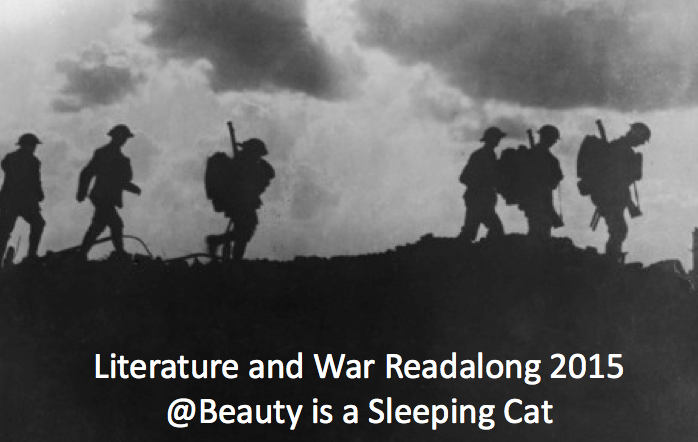
Literature and War Readalong 2015 – Mini Edition

Literature and War Readalong 2015

For some of you it may come as a surprise that next year’s Literature and War Readalong contains only four titles, but I felt we needed a change. That’s why I chose only four books, from four different countries, focussing on three different wars. The list should appeal to those interested in international literature, books by prize winners, novels on international conflict, modern classics, books that have been made into movies and a lot more.

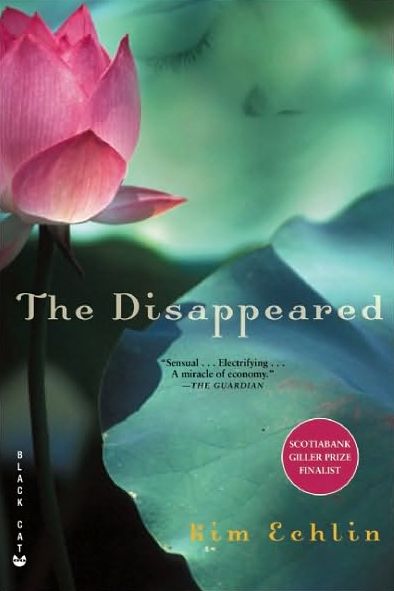
The Disappeared

March, Tuesday 31 2015

The Disappeared by Kim Echlin (Canada 2009), War in Cambodia, Novel, 336 pages.

Here’s the blurb:

After more than 30 years Anne Greves feels compelled to break her silence about her first lover, and a treacherous pursuit across Cambodia’s killing fields. Once she was a motherless girl from taciturn immigrant stock. Defying fierce opposition, she falls in love with Serey, a gentle rebel and exiled musician. She’s still only 16 when he leaves her in their Montreal flat to return to Cambodia. And, after a decade without word, she abandons everything to search for him in the bars of Phnom Penh, a city traumatized by the Khmer Rouge slaughter. Against all odds the lovers are reunited, and in a political country where tranquil rice paddies harbour the bones of the massacred, Anne pieces together a new life with Serey. But there are wounds that love cannot heal, and some mysteries too dangerous to know. And when Serey disappears again, Anne discovers a story she cannot bear.

Haunting, vivid, elegiac, The Disappeared is a tour de force; at once a battle cry and a piercing lamentation, for truth, for love.

Literary fiction of the highest order, this is an unforgettable novel set against the backdrop of Cambodia’s savage killing fields.
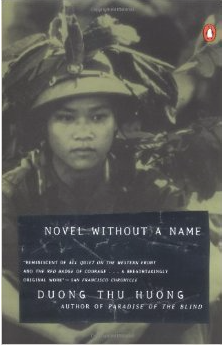
Novel Without A Name.
May, Friday 29 2015

Novel Without a Name – Tiêu thuyêt vô dê by Huon Thu huong (Vietnam 1995), War in Vietnam, Novel, 304 pages.

Here is the blurb:

Vietnamese novelist Huong, who has been imprisoned for her political beliefs, presents the story of a disillusioned soldier in a book that was banned in her native country.

A piercing, unforgettable tale of the horror and spiritual weariness of war, Novel Without a Name will shatter every preconception Americans have about what happened in the jungles of Vietnam. With Duong Thu Huong, whose Paradise of the Blind was published to high critical acclaim in 1993, Vietnam has found a voice both lyrical and stark, powerful enough to capture the conflict that left millions dead and spiritually destroyed her generation. Banned in the author’s native country for its scathing dissection of the day-to-day realities of life for the Vietnamese during the final years of the “Vietnam War, ” Novel Without a Name invites comparison with All Quiet on the Western Front and other classic works of war fiction. The war is seen through the eyes of Quan, a North Vietnamese bo doi (soldier of the people) who joined the army at eighteen, full of idealism and love for the Communist party and its cause of national liberation. But ten years later, after leading his platoon through almost a decade of unimaginable horror and deprivation, Quan is disillusioned by his odyssey of loss and struggle. Furloughed back to his village in search of a fellow soldier, Quan undertakes a harrowing, solitary journey through the tortuous jungles of central Vietnam and his own unspeakable memories.

Fateless

September, Wednesday 30 2015

Fateless – Sorstalanság by Imre Kertész (Hungary 1975), Holocaust,  Novel, 272 pages.

Here is the blurb:

The powerful story of an adolescent’s experience of Auschwitz by Holocaust survivor and Nobel Prize winner, Imre Kertész.

Gyuri, a fourteen-year-old Hungarian Jew, gets the day off school to witness his father signing over the family timber business to the firm’s bookkeeper – his final business transaction before being sent to a labour camp. Two months after saying goodbye to his father, Gyuri finds himself assigned to a ‘permanent workplace’, but within a fortnight he is unexpectedly pulled off a bus and detained without explanation. This is the start of his journey to Auschwitz.

On his arrival Gyuri finds that he is unable to identify with other Jews, and in turn is rejected by them. An outsider among his own people, his estrangement makes him a preternaturally acute observer, dogmatically insisting on making sense of everything he witnesses.

A Time To Love and a Time to Die

November, Friday 27

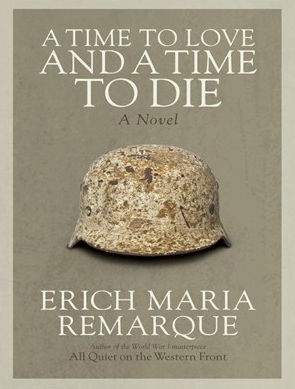
A Time to Love and a Time to DieZeit zu leben und Zeit zu sterben by Erich Maria Remarque (Germany, WWII, Novel, 384 pages.

It’s interesting to note that the German title isn’t as corny as the English one. It means “A Time to Live and a Time to Die” not Love and Die.

Here is the blurb:

From the quintessential author of wartime Germany, A Time to Love and a Time to Die echoes the harrowing insights of his masterpiece All Quiet on the Western Front.

After two years at the Russian front, Ernst Graeber finally receives three weeks’ leave. But since leaves have been canceled before, he decides not to write his parents, fearing he would just raise their hopes.

Then, when Graeber arrives home, he finds his house bombed to ruin and his parents nowhere in sight. Nobody knows if they are dead or alive. As his leave draws to a close, Graeber reaches out to Elisabeth, a childhood friend. Like him, she is imprisoned in a world she did not create. But in a time of war, love seems a world away. And sometimes, temporary comfort can lead to something unexpected and redeeming.

“The world has a great writer in Erich Maria Remarque. He is a craftsman of unquestionably first rank, a man who can bend language to his will. Whether he writes of men or of inanimate nature, his touch is sensitive, firm, and sure.”—The New York Times Book Review


I will anounce each title with some additional information about six weeks before the discussion date. I hope you like the choices and will join me whenever you can.

Looking Back on German Literature Month IV 2014

Screen Shot 2014-09-24 at 07.23.25

Every year Lizzy and I think that German Literature Month can’t get any better and every year we are wrong. It keeps on getting better and better. More people take part – 43 this year – more blog post are being written – 174 (!) -, and the quality of the posts is surprising too. I’m so pleased and want to thank you all for participating and showing so much enthusiasm.

I tried to read all the posts, but I still have some catching up to do before next Sunday. Next Sunday Lizzy and I are giving away two books. One for the winner of the “pick and mix”- category and one for our “favourite post”. It’s not easy because there have been so many great posts.

I’m sorry if I haven’t been able to comment on some blogs, but unfortunately there are always a few with a commenting system I can’t use.

My personal month went great as well. I’ve read some outstanding books, discovered a new favourite crime writer, and managed to read most of the books on my list.

Thanks once more to everyone. And a very special thank you to my wonderful co-host Lizzy.

Joseph Roth: Flight Without End – Die Flucht ohne Ende (1927) Literature and War Readalong November 2014

Screen Shot 2014-10-19 at 10.18.51

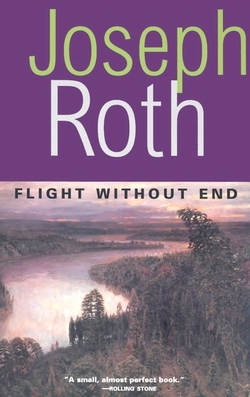
I’ve read a few novels by Joseph Roth now and every time I’m surprised how different they are. Die Flucht ohne EndeFlight Without End is no exception. This is a Roth I’ve not encountered so far, or only in snippets. Flight Without End clearly shows the mark of the journalist, but it’s also the book of someone who cannot take the society he lives in seriously. Rarely have I seen him this sarcastic, mocking individuals and groups of people. And rarely have I come across a Roth that was this funny. I had to laugh out loud more than once and truly wish the translator was able to capture this. Roth’s wit and humour is very subtle and although a translation could be literal, the humour might get lost in translation as it’s often tied to one word that changes the meaning. Mostly he uses it when describing someone. Here’s just a short example.

Eine junge Schauspielerin, die zwar mit dem dicken Zweiten Bürgermeister geschlafen hatte, aber unbeschädigt aus seiner Umarmung wieder herausgekommen war und teilweise sogar erfrischt.

A young actress, who indeed slept with the fat second mayor but came out of this embrace undamaged, partially even refreshed.

I take just one element of the sentence to explain what I mean. It’s entirely possible to choose the word unharmed instead of undamaged but it would remove a lot of the fun. “Unbeschädigt” means both unharmed or undamaged, but normally you’d use it for an object, while unharmed would rather mean a person. Roth chose undamaged very consciously.

What struck me too in this book was how cosmopolitan Roth was. The book starts in the Russian steppe, moves to Baku, from there to Vienna, then to a unamed city on the Rhine, and ends in Paris. Each place is described masterfully, its essence captured, its character laid bare.

The story is a bit more problematic. I’ve seen this book mentioned as one of Roth’s weakest works, which would have needed some editing. I agree to some extent. I didn’t mind the lack of plot. What we find here is basically the story of a quest. Franz Tunda, former officer, then captive of the Russian army, escapee, revolutionary, drifter and private tutor, lacks one thing – a home. What is home for a man like Tunda? If he can be of some use, he’s adopted everywhere, but never really welcome. He stays an outsider and this makes him a keen observer. He sees behind everyone’s masks, doesn’t buy any of the big theories on progress and wealth. He’s as wary of the communists as he is of the socialist’s and the bourgeoisie. They all have a hidden agenda. That’s why his flight is without end because, as vast as the world may be, society ultimately makes it very small and there’s no home for those who don’t play along. When I get so much insight and analysis of people and countries I don’t mind a lack of plot. My reservation has something to do with the structure of the book. It’s presented as if we were reading an account of someone who is Tunda’s friend. At the same time there are accounts that are directly made by Tunda and it switches occasionally from third to first person. I think this would have needed editing but it’s a minor flaw.

One of the most poignant scenes is when Tunda visits the grave of the unknown soldier, under the Arc de Triomphe, in Paris.

The blue flame burned not to honor the dead soldiers, but to reassure the survivors. Nothing was more cruel than the blissfully ignorant devotion of a surviving father at the grave of his son, whom he had sacrificed without knowing it. Tunda sometimes felt as if he himself lay there in the ground, as if we all lay there, all those of use who set out from home and were killed and buried, or who came back but never came home. For it doesn’t really matter whether we’re buried or alive and well. We’re strangers in this world, we come from the realm of shadows.

Flight Without End doesn’t show us a poetic or lyrical Roth. It’s not elegiac or nostalgic. It’s sarcastic and ironic. It’s the work of someone who saw the downside of globalisation long before anyone else and who was no fool when it came to human beings. There are a few good ones out there but they hardly ever occupy the big stages; they might be hidden somewhere in the Taiga, doing their thing quietly and unseen.

I thoroughly enjoyed this book. It’s witty, irreverent, unflinching and astute. It may not be the best book for someone who hasn’t read Roth yet, but it’s a must-read for those who already like him.


Other reviews

Vishy (Vishy’s Blog) 


*******

Flight Without End is the eleventh book in the Literature and War Readalong 2014. The next book is Letters from a Lost Generation by Vera Brittain and four of her friends. Discussion starts on Monday 29 December, 2014. Further information on the Literature and War Readalong 2014, including the book blurbs can be found here.
German Literature Month – Some Plans and Suggestions

Screen Shot 2014-09-24 at 07.23.25

Although I don’t really stick to my plans these days, I was still tempted to make a list of possible choices for German Literature Month because in the past years my lists helped others find books. I’ll attempt to read a mix of translated and not yet translated books but all by authors known in the English-speaking world.

Walter Benjamin

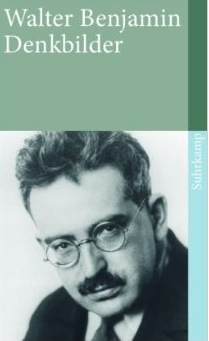
I started to read Walter Benjamin’s essay collection Denkbilder. Many of the essays can be found in the collection Reflections. Benjamin was a philosopher, essayist, memoirist and modernist writer, who tragically took his own life in 1940, in France, when he knew he wouldn’t be able to escape the Nazis. He has written a lot of influential books like The Work of Art in the Age of Mechanical Reproduction

Tonio Kröger

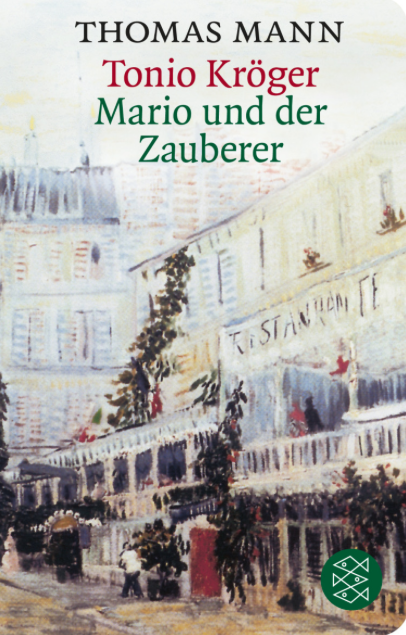
Another classic, Thomas Mann’s novella of a young artist, Tonio Kröger.

The Tongue Set Free

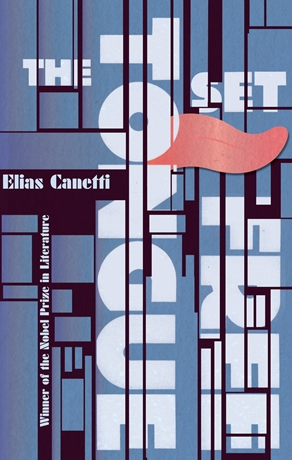
Another modernist writer and memoirist, just like Walter Benjamin. Elias Canetti’s The Tongue Set Free is a childhood memoir, written in a dense poetic prose.

Aller Liebe Anfang

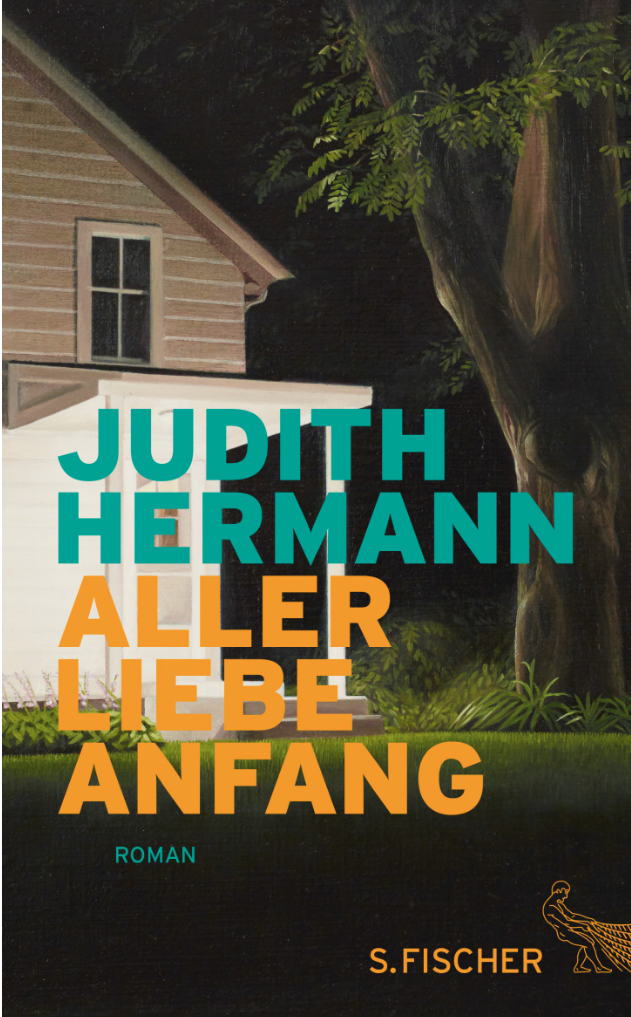
Judith Hermann has just published her fourth book. I loved her two short story collections and appreciated Alice and now I’m curious to find out how much I’ll like her novel which just came out in Germany.

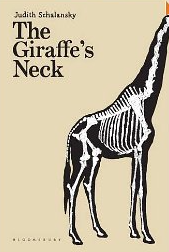
The Giraffe's Neck

I bought Judith Schalansky’s The Giraffe’s Neck when it was published in Germany, two years ago. Now it has finally been  translated.

Here’s the blurb

Adaptation is everything, something Frau Lomark is well aware of as the biology teacher at the Charles Darwin High School in a country backwater of the former East Germany. It is the beginning of the new school year, but, as people look west in search of work and opportunities, its future begins to be in doubt.

Frau Lohmark has no sympathy for her pupils and scorns indulgent younger teachers who talk to their students as peers, play games with them, or (worse) even go so far as to have ‘favourites’. A strict devotee of the Darwinian principle of evolution, Frau Lohmark believes that only the best specimens of a species are fit to succeed. But now everything and everyone resists the old way of things and Inge Lohmark is forced to confront her most fundamental lesson: she must adapt or she cannot survive.

Written with cool elegance and humane irony, The Giraffe’s Neck is an exquisite revelation of a novel, and what the novel can do, that will resonate in the reader’s mind long after the last page has been turned.

The Glory of Life

Michael Kumpfmüller has already published a few novels to high acclaim. Some have been translated. The Glory of Life is his latest book and tells the story of Kafka’s last year, during which he fell in love with Dora Diamant. I started reading it and the writing is luminous and lyrical.

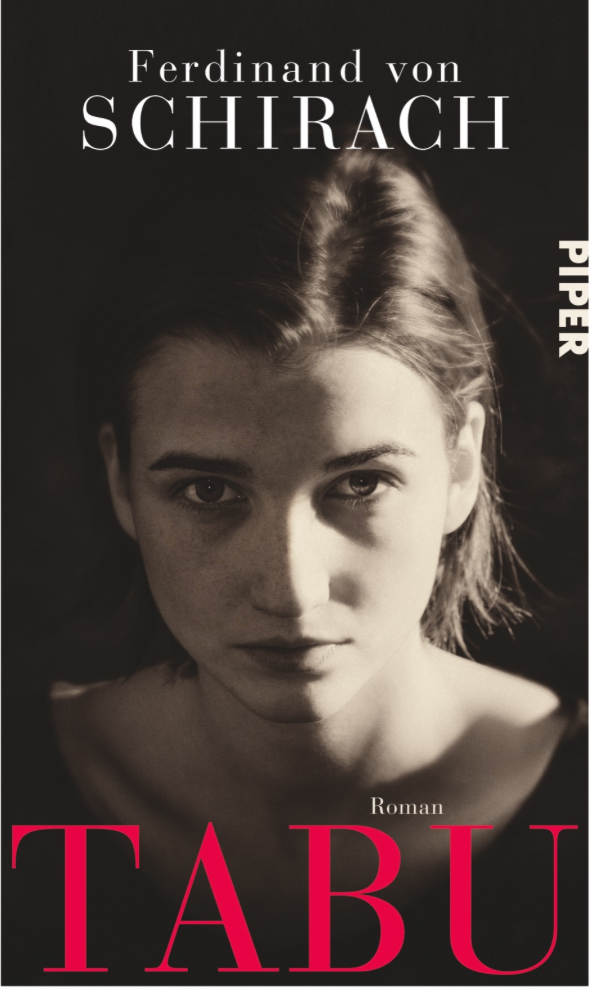
Tabu

The translation of Ferdinand von Schirach’s latest novel Tabu – The Girl Who Wasn’t There will be published in January. He’s another author whose every book I tend to read.

Sebastian von Eschburg, scion of a wealthy, self-destructive family, survived his disastrous childhood to become a celebrated if controversial artist. He casts a provocative shadow over the Berlin scene; his disturbing photographs and installations show that truth and reality are two distinct things.

When Sebastian is accused of murdering a young woman and the police investigation takes a sinister turn, seasoned lawyer Konrad Biegler agrees to represent him – and hopes to help himself in the process. But Biegler soon learns that nothing about the case, or the suspect, is what it appears. The new thriller from the acclaimed author of The Collini CaseThe Girl Who Wasn’t There is dark, ingenious and irresistibly gripping.

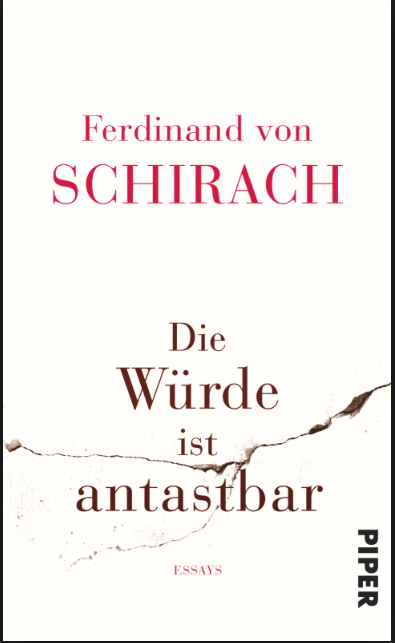
Essays

I’ve almost finished this collection of Ferdinand von Schirach’s essays. Some are interesting, some, like the one of smoking, annoyed me quite a bit, but overall they are worth reading.

Screen Shot 2014-10-19 at 10.18.51

Since I’m hosting a Joseph Roth Week I’ll be reading at least two of his novels. One of them is our readalong title Flight Without End.

Flight Without End, written in Paris, in 1927, is perhaps the most personal of Joseph Roth’s novels. Introduced by the author as the true account of his friend Franz Tunda it tells the story of a young ex-office of the Austro-Hungarian Army in the 1914- 1918 war, who makes his way back from captivity in Siberia and service with the Bolshevik army, only to find out that the old order, which has shaped him has crumbled and that there is no place for him in the new “European” culture that has taken its place. Everywhere – in his dealings with society, family, women – he finds himself an outsider, both attracted and repelled by the values of the old world, yet unable to accept the new ideologies.

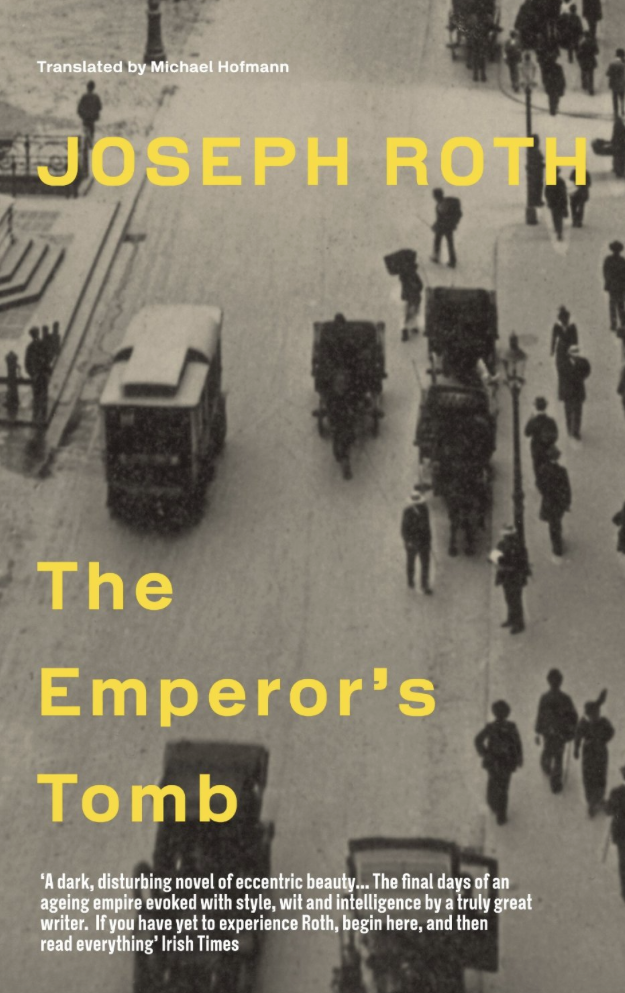
The Emperor's Tomb

The Emperor’s Tomb might be the second choice.

The Emperor’s Tomb is a magically evocative, haunting elegy to the vanished world of the Austro-Hungarian Empire, and to the passing of time and the loss of youth and friends. Prophetic and regretful, intuitive and exact, Roth’s acclaimed novel is the tale of one man’s struggle to come to terms with the uncongenial society of post-First World War Vienna and the first intimations of Nazi barbarities.

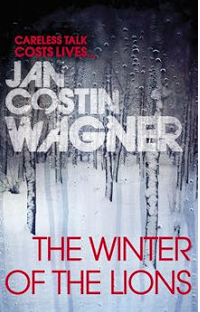
The Winter of the Lions

Jan Costin Wagner is a German crime author whose books are set in Finland. A very unique mix. I’m reading the third in his Kimmo Joentaa series The Winter of the Lions and like it so much, I already got another one. I’m particularly fond of the writing. It’s so sparse and dry. Decidedly more literary than mainstream.

Every year since the tragic death of his wife, Detective Kimmo Joentaa has prepared for the isolation of Christmas with a glass of milk and a bottle of vodka to arm himself against the harsh Finnish winter. However, this year events take an unexpected turn when a young woman turns up on his doorstep.

Not long afterwards two men are found murdered, one of whom is Joentaa’s colleague, a forensic pathologist. When it becomes clear that both victims had recently been guests on Finland’s most famous talk show, Kimmo is called upon to use all his powers of intuition and instinct to solve the case. Meanwhile the killer is lying in wait, ready to strike again…

In Kimmo Joentaa, prizewinning author Jan Costin Wagner has created a lonely hero in the Philip Marlowe mould, who uses his unusual gifts for psychological insight to delve deep inside the minds of the criminals he pursues.

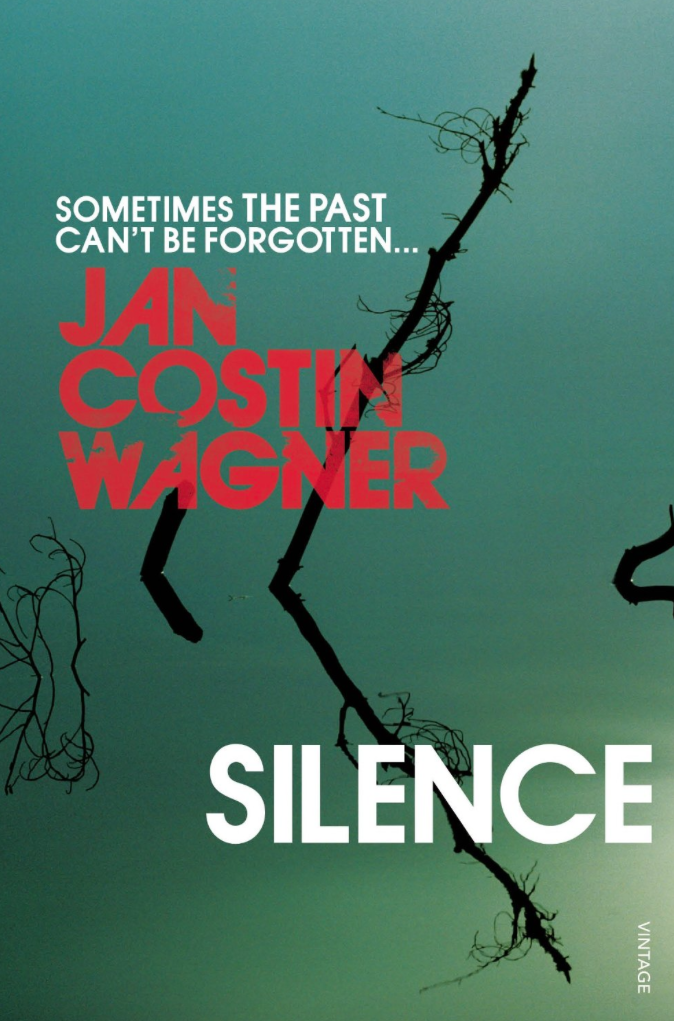
Silence

Silence is Wagner’s second Kimmo Joentaa novel.

A young girl disappears while cycling to volleyball practice. Her bike is found in exactly the same place that another girl was murdered, thirty-three years before. The original perpetrator was never brought to justice – could they have struck again? The eeriness of the crime unsettles not only the police and public, but also someone who has been carrying a burden of guilt for many years…

Detective Kimmo Joentaa calls upon the help of his older colleague Jetola, who worked on the original murder, in the hope that they can solve both cases. But as their investigation begins, Kimmo discovers that the truth is not always what you expect.

Ghost Knight

I’m also tempted by Cornelia Funke’s ghost story Ghost Knight, set in and around Salisbury Cathedral.

Eleven-year-old Jon Whitcroft never expected to enjoy boarding school. He never expected to be confronted by a pack of vengeful ghosts either. And then he meets Ella, a quirky new friend with a taste for adventure…

Together, Jon and Ella must work to uncover the secrets of a centuries-old murder, while being haunted by ghosts intent on revenge. So when Jon summons the ghost of the late knight Longspee for his protection, there’s just one question – can Longspee really be trusted? A thrilling tale of bravery, friendship – and ghosts!

Screen Shot 2014-10-19 at 09.59.49

These are the plans for the translated authors/books, but I might also read some of those that haven’t been translated yet, like Keto von Waberer.

Have you read any of these books? What are you’re plans?

Wednesday is Wunderbar – German Literature Month – Giveaways

Screen Shot 2014-09-24 at 07.23.25

Thanks to the generosity of different publishers, Lizzy and I are able to give away a number of wonderful books.

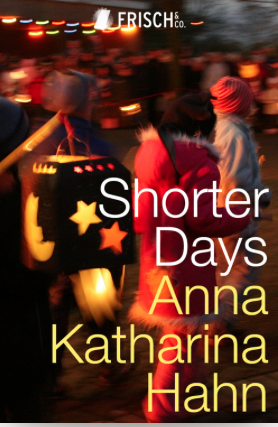
I’m particularly pleased to give away a copy of the e-book of Anna Katharina Hahn’s novel Shorter Days. I’ve often thought that it was sad that her novel hadn’t been translated because I loved it so much. I’ve read it when it came out in Germany, in 2009, at a time when I read far more German than English books. Since then it’s among my top 5 German books of the last decade. I was really happy when I saw that Frisch & Co, an e-book publisher, was going to publish the novel in October.

Screen Shot 2014-10-01 at 10.21.24

Here’s the publisher’s blurb

It’s fall in Stuttgart, just before Halloween, and thirty-something mothers Judith and Leonie are safely ensconced in their upscale apartments in one of the city’s best neighborhoods. Judith has squeezed her life into the straitjackets of stay-at-home Waldorf motherhood—no TV, no sweets, nature hikes, and, above all, routine—and marriage to staid university professor Klaus. Leonie is proud of her work at a bank and her husband Simon’s career, though she worries that she’s neglecting her young daughters, and that Simon’s work distracts him from his family. Over the course of a few days, Judith and Leonie’s apparently stable, successful lives are thrown into turmoil by the secrets they keep, the pressures they’ve been keeping at bay, and the waves of change lapping at the peaceful shores of their existence.

Shorter Days is a heartrending exploration of the joys, challenges, and dangers of modern family life.

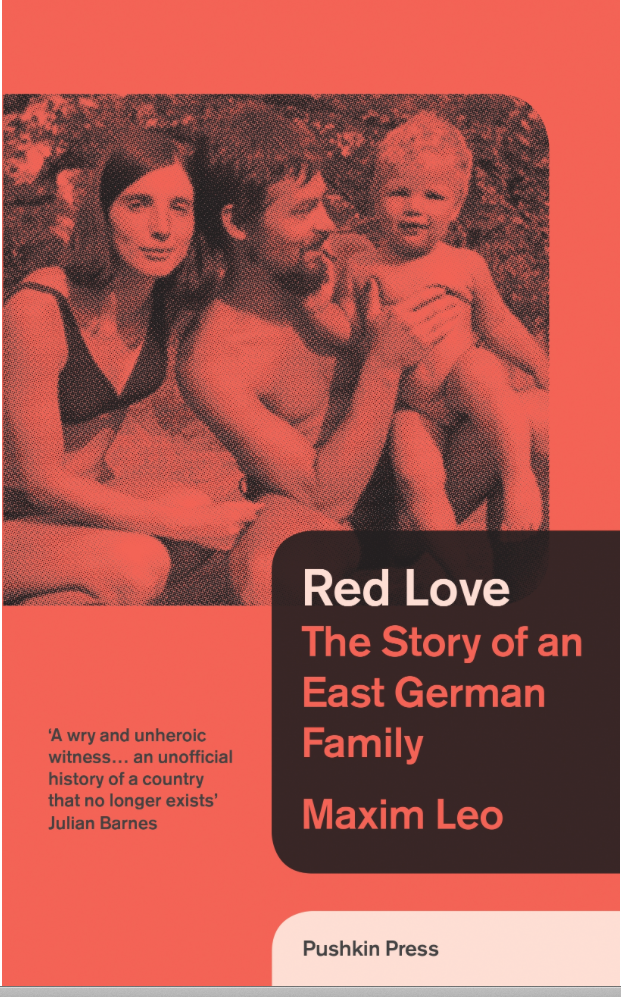
The second book I am giving away is a nonfiction book, published by Pushkin Press, Maxim Leo’s Red Love: The Story of an East German Family. I haven’t read it but it sounds very interesting.

Screen Shot 2014-10-01 at 10.28.30

Here’s the blurb

Growing up in East Berlin, Maxim Leo knew not to ask questions. All he knew was that his rebellious parents, Wolf and Anne, with their dyed hair, leather jackets and insistence he call them by their first names, were a bit embarrassing. That there were some places you couldn’t play; certain things you didn’t say.

Now, married with two children and the Wall a distant memory, Maxim decides to find the answers to the questions he couldn’t ask. Why did his parents, once passionately in love, grow apart? Why did his father become so angry, and his mother quit her career in journalism? And why did his grandfather Gerhard, the Socialist war hero, turn into a stranger?

The story he unearths is, like his country’s past, one of hopes, lies, cruelties, betrayals but also love. In Red Love he captures, with warmth and unflinching honesty, why so many dreamed the GDR would be a new world and why, in the end, it fell apart.

“Tender, acute and utterly absorbing. In fine portraits of his family members Leo takes us through three generations of his family, showing how they adopt, reject and survive the fierce, uplifting and ultimately catastrophic ideologies of 20th-century Europe. We are taken on an intimate journey from the exhilaration and extreme courage of the French Resistance to the uncomfortable moral accommodations of passive resistance in the GDR.

“He describes these ‘ordinary lies’ and contradictions, and the way human beings have to negotiate their way through them, with great clarity, humour and truthfulness, for which the jury of the European Book Prize is delighted to honour Red Love. His personal memoir serves as an unofficial history of a country that no longer exists… He is a wry and unheroic witness to the distorting impact – sometimes frightening, sometimes merely absurd – that ideology has upon the daily life of the individual: citizens only allowed to dance in couples, journalists unable to mention car tyres or washing machines for reasons of state.” Julian Barnes, European Book Prize

With wonderful insight Leo shows how the human need to believe and to belong to a cause greater than ourselves can inspire a person to acts of heroism, but can then ossify into loyalty to a cause that long ago betrayed its people.” Anna Funder, author of Stasiland


I’d like to thank Frisch & Co. and Pushkin Press for their generosity.

If you’d like to enter the giveaway, leave a comment, indicating for which book you’d like to enter. You can enter for both, of course.

Don’t miss visiting Lizzy’s site as she’s giving away titles from other publishers.

The giveaway is open internationally. The winners will be announced on Sunday, 5th October 2014. 

THIS GIVEAWAY IS NOW CLOSED: THE WINNERS HAVE BEEN ANNOUNCED.

Louisa Young: My Dear, I Wanted to Tell You (2011) Literature and War Readalong September 2014

My Dear I Wanted To Tell You

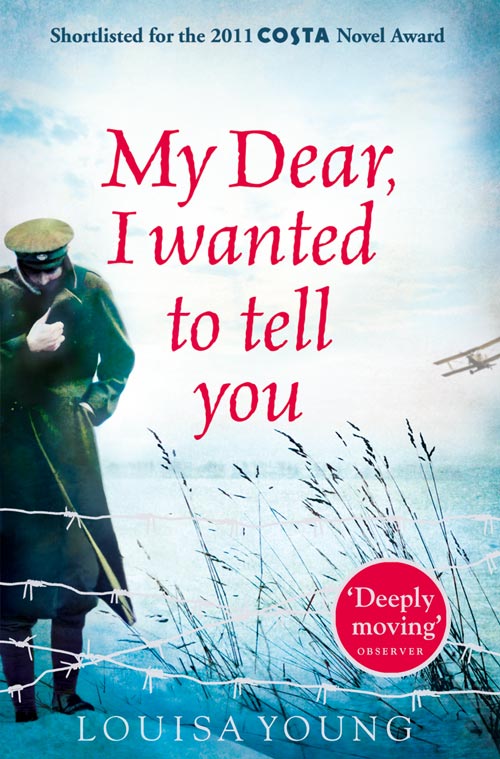
Louisa Young’s novel My Dear, I Wanted to Tell You is one of the most surprising reads for me this year. After having been disappointed in Pat Barker’s Toby’s Room and Helen Dunmore’s The Lie, I was a little worried this would be the third in a series of underwhelming contemporary WWI novels. Well, it wasn’t. I loved this book and could hardly put it down. Not only because the story was so engaging and the characters so likable but because Louisa Young is a skillful storyteller with a very unique style. It’s not easy to tell a WWI story, including all the common themes, and manage to do that in a fresh and original way, but that’s just what Louisa Young did.

Riley Purefoy and Nadine Waveney meet when they are still small children. Although from very different backgrounds – he’s a poor working-class boy, she’s from a rich upper-class family – they become friends and their friendship turns into love eventually. They both share a passion for art and both want to become artists. Just before the war breaks out, Riley works as an assistant to an artist. He sees Nadine regularly and they know they are in love. However, when her parents find out, they are not thrilled and make Riley understand that he isn’t welcome in the Waveney’s home anymore. Feeling hurt and insulted, Riley impulsively joins the army and within a few weeks is sent to the trenches. Nadine on her side, becomes a nurse. They keep in contact and write to each other regularly, even meet during one of Riley’s leaves.

Thanks to influential people at home and thanks to Peter Locke, Riley’s commanding officer, who understands that Riley is very cultured and intelligent, Riley becomes an officer in spite of his background.

Peter Locke and his wife, Julia, are the second important couple in this novel. The book moves back and forth between these four characters.

The first half of the book is intense and beautiful and drew me in so much that when tragedy strikes it made me gasp. What followed wasn’t an easy read. It was tragic but so well done. There are numerous ways to write about facial mutilation and the way Louisa Young did it was outstanding. She combines the themes of body image, art, and beauty, and weaves them together in way that I found extremely thought-provoking. Peter’s wife, Julia, is obsessed with her beauty. She thinks she has nothing else to offer and, although not yet 30, already wants to undergo plastic surgery. Her thoughts and her anguish mirror the thoughts and the anguish of the mutilated men. I also liked that Louisa Young set the book in an artists’ milieu at the beginning because it underlines that we humans are extremely visual beings and while we might not all feel the same about beauty, we all feel the same about looks and mutilation. Making beauty, even more than mutilation, a main theme was a unique choice and even daring. Daring, because Louisa Young doesn’t spare us. She shows us what those mutilations looked like, what they did to a soldier. And how the society reacted. Even mothers screamed and fled at the sight of their disfigured sons.

The second part of the novel focusses almost entirely on the surgeries and the despair of the mutilated men and on the toll the war takes on the minds of those who survive intact.

One of the strengths of the book is its accuracy, another one is that Louisa Young makes us care about her characters. Not only about the main characters but about the minor characters as well. She captures a society and an event, and thus achieves what the best historical fiction should achieve— make us we feel we’ve been there too.

Although My Dear I Wanted to Tell You tells a horrific story, it’s an amazingly beautiful book, full of sentiment and rich descriptions. Louisa Young has already published the sequel (The Heroe’s Welcome) and more books centering on the same characters are still to come. As she said in an interview: “I think I may be writing the twentieth century, through these characters.” I’m eager to read more of her novels.

Other reviews

 Anna (Diary of an Eccentric)

Danielle (A Work in Progress)

My Book Strings

*******

My Dear, I Wanted to Tell You is the ninth book in the Literature and War Readalong 2014. The next book is the Fantasy novel Phoenix and Ashes by Mercedes Lackey. Discussion starts on Friday 31 October, 2014. Further information on the Literature and War Readalong 2014, including the book blurbs can be found here.