Today I’m Over at Shotgun Honey

Shotgun Honey

Today, I was going to write a review on Dashiell Hammett’s The Thin Man but I came down with the flu. Just as well because I have some news to share.

I’m really thrilled to let you know that one of my short crime pieces You Got It All Wrong has been published by Shotgun Honey. I’ve been a fan of the magazine for a while and so I’m really happy about this.

If you’d like to read it – here’s the link.


A Bunch of Mini Crime and Thriller Reviews

The Ice TwinsCop TownChemistry of DeathUntil It's OverDisclaimerMurder on the Orient EXpress

I went over my stacks of read books during German Literature Month and was startled when I noticed how many books, especially thriller and crime novels, I had read but not reviewed. I could probably write longer posts but decided to write a few very short reviews instead. That way, you might still hear about a book worth reading or one you should avoid and I don’t have to post every single day until the end of the year.

Disclaimer

Renée Knight’s Disclaimer is possibly the thriller disappointment of the year. The premise was interesting – a woman receives a novel in which the authors describe something that happened a long time ago and that she never told anyone. I think the book has two major flaws. One is that it’s not believable. I hate it when plot relies on one character suspecting another without questioning things. That alone would have annoyed me but I also thought the story was highly unbelievable. Sometimes a book can be salvaged through great atmosphere and description. Not so this novel. In my opinion that’s the second flaw of Disclaimer. While it’s said to be set in London, it might as well have been set on the moon. Not once did I see the city. Unbelievable story, wonky psychology, and zero atmosphere.

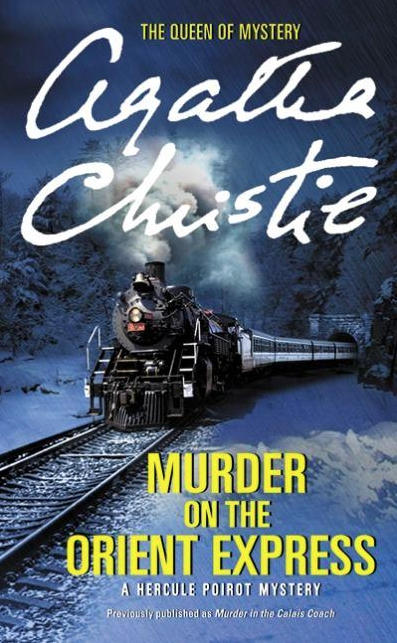
Murder on the Orient EXpress

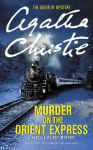
Murder on the Orient Express was another disappointment. I picked it because I was in the mood to read a locked-room mystery and because I haven’t read any Agatha Christie in a long time. So far I’ve only ever read her standalone novels and one or two Miss Marple novels. While they might be formulaic, I still really enjoyed them. This was my first Hercule Poirot. I never picked them up because for me, as a native French speaker, the name is so silly. It sounds like poireau – leek – or poivrot – drunkard – . Plus Hercule? Really? I expected him to be on the boring side and that’s what he is. I wasn’t fascinated by his deductive skills. Still, it was a quick read and I loved the setting. I only found the murder and the way it was solved a bit lame. Still, if you like a great setting – a train in winter – and are in favour of cozy crime and whodunnits – especially locked-room mysteries – this might be for you.

The Ice Twins

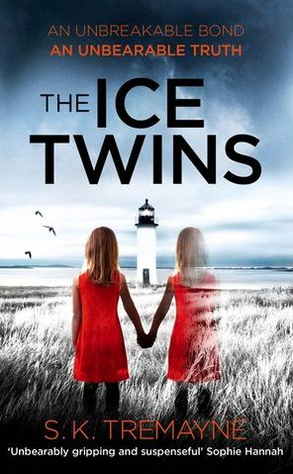
The Ice Twins had a lot to offer. Stunning descriptions and atmosphere. After the death of one of their twin daughters, Angus and Sara Moorcroft move to a remote Scottish island. Such eerie, creepy descriptions and certainly not a place I would have chosen to live in, after the awful loss of a child. It gets creepier when the surviving twin begins to claim that she’s the other one. The part that affected me the most and which is the creepiest is the favouritism. While the father openly preferred one kid, the mother preferred the other. What does it mean, when you suddenly think that it’s not your favourite who has survived?  The Ice Twins was psychologically compelling. The descriptions are great. Unfortunately the end was a bit of a disaster. Not only was it disappointing and far-fetched, I also found it misogynistic. When I bought the book, I thought S.K.Tremayne was a woman but after finishing, I started to doubt that. And indeed, S.K. Tremayne is a man. I’m not surprised. The ending leaves no doubt.

Cop Town

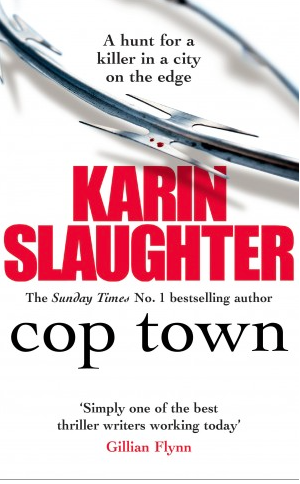
With Karin Slaughter’s standalone novel Cop Town I finally enter the territory of the books I loved without reservations. Like Nicci French or Sarah Bolton, she is one of my favourite mainstream crime writers.  I’ve been reading her series for years, but when I heard she’d written a standalone novel, set in the 70s in Atlanta, I was interested immediately. What sounded particularly great was the research she’d done for this book. The period details are amazing. Her choices of two female protagonists make this a very feminist novel, as it’s in part a murder mystery – there’s a shooter killing cops – and a book about women on the police force, a workplace that’s dominated by white males who are sexist, racists, anti-Semites, homophobic . . . you name it. Into this explosive environment comes Kate, a rookie cop. She’s recently widowed, her husband died in Vietnam. Kate comes from an upper-class, Jewish family. The Vietnam angle, is another well-done angle.  Her first day is a shocker, but to the surprise of everyone, even her partner Maggie, she doesn’t give up. Maggie comes from a cop family. Her uncle and her brother have joined the force. They both didn’t want her to follow them in their footsteps and the aggression and violence she has to endure, are appalling. Notably her uncle Terry is the prototypical male white homophobic sexist racist. The shooter’s been active for a while, which infuriates the cops and even leads them to plant false evidence.  Maggie and Kate decide to take matters into their own hands. A dangerous idea. Slaughter’s writing is tight, as usual, the period details so well captured, the story is gripping. A remarkable achievement. It works as a crime novel and as a novel on the 70s, Atlanta, gender issues . . .  It’s shocking to think what women had to put up with to fulfill the dream of working in a male dominated  job. A word of warning—I’m not the most squeamish but there’s some violence in this book that was very hard to read and get out of my mind again.

Until It's Over

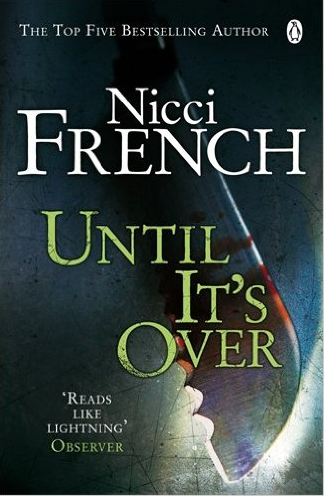
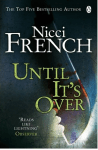
Everyone reading this blog knows how much I love the author duo Nicci French. I’m slowly reading my way through their novels. Surprisingly I wouldn’t have heard of Until It’s Over, if it hadn’t been mentioned by one of my readers a year ago (I’m really sorry I can’t remember who it was). I got it back then and kept it for later. A while ago, I read a review of it and that’s how I remembered I had it on my piles. I’m glad I read that review before reading the book because, with the wrong expectation, I might have been disappointed. They did something very unusual here. They wrote two distinct parts. Part one is told from the point of view of London Cycling Courier Astrid, part two from the point of view of the perpetrator. It wasn’t easy to adapt to part two because I loved part one so much. Astrid lives together with a group of friends in an old house, in an area of London that hasn’t bee gentrified yet. Suddenly people around her are murdered. What has it got to do with her? While the story is suspenseful, it’s not what I liked best. I liked to read about this group of friends who share a house. Loved the setting, which Nicci French captures so well- the bars, the parks, the houses. London is as much a character as the people. Part two is very good too, but I would have loved to go on reading from Astrid’s point of view. Once I had gotten used to the new narrator, I liked part two almost as much. I’ve read a lot of Nicci French’s novels. Some I loved, some I found OK; this was one of the best.

Chemistry of Death

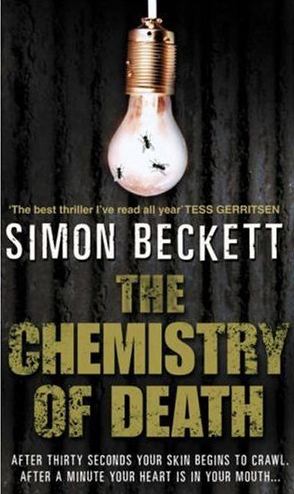
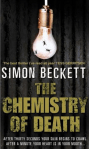
The Chemistry of Death is another book that has been lying on my piles almost since it came out. For some reasons, I didn’t think I would like it because I got a bit tired of serial killer novels. In theory I would like them, because, for me, a great serial killer novel is like a realistic ghost or horror story. That’s why setting, atmosphere and mood are so important in this subgenre. Sadly, many authors just use the trope to avoid to have to dig for good reasons for murder and many of those “products” are as far from psychologically compelling as can be. However, there’s one thing I don’t like even in the best serial killer books —the showdown ending. All these books get frantic towards the end and there are recurring elements that are frankly annoying – e.g. hero/heroine tries to avoid killer and runs right into his arms. While The Chemistry of Death does have a formulaic ending, the rest of the book is so astonishingly well done, that it hasn’t only become one of the favourites of this year but I think it’s possibly one of the best crime novels I’ve ever read. I loved the mourning, depressed narrator, loved, the almost gothic descriptions of murder scenes and locations. The atmosphere is brooding, haunting. Don’t be put of by the serial killer thing— this is so well written and atmospheric, it would be sad to miss it.

Have you read any of these? Does anyone know a good locked-room mystery?

Jakob Arjouni: More Beer – Mehr Bier (1987) Kayankaya 2

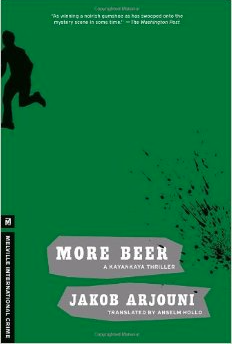
More Beer

More BeerMehr Bier is the second novel in Jakob Arjouni’s Kayankaya series. It’s set in Frankfurt, Germany. PI Kayankaya is of Turkish origin. While Arjouni was still alive, he was called Germany’s answer to Raymond Chandler. I always found this comparison problematic. Arjouni writes extremely well. I’d say he’s definitely at the literary end of the crime spectrum. His books are hardboiled noir. Kayankaya is a cynical loner who gets beaten up more than once, still, I don’t think he has a lot in common with Marlowe. The differences are quite subtle but they are important. I remeber hating how Kayankaya killed a fly in the first novel. In this one, he beats a rat. Marlowe would never do something like that. I remember noticing after I’ve read three or four books by Chandler that Marlowe has a great fondness for animals. Kayankaya is much more jaded.

More Beer sees Kayankaya investigate the murder of a chemical plant owner. Four eco-terrorists have been charged with the murder, but it seems highly unlikely that they did go that far. Unfortunately,they don’t want to talk. Early on, it becomes obvious that there was a fifth man involved. But who and where is he? The defendants’ lawyer hires Kayankaya to find him. He investigates with his usual stubbornness, even pursuing after he gets beaten up a couple of times.

Kayankaya is a loner, a heavy drinker, a disillusioned man with an acerbic wit. And constantly mistreated because of his origins. I forgot how old these books are. This one was written in the 80s and to read about the way Kayankaya is treated was quite shocking. I think the status of people of Turkish origin has changed meanwhile. At least I hope so. Creating a character like this in the 80s must have been pretty provocative.

I’m not too sure what to think about this book. I found the first in the series, Happy Birthday, TürkeHappy Birthday, Turk, so much better. But while I didn’t care for the story of More Beer, I loved the writing. I’d forgotten just how well Arjouni writes. The novel is full of memorable metaphors like when the narrator compares rain drops on a windshield to a herd of animals running.  For that alone, I might reread it and will certainly not wait another ten years before I read the third one.

Arjouni, Jakob
Most of Arjouni’s novels have been translated and published by Melvillehouse.
Sadly the author died of pancreatic cancer in 2013. He was 48 years old.

Mehr Bier

Clare Mackintosh: I Let You Go (2014)

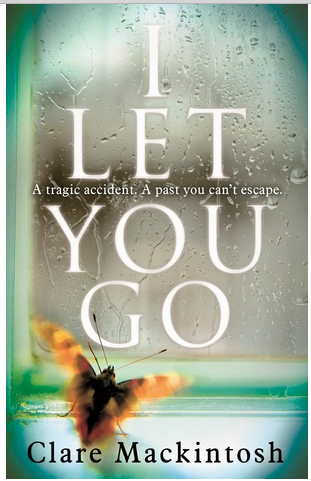
I Let You Go

I came across Clare Mackintosh’s novel I Let You Go on Twitter. It’s another one of those psychological thrillers with a split narrative and a huge, stunning twist. But, for once, I really loved the twist and the split narrative actually added not only other POVs but another genre altogether. Unfortunately I can’t say much about the twist, only that I found it great but if I told you why, it would be utterly spoilt. But I can talk about the split narrative.

The prologue describes a horrible accident. A small child runs from his mother and is killed in a hit and run. The novel is told from several POVs – the two most important ones being Clare’s and the police’s. Adding the POV of the police was quite unusual and made this book a combination of psychological thriller and police procedural, which worked well.

Clare runs from Bristol after the accident and hides in Wales. She’s an artist but her hand has been so severely wounded that she cannot work as a potter anymore. She starts to take photographs of the beaches, where she lives. It’s out of season when she arrives and the cottage she rents is far away from any other houses. The only people she sees are the owner of a caravan park and the local vet who helps her when she finds an abandoned puppy. While Clare, who is haunted by memories of the accident and other traumatic events,  tries to heal and find new meaning in life, the police frantically look for the person who killed the little boy.

The book has a leisurely pace until the twist in the middle, but from then on it gets very fast paced and suspenseful. We find out that the accident isn’t the only horrible thing in Clare’s past and that the past she hopes she’s left behind, is catching up with her. I can’t say more.

This is a suspenseful, well-plotted, fast-paced psychological thriller with a major twist. The characters are well-drawn, the setting is atmospheric and the end doesn’t disappoint. Maybe the police parts are a tad too long, unless this is meant to be a first in a series. If it’s a standalone, then those parts could have done with some cutting because we don’t need to know that much about the private lives of the detectives. Possibly, though, it was Clare Mackintosh’s homage to her twelve years in the police force. All in all, a minor thing that doesn’t change that I enjoyed this book a lot.


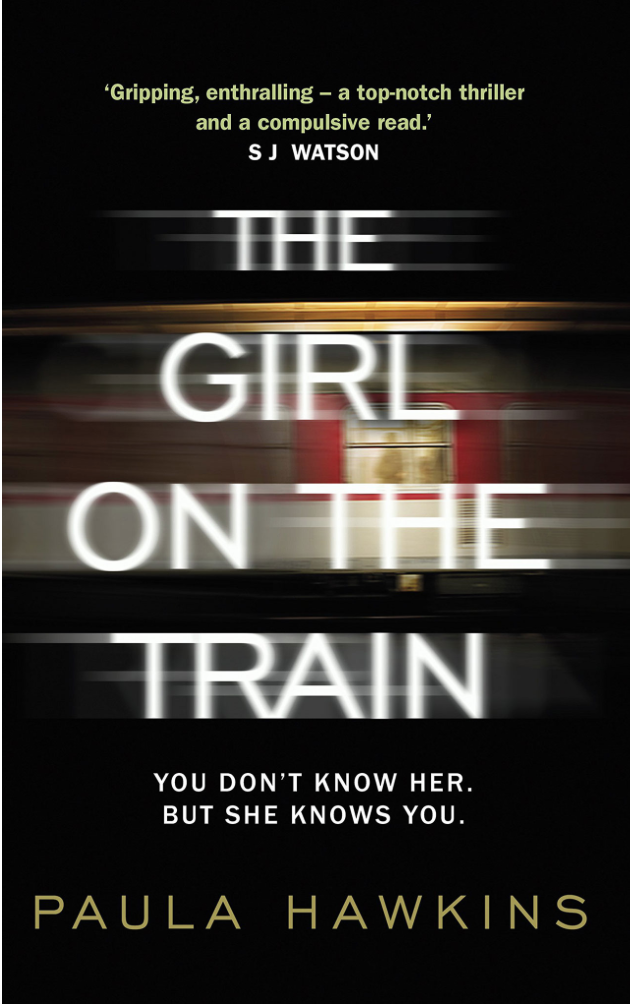
Paula Hawkins: The Girl on the Train (2015)

The Girl on the Train

Sometimes a negative review entices me to read a book. To be fair though, in the case of Paula Hawkins’ The Girl on the Train, there were also a fair amount of positive reviews that made me want to read it. What I didn’t expect was that I would like it so much. I basically gobbled it down in a couple of sittings. For sure, the writing is very simple—present tense + short sentences + split narrative, short chapters, three narrators. Not exactly sophisticated writing. And, yes, the three women who tell this story have only one voice. Without chapter headings indicating when it’s Rachel’s, Megan’s or Anne’s turn to tell the story, we would hardly be able to guess. Their lives are different, some of their dysfunctions are different, but the tone and vocabulary is pretty much the same. And all three of them are not exactly role models.

There’s Rachel, the girl on the train. Every day she commutes to London, guzzling cans of pre-mixed gin and tonic, although she’s been unemployed for some time. The train always stops at the same place and she gets a good view of one of the houses. The young good-looking couple living there fascinates her. They remind her of herself and her ex-husband Tom with whom she used to live only a few houses farther down. While her obsessive interest in the couple is strange, it is far stranger that she’s willing to enter her fantasy world when she thinks she sees something shocking. I’m not going to write more as it’s a book that’s easily spoilt.

Why did I love it, you wonder? There are books that do nothing more than exploit an idea or an image. In this case: looking at people from a train and imagining their lives. I liked this idea a great deal. I would never spy on people with binoculars – a habit I find positively disgusting-, but I’m fascinated by the tiny glimpses of other people’s lives we can catch when we are on a train. I often wonder what kind of life they have, those people, frozen in a single moment of their lives, while I rush by. I could relate to Rachel’s fascination and understood how someone as dysfunctional and lonely would get caught up in her fantasies.

I also loved the novel because I found it very gripping. And very realistic. I’ve had the misfortune of meeting a Megan and an Anna. Also women like Rachel, only without her alcohol problems. One of the characters in particular reminded me of a girl I used to work with for a while. The moment a guy showed interest in someone else, had a girl friend or a wife, she had to fling herself at him.

The Girl on the Train is a page-turner that depicts certain aspects of our society like isolation, commuting, envy, and narcissism in a realistic way. It’s a bit like Gone Girl’s little sister, although the writing isn’t nearly as good. Still,  if you’re in the mood to gobble down a book and share my fascination with the small glimpses of other people’s lives you can catch while rushing by on a train – get it. It’s flawed but entertaining. Just one word of warning – the end is a bit disappointing.

After finishing it I picked up Renée Knights Disclaimer and was amused to see that the sticker on the book doesn’t say “The new Gone Girl” but “If You Liked The Girl on the Train“. I suspect in a few months it will say “The new Disclaimer“. I’m eager to find out which I will like better.

Nicci French: Thursday’s Child (2014)

Thursday's Children

I’ve been waiting to read Thursday’s Child, the fourth in the Frieda Klein series, until it came out in paperback. That happened just a few months before the fifth Friday on my Mind was published. It’s one of the rare series I’ve followed since the beginning. Here are the first three reviews Blue Monday – Tuesday’s Gone – Waiting for Wednesday

I think what surprised me the most, is that this book was so much better than the last and that it felt very fresh, and added a lot on Frieda’s private life and backstory.

Due to the nature of the crime she investigates, we learn a lot about Frieda’s past. Since Frieda is a psychotherapist, an old school friend contacts her because her daughter shows signs of distress. At first, Frieda is not willing to see the girl. For one, she wasn’t all that keen on her mother all those years ago and she’s not sure how she can help. In the end she accepts to see the girl anyway and what she hears is extremely shocking. Not only because something awful happened to the girl, but because what happened sounds exactly like something that happened to Frieda when she was the girls’ age.

Although Frieda’s left her hometown twenty years ago, hasn’t stayed in contact with any of her friends, and never spoke to her mother again, she decides to leave London and investigate what has happened to the girl – and maybe to herself. I’m one of those people who would never go to a school reunion and reading how Frieda went back and had to face her past, was an intense read. I also had a very complex relationship with my mother, and so, reading about her reunion with her mother was intense as well.

Unlike in most other Frieda Klein novels, London isn’t as important in this book as in the others, but it still plays a role. Frieda’s love life takes a surprising turn and I’m not sure how I feel about it. I wonder if it was necessary to handle it that way and I’m very curious to see where she goes from here.

While the crime element is solid and gripping, it’s not the only interesting narrative strand. Following Frieda as she faces her troubled past was well worth reading. That one of the perpetrators of the first books is still following Frieda, added another, creepy layer.

Something I don’t like in crime novels is when there’s a final showdown. It’s a typical element in most psychological thrillers and Nicci French has used it before. Not in this one. That’s why it felt fresher. Frieda also didn’t put herself as much in harm’s way as she did in other books. That was always an element that annoyed me because I felt it had less to do with Frieda than with creating suspense.

If you like the series, you shouldn’t miss this. It’s the second best so far. However, I wouldn’t recommend to start with this one. You would maybe still enjoy the crime story but the part about Frieda’s life would not be as interesting.

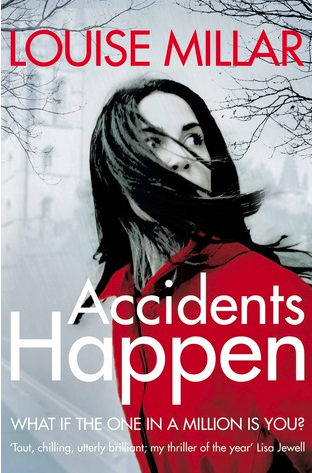
Louise Millar: Accidents Happen (2013)

Accidents Happen

I’m not sure where I’ve first heard of Louise Millar, but the review I read was very positive, so when I saw Accidents Happen at the local book shop, I picked it up.

It’s a book that’s easily spoilt. For once, the blurb doesn’t give away anything. All it says is that Kate had some serious bad luck in her life, which has made her obsessive and paranoid. We learn early that her parents have died tragically and later her husband too. It takes a while until we know how they died, and since I enjoyed discovering it for myself, I’m not going to reveal anything more.

When the book opens, Kate and her young son, Jack, live in Oxford. They have moved from London and live in a shabby neighbourhood, although Kate is very rich. Her parents-in-law aren’t happy about this choice. But they are equally unhappy about Kate’s behaviour which is extreme. She’s obsessed with statistics and hopes that if she controls her son’s and her every move, she’ll be able to avert more bad luck. The relationship with her in-laws and her sister-in-law is more than a little strained. On top of that there were break-ins in the house, Jack pretends he hears noises in the cupboard, and Kate can’t shake off the impression that someone enters while they are out. Unfortunately the in-laws think Kate’s making it all up and that she’s a bad influence on her child. They are planning on taking Jack away and so she’s forced into action. Either she sees a therapist or she changes radically. That’s when she meets visiting Oxford professor Jago, a statistician who proposes a very unorthodox way to cure Kate. I can’t say more.

This is one of those novels that might lose readers halfway in because a lot of what happens during this so-called therapy is more than a little bewildering. I’m not sure why I kept on reading anyway, but I’m glad I did because at the end – everything makes perfect sense. I think I don’t spoil too much when I say it has a major twist but a twist that works because Kate doesn’t know what’s going on either. You have to trust the author in this case, and just wait and see.

Apart from this bewildering element, the book has a lot to offer. I liked that it’s set in Oxford and the way she described the city was really appealing. The topic of statistics and the theme of whether someone is cursed or whether you can prevent accidents, was unusual. The pacing is great. It’s suspenseful but never too fast-paced. Most of the characters are extremely unlikable. Luckily Kate isn’t and we care for her.

I’d love to say more about the transformation she undergoes but – again – it would spoil the book.

While this isn’t one of my all-time favourite crime novels, I liked it a lot. It’s solid and highly entertaining, with some really nasty, even creepy characters. I’ll certainly pick up another of her novels. I was also glad that I couldn’t come up with a comparison. It didn’t feel like I’ve read  a book like this or similar authors before.