Paris in July 2012

Paris in July was one of the events I enjoyed the most last year and I’m really glad that Karen from Book Bath and Tamara from Thyme for Tea are organizing it again.

The rules are very simple. If you’d like to join all you have to do is review a French book or movie or write about something French. Music, art, cuisine. Anything you like. It’s not a challenge so you don’t need to commit to anything. Details can be found here Book Bath and here Thyme for Tea and here is the sign up.

I’ve been reading quite a lot of French books recently which I haven’t even reviewed yet, so this is certainly something I’m going to do.

While we are free to choose any French books we like, I will focus on books set in Paris. Possible choices are

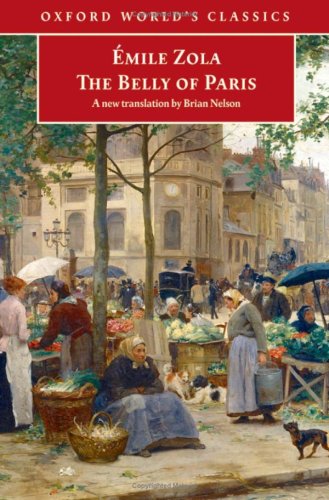
Zola’s The Belly of Paris – Le ventre de Paris

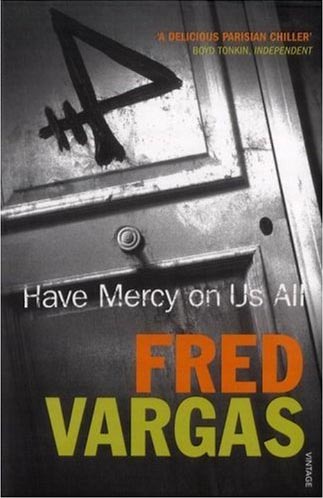
Fred Vargas’ Have Mercy On Us AllPars vite et reviens tard. You cannot go wrong with Fred Vargas. She is one of the best crime writers writing today. If you haven’t read her yet, just pick any of her books.

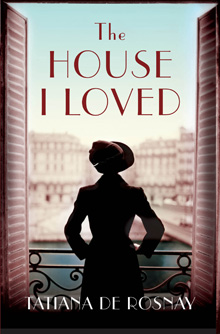
Tatiana de Rosnay’s The House I LovedRose. While she is known as a French writer, this is one of the books she has written in English. It’s a historical novel set in 19th century Paris during the time when the city was undergoing major changes.

I hope to review a movie as well but I’m not sure yet which one it will be. Maybe it’s time to re-watch the movie which is possibly my favourite French film.

I know I will not be able to be as active as last year as July is also Spanish Literature Month.

Are you going to join? Do you already know what you will read?

Joyce Carol Oates: Rape – A Love Story (2003)

Rape: A Love Story begins with what is almost unspeakable. It tells of the brutality and cowardice that overtakes the city of Niagara Falls in the aftermath of an attack on a woman and her young daughter. A diamond-hard dissection of modern mores, it is also the tale of Teena and Bethie’s silent champion – a man who knows the meaning of justice. And love. 

It’s a provocative title, Joyce Carol Oates has chosen for her book: Rape: A Love Story. Maybe it’s because of titles like this that people are divided when it comes to her work. I don’t know. This is maybe the fifth of her books I’ve read so far and every time I read her I think I want to read every thing she has ever written, because even books which are not as good, like The Falls, are still so much superior than most other books. Some like Solstice are of a rare beauty, others like Foxfire and Rape are bound to trigger intense discussions.

Rape tells the story of a bad decision. One single moment which changes a life forever. Because it is a beautiful night, because she comes home from a party and is happy, Teena decides to walk through a park at midnight, together with her 12-year-old daughter. It’s a decision that shouldn’t have any major consequences but it has. She is followed by a group of young men, attacked, raped and almost beaten to death. Her young daughter escapes and gets help. The police officer who finds her is a veteran of the gulf war, a quiet, silent man. He knows the young widow and likes her very much. He is incredibly shocked about what happened to her and the girl. Bethie hasn’t been raped but beaten as well.

This is only the beginning of the story, the first few pages. What follows is maybe less violent, but not less shocking. The town – Niagara Falls – turns against Teena. Rumours start to spread. Was she not too good-looking, too sexy? Did she not like men too much? There is gossip and finally threats. Her prosecutor, a woman, is ridiculed in court, everybody turns against them.

The novel is told in alternating voices, changing points of view. Many of the chapters are second person narratives. A voice seems to be talking to Bethie, the young daughter. I found the novel masterful and impressive. Especially the end. It’s an analysis of violence, guilt, justice and retribution. It doesn’t end like we would expect it will. Of course not, remember, there is the subtitle – A Love Story.… It almost feels as if Joyce Carol Oates wanted to say: “If we cannot have justice in real life, let’s at least have it in our books.”

I found it particularly eerie that Rape had a lot in common with one of the stories in Ferdinand von Schirachs’ second collection Guilt which I just reviewed here. The perpetrators even when they are known are not always brought to justice if evidence is lacking or the defence lawyer is better than he should be.

Another reason why I found the book so good and important is because this is such a universal topic. Something I sometimes fear that will never go away. I have two girl friends who have been raped. None of them reported the crime. One was drunk when she came home, wearing a leather skirt and afraid they would tell her it was her fault. The other one had chosen a way which is known for being a bit dangerous and felt she had deserved it for her stupidity. I have been followed twice and could run away and was once attacked in broad daylight. If my dog hadn’t chased the attacker… I don’t know.  On top of that there has been a series of rapes since a couple of months in the city in which I live. Every weekends since a few months young women are raped on their way home. Sometimes relatively early, around 18.00, sometimes late at night. In many different areas of the city, by one or more men. It’s appalling.

The book captures this and much more so well. One single moment changes everything, a decision that wouldn’t have an impact if we were living in a healthy world, a world in which women and girls would not constantly have to fear being attacked. It manages to say a few powerful things about going to war and being a soldier as well. A short book. But so complex.

These numbers from feminist.com may be of some interest Facts About Violence. They only look at the US which isn’t even one of the most violent places for women to be.

David Foenkinos: La délicatesse – Delicacy (2009)

Natalie isn’t certain of anything anymore. One minute she was a happily married young woman, successful in her career, and convinced the future was full of promise. But when her husband was run over by a car, her whole world was turned upside down. Years later, still bruised with grief but desperate to move on with her life, she impulsively kisses her colleague Markus. For Natalie, the kiss is just a gratuitous act. For the awkward, unassuming Markus, it is the moment at which he falls hopelessly, helplessly in love. But how will he ever convince such a beautiful, intelligent but confused young woman that he is the man who can bring her back to life?

I read a review of DelicacyLa délicatesse on Emma’s blog (here) last year and thought it sounded nice. And it really is a charming book. While it will not knock you off your feet, it’s entertaining and quirky and some elements reminded me of Alain de Botton’s first novels.

The story can be summarized in a few sentences. Nathalie is a young widow who struggles to go on living. For three years she is in a sort of limbo until, one morning, she kisses one of the men from her company. An unimpressive, invisible Swedish guy named Markus. What doesn’t mean much for her and was just a very weird whim, means the world to Markus. They are, as one would say, not in the same league. She is incredibly attractive and beautiful while nobody even notices him.

Charles, their boss, is equally in love with Nathalie which complicates things even more. When Markus asks Nathalie out, she accepts although she isn’t really in the mood. How surprising to find out that this plain-looking man is far from ordinary.

I’m sure this sounds like a pretty usual romance but what makes Delicacy worthwhile is the way in which it is told. The story is divided into 117 chapters, some of them not longer than a sentence, some a few pages long. While the story is told chronologically, many of the short chapters contain quirky remarks, information on things that happened or were said in the preceding chapter, a recipe for a dish, the star signs of the co workers. Additionally there are footnotes making generalizing remarks like “Women called Nathalie are often nostalgic”.

All of these comments and annotations may seem random and silly at first but after a while you realize that Foenkinos’ main themes are prejudice, preconceptions and generalisations and that what he does is quite clever really. He confronts the reader constantly with this type of thinking, with his own prejudices. We are all biased to a certain degree. We associate characteristics with nationalities and even with names. Some research has found out that children are treated differently at school depending on their names.

Gossip is one way to let loose all those preconceptions and faulty ideas about others. Someone walking by without saying hello may just have a bad day while people who see him will interpret this behaviour in different ways “Maybe someone has died”. “He has been reprimanded by the boss”. “He is very ill”… . This is exactly what Nathalie and Markus face once people notice that they have met outside of the company.

I don’t want to spoil the book, so I’m not going into too many details but once you finish, you will see how different the “perfect” relationship between Nathalie and her good-looking dead husband is from how Nathalie and Markus interact.

La délicatesseDelicacy is charming and amusing. It tells a sweet love story and at the same time manages in a very playful and light way to make us aware of our short comings when we meet new people and judge them sometimes for no other reasons than their name and nationalities.

Literature and War Readalong June 29 2012: Bomber by Len Deighton

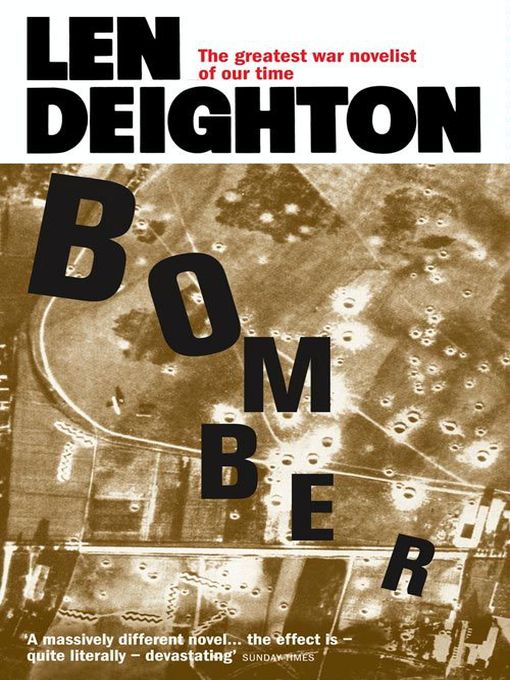
The last two titles in the readalong were both about the Blitz and the bombings of the British cities seen from the perspective of civilians. Bomber shows another point of view. Set in summer 1943 it tells the story of an Allied air raid from the point of view of all of the participants, in the air and on the ground, covering 24 hours. It has been praised for its detailed descriptions and documentary style and from what I read so far, it seems very well done. I have to thank Kevin (The War Movie Buff) for pointing it out.

Here are the first sentences

It was a bomber’s sky: dry air, wind enough to clear the smoke, cloud broken enough to recognize a few stars. The bedroom was so dark that it took Ruth Lambert a moment or so to see her husband standing at the window. “Are you alright, Sam?”

“Praying to Mother Moon.”

She laughed sleepily. “What are you talking about?”

“Don’t you think I need all the witchcraft I can get?”

“Oh, Sam. How can you say that when you…” She stopped.

“He supplied the words: “Have come back safe from forty-five raids?”

Should you want to join you will have to start early. With 527 pages it is by far the longest book of this readalong.

*******

The discussion starts on Friday, 29 June 2012.

Further information on the Literature and War Readalong 2012, including all the book blurbs, can be found here.

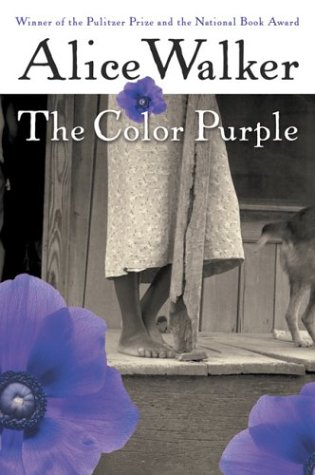
Some Thoughts on Alice Walker’s The Color Purple (1983)

To be frank, this is a difficult post as I really struggled to finish this book. A few years ago I have read some books by Alice Walker. One of them was Possessing the Secret of Joy. The book tells Tashi’s story. Tashi is an Olinka woman – a people invented by Alice Walker – who has to undergo circumcision. I remember that I thought it was well done and a very important book. I didn’t know that Tashi already plays a role in The Color Purple. I think The Color Purple also contains a lot of topics that are still important today but it is a book I should have read as a teenager. Uncle Tom’s Cabin was one of the first books my mother read to me when I was a child, it made a big impression. If there wasn’t such a lot of violence and some explicit sex in The Color Purple it would be great for children as well. I’m too familiar with the topics by now to care much for the educational intention behind the story and the narrative voice – a childlike voice narrating the story in form of letters addressed to God and later letters addressed to a distant sister – annoyed me a lot. After a hundred pages I could hardly bear to go on reading. Still, as I said, the topics are important and some elements were interesting.

The most important topics are sexism and racism. Cultural heritage and religion. Slavery and freedom. Self-esteem and lack of confidence. Each character embodies one or more topics but with the exception of one of the central characters Shug Avery, the Blues singer and lover of Celie and Celie’s husband, all the characters undergo a journey from a fractured self to a complete self. Only Shug is fully herself from the beginning of the novel until the end and as such functions like a catalyst. She is also the only one who has the “true religion” or rather spirituality. A religion free of false patriarchal images, a religion which celebrates life and God in everything and everyone. This aspect of the novel is interesting and was glad to finally find out what the title of the novel means.

Listen, God love everything you love – and a mess of stuff you don’t. But more than anything else, God love admiration.

You sayin God vain? I ast.

Naw, she say. Not vain, just wanting to share a good thing. I think it pisses God off if you walk by the color purple in a field somewhere and don’t notice it.

Well, us talk and talk bout God, but I’m still adrift. Trying to chase that old white man out of my head. I been so busy thinking bout him I never truly notice nothing God make. Not a blade of corn (how it do that?) not the color purple (where it come from) Not the little wildflowers. Nothing.

Towards the middle of the novel, Celie discovers that her long-lost sister Nettie has been writing to her ever since she left. Her letters form an important part and if they hadn’t been so wordy they would have been a relief as they are not written in spoken language. Nettie’s letters give another dimension and add the topic of Africa to the novel. I’m surprised that there haven’t been a lot of critical voices mentioning the depiction of Africa in the book. Nettie goes to Africa as a missionary and describes in great detail the poverty and illnesses, the illiteracy, the patriarchal society which forces girls to undergo the painful and dangerous circumcision. What I found amazing is that Nettie sees a direct link between the fact that many African people have sold other Africans to whites as slaves and their poverty and illnesses.

Although Africans once had a better civilization than the European (though of course even the English do not say this: I get this from reading a man named J. A. Rogers) for several centuries they have fallen on hard times. “Hard times “is a phrase the English love to use, when speaking of Africa. And it is easy to forget that Africa’s “hard times” were made harder by them. Millions and millions of Africans were captured or sold into slavery- you and me, Celie! And whole cities were destroyed by slave catching wars. Today the people of Africa-having murdered or sold into slavery their strongest folks-are riddled by disease and sunk in spiritual and physical confusion. They believe in the devil and worship the dead. Nor can they read or write.

I can’t help it but this passage shocks me. Africa has no homogenous population. It hasn’t and has never had. Africa has always consisted of extremely diverse peoples, with different cultural backgrounds, social systems, governments, religions, etc. From the highly elaborate kingdoms to the hunter gatherer societies there was everything before the white people even arrived. The way this is treated in the book or in this passage makes it sound as if there was such a thing as THE African while there were and are so many different people. While, yes, certain African people were actively selling other Africans – mostly the coastal people sold those from inside the country, the lesser developed people – and without the assistance of Africans slavery wouldn’t have been possible, not everyone has partaken in this. This is simplifying and distorting history. The end of the big cities was brought upon them by the whites. As developed as Africa was, in art and culture, they had no pistols or guns or any such weapons and were brought down relatively easily by a small number of white traders and explorers.

All in all, as I mentioned before, the narrative voice annoyed me. It was very repetitive. I also thought there was much too much in this book. Celie’s and Shug’s story would have been sufficient. There was no need to add a sister who travels to Africa as a missionary. It’s as if she had wanted to touch upon each and every subject related to or important in the life and history of Afro-American women. It may be mean to say so but I don’t think this would received a Pulitzer if it had been published now and not 30 years ago.

As I wanted to read more African – American authors this year, I’m glad I’ve read it but I’m sure, I’ll pick Zora Neale Hurston or one of the novels by Toni Morrison I haven’t read yet, next.

I have read The Color Purple for the readalong hosted by Bettina (Liburuak). If you’d like to read other’s impressions here are the links.

Let me end this post on a provocative note and add a question for the readalong participants or anyone who has read the book.

After having read The Color Purple, do you really consider this to be a classic or is it not rather just a very famous book?


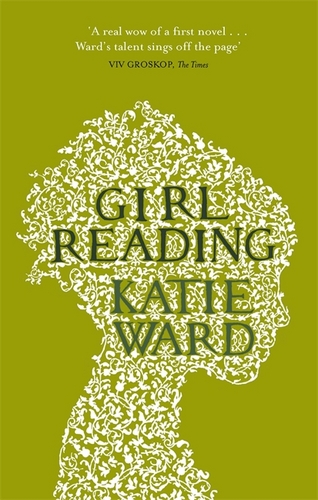
Katie Ward’s Girl Reading Readalong June 25 2012

A while back Rikki (Rikki’s Teleidoscope) and I have decided to read Katie Ward’s Girl Reading together. I discovered the book on Danielle’s blog. It was one of those posts that made me want to get the book and read it immediately. I added the blurb but Danielle’s wonderful review (here) will give you a much better idea.

A real wow of a first novel. The premise is alarmingly simple and yet somehow stunning: seven portraits, seven artists, seven girls and women reading . . . A wonderful, imaginative evocation of seven different worlds . . . It’s very rare for a novel to have a real freshness and originality but at the same time to evoke echoes of other literary memories. This feels incredibly clever. It’s a book packed full of adventures and stories and you completely lose yourself in them . . . This book’s great strength: the perfect, separate, involving worlds it creates. Like Mitchell, Ward is equally adept at shifting between completely different registers and voices . . .

What the blurb doesn’t say is that each episode captures another era and according to Danielle’s review some of them are done remarkably well.

If you have enjoyed Susan Vreeland’s Girl in Hyacinth Blue, you might like this as well.

It would be great if you would consider joining us in reading this novel.

We will discuss the book on Monday June 25 2012. Links to other participant’s posts will be added to our respective reviews.

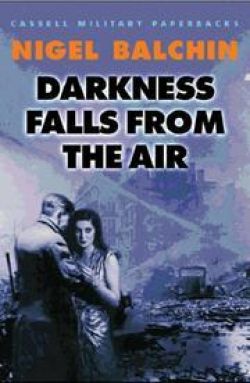
Nigel Balchin: Darkness Falls From the Air (1942) Literature and War Readalong May 2012

With ostentatious lack of concern, Bill Sarratt, his wife and her lover spend the war wining and dining expensively, occasionally sauntering out into the Blitz with cheerful remarks about the shattered night-life of London’s West End. But beneath the false insouciance lies the real strain of a war that has firmly wrapped them all in its embrace. Wit may crackle at the same pace as buildings burn, but personal tragedy lurks appallingly close at hand.

I have always wondered how people lived during the Blitz. How they coped with the fear, the chaos, the exhaustion and lack of sleep. I have seen a couple of movies set during WWII. Something that struck me more than once was the depiction of the Londoners during the Blitz. More than one movie showed them dancing or dining all through an air raid. Almost as if nothing was happening. I always wondered if this could have been the case. And what about the air raids that went on during the whole night? How would you cope with that? A lot of the questions I had have been answered by Darkness Falls From the Air. While I’m sure Blachin took some liberties and may have exaggerated, I think it still manges to give a good impression. It is one of the rare books that has been written during the Blitz which makes it especially interesting. Balchin worked as a psychologist for the British War Office and later as Deputy Scientific Advisor to the Army Council. Both occupations can be felt throughout the novel.

What I liked is how the main characters’ personal story, their marriage, work life and the war are interwoven.

In the beginning of the novel, the air raids aren’t as frequent at night and whenever a bomb falls down somewhere, Bill and his wife Marcia go and watch because it’s to a certain extent exciting. They do not feel threatened at all. They dine in underground restaurants and sleep in their own apartment. But the longer the war lasts, the more precarious the situation gets. People start to live in the tube and Marcia and Bill move to a hotel as their apartment house has no shelter. They still go out and dine underground and walk around the city to see the damage but it starts to become a bit less carefree. What gets to Stephen the most is the lack of sleep.

The day raids were dying down now. I suppose the pace was too hot to last. But to make up for it the nights were getting rougher than ever. The chief difficulty was to get enough sleep to keep going. Everybody was turning up at the office looking half asleep and sour as hell. I think it was this which led up to my row with Lennox. Lord knows there were enough reasons for quarreling with Lennox even if you were sleeping eight hours a night. When you got dow to an average of about three the thing was a certainty.

The narrator of Darkness Falls From the Air, Bill Sarrat, is a public servant. He must be one of the most cynical characters I’ve ever encountered in a novel. I didn’t expect this to be an amusing book but it was. Grim but funny. Passages like the one below illustrate what type a of person Sarrat is. He has an acute sense of the times he’s living in but at the same time he evades self-pity because he ultimately doesn’t take himself too seriously.

I’d decided that, what with work and Marcia and one thing and another, I was getting out of touch with the war. So I got out an atlas and Whitacker’s Almanack and so on and studied the war. That took about ten minutes. Then I tried forecasting the next bits. The last time Ted and I did that was at the beginning of the year. Ted put down that Germany would invade Switzerland, and that Japan would have a crack at Burma. I said that Germany would attack Hungary and Rumania and that Turkey would join up with us. The next morning Russia invaded Finland. An experience like that takes the heat out of you as a prophet.

The book follows three different narratives. The first is the marriage between Bill and Marcia which becomes more and more dysfunctional the longer the war goes on and the deeper Marcia entangles herself in her love affair with Stephen. The second story line centers on the depiction of life during the Blitz. The third narrative strand evolves around Bill’s occupation as a Civil Servant. The absurdity of the bureaucracy stands in stark contrast to the urgency of the matters they deal with. While “there is a war on”, they spend hours and days in useless meetings. Half of the staff is unprepared while others try to sabotage great projects out of sheer jealousy or incompetence. These parts reminded me so much of corporate life where people who have no clue will add tons of comments, questions and words of caution to a well prepared concepts just to pretend to be involved and competent. Additionally nobody wants to take a decision and those who work and think are the one’s seeing the useless people being promoted because they are in the way and no one knows how to deal with them otherwise. All this is captured by Balchin and these elements made this a very amusing book.

Blachin was, as I have mentioned, working as a psychologist and that shows in the parts dedicated to the love triangle. While I could have slapped Marcia and her vain lover Stephen, the discussions, the back and forth and Bill’s analysis of the whole story rang remarkably true.

While Darkness Falls From the Air has been called the novel of the Blitz, which it certainly is, it’s an amazing analysis of bureaucracy and a hopeless marriage. This was my first Balchin and I’m glad I discovered this author on Guy’s blog. It isn’t a flawless novel, it could have done with some editing but the voice and the tone are unique and the grim sense of  humour appealed to me a lot.

Other reviews

Danielle (A Work in Progress)

*******

Darkness Falls From the Air was the fifth book in the Literature and War Readalong 2012. The next one will be Bomber by Len Deighton. Discussion starts on Friday June 29, 2012.