On Juan Carlos Onetti’s A Brief Life – La vida breve (1950)

Picture a lazy summer afternoon. The heat is unbearable. You’re in a room with the blinds half down, lying on a bed listening to the voices of complete strangers in the apartment next door. You’re in a languid dreamy mood. Your imagination starts to invent a story based on the snippets of the conversation you hear.  After a while the lives next door seem more real than your own.

Many of the chapters in Juan Carlos Onetti’s famous novel A Brief Life capture this type of mood, describe inertia paired with a vividly active imagination. I liked this, because I like those motionless summer afternoons spend lazily doing nothing else but day-dreaming. I liked the languid and languorous feeling those chapters conveyed. Seeing the narrator Juan María Brausen captivated by his imagination was appealing but the narrator was not. I hated him big time. I rarely if ever use the word “misogynist” but I felt the narrator was exactly that. His wife has just undergone a mastectomy and the way he thinks about her, her pain, her mutilated body, is unfeeling, self-centered and lacking any kind of empathy. It just annoyed me so much that after 150 pages I stopped reading. Because life is indeed very brief, I decided to abandon this novel.

The novel is well written and parts of it had an atmosphere and a mood I liked a lot but it was also confusing at times. It constantly switches from the narrator’s real life to the invented story about a doctor living in the fictional city Santa María. From there it switches to a third narrative strand showing the narrator inventing himself a double life and visiting the woman, a prostitute, who lives next door.

I suppose if the narrator hadn’t annoyed me so much – and not only because he is misogynistic – I would have finished the book as I found the narrative technique interesting.

I was curious to see whether other people had felt the same and googled “Onetti and misogynist”. I’m not sure why I didn’t trust my own impression but I was relieved to see that it was something critics and readers had commented on very often.

Onetti was a Uruguayan writer. He is famous for his novels and his short stories. I’ve read the collection Tan triste como ella a few years back and liked the melancholic tone. Onetti fled to Spain after having spent 6 months incarcerated in a mental hospital by the military government. Onetti was married 4 times (why did that not surprise me?).

I’ve read Onetti’s novel for Spanish Literature Month hosted by Richard (Caravana de recuerdos) and Stu (Winstonsdad’s Blog). It’s part of a readalong. It will be interesting to see what others thought, if they finished it and how they liked it.

The Canadian Book Challenge 6

I was hoping to find a Canadian Literature Challenge. These days I’m very interested in literature written in English outside of the UK and the US. The Canadian Book Challenge seemed just the thing I was looking for. I came across the challenge on Gavin’s blog Page 247.

The host is John Mutford from The Book Mine Set. His blog is dedicated to Canadian literature. If you are interested here’s the sign up post with all the details you need to know. In theory the idea is to read 13 books. It sounds like a lot but interpreting what John writes I would say it doesn’t seem as if you must reach that number. Aim for it, if you read less, it’s not the end of the world, if you read more, all the better.

I have a lot of Canadian literature on my book piles and have read quite a few authors in the past. Authors writing in English and in French. I asked and if you’d like to join, you can choose books written in English or French as long as the author or the topic is Canadian.

I know that I usually do not stick to my book lists but I still keep on making them. Possible choices for this challenge are

A Map of Glass by Jane Urquhart. Urquhart isn’t an easy writer but she is a fascinating one who writes beautifully.

Margaret Atwood’s Lady Oracle. Atwood is another immensely fascinating author I have meant to return to. I loved Cat’s Eye and Surfacing and some of her short stories.

The Birth House by Amy McKay. I haven’t read this author yet but everyone who read this novel was impressed.

The Stone Angel by Margaret Laurence is a book I discovered not too long ago on Danielle’s blog (A Work in Progress). It sounded like another Canadian must-read.

I would like to read the one or the other novel by Nancy Huston and some other Canadian authors writing in French.  Since I recently discovered Louise Penny’s Canadian crime series, I’ll certainly read one of those as well.

Are you joining? Do you have any Canadian literature suggestions?

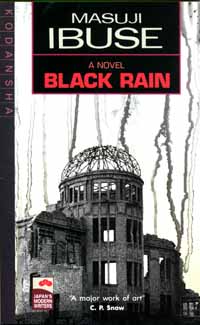
Literature and War Readalong July 30 2012: Black Rain – Kuroi Ame by Masuji Ibuse

When I saw Black Rain mentioned by Gary (The Parrish Lantern) on Rise’s blog (in lieu of a field guide) last year, I knew I wanted to include this book in this year’s readalong. Last year we read Marguerite Duras’ Hiroshima Mon Amour and I’m really curious to find out how this horrible event will be treated by a Japanese author. John Hersey’s Hiroshima and Ibuse’s Black Rain are said to be the most important novels on the horror of Hiroshima.

Here are the first sentences

For several years past, Shigematsu Shizuma, of the village of Kobatake, had been aware of his niece Yasuko as a weight on his mind. What was worse, he had a presentiment that the weight was going to remain with him, unspeakably oppressive, for still more years to come.

*******

The discussion starts on Monday, 30 July 2012.

Further information on the Literature and War Readalong 2012, including all the book blurbs, can be found here.

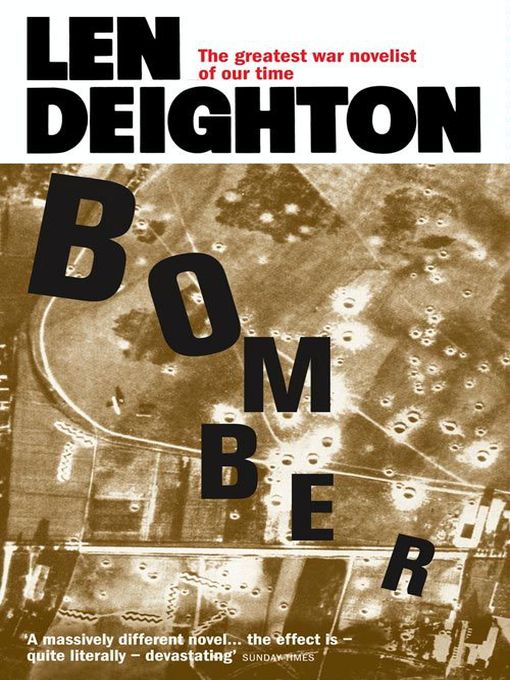
Len Deighton: Bomber (1970) Literature and War Readalong June 2012

It is very rare that I abandon a book. Often I regret this persistence when I finish it anyway and have to find out that it simply isn’t good. Sometimes I’m incredibly glad I went on. Len Deighton’s Bomber was one of those. I struggled badly for 150 pages and the idea to have to go on for another 400 seemed daunting. But it was worth the effort, it really was and looking back, I have to say, how lucky this was part of my readalong or I would have given up and missed out greatly. Bomber is amazing. It’s maybe not refined and highly literary but it’s a huge achievement. Not only because it is extremely accurate and detailed but also because it’s very engaging and admirably well constructed.

Bomber is an epic. A book with a huge cast and numerous different settings and story lines. Deighton really needed 150 pages to set the scene and introduce everyone, including the different aircraft. That part was really challenging to read as there were so many names and one had to try to constantly picture a map to see where they were located. Once the set up was done, the story moved on nicely, all the different story lines were tied together, the characters had become more than just names but people with a story.

Bomber tells the story of a bombing raid that takes place on June 31st 1943. Deigthon deliberately chose a date that doesn’t exist, knowing well that his book felt so realistic and authentic that people would always end up assuming it was non-fiction.

The 31st is a full moon night and all the crews get ready for a night of bombing and fighting. The target is the city of Krefeld in Germany. The planes take off from Warley Fen, head towards Krefeld and have to try to not get shot down before they have dropped the bomb. But before they can drop a bomb

First the PFF Mosquito aircraft will mark the target with red markers. Their gear is much more accurate than anything we have, so their reds are what the Finders must look for. The Finders will put long sticks of flares over the reds. Mixed in with the Finder aircraft there are Supporters – and these are mostly crews on their first couple of trips – who are carrying only high-explosive bombs. That’s because incendiaries could be mistaken for red markers.

What you just read is part of the instruction the pilots receive before flying off. But this part is more than that, it points towards the core of the book because the tragedy of the story has it’s source in the fact that, due to many unlucky circumstances, the markers were dropped on the wrong targets and what was bombed was the small city of Altgarten. No factories, no strategic points, just civilian buildings.

The first third of the book, sets the scene, the next third describes a lot of action and how the mistake happened and the last third is describing the drama in the air and on the ground in a very graphic way. I had to swallow hard a lot of times.

What I liked is that Deighton described a wide range of German characters, from the fanatic Nazi to the likable soldier. The portraits are nuanced and we get a feel for the diversity of the people.

The British crews are equally diverse but for other reasons. There are also Canadians and Australians, upper class and lower class men, married guys and womanizers, men who just do their duty, cowards and heroes.

In the death scenes Deighton’s sympathies clearly lie with the German civilians and the British bomber crews. Each part has one or two main characters and a lot of secondary characters and the fate of the main characters is equally sad in all the parts. I cannot go into too much detail, if you want to read it, you want to find out for yourself who will survive and who will die.

I’ve read a few harrowing accounts in the past and the one or the other book has depressed me incredibly. Bomber didn’t depress me but it brought a few tears to my eyes, a thing that rarely if ever happens to me unless something sad happens to an animal.

Bomber offers an interesting mix of emotional story telling, accuracy and numbers. We are informed of everything. How many people were involved, how many died, how many were injured, how many bombs hit target, how many were jettisoned, how many missed or didn’t go off and so on and so forth. At the end of the book were also informed about each and every surviving character’s future. It’s as if Deighton wanted to answer each and every question someone reading his novel might have.

If you ever wondered what it is like to be in a city which is bombed, this book will bring you close to this experience. If you ever wondered what it is like to be in plane on a bombing raid, this book will allow you to experience this as well.  In any case, if you are interested in WWII and how it was fought in the air, this is the book you should read.

If you’d like to find out a few things about Deigthon and his other books don’t miss visiting the Deighton Dossier. It is a site dedicated to Deigthon’s work and it is done with a lot of passion.

Other reviews (I’m somewhat doubtful that there will be any)

*******

Bomber was the sixth book in the Literature and War Readalong 2012. The next one will be Masuji Ibuse’s Black Rain. Discussion starts on Monday July 30, 2012.

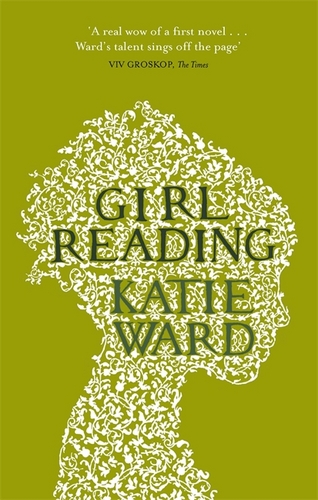
Katie Ward: Girl Reading (2011)

Katie Ward’s Girl Reading is called a novel which is slightly misleading as what it really is, is a collection of seven episodes with a similar theme which are tied together by the last one. Each of the episodes or scenes is set in another time and place, 1333, 1668, 1775, 1864, 1916, 2008, 2060. The way it is tied together, with a final scene set in 2060, gives the whole book a futuristic finish. I knew all this before I started the book but what surprised me was the writing which is quite dense, elaborate and heavily influenced by other books and tales, and, of course, paintings as the linking idea are portraits of reading women or girls seen through the ages.

Most of these “stories” are mysterious, that’s why I chose to call them episodes. They are like small windows that open up on scenes set in the past. We hardly ever get all the background information and often don’t know what will happen to the characters later.

Each of the scenes describes the challenges of women in their respective time and the girl or woman chosen for the portrait is mostly not exactly in line with what is expected of a woman at the time. The fact that the challenges and problems women face stay so similar from the 14th to the 21st century is somewhat unsettling.

Of the 7 stories or episodes I really liked four a lot. The first one, set in Siena, and the second, set in the Netherlands, were not so much to my liking nor was the last set in the future. In the case of story 1 and 2 I had a feeling I have read the exact same stories before, especially the second which was very similar to Girl with a Pearl Earring. Too similar.

I thoroughly enjoyed story 3, set in 1775 in which a female painter comes to the estate of a noble woman to finish the portrait of her lover. The lover, a woman as well, has left and the abandoned one is depressed and morose.

Story 4, set in Victorian England, was another favourite despite the fact that it resembled Audrey Niffenegger’s Her Fearful Symmetry. It’s a tale of two psychic twins. One becomes a photographer, while the other tours the world as a famous medium. It’s a wonderful story and the decor, clothes, atmosphere, are lush and evocative.

Story 5 is another wonderful story. The girl in the center will be a painter in the future but at this point in time she is a slightly silly young girl, infatuated with a painter. What is wonderful is the intensity with which she experiences life. Everything she does – smoking, drinking, falling in love – she does for the first time and savours every minute. Even being heartbroken as it seems.

While I liked some of the stories, I think story 6, set in a Shoreditch bar in 2008, was the most original and rounded of the stories. We get to know much more about the character in this story than about any other of the characters. She is a young black Tory who wants to become member of the Parliament. At the same time she has to decide whether she should get married or not. I liked the way she was described and how descriptions of the most mundane struggles, like wearing shoes which were new but painful, were interwoven with heavy decisions.

I enjoyed some of the stories a lot but as a novel Girl Reading didn’t work for me at all. While the last story, set in the future, gave it an interesting twist, it didn’t manage to really tie them all together. As a whole I found the book a bit artificial which is certainly due to the elaborate and somewhat forced writing. On top of that a few of the stories were too similar to other books I’ve read to be entirely satisfactory.

I’ve read the book along with Rikki and am looking forward to hear what they thought.

Rikki (Rikki’s Teleidoscope) First impressions, Stories 3 and 4, Stories 5-7

If anyone else has read this I would like to know which of the stories you liked best and whether this worked as a novel for you or not. Looking back, I think that story 6 was my favourite because it was the only one that didn’t feel like a pastiche.

If you’d like to see the paintings the stories are based on here is the link to Katie Ward’s site where you find the links.

Japanese Literature Challenge

Every year the Japanese novels I read are among my favourites. While I missed Bellezza’s Japanese Literature Challenge last year, I’m very keen on participating this year. It is a 7 month long challenge which has started this month and runs until January 30 2013.

I’m not going to share a proper list at this point although I have a pile with interesting books. Mostly in French or German translations which makes it tricky to find the English titles and, as so often, they do not even exist in an English translation.

A few of the translated choices are

Ueda Akinari’s Tales of Moonlight and Rain.

Soseki Natsume’s Kokoro

Lady Sarashina As I Crossed A Bridge of Dreams: Recollections of a Woman in 11th Century Japan.

I already know that one of my first contributions will be the July title of my Literature and War Readalong.

Masuji Ibuse’s Black Rain is said to be one of the most important novels which have been written on Hiroshima.

If you participate in the Japanese Literature Challenge you might consider joining us in reading this novel.

The discussion is due on Monday, July 30 2012. An introduction post to this novel will follow shortly.

Alice Hoffman: The Ice Queen (2005)

I don’t know many writers whose first sentences draw you into a novel like Alice Hoffman does

Be careful what you wish for. I know that for a fact. Wishes are brutal unforgiving things. They burn your tongue the moment they are spoken and you can never turn them back. They bruise and bake and come back to haunt you. I’ve made far too many wishes in my lifetime, the first when I was eight years old.

This is the lesson the narrator learns when she is still a little girl at the beginning of Alice Hoffman’s novel The Ice Queen. In a moment of intense anger she wishes her mother dead. A few hours later she and her brother are informed that their mother has died in a car accident. This freezes the narrator’s heart. Nobody will ever be allowed to approach her emotionally, she is shut down. She will live like a spectator, never get involved. When she is older she becomes a librarian, lives with her grandmother, has a lover, a policeman. Apart from being interested in all the possible ways someone can die, her life is uneventful. When her grandmother passes away, she decides to leave New Jersey and move to Florida where her brother lives.

She finds a job at the local library and resumes her uneventful life until she is struck by lightning. That changes everything. She joins a local support group and makes friends with a fellow lightning strike victim, Renny. When she hears of Seth, the man who is called Lazarus, because he returned from the dead, she starts to develop an obsession and finally follows him until he lets her into his house and his heart. The relationship they begin is one of intense passion and not very healthy. They are both initially trying to hide dark secrets from each other but ultimately their relationship will help them reveal and accept them.

The Ice Queen is a peculiar story. To some extent it is a re-imagination of  Andersen’s fairy tale The Ice Queen but many other tales have been incorporated and are mentioned throughout the book. Beauty and the Beast is as important as Amor & Psyche. And fairy tales are also present as topic. The narrator speaks about them, mentions them.

The main character isn’t very appealing, I can’t say I ever sympathized with her and her life much but I learned a world of things I didn’t know about lightning strike victims. How tragic it is, how much your life can be altered by it, the wounds, the scars. The worst that happens to the narrator is that she looses the ability to see the color red. This triggers the love story with Seth because she dresses and behaves differently just because all that was formerly red to her looks white. It’s amazing to imagine something like this and I found it fascinating to see the world described through the eyes of someone who sees white instead of all the shades of red. While it seems visual problems are common in lightning strike victims,  I’m not so sure something like this could happen but I was equally not sure that people could get so-called lightning figures that make them look as if whole trees had been burned into their skin. But then I looked it up and as amazing as it may seem, the phenomenon, which is called Lichtenberg figures, really exists (the link will guide you to some photos).

While as a whole this is one of the rare Alice Hoffman novels that didn’t work for me so much, there were a lot of amazing elements, as usual. One of the main characters, Renny, believes that every person has a defining secret and that it makes him or her tick. It’s an interesting concept and the novel elaborates on it.

I also liked the aspect that the narrator is a librarian and that for her each library card represents a person’s secrets. She thinks the information on it is as personal as diary entries.

What people read revealed so much about them that she considered our card catalog a treasure house of privileged secrets; each card contained the map of an individual’s soul.

I have read quite a lot of Alice Hoffman’s novels and find her a fascinating writer. Unusual and captivating and highly quotable. This isn’t one of her best in my opinion but it’s not bad at all. I just didn’t care much for the narrator and the story is based more on themes than plot which makes it somewhat disparate.

Of all the Hoffman novels I read so far I liked Seventh Heaven, Turtle Moon and The River King best. Second Nature and Here on Earth follow closely but I cared less for Practical Magic and Illumination Night.

Which is your favourite book by Alice Hoffman?

The review is a contribution to Carl’s Once Upon a Time Challenge. I am glad I made it. I had a list with several books and wanted to read at least one. I’ve read one and half. While book two – Patricia Mc Killip’s Solstice Wood – is much better than The Ice Queen, I will not be able to finish it this month.