Chris Pavone: The Expats (2012)

I saw Chris Pavone’s The Expats at the local book shop and the blurb sounded interesting. It said the novel was about a young married American woman, Kate, mother of two, who followed her husband to Luxembourg and reinvented her life as an expat mom. They meet another expat couple, become friends and some weeks into the friendship Kate starts to doubt that Julia and Bill are really who they say they are. As a matter of fact none of the people in this novel are who they say they are.

I’m not a fan of spy novels and if I had realized that’s what this was supposed to be, I wouldn’t have bought it but the blurb was misleading. It sounded much more like the story of a woman who reinvents herself, gives her life new meaning, which is a topic I love. Despite the fact that it’s a genre I’m not fond of and a very long novel, I was still willing to give it a try and finished it rather quickly. Unfortunately this doesn’t mean I liked it.

I wrote above that this was supposed to be a spy novel but I’m not sure it really is. It’s the story of a woman who had a secret she didn’t even tell her husband and that secret was, that she used to work for the CIA. Later, when she finds out that all the people around her have secrets, she tries to uncover them but that’s not really spying, is it? It’s rather a crime novel without murder, a thriller without danger. Still it’s quite suspenseful as there are many twists and turns or rather manipulative cutting and withholding of information. If you don’t mind that, you will find it gripping. Unfortunately I hate it when the twists and turns in a novel are not achieved in a natural way but simply through the cutting up of the story. Every time some question arose, some mystery was hinted at and about to be resolved, the author jumped back or forth in time. Annoying.

Another thing that I found hard to take is that Kate’s husband is called Dexter. How can you write a genre novel and call your main protagonist Dexter? Maybe Dexter isn’t as iconic as Ripley but he is not far from it.

Some other thing that bugged me – big time – were the cobblestones. Pavone spent some time as an expat in Luxembourg and clearly he wanted to share his insider information of Europe. Or rather what an American expat would call his insider information. I suppose one of the things that must have really made an impression on Pavone were the cobblestones. Sure, there are cobblestone roads in European cities but not everywhere. And why all his protagonists had to stand, walk, drive on cobblestones and not on roads, streets, alleys… I have no clue. I live in a very old European city, one with a big medieval old-town center and I can guarantee you, there aren’t all that many cobblestone roads and certainly not in the newer parts of the town or the roads on which cars drive.

I also really didn’t care for the country clichés. So Switzerland is just a rich ski resort? Everybody eats ham sandwiches in Luxembourg all the time? Paris… yeah well, Paris has sordid clubs and food, food, food. Amsterdam has prostitutes in windows (who knew?).

Still, as I said, I finished this quickly, as the first secret which concerns the identity of Julia and Bill is interesting. After that the novel was quite predictable. Maybe a forgiving reader might like it but I thought the construction was annoying and the whole novel was full of trite clichés and one-dimensional characters. Last but not least who wants to read a book in which people with an annual salary of 300.000$ have a hard time to make ends meet?

From Australia to Russia via the US – A Few Challenges/Events in 2013

Aussie-Author-Challenge-2013

I have decided to be less active this year when it comes to challenges, readalongs and other events but there are still a few things I want to do or rather challenges I’d like to sign up for again.

All the Australian books I read last year were wonderful books and I want to explore more Australian literature. That’s why I singed up again for The Aussie Author Challenge at Booklover Book Reviews.

These are the possible choices

Secret River

Kate Grenville’s The Secret River

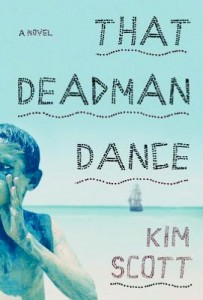
That Deadman Dance

Kim Scott’s That Deadman Dance

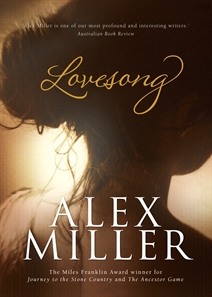
lovesong

Alex Miller’s Lovesong

American Revolution Reading Challenge 2013

I will also participate again in Anna’s and Serena’s War Through the Generations Challenge. The topic this year is the American Revolution. I haven’t read anything about this period yet and don’t know any books at all. Suggestions are very welcome.

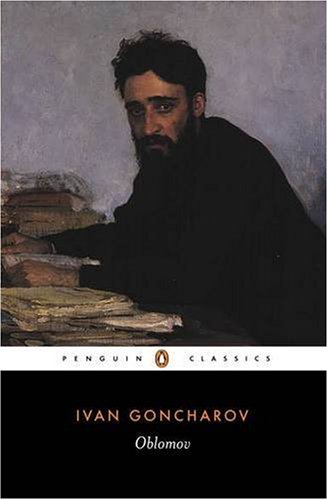
oblomov

Last but not least I’m planning on joining Richard (Caravana de recuerdos) for one or two of his 2013 Russian Reading readalong titles.

Here is the list.

Vasily Grossman’s Life and Fate (c. 1960)
 
Nikolai Gogol’s Dead Souls (1842)
 
Ivan Goncharov’s Oblomov (1859)
 
Leo Tolstoy’s Anna Karenina (1877)
 
Mikhail Bulgakov’s The Master and Margarita (c. 1940)
 
Vladimir Nabokov’s Lolita (1955)
 

Please visit Richard’s site for the details.

Literature and War Readalong January 28 2013: The Yellow Birds by Kevin Powers

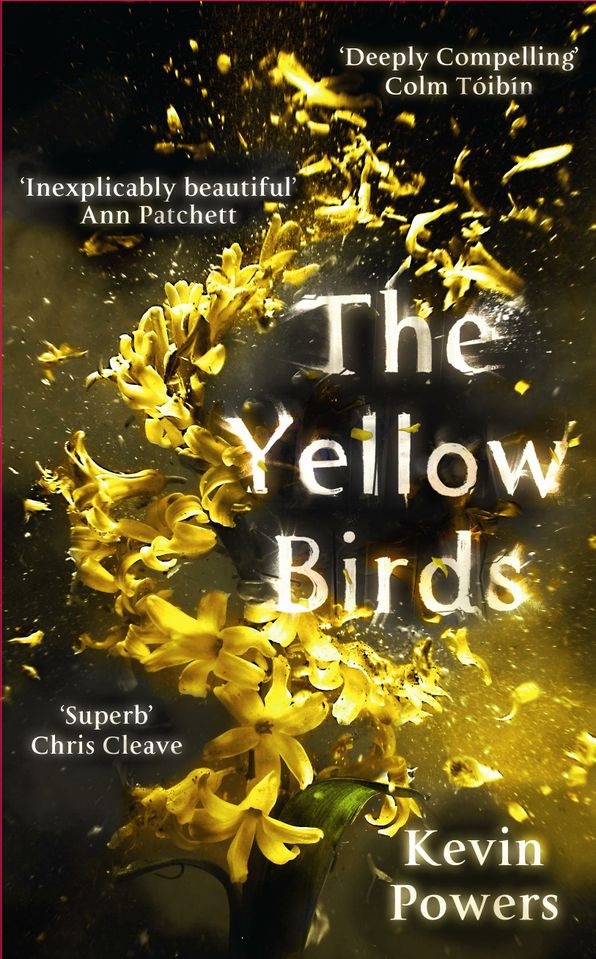
The Yellow Birds


I decided to include The Yellow Birds after having seen a few reviews which made it sound interesting. I wanted to branch out and include literature on other wars than just WWI, WWII and Vietnam. Iraq seemed an excellent choice and I’m very curious to see what we will think of this novel.

Kevin Powers is a veteran of the Iraq war. The Yellow Birds is his first novel.

Here are the first sentences

The war tried to kill us in the spring. As grass greened the plains of Niniveh and the weather warmed, we patrolled the low-slung hills beyond the cities and towns. We moved over them and through the tall grass on faith, kneading paths into the windswept growth like pioneers.

*******

The discussion starts on Monday, 28 January 2013.

Further information on the Literature and War Readalong 2013, including all the book blurbs, can be found here.

Dickens in December – Wrap up

Dickens button 01 resized

It’s a sure sign that the year is ending when we publish more wrap up posts than original posts. The end of 2012 also marks the end of Dickens’s bicentenary and of Delia and my Dickens in December event. It’s time to thank all of those who have participated and have joined in the readalong or reviewed books and movies. The links below show that the event was quite a success. I enjoyed it a lot and am glad that I have finally read one of Dickens novels. It will not be my last. A special thank you to my co-host Delia.

Thank you once more and I hope you enjoyed  it as well.

Intro Delia

Intro Caroline

Intro Post (Resistance is Futile)

Intro Post (Leeswamme’s Blog)

Intro Post (50 Year Project)

Intro Post (Rikki’s Teleidoscope)

Intro Post (Page 247)

Intro (Books Speak Volumes)

Dickens in December Begins Today (Beauyt is A Sleeping Cat)

Intro (Too Fond)

Dickens in December Start (Postcards for Asia)

Some Dickens for December (Kaggy’s Bookish Ramblings)

Giveaways Delia – Caroline

Classics Club December Meme – A Christmas Carol (Too Fond)

Great Expectations (Fanda Classiclit)

Bleak House (The Argumentative Old Git)

My Favorite Dickens Quote (On the Homefront)

Great Expectations (My Reading Journal)

A Tale of Two Cities (Babbling Books)

Dickens in December – A mixed bag (Lizzy’s Literary Life)

The Muppet Christmas Carol (Rikki’s Teleidoscope)

Dickens Project (Reader Woman)

A Christmas Carol – Jim Carrey Version (Beauty is a Sleeping Cat)

Great Expectations mini series (Fanda Classiclit)

The Life and Adventures of Nicholas Nickelby (2001) — (Postcards from Asia)

Oliver Twist- The Movie (Leeswamme’s Blog)

The Chimes (The Argumentative Old Git)

Dickens on Screen: David Copperfield, The old Curiosity Shop, Great Expectations (Postcards from Asia)

The Old Curiosity Shop (Tabula Rasa)

Great Expectations (Beauty is a Sleeping Cat)

A Tale of Two Cities (50 Year Project)

Three Detective Anecdotes (Cceativeshadows)

Havisham and Bleak Expectations (Lizzy’s Literary Life)

Blackadder’s A Christmas Carol (Rikki’s Teleidoscope)

Great Expectations (Lynn’s Book Blog)

A Christmas Carol BBC Version (Rikkis’ Teleidoscope)

The Pickwick Papers (Tony’s Reading List)

A Christmas Carol (Surgabukuku)

Great Expectations (50 Year Project)

A very short review A Tale of Two Cities (Leeswamme’s Blog)

Three Short Stories (Postcards from Asia)

A Tale of Two Cities (Tabula Rasa)

Dodger by Terry Pratchett and Dickens by Peter Ackroyd (Tabula Rasa)

Hard Times (Vishy’s Blog)

The Old Curiosity Shop (Kiss a Cloud)

Readalong participants

50 Year Project (TBM)

Dolce Bellezza (Bellezza)

Kaggsy’s Bookish Ramblings

Polychrome Interest (Novia)

Postcards from Asia (Delia)

The Argumentative Old Git (Himadri)

The Things You Can Read  (Cynthia)Questions and Answers

The Things You Can Read Student Comments

The View From the Palace (Shimona)

Lost in the Covers (Elisa)

Leeswamme’s Blog (Judith)

Lynn’s Book Blog

Love. Laughter and a Touch of Insanity (Trish)

A Work in Progress (Danielle)

Sandra – please see comments section

Tabula Rasa (Pryia)

Slightly Cultural, Most Thoughtful and Inevitably Irrelevant (Arenel)

My Reading Journal (Ann)

Vishy’s Blog (Vishy)

Resistance is Futile (Rachel)

Too Fond

Beauty is a Sleeping Cat (Caroline)

Michael Herr: Dispatches (1977) Literature and War Readalong December 2012

https://beautyisasleepingcat.com/wp-content/uploads/2011/11/dispatches.jpg

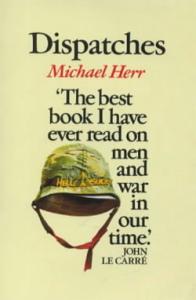
Dispatches is Michael Herr’s account of his time in Vietnam as a front-line reporter. It’s an example of what is commonly called gonzo journalism as invented by Hunter S. Thompson. The beginning reminded me of William S. Burroughs’ books like Naked Lunch or Tom Wolfe’s Electric Kool Aid Acid Test. Pure 60s writing, fragmented, high on dope and high-strung as well. Not my cup of tea anymore. I used to read this type of books as a teenager, nowadays I prefer more lyrical approaches with a stronger narrative.

What Herr tried to do in the beginning, is make the reader experience as close as possible, what it was like to be there. I thought it was difficult to follow. I lost interest more than once and couldn’t help comparing it to Tim O’Brien’s masterpiece. I’m afraid Dispatches doesn’t hold up. On the other hand it’s not fair to compare them because they are totally different. O’Brien’s novel is a blend of fiction and non-fiction with a lot of metafictional elements. Herr tries to tell it as it was. Whatever he describes, even though it is filtered through his experience, it’s still true while O’Brien embellished and made things up. Sure, we could argue that truth is relative anyway and that’s precisely what O’Brien did argue. Be it as it may, Herr didn’t consciously change anything to make it “more real”.

Dispatches consists of 6 parts and while I had problems with the first three, I really liked the last three called Illumination Rounds, Colleagues and Breathing Out. Illumination Rounds is a series of portraits of soldiers Herr met in Vietnam and shows the wide range of people. How some of them got affected so badly by the war that they didn’t want to go back home, got addicted to it, or got crazy. They are just small vignettes but I found each of them powerful. Colleagues was equally interesting. This time fellow reporters and photo journalists were at the center of the story. The most prominent ones being Sean Flynn, Erroll Flynn’s son, a photojournalist and Dana Stone, another reporter. The two men disappeared in 1970, on the Cambodian border were they were said to have been captured by communist guerillas and were never seen again. Quite a sad story, really. Both were friends of Michael Herr and while he isn’t too outspoken it is obvious that he felt deeply when he heard about their disappearance. I attached two tributes that I found on YouTube.

Breathing Out focusses on the return home and how everything just seemed so dull. Something that you see mentioned often in Vietnam accounts is that the soldiers enjoyed being there to some extent because it was so intense.

An important part of the book looks at how the journalists were treated. Many of the soldiers were glad to have them because they wanted people to know how it really was. There were some others who hated them for being there without having to but purely because they wanted to. This was precisely the reason why others admired them. It takes guts to go somewhere like that if you don’t have to. The reasons for the journalists in Herr’s account to be there were very rarely political. Some were adventurers and Vietnam was just a way to combine making money with traveling and experiencing something nobody else had experienced.

Reading this book made me wonder what this war would have been like if it had been fought in the 80s. It’s so much part of 60s culture and was so much influenced by it. What would it have been like without the pot smoking, the music, the attitude of the people?

One part that I found extremely interesting is when Herr writes that arriving in Vietnam took a lot of adjustment at first because they had all seen too many war movies and it took a while until it sank in that this were not just pictures flickering by. I always though that was a newer problem but I guess nowadays it is video games, not movies which blur the lines.

I really can’t say this isn’t a good book but I would have appreciated it more a few years ago and if I had read it some other time. In any case, it felt very authentic, very realistic, gritty but not too graphic. However if you are looking for background information on Vietnam, that’s not the book to turn to.

Other reviews

Reading Michael Herr’s Dispatches (Danielle – A Work in Progress)

Danielle (A Work in Progress)

*******

Dispatches was the last book in the Literature and War Readalong 2012. The first in 2013 is The Yellow Birds by Kevin Powers (2012), 240 pages – US – Iraq war.

Discussion starts on Monday 28 January, 2013.

Further information on the Literature and War Readalong 2013, including all the book blurbs, can be found here.

The Winner of the Dickens in December Giveaway – Tom-All-Alone’s

Random org has determined the winner of the second Dickens in December giveaway.

The winner of a copy of  Tom-All-Alone’s, including a book-plate signed by the author is

Séamus Duggan (Vapour Trails).

Congratulations Séamus.

Please send me your address via beautyisasleepingcat at gmail dot com

Dickens button 01 resized

Best Books 2012

Last year I had a hard time to narrow down the choices and ended up with a very long list. This year it was far easier. All in all it wasn’t such a great reading year. Still, there were 13 novels and 2 non-fiction books I found outstanding.

I added the links to my posts and a quote from my reviews.

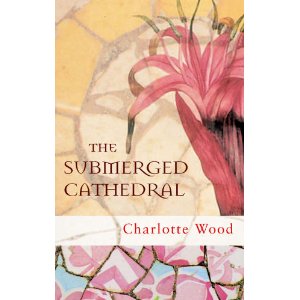
Charlotte Wood – The Submerged Cathedral

Australian author Charlotte Wood’s lyrical novel The Submerged Cathedral caught me unawares. Reading it felt at times like daydreaming. It has a hypnotic and very gentle quality that isn’t easy to put into words. It is highly symbolical and complex but still down to earth. The voice and choice of themes are so unusual, I’m really glad I discovered it on Kim’s blog last year (here).
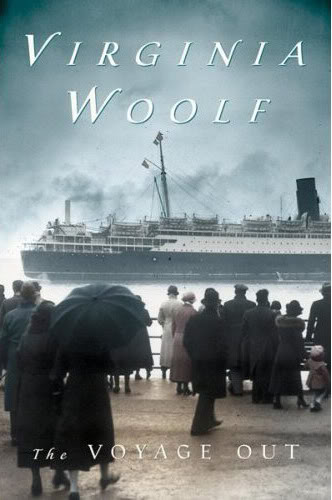
Virginia Woolf – The Voyage Out

Reading The Voyage Out makes me realize once more what I like the most about her writing. Yes, the style, especially in the later novels, is fantastic, with its flow of interior monologue, the way she uses time and how she describes the passing of time. But there is something else that stayed with me forever since the day I have read Mrs Dalloway. Her writing has an exhilarating quality, an effervescent intensity of feeling that made me think of a German expression which I adore: “Champagner Wetter” or “Champagne weather”. Champagne weather is used to describe a very fresh but sunny spring morning on which the air is still cool, nature has returned to life, the first tentative, tiny leaves appear, the first blossoms can be seen. It’s already a bit warm in the sun but still chilly in the shade. It’s like drinking the first glass out of a freshly opened, nicely cooled Champagne bottle. It bubbles and goes to your head. Virginia Woolf’s novels are full of scenes conveying the mood of champagne weather.

Robin McKinley – Chalice

What I loved so much about this book is the atmosphere. Sweet and floating, like the scent of beeswax candles. The descriptions are beautiful and following Marisol’s journey has something enchanting and almost hypnotic. The world building is exquisite. I was there in Willowsland the whole time. And Marisol is such a great character, so real. She is very insecure and has to find her way in a hostile environment but her strength and her love for her home guide her. I liked how she lived, on her own, outside of the Great House or the village, only with her bees whom she treats like pets.

Antonio Tabucchi – The Edge of the Horizon

I liked it because it’s a very melancholic story and the descriptions are wonderful. Instead of taking a trip to Lisbon it was like taking a trip to one of those typical old Italian towns with the narrow and steep alleys. The book has many descriptions of quiet moments like this one towards the end:

“When the night began to fall, he turned on the radio without turning on the light. He was smoking in the dark while looking out of the window and observing the lights in the harbor. He let time slip away. He enjoyed listening to the radio in the dark, it gave him a feeling of distance.”

Helen Dunmore – Zennor in Darkness

Dunmore conveys the soft light of the Cornish coast, the beauty of the lovely landscape, the slow pace of life. This softness is mirrored in the way she changes the point of views, blurring the edges, softening the transitions, so that it feels as if one person’s consciousness and interior monologue, was flowing gently into that of another character. Reading it made me dreamy and I felt as if I was watching a water-color come to life. I read this book very slowly. I could have finished it in a few evenings but I put it aside frequently to make it last.

Amor Towles – The Rules of Civility

This is the reason why I always look forward to new releases because ever so often you discover a new book and simply enjoy it to the extent of wanting to start all over again after finishing it. This doesn’t always have to be a book that will enter the literary canon, it can just be a novel that makes you spend a few extremely entertaining hours. Like a well-made movie.

Charles Dickens – Great Expectations

Great Expectations offered everything I expected from Dickens and so much more. The only thing I could criticize is that it was predictable and that there were a lot of coincidences which didn’t seem all that realistic but who cares. There is so much in this novel to like that I can easily forget its flaws. The characters were, as was to be expected, quirky and over-the top, much more caricatures than portraits, but drawn which such a wonderful imagination that I loved each one of them.

Sylvia Toswnsend Warner – Lolly Willowes

I’m glad I discovered this wonderful novel. It has freshness and vivacity, is clever and witty and the descriptions are detailed and atmospheric, the portraits of the society and the people are true to life and Lolly is a very endearing character, an illustration of the importance of “a room of one’s own” and the right of women to live an independent life, even outside of society and without a man. It’s certainly one of the rare novels in which a being considered to be a useless burden on society shows that she doesn’t need society in order to live a truly happy and  fulfilled life.

Guy de Maupassant – Bel Ami

After having read Bel-Ami, I think that he might very well be one of the best writers in any genre. It’s one of the most perfect books I’ve ever read. I couldn’t name one single flaw. As much as I like Balzac there is always this and that, minor things, sure, but still, some imperfections. Not with Maupassant. What also surprised me is that this book could have been written nowadays. The society has changed, the world has changed but the way he writes about love, sex, power, money, careers… It’s outspoken and modern.

Louise Penny – Still Life

If I could I would move to Three Pines, the small fictional village, located a few hours from Montreal, in rural Québec. It’s a small village that sounds as if it was a place where time stands still and reminded me a lot of Elizabeth Gaskell’s Cranford. Old cottages face a small village center and are surrounded by old trees and lush gardens. The place is very green and picturesque, the descriptions of it atmospheric and full of tiny details of the season. It’s the end of autumn, dead leaves are falling, it rains and the temperature is slowly dropping. A storm will come and soon it will be winter. Before the crime is solved, snow will begin to fall and a lot of the investigation will have taken place in front of a cozy fire.
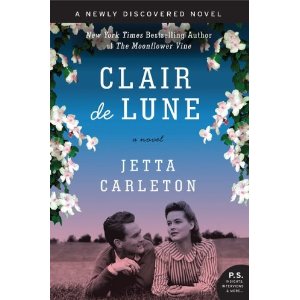
Jetta Carleton – Clair de Lune

I absolutely loved this book. I tried to slow down while reading but it was pointless, I just rushed through the pages and when I turned the last one I was quite sad. It contains such a lot of intense scenes and the most uplifting ending since I’ve read Nada last year. Since the largest part of the book is set in spring, there are a lot of wonderful outdoor scenes in which the three friends walk in the streets, stand in the rain or just stroll through the fog. There is a breathlessness and joy of life in these pages that is exhilarating. It renders the enthusiasm of young people for whom everything is a discovery, be it literature, art, music, love or friendship. At the same time there is the anxiety about war and the knowledge that the freedom and carefreeness they experience is going to end.
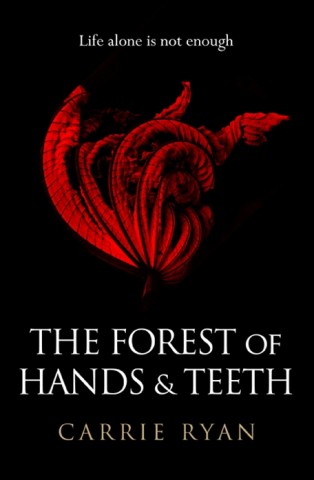
Carrie Ryan – The Forest of Hands and Teeth

I never felt like reading a zombie novel before and if it hadn’t been for Sarah’s intriguing review I wouldn’t have tried this book but I’m glad I did. It has a very special and haunting atmosphere, very captivating and oddly enthralling. The word zombies, is never used, by the way, but it’s clear from the descriptions. The Forest of Hands and Teeth is part I of a trilogy. I won’t rush to read part II and III right now but I feel like reading them some day.

Edda Ziegler – Forbidden – Ostracized – Banned

Edda Ziegler’s fantastic book on German women writers under National Socialism Verboten – Verfemt – Vertrieben (Forbidden – Ostracized – Banned) was easily my favourite read this year. I hope that some English language editor will buy the rights to this book and have it translated. It’s an introduction to the most prominent German women writers under National Socialism, a detailed historical account of the times and an analysis of publishing history.
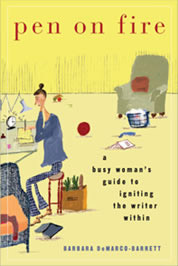
Barbara DeMarco-Barrett

I didn” get a chance to review this yet but if you are looking for a truly original genre blend – memoir + book on writing, this may be the book for you. Or if you are one of those who keep on saying “I would write if I only had the time” – this may be for you as well. An inspiring, motivating and really lovely book on writing and the life of a writer.