Literature and War Readalong May 31 2013: All That I Am by Anna Funder

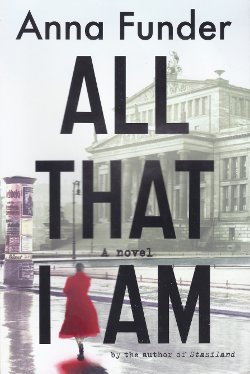
All That I AM

When I first heard of Anna Funder’s novel All That I Am  I wanted to start reading it right away as it sounded so appealing. The novel is inspired by – or based on – the tragic life of German-Jewish left-wing playwright Ernst Toller. Some have termed the book “faction” but judging from what I read about it, Funder took a lot of liberties, which makes the term “fiction” more appropriate in the  end. All That I Am is Funder’s first novel but she had a huge publishing success with her book Stasiland: Stories From Behind the Berlin Wall.

The book starts in 1933 with Hitler’s rise to power and tells the story of four young German exiles who try to raise awareness in the UK for the threat the new German government poses. Toller is one of them. In 1933 he lost his citizenship, left Berlin and went to live in London.

Here are the first sentences

When Hitler came to power I was in the bath. Our apartment was on the Schiffbauerdamm near the river, right in the middle of Berlin. From its windows we could see the dome of the parliament building. The wireless in the living room was turned up loud so Hans could hear it in the kitchen, but all that drifted down to me were waves of happy cheering, like a football match. It was Monday afternoon.

*******

The discussion starts on Friday, 31 May 2013.

Further information on the Literature and War Readalong 2013, including all the book blurbs, can be found here.

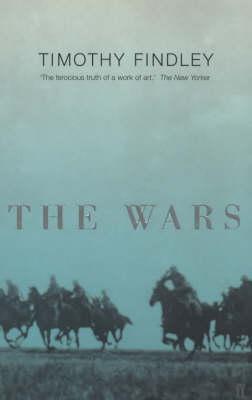
Timothy Findley: The Wars (1977) Literature and War Readalong April 2013

The Wars

Is it possible to write about WWI – including the trenches, the incapable high command, shell shock, gas attacks, rats, mud, facial wounds, the immense body count – and still be original and have something profound and thought-provoking to say? Before reading Timothy Findley’s  The Wars I might have said “possibly” but after finishing it, I have to say “definitely”. This novel proves that in the hands of a powerful writer anything can become extraordinary.

The Wars has an episodic structure but still tells a coherent story, exploring what happened one day, during WWI, when young Officer Robert Ross, broke the ranks, committing an act of total insubordination, shot another officer and freed dozens of horses. How did it come to this? The story is told in a circular way, starting with the end, withholding all the vital information, and then moving back to  the beginning, unfolding every step which led to that fatal day.

I said in my intro post that I was worried the book would contain a lot of animal suffering and it did but in an unusual way. The strength of Findley’s work is that he manages to show, just like Coetzee – another defender of animals – that, at the end of the day, animals and humans are equal. Both feel pain; their lives are precious and must be protected. Being alive is nothing short of a miracle.

This first quote is central in the book and illustrates perfectly what kind of person Robert Ross is

In another hole there was a rat that was alive but trapped because of the waterlogged condition of the earth that kept collapsing every time it tried to ascend the walls. Robert struck a match and caught the rat by the tail. It squealed as he lifted it over the edge and set it free. Robert wondered afterwards if setting the rat free had been a favour – but in the moment that he did it he was thinking: here is someone still alive. And the word alive was amazing.

The instances in which animals die at the hand of men who have gone crazy or are saved by compassionate men are numerous. Madness is an important topic in this novel. Not just in the sense of war is madness but because people lose their minds during battle or under attack. And often they take it out on weaker ones. Wounded Germans, prisoners or animals.

Many of the soldiers in the book question the decisions of their superiors

This – to Bates – was the greatest terror of the war: what you didn’t know of the men who told you what to do – where to go and when. What if they were mad – or stupid? What if their fear was greater than yours? Or what of they were brave and crazy – wanting and demanding bravery from you?

Life in the trenches is constant terror, trying to stay sane and attempting to survive.

Robert had only taken eight hours sleep in the last three days. He was living on chocolate bars and tea and generous portions of rum which he took from the supply wagons. His body was completely numb and his mind had shrunken to a small, protective shell in which he hoarded the barest essentials of reason.

The novel is divided in many short chapters which could be read separately but definitely work as a whole. This isn’t a collection of snapshots, it is a novel but this approach of unfolding the story in short chapters, which change point of view, narrative technique, tone and mood, make every part very powerful. Findley is probably one of the most assured writers I’ve read. This could have been difficult to read but most chapters contain strong and expressive scenes. There is far more show than tell in this book, which makes it accessible but also painful. Death, pain, loss and grief are described in a civilian setting and during war, and finally illustrate that love is all that counts. War is mad, inflicting pain is mad and treating people without respect is mad as well.

What came as a surprise were the many funny moments in this book. Rodwell is an officer who saved some injured animals after an attack

“Where did you find the hedgehog?” Robert asked.

“Under a hedge,” said Rodwell.

Everybody laughed.

“I suppose that means you found the bird in the sky,” said Devlin.

“Would that I had, Mister Devlin,” said Rodwell. “No sir – I found him with the hedgehog. They were crouched there side by side when I got them by putting out my hand to secure the toad. We were all there together, you see. It was a popular hedge just at that moment.”

There are many other funny moments. I was glad for those, otherwise the book would have been really dark.

The Wars is populated by likable characters which makes it a painful read. There are not many men or animals who survive in this book. It’s not too gruesome as wounds and pain are not dwelt on but it has many explicit moments which make it an equally beautiful, powerful and painful read.

Other reviews

Anna (Diary of an Eccentric)

Buried in Print

Danielle (A Work in Progress)

The review is also a contribution to The Canadian Book Challenge.

*******

The Wars was the fourth book in the Literature and War Readalong 2013. The next is the WWII novel All That I Am  by Australian writer Anna Funder . Discussion starts on Friday 31 May, 2013. Further information on the Literature and War Readalong, including the book blurbs can be found here.

Moroccan Literature and A Blogging Break

Picture taken from www.trekearth.com

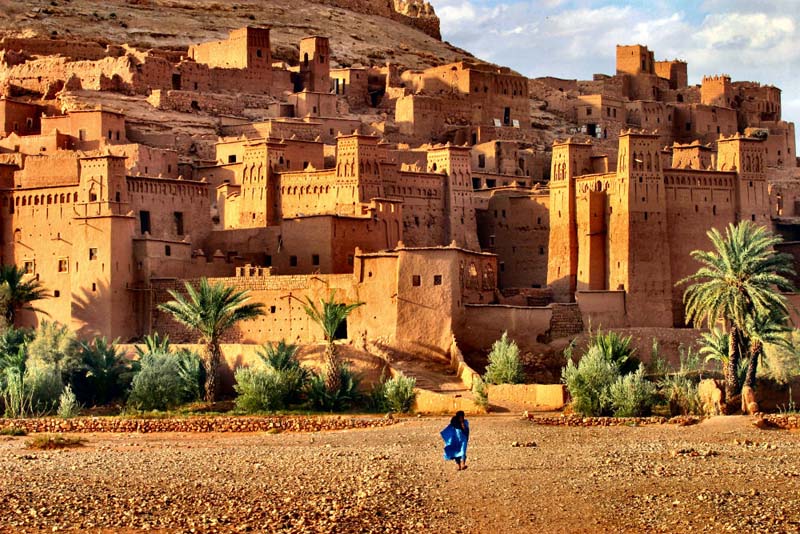
Picture of the Kashbah Aït Benhaddou taken from http://www.trekearth.com

This is just a quick post to let you know I’m taking a blogging break. I’m not sure for how long but I will certainly be back in time for the readalong at the end of the month.

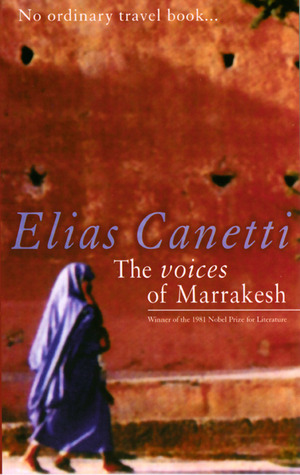
Canetti

Some of you know that one of the reasons for the break is that I’m travelling to Morocco. To Marrakech to be precise. The first time I’ve been to Morocco was in part because of so many European and American writers like Paul Bowles, Elias Canetti, Esther Freud, who loved Morocco and especially Marrakech. The way they described the city made me think I would love it. At first I was disappointed as it was so different from what I had imagined but then I went back and saw the “real” Marrakech and fell in love. I wonder how it will be this time. This trip will be special as I’m travelling with someone who has been there before, someone who has never been there and someone who was born there. It will be interesting to see the city through so many different eyes. From Marrakech we will travel to Essaouira which is on the coast and stay there for a couple of days.

I’m looking forward to this trip as the temperature here is still around 6°C/42,8°F, while in Morocco it should be around 27°C/80,6°F.

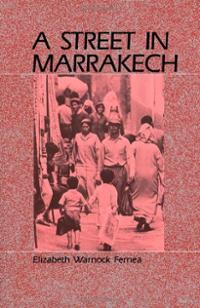
a-street-in-marrakech-elizabeth-warnock-fernea-paperback-cover-art

Another reason why I wen to Marrakech for the first time was Elizabeth Fernea. While studying at the university I took a course on travel memoirs written by cultural anthropologists. One of the titles that made a huge impression was A Street in Marrakech. I’d love to read it again. It’s a fascinating account and a well-written book that captures the magic of living in another culture and the sorrow to leave it again.

The other day I thought it was appalling that I haven’t read any Moroccan writers other than Tahar Ben Jelloun. There are so many, however not all of them have been translated. To put myself in the mood for the trip I compiled a small list.

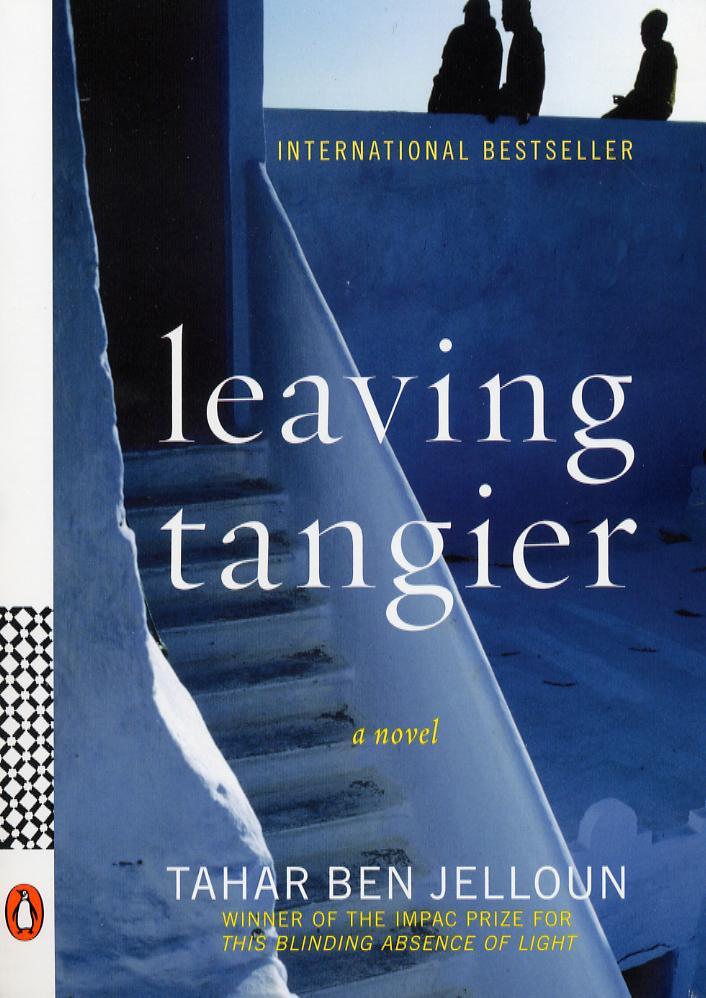
Tahar-Ben-Jelloun-Leaving-Tangier

Tahar Ben Jelloun – Leaving Tangier

Ben Jelloun is probably the most famous Moroccan writer. His books are short and lyrical. He has written a lot. Many of his books have been translated.

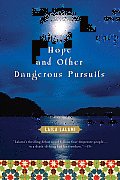
Laila Lalami

Laila Lalami Hope and Other Dangerous Pursuits

Lalami is  new to me. Her books received much praise. She lives in the US and writes in English but was born in Morocco.

For-Bread-Alone

Mohamed Choukri – For Bread Alone

Mohamed Choukri’s autobiographical novel is a classic. It has been translated by Paul Bowles. It’s an account of poverty and hardship, written in powerful prose.

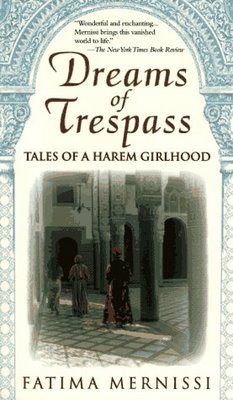
Dreams_Trespass

Fatima Mernissi – Dreams of Trespass: Tales of a Harem Girlhood

I bought this years ago but have still not read it. Mernissi writes in English. I’ve read other memoirs by women who grew up in a harem. They are worth reading as we discover a world we would otherwise never see.

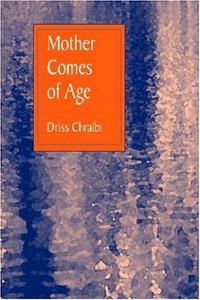
mother-comes-age-driss-chraibi-paperback-cover-art

Driss Chraibi’s novel Mother Comes of Age is another classic which I’ve bought some time ago. It is said to be one of the most important Moroccan books.

I hope this post will tempt the one or the other to pick up a Moroccan writer in the future.

I know that some of you are curious to see what books people will read when travelling or on holidays. While I have a kindle I will not go anywhere without real books. These are the candidates I’m taking with me:

Asmara

I’ve already started Asmara et les causes perdues. Jean-Christophe Rufin has won the Prix Goncourt for his novel Rouge Brésil or Brazil Red. Unfortunately Asmara hasn’t been translated.

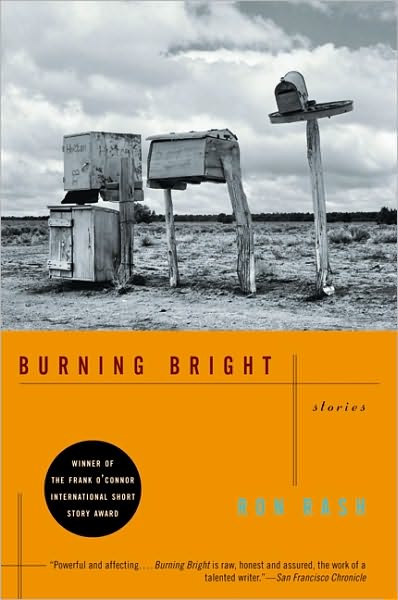
burning bright - ron rash

Ron Rash has been on my radar for a while. Before reading his novel The Cove I wanted to explore his shorter fiction. Burning Brigth has received some prestigious prizes.

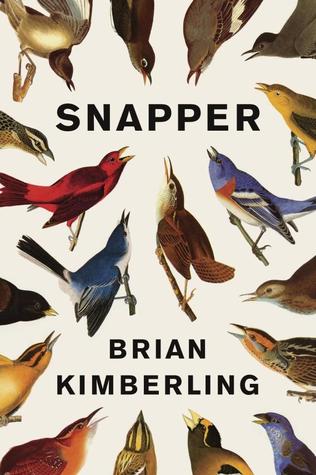
Snapper

I just received Brian Kimberling’s first novel Snapper from Random House and since it sounds so good, I’m going to read this soon.

You certainly wonder why I’m not taking any of the Moroccan books. I’m weird that way, I keep those for when I’m back.

Take care everyone. I’ll be back in a couple of weeks.

Literature and War Readalong April 29 2013: The Wars by Timothy Findley

The Wars

On my intro post to the Canadian Book Challenge John, the host of the challenge, suggested I read Timothy Findley’s The Wars. There are quite a few Canadian WWI novels and this is said to be a Canadian classic.

Tomothy Findley wrote novels, plays, short stories and non-fiction. Many of his novels received prestigious prizes.On the back of my copy it says that he is Canada’s greatest living writer. That was back when the book was printed, in 2001. Findley died in 2002.

I must admit the first sentences make me feel anxious. Horses in WWI novels and movies are hardly ever a cheerful thing.

Here are the first sentences

She was standing in the middle of the railroad tracks. Her head was bowed and her right front hoof was raised as if she rested. Her reins hung down to the ground and her saddle slipped to one side. Behind her, a warehouse filled with medical supplies had just caught fire. Lying beside her there was a dog with its head between his paws and its ears erect and listening.

*******

The discussion starts on Monday, 29 April 2013.

Further information on the Literature and War Readalong 2013, including all the book blurbs, can be found here.

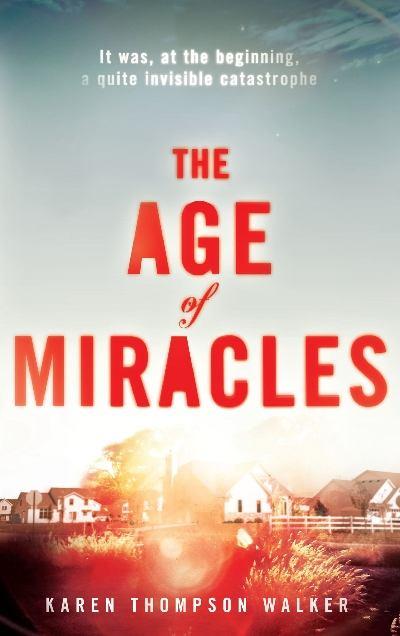
Karen Thompson Walker: The Age of Miracles (2012)

The Age of Miracles

Ever since Jacquelin Cangro reviewed The Age of Miracles, I felt like reading it. I assumed I would like it but I didn’t expect that I would love it so much. It may seem odd to love an “end of the world” story but The Age of Miracles is so much more. It’s as much the story of a disaster as a coming-of-age tale, an exploration of how we adapt to change and a meditation on the fragility of life on earth. Plus the tone of the whole book is lovely and nostalgic.

The Age of Miracles is told by 11-year-old Julia, an only child who is a bit of a loner and a keen observer. Suddenly, one day, they hear on the news that the rotation of the earth has slowed down and as a result the days have grown longer. At first this is minimal but gradually the days and nights extend until, at the end of the novel 72 hour days are followed by 72 hour nights.

The consequences are massive. Many animals and plants die. After a few months, it’s dangerous to go out during daytime as the sun’s radiation can be fatal. Plants only grow in hot houses, people need protection at all times.

Early on the government decides to disregard daylight and to stay on the usual 24 hour clock time. Opposing groups find this unacceptable and adjust to the sunlight. They stay awake longer, sleep longer. Soon there is hostility between those groups and most of the day timers flee after a while and live in communes outside of the cities.

Julia describes all this in great detail. She’s worried but is also surprised how quickly people get used to these changes. But there are many other things on her mind. She was always a loner but the slowing makes her lose even more friends. She is secretly in love with Seth Moreno who is also a loner  which makes it difficult for them to become friends but once they overcome some obstacles, they spend every minute together.

The tone of Julia’s voice and some hints, indicate that she tells this story looking back. It’s the grown-up Julia who tells about the year during which the biggest changes, in the outside world and in her personal world, take place. It’s the year of her first love, of the near collapse of her parent’s marriage and also the year in which everything anyone took for granted disappears forever.

I know that some people found the book alarming because it obviously touches on subjects like climate change and natural disasters. I was more touched by Julia’s personal story, by the tone of her voice which was infused with sorrow. There are as many scenes of great beauty as there are scenes of damage and loss. Ultimately this is a melancholic story about a long goodbye, goodbye from people, things and habits.

When I started reading, I was a bit afraid, the book would be gimmicky. It’s not. It’s a quiet, moving tale. The unusual event is just a means to tell a much deeper story; a story of change, loss and sorrow inherent to all of our lives.

Elizabeth Bowen: The Heat of the Day (1948) Literature and War Readalong March 2013

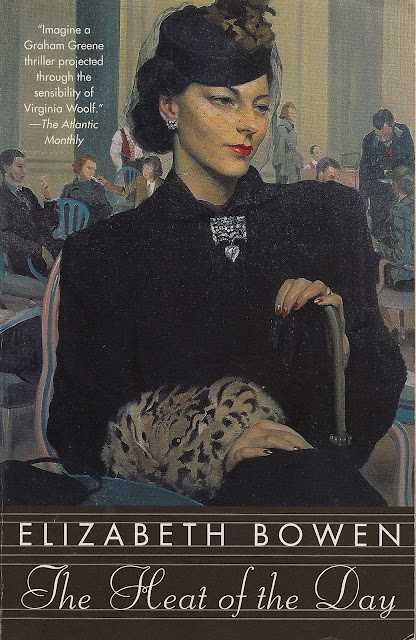
The Heat of The Day

Elizabeth Bowen’s The Heat of the Day introduces us to London during WWII. The novel starts on a Sunday in 1942 and ends exactly two years later. London is a ghostly city. Many houses are but ruins, other’s are abandoned. People’s lives have changed, relationships are formed much more quickly but they end as abruptly too. Social differences become smaller, the society is less strict as a whole. Everything is perceived more intensely. The seasons, the hours of the day, the light. The beauty and spookiness of the time is captured in evocative passages like the one below.

Out of the mists of morning charred by the smoke from ruins each day rose to a height of unmisty glitter; between the last of sunset and first note of the siren the darkening glassy tenseness of evening was drawn fine. . . . The diversion of traffic out of blocked main thoroughfares into byways, the unstopping phantasmagoric streaming of lorries, buses, vans, drays, taxis past modest windows and quiet doorways set up an overpowering sense of London’s organic power–somewhere here was a source from which heavy motion boiled, surged and, not to be damned up, forced itself new channels.

The very soil of the city at this time seemed to generate more strength: in parks the outsize dahlias, velvet and wine, and the trees on which each vein in each yellow leaf stretched out perfect against the sun blazoned out the idea of the finest hour. Parks suddenly closed because of time-bombs–drifts of leaves in the empty deck chairs, birds afloat on the dazzlingly silent lakes–presented, between the railings which girt them, mirages of repose. All this was beheld each morning more light-headedly: sleeplessness disembodied the lookers-on.

In reality there were no holidays; few were free however light-headedly to wander. The night behind and the night to come met across every noon in an arch of strain. To work or think was to ache. In offices, factories, ministries, shops, kitchens the hot yellow sands of each afternoon ran out slowly; fatigue was the one reality. You dared not envisage sleep.

The main story centers on Stella, her lover Robert, her son Roderick and the intelligence agent Harrison. The side story involves two girls, Louie and Connie. It’s a peculiar story. Harrison visits Stella one night and tells her that Robert is a spy working for the Nazis. Harrison could protect him to some extent if Stella was willing to become his lover.

It’s hard to imagine what it would feel like to hear something like this about the man you love. Stella doubts it at first but Harrison has proof and after a few months she accepts it and confronts Robert.

I’m not exactly sure why Elizabeth Bowen chose this topic or why she chose to paint the portrait of a likable Nazi spy. I didn’t feel this was believable at all.

If you put the story aside and concentrate on other elements, you will find an excellent description of wartime London. I liked the many side stories far more than the main story as such. The female characters are all interesting. There is Stella who was perceived as a fallen woman as it was said she had walked out on her husband. Nettie, the wife of a distant Irish uncle lives in a home for mentally ill patients but is perfectly fine. Louie sleeps with various men, to feel closer to her husband who is stationed in India. The status of women has changed a lot at the time, the society is less rigid, many could finally break free,

Robert, although far less of a character than most women in this novel, is interesting because he symbolizes the wounded men who came back after Dunkirk, unfit for future service. Many of these men must have been very bitter. I’m not sure though that an experience like this would have pushed many to become Nazi spies.

All in all this was a disjointed reading experience. I liked the atmosphere and the mood, didn’t care for the story and often had the feeling Elizabeth Bowen cannot write novels. As much as I liked her shorter prose and could forgive her for many convoluted sentences, in this book she went too far. According to Glendinning’s biography, her editor changed many sentences and told her many times to work on them. It’s not that they are long – long sentences hardly bother you when you read German or French literature – but the structure is weird. Let me give you a few examples.

In the street below, not so much a step as the semi-stumble of someone after long standing shifting his position could be, for the fist time by her, heard.

Or her way to break up dialogue and add long complicated tags

“This is certainly,” she agreed, with the affability of extreme disdain, “rather a point.”

This one is hilarious

“Absolutely,” he said with fervour, “not! Though you know I do wish I knew what’s rattled you.”

While I would still recommend to read The Heat of the Day for many different elements, I’m not so keen on reading another of her novels soon unless someone tells me there is one in which the sentences are not as contorted. For the time being I’ll stick to the short stories.

Other reviews

Anna (Diary of an Eccentric)

Lizzy (Lizzy’s Literary Life)

TBM (50 Year Project)

*******

The Heat of the Day was the third book in the Literature and War Readalong 2013. The next is the WWI novel The Wars by Canadian writer Timothy Findley. Discussion starts on April 29, 2013. Further information on the Literature and War Readalong, including the book blurbs can be found here.
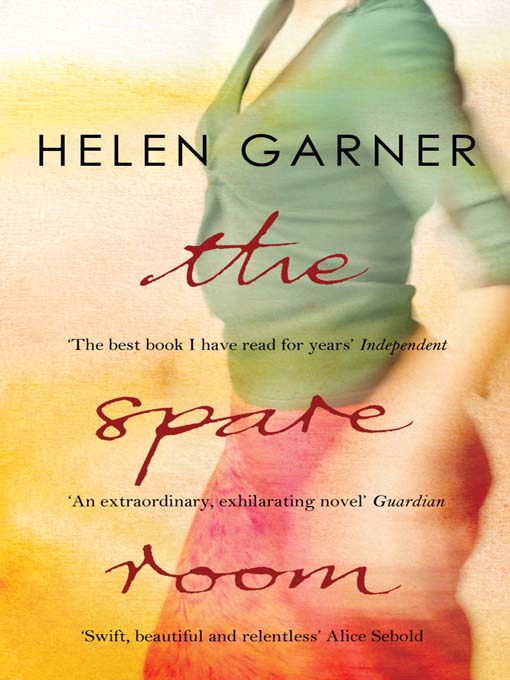
Helen Garner: The Spare Room (2008)

untitled

Helen Garner’s The Spare Room was one of the books I found at work. I started it immediately and finished it almost in one sitting. Garner has chosen a difficult topic and written about it beautifully. Despite the sad topic, it’s an uplifting book.

Helen’s friend Nicola is very ill. She has stage four metastatic cancer. This means it’s terminal. Chances that she will recover are less than minimal. Looking for a miracle cure she asks her friend if she can stay with her in Melbourne for three weeks. Helen doesn’t know any details. She doesn’t know that Nicola is in denial. She just wants to help her friend and accepts.

Nicola always used to believe in alternative medicine. But what works for all sorts of ailments, does not work for terminal cancer. Many late stage cancer patients cannot accept the fact that they are dying which makes them an easy prey for frauds and con men. The clinic Nicola will visit during her stay is not much different. The cure has no value but terrible side effects. And it costs a fortune. What Nicola would really need is palliative care but she thinks getting palliative care will speed up her death.

Caring for her friend is beyond Helen’s strengths. Like Nicola, she is over 60 and washing sweaty bed sheets every night, seeing her friend in horrible pain and denial sucks all her energy from her.

“It’s just that in my work,” said Carmel, “I’ve learnt that there are people who never, ever face the fact that death’s coming to them. They go on fighting right up to their last breath.” She paused. “And it is one way of doing it.”

This must sound like a bleak story but it’s not. It’s honest and even funny, stripped of everything but the bare reality. The worst part is that the two women have to live a fake relationship as Nicola doesn’t want to accept she will not be cured. She smiles constantly, pretending everything is alright. She doesn’t want to feel her emotions and in doing so triggers them in others. All those who care for her feel desperate, sad and angry while she keeps on grinning.

When Helen is at the end of her strength, she confronts her demonstrating that sometimes you really have to be cruel to be kind. When they finally speak openly about the fake cure and the probability that Nicola will die, things get better and they are able to live moments of true friendship again.

Oh, I loved her for the way she made me laugh. She was the least self-important person I knew, the kindest, the least bitchy. I couldn’t imagine the world without her.

I devoured this book. Its spare prose is beautiful. Its honesty was soothing.

I’ve seen this happen quite a few times around me. People get very ill, terminally ill but until the last moment they deny it. No real conversations are possible and what little time is left is spent chasing a miracle cure.

But Garner goes one step further. She also writes about the caregiver and how incredibly strong you must be to perform the tasks which are needed. How much you may come to hate the person who depends on you because it’s so tiring and stressful.

The Spare Room is astonishing because it’s so well written and manages to be ultimately uplifting through its gentle humour, honesty and in  showing what true friendship can achieve.

This review is my first contribution to the Aussie Author Challenge 2013

Aussie-Author-Challenge-2013

We all know that search engines work in mysterious ways that’s why I add this caveat: 

For anyone reading this who is afflicted by cancer or has friends or family who are ill, please be aware, that the case in this book is not just a simple case. It’s a stage four metastatic cancer. I’m saying this because I don’t want to rob anyone of their hope. Many cancer patients, especially when their illness has been discovered early on, can be cured, notably when the tumour is operable. There are but a few types like the very aggressive malignant glioblastoma multiforme which leave you with hardly any chance.