Some Plans: Spanish Literature – Japanese Literature and Mary Hocking

Japanese Literature Challenge

I’m not good at sticking to plans and projects these days. Especially not when I add reading lists to my intro posts. That jinxes it every time. Therefore, I’m not going to make the same mistake again and just let you know that I will take part in three events. Maybe these announcements will inspire the one or the other to join as well.

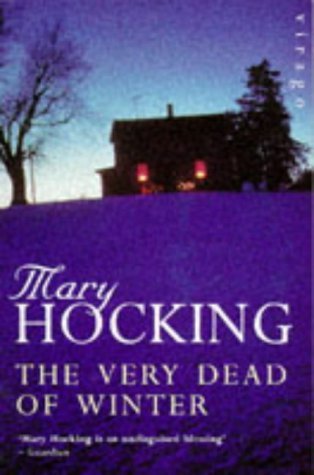
First up is Heavenali’s Mary Hocking Reading Month. I’d never heard of the author, nor was I familiar withHeavenali’s blog before I saw an announcement on Kaggy’s Bookish Ramblings. Browsing told me that Mary Hocking is right up my street and I decided, if I can get one of her many novels (many are out of print), I’ll join. So this is the only plan I’m sharing. I’ll be reading Mary Hocking’s The Very Dead of Winter.

The Very Dead of Winter

Here’s the blurb

This is a portrait of a family forced to confront the grievances of their shared past. In the very dead of winter they assemble at a remote country cottage enveloped in snow. Mary Hocking has also written “Good Daughters, Indifferent Heroes”, “Welcome Strangers” and “An Irrelevant Women”.

Should you want to join, there are quite a lot of used copies available. She’s written a lot of books, many of which have been published by Virago and are still in print. You can find a list on Heavenali’s blog.

spanish_speaking_countries_flags

July is Spanish Literature Month hosted by Richard (Caravana de Recuerdos) and Stu (Winstonsdad’s Blog). Two years ago, when they hosted the first Spanish Literature Month I had some wonderful plans and failed miserably. This year it should be different. I’ve been collecting books for the event, the general direction might be crime, but I’ll decide what I’ll read spontaneously.

Japanese Literature Challenge

Bellezza’s Japanese Literature Month 8 has started on the first of June and runs until the end of January 2015. On Bellezza’s blog you’ll find reading suggestions and links to the review site. This year I will read whatever I like, without taking into consideration whether or not the book has been translated into English. Hopefully I’ll be in the mood for something that has been widely transalated.

Will you participate in any of these events?

Literature and War Readalong June 27 2014: Fear aka La Peur by Gabriel Chevallier

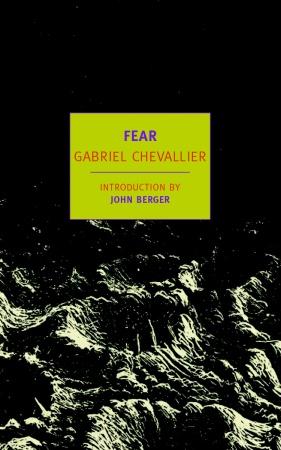
Fear

Every year there is at least one book in the readalong I’m dreading. This year Gabriel Chevallier’s Fear –La Peur is one of them. Cheavllier called it explicitly an anti-war novel and at the same time his wish was to be as truthful as possible, to tell things as they were and to make those, who were not there understand what the war was like. His own experience as an infantryman made him especially qualified to write about the war.

In the French edition of the book is a foreword from 1951 and reading it, one could almost think thar Chevallier himself thought that he went too far. Probably it’s not surprising that the book went out of print when WWII broke out as it was considered bad for morale.

In any case, it’s one of the great French WWI classics. Another one of Chevallier’s novels, Clochemerle, was quite successful.

Here are the first sentences

The fire was already smouldering somewhere in the depths of Europe, but carefree France donned its summer costumes, straw hats and flannel trousers, and packed its bags for the holidays. There wasn’t a cloud in the sky – such an optimistic, bright blue sky. It was terribly hot and drought was the only possible worry. It would be so lovely out in the country side, or down by the sea. The scent of iced absinthe hung over the café terraces and gypsy orchestras played popular tunes from The Merry Widow which was then all the rage.

Some details and the blurb for those who want to join

Fear – La Peur by Gabriel Chevallier (France 1930)  WWI, Classic, Novel, 320 pages

It is 1915. Jean Dartemont is just a young man. He is not a rebel, but neither is he awed by authority and when he’s called up and given only the most rudimentary training, he refuses to follow his platoon. Instead, he is sent to Artois, where he experiences the relentless death and violence of the trenches. His reprieve finally comes when he is wounded, evacuated and hospitalised.

The nurses consider it their duty to stimulate the soldiers’ fighting spirit, and so ask Jean what he did at the front.

His reply?

‘I was afraid.’

First published in France in 1930, Fear is both graphic and clear-eyed in its depiction of the terrible experiences of soldiers during the First World War.

*******

The discussion starts on Friday, 27 June 2014.

Further information on the Literature and War Readalong 2014, including all the book blurbs, can be found here.

Michael Morpurgo: Private Peaceful (2003) Literature and War Readalong May 2014

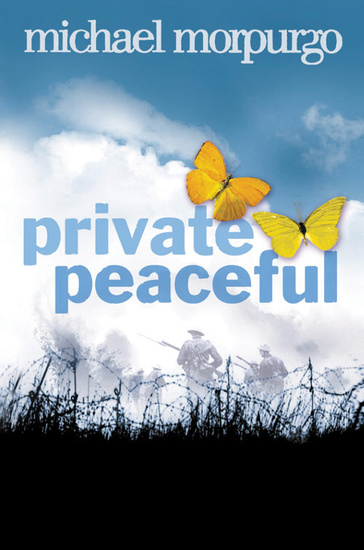
Private Peaceful

British author Michael Morpurgo is one of the most appreciated writers for Children. He was the UK Children’s Laureate from 2003 to 2005 and Writer in Residence at the Savoy Hotel in 2007. He won many prizes for his fiction.

Tommo Peaceful is the narrator of Private Peaceful. He begins his story at five past ten in the evening, after everyone else has left him. He awaits the next day with anxiety but he doesn’t want any company or distraction. He wants to spend the night thinking about his life. The chapters are all given a specific time and each intro to the chapter describes briefly Tommo’s surroundings and his state of mind. After the intro Tommo tells us in flashbacks his story, from the idyllic childhood in the English countryside to the trenches of WWI.

Tommo is one of three boys. At the age of nine his father dies in an accident and Tommo feels responsible for his death. Although he and his older brother Charlie are very close, he never mentions what happened in the woods, the day their father dies. They have an older brother Big Joe who had Meningitis as a child. He can’t go to school and is easily agitated but they are still very fond of him.

Their father’s death marks a transition from a carefree life to a life of some hardship. They are at the mercy of the Colonel in whose cottage they live. The cottage is tied to a function and after the death of the father, who was the forester, they would have to leave. The Colonel’s estate is big and many people and families work for him and so Tommo’s mother is offered a position at the big house, and they can stay in the cottage.

The years go by and there is happiness and heartache in equal measures. When WWI breaks out, they don’t think they are affected. Tommo is only 16 and Charlie, who is two years older, doesn’t think of volunteering but in the end they are forced. Although Tommo is too young, he doesn’t want to abandon Charlie and pretends he’s older. Finally they are shipped to France together. From there they move on to Belgium and stay near Ypres for the following months.

They don’t see any action at first but eventually they come under heavy fire. From then on we get an impression of everything that was typical or important during WWI: trench warfare, mustard gas, rats, rain, mud, high numbers of casualties among men and horses, arbitrariness of orders, sadism of the high command, absurdity of it all . . . While it’s usually key to show but not tell, Morpurgo often tells but doesn’t show. He stays away from graphic descriptions or anything that you could call gruesome. We still get the horror because we see how it affects Tommo. Most of the time, we just don’t get to see what he sees. I think that’s a great way to go in a Children’s book.

What works particularly well in the book is the contrast between the childhood and teenage years and the war scenes. Morpurgo takes a lot of time to introduce us to his characters and to make us care for them. While some of the secondary characters are a bit stereotypical, the main characters Charlie and Tommo are well-developed. Their relationship is very close and they would give everything for each other.

As I wrote in the introduction to this month, I was particularly interested to see how a Children’s author would handle a WWI book from the point of view of a soldier. I think Michael Morpurgo did an admirable job. I’m sure, children will get a good impression for the particularities of WWI. And they will care for the characters and feel deeply about the end. For an adult reader who has read some very similar books for adults – Strange Meeting and How Many Miles to Babylon come to mind – it was not exactly a huge revelation, but in spite of that, I found the twist at the end harrowing.

Other reviews

Danielle (A Work in Progress)

 Judith (Reader in the Wilderness)

*******

Private Peaceful is the fifth book in the Literature and War Readalong 2014. The next book is the WWI novel Fear – La Peur by Gabriel Chevallier. Discussion starts on Friday 27 June, 2014. Further information on the Literature and War Readalong 2014, including the book blurbs can be found here.

Deirdre Madden: Molly Fox’s Birthday (2008)

Molly Fox's Birthday

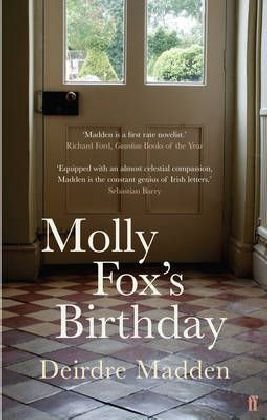
It’s been a while since I’ve read a book by a new-to-me author and felt like reading everything she’s ever written. I have Guy to thank for the discovery of Irish writer Deirdre Madden. When he reviewed her novel Time Present and Time Past (here’s the link) I knew right away this would be a book I’d love to read. When I looked at her other novels Molly Fox’s Birthday tempted me even more.

Molly Fox’s Birthday is set in Dublin and tells about one day in the life of the narrator, a playwright and best friend of Molly Fox. Molly is a much-admired, famous theatre actress. She’s spending some time away from Ireland and she and her friend swap apartments. While the narrator stays in Dublin, Molly will be staying at her apartment in London.

The narrator has just started a new play and tries to overcome a severe case of writers’ block. Instead of writing, she spends the day thinking back on her life and her friendship with Molly and their mutual best friend Andrew. One little thing leads to another, one thought leads to the next. While not a lot happens during that day – the narrator goes shopping, Andrew drops in, a stranger rings the doorbell – we see the richness of a complex life unfold. A life that is as much rooted in Irish history as in the love for theater and acting. The different elements all lead to an in-depth exploration of many other themes: religion, friendship, family, acting, reality, dreams, authenticity.

I liked how she shows the world of the theater from different sides. The side of the playwright, the side of the actor, the view from a fan, and how she draws parallels. Her own brother is a priest and a lot of what he’s doing, when preaching, is acting as well. One strand of thoughts circles around how much any person acts and how much someone can ever know an actor. Until the end of the book, Molly stays an enigma. Just like she hates celebrating her birthday, she hates talking about her feelings and withdraws into her acting if someone comes too close. This doesn’t mean Molly doesn’t reveal herself. Her apartment which is carefully decorated allows a glimpse into her soul.

While the narrator thinks about this, we realize that one of the reasons why Molly, Andrew and the narrator are such close friends, is that they share this reservation. As rich and detailed as their inner lives are, they are not very explicit people and are interested in what is left unsaid, maybe more than in what is said. In the end, when someone like Molly decides to talk – it can always be to reveal something or to hide even more. She may always play a role. But that’s true of many people, only actors are much better at selling the idea of themselves they want others to buy.

It’s hard to do a book like this justice because it’s so complex and multi-layered. And because I loved it so much.

A few quotes may help to give you a better impression.

There are forms of communication that drive people apart, that do nothing other than confirm distance. But there are also instances when no connection seems to be made and yet something profound takes place, and this was just such a moment.

My hunger for the stage at that time was intense in a way I now find somewhat alarming. I watched plays with the kind of voracity with which small children read books; with the same visceral passion, the same complete trust in the imagination which is so difficult to sustain throughout the course of one’s whole life.

Here is one of Molly’s fans telling the narrator why the theater and someone like Molly who brings so much authenticity to the stage is important in her life.

You’re locked into this iron routine, cooking and shopping and cleaning, saying things to people and them saying things back to you, and none of it meaning anything, all of it pointless. Maybe it has to do with getting older, I don’t know, I feel like I’m sleepwalking through the years, but I want to wake up. Reality, you know? Why is it so hard to find? And why do so many people not seem to notice this? Why don’t hey care? Yes, I did go to see The Duchess, and all of this was very much on my mind that particular evening. I was worn down with it all, I felt stultified. And then the play – well, Molly Fox in particular, she was electrifying. All that dullness, that unreality I’m talking about, she blew a whole through it with language, with that voice of hers; i wa like an explosion going of in your soul.

Of course, since this book is the story of one day, set in Dublin, and one of the main protagonists is called Molly, we are reminded of Ulysses. I didn’t try to dig deeper, but the connection seems pretty obvious.

Molly Fox’s Birthday is a wonderful celebration of the interior life, art, theatre, friendship and it’s an exploration of how daily life, despite the struggles, doesn’t have to turn into something dull and devoid of authenticity. There’s always meaning, you just have to look for it.

Edith Wharton: The House of Mirth (1905)

The House of Mirth

It took me far over two months to decide whether I wanted to review The House of Mirth or not. For some reasons, I found this book profoundly disturbing.

While reading  The House of Mirth I felt like I was watching a fly getting trapped in a spider’s web. At first, when they notice that they are trapped, they wiggle frantically, hoping to be able to free themselves but, in doing so, entangle themselves even more. Comparing the stunningly beautiful Lily Bart to a fly isn’t doing her any justice, but the way she’s trapped by the society she lives in, and the way in which she tries to free herself, is not much different from the poor fly. I’m still a bit shocked. I knew nothing about The House of Mirth and to find that Lili Bart is just as tragic – maybe even more so – as Effi Briest or Mme Bovary (only without the adultery), came as a huge surprise.

Lily Bart comes from a formerly rich family who has lost everything, Her parents are dead and Lily depends on a rich aunt and her friends. She spends a lot of time at her aunt’s New York home or at the country houses of her friends, on the Hudson. Lily is lucky; she’s stunningly beautiful and people like to adorn their parties and evenings with her. She is also a great conversationalist. Everyone is sure she is going to marry rich but the years go by, Lily is already 29, and she still hasn’t settled.

At the beginning of the novel, she meets the lawyer Lawrence Selden. Lily clearly fancies him but since he’s not rich, she doesn’t think of getting married to him. Accidentally meeting at the train station is surprising for both of them and it triggers something reckless in Lily. She spontaneously decides to follow him home for a cup of tea. Something that would be of no consequences nowadays sets in motion Lily’s downfall and shows how much it costs her at all times to play by the rules. The visit is harmless enough. Lily and Selden chat and speak about mutual acquaintances. The tragedy is set in motion because Lily bumps into someone on her way out and abashedly lies about where she’s been. What follows is a series of bad decisions (on Lily’s side) and shameless exploitation, petty jealousy and revenge (on the society’s side). The story has a lot in common with a Greek tragedy in which the heroes fail inevitably.

As much as some elements of the plot shocked me, I loved this book. The prose is luminous, the descriptions are masterful. I went over many passages repeatedly, before moving forward. The book is written from different points of view, each adding another element, another voice. Selden’s passages are analytical, while Lily’s are far more descriptive and atmospheric.

I found Lily Bart one of the most interesting fictional characters because she’s such a bundle of contradictions and – in many ways – her own worst enemy. At least in the beginning. From a 21st Century perspective one is tempted to condemn her at first. But her upbringing really didn’t equip her for an independent life. She has examples of people around her who are independent, but they are outside of the society whose member Lily wishes to stay. Still, they could inspire her and they do eventually, only by then it’s too late then. What makes Lily endearing, is the way she self-sabotages herself constantly, because these acts of sabotage show that she’s not that corrupted, that she actually despises the society she lives in.

The biggest shock is to see how especially women contribute to Lily’s undoing and how much they relish watching her going down. The House of Mirth is an illustration that – I hate to say this – as long as women actively contribute to undermine, discredit and harm other women – out of jealousy or envy – there will never be true gender equality.

I’ve read The Age of Innocence, Ethan Frome and Mme de Treymes, three very different books, which are all great, but none of them quite equals The House of Mirth. I’m pretty sure, I will re-read it. Now that I know the story, I’ll be enjoying the writing even more.

C.E. Lawrence: Silent Screams (2009) Lee Campbell Series 1

Silent Screams

C.E. Lawrence is the byline of the New York-based writer, performer, composer, poet and playwright Carole Buggé. The first time I came across her name was when I was reading a Sherlock Holmes Mystery Magazine (#7 2012). The magazine contained one of Carole’s short stories The Way it Is and an interview with C.E.Lawrence titled The darker half of Carole Buggé. I enjoyed the story and found the interview extremely fascinating. Thanks to the interview I learned that while Carole Buggé has written cozy mysteries and Sherlock Holmes novels, C.E.Lawrence explores the darker side of crime, sending her main protagonist, profiler Lee Campbell, after nasty serial killers. When I discovered that the multi-talent Carole Buggé gave an online course in mystery writing, I signed up. It was instructive and great fun. During the course we “spoke” about setting and when Carole mentioned that New York was as much a character in her novels as Lee Campbell, I picked up Silent Screams, the first in the series.

I’ve read a fair amount of non-fiction on serial killers, watched a few movies and TV shows, but I’ve never read a novel in which a profiler was the main character. I was curious to see how she’d pull it off. It’s a favourite theme in TV series; adding something new, seemed quite difficult.

She’s pulled it off admirably well because she added two new things. The first is her character, psychologist Lee Campbell. He’s a troubled soul, who, after a breakdown, has spent time in a psychiatric hospital because of depression. When the book starts, he functions but is still not exactly stable. His friend and colleague doubts he’s ready to take on a big case, but Lee feels he must as the dead girl they find shows the signs of ritualistic murder. As I said before, C.E. Lawrence added two new things and the second is tied to the first. Her novels are set in New York and the way she describes it is detailed and fascinating. It shows an insider’s perspective that hasn’t a lot to do with the cliché New York we’ve come to know through movies. Additionally she’s set the book at a special moment in time: a few months after 9/11. And that’s when we understand Lee’s breakdown. He may have been depressed before – some elements of family history we read about may explain it – but 9/11 triggers the breakdown. I don’t think that I’ve ever read a book, which managed to make me experience some of the horror 9/11 must have been for those who lived in New York. At times I forgot this is a crime novel because I was so captivated by the descriptions.

While Lee battles his demons and moves through a traumatized city, the “Slasher”, as they have come to call him, kills another girl. And another one. Early on, Lee himself is targeted as well. It’s that story line in particular that I found gripping. Why would a serial killer target a profiler from the very beginning? Did he have something to do with the disappearance of Lee’s sister a few years ago?

Readers of this blog know that I don’t like frantic pacing. I was very glad that this novel only picked up speed after the first third and even then, it was anything but frantic.

Overall this was an enjoyable read. It had a few flaws – occasionally too much explaining – but they didn’t bother me. What I found really intriguing – other than the amazing way she explored the time and setting – was that this thriller, despite its darkness, had many elements of a cozy mystery: great atmosphere, careful descriptions, likable characters and a laid-back pace. Due to the end, which I won’t spoil here, of course, I’m very curious to see what case Lee will have to solve next and am going to read book two Silent Victim soon.

If you’d like to read some of Carole’s shorter fiction – one of her stories can be found in the anthology Vengeance: Mystery Writers of America Presents, edited by Lee Child.

Her books have been translated into Germand and French.

Sarah Moss: Bodies of Light (2014)

Bodies of Light

In January I read Sarah Moss’ first novel Cold Earth (here is the review). I liked it but had some minor reservations. I wasn’t sure how good a writer she really was. After having read her latest book, Bodies of Light, I think it’s safe to say that she’s evolved from a promising writer to an accomplished one.

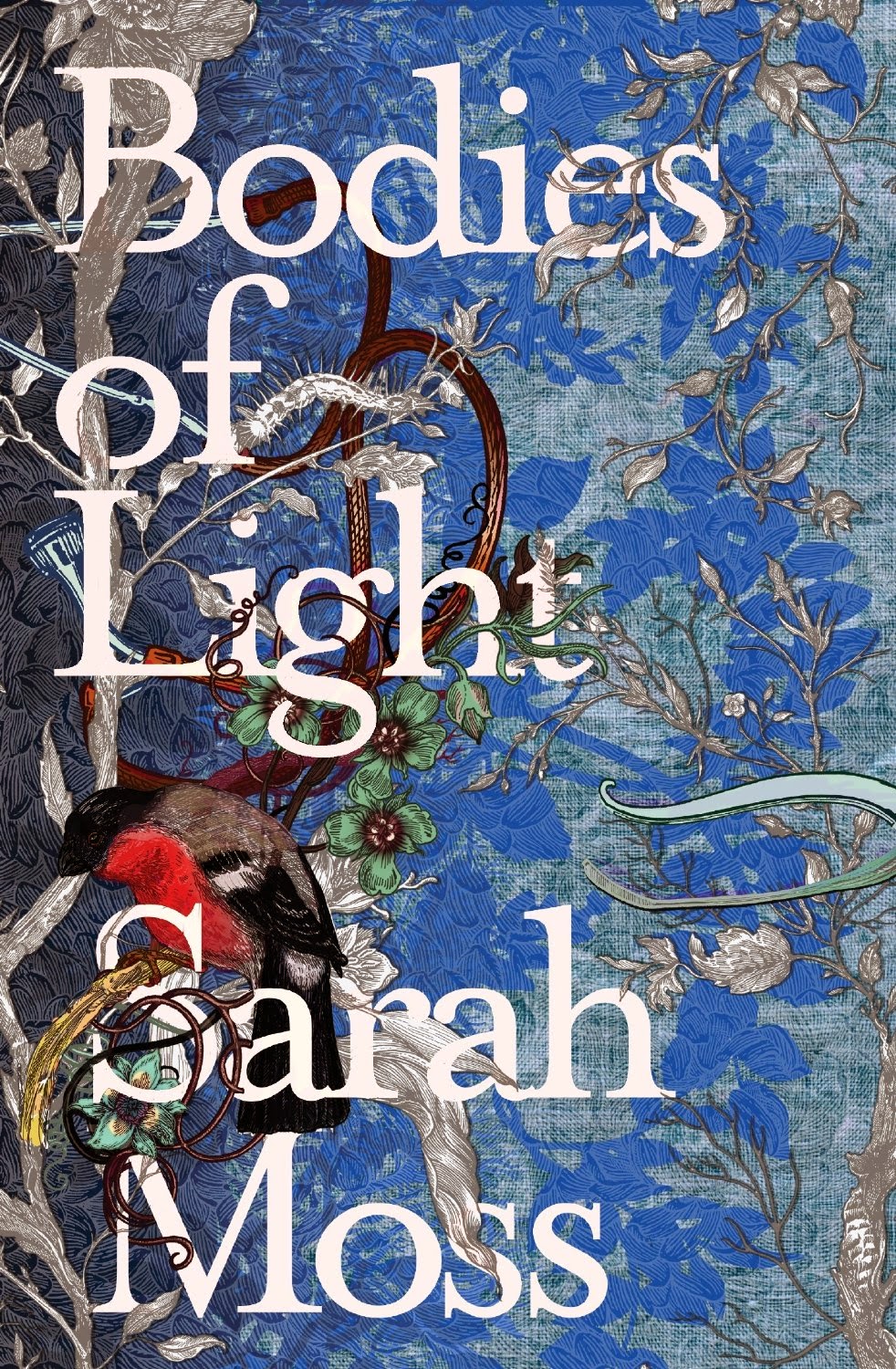
I didn’t look at the author’s name when I saw the book at the book shop the other day. What caught my attention was the beautiful cover that reminded me of a Victorian wallpaper. As soon as I opened it, I discovered that they had used the same endpaper inside. When I read the blurb, I saw how fitting this was, as Sarah Moss has set her third novel in Victorian Manchester and London. This might not have been enough for me to buy the book, but I started browsing and what struck me was how often colors and light were mentioned. I did something I don’t do that often; I bought the book and started reading it right away.

The novel did keep its promise; it has a lot of a William Morris wallpaper. The descriptions and the writing are gorgeous. But what is really arresting is the combination and range of topics.

Bodies of Light tells the story of two generations of women. Elizabeth is married to the designer and painter Alfred Moberley. Beauty is most important to him. He pays attention to color and light, to fabrics and interior decoration, to every single detail in a furniture, wallpaper or painting. Elizabeth is quite different. She likes it sober. She doesn’t want to wear expensive, colorful clothes. Her mother taught her that she has to be modest at all times because there are so many poor women who have nothing. This strict, severe upbringing, in which every single minute is dedicated to helping the poor, has turned Elizabeth into a joyless creature. And she’s ill-equipped for motherhood. She hates being pregnant and once the girl is born she hates her and can hardly be forced to take care of her. On the other hand, her mother taught her to despise the ways of the rich. A nanny is out of the question. Whenever her husband, who is a kind man, wants to take care of Ally and pampers the child, Elizabeth tells him off. It’s easy to understand why this marriage isn’t a happy one.

May is born after Ally. While she will be treated in very strict ways as well, she will not be abused. Abuse is the ugly secret in the Moberly household. Ally is her mother’s mirror and instrument. Her mother mishandles and punishes her and forces her to become successful. What she calls strict is nothing bud thinly veiled sadism.

In spite of this – or because of this – Ally will become one of the first women doctors. When it’s time for her to study, she will leave Manchester and go to live in London. She’s learned from an early age that others have less, that women are mistreated and it seems natural for her to dedicate her life to the cause of women. But her family, especially her mother, looms like a dark shadow over her head. The question is – will she be able to free herself and find happiness?

The summary may seem gloomy and the parts dedicated to Ally’s upbringing, the many cruelties she had to endure on a daily basis, made me choke, but the book contains so much beauty. I liked how complex all the characters are. Even Ally’s mother, Elizabeth. She’s doing a lot of good, helping the poor selflessly, at the same time, she unleashes her sadistic impulses on her daughter. It’s something that we hear occasionally. A person famous for his/her altruism, is a tyrant, bully or even a sadist at home.

A major topic is women’s fight for the right to higher education, their fight to become doctors. The scenes at the hospital are quite drastic. Ally specializes in gynaecology at first but then discovers her interest in psychiatry.

At times it was shocking to see that, while we’ve come a long way, women still fight for many of the things they fought for in the 19th Century. Conflicting emotions about motherhood, for example, are still more or less taboo.

Bodies of Light is a remarkable book. The writing is taut and stylish and full of luminous descriptions. The topics range from art to motherhood, from medicine to women’s history, from psychiatry to abuse and, finally, to healing. The greatest accomplishment however, is that the opposing themes and characters of the novel are mirrored in the writing. The writing is at times pithy, at times lavish. It’s a fascinating, thought-provoking book from a very assured writer. We can look forward to her next books.