German Literature Month Week III Wrap-up and The Winners of the Friedrich Glauser Giveaway

When I did the wrap up for the first week I was amazed about the contributions and thought that the enthusiasm might die down further into the month. I’m glad I was wrong with this assumption. The number of reviews and the variety of authors and books that have been chosen is as great as during week I and II. I would really like to thank all of you who contributed and help making this event a huge success.

The complete links and participants list can be found HERE.

Lizzy contributed two posts, one in which Publisher’s and Authors recommend their favourite German books and the other is a review of Julya Rabinowich’s Splithead which sounds like a most unusual book.

The Magic Mountain of German Literature 3 (Publisher and Author Recommendations)

Splithead by Julya Rabinowich

I reviewed a short story collection by Peter Stamm that I liked a lot and also reviewed Vicki Baum’s classic bestseller Grand Hôtel. While it isn’t as refined as Joseph Roth’s Hotel Savoy it is still a surprisingly interesting and character driven book.

In Strange Gardens and Other Stories by Peter Stamm

Grand Hôtel – Menschen im Hotel by Vicki Baum

Danielle (A Work in Progress) reviewed The Murder Farm by Andrea Maria Schenkel which she found a fascinating and unusual crime story in the vein of Capote’s In Cold Blood.

Emma (Book Around the Corner) read Short Stories by Stefan Zweig. The stories had all a historical theme. She did enjoy it but maybe not as much as his non-historical stories.

Ted (BookeyWookey) read The Artificial Silk Girl by Irmgard Keun and liked it a lot. The review captures the frothy playful tone that covers a dark undercurrent very well. The many quotes included in the review give a good impression of the novel (a favourite of mine).

Grace (Books Without Any Pictures)  re-read The Trial by Kafka which she thinks a most unusual and absolute must-read book. She likes it better than most of his short stories.

Richard (Caravana de Recuerdos) read Doctor Faustus by Thomas Mann after having been urged by a few people. He appreciated it a lot but liked it more for its ideas than its style. His review gives an excellent impression of the many interwoven themes of this complex book.

Jackie (Farm Lane Books) came to the conclusion that neither Jelinek’s Piano Teacher nor Grass’ The Tin Drum are to her liking. On Jelinek’s the Piano Teacher and Grass’ The Tin Drum. Judging from the comments, she is far from alone.

Guy (His Futile Preoccupations) read and reviewed Where Do We Go From Here? by Doris Dörrie which seems to have been a very good read, in typical Dörrie style “With piercing wit and a generous view of human nature.” Guy also read and reviewed  The Snowman by Jörg Fauser. A cult classic of gritty German crime which – to quote Guy – “is strongest in its depiction of the seedy underbelly of life –the cheap hotels, the filthy toilets (…).  There’s an intense authenticity to these scenes, and a sour truth to Fred’s realization that he’s small-time for a reason.”

Rise (in lieu of a field guide ) underlined in his review of Rock Crystal by Adalbert Stifter how crystal clear Stifter’s prose is. A captivating story written in a flawless style, concrete and precise like poetry, as he writes.

Fay (Read, Ramble) read Poems by Rilke which impressed her or in her own words “One reading of selected poems gives a sense of striking imagery and intense artistic purpose but not enough mastery of Rilke’s art to make further commentary worthwhile. Rilke is a poet who deserves several careful readings. All I know is that the more I came to know Rilke’s voice, the better I liked him, after a hesitant start. It is a voice to listen to again.”

Rikki (Rikki’s Teleidoscope) read Maybe This Time by Alois Hotschnig in German. She writes “I read this is German and I don’t think I have ever come across a writer who writes in such a precise way and who conjured such a clear picture of what is going on.”

Scott W. (seraillon) reviewed  Beautiful Days – Schöne Tage by Franz Innerhofer. In his in-depth review he writes about the unusual combination of a seemingly cheerful title with the topic of child abuse. The book seems to be well worth reading, complex and arresting.

Priya (Tabula Rasa) liked Hotel Savoy by Joseph Roth a lot and recommends it highly.

Alex (The Children’s War) rediscovered and reviewed an old children’s classic Emil and the Detectives by Erich Kästner and reviewed A Song For Summer by Eva Ibbotson. Ibbotson’s book offers a wide variety of unusual, typical Ibbotoson characters and despite a WWII topic stays light and hopeful.

Parrish (The Parrish Lantern)  introduced a great book on German poetry, including authors like Else Lasker-Schüler as well as Jan Wagner. The Faber Book of 20th Century German Poems. He included the whole list of poets, a poem by Elke Erb and a lot of other information.

Anthony (Time’s Flow Stemmed) calls Old Masters by Thomas Bernhard a flawless book. It seems also a very interesting book and one that was echoed by two other reviews (in lieu of a filed guide and seraillon). Bernard’s character criticizes Austrian art and artists, among them Stifter. The book could be called a rant but Anthony chooses to call it a tirade.

Tony (Tony’s Reading List) What happens when someone reads Kafka’s The Castle and participates in German Literature Month? Given he is an imaginative person it might look a little bit like this Das Schloss – The Play Act One  – Das Schloss – The Play Act Two  – Das Schloss – The Play Act Three Das Schloss – The Play (Director’s Cut). Tony writes his own “Castle Play ” and adds a review of Kafka’s book.

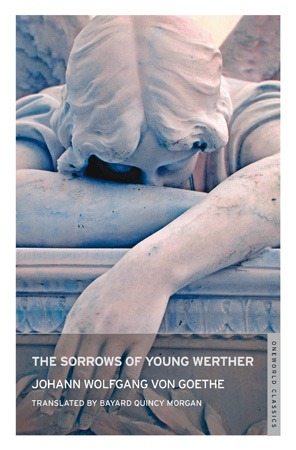
Liz (Tortoisebook) liked the sad but beautiful  The Sorrows of Young Werther by Goethe. She says “This book is a lovely read, beautifully told and achingly heartbreaking.”

Vishy (Vishy’s Blog) reviewed the original sheep crime novel Three Bags Full by Leonie Swann which read as if “Agatha Christie had rewritten The Wind in the Willows“.

Poor Daryl (Who Killed Lemmy Caution?) was ill but is recovering. Soon we will read her review of Klausen by Andreas Meier. Review on Its Way

Week three gives us a slightly puzzled Tom (Wuthering Expectations ) who after having read Wedekind’s Spring Awakening during week II thought he had seen the height of Austrian treatment of  sexuality in plays but no – he hadn’t read the La Ronde/Der Reigen by Arthur Schnitzler yet. He was quite amused by the use of … to cover up the ongoing activities and wonders how they handled this during the play.

Effi Briest Readalong

Week III

Andrew

Caroline

Danielle

Eibhlin

Fay 

Iris

Lizzy

Tony

**************

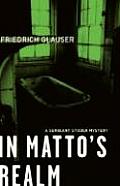
And here are the winners of the Friedrich Glauser giveaway courtesy of Bitter Lemon Press.
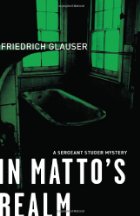
One copy each of In Matto’s Realm goes to

Neer from A Hot Cup of Pleasure and

Richard from Caravana de Recuerdos

Happy reading Neer and Richard!

Please send me your address via beautyisasleepingcat at gmail dot com.

The giveaway is part of German Literature Month.

The next giveaway will take place on Wednesday 23 November 2011.
Wednesdays are wunderbar – Joseph Roth, Irmgard Keun and Christa Wolf (English or German) Giveaway

Today we have a different kind of giveaway. The books are personal contributions and that is why you can win them either in English or in German. The giveaway is part of Lizzy and my German Literature Month in November.

The books I selected are the following:

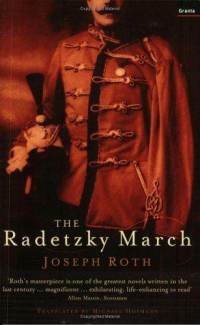
Joseph Roth’s The Radetzky March (1932).

The Radetzky March is one of the very great novels of 20th century literature. It’s a swan song, a melancholic depiction of the end of an era.

The Radetzky March can fairly claim to be one of the great novels of the last century. Its theme, beautifully articulated, is the end of an era. His anthem for a vanished world has the intense, fleeting beauty of a sunset’ Sunday Telegraph ‘He saw, he listened, he understood. The Radetzky March is a dark, disturbing novel of eccentric beauty… If you have yet to experience Roth, begin here, and then read everything’ Eileen Battersby, Irish Times ‘The true reading pleasure afforded by the rich environment Roth captures may well have increased over time, while the schisms at the heart of Europe continue to fascinate. It seems that we are rediscovering in twentieth-century Central European literature classics for a new millennium.”

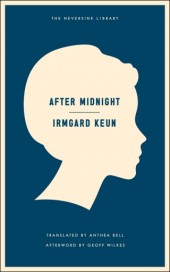
Book number two is After Midnight (1937) by Irmgard Keun.

Keun was a very successful writer until the Nazi’s came. Her novel After Midnight and all of her other works (the most famous is The Artificial Silk Girl) were confiscated and banned. She flew from Nazi Germany together with her lover Joseph Roth. Keun is a tragic figure. In and out of psychiatric hospitals, alcoholism… Her biography is as fascinating as her novels. There is a lot of her own life in the novels too.

What I like a lot about her writing is that it seems so deceptively simple while in reality it is full of explosives. In After Midnight a young woman with the voice of a child describes the most upsetting things. It’s a lucid depiction of the ascent of Nazism and shows, like not many other novels, how and why the Nazi’s were so successful. The fact that a very simple, almost simpleminded girl tells the story makes it an uncanny read.

In 1937, German author Irmgard Keun had only recently fled Nazi Germany with her lover Joseph Roth when she wrote this slim, exquisite, and devastating book. It captures the unbearable tension, contradictions, and hysteria of pre-war Germany like no other novel. Yet even as it exposes human folly, the book exudes a hopeful humanism. It is full of humor and light, even as it describes the first moments of a nightmare. After Midnight is a masterpiece that deserves to be read and remembered anew.

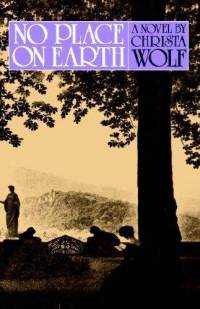
The third book is Christa Wolf’s No Place on Earth (1979).

No Place on Earth is a special book for me and a special book for this event. It is my favourite Christa Wolf and its topic fits nicely into our event as it depicts an imaginary encounter between Heinrich von Kleist and the poet Karoline von Günderrode. Von Günderrode is hardly read anymore although she was very influential. She was the friend of Bettina von Arnheim (born Bettina von Brentano, sister of Clemens Brentano) who wrote a book about her which is really wonderful. Von Günderrode and von Kleist never really met but – that’s what Christa Wolf imagines – if they had…. Who knows, they might not have ended their lives. Both authors committed suicide at an early age and are seen as victims of the circumstances in which they lived. In Wolf’s novel they are given the opportunity to meet and to find that they are kindred spirits. It’s a very poetical novel and I would wish that whoever wins it will like it as much as I did.

This fictionalized account of an encounter in 1804 between the poet Karoline von Gunderrode and writer Heinrich von Kleist is pieced together from extracts of actual letters. In real life, both committed suicide some years after the events in this book.

If you would like to win one of those books, or enter for more than one, please let me know which ones you would like and why you would like to win them. Also indicate if you would like the book in English or in German. There is only one little condition – you should be a participant of German Literature Month.

The giveaway is open internationally, the books will be shipped by amazon or the book depository. The winners will be announced on Sunday 30 October 18.00 – European – (Zürich) time.

German Literature Month – November 2011

Finally I am allowed to let you know what Lizzy and I have been planning in the background for quite a while now.

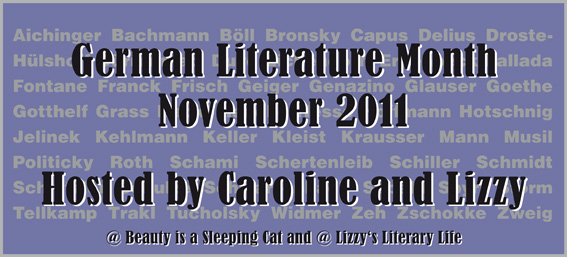
I’m happy to announce that Lizzy Siddal from Lizzy’s Literary Life and I are co-hosting a German Literature Month in November.  Ever since Iris from Iris on Books hosted her Month of Dutch Literature it’s been on our minds to do something similar for the literature of the German-speaking countries. We both share a passion for the literature of Austria, Germany and Switzerland and hope to find many like-minded and interested people to join us.

We have prepared a programme, including two readalongs and a lot of giveaways that generous publishers like Melville House, Bitter Lemon Press, Pereine Press, And Other Stories, Portobello Books and One World Classics have kindly contributed. The giveaways are international with the exception of a few which are UK only.

The official kick off will be on November first,  from then on we will post on alternating days. Lizzy will post on Tuesdays and Fridays, I will post on Mondays and Thursdays. Wednesdays, starting already in October, are reserved for giveaways. The readalongs will take place on Saturdays. Sunday will be weekly wrap up day and the time for announcing the winners of the giveaways.

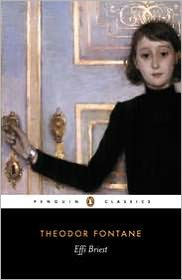
The first readalong is dedicated to  Effi Briest. It will run for three weeks. Details and exact dates are given below.

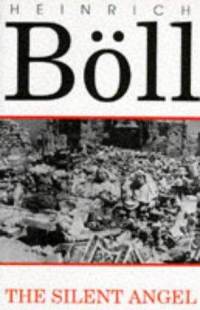
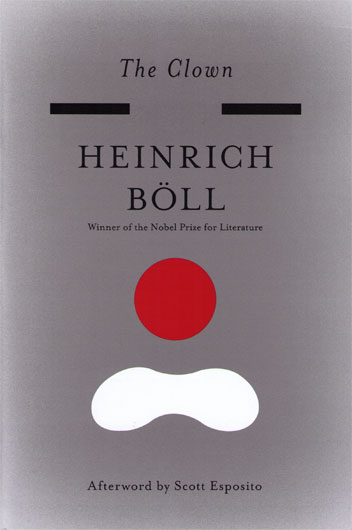
The second readalong is my monthly Literature and War Readalong that I will shift to Saturday and I have also changed the previoulsy announced title. We will read Heinrich Böll’s The Silent Angel. This book is unique for reasons that I will reveal in a later post. On a more personal note it is important to me as Böll is my favourite German author.

The programme will look as follows

Week 1 German Literature

Maybe you like Thomas Mann or you are a fan of Genazino. Now’s the time to share this.

Week 2 Crime Fiction

There are a lot of crime novels written in German out there. Whether you like it gritty or rather go for psychological suspense, you are sure to find something.

Week 3 Austria and Switzerland 

You could either read some of the 19th century Swiss classics like Gotthelf, Keller or Meyer or finally read the Roths and Zweigs you have had on your TBR pile for years.

Week 4 Kleist and Other German Classics

Kleist died 200 years ago. We are going to read some of his novellas and give away some of his books but we will also read other classics.

Week 5 Read As You Please and Wrap Up

Wrap up week is a chance to read and review whatever you like. I’ll go for something that hasn’t been translated yet.

Three Week Readalong on Saturdays  (5th chapters 1-15, 12th chapters 16 – 24 and 19th chapters 25 – 36, 280 pages)

Literature and War Readalong 2011 on Saturday 26th November

The Silent Angel (184 pages)

Giveaways

These are some of the possible titles for the giveaways. The exact titles will be announced on the giveaway days.

We will post a few times in the upcoming weeks sharing reading suggestions, as we hope that many of you will read and review with us.

The idea is that you link your posts in the comment sections of our posts. The Sunday will be wrap up day in which we will give an overview of everything that has happened through the week.

Get your copies out, enter the giveaways, or buy a few books and join us.

Feel free to use the button and spread the word.

I’m looking forward to November.

Visit the German Literature Month Page for regular updates.