Madame de Lafayette: The Princesse de Monpensier – La Princesse de Montpensier (1662)

The Princess of Montpensier

I’m not a re-reader but I have read Mme de Lafayette’s La Princesse de Clèves at least four times. It is my favourite novel. For its style as well as for the story. There is something in the way Mme de Lafyette describes feelings that touches me profoundly. She wasn’t a very prolific writer. Before publishing La Princesse de Clèves (1678) she published La Princesse de Montpensier (1662) anonymously and later La Comtesse de Tende. Zaïde (1670/71) was published shortly after La Princesse de Montpensier. Although Zaïde was published under a pseudonym, it seems to be sure that it was also written by Mme de Lafayette.

Generally I’m not so much into the literature of the 19th century, I often feel that earlier writers, especially some of the French ones, are far more modern and original. This is certainly the case of Mme de Lafayette. Until a few days ago I had not read anything else by her but I bought a book called Nouvelles galantes du XVIIè siècle (it contains stories by Mme de Lafayette, Saint-Réal, Du Plaisir and Catherine Bernard) and finally read La Princesse de Montpensier.

It is a short novella but it’s as wonderful and as astonishing as her masterpiece. Her style is flawless, it is pure perfection. I particularly like her use of the passé simple and the indirect speech. The language is as fresh as a newly cut rose, it hasn’t aged one day.

Mme de Lafayette was an innovator. Before her most of the baroque novels, like d’Urfés L’Astrée, were thousands of pages long. To be this concise and precise like she was, was unheard of before. She was also one of the first to write historical fiction. The people in her books did exist, however the story is invented.

La Princesse de Montpensier is set during a very tumultuous period of French history. It starts 1566,  during the civil war in which Catholics and Protestants fought a bloody battle, and ends in 1572 at the time of the horrible massacre of the Nuit de La Saint-Barthélemy or The St.-Bartholomew’s Day Massacre.

La Princesse de Montpensier and the Duc the Guise are secretly in love with each other. They are very young and hope to get married but for political reasons her family decides otherwise and marries her to the Prince de Montpensier. This is a great tragedy for the princess. She doesn’t love her husband and when conflict breaks out she is glad to see him go to war. Montpensier leaves the Comte the Chabannes with her, not knowing how much in love the Comte already is with the princess as well.

This is a time in which women do hardly ever choose their husbands and adultery is very common. The princess is an extremely beautiful woman and it isn’t surprising that there are many men falling for her. She fights them all off until the day when she sees the Duc de Guise again. A qui pro quo and the intense jealousy of her husband accelerate the story. The end is somewhat unexpected and tragic.

I was thinking of Kleist while reading this novella and saw once more how much German changed while French has pretty much stayed the same since the 17th Century. La Princess de Montpensier is 150 years older than Kleist’s The Duel but it feels so much more modern.

I really loved this story and will soon read La Comtesse de Tende as well. I cannot believe that this was only 50 pages long, it feels as if I had read a novel, it is so rich. The five main protagonists are all equally well developed. All five of them are hurt and we feel for all of them. We know the society is to blame for their tragedy but Mme de Lafayette wouldn’t be Mme de Lafayette if she didn’t pick one particular person and blame her.

Still, if you have never read anything by her, I would recommend to start with The Princesse de Clèves but this little book is very beautiful as well.

I would love to watch Bertrand Tavernier’s movie La Princesse de Montpensier. Has anyone seen it?
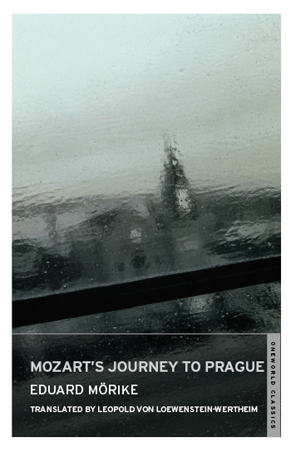
Eduard Mörike: Mozart’s Journey to Prague – Mozart auf der Reise nach Prag (1855)

This is one of those books that I had meant to read since years. Now that I have read it, just after reading Kleist, I must say, I couldn’t imagine another classic as far from Kleist as Mörike. Mozart’s Journey to Prague is a truly lovely piece of writing. Sunny, cheerful but still profound, thoughtful and with a melancholic undertone. All in all one could say the sunniness is deceptive.

It’s the year 1787 and Mozart and his wife Konstanze are on a journey to Prague for the opening of Don Giovanni. They are cheerful but not without worries. Money is a big issue in Mozart’s life. Money and his health. He never rests, never stops running from one invitation to the next, working till the early morning, hardly sleeping.

His needs were various, above all his passion for all the pleasures of society were extraordinarily strong. Honoured and sought out as an incomparable talent by Vienna’s noblest families, he seldom or never declined invitations to dinners, parties and soirées. In addition he would entertain his own circle of friends with befitting hospitality. The Sunday musical evening, a long-established tradition in his house, or the informal luncheon at his well-furnished table with a few friends and acquaintances two or three times a week, were pleasures he refused to forgo. Sometimes, to his wife’s dismay, he would bring unannounced guests straight in off the streets, a very varied assortment of people, dilettanti, artistic colleagues, singers and poets. The idle parasite whose sole merit lay in an untiring vivacity, ready wit and the coarser sort of humour was made as welcome as the learned connoisseur or the virtuoso musician.

They talk about a few of these things but they are enjoying themselves as well. Mozart steps out of the carriage in a forest and gets all enthusiastic about the trees, the beauty of nature of which he hardly sees anything in Vienna.

A little later they stop at a village and Konstanze rests in a guest house while Mozart goes for a walk in someone’s garden. Lost in his thoughts he carelessly snaps an orange from a little tree and halves it with his knife. He immediately gets arrested by the gardener and brought in front of the noble man whose park he has entered. Lucky for him they recognize him and are delighted to have him there.

The little tree is very dear to the daughter of the noble man. It has once been a gift from Mme de Sévigné herself. The little tree was about to die but thanks to a skillful gardener has recovered. His oranges were counted and the tree was meant as a gift for the daughters engagement.

Mozart and his wife are invited to spend the day and the evening of the engagement with the family. He plays the piano, sings, introduces them to Don Giovanni.

There is a lot of cheering, drinking and laughing but towards the end the daughter of the family feels a chill. She is convinced that Mozart is burning from an inner fire, that he consumes himself too fast and will not live much longer. The novella finishes with a sad poem by Mörike that ends the book on a melancholy note.

Mörike wrote this novella as an homage to Mozart whose music he adored. He tried to capture the beauty and the cheerfulness of his music and the man himself but did not omit the fact that Mozart wasn’t able to refrain himself. He couldn’t live in a moderate way, was excessive in everything, burned the candle on both sides and did, as we all know, not live very long.

Reading this novella felt at times like watching a painter paint a very colorful painting, drawing flowers and trees, a sunny blue sky but in the upper left corner of the painting we can see a dark cloud slowly starting to spread.

Mozart was without any doubt a genius and there is always a mystery surrounding them. One could wonder whether he was living and working so excessively, as the novella wants us to believe, because he knew deep inside he was going to die young or whether his excesses led to his untimely death.

It’s a very visual novella, lovely and enchanting but profound as well.

The review is part of German Literature Month – Week IV Kleist and the Classics

Heinrich von Kleist: The Duel – Der Zweikampf (1811)

Today is the bicentennial of Kleist’s death. I had a few different ideas for this post but finally, after having read The Duel – Der Zweikampf, one of the very few of his novellas I hadn’t read before, I decided on focusing on that. The initial idea was to write about his death. Since his death and the novella The Duel have elements in common, it’s only fair, to at least mention it.

Kleist shot himself on November 21 1811, near the Kleiner Wannsee, after having shot his friend Henriette Vogel. This suicide was premeditated and even announced. He wrote letters to different people mentioning it and so did Henriette. It has been argued that one of the reasons why his grave is hard to find and almost hidden isn’t that he was a suicide but that he was also a murderer. I don’t think we can call him that, what he did was assisted suicide. Henriette wanted to die with him and, as was found out later, had reasons. The autopsy showed that she suffered from terminal cancer. In any case, what is striking, is the violence of their deaths which leads me back to The Duel. One of the most striking features of Kleist’s prose, apart from being very unique, and at times challenging to read, is the omnipresence of violence. Rape, abuse, murder, fights, duels, you name, it’s there. The novella The Duel is no exception. The story that is set in the 14th century starts with a murder. From the beginning there is a suspect only he seems to have an alibi. He indicates to have spent the night with a noble woman, a widow. In order to save himself, he reveals her name which has severe consequences. Upon hearing what their sister has done, her brothers beat her up and chase her from their home. She seeks refuge at the castle of another noble man, one who had asked her to marry him before. Convinced of her innocence he wants to duel with the man who has brought shame upon her and in doing so prove that she is not guilty. Since he is convinced she is innoncent, he is convinced the other one will die.

For those who will still read this novella I’m not going to reveal the outcome of the fight. What struck me is that it is believed that a duel equals a judgment of God and that the outcome isn’t only a means to get satisfaction but will show the irrevocable truth. The duel should help clarify who is lying. It’s aim is not a payback for an inflicted injustice or a libel but it will, through God, reveal the truth.

The story felt very archaic, and as I already said, I was, as always with Kleist, amazed how violent the story is. I’m far less familiar with his plays. I think some of them are even comedies. Kleist is a fascinating writer because there is something mysterious in what he writes. His characters react in a very intense way and one of the predominant themes is always sexuality which is linked to violence. The aggression between men is intense but it’s far more intense between men and women.

The Duel is one of Kleist’s shorter novellas and not a bad starting point if you have never read him. My favourite is The Marquise of O. An incredible story of a woman who doesn’t know how she got pregnant and is looking for the father of her child.

The Duel is part of The Art of the Novella series by Melvillehouse Publishing and in this series part of The Duel set of five novellas with the same title from different authors.

Have you read any of them and which one did you like? How do you think Kleist’s book compares to other duel stories?

For those who read German, I attached this link where you can find his letters. Alle Briefe

The review is part of German Literature Month – Week 4 Kleist and other Classics

German Literature Month Week I Wrap-up and The Winners of the Heinrich Böll Giveaway

This post has two parts. First is the wrap-up of Week I of our German Literature Month – focussing on literature from Germany. Please do not just skip it. It’s a tribute to all our participants. We have already seen some really amazing contributions and I would like to thank all of you for this.

There have been a lot of interesting lists and contributions made during October. They are HERE. This is the wrap-up of Week I.

Here are all of this weeks’ links with my impressions:

Week I

Lizzy has made a post on how to find German books in translation and a review of a very unique sounding book by Alina Bronsky.

The Magic Mountain of German Literature

The Hottest Dishes of the Tartar Cuisine by Alina Bronsky

Caroline – I have compiled a post with 14 women writers that shouldn’t be missed and reviewed Sebald’s book on the absence of the description of the destruction of German cities during WWII from German post-war literature. The book leads us to the Böll readalong on November 26.

14 Women Writers You Shouldn’t Miss

On the Natural History of Destruction – Luftkrieg und Literatur by W. G. Sebald

The Participants

Neer (A Hot Cup of Pleasure) shares her German Literature Month inspired Wishlist.  That’s always a risk with events like this. You may end up with far more books than before.

Christina from Ardent Reader hopes to be able to keep up with her Reading plans.

Danielle (AWork in Progress) introduces her choices. A list with descriptions. Plans for German Literature Month 

Emma (Book Around the Corner) wrote an enthusiastic review of  Fame by Daniel Kehlmann that she calls a “strange exhilarating book”.

sakura (chasing bawa) is thrilled by her discovery of Dark Matter by Juli Zeh  and adds (after having been tracked down by the German Literature Month Police , i.e. me) an Introduction.

Jackie (Farm Lane Books) wrote a very appealing review of the WWII novel Death of the Adversary by Hans Keilson. Not an easy read, highly literary but rewarding.

Guy Savage (His Futile Preoccupations) dethrones Goethe in his musings on  On Goethe’s Elective Affinities and reestablishes him again – at least in parts – in  On Goethe’s Elective Affinities Part II. The review is to follow.

Rise (in lieu of a field guide) reviewed Visitation by Jenny Erpenbeck and compares it to the passage of time chapter in Virginia Woolf’s To the Lighthouse.

Harvey (Leben, Kochen, Bier u. Fussball) offers a list with interesting choices Introduction with choices.

Eibhlin (Mar gheall ar a léim) shares he reading plans in Eibhlin’s reading plans.

Fay (Read, Ramble) reviews  Herta Müller – Land of Green Plums describing how she wanted to give up after a little while but was rewarded by her persistence.

Rikki (Rikki’s Teleidoscope) enjoyed The Hottest Dishes of the Tartar Cuisine by Alina Bronsky as much as Lizzy. She captures the unusual voice of the narrator very well.

Susanna P (Susie Bookworm)  has added her reading plans German Lit Month Kick off. She already read Lotte in Weimar and is about to pick something else soon.

Priya (Tabula Rasa) shares her reading plans Plans.

Alex The Children’s War wrote an in-depth review of The Oppermann’s by Lion Feuchtwanger. He writes  “What makes The Oppermanns so interesting is that it has the distinction of being the first story of its kind to tell about life under the Nazis and how it affected people opposed to Hitler.”

Parrish (The Parrish Lantern)  wrote a thoughtful review On The Joys of Morphinism by Fallada. Introducing first the life of the author and then writing about the book.

Mel u (The Reading Lives) announces German Literature Month and reviews a very interesting short story by Gerstacker, a lesser known author. His review is proof that it is worth looking for the lesser known.  Announcing German Literature Month and Short Story by Gerstacker

Tony (Tony’s Reading List) has really liked Alois Hotschnig’s – Maybe This Time and already read it twice but he doubts that he will re-read  All the Lights by Clemens Meyer. Although he didn’t mind reading it at all, he doesn’t seem to be convinced it’s all that literary.

Liz (Tortoisebook) shares he reading plans. German Literature Month Plans

Vishy (Vishy’s Blog) has reviewed a wide range of short stories and novellas. A really wide range. Both Lizzy and myself were stunned. This is pretty much an introduction to the most important German writers.  A Wide Range of German Short Stories

Stu (Winstonsdad’s Blog) I was equally amazed about the wide range of books reviewed by Stu. There are some wonderful books to discover here.  An early novel by the Nobel Prize winner Nadirs by Herta Müller , a novella by the author of Perfume The Pigeon by Patrick Süskind, a poetical novella Jarmila by Ernst Weiss and a novel of a Swiss writer A Perfect Waiter by Alain Claude Sulzer.

Amateur Reader (Tom) Wuthering Expectations wrote one post on the melancholic story Flagman Thiel by Gehart Hauptmann (also reveiwed by Vishy) and two posts on Hauptmann’s play Gerhart Hauptmann-Before Daybreak – Gerhart Hauptmann’s characters.

Effi Briest Readalong

Week I

The following people have posted so far, some freestyle, some answering our questions.

Andrew

Caroline

Danielle 


Fay

Eibhlin

Iris

Lizzy

Sarah

Tony

This and That

Yes, we were also featured on the web.

Melville House Press on What to drink when reading Heinrich Böll 

The Millions announce German Literature Month

kulturplease announces German Literature Month

love german books – Kid – On German Literature Month

The Victory Stitch – Peggy  If I were reading

**************

And here, finally, the winners of the Heinrich Böll giveaway courtesy of Melville House Press.

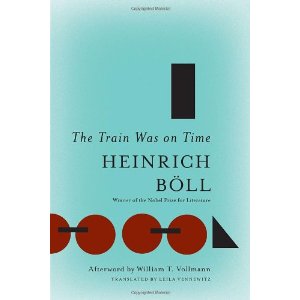
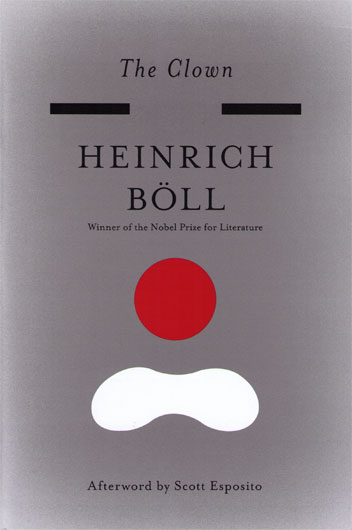
The winner of The Train Was on Time and The Clown is

Priya from Tabula Rasa

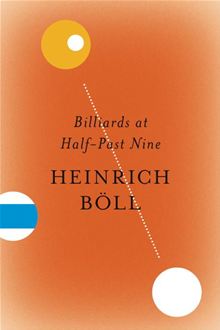
The winner of Group Portrait with Lady and Billards at Half-Past Nine is

Guy from His Futile Preoccupations

And the winner of The Irish Journal and The Safety Net is

Stu from Winstonsdad’s Blog

Happy reading Priya, Guy and Stu!

Please send me your address via beautyisasleepingcat at gmail dot com.

The giveaway is part of German Literature Month.

The next giveaway will take place on Wednesday 9 November 2011. Remember… It’s crime week…. there are some great books to be won. And, yes, those who won already can still participate.

Wednesdays are wunderbar – Heinrich Böll Giveaway

I’m so glad that I can give away six books by Heinrich Böll, my favourite German author. The giveaway has been kindly provided by Melville House Press.

We give away 6 novels to 3 winners, 2 novels each. Please tell us which novels you would like.

Here we go (the blurbs are all from the Melville House Böll Page):

The Train was on Time

Heinrich Böll’s taut and haunting first novel tells the story of twenty-four-year-old Private Andreas as he journeys on a troop train across the German countryside to the Eastern front. Trapped, he knows that Hitler has already lost the war … yet he is suddenly galvanized by the thought that he is on the way to his death.

As the train hurtles on, he riffs through prayers and memories, talks with other soldiers about what they’ve been through, and gazes desperately out the window at his country racing away. With mounting suspense, Andreas is gripped by one thought over all: Is there a way to defy his fate?

The Safety Net

Fritz Tolm has risen to the most powerful position in Germany.

With fame comes fear and vulnerability. Threats to his life are met with the all-pervasive “safety-net” of police protection and surveillance.

Trapped in a house they dare not leave, where every visitor is suspect and every object a potential bomb, Tolm and his family wait to discover when and how terrorism will overtake them.

Group Portrait with Lady

Cited by the Nobel Prize committee as the “crown” of Heinrich Böll’s work, the gripping story of Group Portrait With Lady unspools like a suspenseful documentary. Via a series of tense interviews, an unnamed narrator uncovers the story—past and present—of one of Böll’s most intriguing characters, the enigmatic Leni Pfeiffer, a struggling war widow.

At the center of her struggle is her effort to prevent the demolition of her Cologne apartment building, a fight in which she is joined by a motley group of neighbors. Along with her illegitimate son, Lev, she becomes the nexus of a countercultural group rebelling against Germany’s dehumanizing past under the Nazis … and what looks to be an equally dehumanizing future under capitalism.

Billards at Half-Past Nine

Heinrich Böll’s well-known opposition to fascism and war informs this moving story of a single day in the life of traumatized soldier Robert Faehmel, scion of a family of successful Cologne architects, as he struggles to return to ordinary life after the Second World War. An encounter with a war-time nemesis, now a power in the reconstruction of Germay, forces him to confront private memories and the wounds of Germany’s defeat in the two World Wars.

The Clown

Acclaimed entertainer Hans Schnier collapses when his beloved Marie leaves him because he won’t marry her within the Catholic Church.

The desertion triggers a searing re-examination of his life — the loss of his sister during the war, the demands of his millionaire father, and the hypocrisies of hs mother, who first fought to “save” Germany from the Jews, then worked for “reconciliation” afterwards.

Heinrich Böll’s gripping consideration of how to overcome guilted and live up to idealism — how to find something to believe in — gives stirring evidence of why he was such an unwelcome presence in post-War German consciousness … and why he was such a necessary one.

Irish Journal

When Heinrich Böll traveled with his wife to Ireland in the early 1950′s, he was immediately enchanted by the landscape and the people. Reveling in respite from a Europe still recovering from war, he was captivated by what he saw as a friendly and classless society that took life at a more leisurely pace. He was delighted, for example, by the Irish saying that explained why the trains were always late: “When God made time he made plenty of it.” Böll would return again and again.

In this unique entry in his oeuvre, Böll documents his eccentric travels around the Emerald Isle, detailing its charm in a way that gives his own habit of studying character and paradox, not mention national identity, a beguiling twist. The result, here presented with an epilogue written years later with Böll’s observation of changes since his first visit, is a reflection on the essence of a place and its people that is, indeed, evergreen.

*********

If you are interested in two or more of these books, tell me which ones you would like. The only condition is that you tell us about a favourite German book or author or – if you only get started – tell us what books you plan on discovering, which authors or books tempt you.

The giveaway is part of German Literature Month.

Also visit What to drink while reading Heinrich Böll on the Melville House Blog.

The giveaway is open internationally, the books will be shipped by the editor. The winners will be announced on Sunday 6 November 18.00 – European – (Zürich) time.

Tao Lin: Shoplifting From American Apparel (2009)

Sometimes I forget  something very important that I want from literature. I read books, I like them but at the end of the day, they are often far from our lives and certainly nothing new. And then I come upon a book like Shoplifting From American Apparel and all of a sudden I know what I was looking for. Books that look at contemporary life in a revealing way and are written in a very distinct voice.

Tao Lin was first only well-known in underground circles but starts to get more and more appreciation from everywhere. He is also known as the writer of a blog called Reader of Depressing Books. The title has changed meanwhile but the blog still exists as you can see here: Tao Lin’s Blog.

Lin has published poems, short stories, two novels and this novella.

The book tells about two years in the life of a young writer. It’s mostly set in Manhattan but some of the chapters take place in other cities.

If it was only a writer’s story it wouldn’t be that special but it’s also an exploration of relationships, alternative lifestyles and the meaning of happiness. The characters question what our society takes as a given. Forms of living, culture and social conventions are explored and this with a total absence of sarcasm or cynicism which is refreshing.

Sam is a young writer. To make a living he works in a vegan restaurant but he has hardly enough money to buy things he likes. Shoplifting has become a habit for him. Getting caught seems to be part of it. Everything in  his life seems to be changing constantly. He goes through phases. At the beginning of the book he sees a girl called Sheila and his best friend is Luis, who is a writer as well. Their friendship takes place in cyberspace, on Gmail chat. They both blog as well. They met once but did not have all that much to say to each other although they can chat for hours.

“Do you think in five years the national media will create a stupid term like blogniks to describe us?”

A year later he is seeing Hester but they drift apart very soon. His best friend is Robert, with whom he goes to parties.

This book is rooted so deeply in contemporary life that it’s almost eerie. Sam meets the DJ Moby, he drinks smoothies, eats organic and vegan food, chats online and writes a blog. He sees friends and wonders if they are happier than he is. Some of his relationships take place in real life others are limited to cyberspace.

The dialogue is one of the best elements in the novel. It sounds very authentic with its frequent use of “like” and “or something”.

“I played video games,” said Luis. “Perfect Dark. I killed people for two hours then I got bored. I know what you mean by impossible.”

“This is fucked,” said Sam.

“You know those people that get up every day and do things,” said Luis.

“I’m going to eat cereal even though I’m not hungry, “said Sam.

“And are real proactive, ” said Luis. And like are getting things done, and never quit their jobs. Those people suck.”

“We get shit done too, ” said Sam. “Look at our books.”

“I know but that brings in no money, ” said Luis. “Are we, like, that word ‘bohemians’. Or something. Our bios: ‘They lived in poverty writing their masterpieces.'”

But more than dialogue, many of these exchanges are intimate conversations in which people listen to each other and take each other seriously.

I liked this book so much because it’s fresh, irreverent and looking at other ways to live, far from the mainstream but the characters are not self-destructive nor cynical or sarcastic, like they are in so many other books about young writers. Apart from the shoplifting, Sam is quite tame. And the shoplifting is not so much delinquency as silliness. The characters are insecure and floating but very close to their feelings. They can talk about their emotions and dreams and wishes. And even when a relationship has come to an end and they have nothing much to say anymore, they can put this into words. This doesn’t mean they are happy all the time, on the very contrary, they feel often sad and lonely but they express it, they don’t just act it out.

I also liked that there are references to so-called high culture standing next to the references to pop culture. Sam tests what works for him, in music or literature but doesn’t feel tied down by something being called “classic”. I read somewhere that Tao Lin also uses his books as a means to raise awareness for alternative lifestyles. It’s interesting to see how many times food is mentioned and what type of food. The way he writes about it makes it sound playful, not preachy at all. This made me think that there was once a time when writers felt they had a responsibility, that they should contribute to making this world a better place. I think Tao Lin can bee seen in that tradition.

I want to read more of Tao Lin and am very curious where he will go from here as a writer.

Have you read him?

Kleist Novellas Giveaway – The Winner

It’s finally Sunday and I’m glad to be able to announce the winner of the giveaway of the following two novellas by Kleist, courtesy of Melville House Press.

The giveaway is part of Lizzy and my German Literature Month in November.

The winner of this week’s giveaway – drawn by random.org number generator – is Vishy from Vishy’s Blog.

Please send me your contact details via beautyisasleepingcat at gmail dot com.

We hope you will be able to read and review at least one of them during Kleist week in November.

Happy reading, Vishy.

The next giveaway will take place next Wednesday.