Best and Worst Books 2011

Looking back I must say that this was a very good reading year. That’s fortunate for me because to be honest in many other areas it was a nightmare and I hope that next year will be better. But readingwise it was wonderful. So many new authors, so many really great books. It couldn’t have been much better.

It’s always so difficult to say which books I liked the most but I noticed that whenever I thought “Best Books” and started to make a mental list, the same 12 books popped up again and again and only when I went back to the blog and looked at all the posts, did I remember many more. So, like last year, I’m cheating and do not present a Top 10 but a best of per category.  The 12 that popped up immediately can all be found under the category beautiful and enchanting.

All the quotes are taken from my reviews.

Most beautiful and enchanting books 

Saraswati Park by Anjali Joseph

“The calm, quiet and floating feeling that permeates Saraswati Park makes this one of the most beautiful novels I have read recently. Saraswati Park is about love and marriage, loss and discoveries but also about the power of imagination and memories, the beauty and danger of reading and ultimately also about writing.”

Three Horses by Erri de Luca

Three Horses was my first Erri de Luca but it will not be the last. “The scent of earth, sage and flowers pervades a story of love, pain and war.”

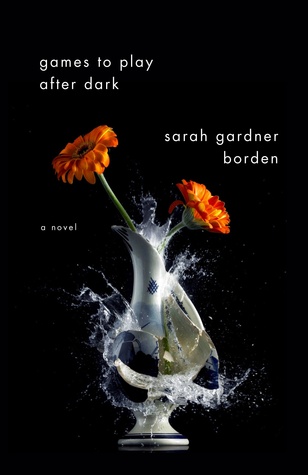
Games to Play After Dark by Sarah Gardner Borden

“It is hard to believe that Games to Play After Dark is Sarah Gardner Borden’s first novel. The topic, a marriage that falls apart, may not be the most original, the young mother who tries to combine the demands of her children and her husband and her personal needs, isn’t new but how she describes it, the details she evokes, the way she looks at what has been swept under the carpet and the bed and what is hidden in the closets is extremely well done.

Back When We were Grownups by Anne Tyler

Back When We Were Grownups is a novel about possibilities, lost dreams, second chances, family and love and ultimately about chosing the right path and belonging. I really loved this book. I liked Rebecca and many of the other characters, especially Poppy, the great-uncle. I liked how it shows that choosing a partner also means choosing a life and that maybe sometimes when we feel we are just drifting we are actually just sliding along because we are on the right path.

The Fish Can Sing by Halldór Laxness

Have you ever read a book and caught yourself smiling almost all the time? The Fish Can Sing is so charming I couldn’t help doing it. It’s also quite funny at times and certainly very intriguing. I’m afraid I can’t really put into words how different it is. As a matter of fact, Halldór Laxness’ book is so unusual and special that I have to invent a new genre for it. This is officially the first time that I have read something that I would call mythical realism.

The Square Persiommon by Takashi Atoda

I think the most intense reading experience is one that connects you to your own soul, that triggers something in you and lingers. Atoda’s stories even made me dream at night. I almost entered an altered state of consciousness while reading them.  The Square Persimmon managed to touch the part in me where memories lie buried and dreams have their origin.

Stranger by Taichi Yamada

Strangers is an excellent ghost story but it is also so much more than just a ghost story. It’s a truly wonderful book with a haunting atmosphere, a melancholy depiction of solitude and loneliness with a surprisingly creepy ending.

Enchanted Night by Steven Millhauser

Hot summer nights have a special magic. In the middle of the night, when everyone is sleeping and only night creatures are awake, the hot still air is heavy, time seems to stand still and the world is indeed enchanted. This is the magic captured by Steven Millhauser in his beautiful and poetical novella Enchanted Night. I have never read this book before but the images, the atmosphere felt so familiar. It was a bit like looking into my own imagination.

Goldengrove by Francine Prose

Reading Francine Prose’s novel Goldengrove felt at times like holding the clothes and belongings of a dead person in my hands. While I read it, and for a long while after I finished it, I felt as if I was grieving. It’s a really sad novel but at the same time it’s a very beautiful novel. It also reminded me of the series Six Feet Under. There is something very similar in the mood and the characters. Although I absolutely loved this novel I could imagine it isn’t for everybody.

Nada by Carmen Laforet

 Nada deserves to be called a classic. However it isn’t a classic because of the plot which can be summarized in a few sentences but because of the style. This is a young writer’s book who manages to capture the intensity of living typical for the very young and passionate.

The Cat by Colette

La Chatte has a subject to which I relate but it is far more than the story of a relationship between a man and his cat. It is a subtle analysis of love versus passion, of marriage versus celibacy, of childhood and growing up, of change and permanence. The story also captures the dynamics of disenchantment following the recognition that one’s object of desire is flawed.

So Long, See You Tomorrow by William Maxwell

So Long, See You Tomorrow  is a beautiful and melancholic short novel that explores a wide range of themes like memory, the past, isolation, loneliness, friendship, jealousy and violence. The central theme is that of the omission and the following regret. There are so many things left unsaid, things not done or too late in a life, that this core theme will speak to almost all of us. It’s often little things but they resonate for a long time in our lives and we might wish to turn back time and undo what has happened.

Most engrossing reads

These were the books where I never checked how many pages were left because I had finished them before even getting the chance to do so. In other words, the page-turners.

Underground Time by Delphine de Vigan

Les Heures souterraines or Underground Time is a chillingly good novel and shockingly topical. It’s accurate in its depiction of life in a corporate setting and of  life in a big city. It’s a very timely book, a book that doesn’t shy away to speak about the ugly side of  ”normal lives”.

Whatever You Love by Louise Doughty

Whatever You Love is a book of raw emotions. And that from the first moment on when we read about the police knocking on Laura’s door to inform her that her daughter Betty has been killed. Laura is a very emotional woman, she feels everything that happens to her intensely, her reactions are very physical. There are many elements in the book that made me feel uneasy.

You Deserve Nothing by Alexander Maksik

You Deserve Nothing was certainly one of the most entertaining reads this year. It offers an interesting mix of alternating and very realistic sounding voices, a Parisian setting and a wide range of themes.

A Kind of Intimacy by Jenn Asworth

I already jokingly “said” to Danielle in a comment that her top 2010 might become my top 2011 and,  yes, this book is certainly a candidate as it is astonishingly good. Very dark, absolutely fascinating, engrossing, and very well executed. While starting it I had forgotten Jenn Ashworth was compared to Ruth Rendell but the association immediately occurred to me as well.

everything and nothing by Araminta Hall

everything and nothing was one of those super fast reads, a book that I could hardly put down. Really riveting. The only complaint I have is that this is labelled as a psychological thriller. Although there is a part of it reminiscent of Ruth Rendell, it is like a background story and not really very gripping. At least not for me. Still I consider this to be a real page-turner for the simple reason that it captures chaotic family life in so much detail and explores some of the questions and problems parents who work full-time would face.

Best Books – Literature and War Readalong

How Many Miles To Babylon? by Jennifer Johnston

I loved How Many Miles to Babylon? I think it is a beautiful book. It doesn’t teach you as much about WWI as Strange Meeting (see post 1) but it says a lot about Irish history. I found this look at the first World War from an Irish perspective extremely fascinating.

The Things They Carried by Tim O’Brien

I expected The Things They Carried to be a very good book. A very good book about the war in Vietnam. What I found is not only an outstanding book about the war in Vietnam but also about the art of storytelling. I’m really impressed.

The Silent Angel by Heinrich Böll

Böll has a gift for description which is rare. And he represents a rare model of moral integrity, he is an author who wrote for those who have nothing, who tried to unmask hypocrisy and uncover everything that was fake and phony in post-war Germany. I don’t know all that many authors who are so humane.

Most touching

On the Holloway Road by Andrew Blackman. I read this novel in the summer and it’s one of a few books I haven’t reviewed. In this case because the reading caught me completely unawares. I had such an emotional reaction that I had to talk about it all the time. I still feel like reviewing it but I need some distance

Best classics

Mme de Treymes by Edith Wharton

Madame de Treymes has a Parisian setting which always appeals to me, as sentimental as this may be. It is a cruel little book and a very surprising one. All in all there is not a lot of description of the city itself, the novel rather offers an analysis of the society. It is interesting to see how Americans perceived the Parisian society and the differences in their respective values.

Hotel Savoy by Joseph Roth

Hotel Savoy has really everything. It is funny, sad, picturesque, touching and bitter-sweet and the ending is perfection. Roth describes people, the hotel and the little town with great detail. And every second sentence bears an explosive in the form of a word that shatters any illusion of an idyllic life. Roth served in WWI and never for once allows us to forget that the horror of one war and subsequent imprisonment have only just been left behind  while the next one is announcing itself already.

Grand Hôtel by Vicki Baum

Grand Hôtel is set in a luxurious hotel in Berlin between the wars. It’s walls shelter a microcosm of German society. The novel draws a panorama of the society and the times, reading it is fascinating and gives a good impression and feel for the time and the people. Vicki Baum includes a wide range of characters, the porter who waits for his wife to give birth to the first child, the aristocratic head porter Rohna, the many drivers and maids as well as some very interesting guests. Including the employees of the hotel gives the book a bit of an upstairs-downstairs feel and permits insight into the lives of the “simple people” who earn just enough not to starve.

Pedro Parámo by Juan Rulfo

It’s a powerful novel infused with the spirit of the Mexican Día de los muertos or Day of the Dead at the same time it is an allegory of oppression and freedom that comes at the highest cost. When you read Pedro Páramo it becomes obvious that “magic realism” has many faces.

Best non-fiction books

Making Toast by Roger Rosenblatt

I found Making Toast wonderful. It contains a lot of little endearing episodes like the one that gave the book its title, in which Rosenblatt states that the only thing he is really good at is making toast for the whole family in the morning. He describes how he gets up very early and, taking into consideration each family member’s taste, he produces a multitude of personalized breakfast toasts.

The Film Club by David Gilmour

The relationship between these two is unique. So much honesty, trust and friendship between a father and a son is wonderful. Not every parent has the chance to spend as much time with his kid, that is for sure, but every parent has certainly spent enchanted moments with his/her child and will be touched by this story. For us film lovers The Film Clubis  a great way to remind us how many movies there are still to discover, how many to watch again and in how many different ways we can watch them.

Howard’s End is on the Landing by Susan Hill

I can’t tell you exactly how long it took to read Howards End is on the Landing. An evening? Two? Certainly not longer. I devoured it. What is more fascinating to read than a bookish memoir? And written by a writer.

The Gifts of Imperfection by Brené Brown

Brené Brown is a researcher, specialized in topics like shame and perfectionism and analyzing how they are linked and keep us from living wholeheartedly. She is an incredibly honest and open person who is able to show her vulnerability.

Natural History of Destruction by W.G. Sebald

On the Natural History of Destruction is one of the most amazing books I have read this year. For numerous reasons. It is in line with the topic of my reading projects and readalong and contains descriptions that I have never read like this. On the other hand it gave me the opportunity to see another side of Sebald. One that I didn’t expect.

Cinderella Ate My Daughter by Peggy Orenstein

What happens when a feminist who knows exactly how things should be, gets pregnant and the child is – horror on horror – a girl? This is pretty much how Peggy Orenstein opens her entertaining, thought-provoking and occasionally quite shocking account Cinderella Ate my Daughter about what she sub-titles “Dispatches from the front-lines of the new girlie-girl culture”.

The Equality Illusion by Kat Banyard

Kat Banyard’s The Equality Illusion: The Truth about Men and Women Today takes an unflinching look at what it means to be a woman today and, due to the fact that Banyard is British, especially in the UK . Still, whether you are an Afghan woman fighting for girl’s rights of literacy or an American doctor performing late stage abortions, you have one thing in common: you lead a dangerous life and might end up being killed. Both things happened.  The first happened in Afghanistan in 2006, the second in the US in 2009. They illustrate the illusion of equality and show what a global phenomenon it is.

New Author Discoveries

These are the authors that made me think “I would like to read all of his/her books”.

Beryl Bainbridge,  William Maxwell, Jennifer Johnston, Peter Stamm, Annie Ernaux

The worst book this year

There is a lonely winner this year and it has so far not even been reviewed. I’m still determined to do so but I find adding quotes so tedious, only in this case it’s necessary to illustrate the problem I had with the book. Now you are dying to know the title, aren’t, you?

In a Hotel Garden by Gabriel Josipovici
Alexander Maksik: You Deserve Nothing (2011)

Set in an international high school in Paris, YOU DESERVE NOTHING is told in three voices: that of Will, a charismatic young teacher who brings ideas alive in the classroom in a way that profoundly affects his students; Gilad, one of Will’s students who has grown up behind compound walls in places like Dakar and Dubai, and for whom Paris and Will’s senior seminar are the first heady tastes of freedom; and Marie, the beautiful, vulnerable senior. 

You Deserve Nothing was certainly one of the most entertaining reads this year. It offers an interesting mix of alternating and very realistic sounding voices, a Parisian setting and a wide range of themes.

The story is told by three people, Will, a charismatic teacher at an international school in Paris, Gilad, one of his students and Marie, a younger student who goes to another class. Will teaches literature in a very unorthodox way, challenging his students to think for themselves and provoking them as well. There are no taboo topics in his courses, religion, ethics, philosophy, they are equally discussed. Not every student feels comfortable to be challenged like this and while some admire Will as if he was a pop star, others resent him.

Those three voices tell the story four years after it has taken place. We see what happened from three different angles and point of views. I really liked those voices, they sounded authentic, very different from each other.

Since they tell the story four years after it occurred, we know from the beginning that something bad must have happened and we watch the story unfold slowly.

In the beginning we are amazed by Will and his unique teaching style. But after a while he does sound like a self-help book. In one class he teaches them about fear and his slogan is “Feel the fear and do it anyway” which is the title of a bestselling self help book by Susan Jeffers. There are many such instances. At first he sounds profound in his analysis of Sartre and Camus but when he tells his students to trust their feelings and follow their dreams, his concepts start to unravel.

Different incidents slowly show us another side of Will, a side that he would probably rather hide but funnily enough, he doesn’t really try to go on pretending. He seems a bit tired and the things he left in his past and which he tried to forget are resurfacing with force.

It’s not difficult to imagine what causes the downfall but I’m not going to reveal it.

I liked a lot of things in this book. It’s quite suspenseful and the characters are captivating and even more than that I liked the story and the themes. I always feel that school, teachers and teaching are some of the most fascinating topics and certainly topics we can all relate to. We have all gone or go to school and some of us have been or are teachers. We know both sides. The importance and influence, I would even say the power, that teachers have is almost frightening. Being a charismatic teacher can be dangerous.

The question of how far a teacher can and should go, is one of the core questions, another one being the discrepancy between theory and practice. Will knows how influential he is, yet he isn’t fully aware of his responsibility to be who he pretends to be. It’s a catastrophe for his students to find out that a lot of what he preaches may just be empty words.

I read about this book first on Guy’s blog (here is his review) and was already very interested in reading it. Some weeks later Jackie reviewed it as well (here is her review). It even made her best of 2011 and will also make mine. Jackie compared the book to Notes on a Scandal (and two other novels that I have not read) which is very accurate.

After having finished the book, I returned to Jackie’s blog and saw that someone had left an intriguing comment and a link to an article about Maksik. It seems as if Maksik’s novel was based on his own story. I’m not sure what to think now but while I was reading the book, I sympathized a lot with Will.

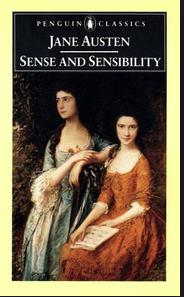
On Jane Austen’s Sense and Sensibility and Why I Love Marianne

sense-and-sensibility

At the beginning of December I was in the mood to read a lot of classics and that’s why I decided to participate in Advent with Austen. I didn’t manage to read or watch anything else that is Austen related apart from Sense and Sensibility  (1811). Today is the last day of the readalong. If you would like to read more enthusiastic takes on the book it might be good to visit Reading, fuelled by Tea.

What about my impression of Sense and Sensibilty? Boy, this was painful. Babushka-like reading. You know, the little doll inside of the little doll, inside of the little doll… Every time I peeled off a layer of pages, the book got magically longer and longer.

I suffered especially all through the first 100 pages. Yes, there were many witty sentences but all in all it was about money, marriages and talk, talk, talk. We could watch a bunch of nasty, fairly rich and scheming characters trying to kill time, marry right, secure their income and avoid at all times introspection and spending time on their own.

But then Marianne fell in love and started to suffer so terribly when Willoughby left for London, that I couldn’t help but being interested.

In many of the comments and posts I read, people state they like Elinor but not Marianne. Why? I think Elinor is a likable character but I love Marianne. She is the only truly honest person in this phony world and that’s why she falls so violently ill. She knows that there is a fine line between politeness and hypocrisy and her body reacts strongly to all the rules and laws of this society.

Some of the scenes in this novel made me cringe. I cannot picture myself in them. At 17, like Marianne, I would have fallen stupidly in love and ill as well. Nowadays, as a saner version of myself, I would just smash a few windows and ruffle whole bagloads of feathers.

Gossip and small-talk, insipid conversations and endless games is the essence of how the society in this book spends its time. People have to be glued to each other constantly. They can’t bear to be on their own. Although they are constantly around each other, they hardly ever connect. The only person who openly disregards this, is Marianne. She is often perceived as impolite, yet all she is, is honest.

I really liked her more and more. Whenever they arrive at a new place, she doesn’t participate in the tedious chit-chat that is soon to follow but walks off, looking for the library.

Elinor, however little concerned in it, joined in their discourse, and Marianne, who had the knack of finding her way in every house to the library, however it might be avoided by the family, soon procured herself a book.

Pretending and lying gives her headaches and she retires to her rooms. Realizing that she has been betrayed by Willoughby affects her so deeply, there is no more behaving or pretending, on the very contrary, she litterally screams, cries and gets very ill.

Despite her psychosomatic ailments after Willoughby’s departure and his breaking up with her, the most critical illness is still to come.

After she hears what Elinor had to endure without being able to talk about it, she is so shocked about having been so self-centered that she develops some late reaction and falls even more seriously ill.

Reading his I was amazed how audacious this really is and how modern but then comes the final part and Jane Austen spoils it. When Marianne has recovered and speaks about her illness, all she sees in it is an experience that helped her better herself, make her more fit for society. It’s not surprising then, that Jane Austen marries the tamed Marianne to the man she thought so ridiculous at the beginning of the novel.

I really didn’t like the book as a whole but Marianne will from now on be one of my favourite heroines of all time and I would have wished for another ending.

As I wrote earlier, the book is witty. Language has always a prominet place in Jane Austen’s novels. The differences between Marianne and Elinor are never as eloquent as when they speak about things they like. This is one of my favourite quotes and one that made me like Marianne even more:

“Dear, dear Norland, ” said Elinor, “probably looks much as it always does at this time of the year. The woods and walks thickly covered with dead leaves.”

“Oh!” cried Marianne, ” with what transporting sensations have I formerly seen them fall! How have I delighted, as I walked to see them driven in the showers about me by the wind! What feelings have they, the season, the air altogether inspired! Now there is no one to regard them. They are seen only as a nuisance, swept hastily off, and driven, as much as possible from the sight.”

“It is not every one, ” said Elinor, ” who has your passion for dead leaves.”

This was my fourth Jane Austen novel and it was the only one I didn’t like. So far Pride and Prejudice is still my favourite. But I haven’t read Persuasion yet. I have a feeling I will like it.

How about you, do you like Sense and Sensibility and Jane Austen in general? Do you have a favourite novel?

And what about the movies? I have seen Sense and Sensibility and liked the movie well enough although I thought Emma Thompson was far too old as Elinor. I liked the BBC version of Pride and Prejudice but I liked the film with Keira Knightley even better. Yesterday I discovered that I have a TV version of Mansfield Park on one of my DVD shelves.

Fyodor Dostoevsky: Poor People/Poor Folk – Бедные люди [Bednye lyudi] (1846)

Presented as a series of letters between the humble copying-clerk Devushkin and a distant relative of his, the young Varenka, Poor People brings to the fore the underclass of St Petersburg, who live at the margins of society in the most appalling conditions and abject poverty. As Devushkin tries to help Varenka improve her plight by selling anything he can, he is reduced to even more desperate circumstances and seeks refuge in alcohol, looking on helplessly as the object of his impossible love is taken away from him.

Poor People – or Poor Folk, depending on the translation – was Dostoevsky’s first novel. Published in 1846 it was highly acclaimed by fellow writers and critics alike. At only 24 Dostoevsky became a literary celebrity. It is generally not considered to be his best book, his masterpieces were still to come, but it already contains many of the elements that made Dostoevsky famous.

I must admit this was not an easy read. The style is simple and descriptive but the story was unsettling and depressing and it did ring unbearably true.

Poor People is an epistolary novel set in St.Petersburg among the very poor. The letters are exchanged between a young orphaned woman, Varenka,  and an elderly distant relative, the copy-clerk Devushkin, who loves her very much.

Those two poor people live very close to each other but have to hide their friendship as it could be misunderstood. The descriptions of Varenka’s past, how her parents died and mean people pretended to take care of her while in reality there was only abuse, are paired with Devushkin’s descriptions of the way he is living. Although he is very poor himself he tries to help the fragile young woman and sends her what little money he has. In order to save money he left his old apartment after his landlady died and moved into another place. In this apartment he lives with a great number of equally poor people together in close quarters. He really only occupies a little corner of the kitchen that is separated from the rest by a piece of fabric.

He doesn’t even mind living like this at first as he can see Varenka’s windows from his room but after a while it gets harder for him. In their letters they try to comfort each other and describe in great detail how they live. The tone is very emotional, there isn’t much they hold back. On some days they are cheerful and will write about nice things they have seen or experienced but on most other days they are in despair and very sad. Varenka is often ill and can’t work while Devushkin has a hard time to hide his poverty at work. His clothes are shabby and would need mending, he loses his buttons, his shoes have holes and the soles are coming off. The poorer they get, the worse they are treated by others, also from those who are as poor as they are.

As if matters were not bad enough, Devushkin spends what little money he has on alcohol. He invariably pays his escapades with fear and shame. One misfortune follows another as they have little or no means to prevent them.

Varenka is a very intelligent young woman. Unlike Devushkin she is educated and likes to read. She loves Pushkin and Gogol. In some of the letters and a little notebook that she sends to Devushkin, she describes her childhood. These are wonderful passages that capture the life in the country, the changing of the seasons. She describes with great detail how golden the autumn was in the country, how wonderful winter could be because they would sit around a fire and tell stories. These passages show how masterful a writer Dostoevsky is.

Devushkin on the other hand tells her what he sees when he goes out in Petersburg. It makes him sad to see beautiful rich women and to know how arbitrary it is to be either born poor or rich.

One of the themes of the novel is the arbitrariness of poverty and how prejudiced the rich are. They treat the poor as if they were contagious. On the other hand they like to see them because it makes them feel superior. For that very same reason they  like to give them alms. The lack of privacy makes matters worse. Living with so many or being stuffed into a tiny office space with many other clerks exposes you constantly to the prying of others.

It seems as if one should never undergo a certain level of poverty, once you fall below there is no getting up anymore. There are numerous little stories of other poor people who fall ill and of children who die because no medicine is available.

Devushkin and Varenka are amazing characters. Despite their destitution they always think of each other first and if they receive just a little bit of money from somewhere they will give to those who have even less.

Reading this in winter, when the days are getting shorter and it is getting colder was really not easy. It’s depressing and sad. I thought of a documentary that I watched not long ago about Russian pensioners and some of those people lived in the same dirty, shabby and unhealthy tiny apartments. I remember one old woman, sitting in a box-like room, crying all through the interview. She had hardly any food, no heating, her clothes were rags. And this in Europe in 2011.

I didn’t enjoy reading this but on the other hand I felt very bad for thinking like this. Those who live under such conditions cannot just decide to walk away from them. Who am I to want to shelter myself from reading about such things?

I accidentally landed in a slum once, in Fort-de-France, Martinique. I felt really miserable, not because I thought it was dangerous, (maybe it was, no clue) but because it felt like prying. By walking between the shacks I could see into the homes of these people, they had no windows or doors and I felt like a voyeur. I was then asked angrily what the heck I thought I was doing but they understood, that I had lost my way and once they realized it wasn’t curiosity, they were very helpful.

It is really in bad taste but apparently it is part of many a guided tour in Brazil to pay a visit to the favelas.

I have read a few of Dostoevsky’s books, Crime and Punishment, The Gambler, Memoirs from the House of the Dead, with the exception of the last, they didn’t seem this depressing and I liked them very much.

I still got White Nights, Notes From Underground and The Brothers Karamazov to read. But not just yet.

I didn’t include any quotes as I’ve read this in a German translation. I like the German cover a lot.

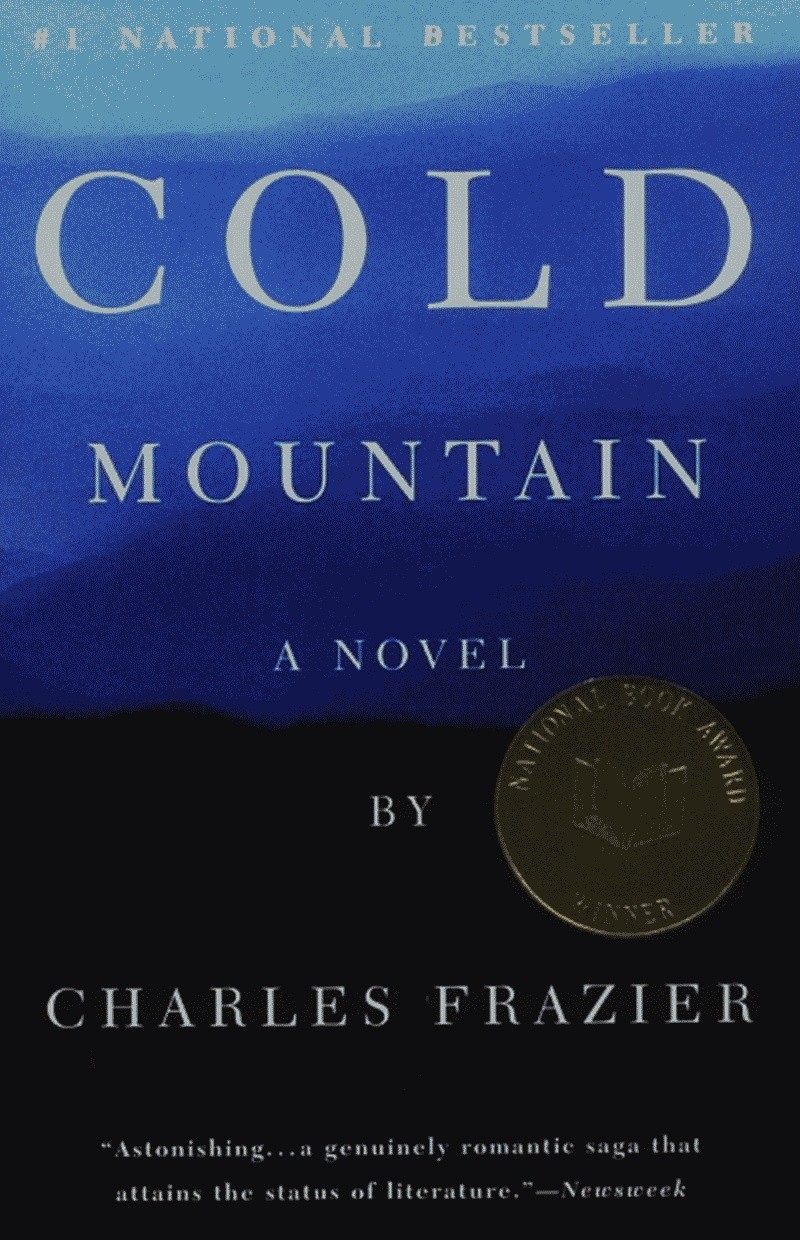
Literature and War Readalong December 30 2011: Cold Mountain by Charles Frazier

While I’m busy collecting the titles for next year’s Literature and War Readalong I should not forget to make you aware that there is still one more book on the list for 2011. Initially I had chosen two books on the US Civil War but German Literature Month made me remove The Killer Angels from the list.

This year’s last readalong title is Charles Frazier’s Cold Mountain. I’ve watched the movie a while back but don’t remember all that much apart from a stunning cinematography. I’ve heard a lot of good things about the novel and especially the friendship between the two women is said to be very compelling so I’m really looking forward to reading it and find out if I will like it or not. For some reason I think it’s a particularly good choice for December.

For those who have no idea what it’s all about and whether or not it’s worth joining here’s the blurb.

Charles Frazier’s debut novel, Cold Mountain, is the story of a very long walk. In the waning months of the Civil War, a wounded Confederate veteran named Inman gets up from his hospital bed and begins the long journey back to his home in the remote hills of North Carolina. Along the way he meets rogues and outlaws, Good Samaritans and vigilantes, people who help and others who hinder, but through it all Inman’s aim is true: his one goal is to return to Cold Mountain and to Ada, the woman he left behind. The object of his affection, meanwhile, has problems of her own. Raised in the rarified air of Charleston society, Ada was brought to the backwoods of Cold Mountain by her father, a preacher who came to the country for his health. Even after her father’s death, Ada remains there, partly to wait for Inman, but partly because she senses her destiny lies not in the city but in the North Carolina Blue Ridge.

S.J. Bolton: Sacrifice (2008)

Danielle recently wrote about S.J. Bolton’s book Now You See Me and I really liked the tone of it and wanted to read one of her books. I got her first novel Sacrifice instead because I liked the idea of a book set on The Shetland Islands. I know some of the islands off the Scottish coast and I find the landscape incredibly beautiful.

Tora, an obstetrician from London, is married to a man from The Shetland Islands. Duncan hasn’t been living on the islands for over twenty years but now he wants to return and Tora follows him. She has found a job in a local clinic. They live in a house in the country, quite far away from any other houses or farms which doesn’t bother Tora too much as she grew up on a horse farm.

The novel opens with Tora trying to bury her beloved horse Jamie. While digging in the field she finds something utterly disturbing, namely a corpse wrapped in fabric. Whether the dead person has been lying in its peat grave since the earliest days of Shetland Civilization or been buried recently isn’t sure at first but the police soon find out, the body hasn’t been dead for longer than two years. When they unwrap the corpse they discover something quite grisly. The dead womans heart has ben cut out and there are runic symbols carved into the skin of her back. On top of that the dead woman must have given birth right before she was killed.

Tora is a very determined woman and the shock to find a body on her land triggers an urge to help find the killer. Being a doctor allows her to have access to much more information than even the police. She teams up with a police woman, Dana, also a foreigner, who has a hard time being accepted by the locals. The two women start to dig quite deep into some mysterious things. Tora’s investigation isn’t entirely legal but she can’t stop it, even less when she discovers that the dental records of a woman who has died of cancer two years ago match the records of the dead body in her peat field.

From the early moments in the novel, it’s obvious that Tora endangers herself with this investigation. And when she wakes one night and thinks that someone is in her bedroom, she is sure her life is threatened.

The fact that Tora lives in this lonely house on her own most of the time, because Duncan is away for work, heightens the feeling of threat. She and Dana stumble from one eerie discovery to the next and I really speeded through the 550 pages because I wanted to find out what was going on.

This is a book to read in almost one sitting, if you break the speed for a while, which I did, you lose momentum and the end might not go down so well. I saw Danielle reviewed Sacrifice here as well and there is a comment from the author saying that she herself wasn’t too sure about the ending (if you intend to read this book don’t read the authors’ comment it does give away a lot).

I can only say, this is a great read, if you rush through it but a part of the explanation was a disappointment for me. It’s too unbelievable. Still, the book works well on many levels. It’s very suspenseful and has a great atmosphere. Something I really liked was the description of the friendship between Tora and Dana. They both do not easily trust other people but they soon feel quite close. Also these are not your typical “women in jeopardy”, they are threatened but they are gutsy and can fight for themselves. Being threatened worries them but doesn’t keep them from going on. I might very well read another S.J. Bolton. Judging from the comment she left on Danielle’s blog, I could imagine, she did in her more recent books stay away from stretching believability too much.

Heinrich Böll: The Silent Angel – Der Engel schwieg (1951) Literature and War Readalong November 2011 Meets German Literature Month

Written between 1949 – 1951 Der Engel schwieg  or The Silent Angel is unique in many ways. Unique for German literature but also in Böll’s work. I have already written about it in my post on Sebald’s The Natural History of Destruction. Böll’s novel, which is one of the rare to depict a German city after the massive bombings by the Allies, had to wait 40 years for its publication. For this reason many of the chapters have been re-used in other books and if you are familiar with Böll the one or the other scene or description may appear familiar. All the important themes of Böll’s work can already be found here. Criticism of post-war Catholicism, compassion with those who have nothing, with those who suffer. His books often circle around the same elements, motives and themes and although he doesn’t always use the same style, this gives the impression of a very organic work that, read in its entirety, gives an excellent panorama of Post-war Germany.

The Silent Angel is one of the most important works of the so-called “Trümmerliteratur” (the literature of the ruins). The story as such can be told in a few sentences. It’s May 8 1945. Hans, a deserter, returns from the war without a passport. He tries to find the woman of a comrade who died instead of him. While walking the bombed and destroyed city he meets a woman who lives in an appartment in a house that is almost a ruin. He feels a strong connection to her and asks her if he can stay with her. She has lost her baby in an air raid, his wife has died as well and so, like two castaways, they are stranded together in this apartment. At first they both envy those who died but slowly they find their way back to love, hope and some kind of livable future.

It isn’t said but we know that the city which is described is Köln, Böll’s hometown. The description of the despair of the people, how tired they are physically and psychologically is impressive. The way he depicts their struggle to find bread, their fight to survive in those ruins is powerful. There is one scene in which Hans tries to visit someone and to walk a distance which used to take him ten minutes, he takes an hour because of  all the debris and the rubble. As I said before, Catholicism is an important theme in Böll’s work and in this novel, in which the greed of some Catholics is shown in all its ugliness, the description of the bombed churches becomes a very significant additional meaning.

What impressed me the most apart from the descriptions of the ruined city is how tired these people are. They spend days and days on end in their beds, staring at their walls. Finding something to eat, moving about the city, coming to terms with was has happened, takes an unimaginable effort, drains them of all their energy. All they have left is exhaustion.

This must sound very depressing but Böll isn’t only a writer of despair. He describes hopelessness but his characters overcome it, they find hope and the courage to go on living. The negative people have their positive counterparts. The greedy Dr. Fischer who doesn’t care for anything but money and for whom Catholic artifacts are just collectible items finds his counterpart in the gentle priest who helps Hans. The priest is the embodiment of a pure, compassionate Catholicism.

I was wondering while reading The Silent Angel whether I thought it was well written. I think he could have improved the structure, some passages read like short stories, some elements could have been left out, all in all it feels a bit loose at times which isn’t the case in his later work. His later novels are much more condensed but Böll has a gift for description which is rare. And he represents a rare model of moral integrity, he is an author who wrote for those who have nothing, who tried to unmask hypocrisy and uncover everything that was fake and phony in post-war Germany. I don’t know all that many authors who are so humane.

I have read The Silent Angel before. It isn’t my favourite Böll novel but since it’s an excellent example of “Trümmerliteratur” it seemed a great choice for the readalong. I’m very interested to know what others thought of this book.

Other reviews

Christina (Ardent Reader)

Danielle (A Work in Progress)

Fay (Read, Ramble)

Lizzy (Lizzy’s Literary Life)

Rise (in lieu of a field guide)

Tony (Tony’s Reading List)