Dorothy B. Hughes: In a Lonely Place (1947)

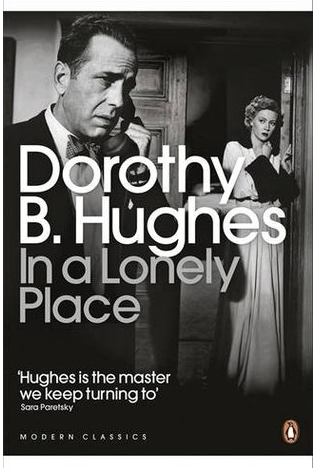
In a Lonely Place

I came across Dorothy B. Hughes excellent noir novel In a Lonely Place in Books to Die For, a book of essays on important crime novels. Each of the articles was written by a famous crime writer. The book has been edited by John Connolly and Declan Burke. The article on In a Lonely Place was written by Megan Abbott. I’m sure I would have liked In A Lonely Place without reading Abbott’s essay but I might have missed a few things.
Books to Die For

Hughes novel is one of the first serial killer novels and inspired later works like Jim Thompson’s The Killer Inside Me. I know that many readers of this blog are averse to serial killer novels and I understand why. But this one is a very different book. There are three types of serial killer novels—those from the point of view of the victim, those from the point of view of the detectives and those from the killer’s point of view. The mainstream/bestselling novels usually fall into category one or two, while this one falls into the third category. Unfortunately, the blurb gives a very wrong impression and the reader thinks (s)he is reading a thriller-type story. That was never Hughes intention. Without the blurb it’s clear from the beginning that we’re in the head of the killer, Dix Steele. Dix is a WWII veteran who has just moved to L.A. and, on the spur of a moment, contacts Brub Nicolai, a former army buddy, who served with him in the UK, not knowing that he is a detective. An other perpetrator would have stayed away or fled, not so Dix Steele. He loves the idea of being able to follow the investigation very closely.

Here’s an early quote which doesn’t only give an idea of Dorothy B. Hughes’ writing but also of how eerie this scenario is. Brub is obviously talking to Dix.

Brub started, “Wha-” He realized Dix’s question. ” I guess it’s pretty much my fault. Ever since the thing started, I’ve been afraid for her. She’s lived in  the canyon all her life. She never had any fear, wandered all over it, any time of the day. But the canyon at night, the way the fogs come in— it’s a place for him.” His face was again angry, helplessly angry. “I’ve scared her. She’s alone so much. I never know what hours I have to keep. We have good neighbours, a couple of our best friends are right across the road. But you know our street. It’s dark and lonely and the way our house is set up there—” He broke off. “I’m the one who’s scared; I’ve infected her. And I can’t help it. I can’t pretend until we caught him.”

Megan Abbott emphasized in her essay that this is far more than a serial killer novel or an ordinary noir. The author went further than others in showing how difficult it was for veterans to return. How in many cases, they felt like their masculinity was in danger. The book is as much about gender as it is about crime. Men like Dix Steele had to reinvent themselves after the war. With the end of the war, they lost their identity.

What made me love this book is that we actually pity Dix Steele. He’s more than a little troubled and his suffering is genuine. Here’s a quote to illustrate this:

A man couldn’t live alone; he needed friends. He needed a woman, a real woman. Like Brub and Sylvia. Like that stupid Cary had that stupid Maude. Better than being alone.

It wasn’t often it hit him hard. It was the balmy night and the early dusk and the look of the lamps through opened windows and the sound of music from radios in the lighted rooms. he’d eschewed human relationship for something stronger, something a hell of a lot better.

What makes Dix Steele so tragic is that he is not only greedy and full of longing— for women he can’t have, for status, money, relationships, the “good life”— but also oddly hopeful. He believes that with the right woman everything might be different. When he sees Laurel Grey for the first time, a young  actress who is just as greedy for the good life, as he is, he genuinely believes, she might be his saviour.

I love nothing as much as atmospherical crime novels and this one might be one of the greatest in this regard. Set in L.A., it really brings the city to life and makes great use of the landscape and weather conditions. I thought that fog and mist were particular to San Francisco but reading this, I have to assume that the L.A. area (at the time?) was constantly foggy. Reading how this lonely, deranged and driven killer hunts for his prey in the fog made for great reading.

In a Lonely Place has been made into a movie starring Humphrey Bogart and Gloria Grahame. I haven’t seen it but I get the impression, the ending is very different.

Dorothy B. Hughes had an unusual writing career. She published twelve novels, three of which were made into movies, before she stopped writing in 1950. Allegedly, because she took care of her mother and her grandchildren. She died in 1993. It’s a bit sad to think that this great writer spent the last forty years of her life not writing.
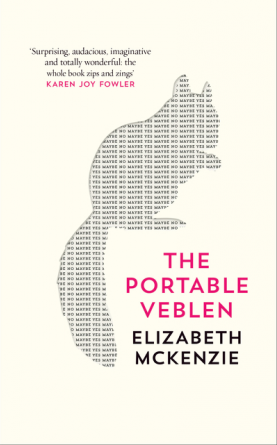
Elizabeth McKenzie: The Portable Veblen (2016)

The Portable Veblen

There are a few things you might see differently after having read The Portable Veblen—squirrels, marriage, clinical trials, mental health, consumerism, Thorstein Veblen. What I’m trying to say – this is a novel that’s as quirky as it is serious. But the best of all: the voice is stunning and as witty as it is clever. Looking at some of the topics this novel explores—dsyfunctional families, PTSD, pharmaceutical companies, mental illness— one wouldn’t think it would be funny, but it is. I really loved this book and it’s main narrator Veblen Amundsen-Hovda.

Veblen, named after Thorstein Veblen, author of The Theory of the Leisure Class, is a self-declared “cheerer-upper” with a narcissistic, hypochondriac and controlling mother. Veblen is obsessed with squirrels, translates from the Norwegian in her free time and is highly suspicious of everything that whiffs of consumerism.

Veblen espoused the Veblenian opinion that wanting a big house full of cheaply produced versions of so-called luxury items was the greatest soul-sucking trap of modern civilization, and that these copycat mansions away from the heart and soul of a city had ensnared their overmortgaged owners – yes, trapped and relocated them like pests.

She’s engaged to Paul, a neurologist who works for a shady pharmaceutical company and gives her the most ridiculously huge engagement ring. All of her life, Veblen has been crushed by her mother. Her dad is in a mental institution and her step-dad always takes her mother’s side. Nonetheless, her mother and her mother’s opinion are important. So far, neither Veblen nor Paul have met their respective parents. Both are wary of a meeting. Veblen because she’s afraid of what crushing things her mother might say about the engagement and her fiancé, and Paul because he’s ashamed of his parents, hippies who were anything but good parents.

Just to give you an idea of what Veblen has to deal with. That’s her thinking of telling her mother about the engagement:

She had an internal clock set to her mother’s hunger for news, but sometimes it felt good to ignore it.

Then she went back inside and grabbed the phone to spring the news on her mother. Nothing being fully real until such springing. And nothing with her mother ever simple and straightforward either, and that was the thrill of it. A perverse infantile thrill necessary to life.

And this is how the phone call goes:

“Well. Did you say yes for all the right reasons?”

The coffeemaker gurgled and hissed, a tired old friend doing its best. “I think so.”

“Marriage is not the point of a woman’s life. Do you understand that?”

“By now.”

“Do you love him?”

“I do, actually.”

“Is everything between you, good, sexually?”

“Mom, please! Boundaries or whatever.”

“Don’t say boundaries like every teenage twerp on TV.”

It bothered Veblen’s mother that most people were lazy and had given up original thought a long time ago, stealing stale phrases from the media like magpies.


The main question at the heart of the story is: should anyone get married, especially when coming from a dysfunctional family? It takes Veblen a long time to make up her mind – the whole novel – and most of it involves hilarious scenes. Her mother is one of those parents that, while toxic, still has a lot going for her. I loved all the scenes that involved her. I equally enjoyed the passages in which we see Veblen on her own. Some of the chapters are told from Paul’s POV and those weren’t my favourites. He’s not a character that could stand on his own, he always needs to clash with another one to be interesting.

This might be one of the wittiest books I’ve read in a long time. But it’s also charming and profound. I’ve seen a few people comment that they found the book confusing. I didn’t. Most of the crazy moments are due to Veblen’s attempts at staying sane. Dissociation and escape into a fantasy world in which squirrels communicate with her, are coping mechanisms. As cheerful as Veblen seems, she is someone who has been crushed and whose lack of self-confidence is painful. That a lot of her composure comes from taking medication, is equally tragic. It may sound paradoxical, but given her upbringing, she’s doing well.

As I said, I enjoyed The Portable Veblen a great deal. It’s s such a clever book.

I wasn’t surprised to find it on the short list for the 2016 Bailey’s Prize for Fiction.

Three Short Reviews – Eileen (2015) – The Loney (2014) – Saturday (2005)

Ottessa MoshfeghScreen Shot 2016-04-15 at 09.37.31Screen Shot 2016-04-15 at 10.16.27

I finished so many novels recently that I will never be able to review them all. That’s why I decided to do a post with shorter reviews. It doesn’t mean that the books weren’t as good as other books I’ve read. Just bad timing review-wise. I’ve added some blurb quotes at the beginning. Either as a contrast to what I wrote or to emphasize my opinion.

Ottessa Moshfegh

Fully lives up to the hype. A taut psychological thriller, rippled with comedy as black as a raven’s wing, Eileen is effortlessly stylish and compelling. – Robert Douglas-Fairhurst, The Times

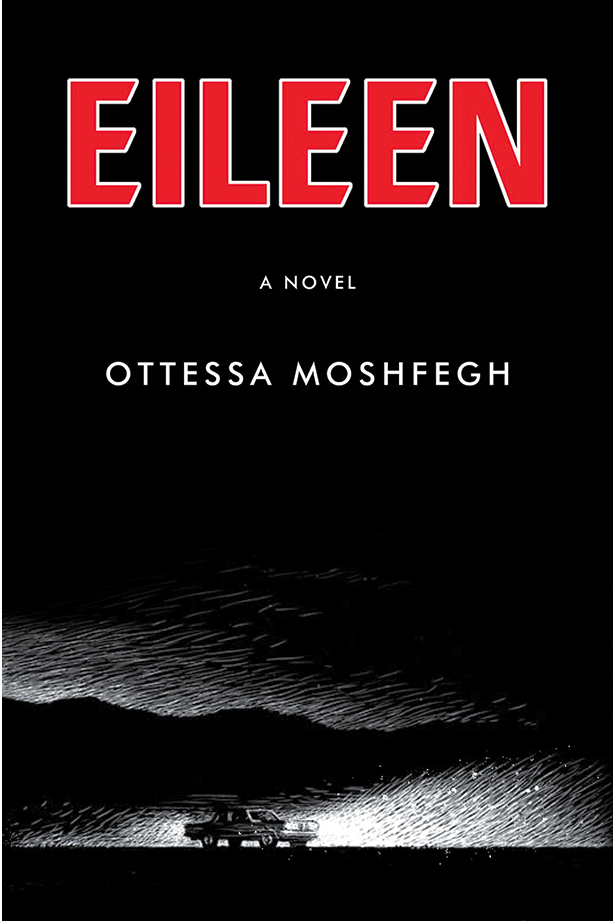
First up is Ottessa Moshfegh’s Eileen. The tale of a crime that is instrumental in freeing the main character. Now this is a book I’m not likely to forget. The writing is so assured and strong. The voice of the narrator is original and the way the book was told worked remarkably well. The narrator, who was once called Eileen, is now an older woman, looking back at something that happened a long time ago. Back then she was an insecure woman who lived with her alcoholic father in a very dirty, sordid home and worked in a boy’s prison. When the new counselor, the glamorous Rebecca, arrives at the school, things first get very exciting for Eileen and then they get out of control. Eileen is a very unpleasant character. It’s not always a joy to be inside of her head. She has perverse fantasies and some of her hidden habits are really gross. The reasons why I enjoyed this taut noir so much, is that the older Eileen constantly adds information about her future life and because we sense that things will go wrong, we wonder how she managed, in spite of everything we are told, to have an almost normal life. I also enjoyed that it’s never really clear whether she’s totally unreliable or just completely deranged. Ottessa Moshfegh has been on my radar for a while. Many of her short stories have been highly praised. She certainly is a very assured and very talented writer. I’m really keen on reading more of her stories and hope she’ll write another novel soon

If you’d like a more detailed review here’s Guy’s post on Eileen. I discovered the book on his blog.

Screen Shot 2016-04-15 at 09.37.31

‘The Loney is not just good, it’s great. It’s an amazing piece of fiction’ Stephen King

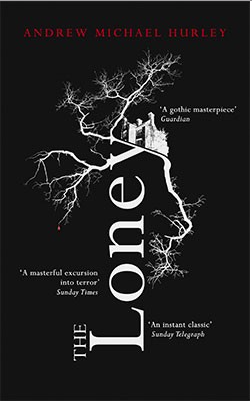
The Loney won the Costa Prize in 2015. I received the novel as a Christmas gift. I’d never heard of the book before but the person who gave it to me, knows that I like dark and gothic tales. I’m really glad that I’ve read it but not entirely sure I liked it. The atmosphere is amazing. It’s set in a bleak desolate part of England, near the coast in Lancashire. The Loney is a stretch of land that gets cut off and turns into an island during high tide. Getting lost between the land and the sea is very dangerous. The tide comes in quickly and surprisingly. The narrator is an older man. The story he tells takes place when he’s still a young boy. For a long time it’s not clear if what happens in the book is just the result of religious fanaticism or whether there is really a haunting. I found that interesting but wasn’t too keen on the ending. The story takes place during Easter. The narrator’s parents, especially the mother, are fanatics. They hope that they will be able to cure the narrator’s older brother through prayer. The mother is a really chilling charcater and sounded a lot like Jeannette Winterson’s mother.

What didn’t work so well was the subdued tone. The writing is deliberately old-fashioned, but takes, in my opinion, too much time. The atmosphere is spooky from beginning to end; the mood depressing, but there’s no real climax. It’s very well written though. I’ll keep an eye out for other books by this author. This was Andrew Michael Hurley’s first novel.

Screen Shot 2016-04-15 at 10.16.27

“A book of great moral maturity, beautifully alive to the fragility of happiness and all forms of violence… Everyone should read Saturday… Artistically, morally and politically, he excels” (The Times)

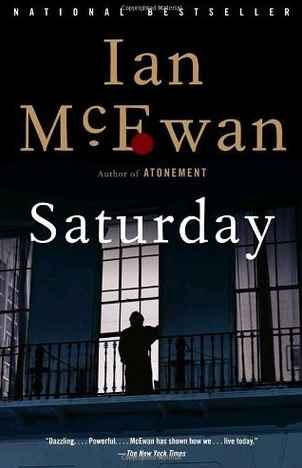
I know that a lot of people love Ian McEwan. Many even think he’s an outstanding writer. While I find him entertaining, I don’t really think he is all that good. The whole time I was reading Saturday I kept turning the pages quickly, which means I was captivated by the story, but at the same time I couldn’t help but think that this was a lot like Grey’s Anatomy in book form. Captivating but also a bit trashy. Saturday tells the story of one day in the life of neurosurgeon Henry Perowne. The details are so minute that it actually made me laugh. You can sense that McEwan did a lot of research but did he have to pack all of it into his book? I found this very heavyhanded. Almost like the novel of a beginner. Now, the neurosurgery part was actually OK. Not the most fascinating topic for me, but OK. But since he wanted to add other subjects, we get a lot of information on literature—one of Perowne’s kids is a poet, and so is his father-in-law— and information on music— his son is a musician. After a while, I felt like being invited to one of those boring dinner parties where everyone has a “great career”, reads the latest books, has seen the latest movies and talks a little bit about politics and endlessly about food. There’s even a recipe in this book. Ha! Perowne and his entourage are the kind of people I’ve seen referred to as “Champage Socialists” here in Switzerland.

At the beginning of the day, Perowne thinks he witnesses something horrible. He’s unsettled. Later, he really experiences something terrible. It all left me completely cold. I’d lost patience with the character. All in all, yes, I was entertained. In a way it felt like spying on someone or like living someone else’s life for a day. Nonetheless, I can’t say I found it great or that it’s a must read.

Have you read any of these?

Jean Echenoz: 1914 – 14 (2012) Literature and War Readalong March 2016

1914

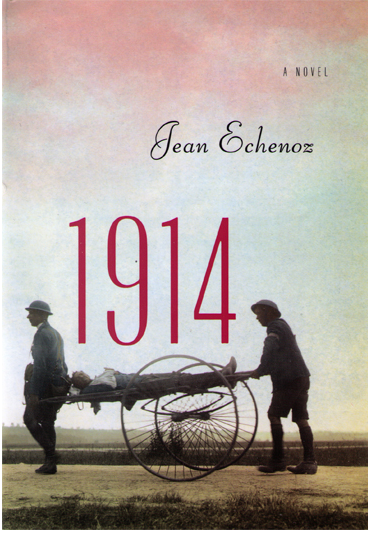
Jean Echenoz tells a very simple story in this short, compressed novel. Five men go to war; two of them return, three don’t. Two of them are brothers and in love with the same woman. The characters as such are not that interesting. What is interesting is what happens to them. Each stands for something that is particular to WWI. Charles is shot down when he joins a pilot to take pictures. The industrialization of war and the use of planes is new. Both elements were important for Echenoz and whole chapters are dedicated to them. One of the men is blinded by gas. That, too is a new and especially beastly feature of WWI. One man returns after having lost an arm. I don’t think any war saw as many mutilated men return. One of the men is executed because they mistake him for a deserter. The absurdity and farce of these decisions is made clear. One man dies during an attack. His body’s lost somewhere in the mud of no-man’s-land. All these are exemplary fates and could have turned the men into pure types, but thanks to Echenoz’s sense for detail, they are more than just types. Echenoz, as he said many times, isn’t interested in psychology. To convey a characters personality and emotions he sticks to pure “show don’t tell”. He describes the actions and the objects surrounding the characters. Both contribute to the description, one in a very realistic, the other in a more symbolic way. I think this was what fascinated me the most. Echenoz’s writing is so rigorous. There’s not one superfluous word. The vocabulary is refined, rich, and exact. He uses lists and enumerations, abstraction, numbers, irony. His writing is visual, even audiovisual because he tries to convey emotions through sounds.

1914  – 14 is one of those books that gets more interesting the more you read about it. My French paperback had about 40 pages of additional material, for which I was grateful, as an important element of Echenoz’s writing is intertexuality. I’ll give you one example. The story begins with Anthime on a hill. There’s a strong wind and suddenly he hears church bells ringing the tocsin that signals mobilisation. At the end of the scene, Anthime drives back to the village on his bicycle. He loses his book which has fallen from his bicycle and opened at the chapter “Aures habet, et non audiet”. What is interesting here is the fact that this whole scene is inspired, or rather taken from a scene in Victor Hugo’s Quatrevingt-treize – 93. It’s almost the same scene, only in Hugo’s novel, the character cannot hear the church bells, he only sees them moving. Echenoz who is interested in sound – the incredible noise is another new feature of this war – rewrote this scene, describing the sound of the bells. The book that Anthime carried with him is Hugo’s book. Allusions like these, which blend history and literature and the writing about history and literature are frequent and the closer you read, the more allusions you find.

When the book came out it was praised for its originality although Echenoz himself doesn’t seem to think it’s all that original. Here’s a quote from the book.

All this has been described a thousand times, so perhaps it’s not worthwhile to linger any longer over that sordid, stinking opera. And perhaps there’s not much point either in comparing the war to an opera, especially since no one cares about opera, even if war is operatically grandiose, exaggerated, excessive, full of longueurs, makes a great deal of noise and is often, in the end, rather boring.

I can see why critics found this original. His writing style is unique and he includes some chapters, like the one on animals, which is very different from what I’ve read in other WWI novels. The most original however is that he uses the techniques of the Nouveau Roman. One of these techniques is to explore nontraditional ways of telling a story. That’s why we find shifts in POV, intrusions of the author. Comments about the future etc. To some extent it is as much a book about writing as about war.

In an interview at the beginning of my edition, Echenoz names the three books that have influenced him the most when he wrote 14. Erich Maria Remarque’s All Quiet on the Western Front – Im Westen nichts Neues, Henry Barbusse’s Feu Under Fire (Prix Goncourt 1916) and Gabriel Chevallier’s Peur – Fear, which we have read during an earlier Literature and War Readalong.

As short as this novel is, it’s very complex. Luckily, others have reviewed it too and much better than I.

I really liked Echenoz’s writing and would like to read more of him. Do you have suggestions?

Other reviews

Juliana (The Blank Garden)

Danielle (A Work in Progress)


*******

1914 was the second book in the Literature and War Readalong 2016. The next book is the a novel on the war in Korea, The Hunters by James Salter. Discussion starts on Tuesday 31 May, 2016. Further information on the Literature and War Readalong 2016, including the book blurbs can be found here.

On Robert Seethaler’s Ein ganzes Leben – A Whole Life (2013)

Ein ganzes LebenA Whole Life

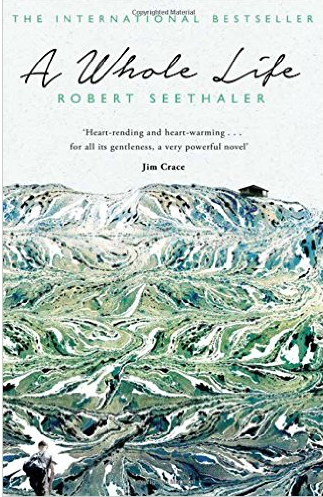
I’ve heard a lot about Austrian author Robert Seethaler’s books, especially Der Trafikant, but only when I saw that his latest had been translated and longlisted for the Man Booker International Prize, did I finally feel like reading him. I’ve read so many raving reviews that I thought I’d love this. Unfortunately, I didn’t. When I went digging for German and Swiss reviews, I found out that he wasn’t so unanimously praised and that I was far from alone in being highly critical of this novel. That said, it’s not a bad book. It has beautiful passages but it felt oddly anachronistic and I couldn’t shake a feeling of déjà-vu” or rather “déjà-read”. I should have picked one of his other novels. I’ve read so many similar books by earlier authors that I couldn’t help but wonder “Why did he write this?”. Robert Walser, Meinrad Inglin, C.F. Ramuz, they all wrote similar stories but, in my opinion, much better. There’s even a recent crime novel that’s similar. Now, maybe it’s unfair to judge a book because of its lack of originality, but I had other problems. People wrote how beautiful it was, how soothing, calming, refreshing. The only thing I found soothing, calming, and refreshing was the moment when it was over and I realized – wow – am I grateful for my own life.

Our protagonist, Andreas Egger, is an orphan, has to live with an uncle who is cruel, even sadistic, beats him until he’s crippled. Later he falls in love but the woman is taken from him. After that he volunteers to go to war (we’re in 1940s) and is refused. Later he’s taken anyway and soon becomes a prisoner of war on the Russian Front. He comes home; things have changed. He works like a donkey. He’s always alone. He sees a buddy lose an arm. And so on and so fort. It takes a stronger reader than me to find much joy in something like this. I found it nightmarish.

I did like a few passages because the descriptions were amazing. I liked the way he captured the mountains. The book is set in the Alps, pre-electricity, pre-tourism, at first. I’ve seen the scary side of the Alps. I always feel like the mountains are alive, brooding and lying in waiting. Seethaler does evoke that. (But so do Inglin and Ramuz). I also liked a few really crazy moments like the beginning in which the main character carries an old man down the mountains (that doesn’t sound crazy but believe me— it is. I’m trying not to spoil this book too much).

In the NZZ, the Neue Zürcher Zeitung, the critic Hannelore Schlaffer called this a book for sadists. Of course, that’s an exaggeration but I get what she means. I wish I had picked another of Seethaler’s books. They all sound wonderfully original. However, my biggest problem is that of all of his books, this is the one that was chosen for translation. Why? WWII? Again? Admittedly it’s just a short sequence but it’s important.

To some extent, I can see the appeal. Andreas Egger is a quiet man. Someone who doesn’t care for tourism and all the commodities a modern life brings. He’s modest and humble. You couldn’t find a character who is less narcissistic. All this is admirable but why did Seethaler have to turn this into such a biblical story? Couldn’t our humble protagonist have experienced more joy? Why was Seethaler so cruel to his character?

It may surprise you, but I’m tempted to pick another of Seethaler’s novels and I’m even convinced I will like it. Not every book is for everyone and this one wasn’t for me.

Those who loved this might enjoy Robert Schneider’s Schlafes Bruder – Brother of Sleep, which I found amazing. They might also enjoy this trio of Swiss writers, two of which write in German, one in French: Robert Walser, Meinrad Inglin, and C. F. Ramuz.

As I said, I have read many positive reviews of this book. Here are a few Lizzy, Vishy, Stu, and Pat.

Here’s the link to the NZZ review (in German)

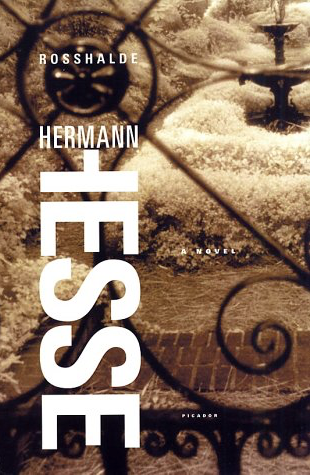
Hermann Hesse: Rosshalde (1914)

Rosshalde

Published in 1914, Rosshalde is Hermann Hesse’s fourth novel. It tells the story of a failed marriage and the disillusionment of a painter. In many ways it’s a continuation of Gertrude. Both novels are autobiographical, Rosshalde even more so than Gertude. Hesse often tried to make sense of his own life in writing his books, that’s why critics call many of his narrators alter egos.

Johann Veraguth, the main character of Rosshalde, is a painter who is entirely dedicated to his art. The only love in his life is the love for his second son Pierre. He bought the estate Rosshalde many years ago when there was still hope for his marriage. At the beginning of the novel, he returns home one night on his own and looks at the dark house. He has moved out a long time ago and lives in his artist’s studio. He gets up very early every morning, paints until noon, then takes lunch with his wife and son and later paints again until the evening. He’s a rich and famous painter, lives a life of ease, surrounded by beautiful things, he even has servants but he’s very lonely. His wife is hard and distant and has never really understood how he could be so absorbed by his art. His first-born hates him and had to be sent to a boarding school. His best friend travels the world and only rarely returns to Europe. The only joy in his life is his little boy. If his wife allowed him to keep the boy, he would have divorced her a long time ago.

Veraguth is unhappy but he doesn’t even realize it. He’s a bit like a well-oiled machine. He produces one painting after the other, follows a strict routine. All this changes when his old friend pays him a visit. He’s shocked when he sees how Veraguth lives and tells him he has to leave. He cannot go on living in such loveless isolation. But Veraguth cannot make up his mind. He’s too attached to his boy. Nonetheless, he has to admit that his friend is right and before he leaves again, he tells him he might follow him to India and spend a couple of months with him.

I had very mixed feelings while reading this. I didn’t like the beginning all that much but from the middle on, I really started to love this book. I finished it a week ago and it’s still constantly on my mind. There’s so much to like here. But there’s also a lot that I didn’t like. I really loved the descriptions and being in Veraguth’s head when he contemplated nature, his garden, his art. Those passages reminded me of Mercè Rodoreda’s novel Jardí vora el mar. In both books, a solitary man lives in a small house, surrounded by a huge garden and follows the life that is led in the estate nearby. But these passages also reminded me of Virginia Woolf’s The Voyage Out. The end of the novel has affected me quite a bit. I can’t really say anything without spoiling it – just this much – it’s very similar to The Voyage Out as well. I also liked how Hesse depicted Veraguth. The man’s so absorbed by his work, so self-centered, that he doesn’t even notice when his kid needs him, although the boy is the only really good thing in his life. Some of these scenes were written from the small boy’s point of view and were very sad.

What I didn’t like is the idea behind the novel. As I said earlier, it’s autobiographical and closely mirror’s Hesse and his wife’s marriage. From his biography I know that Hesse believed that artists – writers, painters, musicians – should never get married and live conventional lives. His own wife didn’t really understand him and having to provide for her and his three kids took its toll on him. Unfortunately, his views are so dated. His views on marriage, artists, and especially his views on gender. When you read about his views, it’s clear that the artist is always a man and the woman, who wants children and is dependent on him financially, will become a burden. Even so, Hesse thinks that the true failure of the marriage comes from the fact that an artist makes a poor companion. He’s too narcissistic, to self-absorbed. I couldn’t agree less. I’m sure there are artists like that but there are just as many narcissistic, self-absorbed people who don’t create anything. I’m afraid, it might have been a character trait Hesse struggled with. My problem with it is that he thinks it’s a universal problem, thinks that all artists are like that.

And then there’s the language. Hesse’s a very original writer. He creates words, uses new combinations but his German feels very old-fashioned, and his choice of words are at times too emotional, too sentimental. Don’t get me wrong, in spite of these negative aspects, I’m glad I read this and really loved it. But I had to ignore his views on men, women, artists, and marriage and just enjoy the amazing descriptions, the interior life of his protagonist and the terribly tragic story.

Rosshalde might be one of the best books for someone who hasn’t read Hesse and is a bit wary of his spirituality. Those who love him, do love him for that, but those who shy away from him or don’t appreciate him, often mention that aspect. Rosshalde isn’t like his later works in that regard. It talks about transcendence of some sort, but it isn’t meant in a religious way.

Have you read Rosshalde or any other of  Hesse’s books? Which is your favourite?

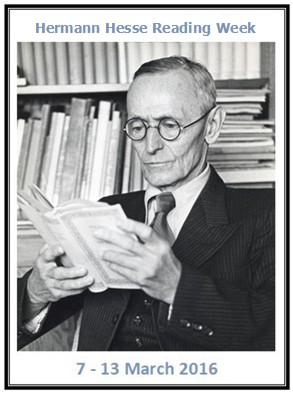
Welcome to Hermann Hesse Reading Week 7 – 13 March 2016

hesse revised

Today is the first day of Hermann Hesse Reading Week, here at my blog and over at Kaggsy’s Bookish Ramblings. I’ve been busy and have read a couple of books (Rosshalde, Klingsor’s letzter Sommer, Wanderung) and will write about them shortly. Pat (South of Paris Books) and I will both write about Klingsor on Thursday 10 March, so if anyone has read that too, try to  join our discussion.

If you participate, please use the Mr. Linky, so Karen and I can visit and comment. Just add your name (blog) + the name of the book you’ve read and then the link below.

I wish everyone a great week.