A Day in Lion Feuchtwanger’s Life – On Klaus Modick’s Sunset (2011)

Sunset

Apologies for using this misleading title. Sunset is the German title but, unfortunately, it hasn’t been translated yet.

Klaus Modick is a German author whose books regularly win prizes. He is also well-known as a translator of English and American books. John O’Hara and Nathanael West are a few of the authors he has translated. He wrote his PhD on the Jewish German writer Lion Feuchtwanger and frequently returns to him in his writing.

Sunset tells about one day in Lion Feuchtwanger’s life. Using flashbacks and memory tags, we are given insight into his life, an era and his lifelong friendship with Bertolt Brecht.

It’s a day in 1956. Feuchtwanger is alone in his home in Pacific Palisades. His wife is out of the house for the day. In the early morning he receives a telegram. Feuchtwanger is the last of the great German authors who is still living in California. During the war a lot of them stayed here. The Manns, Brecht, Werfel, Baum… Feuchtwanger was the most successful one, the one who made the most money. His house in Pacific Palisades is a huge villa. Unlike most others he doesn’t want to return to Germany. He thinks of his home country, of his childhood, he misses using the language and the snow and many other things but he loves the US and the Germany he once knew, is gone anyway.

The telegram he receives informs him of Brecht’s death. What a shock. Not only does he lose his best and maybe only friend, he is reminded of his own mortality. He is 16 years older than Brecht, it should have been him first.

The book then moves back in time and describes how the two met in Germany, how Feuchtwanger became the young Brecht’s mentor, how he knew immediately that he met a genius.

The beauty of the language struck me from the very first sentence. Modick uses images sparingly but to great effect.

In the inner courtyard the roses wither in tired opulence. It almost looks as if they were bleeding to death.

or

The smell of paper and dust wafts through the open door of the salon. The ink of the night trickles from the east into the fog.

Modick uses one day in the life of Feuchtwanger to unfold a whole life, exploring various different aspects and themes. Feuchtwanger’s books are infused with stories from his life. The daughter who died barely one year old, things people say, characters, such a lot is taken from his life.

He loves the US but like so many others he is scrutinized by the McCarthy government, suspected to sympathize with Stalin.

An early memory haunts him on the afternoon of the telegram. As a child, on an excursion with the whole family, Lion fell into a swamp. He was scared of drowning, cried for help but nobody came to his assistance, neither his parents, nor any of his eight siblings. They only laughed. This episode points to a recurring theme in Feuchtwanger’s life – being ridiculed. People like Thomas Mann and many others envied him his whole life and tried to mask this with mockery.

The friendship with Brecht is peculiar. They are so different but influence each other. Brecht has ideas, Feuchtwanger money and discipline. They often work together. They share a passion for women; both are adulterous men.

Towards the end of his life, writing is what keeps Feuchtwanger going. He writes one long novel after the other. After his prostate operation there is not much more left, he thinks. Passion is gone. And now Brecht is dead. But he doesn’t despair. He works out, works hard on his novels, enjoys life, loves the US and still hopes for citizenship.

Modick let’s us experience the way Feuchtwanger wrote – collecting ideas, noting down dreams, fleeting thoughts, images, symbols – nothing is lost, everything kept in notebooks. It takes a long time until he captures the perfect sentence, the perfect description. He approaches his work slowly, using information, memories, dreams.

Modick is a translator. It isn’t surprising that language is important in the book.Feuchtwanger mediates on language. On how you can translate things but they still don’t mean the same . The German word “Eisblume” which haunts him on this afternoon is a good example. In English “Eisblume” means “frost pattern” but literally “Eisblume” means “flower of ice”. A world of difference.

Modick paints the portrait of an interesting man. Successful and proud of it, yet modest and incredibly kind and generous. Without Feuchtwanger’s money many an author would have suffered greatly. Yet most of them didn’t even know the money came from him.

I have been fascinated since years by the German writers who escaped Germany and fled to California. The names in the novel are illustrious. Not only the German ones. Feuchtwanger knew them all, the actors, film makers, studio bosses. The German authors were all hoping to make money in Hollywood but that didn’t happen for most. Brecht and many others failed. Feuchtwanger regularly sold the movie rights to his books but they were hardly ever made into movies.

Feuchtwanger was a passionate collector of books. He first collected books when he was still in Germany but those were confiscated and probably burned by the Nazis. In his French exile he started another collection, most got lost when he fled. Finally in the US he started again and when he died he owned far over 30,000 books.

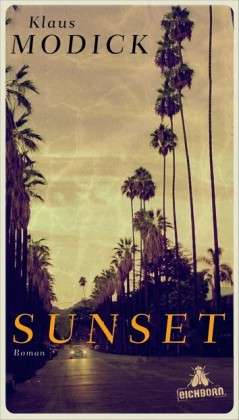
Sunset is a wonderful title for a book which describes the evening of the life of a writer and an era which is long gone. It is infused with the fading light of a dying sun, sinking slowly into the ocean. The title is perfect and so is the German cover with its sepia photo.

Modick is compared to authors like Grass, Lenz and Walser, it’s easy to see why. It is a real shame he hasn’t been translated.
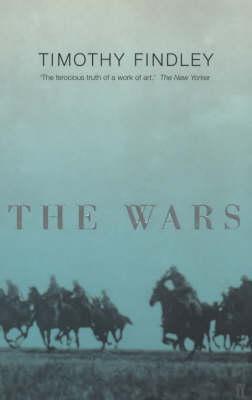
Timothy Findley: The Wars (1977) Literature and War Readalong April 2013

The Wars

Is it possible to write about WWI – including the trenches, the incapable high command, shell shock, gas attacks, rats, mud, facial wounds, the immense body count – and still be original and have something profound and thought-provoking to say? Before reading Timothy Findley’s  The Wars I might have said “possibly” but after finishing it, I have to say “definitely”. This novel proves that in the hands of a powerful writer anything can become extraordinary.

The Wars has an episodic structure but still tells a coherent story, exploring what happened one day, during WWI, when young Officer Robert Ross, broke the ranks, committing an act of total insubordination, shot another officer and freed dozens of horses. How did it come to this? The story is told in a circular way, starting with the end, withholding all the vital information, and then moving back to  the beginning, unfolding every step which led to that fatal day.

I said in my intro post that I was worried the book would contain a lot of animal suffering and it did but in an unusual way. The strength of Findley’s work is that he manages to show, just like Coetzee – another defender of animals – that, at the end of the day, animals and humans are equal. Both feel pain; their lives are precious and must be protected. Being alive is nothing short of a miracle.

This first quote is central in the book and illustrates perfectly what kind of person Robert Ross is

In another hole there was a rat that was alive but trapped because of the waterlogged condition of the earth that kept collapsing every time it tried to ascend the walls. Robert struck a match and caught the rat by the tail. It squealed as he lifted it over the edge and set it free. Robert wondered afterwards if setting the rat free had been a favour – but in the moment that he did it he was thinking: here is someone still alive. And the word alive was amazing.

The instances in which animals die at the hand of men who have gone crazy or are saved by compassionate men are numerous. Madness is an important topic in this novel. Not just in the sense of war is madness but because people lose their minds during battle or under attack. And often they take it out on weaker ones. Wounded Germans, prisoners or animals.

Many of the soldiers in the book question the decisions of their superiors

This – to Bates – was the greatest terror of the war: what you didn’t know of the men who told you what to do – where to go and when. What if they were mad – or stupid? What if their fear was greater than yours? Or what of they were brave and crazy – wanting and demanding bravery from you?

Life in the trenches is constant terror, trying to stay sane and attempting to survive.

Robert had only taken eight hours sleep in the last three days. He was living on chocolate bars and tea and generous portions of rum which he took from the supply wagons. His body was completely numb and his mind had shrunken to a small, protective shell in which he hoarded the barest essentials of reason.

The novel is divided in many short chapters which could be read separately but definitely work as a whole. This isn’t a collection of snapshots, it is a novel but this approach of unfolding the story in short chapters, which change point of view, narrative technique, tone and mood, make every part very powerful. Findley is probably one of the most assured writers I’ve read. This could have been difficult to read but most chapters contain strong and expressive scenes. There is far more show than tell in this book, which makes it accessible but also painful. Death, pain, loss and grief are described in a civilian setting and during war, and finally illustrate that love is all that counts. War is mad, inflicting pain is mad and treating people without respect is mad as well.

What came as a surprise were the many funny moments in this book. Rodwell is an officer who saved some injured animals after an attack

“Where did you find the hedgehog?” Robert asked.

“Under a hedge,” said Rodwell.

Everybody laughed.

“I suppose that means you found the bird in the sky,” said Devlin.

“Would that I had, Mister Devlin,” said Rodwell. “No sir – I found him with the hedgehog. They were crouched there side by side when I got them by putting out my hand to secure the toad. We were all there together, you see. It was a popular hedge just at that moment.”

There are many other funny moments. I was glad for those, otherwise the book would have been really dark.

The Wars is populated by likable characters which makes it a painful read. There are not many men or animals who survive in this book. It’s not too gruesome as wounds and pain are not dwelt on but it has many explicit moments which make it an equally beautiful, powerful and painful read.

Other reviews

Anna (Diary of an Eccentric)

Buried in Print

Danielle (A Work in Progress)

The review is also a contribution to The Canadian Book Challenge.

*******

The Wars was the fourth book in the Literature and War Readalong 2013. The next is the WWII novel All That I Am  by Australian writer Anna Funder . Discussion starts on Friday 31 May, 2013. Further information on the Literature and War Readalong, including the book blurbs can be found here.

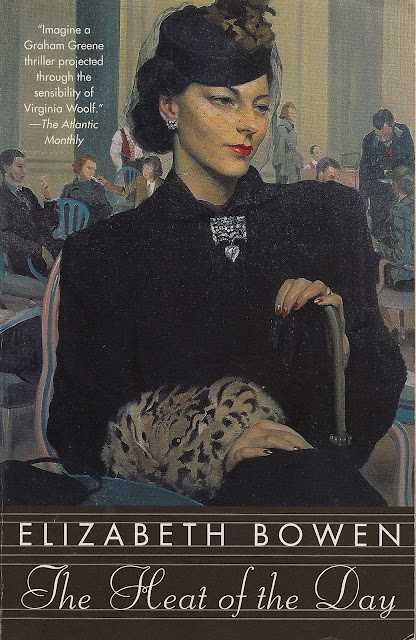
Elizabeth Bowen: The Heat of the Day (1948) Literature and War Readalong March 2013

The Heat of The Day

Elizabeth Bowen’s The Heat of the Day introduces us to London during WWII. The novel starts on a Sunday in 1942 and ends exactly two years later. London is a ghostly city. Many houses are but ruins, other’s are abandoned. People’s lives have changed, relationships are formed much more quickly but they end as abruptly too. Social differences become smaller, the society is less strict as a whole. Everything is perceived more intensely. The seasons, the hours of the day, the light. The beauty and spookiness of the time is captured in evocative passages like the one below.

Out of the mists of morning charred by the smoke from ruins each day rose to a height of unmisty glitter; between the last of sunset and first note of the siren the darkening glassy tenseness of evening was drawn fine. . . . The diversion of traffic out of blocked main thoroughfares into byways, the unstopping phantasmagoric streaming of lorries, buses, vans, drays, taxis past modest windows and quiet doorways set up an overpowering sense of London’s organic power–somewhere here was a source from which heavy motion boiled, surged and, not to be damned up, forced itself new channels.

The very soil of the city at this time seemed to generate more strength: in parks the outsize dahlias, velvet and wine, and the trees on which each vein in each yellow leaf stretched out perfect against the sun blazoned out the idea of the finest hour. Parks suddenly closed because of time-bombs–drifts of leaves in the empty deck chairs, birds afloat on the dazzlingly silent lakes–presented, between the railings which girt them, mirages of repose. All this was beheld each morning more light-headedly: sleeplessness disembodied the lookers-on.

In reality there were no holidays; few were free however light-headedly to wander. The night behind and the night to come met across every noon in an arch of strain. To work or think was to ache. In offices, factories, ministries, shops, kitchens the hot yellow sands of each afternoon ran out slowly; fatigue was the one reality. You dared not envisage sleep.

The main story centers on Stella, her lover Robert, her son Roderick and the intelligence agent Harrison. The side story involves two girls, Louie and Connie. It’s a peculiar story. Harrison visits Stella one night and tells her that Robert is a spy working for the Nazis. Harrison could protect him to some extent if Stella was willing to become his lover.

It’s hard to imagine what it would feel like to hear something like this about the man you love. Stella doubts it at first but Harrison has proof and after a few months she accepts it and confronts Robert.

I’m not exactly sure why Elizabeth Bowen chose this topic or why she chose to paint the portrait of a likable Nazi spy. I didn’t feel this was believable at all.

If you put the story aside and concentrate on other elements, you will find an excellent description of wartime London. I liked the many side stories far more than the main story as such. The female characters are all interesting. There is Stella who was perceived as a fallen woman as it was said she had walked out on her husband. Nettie, the wife of a distant Irish uncle lives in a home for mentally ill patients but is perfectly fine. Louie sleeps with various men, to feel closer to her husband who is stationed in India. The status of women has changed a lot at the time, the society is less rigid, many could finally break free,

Robert, although far less of a character than most women in this novel, is interesting because he symbolizes the wounded men who came back after Dunkirk, unfit for future service. Many of these men must have been very bitter. I’m not sure though that an experience like this would have pushed many to become Nazi spies.

All in all this was a disjointed reading experience. I liked the atmosphere and the mood, didn’t care for the story and often had the feeling Elizabeth Bowen cannot write novels. As much as I liked her shorter prose and could forgive her for many convoluted sentences, in this book she went too far. According to Glendinning’s biography, her editor changed many sentences and told her many times to work on them. It’s not that they are long – long sentences hardly bother you when you read German or French literature – but the structure is weird. Let me give you a few examples.

In the street below, not so much a step as the semi-stumble of someone after long standing shifting his position could be, for the fist time by her, heard.

Or her way to break up dialogue and add long complicated tags

“This is certainly,” she agreed, with the affability of extreme disdain, “rather a point.”

This one is hilarious

“Absolutely,” he said with fervour, “not! Though you know I do wish I knew what’s rattled you.”

While I would still recommend to read The Heat of the Day for many different elements, I’m not so keen on reading another of her novels soon unless someone tells me there is one in which the sentences are not as contorted. For the time being I’ll stick to the short stories.

Other reviews

Anna (Diary of an Eccentric)

Lizzy (Lizzy’s Literary Life)

TBM (50 Year Project)

*******

The Heat of the Day was the third book in the Literature and War Readalong 2013. The next is the WWI novel The Wars by Canadian writer Timothy Findley. Discussion starts on April 29, 2013. Further information on the Literature and War Readalong, including the book blurbs can be found here.

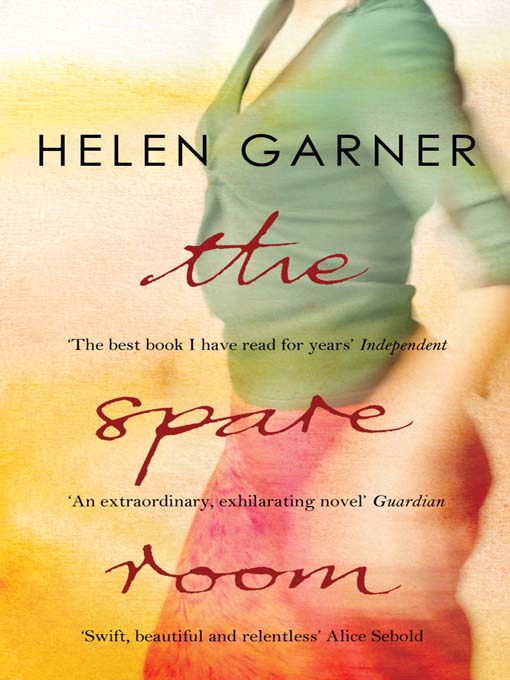
Helen Garner: The Spare Room (2008)

untitled

Helen Garner’s The Spare Room was one of the books I found at work. I started it immediately and finished it almost in one sitting. Garner has chosen a difficult topic and written about it beautifully. Despite the sad topic, it’s an uplifting book.

Helen’s friend Nicola is very ill. She has stage four metastatic cancer. This means it’s terminal. Chances that she will recover are less than minimal. Looking for a miracle cure she asks her friend if she can stay with her in Melbourne for three weeks. Helen doesn’t know any details. She doesn’t know that Nicola is in denial. She just wants to help her friend and accepts.

Nicola always used to believe in alternative medicine. But what works for all sorts of ailments, does not work for terminal cancer. Many late stage cancer patients cannot accept the fact that they are dying which makes them an easy prey for frauds and con men. The clinic Nicola will visit during her stay is not much different. The cure has no value but terrible side effects. And it costs a fortune. What Nicola would really need is palliative care but she thinks getting palliative care will speed up her death.

Caring for her friend is beyond Helen’s strengths. Like Nicola, she is over 60 and washing sweaty bed sheets every night, seeing her friend in horrible pain and denial sucks all her energy from her.

“It’s just that in my work,” said Carmel, “I’ve learnt that there are people who never, ever face the fact that death’s coming to them. They go on fighting right up to their last breath.” She paused. “And it is one way of doing it.”

This must sound like a bleak story but it’s not. It’s honest and even funny, stripped of everything but the bare reality. The worst part is that the two women have to live a fake relationship as Nicola doesn’t want to accept she will not be cured. She smiles constantly, pretending everything is alright. She doesn’t want to feel her emotions and in doing so triggers them in others. All those who care for her feel desperate, sad and angry while she keeps on grinning.

When Helen is at the end of her strength, she confronts her demonstrating that sometimes you really have to be cruel to be kind. When they finally speak openly about the fake cure and the probability that Nicola will die, things get better and they are able to live moments of true friendship again.

Oh, I loved her for the way she made me laugh. She was the least self-important person I knew, the kindest, the least bitchy. I couldn’t imagine the world without her.

I devoured this book. Its spare prose is beautiful. Its honesty was soothing.

I’ve seen this happen quite a few times around me. People get very ill, terminally ill but until the last moment they deny it. No real conversations are possible and what little time is left is spent chasing a miracle cure.

But Garner goes one step further. She also writes about the caregiver and how incredibly strong you must be to perform the tasks which are needed. How much you may come to hate the person who depends on you because it’s so tiring and stressful.

The Spare Room is astonishing because it’s so well written and manages to be ultimately uplifting through its gentle humour, honesty and in  showing what true friendship can achieve.

This review is my first contribution to the Aussie Author Challenge 2013

Aussie-Author-Challenge-2013

We all know that search engines work in mysterious ways that’s why I add this caveat: 

For anyone reading this who is afflicted by cancer or has friends or family who are ill, please be aware, that the case in this book is not just a simple case. It’s a stage four metastatic cancer. I’m saying this because I don’t want to rob anyone of their hope. Many cancer patients, especially when their illness has been discovered early on, can be cured, notably when the tumour is operable. There are but a few types like the very aggressive malignant glioblastoma multiforme which leave you with hardly any chance.

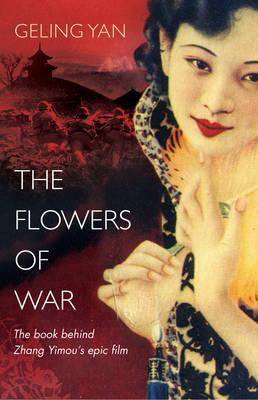
Geling Yan: The Flowers of War – Jingling Shisan Chai (2006) Literature and War Readalong February 2013

The Flowers of War

Geling Yan’s novel  The Flowers of War – Jingling Chisan Chai is set in Nanking in 1937 during The Rape of Nanking or The Nanking Massacre, when the city was occupied by Japanese troops. The story which is inspired by true events takes place in the compound of an American church. Father Engelmann hides a group of school girls and when some prostitutes from the nearby brothels climb over the wall, he hides those as well. Later, three Chinese soldiers, two of which are badly wounded will also come and seek refuge. Their presence endangers the others greatly.

The Rape of Nanking is one of those horrific events which are hard to imagine and I was very curious to see how the author would handle this. I must say she’s written an amazingly powerful and beautiful book which gives us a good impression of what has happened without dragging the reader down too much. Still, especially due to the very sad ending, we never doubt for one minute how atrocious this must have been, notably for women.

Having a group of beautiful and very seductive prostitutes hide in the compound also leads to comical moments. The girls are still very young and pious and hate “those women” with a vengeance. The prostitutes on the other hand love to provoke and shock the priests and the girls.

In the beginning of the novel nobody expects that the Japanese occupation will turn into such a nightmare and Father Engelmann frequently says that he knows the Japanese to be very polite and expects that they will stay civilized and follow the Geneva Convention. When rumours of rapes and executions are spread he learns that he was wrong.

Because the church is neutral territory, Engelmann lives under the assumption that they are all safe inside of the compound. Safe but hungry because there is hardly any food left in Nanking. However Engelmann is wrong and the end of the story is harrowing. The Japanese don’t only enter the compound because they are looking for food but also because they are looking for women. It is known that the Japanese took female prisoners and used them as so-called “comfort women” and turned them into prostitutes or rather sex slaves.

I didn’t expect to love this book so much but I did. Geling Yan tried to show that war brings out the worst in people but also the best. It explores different moral choices and questions what is really good and what is bad. In the end, the prostitutes who are seen as bad, are the ones who prove to be capable of the greatest kindness and compassion.

The characters are very well-developed. We learn the back story of almost all of the characters and truly care for them by the end. There are numerous moments in which two people are listening and caring for each other and manage to share true beauty despite of the mayhem that is raging outside.

It occurred to Fabio that he might stop drinking if he had someone to tell his troubles to. A listening face like hers was intoxicating enough.

I thought this was one of the most subtle books on war I’ve read so far. It’s written in a very simple, straightforward and engaging way and tells a story of beauty, humour, sacrifice, compassion and hope without ever letting us forget the horrors or minimizing them. The biggest strength were the many characters which came alive in a few sentences.

When I choose a book for the readalong I tend to focus on the war aspect but ultimately The Flowers of War has a lot to say about the precarious condition of women.  The stories of the prostitutes are heartbreaking. It’s also well shown how conditioning makes other women, in this case the girls, hate them because of their trade. They are treated like the scum of the earth although they are good-hearted and kind and in most cases had no other choice. Many come from poor families and have been sold to brothels at a very young age.

One of the core messages of the book is captured in this quote in which Father Engelmann speaks to one of the Chinese soldiers who hides in the compound

“God used him to give me inspiration. He wanted me to save myself by saving others. God wants people to help each other especially when they are injured or weak. I hope you will trust in God. It is God you should trust, not weapons, when you are powerless to control your fate, as you are now.”

I’m looking forward to read what others thought of this novel. I liked it a great deal.

Other reviews

Book

Anna – Diary of an Eccentric

Danielle – A Work in Progress

JoV’s Book Pyramid

Movie

The Flowers of War – Novia (Polychrome Interest)

Book and Movie

Kevin (The War Movie Buff)

*******

The Flowers of War was the second book in the Literature and War Readalong 2013. The next is The Heat of the Day by Irish writer Elizabeth Bowen. Discussion starts on Thursday 28 March, 2013. Further information on the Literature and War Readalong, including the book blurbs can be found here.

Elizabeth Bowen and Irish Short Story Week

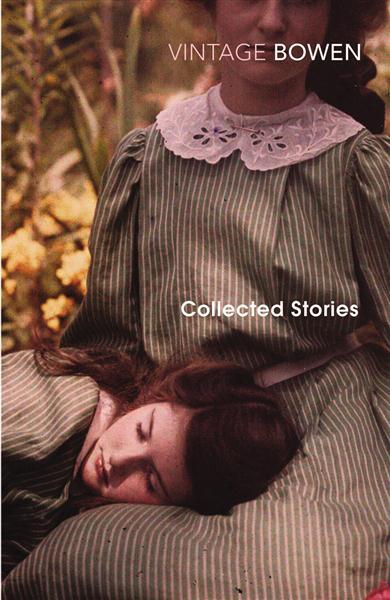
Elizabeth Bowen Collected Stories

I just wanted to let you know that Mel’s Irish Short Story Week is upcoming in March. Because it was such a success in the last couple of years the week has been extended to a whole month and therefore runs from March 1 until March 31 2013.

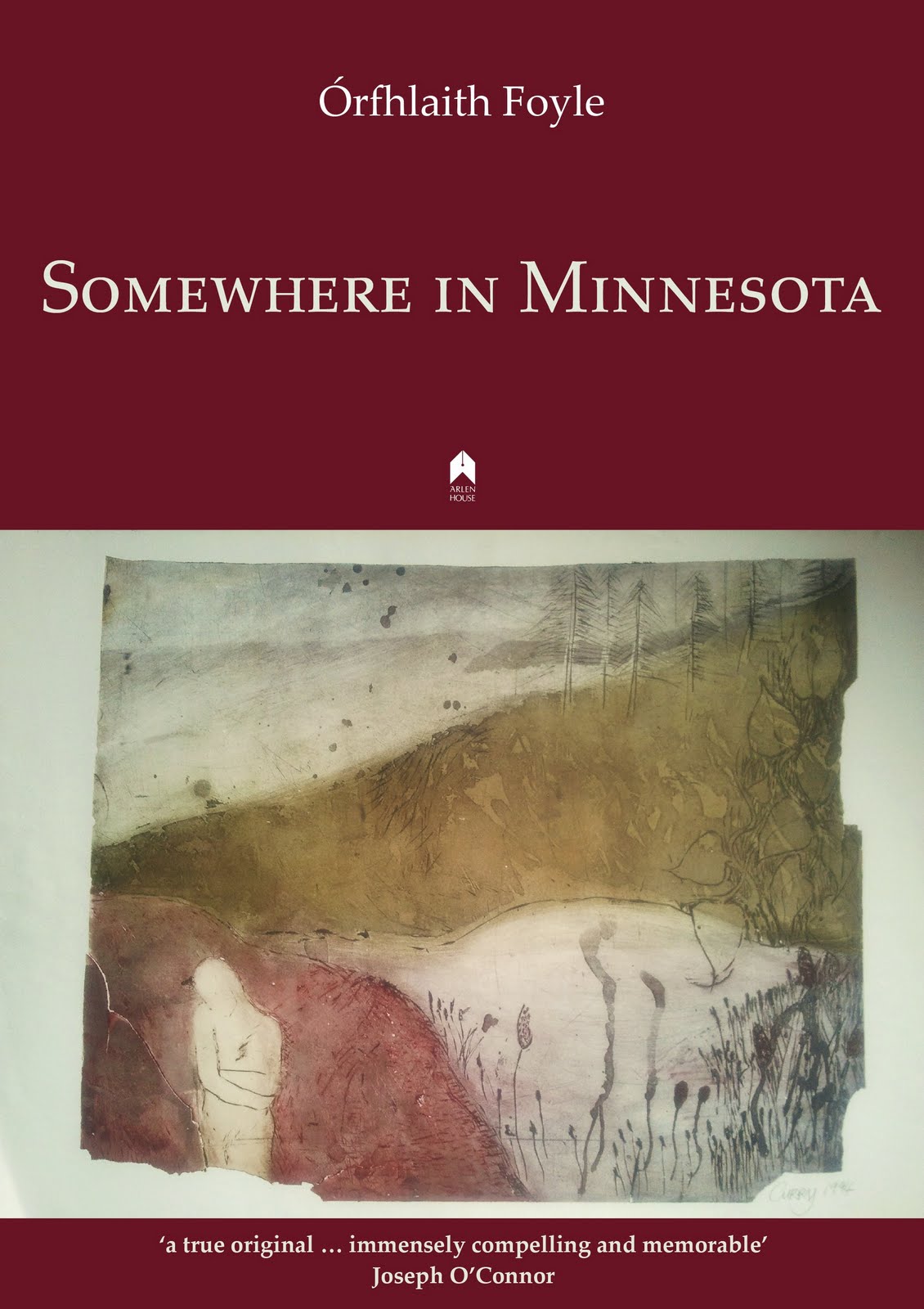
I discovered some great new writers like Órfhlaith Foyle and Kevin Barry last year, but I also rediscovered old favourites like Elizabeth Bowen. I read a few of her short stories and had sworn I would read more. This year I’m planning on reading several of her stories contained in the Collected Stories which seems to be a great collection.

To stay in line with this month’s theme my Literature and War Readalong, which takes place at the end of the month, also features a book by Elizabeth Bowen – The Heat of the Day.

Because I loved the stories I read last year so much I also got her book Love’s Civil War which contains letters and diary entries and Victoria Glendinning’s biography which was recommended by Mel u. I might start the one or the other or even both.

For more details and Irish reading suggestions please visit Mel u at The Reading Life.

Orfhlaith Foyle

Hiromi Kawakami: The Briefcase – Sensei no kaban (2004)

Hiromi Kawakami is one of my favourite writers. Three of her books have been translated into German two of which are available in English as well. I loved both books I’ve read so far (Manazuru and Mr Nakano and the Women) and was looking forward to this third one which has been published last year in English.

I often hear people say they don’t know any Japanese literature or don’t know where to begin. I usually recommend Banana Yoshimoto as a first author but now I think Kawakami’s The Briefcase may be even a better starting point.

The Briefcase is a love story between a retired college professor and his former student Tsukiko. When you read “love story”, you may have some expectations but you will have to throw them overboard as nothing will quite match this story which is as far from a Western love story or romance as can be.

The professor or sensei and his former student  meet accidentally one evening in a bar. Tsukiko is 38 years old, a loner who doesn’t believe she will ever find true love. She isn’t too sad about this though, she is unconventional and likes to live on her own.

The professor is somewhat startled to meet a woman in such a bar and drinking a lot of sake at that but soon they are both delighted to find out that they like the same food and drinks and that they enjoy hanging out together. The relationship is very formal at first, nothing hints at a possible love story at all. Tsukiko is quite quirky and in the beginning the professor tells her constantly that she isn’t acting very ladylike, only she couldn’t care less. It becomes soon obvious that he isn’t less quirky. They never  make appointments, they just meet at the same bars week after week until one day pick when they a fight over something really silly. It’s only when they do not see each other any more for a long time that Tsukiko realizes she has fallen in love.

The way they slowly and carefully approach each other, and get to know each other is so lovely. They really take their time and only decide to be real lovers when they have spent a long time together and have seen each other at their worst. But they are also both very shy and not very experienced and have been on their own for a long time. Why the professor has been alone will only be revealed in the end.

The way this relationship is described is very Japanese. It’s filled with respect and an almost ritualized slow approach of another human being. None of them would ask the other any direct questions, the way they get to know each other is far more subtle. Through shared moments and mutual attention and observation.

There are many wonderful and typically Japanese elements which could have turned the book into a cliché if a lesser writer had attempted to write about them. Food is extremely important and we read about an incredible amount of different meals. Vegetables, mushrooms, fish we’ve never heard of are mentioned.

Japanese poetry, Haikus, the cherry blossom festival, calligraphy and many other things are very important as well and reading the book is a bit like a trip to Japan. Or at least like I would imagine it.

What I liked is how the book reads as if it had been painted with one of those very precise and fine calligraphy brushes. Kawakami can evoke an atmosphere and emotions in a few lines, and artfully captures how they are changing constantly. The story takes up almost a year and the change of seasons is captured as well as the change of emotions.

The end was a real killer, beautiful but quite sad. I highly recommend this wonderful and lovely book. It is a great introduction to Japanese literature, its sensibilities and esthetics.

I’ve read the book as a contribution to Tony’s January in Japan and Bellezza’s Japanese Reading Challenge.

January_in_Japan

Japanese Literature Challenge