Sarah Hall: The Carhullan Army (2007)

Carhullan

Set in the part of England once known as The Lake District and frequented by hordes of landscape hungry tourists, The Carhullan Army is narrated by a young woman who has adopted the name Sister. Britain after its union with the United States and numerous unsuccessful foreign wars, has found itself in the grip of a severe fuel crisis and the country is now under the control of a severe body known as The Authority. All fire-arms have been handed over to the Government and all women have been fitted with contraceptive devices; this Britain of the near-future is brutal and very-near desperate.Sister’s only hope — or so she thinks — lies in finding the Carhullan Army: a mythical band of women who lives a communal existence in the remote hills of Cumbria.

I came across Sarah Hall’s name many times in the past months. First I read a review of The Carhullan Army on Vishy’s blog (here) and immediately thought I’d love to read it. I later saw that Hall won the John Llewellyn Rhys Prize for The Carhullan Army, the Commonwealth Writer’s Prize for Hameswater and was shortlisted for the Man Booker for The Electric Michelangelo. Her short stories are said to be very good too.

The Carhullan Army is a dystopian novel. It has been called A Handmaid’s Tale for our times. I can’t confirm whether that’s the case as I haven’t read Atwood’s novel yet, but it’s certainly not a genre novel, it’s highly literary.

The Carhullan Army  is set in a bleak Britain, which is ruled by the so-called Authority. The system has collapsed due to a fuel crisis. People live like cattle, sharing small apartments. Some things are strictly regulated like work and reproduction, others are forbidden, like leaving the town. People are depressed, many use drugs. Relationships collapse, love dies. “Sister”, how the narrator calls herself, can’t take this anymore. She’s heard of Carhullan. Somewhere in the mountainous region of the Lake District lives a group of women autonomously. They have a leader, Jackie, a very charismatic figure, but other than that, they are free. Sister doesn’t know that much about the place, only that what she has heard. The rest is a mix of her imagination, her hopes, her dreams.

The place sounded utopian, martial or monastic, depending on which publication was interviewing, and what angle they wanted to push.

Sister is sure that her life will improve and that the women will welcome her, commend her for her courage to leave. But things don’t exactly go like that. The way Sister is “welcomed” is a huge disappointment, a shock even. It will take more than simple resilience to come to terms with this. But once she’s proven she isn’t a spy, nobody is following her and that she’s truly interested in living at Carhullan, she’s accepted.

Sister is a complex narrator but Jackie, the leader, is even far more complex. What Jackie has created at Carhullan is as amazing as it is scary. The women are able to provide for themselves. They plant, gather, and hunt, and – even far more important – they have an army. An army which has been trained by ex-soldier Jackie who is a severe drill instructor. She’s fierce and demanding, charismatic and unforgiving. Most women know that they might need to defend themselves some day and for many it is a special distinction and a great honor to be chosen for the army, others however think Jackie goes too far. Sister would love to be part of the army, but she has to wait a long time.

In Jackie Sarah Hall has created a multilayered personality. She combines the traits of a cult leader, of a fanatic, a saviour, a soldier and a hero. She never questions the use of violence, which, for me, was the most difficult part of the book. I never thought this was a utopian society, but I never thought they were that misguided either. Given the circumstances the development was quite logical but they were not free. Every single of Jackie’s decisions is an answer to the Authority and the end of the book makes this very clear. Sister idealizes Carhullan when she goes looking for it, the reader thinks it’s ideal at first, but towards the end we understand that Carhullan is part of the system as well. There would be no Carhullan, at least not the one we see here, if the society had not reached an endpoint.

Here’s Jackie talking to Sister:

“…. I just want to get to the bottom why these things go on. I’m a dark fucking tourist, Sister, I like going to these places. It’s interesting to me. I’m interested in what holds people back. And what doesn’t. And how far these things extend….”

I think this illustrates my point. Jackie is raw, she’s violent and she’s never free of questioning the system, she has an urge to explore it and in doing so stays tied to it.

The Carhullan Army explores many other themes, Lesbian love, autonomous living, the nature of cults and fanatics, totalitarianism and terrorism. Sarah Hall writes well, her sentences are limpid, simple, yet her vocabulary is rich and evocative.

The story is told like a confession, which has been recorded. Some of the files are recovered, some are corrupted. I thought tha approach worked well.

It’s a book that made me feel very uncomfortable. I found it had a bit of a Lord of the Flies vibe. The place Sarah Hall describes isn’t a gentle haven, it’s a rough world, in which people have to fight for their survival. The harsh landscape, the difficult situation has changed them. They swear, they fight. They do have camaraderie and loyalty, even love,  but it’s all very raw.

I am glad I’ve read The Carhullan Army. I think it’s excellent and thought-provoking but it’s depressing as well. I wouldn’t want to live in neither of the worlds Sarah Hall has created.

Have you read any of Sarah Hall’s novels or short stories?
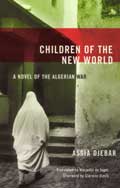
Literature and War Readalong July 29 2013: Children of the New World – Les enfants du nouveau monde by Assia Djebar

Children of The New World

Assia Djebar’s novel Children of the New WorldLes enfants du nouveau monde is the first novel about the war in Algeria in this readalong. Assia Djebar is one of the most important, if not the most important North African writer. She is also a translator, essayist and filmmaker.

I’ve been meaning to read her for years as I got other books by her on my piles and I’m glad to finally get a chance to do so.

She was the first writer from the Maghreb to be elected to the Académie Française in 2005. Djebar is known to be anti-patriarchal and anti-colonial; her novels focus on women’s lives. She writes in French, not in Arabic.

Children of the New World is about the war in Algeria from the point of view of the women.

Here are the first sentences

In the old Arab quarters at the foot of the mountain the whitewashed houses all look alike. Before the city grew larger, this was the only place where affluent families would come to find a bit of cool air, near the b rooks and orchards at the end of spring. Each home is at the end of a cup de sac, where, after wandering through a maze of silent little alleyways, one must stop. All that can be heard is some vague whispering suddenly interrupted by the shrill cries of children, whom the mothers are trying to keep at home, but to no avail. The military guard can show up any moment. Then there is barely enough time to gather the children and muffle their voices behind closed doors.

*******

The discussion starts on Monday, 29 July 2013.

Further information on the Literature and War Readalong 2013, including all the book blurbs, can be found here.

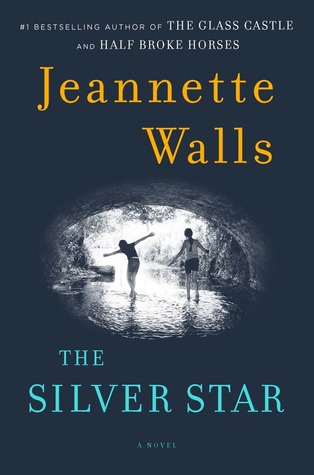
Jeanette Walls: The Silver Star (2013)

The Silver Star

I still remember when Jeanette Wall’s The Glass Castle came out. I devoured it and absolutely loved it. I was a bit disappointed to find out her second book, Half Broke Horses, wasn’t a memoir but a novel. I bought it but never read it. Last week I got her latest, The Silver Star, as a present and just finished it yesterday.

If you know Jeanette Walls, The Silver Star will not surprise you. Like in her memoir we are introduced to some really bad parenting, children who have to cope on their own, a murky family history and abusive grown-ups.

Some writers always return to familiar territory, mining their lives and telling a similar story over and over again. I don’t mind that when it is well done. And Jeanette Walls writes well. Her writing has an almost cinematic quality, her way of conjuring up a scene is very powerful.

Bean and Liz are 12 and 15 respectively when her single mum has a break down and leaves the two girls alone, with just about enough money for a month. Their mother is 36 but still a wannabe singer/songwriter/actress. Nothing she tries ever seems to work out and all of her plans invariably end in disaster. That she disappears for a couple of days is nothing new, but for a whole month is a novelty. When social services turn up in front of the house, the girls decide to go to their mother’s hometown and see if their uncle will take them in.

Their mother is originally from a small town in Virginia. The family used to be very rich but all they have left is a decaying mansion. The girls don’t know why their mother left right after Bean was born. They also don’t know who their respective fathers are.

When they turn up on uncle Tinsley’s doorstep he isn’t too thrilled at first, but eventually he gives in and lets the girls stay with him. It turns out that Bean and Liz really love the small town and settle in quickly. They make new friends, get to know Bean’s father’s family and have a great time. Their mother comes to visit but it ends in a huge drama.

When the local bully and mill supervisor Maddox tries to rape Liz, things escalate.

The book is set in the 70s; the Vietnam war and racial tensions are important topics. But gender is maybe even more important. There is an instance in which To Kill a Mocking Bird is mentioned and that’s no coincidence. There is a parallel to the novel, as in The Silver Star there is also a trial. Only with a very different outcome. Afro-American’s are still not treated like white people but women are treated even worse.

What I really liked about this book is what it says about parenting. It is obvious that Bean’s and Liz’s mother is incapable of taking care of her girls but despite this I was wondering how bad her parenting really was. She is often absent, not there when they need her, she’s “bonkers” as both girls say but she is kind and raises girls with a very strong self-esteem. I don’t try to say it’s OK for parents to just abandon their children but as a matter of fact, they were quite capable of taking care of themselves and if she’d been there, the attempted rape would still have happened. She is far from an ideal mother, she can’t cope and went through a lot of awful things but both girls are strong and very resilient. Many children who have parents who never abandon them, and provide for them materially, nevertheless crush their children’s self-esteem, abuse and neglect them emotionally. I find that far worse.

I saw that this book has received a lot of negative reviews on amazon (A lot of readers hated it because of the mother. I really wonder if they are all that perfect). Sure, it’s similar to her other books but I thought it was very enjoyable. It’s warmhearted and humorous. I loved the two girls who are very different, their uncle, and even the mother is fun as a fictional character. I’m glad I’ve got Half Broke Horses already. I’ll certainly read it soon.

Jan Terlouw: Winter in Wartime – Oorlogswinter (1972) Literature and War Readalong June 2013

Winter in Wartime

Dutch author Jan Terlouw’s award-winning novel Winter in Wartime  (Oorlogswinter), which has been made into a movie, is a book for YA. It tells the story of 15-year old Michiel and is set during the hunger winter, in the Netherlands in 1944.

Michiel lives in a Dutch village with his parents, older sister and younger brother. His father is the mayor of the village. Like the rest of the Netherlands, their village is occupied by the Germans. It’s obvious for everyone that the war will come to an end soon and that the Germans are losing it. However, instead of giving up, they intensify their hostile activities; they search houses, arrest, torture and shoot people.

The village is divided, some are collaborating, some are suspected to collaborate, while others are in the resistance. Michiel’s parents are anti-German; they are good people who try to help those who have less, as much as possible. Every night they open their doors to distant relatives, people on the run, displaced persons, provide shelter and food for one night. Uncle Ben who is in the resistance is one of the regulars.

Michiel has an outsider position. He isn’t really a child anymore but doesn’t seem old enough for resistance work. When Dirk, an older boy who has joined the resistnace, asks him to deliver a letter, should he not return from a mission, Michiel feels honoured.

That same day his father and a group of other people is arrested because someone has killed a German soldier. Some of the men who are arrested will be hanged. When Dirk doesn’t return and Michiel fails to hand over the letter, he opens it and discovers that Dirk has been hiding a wounded British pilot. What should he do now? Who will help him? Is there anyone he can trust? That’s what you will discover if you decide to read Winter in Wartime.

Towards the end of the book (p. 121) Michiel remembers something his father said

Michiel often thought of something his father once said: “In every war dreadful things happen. Don’t think that it is only the Germans who are guilty. The Dutch, the British, the French, every nation has murdered without mercy and perpetrated unbelievable tortures in times of war. That is why, Michiel, you shouldn’t allow yourself to be misled by the romance of war, the romance of heroic deeds, sacrifice, tension and adventure. War means wounds, sadness, torture, prison, hunger, hardship, and injustice. There is nothing romantic about it.”

This short paragraph is central and summarises the theme of the book. The novel looks exactly into this and tests it. While the story confirms that war is horrible, it still shows that heroism is possible. There will always be courageous and kind people in every war, people who will try to stay good and do good.

This is a book for young people and I was very interested to see how WWII would be handled. In all the resistance books and movies torture plays an important role. How would that be handled for children. I’d say Terlouw did a great job. He was explicit but not gruesome. Not for one second we think it may not have been as bad but still he isn’t too explicit.

Books for children and YA always have a message. A lot of that message is captured in the quote above but there is another central theme, which is illustrated too – not every German was bad. No people is bad as a whole.

I think Terlouw’s book is well done, it captures he Netherlands during the winter of 44 very well. The hunger, the masses of  fleeing people, the occupation, the suspicions, all this is well drawn. The tone isn’t depressing as the end of the war is in sight. Horrible things happen still but there is a lot of hope.

I saw the movie a few years ago that’s why I possibly didn’t like the novel as much as I would have if I hadn’t known the story already. It isn’t one of my favourite readalong titles but it’s still well worth reading and, as a children’s book, I’d say, it’s excellent.  Don’t miss it if you’re interested in WWII, occupied Holland, the Dutch resistance, and are looking for all of these topics done in a way that is appropriate for younger readers.

Other reviews

Anna (Diary of an Eccentric)

Danielle (A Work in Progress)

Iris (Iris on Books)

Judith (Reader in the Wilderness)

Movie review

Kevin (The War Movie Buff)

*******

Winter in Wartime was the sixth book in the Literature and War Readalong 2013. The next is the novel is Children of the New World aka Les enfants du nouevau monde on the war in Algeria by Algerian writer Assia Djebar. Discussion starts on Monday 29 July, 2013. Further information on the Literature and War Readalong, including the book blurbs can be found here.

Philip K. Dick: Do Androids Dream of Electric Sheep? – Blade Runner (1968)

Do Androids Dream of Electric Sheep

The movie Blade Runner is one of my favourite movies. I liked it so much that I never re-watched it but the mood and the atmosphere and some of the pictures stayed with me. I always meant to read the book it was based on but always forgot about it. After reading Danielle’s review a while back (here) and Brian’s insightful commentary a few weeks ago (here) I thought I really need to do it now. I also did a much more daring thing, I re-watched the movie. Luckily my courage wasn’t punished. It’s still one of my favourite movies of all time. Maybe I even like it more than before.

Philip K. Dick’s novel Do Androids Dream of Electric Sheep?  is set in San Francisco, in a bleak post-war society. Only those who cannot afford to leave Earth and emigrate to Mars, stay on. These are people who have either been too damaged by the fallout, the so-called specials or chickenheads, or those who lack money. Plants and animals have been badly damaged and there are hardly any living animals on Earth anymore. It’s a sign of prosperity if you can buy yourself an animal, any animal, a toad, a sheep, a goat.

Rick Deckard is a cop, or rather a bounty hunter assigned to hunt and “retire” androids who have escaped and turned against humans, starting to kill them. A new generation of androids, the Nexus 6, look and act exactly like humans but they don’t feel like humans that’s why a test which measures the emotional response can detect whether someone is an android or not. What complicates matters is that some androids have received false memories and don’t know that they are androids.

Deckard’s salary isn’t high but he receives a bonus for every retired android. 6 of these Nexus androids have escaped and need to be hunted. Some of them are quite dangerous. He hopes retiring them will allow him to finally buy a real animal and not just an electric sheep.

I thought it was extremely interesting to read this book and I didn’t expect it to be the way it was. To some extent it’s an almost straightforward noir novel, of course with a sci-fi twist, but it still works like many other bounty hunter or PI novels. But that is only one part, the part that was kept for the movie. The other part is more philosophical and at times a bit confusing. The people in the novel can use an empathy box and also use mood altering devices. The empathy box lets them experience what Mercer, a god-like figure, experiences. Empathy is the key word in this novel. What differentiates the humans from the androids is empathy but even the humans lack it and need to be reconnected to the empathy box. At least that’s how I understood it. What makes a human human is another important question. While the humans call destroying androids “retiring”, the androids see it as getting killed. They feel a real horror of death. It is Deckard’s dilemma that he can no longer pretend that he feels as if they were just machines.

Ridley Scott used the noir elements and turned them into something that has been called cyberpunk. His movie is set in a LA that looks like Hong Kong in which it is constantly night and raining. It’s quite a melancholic movie. The hunter and the hunted are both losers, the characters are much more complex than in the book.

I didn’t expect book and movie to be alike but I didn’t expect them to be this different. I absolutely love the movie but I didn’t love the book. Don’t get me wrong, I liked it but it’s pale in comparison. I found it much colder, and it lacked the mood and atmosphere of the film. The androids in the movie seem more human while some of their acts in the book made me despise them.

Brian has written an in-depth analysis in which he focusses on the philosophical aspects of the novel. I’ve read the book for the first time and certainly didn’t get all of it. So if you’d like to know more about those aspects here is the reviw. And here another review from Anna.

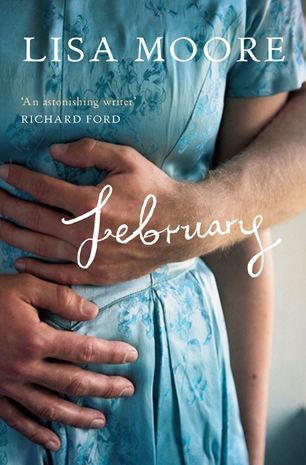
Lisa Moore: February (2010)

February

In 1982, the oil rig Ocean Ranger sinks off the coast of Newfoundland during a Valentine’s night storm. Helen O’Mara, pregnant with her fourth child, receives a call telling her that her husband, Cal, has drowned.

A quarter of a century later, Helen is woken by another phone call. It is her wayward son, John, calling from another time zone to tell her that he has made a girl pregnant and he wants Helen to decide what to do. As John grapples with what it might mean to be a father, Helen realises that she must shake off her decades of mourning in order to help.

With grace and precision and an astonishing ability to render the precise details of her characters’ physical and emotional worlds, Lisa Moore reveals the story that unfurls around those two moments.

Lisa Moore is an acclaimed Canadian author whose books are regularly nominated for awards and prizes. She won the Commonwealth Writers’ Prize for her novel Alligator. Her novel February was longlisted for the Man Booker in 2010. I discovered her when I was looking for authors for The Canadian Book Challenge 6. For those who are interested – Challenge 7 will start in July 2013.

February starts in 2008. Helen receives a phone call from her son John, telling her, he will be a father. John has always been the most difficult of her four children and the news fills her with joy and apprehension and triggers a flood of memories.

Helen has been a widow since 1992 when her husband died. He was working on the oil rig Ocean Ranger, which sank off the coast of Newfoundland during a stormy night. All the men died. It took three days until all the families had the certitude that nobody survived. Helen who was pregnant with her fourth child knew immediately that Cal was dead. They had such a strong connection, she felt that he would not return.

Grief holds Helen firmly in its grasp. For more than 20 years, she still belongs to the love of her life but deep down inside she knows she isn’t cut out to stay alone forever. There is a longing, a yearning. She wants to be touched, feel another person’s presence. At the time of the phone call, Helen has her house redecorated and falls in love with the man in charge of the redecoration.

The book jumps back and forth in time. A scene set in 2008 follows an episode from 1982; the next will take place in 2006 and the book will then move back to 1992 and finally return to 2008. The chapters indicate the year, it’s easy to follow but at first I didn’t understand why she chose this approach until I realized how much sense it made. Imagine you arrive at a crucial point in your life and look back on the years before that moment. I don’t think anyone would do this in a chronological order. We remember this and that, bits from that year, others from another year. That’s how February is constructed. Helen is finally ready to let go of her grief and these intense new feelings bring back the past with a new acuteness.

This is the kind of thing Helen remembers, bits of afternoon that sharpen in focus until they are too bright. Just moments. Tatters. How the kids climbed on Cal. Flung themselves. How they clambered over him. He tickled them. Gave them horseback rides. Told stories. He did the airplane. Lying on his back, his legs in the air, their little rib cages resting on his grey wool socks. Soaring.

February is a quiet, introspective book. Moore captures feelings masterfully and her style mirrors their complexity and depth. Her descriptions of love, loss, grief and hope are intense and powerful, entirely free of kitsch. Helen’s sadness is palpable, her loneliness can be felt.

February tells the story of a woman whose emotional life has come to a standstill. The man she lost was the love of her life and the relationship they shared was strong and deep. It was physical and emotional. There is incredible pain to imagine how he died, sinking into the icy cold water, with no hope to be rescued. Imagining this takes its toll. It’s as if she feels she will betray him, if she lets go of his memory.

When Helen reawakens to her needs, she feels like a young girl inside of the body of and elderly woman. She’s 58 and shocked to find out that she isn’t considered to be attractive anymore. I liked the way Moore showed this, the scenes she chose to illustrate how invisible older women become in our society which only values women who are young and beautiful. Moore shows this with so much compassion, it’s touching and painful at the same time. Here’s Helen after a date with an online acquaintance she’s been writing to daily for three months has gone an unexpected way

‘Heathcliff’ had come and looked at her and didn’t find her attractive. It was so far outside the scope of what she knew to be decent human behaviour that she could not fathom it, though some part of her also knew it exactly. She went to the bathroom and got down on her knees in front of the filthy toilet and puked. The floor of the bathroom had slush all over it and the knees of her nylons were soaked; a single stone dug sharply into her knee. What she was vomiting was the belief that getting old didn’t matter. Because it did matter. It mattered a lot and there was no stopping it, and everything inside her heaved out that idea.

Moore’s achievement is to describe the pain and the loss of the beloved man in an understated way and to pair them with the pain of lost youth and possibilities. This could be a depressing book but it’s not, it’s very beautiful because Helen learns that there may not be so many possibilities anymore but there are still some and life can start anew.

I began February last year but had to put it aside because it’s a book that demands attention. It’s best read slowly as it’s very rich and the style is fresh and diverse. It’s a very authentic book that rings true at every moment. It has what you would call a happy ending but it’s not corny as, in a way, it is a narrow escape. There is always the danger of staying alone and lonely, of spending old age abandoned from life and love.

I liked the idea that Lisa Moore chose a true story, the Ocean Ranger Disaster, and based her novel on that tragedy. Just like the Titanic, the Ocean Ranger was said to be unsinkable. Nobody saw the disaster coming. Does that make it worse? Was Helen better off because she knew right away and with an absolute certainty that Cal was gone while others were still hoping for her husbands and sons to return?

This is the second author I have discovered thanks to The Canadian Book Challenge. And, like Mary Lawson, she is an author I want to read more of. She writes beautifully and with a rare authenticity.

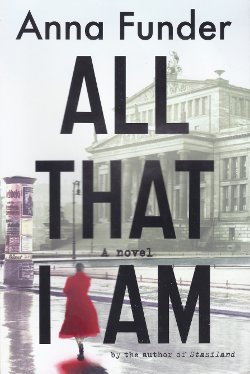
Anna Funder: All That I Am (2011) Literature and War Readalong May 2013

All That I AM

It’s not easy to write about this book and what is even worse – this is the very first time I almost forgot to write the review of one of my readalong titles. The book is not bad as such, I didn’t suffer while reading it or want to abandon it or anything like that. It just never reached me, if you know what I mean. It was like listening to the radio while talking to someone at the same time. You hear some individual words which briefly get your attention but overall it’s just background noise. This has certainly nothing to do with the topic as such but was entirely due to its execution. I was wondering before starting the novel why people called this “faction”. Now I know.

All That I Am tells the true story of four friends. Ruth Becker, her cousin Dora Fabian, the playwright Ernst Toller and Ruth’s husband Hans Wesemann. At a time when hardly anyone noticed, they knew that Hitler’s coming to power in 1933 was a very bad thing. Being part of the communist and socialist movement, they were not only in opposition to the National Socialist party but in grave danger from the beginning.

The chapters alternate between the point of view of Ruth Becker and Ernst Toller. They are both told in the present, just before their deaths, at different points in time. Ruth is living in Australia when she is looking back on her life, while Toller stays in the US in 1939 and tells Dora’s story from his point of view. Although they were both important, and, in Toller’s case, even more famous than Dora, their stories focus on Dora who was the center of their respective lives, their best friend and lover.

After a small act of rebellion – Ruth hangs a red flag out of the window, after Hitler comes to power – the four friends have to fear for their lives. People are being arrested and executed if they openly criticise the regime.

The four decide to leave for London and continue their work there. They fight in order to raise awareness of what is happening in Germany and still hope that Hitler will be overthrown.

At first they might have felt like they had escaped but Hitler’s agents were everywhere and even people living abroad were executed. They hear daily about people they know being killed. They must also fear that there is a traitor among them.

I’m not going to reveal more as the book works best, I think, when you don’t know too much in advance. That way it’s at least to some extent surprising. There are a few dramatic events and unexpected developments.

While I didn’t know these particular stories, wasn’t familiar with the four people, I knew enough about German history, so that this particular slice of it, had nothing new to offer. What was new were the stories of the four friends but the way this was told was not very interesting. It’s true, the book picks up speed in the second part but still, it read like Funder had tried to fill facts with life but didn’t really succeed. All we got was a half filled balloon hovering half a meter above the ground. It never managed to fly high up in the sky.

The best parts were the few moments telling Toller’s and Ruth’s final days.

Those who have read Stasiland, Anna Funder’s non-fiction book on Eastern Germany, were all very enthusiastic, which makes me think it would have been better if she had opted for the same approach here. Only, the facts are kind of meagre and maybe she thought turning something you could have told in 50 non-fiction pages would work better if turned into a full-length novel.

As for the topic – Yes, there were people who were aware as soon as 1933 that things were going wrong in Germany. Toller and his friends were not the only ones. There was a large number of writers and artists, communists and socialists who left Germany as early as that. What the book doesn’t explore is the fact that if  the communists and socialists would have been able to overthrow Hitler and his party, Germany might not have been much better off.

Sure, it’s an interesting story, sad and dramatic but told in a lifeless manner and very dry. It certainly didn’t work for me. Luckily it worked for others.

Other reviews

Lindsey (Little REader Library)

Lizzy’s Literary Life

Tony’s Reading List

The review is also a contribution to the Aussie Author Challenge.

*******

All That I Am was the fifth book in the Literature and War Readalong 2013. The next is the WWII novel Winter in Wartime by Dutch writer Jan Terlouw. Discussion starts on Friday 28 June, 2013. Further information on the Literature and War Readalong, including the book blurbs can be found here.