German Women Writers – A Few More Suggestions

image

German Literature Month is upcoming and since we’d like to promote women writers I thought, I give you some more suggestions. Two years ago I wrote this post containing mostly classics. Below you find a list with newer or lesser-known authors and books who are all interesting. None of these have been reviewed in one of the past GLM. There would be so many more if only they were translated.
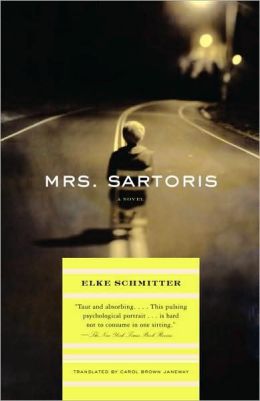
Mrs Sartoris

Elke Schmitter – Germany

Mrs Sartoris

An explosive first novel – Madame Bovary in modern Germany – about a wife and mother whose failed love affairs have driven her to the edge of sanity and to a startling attempt at vindication. After being jilted by a rich boyfriend, Margaret, eighteen and heartbroken, throws herself into a comfortable but stifling marriage to Ernst, a war veteran with a penchant for routine and order, who still lives with his mother in a small German village.

It’s not a bad life, considering Margaret’s psychological scars, but neither Ernst’s adoration nor the birth of a daughter can reawaken her frozen emotions. Until she slides into an affair with a married man with whom she plans to run away. Her plan is a fantasy that cannot possibly come true. Its repercussions nevertheless will explode with unimaginable force in these astonished lives.
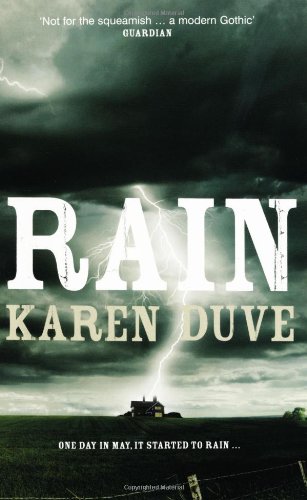
Rain

Karen Duve – Germany

Rain

“It will get better when it stops raining,” said Leon. When Leon Ulbricht lands a contract to write a gangster’s memoirs and moves into his dream home in an East German village with his beautiful wife Martina, everything seems set for an idyllic existence. But the dream home turns out to be in the middle of a fetid swamp; his house and marriage are falling apart; he can’t write the book and has spent all of his advance. It rains without end and their attempts to repair the house, or at least dry it out, are hampered by the plague of slugs eating away at the foundations. And then the gangster, wondering why his memoirs are not yet completed, decides to get nasty.
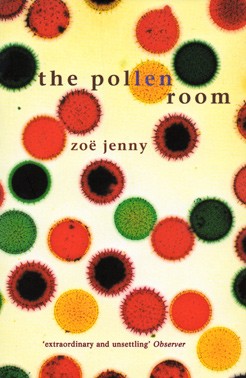
The Pollen Room

Zoe Jenny – Switzerland

The Pollen Room

Carlin Romano “The Philadelphia Inquirer”A European “Catcher in the Rye” or “Less than Zero” — a “spokenovel” for its generation….Abounds in gleaming sentences, in burnished image after image…[Jenny] is a beautifully disciplined writer.
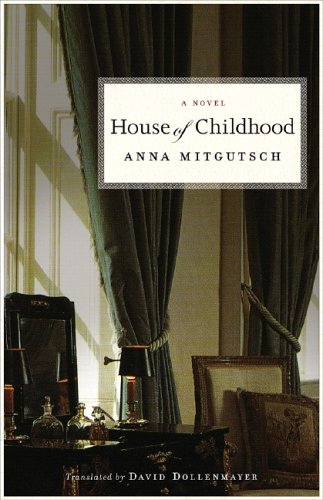
House of Childhood

Anna Mitgutsch – Austria

House of Childhood

Max Berman, a successful but rootless New York restoration architect, socialite, and ladies’ man, remembers his childhood home in the small Austrian town of “H,” mostly through his mother‚’s cherished photographs and vivid stories. When she dies, still longing for the house she fled with her husband and young children in 1928, Max temporarily abandons his playboy lifestyle and travels to H, determined to reclaim the confiscated house.

In H, Max encounters Nadja, a young woman convinced that her late mother was Jewish and that the local synagogue will provide the sense of community she lacks. Recognizing that she is too talented for her provincial neighbors, he arranges for her to attend college in the U.S., where she becomes the most significant of his many lovers. He also befriends Arthur Spitzer, a Holocaust survivor and the leader of H’s dwindling Jewish community, who helps him regain legal control of his mother’s house. When, years later, the last of his tenants finally moves out, Max returns to investigate his family’s ties in H for a fateful year that challenges his restlessness and seems to offer the chance for real belonging.

Acclaimed Austrian writer Anna Mitgutsch’s novel is a powerful examination of the meaning of home—in a place, a community, a relationship—and the difficulty of finding one in our tumultuous world.
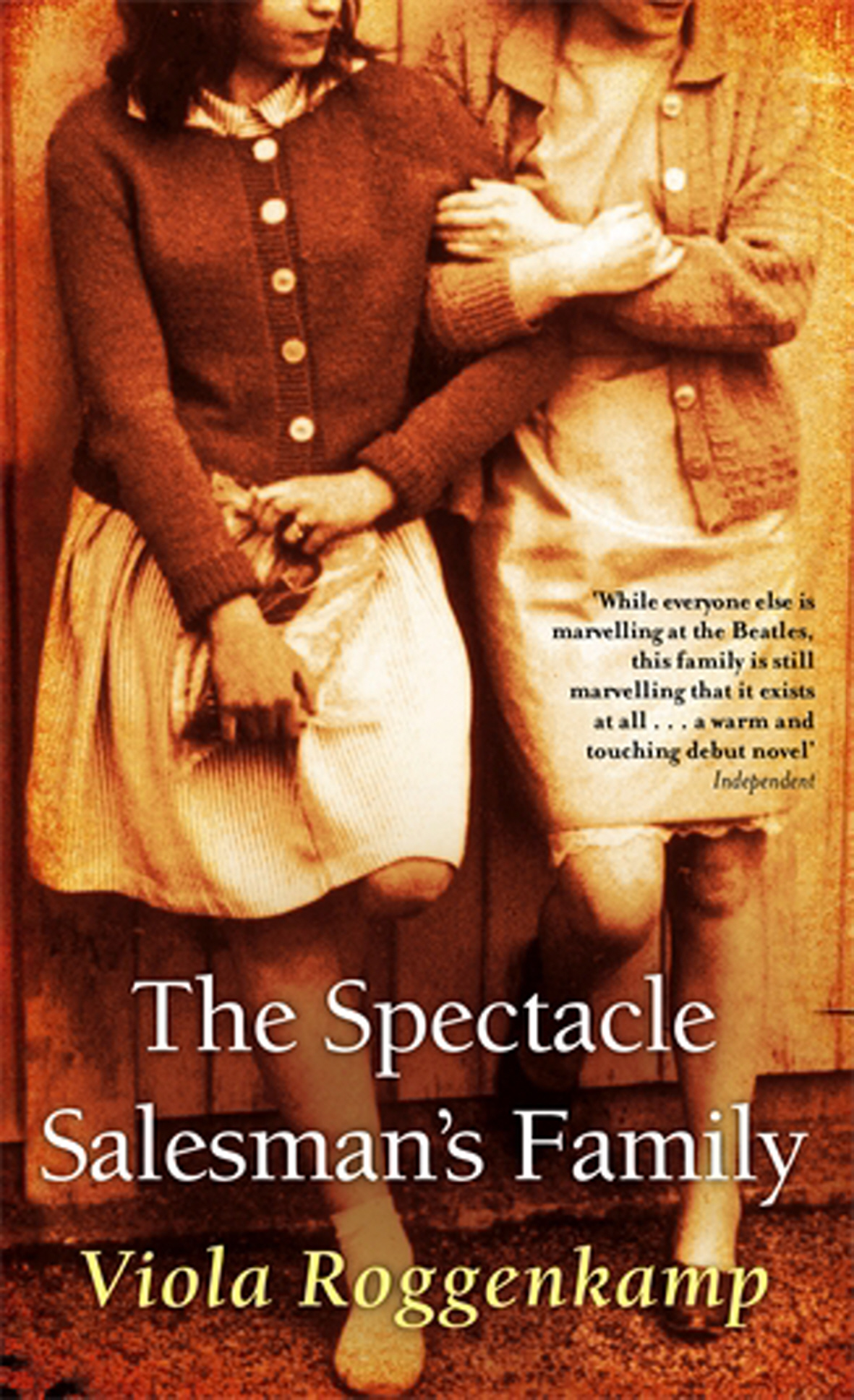
Roggenkamp

Viola Roggenkamp – Germany

The Spectale Salesman’s Family

Paul Schiefer is a travelling spectacles salesman. Every Monday morning he leaves Hamburg on a week-long sales trip. His wife, his mother-in-law and his two teenage daughters Fania and Vera see him off with abundant hugs and kisses, and they welcome him back with equal exuberance on Friday evening – just in time for Sabbath eve. While her husband is away, Alma Schiefer defends the wellbeing of her family with an explosive mixture of ferocious love and extreme determination. Thirteen-year-old Fania is torn between the comfort of home and the fearful thrills of the unknown outside world, a sixties world that contains student protest, beehive hairdos, Israel and the Six Day War, politics, religion, revolution and . . . the promise of love. Sensual, funny and acerbic, The Spectacle Salesman’s Family is a brilliant, vivid portrait of Jewish life in post-Holocaust Germany that continues the Jewish tradition of memorialising, recounting the details in order to hold onto the past and its lessons.
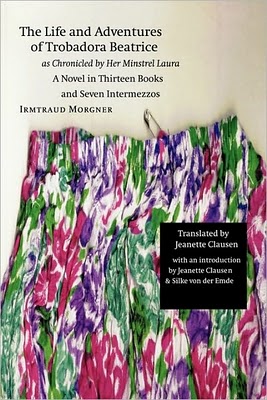
 

Trobadora Beatrice

Irmtraud Morgner – Germany

The Lives and Adventures of Trobadora Beatrice Chronicled by Her Minstrel Laura

Set in the German Democratic Republic of the early 1970s, The Life and Adventures of Trobadora Beatrice-a landmark novel now translated into English for the first time-is a highly entertaining adventure story as well as a feminist critique of GDR socialism, science, history, and aesthetic theory. In May 1968, after an eight-hundred-year sleep, Beatrice awakens in her Provence château. Looking for work, she makes her way to Paris in the aftermath of the student uprisings, then to the GDR (recommended to her as the “promised land for women”), where she meets Laura Salman, socialist trolley driver, writer, and single mother, who becomes her minstrel and alter ego. Their exploits-Beatrice on a quest to find the unicorn, Laura on maternity leave in Berlin-often require black-magic interventions by the Beautiful Melusine, who is half dragon and half woman. Creating a montage of genres and text types, including documentary material, poems, fairy tales, interviews, letters, newspaper reports, theoretical texts, excerpts from earlier books of her own, pieces by other writers, and parodies of typical GDR genres, Irmtraud Morgner attempts to write women into history and retell our great myths from a feminist perspective. Irmtraud Morgner (1933-90) was one of the most innovative and witty feminist writers to emerge from the GDR. Jeanette Clausen is an associate professor of German at Indiana University-Purdue University at Fort Wayne. She is a coeditor of German Feminism: Readings in Politics and Literature and is a past editor of Women in German Yearbook.
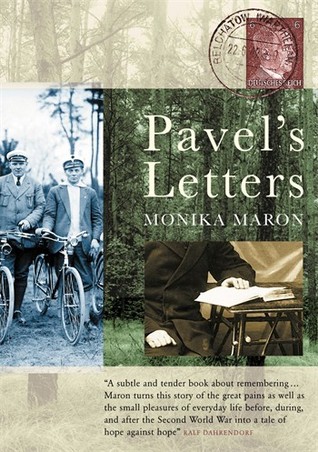
Pavel's Letters

Monika Maron – Germany

Pavel’s Letters

Teasing her family’s past out of the fog of oblivion and lies, one of Germany’s greatest writers asks about the secrets families keep, about the fortitude of ordinary people in extraordinary circumstances, and about what becomes of the individual mind when the powers that be turn against it.

Born in a working-class suburb of wartime Berlin, Monika Maron grew up a daughter of the East German nomenklatura, despairing of the system her mother, Hella, helped create. Haunted by the ghosts of her Baptist grandparents, she questions her mother, whose selective memory throws up obstacles to Maron’s understanding of her grandparents’ horrifying denouement in Polish exile.

Maron reconstructs their lives from fragments of memory and a forgotten box of letters. In telling her family’s powerful and heroic story, she has written a memoir that has the force of a great novel and also stands both as an elaborate metaphor for the shame of the twentieth century and a life-affirming monument to her ancestors.

Do you have a favourite author writing in German?

Literature and War Readalong October 28 2013: Everything Flows by Vasily Grossman

Everything Flows

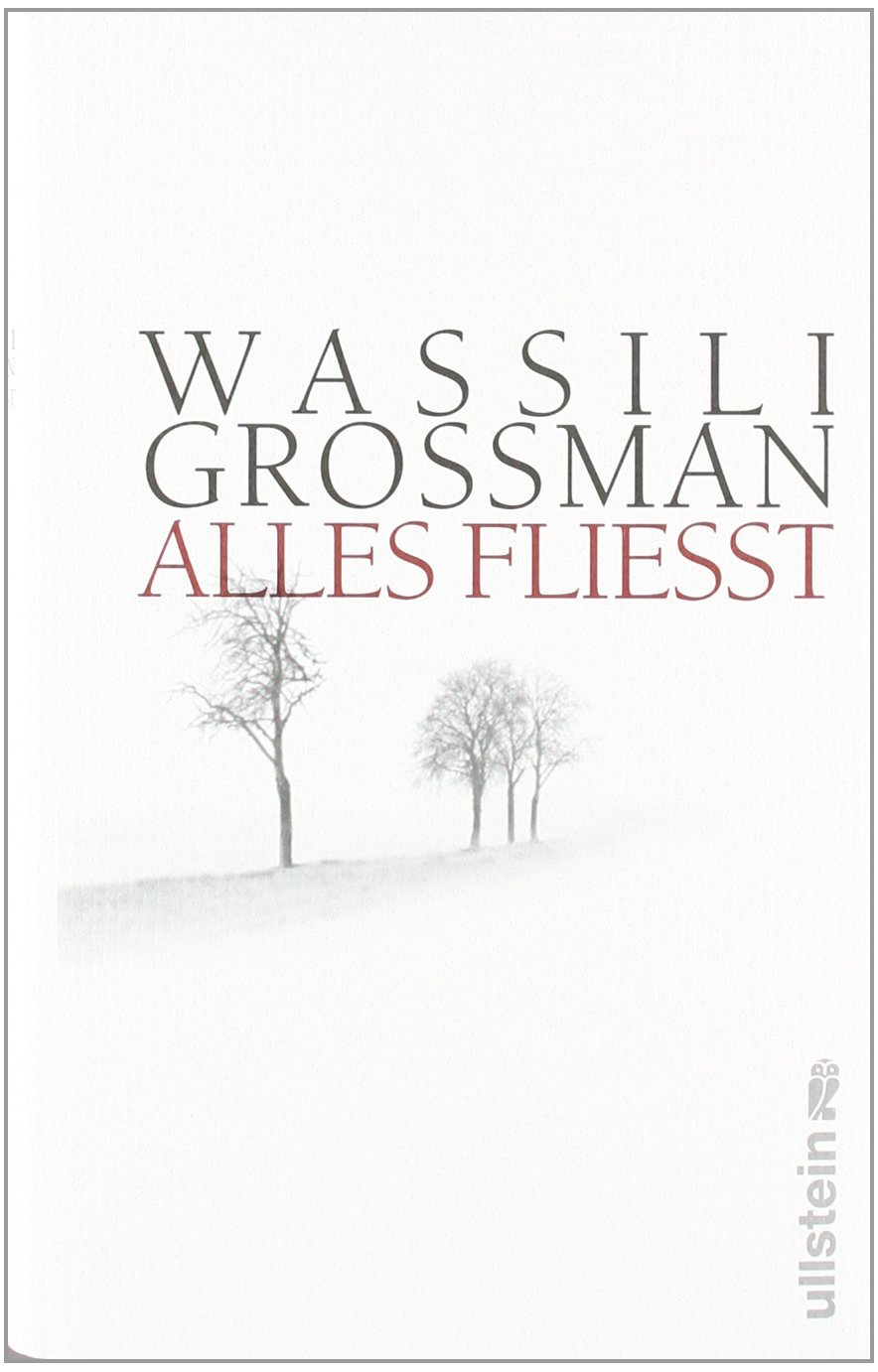
I’m very late in announcing this month’s readalong title. Vasily Grossman’s Everything Flows isn’t a war novel per se. It’s a post war novel. I found it’s about time to have a look what state countries, which had participated in WWII, were left in after the war. Russia is decidedly one of the most interesting places when it comes to the post-war era and Grossman is famous for the way he captures this time. Like many other Russian authors Grossman’s novels were forbidden during the Soviet era. Everything Flows was written after his major work Life and Fate.  I have seen a few of his books reviewed on various blogs ( Silver Threads on Life and Fate –  A Work in Progress on Armenian Sketchbook –  Caravana de Recuerdos on Life and Fate) and the feedback was always more than favorable.

I’ll leave you with the b blurb and the first sentences.

Ivan Grigoryevich has been in the Gulag for thirty years. Released after Stalin’s death, he finds that the years of terror have imposed a collective moral slavery. He must struggle to find a place for himself in an unfamiliar world. Grossman tells the stories of those people entwined with Ivan’s fate: his cousin Nikolay, a scientist who never let his conscience interfere with his career, Pinegin, the informer who had Ivan sent to the camps and Anna

Here are the first sentences

The Khabarovsk express was due to arrive in Moscow by 9 a.m.. A young man in pyjamas scratched his shaggy head and looked out of the window into the half-light of the autumn morning. He yawned, turned to the people standing in the corridor with their soap boxes and towels and said, “Well, citizens, who’s last in line?”

I will be reading the German translation Alles fliesst. I have this idea that Russian works better translated into German.

Alles fliesst


*******

The discussion starts on Monday, 28 October 2013.

Further information on the Literature and War Readalong 2013, including all the book blurbs, can be found here.

Alexander Baron: There’s No Home (1950) Literature and War Readalong September 2013

There Is No Time

Alexander Baron was once known as the great British novelist of WWII, but since then he’s been somewhat forgotten. Three of his novels are “war novels”.  There’s No Home is one of them. For a novel about WWII it’s surprisingly peaceful and deals with a lesser known aspect of the war. When the allies invaded Sicily, and drove back the Germans to the Italian mainland, some of the troops were granted a few months of peace and quiet during which they lived among the Sicilian civilians.

There are different POV characters in the novel, but the main story focuses on Sgt Craddock. He’s the type of soldier liked by everyone, superiors and inferiors alike. He’s married with a little kid. Being away from home, first in combat and now in this eerie state of peace among the Sicilian civilians makes home seem like another world, a world far more foreign than Sicily. When he meets Graziella, falls in love with her and lives with her, almost as if they were husband and wife, only with far more openness and directness than he’s ever known with his wife, his own life in England moves farther and farther away.

The love story between Craddock and Graziella, is the only coherent story line, the rest is made of anecdotal episodes, either about civilian life or things that happen among the soldiers during the time in Sicily. The war and the fighting are far away, but eventually, they have to move on, go back to fighting and leave everything that has become dear to them.

It’s easy to see that Baron wrote from his own experience. Only someone who spent time in Italy, among Italians would be able to capture so many details, render such lifelike scenes. In the afterword we read that Baron was “adopted” by an Italian family while in Sicily, visited them often, ate with them. Most soldiers, not only those who had an Italian lover, formed close relationships with the population.

The book describes some of the absurdity of war, but it’s toned down. During this time of rest, the absurdity is felt the most in the treatment of deserters. It’s no coincidence that we have three deserters in this novel. A British, soldier, an Italian and a German one. Their treatment is very different.

I liked the way this book was written a great deal. It’s written in such a precise but effortless style, you barely notice you are reading, it felt much more like watching a movie. I appreciated that Baron chose a topic that may seem marginal to the war but that was interesting and rendered with great warmth. I suppose you could read his three war books like a trilogy, each showing another aspect of what Baron experienced during the war. After having read this novel on civilians and soldiers in repose, I’d like to read one of his other novels, From the City From the Plough, telling the story from the POV of an infantryman in combat.

Other reviews

You can find some quotes from the book on Danielle’s blog

Danielle (A Work in Progress)

*******

There’s No Home was the ninth book in the Literature and War Readalong 2013. The next is the post-war novel Everything Flows  by Russian writer Vasily Grossman. Discussion starts on Monday 28 October, 2013. Further information on the Literature and War Readalong, including the book blurbs can be found here.

Jane Austen: Mansfield Park (1814)

Mansfield Park

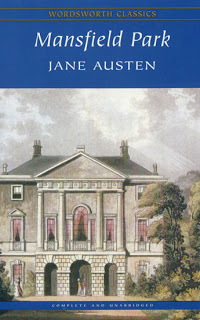
I’m nearing the end of my Austen journey. Now that I have read Mansfield Park, I’ve only got Persuasion and her short fiction left. I was surprised to like Mansfield Park so much as I know it’s not a favourite of many. The reason for this is to some extent its heroine Fanny Price. I wouldn’t go as far as saying I liked Mansfield Park better than Pride and Prejudice, but it may come in second, before Emma.

The story can be summarized briefly. Three women make three very different marriages. Mrs Price gets married to a poor man who likes his drink too much. She bears him some 12 children, one of them is Fanny. Lady Bertram marries a very rich man, owner of an impressive country estate, Mansfield Park. The third, Mrs Norris, lives near Mansfield Park with her husband in a small parsonage. The two ladies often speak about their unfortunate third sister who lives in Portsmouth in squalor and one day Mrs Norris urges the Bertrams to send for Fanny, who is about ten years old, and suggests they raise her at Mansfield Park, together with her four older cousins, Tom, Edmund, Maria and Julia.

Fanny is extremely timid but over the years she is doing well. She grows up to be an educated and very pretty young woman. She’s secretly in love with her cousin Edmund who was the only one who was nice to her. Edmund has decided to join the clergy as being the younger brother he will not have a lot of money to live on. A lot of the Bertram’s money comes from the colonies and when the plantations don’t do so well, Sir Bertram travels to Antigua with his older son.

Mrs Norris who is a widow by now had to vacate the cottage for the new pastor, Mr Grant, and while Sir Bertram travels to Antigua, Mary and Henry Crawford, the younger brother and sister of Mrs Grant, arrive and set in motion a series of dramatic events.

If you know Austen well, you know that all of her heroines are tested. Some more, some less, but in the end they are always rewarded and the reward is a happy marriage.

Fanny Price is a unusual heroine because she comes from a very poor family and the way she is treated by the Bertram’s is often quite shocking. Especially the unlikable Mrs Norris lets her feel daily that she is an inferior. Fanny reminded me much more of a Dickens character and when she is sent back to Portsmouth, as a form of punishment, towards the end of the book, it’s even more Dickensian. I don’t think we find such a close up of a poor family in any other of Austen’s novels. But Fanny Price is unusual for other reasons. She is so timid and fearful and very frail as well. I was surprised to find the portrait of a highly sensitive person who even shows some signs of what used to be called neurasthenia. She has to be careful at all times; she catches colds more easily than others, she’s more easily exhausted. Her symptoms are never as pertinent as when she stays in Portsmouth. She suffers from the noise, the dirt and the smells far more than anyone else would. I have seen her called passive by people but I would say she is quiet and withdrawn, she’s not so much a dreamer as a thinker. Sure, to some extent she is passive, but if you are told daily that you are nothing, that you have to be grateful, that you have to stay in the shadow, then it’s hard to be any other way. Even if she is passive, I don’t think she has a weak mind at all. When they want to force her to marry Henry, she opposes this strongly.

I think a lot of the dislike of Fanny Price stems from her opponent Mary Crawford. I saw people mention that they like her far better than Fanny. When the book was written, she was clearly one of the negative people but we, with our 21st Century mentalities, can’t help but like her and find a lot of what she says quite reasonable. I don’t think I spoil the novel if I mention that it is also about adultery. From our point of view Mary’s reaction to this event is understandable, but when the book was written it was quite shocking. I think small elements like this show very well why many people prefer a historical novel set in 1814 than the real thing because a writer of historical novels would take our mindset into consideration.

Mansfield Park has one of my favourite villains Mrs Norris. She’s a self-centered, selfish and cruel person and tries to exclude Fanny from every little bit of joy, denies her a fire in her room and reminds her constantly that she is an outsider. I loved to hate her and the end is so rewarding.

Mansfield Park has a minor flaw. It is Austen’s longest novel but it’s not long enough. I felt the end was rushed. Many of the most important scenes happen offstage and the final emotional developments happen too quickly. I wasn’t surprised when I watched the ITV production right after finishing the book to see, that those elements were shown in the film while the first parts were compressed. I can’t remember if Austen rushes all of her endings like this. I found it a bit disappointing, which doesn’t mean I preferred the movie version. Not at all. It’s OK but not great and it contains a lot of major changes.

I think that when people write unkindly about Fanny Price, they seem to forget that being adopted into a rich family, means that you are leaving your family behind. Being cut off from what you know, not seeing your beloved brother for years, must be a terrible shock, no matter how stately a home you get in exchange. The story of the little girl Fanny Price who became a delicate but strong heroine has moved me. It’s a rags to riches story that I wouldn’t have expected from Austen. Most of her heroines marry well and improve economically through their marriage, but they don’t start out being as destitute as Fanny.

“The term literay fiction has been invented to torment people like me” – John Updike

P1030189

I can only speak for myself but I feel pretty much the same as Updike and mostly agree with the full quote below which is taken from an interview with Lev Grossman in Time magazine in 2006 (you can find the whole interview here)

I think America is an increasingly book-free country. In the world of my boyhood, there were books everywhere. Your piano teacher had books, and there were lending libraries everywhere–your department store had a lending library. Books are still bought, and you see them being read in airplanes, but it’s a last resort, isn’t it? And the category of “literary fiction” has sprung up recently to torment people like me who just set out to write books, and if anybody wanted to read them, terrific, the more the merrier. But now, no, I’m a genre writer of a sort. I write literary fiction, which is like spy fiction or chick lit. I was hoping to talk to America, like Walt Whitman, you know? Address it and describe it to itself.

I have seen quite a few debates circling around the questions about the end of literature and/or what “literature and literary fiction” means. Is it so-called literary fiction that is about to end? The modernist novel? Surely nobody can say that story telling will end? And what is literary fiction anyway? Isn’t that an absurd expression? For me, being a French/German native speaker the term “literary fiction” is an oddity. In French and German it is much more pragmatic. Literature is pretty much the same as what English-speaking people call literary fiction. If you want to be precise you can add “demanding”, “challenging” or “sophisticated”  or to describe the opposite “entertainment”. Or you can add a school or movement like “nouveau roman” which already excludes “genre”. But that seems to be a continental European perception.

Lately I came across a term I found even more absurd “literary genre”.  It was used for books like Jamie Ford’s Hotel on the Corner of Bitter and Sweet. In German we would call that “gehobene Unterhaltungsliteratur” , meaning sophisticated entertainment literature. It’s a term used to tell the interlocutor that you’re not exactly reading trash, but nothing too demanding either.

In his extremely interesting book Writing 21st Century Fiction (I’ll need to review that some day), literary agent and writer Donal Maass argues that “literary genre” is the thing of the moment. I’d say it’s nothing new, it’s just another word for bestseller or mainstream fiction. Because being slightly more literary than the average genre novel, without being crime/fantasy or romance,  but accessible and well constructed, has always been the recipe for bestsellers.

In any case, literature is still alive and kicking, whether genre or literary. What seems to be dying is the patience of the reader, hence the popularity of so-called “readable” fiction, which means a lot of different things like simple sentences, short paragraphs, many chapters etc. Probably one of the many legacies of TV and other newer media that can be asborbed quickly. It’s no surprise that a lot of the current bestellers have been written by MFA graduates. They are well-constructed, have a stronger emphasis on metaphors and similes and take the short attention span of the reader into consideration.

Do you agree with Updike? Do you think literature is dying? And what about the terms literary fiction and literary genre?

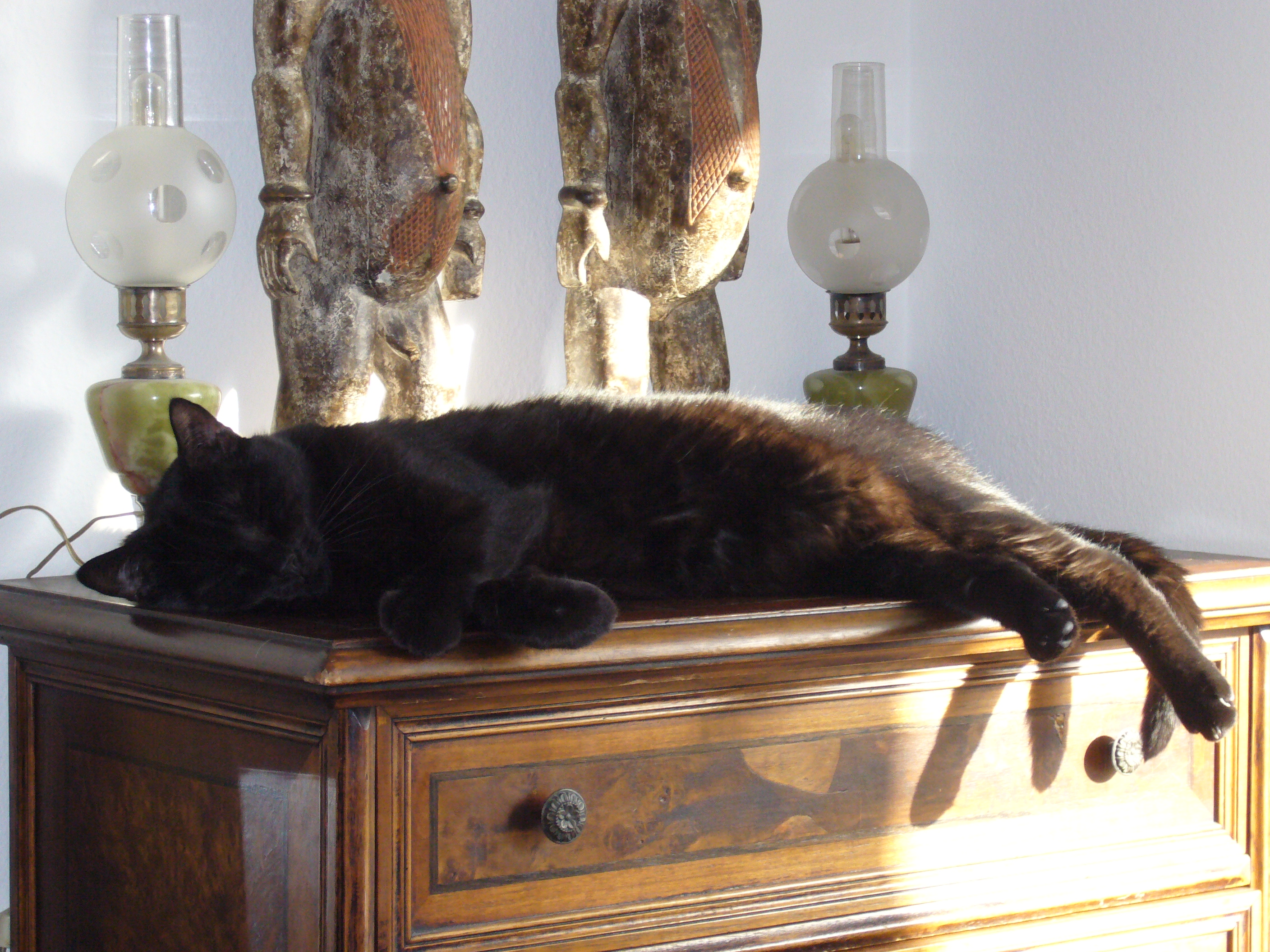
My cat, as you can see,  couldn’t care less. Maybe he has a point.

Literature and War Readalong August 30 2013: Grey Souls by Philippe Claudel

Grey Souls

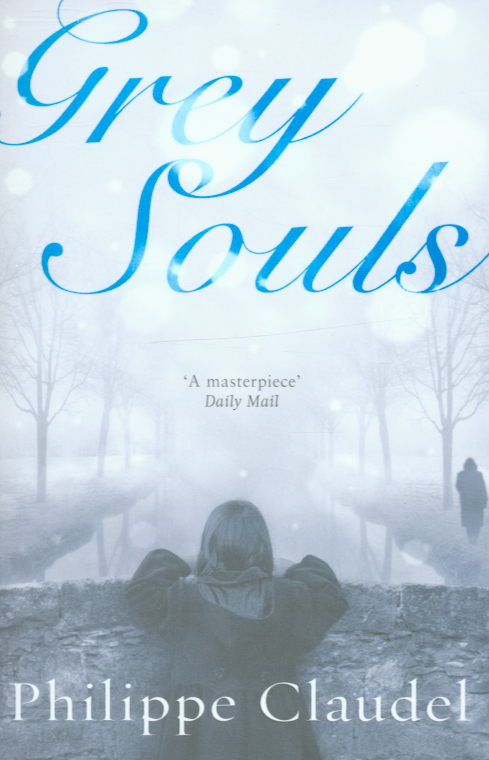
I wanted to read Philippe Claudel since years and looking for a WWI novel I came across his Grey Souls – Les âmes grises. Like most of his other books the novel has been translated into 25 languages and was generally liked by readers and critics. From what I know so far, the war is not predominant in the novel. It’s more like the starting point to a crime which is solved much later. From some of the reviews I got that it’s quite heavy and brooding.

Here is the blurb

This is ostensibly a detective story, about a crime that is committed in 1917, and solved 20 years later. The location is a small town in Northern France. The war is still being fought in the trenches, within sight and sound of the town, but the men of the town have been spared the slaughter because they are needed in the local factory. One freezing cold morning in the dead of winter, a beautiful ten year old girl, one of three daughters of the local innkeeper, is found strangled and dumped in the canal. Suspicion falls on two deserters who are picked up near the town. Their interrogation and sentencing is brutal and swift.

Twenty years later, the narrator, a local policeman, puts together what actually happened. On the night the deserters were arrested and interrogated, he was sitting by the bedside of his dying wife. He believes that justice was not done and wants to set the record straight. But the death of the child was not the only crime committed in the town during those weeks.

The first sentences:

I don’t really know where to start. It’s quite difficult. All this time that has gone by, which words will never bring back, the faces too, and the smiles, the wounds. Still I need to try to say it. Say what’s been bothering me for twenty years. The remorse and the big questions. I have to cut open the mystery with a knife, just like a belly, and sink my hands in, even if that’s not going to change a thing.

The book has been made into a movie but I don’t know whether it’s available in English

*******

The discussion starts on Friday, 30 August 2013.

Further information on the Literature and War Readalong 2013, including all the book blurbs, can be found here.

Assia Djebar: Children of the New World – Les enfants du nouveau monde (1977) Literature and War Readalong July 2013

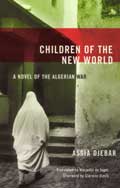
Children of The New World

Assia Djebar’s novel Children of the New World – Les enfants du nouveau monde is set during the Algerian War of Independence or Algerian Revolution which lasted from 1954 – 1962. If you are not familiar with this war wikipedia gives a short overview. It was a so-called decolonization war between France and Algeria. The war was fought in many different ways, guerrilla warfare, maquis fighting, terrorism and extensive use of torture on both sides.

The war in Algeria is still controversial in France. While it is meanwhile called “a war” and not only a “pacification intervention” – or whatever euphemism was chosen at the time – many of the aspects of the war are still not spoken about openly. One of them being the “interrogation techniques”.

It was a complex war that ripped apart the Algerian society. I think Assia Djebar showed this well in her novel. She chose to write Children of the New World as a series of vignettes, each with the name of a protagonist as title. Upon closer inspection we see that these are not individual stories but that each is a piece of a puzzle forming a kaleidoscopic canvas, which is apt and nails the Algerian society of the time. This was a society that resembles a broken pot, still held together at the seams, but the cracks showed and covered it like spiderwebs, ready to burst at any moment.

I have read the one or the other critique of this book stating it wasn’t really about the war, which puzzles me no end. The war is everywhere in this book, in every page. Every relationship is influenced or distorted by it. Neither love nor parenthood, nor friendship, nor anything else is free of the war’s influence.

We don’t see the fighting, that takes place outside of the city, in  the mountains, but the people see burning farms from afar, they see bombs fall and at the opening of the book, one falls on a house in the city, killing and old woman.

The book also shows how hostile this society was and how it was almost impossible to make a difference between enemies and allies. There were so many good and bad people on both sides. Not every Algerian was for the Algerian cause, not every French person was against it and many on both sides were against the use of torture and violence.

I have never read about any war in which torture was used this extensively. This becomes clear in the book too, although, mercifully, we find no descriptions, but we hear of people who don’t survive interrogations, of others who hear them scream in their own cells.

As said, the war is omnipresent in this book but Djebar transcends it and gives us more than just a society at war with itself and its oppressor. It shows a traditional society undergoing change and what this change means, notably for its women. I loved the many different descriptions of women’s lives. The diversity is amazing and in its best parts Djebar’s writing is as detailed as a documentary.

This was Assia Djebars third novel and it’s said that it’s not her best. I suppose that is correct as there are many structural problems. Djebar makes intense use of analepses , still I got the impression there were a lot of time-breaks that were not entirely wanted.

I’m curious and want to read another of her novels some day. She’s an interesting writer, with a raw unpolished force that I found quite refreshing.

For those of you interested in movies on the Algerian war – here’s a list that will also guide you to some of my reviews.

Other reviews

Danielle (A Work in Progress)


*******

Children of the New World – Les enfants du nouveau monde was the seventh book in the Literature and War Readalong 2013. The next is the WWI novel Grey Souls aka Les âmes grises by French writer Philippe Claudel . Discussion starts on Friday 30 August, 2013. Further information on the Literature and War Readalong, including the book blurbs can be found here.