Literature and War Readalong October 31 2014: Phoenix and Ashes by Mercedes Lackey

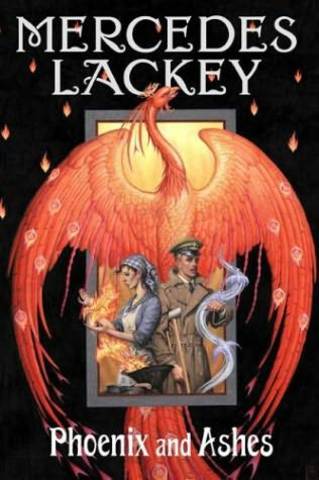
Phoenix and Ashes

Admittedly, this was a bit of an experimental choice for the Literature and War Readalong, but since this year is mostly dedicated to WWI, I thought some diversity would be nice. So why not read a fantasy novel dealing with the aftermath of the war?

Mercedes Lackey is one of the most prolific fantasy writers and has a huge following. Phoenix and Ashes is part of the Elemental Masters series. The books in the series are all fairy tale retellings, set in the early 1900s. Phoenix and Ashes is based on Cinderella. There are ten volumes in the series so far. If you’d like to find out more about Mercedes Lackey— here’s the link to her website.

Here are the first sentences

Her eyes were so sore and swollen from weeping that she thought she should have no tears left at all. She was so tired that she couldn’t keep her mind focused on anything; it flitted from one thought to another, no matter how she tried to concentrate.

One kept recurring, in a  never-ending refrain of lament. What am I doing here? I should be at Oxford.

Eleanor Robinson rested her aching head against the cold, wet glass of the tiny window in the twilight gloom of her attic bedroom. With an effort, she closed her sore, tired eyes, as her shoulders hunched inside an old woollen shawl. The bleak December weather had turned rotten and rainy, utterly un-Christmas-like. Not that she cared about Christmas.

And some details and the blurb for those who want to join

Phoenix and Ashes by Mercedes Lackey (US 2004) WWI, Fantasy, 468 pages

In this dark and atmospheric rendition of the Cinderella fairy tale, an intelligent young Englishwoman is made into a virtual slave by her evil stepmother. Her only hope of rescue comes in the shape of a scarred World War I pilot of noble blood, whose own powers over the elements are about to be needed more than ever.

“A dark tale full of the pain and devastation of war…and a couple of wounded protagonists worth routing for.”


*******

The discussion starts on Friday, 31 October 2014.

Further information on the Literature and War Readalong 2014, including all the book blurbs, can be found here.

Wednesday is Wunderbar – German Literature Month – Giveaways

Screen Shot 2014-09-24 at 07.23.25

Thanks to the generosity of different publishers, Lizzy and I are able to give away a number of wonderful books.

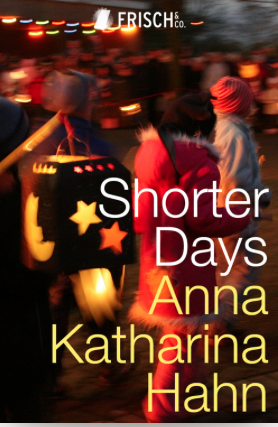
I’m particularly pleased to give away a copy of the e-book of Anna Katharina Hahn’s novel Shorter Days. I’ve often thought that it was sad that her novel hadn’t been translated because I loved it so much. I’ve read it when it came out in Germany, in 2009, at a time when I read far more German than English books. Since then it’s among my top 5 German books of the last decade. I was really happy when I saw that Frisch & Co, an e-book publisher, was going to publish the novel in October.

Screen Shot 2014-10-01 at 10.21.24

Here’s the publisher’s blurb

It’s fall in Stuttgart, just before Halloween, and thirty-something mothers Judith and Leonie are safely ensconced in their upscale apartments in one of the city’s best neighborhoods. Judith has squeezed her life into the straitjackets of stay-at-home Waldorf motherhood—no TV, no sweets, nature hikes, and, above all, routine—and marriage to staid university professor Klaus. Leonie is proud of her work at a bank and her husband Simon’s career, though she worries that she’s neglecting her young daughters, and that Simon’s work distracts him from his family. Over the course of a few days, Judith and Leonie’s apparently stable, successful lives are thrown into turmoil by the secrets they keep, the pressures they’ve been keeping at bay, and the waves of change lapping at the peaceful shores of their existence.

Shorter Days is a heartrending exploration of the joys, challenges, and dangers of modern family life.

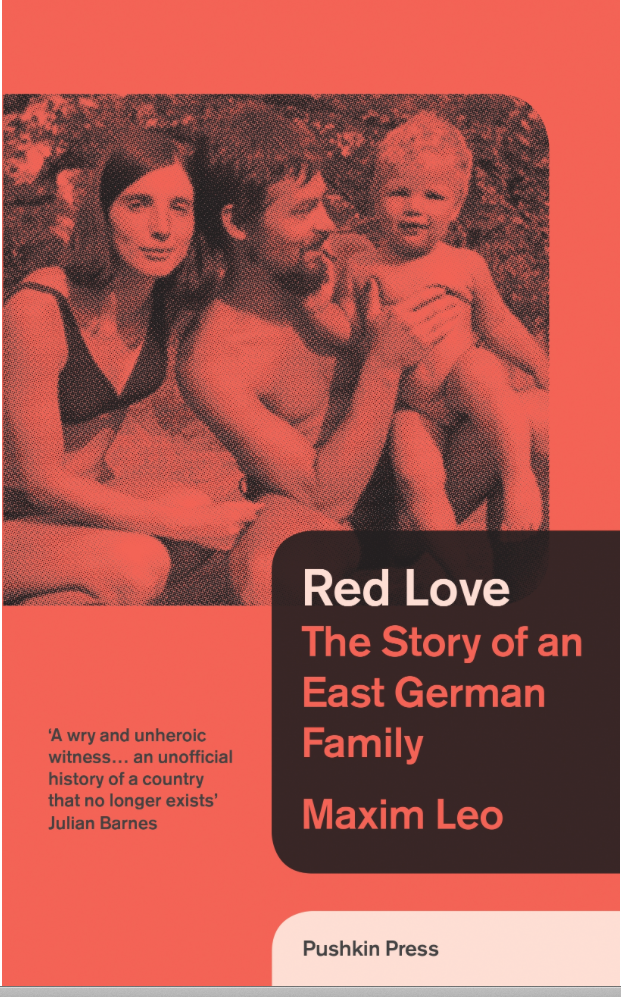
The second book I am giving away is a nonfiction book, published by Pushkin Press, Maxim Leo’s Red Love: The Story of an East German Family. I haven’t read it but it sounds very interesting.

Screen Shot 2014-10-01 at 10.28.30

Here’s the blurb

Growing up in East Berlin, Maxim Leo knew not to ask questions. All he knew was that his rebellious parents, Wolf and Anne, with their dyed hair, leather jackets and insistence he call them by their first names, were a bit embarrassing. That there were some places you couldn’t play; certain things you didn’t say.

Now, married with two children and the Wall a distant memory, Maxim decides to find the answers to the questions he couldn’t ask. Why did his parents, once passionately in love, grow apart? Why did his father become so angry, and his mother quit her career in journalism? And why did his grandfather Gerhard, the Socialist war hero, turn into a stranger?

The story he unearths is, like his country’s past, one of hopes, lies, cruelties, betrayals but also love. In Red Love he captures, with warmth and unflinching honesty, why so many dreamed the GDR would be a new world and why, in the end, it fell apart.

“Tender, acute and utterly absorbing. In fine portraits of his family members Leo takes us through three generations of his family, showing how they adopt, reject and survive the fierce, uplifting and ultimately catastrophic ideologies of 20th-century Europe. We are taken on an intimate journey from the exhilaration and extreme courage of the French Resistance to the uncomfortable moral accommodations of passive resistance in the GDR.

“He describes these ‘ordinary lies’ and contradictions, and the way human beings have to negotiate their way through them, with great clarity, humour and truthfulness, for which the jury of the European Book Prize is delighted to honour Red Love. His personal memoir serves as an unofficial history of a country that no longer exists… He is a wry and unheroic witness to the distorting impact – sometimes frightening, sometimes merely absurd – that ideology has upon the daily life of the individual: citizens only allowed to dance in couples, journalists unable to mention car tyres or washing machines for reasons of state.” Julian Barnes, European Book Prize

With wonderful insight Leo shows how the human need to believe and to belong to a cause greater than ourselves can inspire a person to acts of heroism, but can then ossify into loyalty to a cause that long ago betrayed its people.” Anna Funder, author of Stasiland


I’d like to thank Frisch & Co. and Pushkin Press for their generosity.

If you’d like to enter the giveaway, leave a comment, indicating for which book you’d like to enter. You can enter for both, of course.

Don’t miss visiting Lizzy’s site as she’s giving away titles from other publishers.

The giveaway is open internationally. The winners will be announced on Sunday, 5th October 2014. 

THIS GIVEAWAY IS NOW CLOSED: THE WINNERS HAVE BEEN ANNOUNCED.

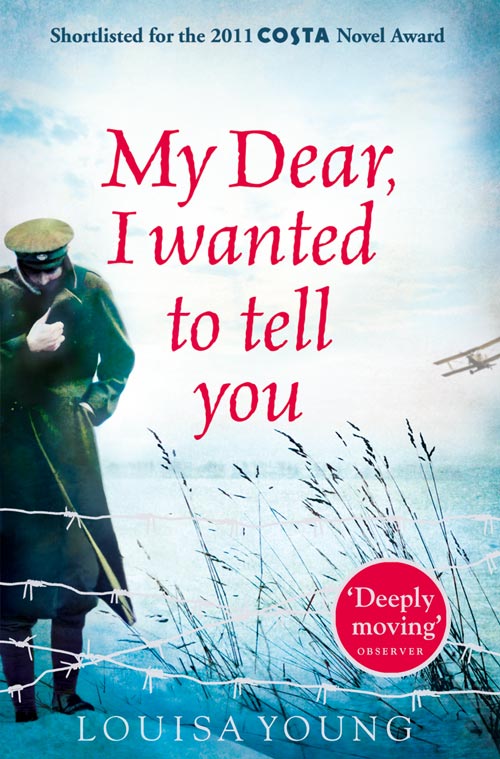
Louisa Young: My Dear, I Wanted to Tell You (2011) Literature and War Readalong September 2014

My Dear I Wanted To Tell You

Louisa Young’s novel My Dear, I Wanted to Tell You is one of the most surprising reads for me this year. After having been disappointed in Pat Barker’s Toby’s Room and Helen Dunmore’s The Lie, I was a little worried this would be the third in a series of underwhelming contemporary WWI novels. Well, it wasn’t. I loved this book and could hardly put it down. Not only because the story was so engaging and the characters so likable but because Louisa Young is a skillful storyteller with a very unique style. It’s not easy to tell a WWI story, including all the common themes, and manage to do that in a fresh and original way, but that’s just what Louisa Young did.

Riley Purefoy and Nadine Waveney meet when they are still small children. Although from very different backgrounds – he’s a poor working-class boy, she’s from a rich upper-class family – they become friends and their friendship turns into love eventually. They both share a passion for art and both want to become artists. Just before the war breaks out, Riley works as an assistant to an artist. He sees Nadine regularly and they know they are in love. However, when her parents find out, they are not thrilled and make Riley understand that he isn’t welcome in the Waveney’s home anymore. Feeling hurt and insulted, Riley impulsively joins the army and within a few weeks is sent to the trenches. Nadine on her side, becomes a nurse. They keep in contact and write to each other regularly, even meet during one of Riley’s leaves.

Thanks to influential people at home and thanks to Peter Locke, Riley’s commanding officer, who understands that Riley is very cultured and intelligent, Riley becomes an officer in spite of his background.

Peter Locke and his wife, Julia, are the second important couple in this novel. The book moves back and forth between these four characters.

The first half of the book is intense and beautiful and drew me in so much that when tragedy strikes it made me gasp. What followed wasn’t an easy read. It was tragic but so well done. There are numerous ways to write about facial mutilation and the way Louisa Young did it was outstanding. She combines the themes of body image, art, and beauty, and weaves them together in way that I found extremely thought-provoking. Peter’s wife, Julia, is obsessed with her beauty. She thinks she has nothing else to offer and, although not yet 30, already wants to undergo plastic surgery. Her thoughts and her anguish mirror the thoughts and the anguish of the mutilated men. I also liked that Louisa Young set the book in an artists’ milieu at the beginning because it underlines that we humans are extremely visual beings and while we might not all feel the same about beauty, we all feel the same about looks and mutilation. Making beauty, even more than mutilation, a main theme was a unique choice and even daring. Daring, because Louisa Young doesn’t spare us. She shows us what those mutilations looked like, what they did to a soldier. And how the society reacted. Even mothers screamed and fled at the sight of their disfigured sons.

The second part of the novel focusses almost entirely on the surgeries and the despair of the mutilated men and on the toll the war takes on the minds of those who survive intact.

One of the strengths of the book is its accuracy, another one is that Louisa Young makes us care about her characters. Not only about the main characters but about the minor characters as well. She captures a society and an event, and thus achieves what the best historical fiction should achieve— make us we feel we’ve been there too.

Although My Dear I Wanted to Tell You tells a horrific story, it’s an amazingly beautiful book, full of sentiment and rich descriptions. Louisa Young has already published the sequel (The Heroe’s Welcome) and more books centering on the same characters are still to come. As she said in an interview: “I think I may be writing the twentieth century, through these characters.” I’m eager to read more of her novels.

Other reviews

 Anna (Diary of an Eccentric)

Danielle (A Work in Progress)

My Book Strings

*******

My Dear, I Wanted to Tell You is the ninth book in the Literature and War Readalong 2014. The next book is the Fantasy novel Phoenix and Ashes by Mercedes Lackey. Discussion starts on Friday 31 October, 2014. Further information on the Literature and War Readalong 2014, including the book blurbs can be found here.

Announcing German Literature Month IV – November 2014

Screen Shot 2014-09-24 at 07.23.25

Good morning/afternoon/evening, German(-language) literature lovers.  It’s time to look through your TBR piles and hunt out all the German literature you can find.  #germanlitmonth is returning for year four!

In years past Lizzy and I have structured the whole month for guidance, but now that a wealth of ideas and reviews exists in the blogosphere (see footnote), we no longer think that’s necessary.  This year we’re each going to host a themed week, leaving the rest of the month for you to read as you please. However, to make things more playful, we’re incorporating an optional pick and mix!

The overall structure of the month looks like this.

Nov 1-2      Introductions and reading plans

Nov 3-9      Award Winners Week (hosted by Lizzy)

Nov 10-23  Read as You Please

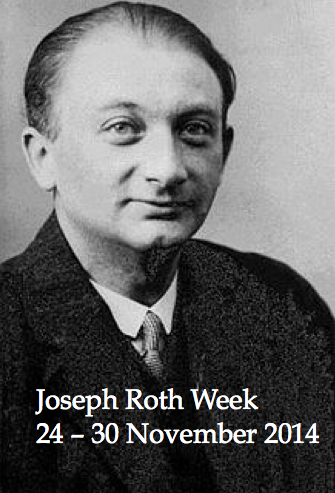
Nov 24-30 Joseph Roth Week (hosted by Caroline, with the Literature and War group read, Flight Without End, on the 29th)

Joseph Roth

At any time during the month you can pick and mix by reading and posting about any of the categories listed below, Each review will receive at least one entry into a prize draw. If the review fits multiple categories, you will earn multiple entries.  For example if you participate in my Literature and War read, you will get two entries: 1 for category 5 and another for category 6.

Pick and Mix Categories

1) Read and review an award winner.

2) Read and review a work that is not a novel.

3) Read and review a recommendation from German Literature Months 1-3. (See footnote)

4)To commemorate the 25th anniversary of The Fall of the Wall, read and review a work relating to the GDR or the Berlin Wall.

5) To commemorate armistice day, read and review a work relating to the First World War

6) Read and review a work written by or relating to Joseph Roth

7) Read a work published in German original or in translation during 2014

For the purposes of clarity, all reviews must relate to works originally written in German, regardless of the author’s nationality.  The winner of the pick and mix prize will be announced during the first week of December.

Apart from that, there are no other rules.  You can participate in the themed weeks and the pick and mix as much or as little as you wish. You can do your own thing too, if you so chose.  If you don’t have a blog, you are welcome to review on librarything or goodreads or similar or even write a guest post for one of the host blogs.

The main focus of the month is to share and enjoy German-language literature.  We hope you  decide to join us.

 *******

Footnote – Indices of reviews from previous years

German Literature Month 2011 (http://lizzysiddal.wordpress.com/2011/12/01/german-literature-month-2011-author-index/)

German Literature Month 2012 (http://lizzysiddal.wordpress.com/2012/12/15/german-literature-month-2012-author-index/)

German Literature Month 2013

(http://lizzysiddal.wordpress.com/2013/12/12/german-literature-month-iii-author-index/)

Literature and War Readalong September 29 2014: My Dear, I Wanted to Tell You by Louisa Young

My Dear I Wanted To Tell You

If I hadn’t read a lot of favourable reviews of Louisa Young’s novel My Dear, I Wanted to Tell You, I would never have picked it up. I know you shouldn’t judge a book by its cover but I’m allergic to men in greatcoat’s on WWI novels. On the other hand it’s better than a man in a greatcoat kissing a woman. But, as fluffy as it looks, the reviews made it sound poignant.

Louisa Young is a versatile author. Not only has she written three previous novels and a biography but, as Zizou Corder, she also writes a successful YA adult series together with her daughter.

Here are the first sentences

France, 7 June, 3.10 a.m.

It had been a warm night. Summery. Quiet, as such nights go.

The shattering roar of the explosion was so very sudden, cracking through the physicality of air and earth, that every battered skull, and every baffled brain within those skulls, was shaken by it, and every surviving thought was shaken out. It shuddered eardrums and set livers quivering; it ran under skin, set up counter-waves of blood veins and arteries, pierced rocking into the tiny canals of the sponge of the bone marrow. It clenched hearts, broke teeth, and reverberated in synapses and the spaces between cells. The men became a part of the noise, drowned in it, dismembered by it saturated. They were of it. It was of them.

They were all used to that.

And some details and the blurb for those who want to join

My Dear, I Wanted to Tell You by Louisa Young (UK 2011) WWI, Historical Fiction, 336 pages

A letter, two lovers, a terrible lie. In war, truth is only the first casualty. ‘Inspires the kind of devotion among its readers not seen since David Nicholls’ One Day’ The Times

While Riley Purefoy and Peter Locke fight for their country, their survival and their sanity in the trenches of Flanders, Nadine Waveney, Julia Locke and Rose Locke do what they can at home. Beautiful, obsessive Julia and gentle, eccentric Peter are married: each day Julia goes through rituals to prepare for her beloved husband’s return. Nadine and Riley, only eighteen when the war starts, and with problems of their own already, want above all to make promises – but how can they when the future is not in their hands? And Rose? Well, what did happen to the traditionally brought-up women who lost all hope of marriage, because all the young men were dead?

Moving between Ypres, London and Paris, My Dear I Wanted to Tell You is a deeply affecting, moving and brilliant novel of love and war, and how they affect those left behind as well as those who fight.


*******

The discussion starts on Friday, 29 September 2014.

Further information on the Literature and War Readalong 2014, including all the book blurbs, can be found here.

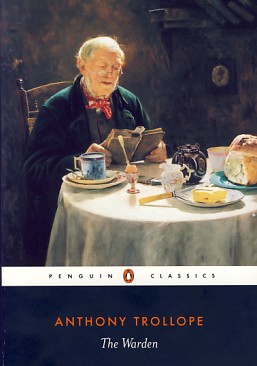
Anthony Trollope: The Warden (1855)

The Warden

Memory is a funny thing. For years I have been haunted by a sensual impression of a place. I remember being in England and walking along a row of houses. It’s a very peaceful, mild, warm autumn afternoon. The houses are part of a larger compound, overshadowed by a huge cathedral. I remember walking away from the cathedral close and coming to a small river that was flowing through the grassy meadow, on the same level as the soil. There were weeping willows and sheep. Walking around that place was like visiting a time long gone. These haunting images returned periodically. The light outside of my windows sometimes triggered the memory. It was always nice to go back in my mind, the only trouble was – I couldn’t remember where this had been. I’ve been in England many times, stayed there for a couple of months or weeks. I’ve visited many places and many cathedrals, but as much as I thought about it – I had no clue where I’d been on that warm autumn afternoon. Not until reading The Warden. The moment I opened the book and read the description of Barchester I knew – this is where I had been. But how could that be? Barchester doesn’t exist. Although I like to keep the introduction of a book until I’ve finished it, I had to read it to find out more. In the introduction I learned that Trollope based Barchester on Salisbury and Winchester. I immediately went online and looked up photos of Salisbury cathedral, the cathedral close and the meadows around and, yes, indeed, that’s where I’ve been some years ago. I found it pretty uncanny that Trollope was so capable at describing a place. I still don’t know why I forgot that the images were images of Salisbury. I’ve never forgotten a place like that. Maybe because it was so dreamlike?

I’ve meant to read Trollope for a while. Actually ever since I’ve read Guy’s (His Futile Preoccupations) and Brian’s (Babbling Books) reviews of his novels. Most of Trollope’s books are chunky but The Warden, the first in the Chronicles of Barsetshire, is a mere 180 pages.

According to the introduction, Henry James called The Warden “the history of an old man’s conscience”. That’s true, however, it’s only one of at least three major themes Trollope exlpores and which all contribute to make The Warden a highly worthwhile and interesting book and one of those you’d love to discuss with other people.

Septimus Harding is precentor and warden of an almshouse. With these positions come 800£ per year. In order to obtain this money Mr Harding doesn’t have to work a lot. As a precentor he’s in charge of the choir in the cathedral and as warden he’s the moral support of the twelve destitute men who are allowed to spend their last years in the almshouse. Since the almshouse was founded in the 15th century, the warden has received  more money every year because of the revenue of the land. The twelve men’s allowance however would have been still the same as in the 15th Century if Mr Harding hadn’t given them some of his own money.

At the time when this story takes place, numerous reformers are hunting down greedy clergymen, showing how they abuse of their power and enrich themselves at the expense of others. Dr Bold is just such a reformer. When he meets the warden and his daughter, with whom he falls in love, he learns about the founder’s will and instigates an investigation which leads him to the conclusion that Mr Harding receives money that is due to the almsmen. His inquiry quickly gets out of hand when the biggest newspaper publicly accuses the warden of greed and malpractice.

Mr Harding is an excessively private man. He’s weak but kind and good-hearted. Being dragged into the spotlight like this, accused and shamed, is more than he can bear. He never thought that he might be doing something wrong but once he starts to think about it, he’s not so sure that he wasn’t enriching himself at the expense of the twelve poor men. While he doesn’t want to fight the accusation, his son-in-law, archdeacon Dr Grantly and the bishop of Barchester, fight for him and soon both parties involve lawyers. The warden has another strong supporter in his daughter who begs Dr Bold to abandon the cause.

The three themes which are explored each center on another figure. Mr Harding has to examine his conscience. Will he stay warden if it has been proven that he’s legally entitled to his money or will his own conscience tell him to let go?

Mr Bold shows how good intentions at the wrong moment and without thinking about consequences can be fatal. Maybe Mr Harding gets too much money, but why make this a matter of public interest and involve the newspaper? Why does he disregard the peace and quiet that reigns at the almshouse? Neither Mr Harding nor the twelve men are wanting anything. They live together amicably but once Dr Bold tells the twelve men that they should get more money, peace is lost forever.

For contemporary readers it might be interesting to read about the role of the press and the journalist Tom Towers. Trollope was inspired by true stories and what he lets us experience is the beginning of the value of public opinion and the power of the press.

Trollope chose to show us the end of an era. The tone of the book is elegiac throughout. In the introduction Robin Gilmour makes an interesting point. The warden’s garden is a strong symbol of this dying of an era. At the beginning of the novel it’s lush, green and lovely. At the end:

The warden’s garden is a wretched wilderness, the drive and paths are covered with weeds, the flowerbeds are bare, and the unshorn lawn is now a mass of long damp grass and unwholesome moss.

I had a very strong reaction when I read how content Mr Harding was in the beginning and how quickly a lifetime of ease was destroyed. At the same time I had to agree with Bold. Not in this matter, but in general. Why would a clergyman be given so many riches, a huge house with gardens, and a large income without doing any work? Still, I was sad for Mr Harding who was threatened to lose everything he held dear, even though he might not have been entitled to have it.

What annoyed me about Mr Bold’s doing was that the man he attacked was a kind and generous man and – compared to other clergymen – a tiny fish.

Before ending this rather lengthy review, I’d like to say a few things about Trollope’s writing. I enjoyed the descriptions and I had to laugh out loud a few times when he characterized people, notably the archdeacon, using caricature and satire. I found many of his authorial intrusions interesting but there were too many for my taste. I had problems with the parodies of Carlyle and Dickens because they felt glued on and were not a part of the story. I didn’t mind that Trollope spoke to the reader directly but some of the more hidden intrusions were annoying.

I’m glad I read The Warden. It made me remember my stay at Salisbury and I loved the descriptions. I liked his choice of themes and think they are just as important today as they were then. I also think he’s a wonderful satirist. Will I read the next in the series? In all honesty – I’m not so sure. I can’t pretend I fully warmed to Trollope and although I’ve started a small Victorian literature reading project, I think I’ll move on to Elizabeth Gaskell and the Brontës.

If you’d like to read more reviews on Trollope visit Guy’s  (His Futile Preoccupations), Brian’s (Babbling Books) and Tony’s (Tony’s Reading List) blogs. Brian’s reading and reviewing The Barsetshire Chronicles (here’s his review of The Warden). Tony has reviewed both the Barchester and the Palliser novels – and some more and  Guy has written about many of the other novels.


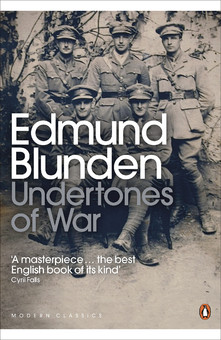
Literature and War Readalong August 29 2014: Undertones of War by Edmund Blunden

Undertones of War

Edmund Blunden’s Undertones of War is one of the most famous WWI memoirs. Blunden was a poet who enlisted at the age of twenty and took part in the battles at the Somme, Ypres and Passchendaele. My edition, which is The University of Chicago Press edition, contains a number of his poems. It will be interesting to compare the accounts of the trenches with the poems inspired by the landscape.

Here are the first sentences

I was not anxious to go. An uncertain but unceasing disquiet had been upon me, and when, returning to the officers’ mess a Shoreham Camp one Sunday evening, I read the notice that I was under orders for France, I did not hide my feelings. Berry, a subaltern of my set, who was also named for the draft, might pipe to me “Hi, Blunden, we’re going out: have a drink.”; I could not dance. There was something about France in those days which looked to me, despite all journalistic enchanters, to be dangerous.

And  some details and the blurb for those who want to join

Undertones of War by Edmund Blunden (UK 1928) WWI, Memoir, 288 pages

In what is one of the finest autobiographies to come out of the First World War, the distinguished poet Edmund Blunden records his experiences as an infantry subaltern in France and Flanders. Blunden took part in the disastrous battles of the Somme, Ypres and Passchendaele, describing the latter as ‘murder, not only to the troops, but to their singing faiths and hopes’. In his compassionate yet unsentimental prose, he tells of the heroism and despair found among the officers. Blunden’s poems show how he found hope in the natural landscape; the only thing that survives the terrible betrayal enacted in the Flanders fields.

*******

The discussion starts on Friday, 29 August 2014.

Further information on the Literature and War Readalong 2014, including all the book blurbs, can be found here.