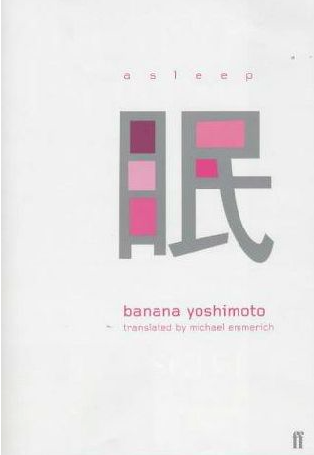
Banana Yoshimoto: Asleep – Shirakawa Yofune (1992)

Asleep

It’s been a while since I’ve last read a book by Banana Yoshimoto, who has always been one of my favourite writers, although I can’t say I loved all of her books. There was always the one or the other that didn’t work as well as a whole, but I always loved her themes and certain elements in every story.

Asleep is a collection of two long short stories (65 and 75 pages ) and one shorter story (30 pages). The stories circle around similar themes. Loneliness, longing, sadness, dreams, sleep, loss, and grief. A character, always a young woman, looks back with longing on a time in her life in which she was with someone she felt very close to or had an intense relationship with. At the time when she tells the story she’s in an uncertain situation. Maybe unemployed, dating a married man, grieving. What the characters in the three stories share as well is that they are visited by the ghosts of beloved dead in their dreams. Sleeping is important in the stories, dreaming can be more intense that staying awake.

Asleep is one of Yoshimoto’s books that I didn’t love as a whole. I loved the dreamy mood, the sorrow and loss, the loneliness and exquisite sadness she described but I found the stories a bit repetitive. Looking back, the three stories blend into each other. The one I liked the most was The Night and Night’s Travellers. The other two could have done with some editing. She moves back and forth in time and occasionally it’s confusing.

Asleep, the title story was interesting as well because I knew someone just like the narrator. A young woman who fell asleep constantly. Or slept for days and days. When you spoke to her, you had the feeling she was never really there. She too, like the main character in Asleep, had experienced something very painful and couldn’t come to terms with it. It was like her consciousness was trying to retreat all the time, shied away from fully confronting her situation. That’s exactly what happens to the young woman in Asleep.

In a way, one could say that these are ghost stories. Not that they are scary but they are eerie and the dead people talk to the living. The dream states are just as real as being awake. Reading this collection, I noticed that while atmosphere is a key element of European ghost stories, in most Japanese ghost stories I’ve read so far, mood is more essential.

While Asleep isn’t my favourite of Banana Yoshimoto’s books, I liked a lot of it and really enjoyed getting re-aquainted with her sadness-infused, eerie stories, in which dreams and dead people play such a prominent role and the characters occupy an in-between world.

This is book four of my 20 under 200 project.
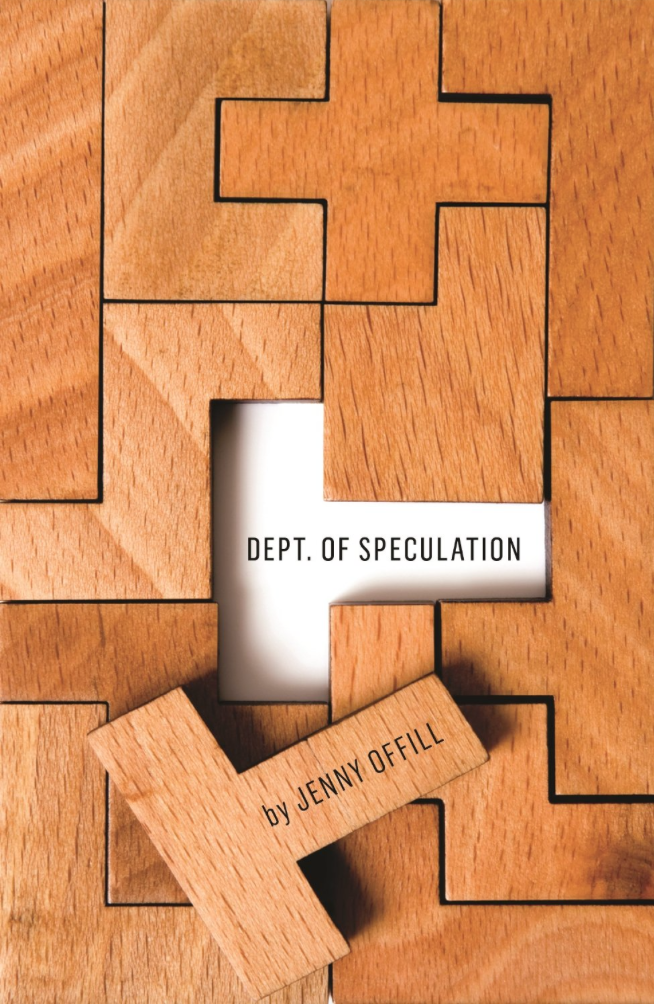
Jenny Offill: Dept. of Speculation (2014)

Dept. of Speculation

Are there any stories more hackneyed than stories of adultery? Possibly not. So, let’s imagine you’re a writer and you want to write a novel about adultery. How would you do it? You could hunt for a really sordid story. Or you could infuse your story with a heavy dose of original writing and, at the same time, make writing about adultery your topic. If you went down that road you might end up with something like Jenny Offill’s Dept. of Speculation. We’ve read the story she tells so many times before, but we never read it told the way she chose to tell it.

The plot is summarized quickly. A woman and a man meet, fall in love, get married, have a child, are happy. Then he cheats. She’s devastated. They fight and grieve and get back together. Jenny Offill could have told this many different ways, but she chose a fragmented approach. Maybe I’ve read too much flash fiction and prose poetry recently, but to me, that’s exactly what Dept. of Speculation is— a novel in flash fiction form. Like flash fiction, it’s highly condensed, pared down, stripped of anything superfluous. It uses formatting as a means of expression, short paragraphs that are arranged like verses in poems. It’s episodic, uses defamiliarization and counterpoint. Reverses expectations, wants to surprise. All characteristics of the condensed art of flash fiction. And it works. Almost every element, each paragraph that has been set apart, can be read individually, like a mini-story. They all offer something and, just like the wheels of a clock, are perfect in themselves.

There’s an interesting use of POV. Before the adultery there’s a first person narrator, after the adultery the POV changes to third. Instead of the pronouns You and I Offill uses “the wife” and “the husband”.  Only in the very last chapter she slowly moves back to first person, almost imperceptibly. Maybe it was the only way to write about the sorrow, pain and grief and avoid cliché and bathos. The result was that I felt kept at arm’s length by the book as a whole, but the individual parts moved me often.

The narrator is a teacher of creative writing. She writes about her student’s stories but, also about her own and how it should have been written differently. I liked those metafictional parts the most.

Of course we wonder how autobiographical it is. At times I felt like reading a personal essay.

There’s a lot to love in this book. Many sentences and passages I admired. Telling such an age-old banal story but infuse it with so much originality – form and thoughts – deserves high praise. And it goes beyond adultery. There are passages in which Offill captures bliss and joy without being corny. Passages in which she praises the wonder of creation and the vastness of the universe. Domestic bliss meets transcendent happiness.

Nonetheless, I couldn’t enjoy it unreservedly because it was too much. For a novel it was almost too rich and for a short story collection it lacked variety in tone, atmosphere, and mood. It’s a hybrid form, and, as such, needs a specific kind of reading.

To give you an impression here are a few quotes:

One night we let her sleep in our room because the air conditioner is better. We all pile into the big bed. There is a musty animal smell to her casts now. She brings in the nightlight that makes fake stars and places it on the bedside table. Soon everyone is asleep but me. I lie in our bed and listen to the hum of the air conditioner and the soft sound of their breathing. Amazing. Out of dark waters, this.


How has she become one of those people who wears yoga pants all day? She used to make fun of those people. With their happiness maps and their gratitude journals and their bags made out of recycled tire treads. But now it seems possible that the truth about getting older is that there are fewer and fewer things to make fun of until finally there is nothing you are sure will be never.


She would not have let one of her students write the scene this way. Not with the pouring rain and the wife’s broken umbrella and the girl in her long black coat. To begin with, she’d suggest taking out the first scene on the subway, the boring one, where the wife pretends to be a Buddhist. (I am a person, she is a person, I am a person, she is a person, etc. etc.) Needed? Can this be shown through gesture?


She has wanted to sleep with other people, of course. One or two in particular. But the truth is she has good impulse control. That is why she isn’t dead. Also why she became a writer instead of a heroin addict. She thinks before she acts. Or more properly, she thinks instead of acts. A character flaw. Not a virtue.

If you’d like to read another review. Max has reviewed here.

This is the third book of my 20 under 200 project.

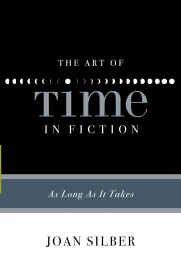
The Art of Time in Fiction by Joan Silber

The Art of Time in Fiction

It’s rare that I read a nonfiction book with as much enthusiasm as Joan Silber’s The Art of Time in Fiction.  Given the topic it’s not surprising though. I’ve long suspected that one of the key elements dividing literary fiction and genre fiction might be the use of time. I’m thinking of the artless use of the split-narrative that we find in almost every crime novel these days. Or the time-split in historical genre novels. Silber’s title is well-chosen, because using time masterfully is really an art.

She divided her book into different chapters, each dedicated to another use of time, another technique. I noticed, when compiling the list that when it’s done really well, we hardly notice what approach an author chose. I really appreciated the many examples she gave and from which she quotes extensively. Of course, this makes it a dangerous book for book addicts because it makes you want to add to your piles.

I will go through the categories, describing them briefly and adding the examples Joan Silber chose.

Classic Time

The first category was “classic time”. In this approach the author describes the story chronologically, chosing only a brief time span. There isn’t a lot of back story, nor flashbacks. I’d say it is the category that shows the most, tells the least.

The best example for classic time is:

  • Scott Fitzgerald – The Great Gatsby


Long Time

When an author tells a character’s whole life and the story spans over many years and decades, then we have an example of long time. I think it’s the category I’m the least fond of, but stories like Flaubert’s A Simple Heart, that capture a whole life, condensing long stretches, and only needs some forty pages, are not to be dismissed.

The examples quoted are:

  • Anton Chekhov – The Darling
  • Gustave Flaubert – A Simple Life/Un Coeur Simple
  • Jhumpa Lahiri – The Namesake
  • Carol Shields – The Stone Diaries
  • Arnold Bennett – The Old Wives’ Tale
  • Guy de Maupassant – Une Vie
  • Yu Hua – To Live
  • Evan Connell – Mrs Bridge
  • Virginia Woolf – To the Lighthouse

Switchback Time

The use of flashbacks, dreamlike sequences, non-linear storytelling, might be what appeals to me the most.

Here are a couple of examples for this type of storytelling:

  • Alice Munro – A Real Life, The Progress of Love, Carried Away, The Albanian Virgin
  • James Baldwin – Sonny’s Blues


Slowed Time

Proust’s In Search of Lost Time might be the most prominent of this category. In a movie there would be the use of slow motion. It’s an arresting technique that captures sensory and sensuous details like no other.

A few examples:

  • Nawal al-Sadaadawi – The Thirst
  • Don DeLillo – Videotape
  • Marcel Proust – In Search of Lost Time


Fabulous Time

This is the realm of magical realism and folk and fairy tales. It’s characterized by uncertainty and a reversal of natural time and disregarding the laws of time.

The examples used to illustrate this are:

  • Gabriel Garcia Marquez – One Hundred Years of Solitude, Chronicle of a Death Foretold
  • Italo Calvino – Italian Folktales
  • Arundhati Roy – The God of Small Things


Time as Subject

One of the most interesting uses of time in fiction is when it’s made the subject of the story. I’ve never read Fitzgerald’s Winter Dreams, which seems to be similar to The Great Gatsby, but uses time differently. Since I’m planning on re-reading The Great Gatsby, I’m looking forward to comparing it to Winter Dreams.

Here are the examples given in the book:

  • F.Scott Fitzgerald – Winter Dreams
  • Katherine Anne Porter – Old Mortality
  • Henry James – The Beast in the Jungle
  • Leo Tolstoy – The Death of Ivan Ilych
  • Alan Lightman – Einstein’s Dream
  • Chinua Achebe – Things Fall Apart
  • Gabriel Garcia Marquez – Love in the Time of Cholera
  • Denis Johnson – Out on Bail
  • Martin Amis – Time’s Arrow
  • Charles Baxter – First Light
  • Jorge Luis Borges – The Secret Miracle
  • Ambrose Bierce – An Occurrence at Owl Creek Bridge
  • Italo Calvino – Invisible Cities

I can’t say there’s one of these approaches I don’t like, but I guess books in which the time is a subject and what Silber calls “switchback time” might be those I like the most.

This is a wonderful little book that will appeal to readers and writers alike. It’s part of “The Art Of” series books published by Graywolf Press.

What about you? Do you prefer any of these categories? Or do you enjoy the use of split timelines/narratives more?


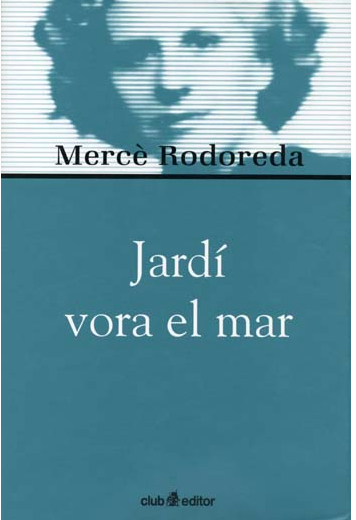
Mercè Rodoreda: Jardí vora el mar – The Garden Above the Sea (1967)

Jardì vora el mar

Mercè Rodoreda was a Spanish writer who wrote in Catalan. She’s most famous for her novel La plaça del diamant – In Diamond Square – (also The Time of the Doves). I’ve had that for ages but when I came across the German translation of Jardí vora el mar (The Garden Above the Sea), I couldn’t resist. Unfortunately it hasn’t been translated into English.

The story is set in Spain, in the 20s of the last century. The narrator of the story is a gardener. He’s a widower and has been in charge for the garden that belongs to a villa above the sea since decades, even before the current owners spent their summer vacations in the villa. The story spans six summers, summers that change from playfulness and enjoyment to drama and tragedy. Our narrator is not only a silent witness, he’s drawn into the story as the occupants of the villa treat him like a confidante. During the first year, when the young couple, Rosamaria and Francesc, and their friends spend their first summer at the villa, things seem perfect. The young people are beautiful, rich, joyful. They swim, they party, they tease each other. The gardener watches and listens. At night he refuels in his garden. He listens to the plants breathe, enjoys the scents and colors, cherishes the loneliness.

He loves to watch the young people. He has his favourites. There’s Feliu the painter who only paints the sea. Sebastia who travels in Africa and brings back a lion and a monkey. The summer when the mischievous monkey is at the villa, is by far one of the most entertaining, but some darkness already manifests. It is the summer of the monkey, but also the summer in which the construction of the neighbouring villa begins. At the end of that summer, the monkey goes missing and the young people at the villa feel like it was the last perfect summer. They already know that the villa next doors will be even bigger and more glamorous than their own.

The following summer, the new neighbours move in, and the tragedy unfolds. The past has come back to haunt Rosamaria and Francesc.

In the afterword the novel is compared to Bassani’s The Garden of the Finzi Continis and to The Great Gatsby. There are similarities but it might be especially interesting to point out the differences. The three novels are told by a narrator who is an outsider but while the narrators in Fitzgerald’s and Bassani’s novels circle the orbit of the rich and famous, they are still guests and allowed to take part, while the gardener is distinctly removed. All three books mourn also the end of an era. The Great Gatsby and The Garden Above the Sea are set in the 1920s, while Bassani’s book takes place in the 40s.  The Finzi Contini are Jewish. Needless to say how the story will end. Gardens and houses are important in the three novels but nowhere is the garden as much a character as in Rodoreda’s novel. The afterword tells us that the author was a passionate gardener and we can feel that. The descriptions of the flowers, trees, and bushes, their changes through the seasons, the difficulties to grow them are described with so much love, only someone who loves plants could have achieved that. I’ve come across many novels, in which houses are like characters, but I’ don’t think I’ve come across many, in which the garden played such an important role. Not even Bassani’s novel.

The Garden of the Finzi-Continis is easily one of my top ten favourite novels. I also love The Great Gatsby. I enjoyed Rodoreda’s book a great deal, but I only loved the descriptions of the garden. In choosing a gardener as her narrator, as wonderful a character as he may be, we stay much more spectators of the characters, are never fully immersed. We only see what they do when they are outside; we never see them interacting inside of the house. Most of the things we learn, are things the gardener himself was told by someone who heard it from someone. Seeing characters from afar, doesn’t allow to get as close to them as we would wish. Plus, the main protagonists change. Every summer, someone else gets close to the gardener, visits him in his small house. Those are the most intimate moments in the book, the ones, other than the descriptions of the garden, that I enjoyed the most. It’s not always good to compare a book with such famous novels as The Great Gatsby or The Garden of the Finzi-Continis, but in this case it helped me understand, why Rodoreda’s book left me a little cold, although it’s a fantastic book that I might even re-read some day.

The review is part of Richard’s and Stu’s Spanish Literature Month.

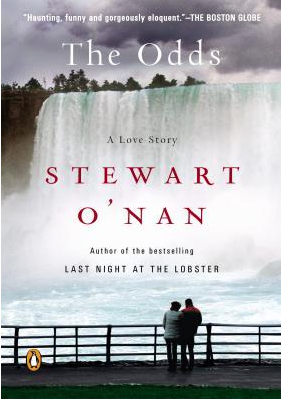
Stewart O’Nan: The Odds (2012)

The Odds

Stewart O’Nan’s novel The Odds is the second novel of my 20 Under 200 project. It’s the third of O’Nan’s novels I’ve read so far and while Last Night at the Lobster is still my favourite, I thought this was very well done.

The Odds tells the story of a middle-aged couple, who spends Valentines Weekend at an expensive hotel in Niagara Falls. They are broke, about to lose their beloved house, and ready to file for bankruptcy. Their marriage has been crumbling for years and after this weekend they will get a divorce. Basically, because they hope to hide assets. The interesting element, the element that generates tension in this novel, is that the reader knows from the beginning this weekend means different things for the characters. Marion considers this a weekend of goodbye. The divorce will bring her freedom. Art, on the other hand, considers this to be a new beginning. He’ll ask his wife to marry him again. Unsurprisingly, the book is full of double entendre and subtext. Watching the protagonists circle each other, trying to find out if they made the right move – Marion hopes having sex isn’t giving the impression, she’s still in for a new beginning, while Art hopes the flashy diamond ring does really express love and is not just seen as a reckless token – is enthralling.

While these dynamics would be interesting enough to follow, there’s something else ging on here. Niagara Falls was where they spent their honeymoon but it’s also a place where you can gamble. This might have been the most interesting part of the book and it shattered a few of my illusions. How naïve was I to believe that Niagara Falls offered nothing but a spectacular view of one of nature’s most amazing offerings. I’ve been taught, Niagara Falls is a garish, small version of Las Vegas. Flashing lights and casinos included. I honestly don’t get it. Do people really enjoy illuminated sights? In garish colors at that? I remember when I saw the Eiffel Tower for the first time in its all-year-round Christmassy illumination – I was disgusted. But this seems even more sacrilegious.

The trip to the casino makes a lot of sense because Art thinks he has figured out how to win big time at the roulette wheel, using the Martingale system. He’s certain that working with the odds will save them.

I found it amusing that Stewart O’Nan used different statistics as titles for his chapters. Odds of a couple making love on Valentine’s Day 1 in 14 – Odds of a U.S. citizen filing for bankruptcy: 1 in 17 – Odds of a married couple reaching their 25th anniversary: 1 in 6 – Odds of surviving going over the Falls without a barrel: 1 in 1,5000,000. Of course, all these are relevant to the story and made me think of those long chapter titles we find in many 19th century novels that give a flavour of what follows.

While they spend their days queuing for hours to see the many tourist attractions, at night they hit the casinos. If you want to find out whether the odds are against them – you’ll have to read the book.

I found this very well written, very realistic. I particularly liked the way he showed the absurdity of a tourist business that transforms a natural phenomenon into a tawdry theme park. Pretty sad, to be honest. It was equally excellent how he described how two people can have very different feelings about the same thing and that even in a marriage you may very well live with a stranger.

What kept me from loving this was that the people described are very realistic, but not exactly interesting. Since this is the second novel about middle-aged people, written by a man, I wonder whether men’s view of middle age in our society isn’t more negative than women’s view. Often, in novels written by women, the middle-aged protagonist starts a new, freer life. This is to some extent reflected in the attitude of the two protagonist. While Art thinks it would be a catastrophe if they spilt, it means freedom for Marion.

After finishing this book I’ve asked myself two questions:

What are the odds that I’ll visit Niagara Falls: 1 in 10,000

What are the odds I’ll pick up another Stewart O’Nan novel? 1:1

Maybe The Odds isn’t Stewart O’Nan’s best novel but it’s still well worth reading.

I first read about The Odds on Guy’s blog here.

Julian Barnes: The Sense of an Ending (2012)

The Sense of an Ending

When I posted my 20 under 200 list last week, Julian Barnes’s The Sense of an Ending was the novel that was mentioned the most and, so, I decided to pick it as the first novel of my project.

I don’t think, I have to write a lengthy summary as many other bloggers have done so already. Just a few words. The narrator, Tony, is in his 60s and looking back on his life. While most of that life is painfully average and there’s not a lot to say about it, his early youth is scrutinized and described in detail. This scrutiny serves a purpose. His past has come back to haunt him and Tony tries to uncover what exactly happened all those years ago, only to find out, his memory is more than a little faulty. While some people and events are still fresh in his mind, a lot has undergone a transformation and changed so much, that the actual events and the remembered events have but little in common.

I loved the way the narrator pieced together his memories, how he tried to make sense, and showed us how, often, we distort our memories to think better of ourselves or forget unpleasant events. I also loved the description of the four high school boys; their idealism that is always paired with more mundane occupations like chasing girls and hoping for sex.

Nonetheless, I can’t say I enjoyed this book. The voice got on my nerves. The way the narrator constantly tried to turn the reader into his accomplice by seeking reassurance, annoyed me. And I found him bland and depressing.

I also found hat there was a profound contradiction at the heart of this novel. On one side we have a very subtle analysis of memory and the tricks it plays on us; on the other side, we have a narrator who is an obtuse bore. For me, these are clearly two different people. One is the author, the other is the narrator. I really don’t think that someone who tells a story like Tony does and who lives such an uneventful life, just drifting, never striving for anything, never questioning, would come up with such amazing passages like this one:

We live in time – it holds us and moulds us – but I’ve never felt I understood it very well. And I’m not referring to theories about how it bends and doubles back, or may exist elsewhere in parallel versions. No, I mean ordinary, everyday time, which clocks and watches assure us passes regularly : tick-tock, click-clock. Is there anything more plausible than a second hand? And yet it takes only the smallest pleasure or pain to teach us time’s malleability. Some emotions speed it up, others slow it down; occasionally, it seems to go missing – until the eventual point when it really does go missing, never to return.

This doesn’t sound like our narrator. This sounds like Julian Barnes speaking.

Don’t get me wrong, this novel has a lot to offer. The portrayal of adolescent boys is spot on and endearing. The analysis of memory is fascinating and how the theme was tied into the plot was very well done. I can’t say the end surprised me, but several other revelations did. What kept me from truly enjoying it was the narrator and his way of talking to the reader.


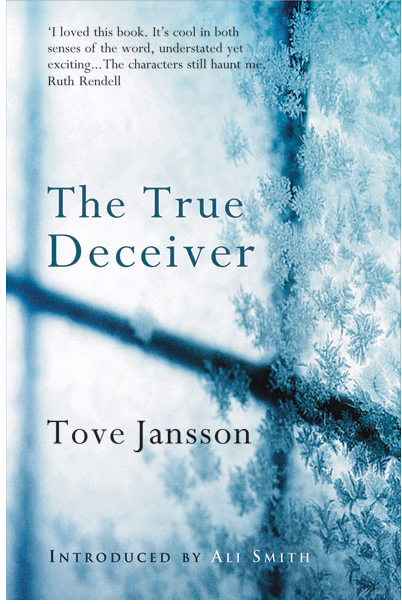
Tove Jansson: The True Deceiver – Den ärlige bedragaran (1982)

The True Deceiver

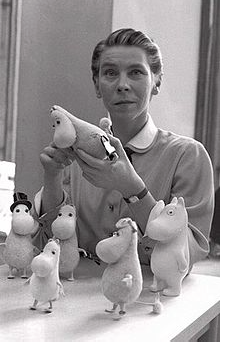
Swedish-speaking Finnish author and artist Tove Jansson is most famous for her stories featuring the Moomintroll family and their friends. Their creation spans almost thirty years. The first story came out in the 40s, the last in the seventies. When Tove Jansson was in her 60s she began to write books for adults. Some, like The True Deceiver, are novels, other’s, like Fair Play, are a collection of linked short stories, or episodic novels.

I always wanted to read her work, the books for children just as much as the books for adults, and I have no idea why it took me so long. After having finished The True Deceiver and already started Fair Play, I must say, this is one of those writers whose every book I want to read. She’s such an orginal, refreshing, and highly inspiring writer.

Katri and her younger brother, Mats, live in a village, in an unnamed Nordic country. It’s the deep winter. The land is covered in snow. The lake is frozen. Katri has just resigned from a job for the local merchant. Her brother helps building boats, his biggest wish being a boat of his own. In the same hamlet lives Anna Aemelin, a famous, rich children’s book illustrator. She’s become famous for her detailed depictions of the forest, which she adorns with drawings of rabbits. Katri decides that she wants Anna’s money for her brother. And she wants to get it in an honest way. Now honesty is an elastic term and for Katri it seems to mean— speaking the truth. Anna Aemelin has her own idea of what honesty means. And so does Mats.

The blurb of the English edition tells the reader that Katri fakes a break-in at Anna’s house to convince her she needs companionship, that’s why it’s not a spoiler to mention that she and Mats will move into Anna’s big house.

While the plot is interesting, the book’s strength lies in the characters and the setting. These people are so unusual. All three are eccentrics, each in their own way. And their interests, occupations, their innermost being is so original.

The artist Anna Aemelin was the character I enjoyed the most. Before Katri arrives, she’s not even aware of how much money she made with her illustrations. She lives a very ordered life, following the seasons. In winter, she doesn’t draw. It’s a bit as if she was hibernating. She orders food from the shops, doesn’t go out, and spends her days answering fan letters and reading adventure stories for kids. The books will be the foundation of her friendship with the boy Mats, a friendship that will create tensions between her and Katri. In spring, after the thawing, Anna goes into the forest and draws her pictures.

Katri is mysterious. She resembles a mythical figure, how she walks around with her huge, nameless dog, hardly speaking to anyone.

The way they live and communicate with each other is so peculiar because all three characters are loners. The conflicts between Katri and Anna are fascinating because they are both scheming, but both can’t really lie. But does that make them honest?

The story is set during winter and a huge part of its charm stems from the descriptions of the winter landscape, the harshness of the weather, the isolation of the big rambling house.

I don’t want to say too much. Pick it up and discover this unique writer for yourself. It’s certainly going to make my Top 10 of the year.

I read the German translation. That’s why I can’t offer any quotes. As I mentioned earlier, I’ve already started Fair Play, the story of two women artists. It’s another great find. I also want to read her Moomin stories chronologically and have her biography and a few other novels sitting on my piles. So, be prepared, you might read a lot more about Tove Jansson on this blog in the future.

Tove Jansson