My Case for “The Artificial Silk Girl” – A Guest Post by John Lugo-Trebble

The Artificial Silk Girl

When you are part of a writers’ group, it’s only natural to discuss books. And so, a while ago, I mentioned German Literature Month on my writer’s forum and found out that one of the members. John Lugo-Trebble, had studied German literature and did research on Irmgard Keun (and other authors). While discussing, he said that he found she deserved to be more widely known, especially her masterpiece The Artificial Silk Girl Das kunstseidene Mädchen. I certainly agree with him, and so I asked him whether he felt like writing a guest post for German Literature Month. I’m very glad he said yes. John Lugo-Trebble is an American writer, living in the UK. Some of his short fiction is forthcoming on Jonathan the literary journal of Sibling Rivalry Press.

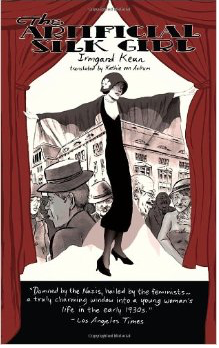
My Case for “The Artificial Silk Girl” – by: John Lugo-Trebble

Christopher Isherwood’s “Berlin Stories” was the inspiration for “Cabaret” which for an English speaking audience is often the image conjured up of Weimar Berlin. His Berlin is a decadent melting pot on the brink of implosion through the eyes of fun seeking expats. I don’t think you can argue that his observations are not important but for me, reading is like travelling and when I travel I always like to experience what locals would. This is why for me, one of the most important German texts capturing the era that should be read by English speakers is “Das kunstseidene Mädchen” (“The Artificial Silk Girl”) by Irmgard Keun.
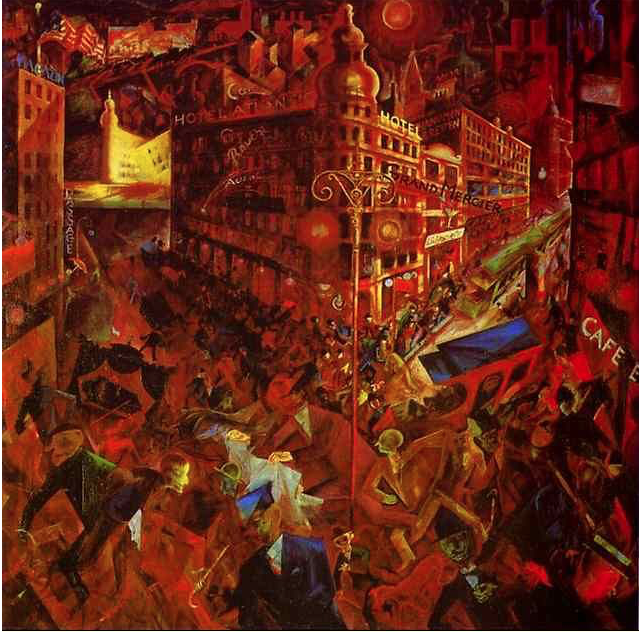
Georg Grosz - Die Stadt

Irmgard Keun gives us not just a German insight but a female German insight to Weimar through the eyes of her protagonist Doris. Working in a theatre in Köln, young Doris craves the spotlight, like the women in the glossy magazines that are like her Bible. She wants glamour, she wants wealth. She doesn’t want to be like her parents, on the breadline. She especially fears becoming her mother and having to support a man, in a loveless marriage. Doris becomes enamoured with a fur coat at the theatre and decides to steal it. In her fur coat, she can dream of the life she so covets. She can pretend to be that wealthy young girl who deserves the finery in life. She can epitomise glamour when wrapped in the soft fur. Now a fugitive because of this coat, she runs to Berlin wherein her vain attempt in pursuing glamour she weaves through the city’s underworld of prostitutes, pimps, communists and even becoming a mistress herself. Her dreams quickly spiral out of control as she chases money, stability and ultimately love amidst the backdrop of Berlin’s economic and political turmoil; putting us in mind of one of Grosz’s paintings come alive.

On the one hand, Doris is a mirror of the limitations of the New Woman, a woman who was to be liberated from the shackles of Imperial Germany by the promise of the Social Democratic Weimar Constitution. The reality is the limitations of that liberation that came with the economic upheaval left by the Treaty of Versailles. There is though something in Doris’ tale that resonates still today and that is the pursuit of glamour, a desire for celebrity.

I was reminded only recently of “The Artificial Silk Girl” when I was watching “The Bling Ring.” For those of you who haven’t seen it, the film is loosely based on a crime spree in Los Angeles perpetrated by a group of celebrity admiring, glamour seeking teenagers who literally break into the houses of their style icons to steal their possessions. They are driven by this desire and need to be famous, to lead an untouchable existence of celebrity. I couldn’t help but think of Doris. The difference though is that Doris has a moral centre which comes forward as she sits on a bench at Bahnhof Zoo, no longer the girl start struck in pursuit of wealth, she is a woman aware of the world around her, her own limitations, and indeed her own desires. Will she head out of Berlin or stay? We don’t know, but what we do know is that the fur coat is long gone now.

Irmgard Keun is one of the few German women writers of her day who have been translated into English and I truly believe one of the finest writers of the Twentieth Century, full stop. She presents us with a protagonist who has the naiveté of youth and the observational skills of a woman of her day. You will fall in love with her vulnerability, laugh at her silliness and want to shake her till she grows up but also respect her path because she tries, even when there is no hope presenting itself. With Keun, there is a voice beyond Alfred Döblin and Hans Fallada’s portrayals of women which leave much open to debate. There is more than Sally Bowles.

*****

Thanks so much, John, for this interesting post. I hope those who haven’t done so yet, will soon pick up The Artificial Silk Girl, or one of Keun’s other great novels.

Welcome to German Literature Month

literatur_2015_gold-2

This is just a brief welcome post to let you know about some of my own plans for German Literature Month.

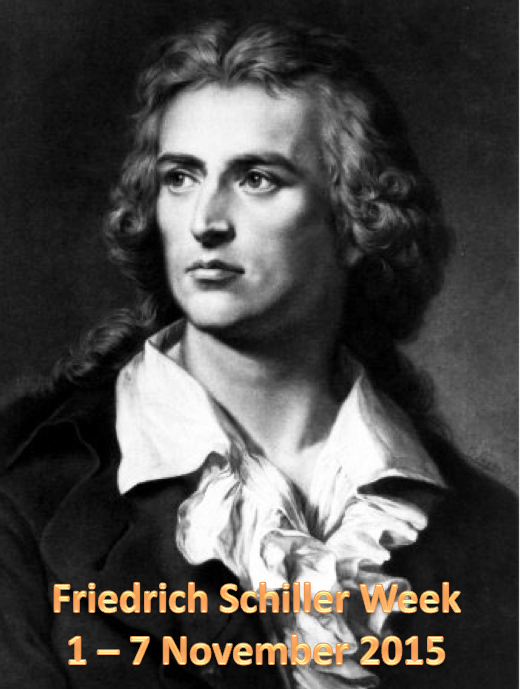
Friedrich Schiller Week

The first week is Schiller week, over at Lizzy’s blog. I won’t participate actively. I hope to review a crime novel and maybe a novella or two.

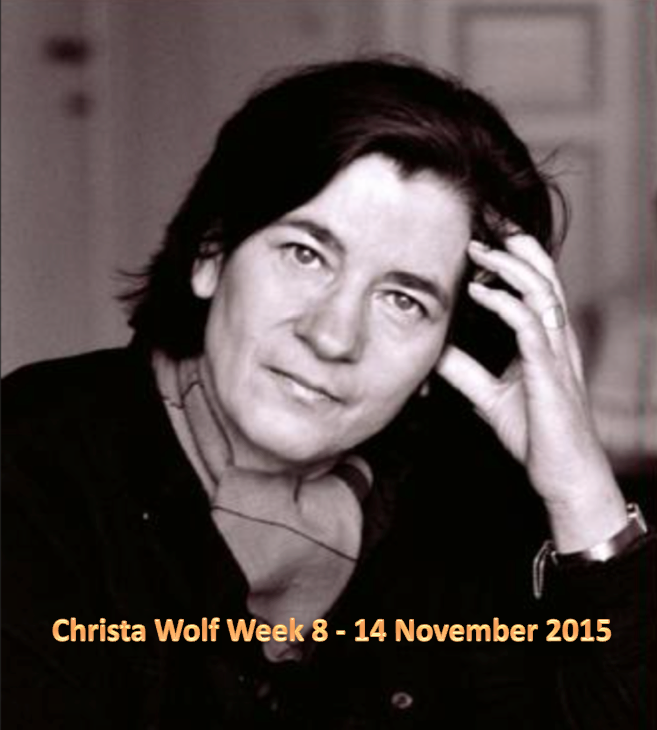
Christa Wolf Week

For Christa Wolf week I’m reading The Quest for Christa T., which is a bit of a challenge. I’m not as keen on it as I was on the her other books.

I’ve scheduled two things for week three. I’ll be posting a guest post by a writing buddy who recently revealed an interest in Irmgard Keun. I will also participate in Lizzy’s readalong of the YA novel Erebos. I’m almost finished with it and must say it’s a captivating book.

My own readlong is forthcoming in week four. Since Erich Maria Remarque’s novel A Time to Live and A Time to Die is rather chunky too, I suppose I’ll be busy reading that.

What other plans do I have?

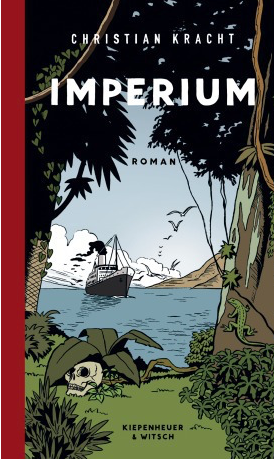
Imperium

Finally reading Christian Kracht’s recently translated Imperium.

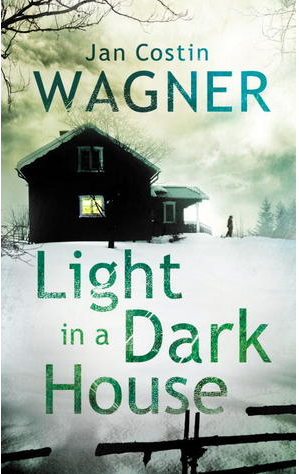
Light in a Dark House

Maybe read Jan Costin Wagner’s Light in a Dark House.

What else? Maybe some short stories.

Have you already started reading? What are your plans?

If you participate, please add your reviews to the German Literature Month Page.

Christa Wolf Giveaway – The Winners

literatur_2015_gold-2

One day left before  German Literature Month begins.

High time to announce the winners of Christa Wolf’s August – offered by Seagull Books.

And the winners are:

TJ @ MyBookStrings

Melissa Beck

Congratulations! And happy reading, TJ and Melissa.

Please send me your address via beautyisasleepingcat at gmail dot com. Lizzy will be sending your copies.


Imre Kertész: Fateless – Sorstalanság (1975) Literature and War Readalong September 2015

Fateless

Imre Kertész novel FatelessSorstalanság tells the story of fifteen-year old Gyuri Köves, a Jewish boy who lives in Budapest. It starts in 1944, on the day on which Gyuri’s father is sent to a labour camp. What strikes the reader from the beginning is the narrator’s voice and his cluelessness. He’s a young boy, interested in girls and puzzled by his parents strange arrangements (he lives with his father and his stepmother and his parents often quarrel because his mother wants him to live with her). He notices everything that goes on around him but his interpretations are always slightly off. He finds logic in many shocking things, like the yellow star they have to wear, the way they are being treated by non-Jews and many other things. Why? Because they seem logical, from a certain point of view. And because he doesn’t feel like a Jew. His family isn’t religious. They even eat porc during the last dinner with his father. He feels that the star and being ostracized hasn’t really anything to do with him. It’s not personal.

A little later Gyuri is sent to work in a factory and then, one morning, has to get off the bus and wait endlessly for a train to take him and others to another “work place”. Of course, the reader knows it’s a concentration camp. He’s first sent to Auschwitz, then to Buchenwald and later to Zeitz.

He still finds logic in everything he sees. In the way they are forced to work, in the way they are punished. That doesn’t mean he doesn’t suffer. He’s cold, dirty and constantly hungry. He witnesses executions and is afraid of being sent to the gas chambers.

Towards the end of the book, he falls ill and is sent back to Buchenwald until the day the camp is freed and he can return to Budapest.

Reading a novel, set to large parts in a concentration camp, filtered through the consciousness of a narrator like this, was a peculiar and eerie experience. It could have gone wrong. It could have felt sensationalist and dishonest like The Boy in the Striped Pyjamas (I’m referring to the movie not the book), but it didn’t. It’s chilling because we know what he’s talking about but he doesn’t. When Gyuri tells us how everyone stepping off the train is inspected and then either sent to one group or the other, we know that it means that they will either be sent to a labour camp or to the gas chambers. Reading Gyuri’s assessment of what happens, his feeling of being chosen and found worthy – without knowing the real logic behind it all – is almost creepy.

The best novels don’t just follow a character from the beginning to the end but they show a change. And Gyuri does change. The boy who’s leaving the concentration camp is bitter and full of hatred. The days of his admiration for a system that runs,logically, smoothly, and mercilessly are long gone.

I’ve seen this novel called “shocking” and, if you’ve read my review until now, you may think, you know why. Because of the distortion. But that’s not the shocking part. What may seem odd is the end of the book. It’s not a plot element, therefore, I don’t consider it to be a spoiler to reveal the end. When Gyuri returns to Budapest, people refer to the horrors he must have seen or ask him whether it was like hell. He tells them that he hasn’t seen hell and therefore he doesn’t know how to compare. And  he finds it absurd when people tell him to start a new life, leave what has happened behind. But it’s not likely he will ever forget. What he doesn’t tell them is, that there were moments of great happiness in the concentration camp. And that’s the shocking thing of the novel. It shows us that we cannot imagine something we haven’t experienced. Whether we think, like some,  it wasn’t all that bad or whether we assume it was “hell” – we have no clue. Both assumptions are equally faulty. And there’s a certain arrogance in a assuming that we can picture what we don’t know.  And there can always be happiness. This reminded me of one of my favourite books – Solzhenitsyn’s One Day in the Life of Ivan Denisovich.

The end also reveals the meaning of the title. The novel describes many instances in which the Jews let the oppressor handle them like cattle. They never fight back. This, as Gyuri says, was a choice. Everything was a choice. There’s no such thing as “fate” – everybody is ultimately free, free to choose how to act. Always.

I wish this review was more eloquent but I’ve got the flu since Monday and my head is fuzzy. I’m sorry for that. It’s a book that would have deserved a careful review because it’s stunning. I really liked it a great deal and, for once, “like” isn’t a badly chosen word, even though I’m writing about a Holocaust novel.

I have watched the movie as well and found it powerful. It stay’s close to the novel, with the exception of the last parts. In the movie Gyuri is offered to go to the US when the camp is freed by the Americans. Going back to Hungary means going to the Russian sector. Nothing to look forward to. This isn’t a topic in the book.

The book is based on Kertész’s own experience. As a fourteen-year old he was sent to Auschwitz and from there to Buchenwald. Interestingly he says that the book is far less autobiographical than the movie.


Other reviews

Emma (Book Around the Corner)


*******

Fateless is the third book in the Literature and War Readalong 2015. The next book is the German novel A Time to Love and a Time to Die – Zeit zu leben und Zeit zu sterben by Erich Maria Remarque. Discussion starts on Friday 27 November, 2015. Further information on the Literature and War Readalong 2015, including the book blurbs can be found here.

Announcing German Literature Month V

literatur_2015_gold-2

I’m delighted to announce that Lizzy and I will host the 5th German Literature Month (#germanlitmonth) this coming November.


For those who have not participated before, here are the rules:


1) Whatever you read, in whichever language you read, must have originally been written in German.  Novels, novellas, short stories, plays, poems, they all count.   No genre is excluded.
2)  Enjoy yourself.  There’s no need to write long, detailed reviews (although we do like those).  A quick opinion piece, the posting of a favourite poem, the tweeting of a pertinent quote or picture of a delicious book cover (using the hash tag #germanlitmonth, of course) all contributes to a communal celebration of German-language literature.


You are free to pick what you like but for those who prefer some guidance or those who love the group-spirit of the event there are themed weeks and readalongs.


Week 1:  Nov 1-7 Schiller Reading Week. Hosted by Lizzy.


Friedrich Schiller Week


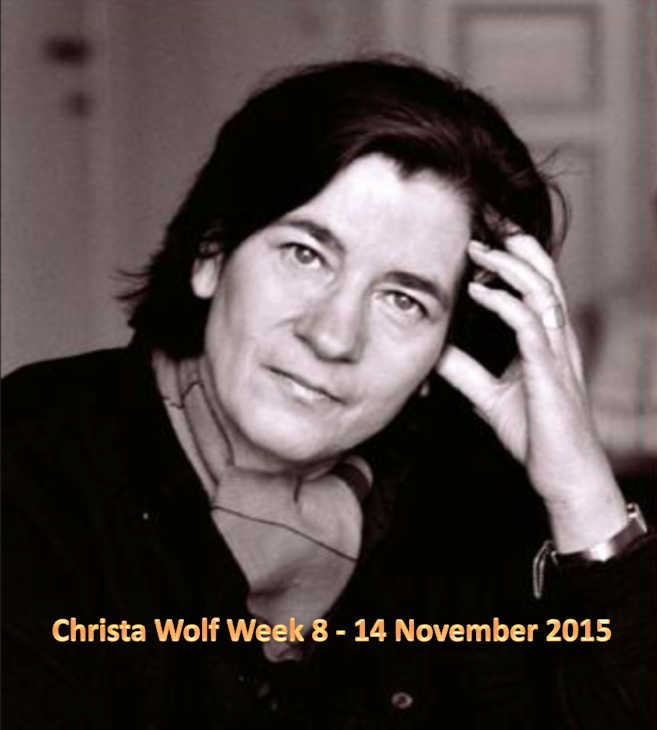
Week 2:  Nov 8-14 Christa Wolf Reading Week. Hosted by Caroline.


Christa Wolf Week


Week 3:  Nov 15-21 Ladies’ reading week incorporating a readalong of Ursula Poznanski’s award-winning YA title, Erebos on Friday 20.11.  Hosted by Lizzy.


Erebos


Here’s the blurb:
‘Enter.
Or turn back.
This is Erebos.’
Nick is given a sinister but brilliant computer game called Erebos. The game is highly addictive but asks its players to carry out actions in the real world in order to keep playing online, actions which become more and more terrifyingly manipulative. As Nick loses friends and all sense of right and wrong in the real world, he gains power and advances further towards his online goal – to become one of the Inner Circle of Erebos. But what is virtual and what is reality? How far will Nick go to achieve his goal? And what does Erebos really want?


Week 4: Nov 22-28 Gents’ reading week incorporating a Literature and War readalong of Erich Maria Remarque’s A Time To Love and A Time to Die on Friday 27.11Hosted by Caroline.


A Time To Love and a Time to Die


Here’s the blurb:

From the quintessential author of wartime Germany, A Time to Love and a Time to Die echoes the harrowing insights of his masterpiece All Quiet on the Western Front.

After two years at the Russian front, Ernst Graeber finally receives three weeks’ leave. But since leaves have been canceled before, he decides not to write his parents, fearing he would just raise their hopes.

Then, when Graeber arrives home, he finds his house bombed to ruin and his parents nowhere in sight. Nobody knows if they are dead or alive. As his leave draws to a close, Graeber reaches out to Elisabeth, a childhood friend. Like him, she is imprisoned in a world she did not create. But in a time of war, love seems a world away. And sometimes, temporary comfort can lead to something unexpected and redeeming.
 
“The world has a great writer in Erich Maria Remarque. He is a craftsman of unquestionably first rank, a man who can bend language to his will. Whether he writes of men or of inanimate nature, his touch is sensitive, firm, and sure.”—The New York Times Book Review


Week 5: Nov 29-30 Read as You Please.


If you’re not sure what to read – our German Literature Month Page can help you with that.
German Literature Month IV was astounding in terms of numbers of participants (40) and quality contributions.  I’m not sure that we’ll be able to match it again, but let’s give it a shot. Are you in?

Kristina Carlson: Mr Darwin’s Gardener (2009)

Mr Darwin's Gardener

Mr Darwin’s Gardener is a novella by Finnish author Kristina Carlson. In her native Finland, she’s a popular children’s book author but has also written three highly acclaimed books for adults, one of which is Mr Darwin’s Gardener.

The blurb calls this novel “A postmodern Victorian novel about faith, knowledge and our inner needs.” The main character is Thomas Davis, Darwin’s gardener. A loner and widower whose faith and trust in life are tested. Not only has he lost his wife but his children are sickly. Since he shuns religion, he can’t even find solace in the church. When the book begins he’s not sure life is still worth living. This sounds conventional enough but the way this novella is presented is anything but. The “story” is told by multiple narrators. The effect is that of a chorus. Kristina Carlson dips in and out of various POVs, often switching from first to third within a paragraph. I could have gotten used to that if the 1st and the 3rd POV had been that of the same person, but very often, that wasn’t the case. The transitions were blurred most of the time and since there were so many characters it was confusing at times. It would have helped, if there had been a change in voice and tone, but Kristina Carlson used the same voice and tone throughout the novel. The way the narrators spoke about faith and destiny, was the only way to distinguish one person from another.

Nonetheless, I enjoyed large parts of the book, because of the descriptions. This book contains some of the most exquisite and precise nature descriptions I’ve come across. And they do serve a purpose. This is a novel about faith, and about a very specific point in time. Darwin’s books challenges the Bible, contradicting it, questioning it. What did a person have when the person lost his/her faith?— nature. Those detailed descriptions reminded me of some very detailed religious paintings. A believer would find much solace in their minutiae. And so, Thomas Davis finds solace in contemplating nature, following its change through the seasons. Its never-ending cycle is a consolation.

Here’s a quote to illustrate her writing

A shadow flits across one of the dark windowpanes of Down House and Thomas is startled. He straightens up, shoves his hands into his pockets and stools to the back gate. Herbs and cabbages grow in a bed where Mr Darwin once cultivated yellow toadflax. The villagers thought it was a mere weed, and of course dahlias and asters are more beautiful, though the nature of beauty is mysterious. By the footpath grow hazel, alders, elms, birches, hornbeam, privet, dogwood and holm oak. Mr Darwin had them planted decades ago. Thomas turns and wanders across the meadow. When the heels of his boots sink into wet earth, the smell of mould wafts out of the long flattened grass.


A book about faith, religion, destiny, bigotry and hope, with accurate and gorgeous nature descriptions. Not a breezy book by any means, but one that’s exquisitely crafted.

This is book five of my 20 under 200 project.

Literature and War Readalong September 30 2015: Fateless – Sorstalanság by Imre Kertész

Fateless

The third book in this year’s Literature and War Readalong is Imre Kertész’ Holocaust novel Fateless. Kertész is a Hungarian author who won the Nobel Prize in Literature in 2002. As far as I know, he’s the only Hungarian author who has won the prize.

As a boy of fourteen, Kertész was deported to Auschwitz in 1944 and later brought to Buchenwald. Although the book is based on some of his own experiences, it is by no means autobiographical. The movie based on the book, and for which Kertész wrote the script, is much more autobiographical as the novel.

Here are the first sentences

I didn’t go to school today. Or rather, I did go, but only to ask my class teacher’s permission to take the day off. I also handed him the letter in which, referring to “family reasons” my father requested that I be excused. He asked what the “family reasons” might be. I told him my father had ben called up for labor service; after that he didn’t raise a further peep against it.

And some details and the blurb for those who want to join

Fateless – Sorstalanság by Imre Kertész (Hungary 1975), Holocaust,  Novel, 272 pages.

The powerful story of an adolescent’s experience of Auschwitz by Holocaust survivor and Nobel Prize winner, Imre Kertész.

Gyuri, a fourteen-year-old Hungarian Jew, gets the day off school to witness his father signing over the family timber business to the firm’s bookkeeper – his final business transaction before being sent to a labour camp. Two months after saying goodbye to his father, Gyuri finds himself assigned to a ‘permanent workplace’, but within a fortnight he is unexpectedly pulled off a bus and detained without explanation. This is the start of his journey to Auschwitz.

On his arrival Gyuri finds that he is unable to identify with other Jews, and in turn is rejected by them. An outsider among his own people, his estrangement makes him a preternaturally acute observer, dogmatically insisting on making sense of everything he witnesses.

I’m planning on watching the movie soon. I’m interested to see the differences. If you don’t get the time to read the novel, but still want to join the discussion, you could just watch (and review) the movie.


*******

The discussion starts on Wednesday, 30 September 2015.

Further information on the Literature and War Readalong 2015, including all the book blurbs, can be found here.