Harry Mulisch: The Assault – De Aanslag (1982)

The execution of a collaborator and Nazi retaliation on the family of twelve-year-old Anton Steenwijk have lasting repercussions in Anton’s life as he learns, through chance encounters, the truth of one harrowing night. 

Harry Mulisch is an author I have wanted to read for a long time. I know he is said to be one of the most important Dutch writers.  The Assault – De Aanslag is one of his most acclaimed novels and since it isn’t as long as The Discovery of Heaven, which I’d like to read sooner or later as well, I thought it’s a good starting point.

The book is told in a prologue and 5 sequences, each set in another year, 1945, 1952, 1956, 1966, 1981.

During the course of one single night, in the famine winter 45, just before the end of the war, the life of Anton Steenwijk, a twelve year-old boy, is changed forever.

The prologue describes the location. We get to know that the Steenwijk’s live in Haarlem, in a detached house, part of a housing project with three other houses. They are small but stately houses. At the beginning of sequence one, the family sits together in the darkened dining room, the only room they still inhabit in the icy cold apartment. Anton is reading, his older brother Peter is doing his home work, the mother spools wool and the father is trying to instruct them. A peaceful moment and despite the hunger Anton is enjoying it.

When they hear shots outside in the street, the peaceful moment is interrupted brutally. Looking out of the window they see that someone has been shot down in front of a neighbour’s house and immediately after this the neighbours come out and drag the man to the front of  Steenwijk’s house. Peter is the only one to react. He runs out and discovers that the man is a well-known police inspector and Nazi collaborator. He tries to drag the man away but before he gets very far, a group of Nazis approaches.

We learn later, that in those days, whenever a Nazi or a collaborateur was shot dead, the Nazis would severely punish those living in the houses close by.

This is exactly what happens. At the end of the night Anton’s parents and brother are shot and the house is destroyed. Anton is brought to his aunt and uncle who live in Amsterdam.

How do you go on living after something like this? How do you cope?

Each of the subsequent scenes shows us Anton at another point in his life. There is no conscious coping at first. It is as if he was numb and had forgotten everything right after it happened. His feeling for time is distorted. Whenever he thinks of that night he doesn’t feel much and thinks it’s much longer ago than it really is. Still the event seems to be guiding him in all of his choices and it is impossible to leave it behind for good. It is as if a secret force was at work and pushing him towards people who will help him uncover what happened really.

Survivor’s guilt may be an important theme but morality and fate or destiny are even much more important. While it was a pure coincidence that the dead man was shot in front of Korteweg’s house, Korteweg’s chose to drag him and leave him in front of Steenwijk’s house. Why? And if those who committed the assault had known that almost a whole family would be erased, would they still have done what they did? All these questions that Anton will start to ask many years later will be answered in the novel.

The book explores the question whether it is morally acceptable to commit a crime which will have severe consequences for others, in order to prevent bigger crimes and it explores also how people live with a trauma and repression. It shows in a very subtle way that although you may not be conscious of it, the trauma still lingers and wants to be acknowledged and express itself. It will find ways to make you pay attention. Pretty much like the elements in a dream which will return as long as you have not resolved some interior conflicts. The trauma can even make you choose a profession and it expresses itself in illness and accidents.

The way Mulisch shows the complexity and symbolism in which our subconscious tries to get our attention is amazing. What is equally wonderful is how evocative and expressive his descriptions are. When we open that book, we sit there with the family in the darkened room. We see the flickering lamp, feel the rough wool of an old pullover on our skin, the hunger churning in our bellies.

I didn’t like all of the parts equally well but one thing is for sure, part I 1945, is an amazing piece of literature and as a whole it is well worth reading.

I have read Harry Mulisch for Iris Dutch Literature Month. If you’d like to discover more Dutch books, make sure to visit her blog.

Has anyone read this or another of Mulisch’s book?

Alice Hoffman: The Ice Queen (2005)

I don’t know many writers whose first sentences draw you into a novel like Alice Hoffman does

Be careful what you wish for. I know that for a fact. Wishes are brutal unforgiving things. They burn your tongue the moment they are spoken and you can never turn them back. They bruise and bake and come back to haunt you. I’ve made far too many wishes in my lifetime, the first when I was eight years old.

This is the lesson the narrator learns when she is still a little girl at the beginning of Alice Hoffman’s novel The Ice Queen. In a moment of intense anger she wishes her mother dead. A few hours later she and her brother are informed that their mother has died in a car accident. This freezes the narrator’s heart. Nobody will ever be allowed to approach her emotionally, she is shut down. She will live like a spectator, never get involved. When she is older she becomes a librarian, lives with her grandmother, has a lover, a policeman. Apart from being interested in all the possible ways someone can die, her life is uneventful. When her grandmother passes away, she decides to leave New Jersey and move to Florida where her brother lives.

She finds a job at the local library and resumes her uneventful life until she is struck by lightning. That changes everything. She joins a local support group and makes friends with a fellow lightning strike victim, Renny. When she hears of Seth, the man who is called Lazarus, because he returned from the dead, she starts to develop an obsession and finally follows him until he lets her into his house and his heart. The relationship they begin is one of intense passion and not very healthy. They are both initially trying to hide dark secrets from each other but ultimately their relationship will help them reveal and accept them.

The Ice Queen is a peculiar story. To some extent it is a re-imagination of  Andersen’s fairy tale The Ice Queen but many other tales have been incorporated and are mentioned throughout the book. Beauty and the Beast is as important as Amor & Psyche. And fairy tales are also present as topic. The narrator speaks about them, mentions them.

The main character isn’t very appealing, I can’t say I ever sympathized with her and her life much but I learned a world of things I didn’t know about lightning strike victims. How tragic it is, how much your life can be altered by it, the wounds, the scars. The worst that happens to the narrator is that she looses the ability to see the color red. This triggers the love story with Seth because she dresses and behaves differently just because all that was formerly red to her looks white. It’s amazing to imagine something like this and I found it fascinating to see the world described through the eyes of someone who sees white instead of all the shades of red. While it seems visual problems are common in lightning strike victims,  I’m not so sure something like this could happen but I was equally not sure that people could get so-called lightning figures that make them look as if whole trees had been burned into their skin. But then I looked it up and as amazing as it may seem, the phenomenon, which is called Lichtenberg figures, really exists (the link will guide you to some photos).

While as a whole this is one of the rare Alice Hoffman novels that didn’t work for me so much, there were a lot of amazing elements, as usual. One of the main characters, Renny, believes that every person has a defining secret and that it makes him or her tick. It’s an interesting concept and the novel elaborates on it.

I also liked the aspect that the narrator is a librarian and that for her each library card represents a person’s secrets. She thinks the information on it is as personal as diary entries.

What people read revealed so much about them that she considered our card catalog a treasure house of privileged secrets; each card contained the map of an individual’s soul.

I have read quite a lot of Alice Hoffman’s novels and find her a fascinating writer. Unusual and captivating and highly quotable. This isn’t one of her best in my opinion but it’s not bad at all. I just didn’t care much for the narrator and the story is based more on themes than plot which makes it somewhat disparate.

Of all the Hoffman novels I read so far I liked Seventh Heaven, Turtle Moon and The River King best. Second Nature and Here on Earth follow closely but I cared less for Practical Magic and Illumination Night.

Which is your favourite book by Alice Hoffman?

The review is a contribution to Carl’s Once Upon a Time Challenge. I am glad I made it. I had a list with several books and wanted to read at least one. I’ve read one and half. While book two – Patricia Mc Killip’s Solstice Wood – is much better than The Ice Queen, I will not be able to finish it this month.

Paris in July 2012

Paris in July was one of the events I enjoyed the most last year and I’m really glad that Karen from Book Bath and Tamara from Thyme for Tea are organizing it again.

The rules are very simple. If you’d like to join all you have to do is review a French book or movie or write about something French. Music, art, cuisine. Anything you like. It’s not a challenge so you don’t need to commit to anything. Details can be found here Book Bath and here Thyme for Tea and here is the sign up.

I’ve been reading quite a lot of French books recently which I haven’t even reviewed yet, so this is certainly something I’m going to do.

While we are free to choose any French books we like, I will focus on books set in Paris. Possible choices are

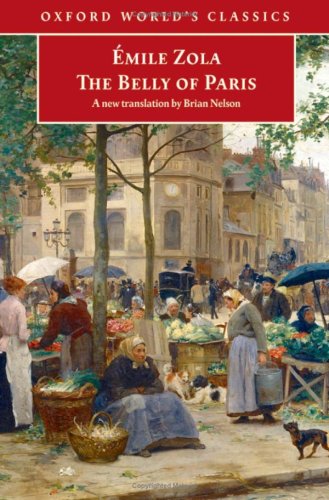
Zola’s The Belly of Paris – Le ventre de Paris

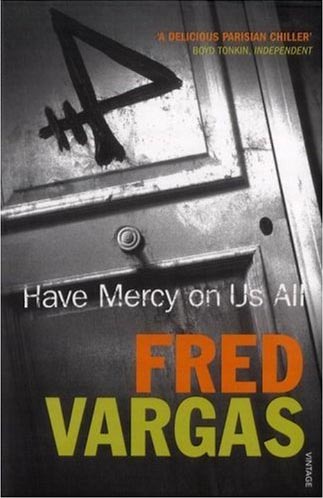
Fred Vargas’ Have Mercy On Us AllPars vite et reviens tard. You cannot go wrong with Fred Vargas. She is one of the best crime writers writing today. If you haven’t read her yet, just pick any of her books.

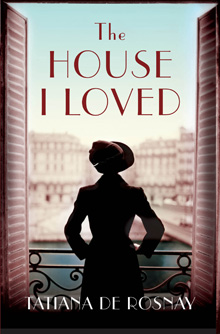
Tatiana de Rosnay’s The House I LovedRose. While she is known as a French writer, this is one of the books she has written in English. It’s a historical novel set in 19th century Paris during the time when the city was undergoing major changes.

I hope to review a movie as well but I’m not sure yet which one it will be. Maybe it’s time to re-watch the movie which is possibly my favourite French film.

I know I will not be able to be as active as last year as July is also Spanish Literature Month.

Are you going to join? Do you already know what you will read?

Louise Penny: Still Life (2005)

The discovery of a dead body in the woods on Thanksgiving Weekend brings Chief Inspector Armand Gamache and his colleagues from the Surete du Quebec to a small village in the Eastern Townships. Gamache cannot understand why anyone would want to deliberately kill well-loved artist Jane Neal, especially any of the residents of Three Pines – a place so free from crime it doesn’t even have its own police force. But Gamache knows that evil is lurking somewhere behind the white picket fences and that, if he watches closely enough, Three Pines will start to give up its dark secrets…

Still Life by Canadian writer Louise Penny was a real discovery. There hasn’t been a start to a crime series since I’ve read the first of Peter Robinson’s Chief Inspector Ranks series that I enjoyed this much.

If I could I would move to Three Pines, the small fictional village, located a few hours from Montreal, in rural Québec. It’s a small village that sounds as if it was a place where time stands still and reminded me a lot of Elizabeth Gaskell’s Cranford. Old cottages face a small village center and are surrounded by old trees and lush gardens. The place is very green and picturesque, the descriptions of it atmospheric and full of tiny details of the season. It’s the end of autumn, dead leaves are falling, it rains and the temperature is slowly dropping. A storm will come and soon it will be winter. Before the crime is solved, snow will begin to fall and a lot of the investigation will have taken place in front of a cozy fire.

It’s hard to believe a crime could happen is such an idyllic setting but it does and Chief Inspector Armand Gamache from the Sureté du Québec and his team have to leave Montreal and try to find out what happened to Jane Neal. The old woman was found dead in the forest on the morning of Thanksgiving. It is the hunting season and Jane has been shot dead by an arrow. However bow, arrow and shooter are missing. Was it maybe no hunting accident?

Gamache and his team will have to stay in Three Pines for the duration of the investigation. They move into Olivier’s and Gabri’s B&B. The two men also own the local bistro which is known for its excellent food. The investigation introduces us to Jane Neal’s friends, a small but interesting community. The painters Clara and Peter, Myrna, a former psychologist who opened a book shop in Three Pines, Ben, the son of Timmer, one of Jane’s best friends, Ruth, a poet and many more.

While Still Life has at times the feel of a cozy, it’s more complex than the average novel of that genre. Chief Inspector Gamache is a kind, intelligent but strict and far from flawless man. It will be interesting to see how he will be portayed in the following books. His team is promising as well, his subordinate is a sort of son figure for him while there is a rookie character with whom he gets into one conflict after another. The novel is well constructed, moving on a steady pace and the crime isn’t solved too easily and very plausible.

I have never read a Canadian crime novel before and I was glad Louise Penny provided a lot of interesting information about Québec, the way the French and the English live together, the peculiarities of the region.

What I liked best apart from a wide range of  psychological insights are the well-drawn characters and the wonderfully atmospheric descriptions of the place. That makes me wonder how the series will go on. It seems part two is set in Three Pines as well but the following parts are not.

If you like to immerse yourself in your crime novels and want them well constructed with detailed descriptions and some very appealing characters, you shouldn’t miss the start to this series. It’s great. And I love the cover.

Joyce Carol Oates: Rape – A Love Story (2003)

Rape: A Love Story begins with what is almost unspeakable. It tells of the brutality and cowardice that overtakes the city of Niagara Falls in the aftermath of an attack on a woman and her young daughter. A diamond-hard dissection of modern mores, it is also the tale of Teena and Bethie’s silent champion – a man who knows the meaning of justice. And love. 

It’s a provocative title, Joyce Carol Oates has chosen for her book: Rape: A Love Story. Maybe it’s because of titles like this that people are divided when it comes to her work. I don’t know. This is maybe the fifth of her books I’ve read so far and every time I read her I think I want to read every thing she has ever written, because even books which are not as good, like The Falls, are still so much superior than most other books. Some like Solstice are of a rare beauty, others like Foxfire and Rape are bound to trigger intense discussions.

Rape tells the story of a bad decision. One single moment which changes a life forever. Because it is a beautiful night, because she comes home from a party and is happy, Teena decides to walk through a park at midnight, together with her 12-year-old daughter. It’s a decision that shouldn’t have any major consequences but it has. She is followed by a group of young men, attacked, raped and almost beaten to death. Her young daughter escapes and gets help. The police officer who finds her is a veteran of the gulf war, a quiet, silent man. He knows the young widow and likes her very much. He is incredibly shocked about what happened to her and the girl. Bethie hasn’t been raped but beaten as well.

This is only the beginning of the story, the first few pages. What follows is maybe less violent, but not less shocking. The town – Niagara Falls – turns against Teena. Rumours start to spread. Was she not too good-looking, too sexy? Did she not like men too much? There is gossip and finally threats. Her prosecutor, a woman, is ridiculed in court, everybody turns against them.

The novel is told in alternating voices, changing points of view. Many of the chapters are second person narratives. A voice seems to be talking to Bethie, the young daughter. I found the novel masterful and impressive. Especially the end. It’s an analysis of violence, guilt, justice and retribution. It doesn’t end like we would expect it will. Of course not, remember, there is the subtitle – A Love Story.… It almost feels as if Joyce Carol Oates wanted to say: “If we cannot have justice in real life, let’s at least have it in our books.”

I found it particularly eerie that Rape had a lot in common with one of the stories in Ferdinand von Schirachs’ second collection Guilt which I just reviewed here. The perpetrators even when they are known are not always brought to justice if evidence is lacking or the defence lawyer is better than he should be.

Another reason why I found the book so good and important is because this is such a universal topic. Something I sometimes fear that will never go away. I have two girl friends who have been raped. None of them reported the crime. One was drunk when she came home, wearing a leather skirt and afraid they would tell her it was her fault. The other one had chosen a way which is known for being a bit dangerous and felt she had deserved it for her stupidity. I have been followed twice and could run away and was once attacked in broad daylight. If my dog hadn’t chased the attacker… I don’t know.  On top of that there has been a series of rapes since a couple of months in the city in which I live. Every weekends since a few months young women are raped on their way home. Sometimes relatively early, around 18.00, sometimes late at night. In many different areas of the city, by one or more men. It’s appalling.

The book captures this and much more so well. One single moment changes everything, a decision that wouldn’t have an impact if we were living in a healthy world, a world in which women and girls would not constantly have to fear being attacked. It manages to say a few powerful things about going to war and being a soldier as well. A short book. But so complex.

These numbers from feminist.com may be of some interest Facts About Violence. They only look at the US which isn’t even one of the most violent places for women to be.

David Foenkinos: La délicatesse – Delicacy (2009)

Natalie isn’t certain of anything anymore. One minute she was a happily married young woman, successful in her career, and convinced the future was full of promise. But when her husband was run over by a car, her whole world was turned upside down. Years later, still bruised with grief but desperate to move on with her life, she impulsively kisses her colleague Markus. For Natalie, the kiss is just a gratuitous act. For the awkward, unassuming Markus, it is the moment at which he falls hopelessly, helplessly in love. But how will he ever convince such a beautiful, intelligent but confused young woman that he is the man who can bring her back to life?

I read a review of DelicacyLa délicatesse on Emma’s blog (here) last year and thought it sounded nice. And it really is a charming book. While it will not knock you off your feet, it’s entertaining and quirky and some elements reminded me of Alain de Botton’s first novels.

The story can be summarized in a few sentences. Nathalie is a young widow who struggles to go on living. For three years she is in a sort of limbo until, one morning, she kisses one of the men from her company. An unimpressive, invisible Swedish guy named Markus. What doesn’t mean much for her and was just a very weird whim, means the world to Markus. They are, as one would say, not in the same league. She is incredibly attractive and beautiful while nobody even notices him.

Charles, their boss, is equally in love with Nathalie which complicates things even more. When Markus asks Nathalie out, she accepts although she isn’t really in the mood. How surprising to find out that this plain-looking man is far from ordinary.

I’m sure this sounds like a pretty usual romance but what makes Delicacy worthwhile is the way in which it is told. The story is divided into 117 chapters, some of them not longer than a sentence, some a few pages long. While the story is told chronologically, many of the short chapters contain quirky remarks, information on things that happened or were said in the preceding chapter, a recipe for a dish, the star signs of the co workers. Additionally there are footnotes making generalizing remarks like “Women called Nathalie are often nostalgic”.

All of these comments and annotations may seem random and silly at first but after a while you realize that Foenkinos’ main themes are prejudice, preconceptions and generalisations and that what he does is quite clever really. He confronts the reader constantly with this type of thinking, with his own prejudices. We are all biased to a certain degree. We associate characteristics with nationalities and even with names. Some research has found out that children are treated differently at school depending on their names.

Gossip is one way to let loose all those preconceptions and faulty ideas about others. Someone walking by without saying hello may just have a bad day while people who see him will interpret this behaviour in different ways “Maybe someone has died”. “He has been reprimanded by the boss”. “He is very ill”… . This is exactly what Nathalie and Markus face once people notice that they have met outside of the company.

I don’t want to spoil the book, so I’m not going into too many details but once you finish, you will see how different the “perfect” relationship between Nathalie and her good-looking dead husband is from how Nathalie and Markus interact.

La délicatesseDelicacy is charming and amusing. It tells a sweet love story and at the same time manages in a very playful and light way to make us aware of our short comings when we meet new people and judge them sometimes for no other reasons than their name and nationalities.

Literature and War Readalong June 29 2012: Bomber by Len Deighton

The last two titles in the readalong were both about the Blitz and the bombings of the British cities seen from the perspective of civilians. Bomber shows another point of view. Set in summer 1943 it tells the story of an Allied air raid from the point of view of all of the participants, in the air and on the ground, covering 24 hours. It has been praised for its detailed descriptions and documentary style and from what I read so far, it seems very well done. I have to thank Kevin (The War Movie Buff) for pointing it out.

Here are the first sentences

It was a bomber’s sky: dry air, wind enough to clear the smoke, cloud broken enough to recognize a few stars. The bedroom was so dark that it took Ruth Lambert a moment or so to see her husband standing at the window. “Are you alright, Sam?”

“Praying to Mother Moon.”

She laughed sleepily. “What are you talking about?”

“Don’t you think I need all the witchcraft I can get?”

“Oh, Sam. How can you say that when you…” She stopped.

“He supplied the words: “Have come back safe from forty-five raids?”

Should you want to join you will have to start early. With 527 pages it is by far the longest book of this readalong.

*******

The discussion starts on Friday, 29 June 2012.

Further information on the Literature and War Readalong 2012, including all the book blurbs, can be found here.