Jane Austen: Persuasion (1818)

Persuasion

After having read Mansfield Park and liking it so much (as you can see here) I decided to read Persuasion, which has been mentioned by so many in the comments as their favorite Jane Austen novel. The two books couldn’t be more different. I found Persuasion much more mature, more subtle, less witty, more elegant and a bit melancholic. It’s a perfect novel, there is nothing superfluous in it; the story and the characters are rounded and the way their emotions are shown is believable and very touching. There is a lot of sadness and heartache in this novel, but, since it’s an Austen novel, the good characters are rewarded. Despite of all of this, I’m not sure I prefer it to Pride and Prejudice or Mansfield Park. The earlier novels have some imperfections, but they also show an exuberance and wit, which I enjoy. From the point of view of the love story, I think Persuasion is my favourite and I like Anne Elliot and Captain Wentworth as much or even more as Elizabeth Bennet and Mr Darcy, but I missed some of the irony and playfulness of the earlier novels. On the other hand Persuasion is very subtle and I love the more urban settings, Lyme Regis and Bath, which add to its appeal.

Anne Elliot is one of three sisters who lost their mother at an early age and grew up with a silly and vain father who, on top of that, is a spendthrift. The most important things to him and his eldest daughter, Elizabeth, who is his female counterpart, are looks and titles. Being a baronet is of the utmost importance to him. The gentle and sensible Anne suffers a great deal through their coldness and superficiality and if it wasn’t for her mother’s old friend Lady Russell, who has become her mentor, she’d be bad off in a family of self-centred, pompous fools. Her younger sister Mary is not much better and at that a hypochondriac. When the novel starts the Elliots are forced to leave Kellynch Hall and find cheaper lodgings in Bath because Sir Elliot and Elizabeth have been spending far too much. The estate will be let to Admiral Croft and his wife. Mrs Croft is the sister of Captain Wentworth, the man Anne Elliot once loved and – persuaded by Lady Russell – refused to marry because he had no money and no status yet.

Eight years later Captain Wentworth is still as handsome and likable as he used to be, but he’s also very rich. Anne who has refused every suitor, soon regrets bitterly that she refused him. Captain Wentworth on his side is still hurt and resentful. He hasn’t forgotten Anne but cannot forgive her.

Persuasion is often called a “novel of second chances”, and that’s what the love story is all about, but Austen novels are always about much more than just love and marriage. Money and the criticism of a superficial society which attached too much worth to it are central themes. In Persuasion we find a similar situation as in Pride and Prejudice: a rich man with no male heir. The way this is handled is central to the society and the times in which Jane Austen lived but, thankfully, so different from now. Should Sir Elliot die, the estate would go to a distant male relative and not to one of his daughters. It seems as if the property was tied to the name only and not so much to the family. Someone who may never even have seen a house, may be living in it, while those who spent there all their lives have to move out.This is so incomprehensible for us, feels so incredibly unjust that whole series, like Downton Abbey, illustrating this practice, are sure to generate our interest.

A large part of the second story line in Persuasion focusses on this aspect. There is an heir, but he is proud and arrogant, and it is very painful for everyone to imagine he will be living in Kellynch Hall. However, since Sir Elliot is still a good-looking man, it’s not impossible that he remarries. If a younger wife would give birth to a son, the whole situation would look entirely different. While the love story is central the “hunt” for the estate and the ensuing complications are no less important.

I’ve read all of Jane Austen’s longer novels now and it’s quite fascinating to look back, to compare, find similarities, spot differences. I’m currently reading Claire Tomalin’s Jane Austen biography and it adds another layer. So much that is mentioned in Tomalin’s book can be found in the novels. I noticed that Jane Austen never describes London, but I didn’t know she’d never been there.

Nowadays I tend to jump from one author to the next, but it has a special appeal to read everything of one writer because the books are always linked and when you’ve read them all, you can see, that despite the differences, the individual books together form a whole. In Jane Austen’s case, reading all of her books, showed all of her novels are full of vivid portraits and character sketches, full of well-observed behaviour and show the many facets of romantic attachment. But while there are similarities in the themes, there is a huge difference in mood.
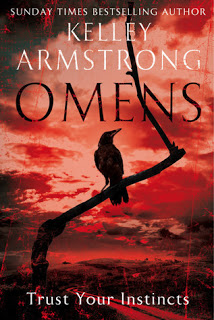
Kelley Armstrong: Omens (2013) The Cainsville Trilogy I

Omens

I always meant to return to Kelley Armstrong’s Women of the Otherworld series, but when I saw she has a new series out, which is a real departure from her dark fantasy series and much more of a thriller/crime series, I was very interested.

Omens is a terrific read and an unusual genre, one could call it a thriller with elements of magical realism. The only bad thing I can say about this book is that it’s not a standalone and that part II will only be out in 2014.

Olivia Talyor-Jones is a 24-year-old, rich society girl, just about to get married to her fiancé James when her world is turned upside down. Not only does she find out that she has been adopted, but her birth parents are serving a life sentence. They are serial killers who have committed four ritualistic murders.

Shocked by the discovery, haunted by the press and pushed away by her adoptive mother and her fiancé, she follows some signs and ends up in the small-town Cainsville, located not too far away from her hometown Chicago. Olivia decides to cut herself off from her former life for the time being, to look for an apartment and get a job.

Cainsville is a small town that seems to be stuck in another time and as soon as Olivia arrives, she encounters signs and omens which lead her to different interesting discoveries about the town and its people and her parents. Her birth parents hear that she has been found and want to get in contact with her. When Olivia meets dubious lawyer Gabriel Walsh, who was her birth mother’s lawyer during one of her appeals, she decides to visit Pamela, her mothe, and hire Walsh.

There were always doubts about her parents really being serial killers and after Olivia has met her mother and memories of her early childhood resurface, she starts to hope that they are innocent and, together with Gabriel, she wants to prove it. Their research puts them in great danger and the story we get to read is suspenseful and fast-paced.

The end of this book tells me that the supernatural elements which are toned down in this book, will become more important in the future. It seems that Olivia has been brought to Cainsville for a reason.

I enjoyed Omens a great deal and can hardly wait for the next book. This absorbing novel would appeal to people who do not like to read fantasy but enjoy a good thriller with a strong and likable heroine. There is potential for a love story here as well. I liked the description of the small town Cainsville a lot. It reminded me a bit of  Louise Penny’s Three Pines, just with some magical realism thrown in.

This is my third contribution to Carl’s RIP VIII. At this pace I will have read four books before the second month starts. So far I have covered these genres”Haunted House”, “Urban Fantasy” and “Thriller”. Next up is, hopefully, – “Gaslamp Fantasy” (don’t tell me you are not intrigued).

If you’d like to see what others have reviewed so far, here’s the link to the  RIP review site.

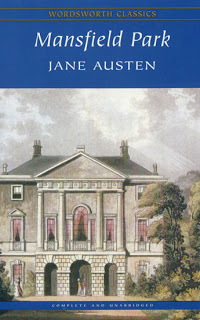
Jane Austen: Mansfield Park (1814)

Mansfield Park

I’m nearing the end of my Austen journey. Now that I have read Mansfield Park, I’ve only got Persuasion and her short fiction left. I was surprised to like Mansfield Park so much as I know it’s not a favourite of many. The reason for this is to some extent its heroine Fanny Price. I wouldn’t go as far as saying I liked Mansfield Park better than Pride and Prejudice, but it may come in second, before Emma.

The story can be summarized briefly. Three women make three very different marriages. Mrs Price gets married to a poor man who likes his drink too much. She bears him some 12 children, one of them is Fanny. Lady Bertram marries a very rich man, owner of an impressive country estate, Mansfield Park. The third, Mrs Norris, lives near Mansfield Park with her husband in a small parsonage. The two ladies often speak about their unfortunate third sister who lives in Portsmouth in squalor and one day Mrs Norris urges the Bertrams to send for Fanny, who is about ten years old, and suggests they raise her at Mansfield Park, together with her four older cousins, Tom, Edmund, Maria and Julia.

Fanny is extremely timid but over the years she is doing well. She grows up to be an educated and very pretty young woman. She’s secretly in love with her cousin Edmund who was the only one who was nice to her. Edmund has decided to join the clergy as being the younger brother he will not have a lot of money to live on. A lot of the Bertram’s money comes from the colonies and when the plantations don’t do so well, Sir Bertram travels to Antigua with his older son.

Mrs Norris who is a widow by now had to vacate the cottage for the new pastor, Mr Grant, and while Sir Bertram travels to Antigua, Mary and Henry Crawford, the younger brother and sister of Mrs Grant, arrive and set in motion a series of dramatic events.

If you know Austen well, you know that all of her heroines are tested. Some more, some less, but in the end they are always rewarded and the reward is a happy marriage.

Fanny Price is a unusual heroine because she comes from a very poor family and the way she is treated by the Bertram’s is often quite shocking. Especially the unlikable Mrs Norris lets her feel daily that she is an inferior. Fanny reminded me much more of a Dickens character and when she is sent back to Portsmouth, as a form of punishment, towards the end of the book, it’s even more Dickensian. I don’t think we find such a close up of a poor family in any other of Austen’s novels. But Fanny Price is unusual for other reasons. She is so timid and fearful and very frail as well. I was surprised to find the portrait of a highly sensitive person who even shows some signs of what used to be called neurasthenia. She has to be careful at all times; she catches colds more easily than others, she’s more easily exhausted. Her symptoms are never as pertinent as when she stays in Portsmouth. She suffers from the noise, the dirt and the smells far more than anyone else would. I have seen her called passive by people but I would say she is quiet and withdrawn, she’s not so much a dreamer as a thinker. Sure, to some extent she is passive, but if you are told daily that you are nothing, that you have to be grateful, that you have to stay in the shadow, then it’s hard to be any other way. Even if she is passive, I don’t think she has a weak mind at all. When they want to force her to marry Henry, she opposes this strongly.

I think a lot of the dislike of Fanny Price stems from her opponent Mary Crawford. I saw people mention that they like her far better than Fanny. When the book was written, she was clearly one of the negative people but we, with our 21st Century mentalities, can’t help but like her and find a lot of what she says quite reasonable. I don’t think I spoil the novel if I mention that it is also about adultery. From our point of view Mary’s reaction to this event is understandable, but when the book was written it was quite shocking. I think small elements like this show very well why many people prefer a historical novel set in 1814 than the real thing because a writer of historical novels would take our mindset into consideration.

Mansfield Park has one of my favourite villains Mrs Norris. She’s a self-centered, selfish and cruel person and tries to exclude Fanny from every little bit of joy, denies her a fire in her room and reminds her constantly that she is an outsider. I loved to hate her and the end is so rewarding.

Mansfield Park has a minor flaw. It is Austen’s longest novel but it’s not long enough. I felt the end was rushed. Many of the most important scenes happen offstage and the final emotional developments happen too quickly. I wasn’t surprised when I watched the ITV production right after finishing the book to see, that those elements were shown in the film while the first parts were compressed. I can’t remember if Austen rushes all of her endings like this. I found it a bit disappointing, which doesn’t mean I preferred the movie version. Not at all. It’s OK but not great and it contains a lot of major changes.

I think that when people write unkindly about Fanny Price, they seem to forget that being adopted into a rich family, means that you are leaving your family behind. Being cut off from what you know, not seeing your beloved brother for years, must be a terrible shock, no matter how stately a home you get in exchange. The story of the little girl Fanny Price who became a delicate but strong heroine has moved me. It’s a rags to riches story that I wouldn’t have expected from Austen. Most of her heroines marry well and improve economically through their marriage, but they don’t start out being as destitute as Fanny.

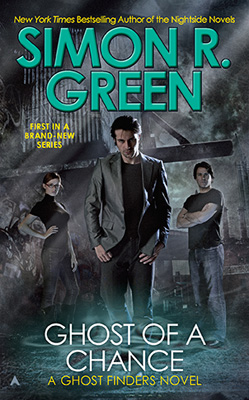
Simon R. Green: Ghost of a Chance (2010) A Ghostfinders Novel

Ghost of a Chance

Well, well. Or rather – not well at all. As  much as I enjoyed – in a guilty pleasure kind of way – the first of Simon R. Green’s Nightside novels (as you can read here), I can’t really find anything to like in this one, the first in a new series. I’d say he temporarily lost his writing mojo when he concocted this trashy, pulpy tale of five ghost hunters and their big adventure. Prologue and chapter 1 were promising enough but from there it went downhill rapidly. The characters are flat and clichéd, the story is pure humbug and the descriptions do a ton of telling instead of showing. There is something evil in the London underground system. It’s the most powerful and most unknown evil ever. What is it? Powerful, old and evil. Did I mention evil? And powerful? Ha! Now that’s descriptive. I can really see this old powerful evil thingy . . . In the end it gets a face but by that time it’s too late. The book has already been sacrificed on the altar of bad descriptions and abysmal storytelling. (I hate it when writers invent one coincidence after the other to save the plot and this happens on every page here.)

I had a look at the amazon reviews and there were many by die-hard Simon R. Green fans and with the exception of one or two everyone hated this novel big time.

Green is a prolific writer. He has a unique imagination, macabre, silly and naughty too. He displays this in this book as well, but other than that it was really bad.

It’s unfortunate that this sorry effort is my second contribution to Carl’s RIP VIII. I was debating whether or not I should write about it but I decided people deserved to be warned.

My verdict: there isn’t a ghost of a chance that anyone will like this.

I’m sure that the RIP review site will provide reviews of much more interesting books. Should you want to join the challenge here’s where you can sign up.

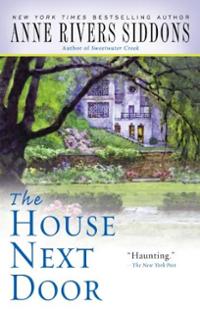
Anne Rivers Siddons: The House Next Door (1978)

The House Next Door

This summer I was suddenly in the mood to read ghost stories and haunted house stories. Looking for books to read I came across Anne Rivers Siddons The House Next Door, which is mentioned in Stephen King’s Danse Macabre as one of the best of its kind. I saw it mentioned again, some time later, in American Nightmares: The Haunted House Formula in American Popular Fiction by Dale Bailey. I’m a huge fan of the so-called Southern Gothic, which was another reason why I wanted to read The House Next Door as it clearly falls under that sub genre.

I had some preconceived ideas of what a haunted house story had to look like and I must say none of those match The House Next Door. It’s a really unusual take on the theme and maybe because of that particularly successful.

Nobody would suspect horrific events in suburban Atlanta, in a world of affluence, in which people lazily discuss their equally rich neighbours over a cocktail, but, if we believe Colquitt, the narrator of The House Next Door, horror has come to haunt the quiet, elegant neighbourhood, in which she and her husband live. Right at the beginning she tells us that the house next door is haunted and then describes why she thinks so in eloquent and elaborate details.

Colquitt and her husband are not the richest in this leafy suburban neighbourhood but they own a house next to a big piece of land, which has proven to be too difficult to build on as a small stream runs right through it. Colquitt cherishes this woodsy piece of land and spends a lot of time looking out of the window into the trees. One day, to her utter shock, her friend and neighbour announces that the land has been bought by a very young couple and that soon the beautiful land will turn into a construction site.

Colquitt dreads the destruction, the noise and dirt, and she also dreads the loss of privacy. While she isn’t a big fan of the young couple, she becomes friends with the young architect and falls in love with the plans of the house, and eagerly watches how it takes form and rises out of the ground. The house is spectacular. It looks as if it was growing out of the earth; it’s a dream made of glass and walls and strikingly beautiful.

While the construction progresses, strange things start to happen. Dead animals are found, people have accidents. I can’t say more or the book will be spoilt.

The Haunted House is unique because it really captures what domestic horror is all about: the place where we feel safest, our home, can turn into the unsafest place imaginable. The book is also unique because it’s not set in a remote wild landscape but in an elegant Southern suburb. The evil breaks into the lives of affluent, sheltered people, and turns their world upside down.

I have never read anything by Anne River Siddons before and while I had some problems with the characters, I really admire her descriptive skills. She elaborates the scenes so well, you think you’re watching a movie. I loved the descriptions of the house and how evil started to spread slowly. I didn’t like the characters, I found them annoying. I’m not the type who wants to gossip over a cocktail every evening, which they happily did. There’s a lot of drinking going on between these pages; not one social encounter takes place without abundant intake of alcohol. Still, I could feel with Colquitt. The shock over the loss of that beautiful untouched piece of land was something I could relate to. I also identified with her enthusiasm once she knew the project for the house. I love all sorts of houses and while this would be a bit too modern for me (I’m not so keen on too much glass), I can see how a house like this would work surrounded by so many trees. I would be like a big tree house.

The House Next Door is a unusual, atmospherical and well written example of a haunted house story with strong images that will stay with you long after you’ve finished the book. I liked that for once the house in question was not an old decrepit mansion, but a brand new stylish house designed by an artistic architect.

This is my first contribution to Carl’s RIP VIII Challenge. Don’t miss visiting the review site.

Literature and War Readalong September 30 2013: There’s No Home by Alexander Baron

There Is No Time

I discovered Alexander Baron’s There’s No Home  thanks to Guy who read an article about this forgotten author a while back.

Reading the beginning of the afterword I’m astonished he was forgotten. John L. Williams writes the following.

Alexander Baron was, arguably, the great British novelist of the Second World War, and for a while he was also the most popular. The three books in which he covered the conflict  –There’s No Home, From the City, From the Plough, and The Human Kind– received glowing reviews and sold in vast numbers on their first appearance on the bookstands and in book club editions.

That these titles have receded from view, rather than becoming established classics – on a par with, say, the wartime books of Evelyn Waugh, Graham Green e or Olivia Manning – seems as mysterious as it is unjust. Perhaps it is due with Baron’s concern with the infantryman’s point of view, rather than the officer class. Or perhaps it is that Baron’s style is so effortlessly simple and unsensational that it is easy to overlook the virtuosity of the writing.

This certainly puts me in the mood to pick up the book and discover this author for myself.

Here are the first sentences

This is not a story of war but of one of those brief interludes in war when the almost-forgotten rhythms of normal living are permitted to emerge again, and when it seeps back into the consciousness of human b wings – painfully, sometimes heartbreakingly – that they are, after all human.

*******

The discussion starts on Monday, 30 September 2013.

Further information on the Literature and War Readalong 2013, including all the book blurbs, can be found here.