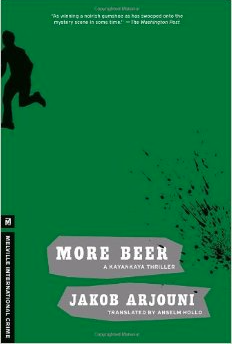
Jakob Arjouni: More Beer – Mehr Bier (1987) Kayankaya 2

More Beer

More BeerMehr Bier is the second novel in Jakob Arjouni’s Kayankaya series. It’s set in Frankfurt, Germany. PI Kayankaya is of Turkish origin. While Arjouni was still alive, he was called Germany’s answer to Raymond Chandler. I always found this comparison problematic. Arjouni writes extremely well. I’d say he’s definitely at the literary end of the crime spectrum. His books are hardboiled noir. Kayankaya is a cynical loner who gets beaten up more than once, still, I don’t think he has a lot in common with Marlowe. The differences are quite subtle but they are important. I remeber hating how Kayankaya killed a fly in the first novel. In this one, he beats a rat. Marlowe would never do something like that. I remember noticing after I’ve read three or four books by Chandler that Marlowe has a great fondness for animals. Kayankaya is much more jaded.

More Beer sees Kayankaya investigate the murder of a chemical plant owner. Four eco-terrorists have been charged with the murder, but it seems highly unlikely that they did go that far. Unfortunately,they don’t want to talk. Early on, it becomes obvious that there was a fifth man involved. But who and where is he? The defendants’ lawyer hires Kayankaya to find him. He investigates with his usual stubbornness, even pursuing after he gets beaten up a couple of times.

Kayankaya is a loner, a heavy drinker, a disillusioned man with an acerbic wit. And constantly mistreated because of his origins. I forgot how old these books are. This one was written in the 80s and to read about the way Kayankaya is treated was quite shocking. I think the status of people of Turkish origin has changed meanwhile. At least I hope so. Creating a character like this in the 80s must have been pretty provocative.

I’m not too sure what to think about this book. I found the first in the series, Happy Birthday, TürkeHappy Birthday, Turk, so much better. But while I didn’t care for the story of More Beer, I loved the writing. I’d forgotten just how well Arjouni writes. The novel is full of memorable metaphors like when the narrator compares rain drops on a windshield to a herd of animals running.  For that alone, I might reread it and will certainly not wait another ten years before I read the third one.

Arjouni, Jakob
Most of Arjouni’s novels have been translated and published by Melvillehouse.
Sadly the author died of pancreatic cancer in 2013. He was 48 years old.

Mehr Bier

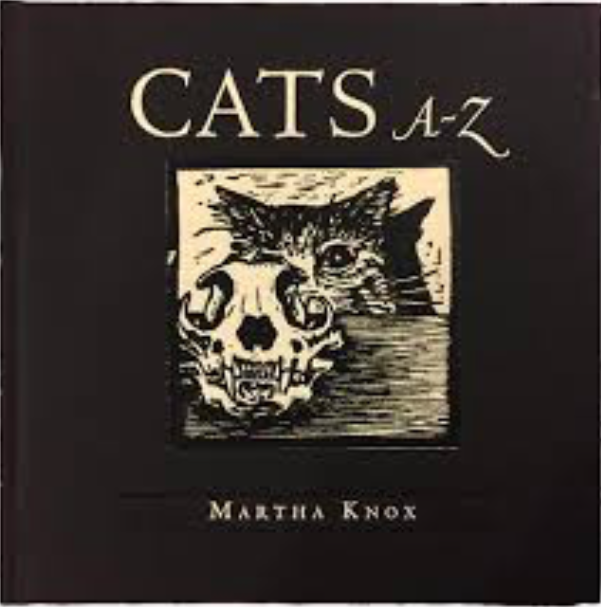
CATS A – Z by Martha Knox

CATS A - Z

A while back I received an e-mail from artist Martha Knox asking whether I’d like to review her book CATS A – Z. In recent years I’ve become wary of these requests because most of the time the cat books I’m offered are either annoyingly humourous (sorry but I’m not into Lol cats or “I haz” cats) or too mawkish. Of course, I love my cats and think they are cute but they are far more than that. They are interesting, fascinating and complex. Something told me that Martha’s book would be quite different. I was right. The book she sent me is simply amazing.

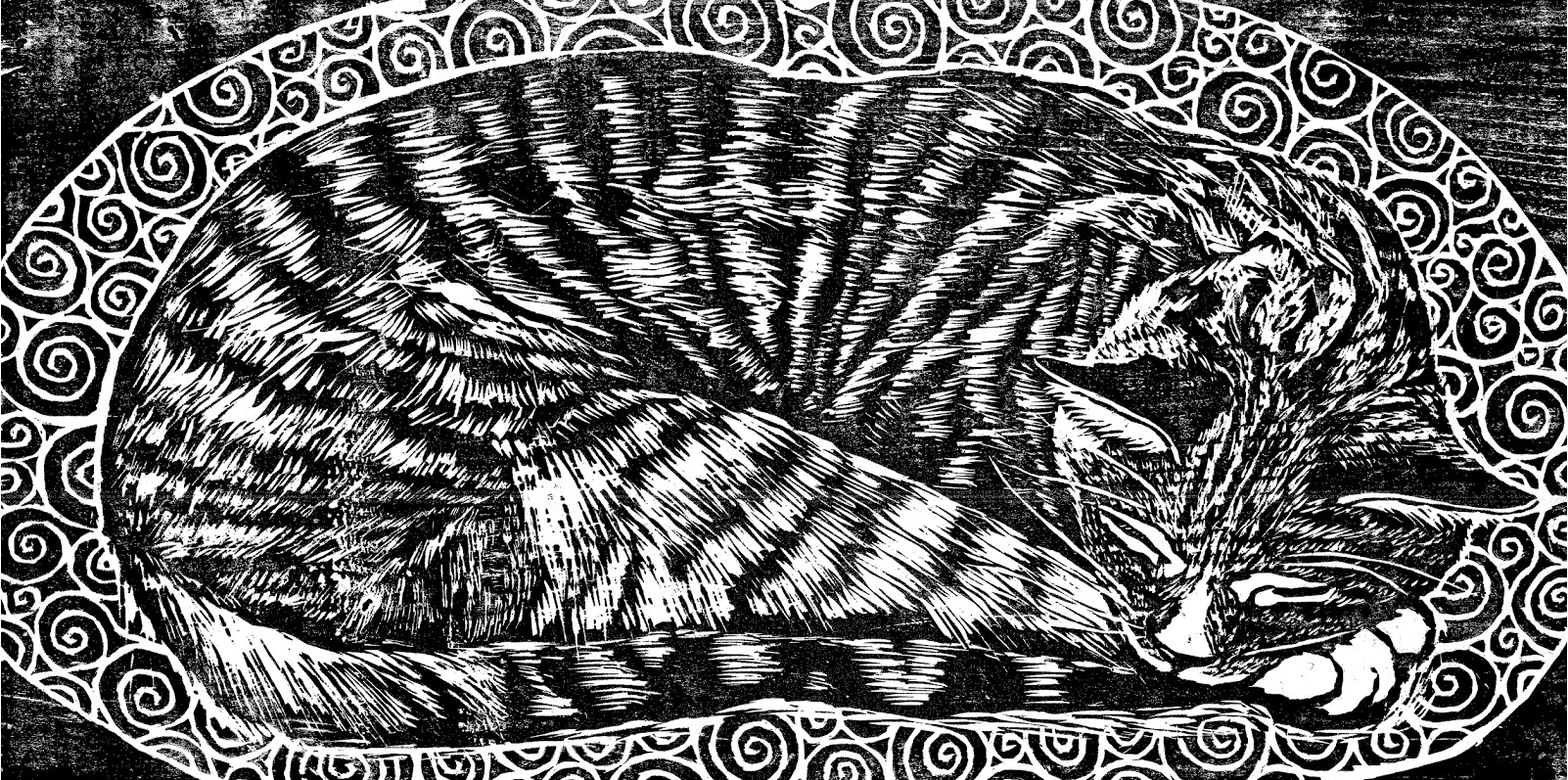
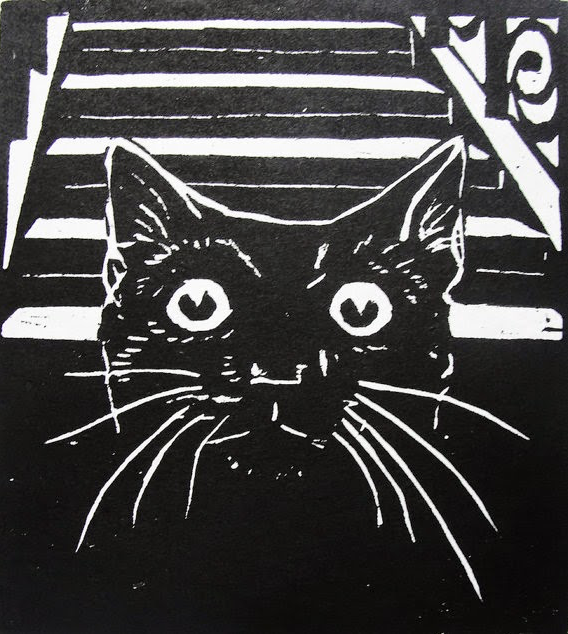
Just look at this woodcut of a sleeping cat. It serves as the end pages of the book.

Endpages Martha Knox

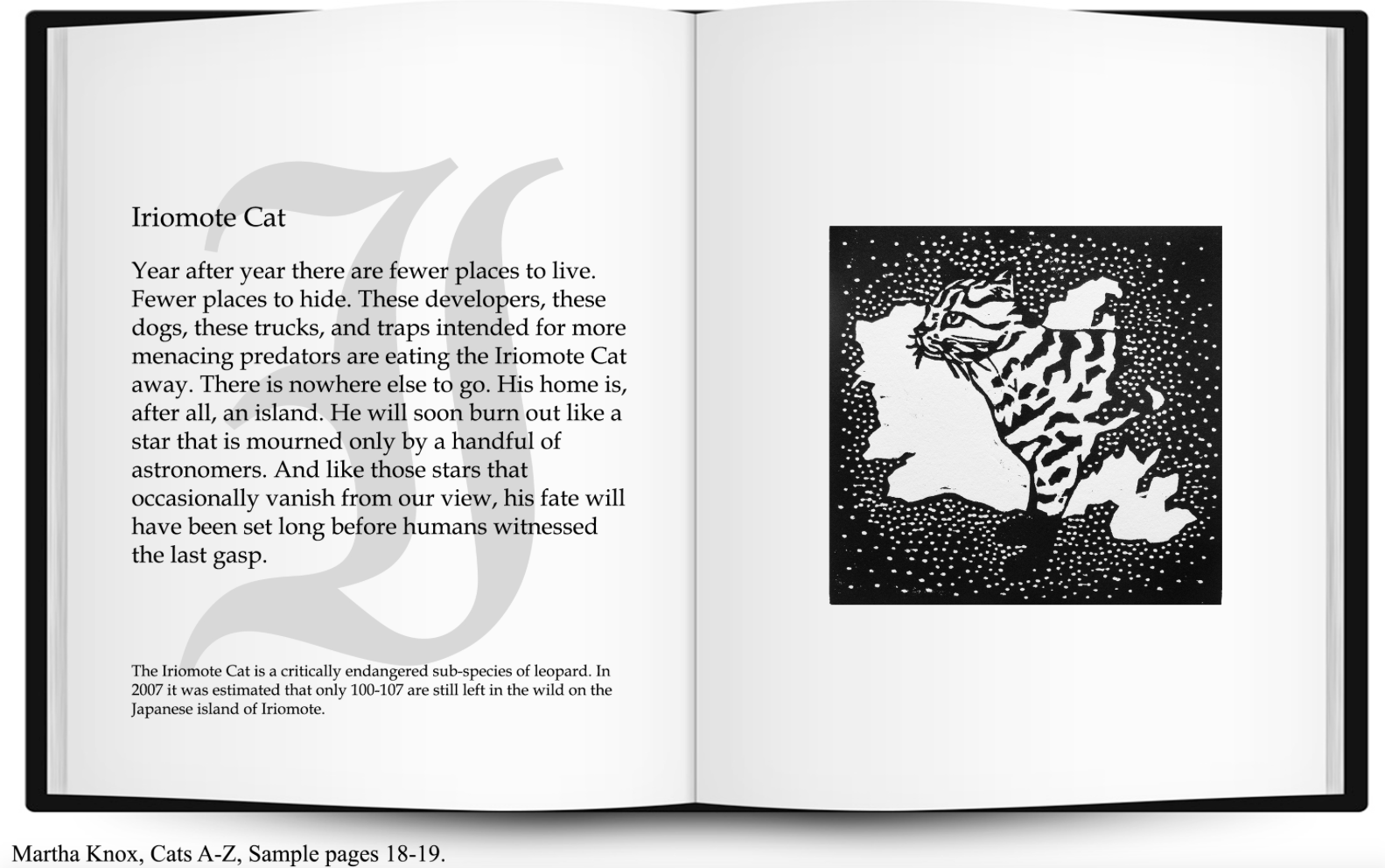
In her book Martha Knox goes through the alphabet sharing true stories and mythology, accompanied by bits of information and illustrated with gorgeous woodcuts. Some of the stories are stunning, some are sad, others are informative. Some stories are about famous cats like All Ball, a kitten adopted by a gorilla in a zoo. Others about unknown cats or literary cats like Raton from Jean de La Fontaine’s fable The Monkey and the Cat.

Zombi by Martha Knox

The picture above shows Zombi, the cat of British poet Richard Southey. Southey claimed in a letter that his cat saw the devil.

Martha Knox

I truly love this book and think that many poeple would enjoy it just as much. It would make a wonderful gift for any cat or art lover.

For those who want to find out more, maybe buy the book, read something about Martha or even buy a print, here are a few links:

The book’s release announcement on Martha’s blog: click here 

Wednesdays Are Wunderbar – German Literature Month Giveaway – August by Christa Wolf

literatur_2015_gold-2

It’s Wednesday again and you already know what that means. We’re hosting a giveaway. This week’s copies are from Seagull Books (University of Chicago Press).

Screen Shot 2015-10-27 at 17.02.56

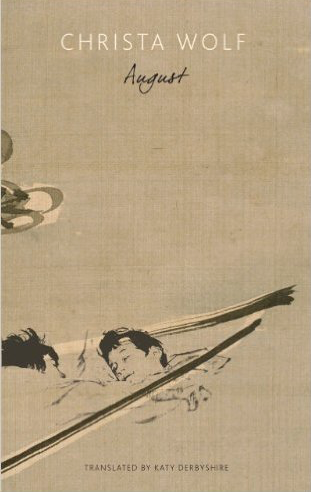
For this year’s German Literature Month I have the opportunity to give away two copies of Christa Wolf’s August, translated by Katy Derbyshire. Since I’m hosting a Christa Wolf week this year, I’m particularly pleased about this giveaway.

Christa Wolf Week

Here’s what the editor writes about August:

Christa Wolf was arguably the best-known and most influential writer in former East Germany. Having grown up during the Nazi regime, she and her family were forced to flee their home like many others, nearly starving to death in the process. Her earliest novels were controversial because they contained veiled criticisms of the Communist regime which landed her on government watch lists. Her past continued to permeate her work and her life, as she said, “You can only fight sorrow when you look it in the eye.”

August is Christa Wolf’s last piece of fiction, written in a single sitting as an anniversary gift to her husband. In it, she revisits her stay at a tuberculosis hospital in the winter of 1946, a real life event that was the inspiration for the closing scenes of her 1976 novel Patterns of Childhood. This time, however, her fictional perspective is very different. The story unfolds through the eyes of August, a young patient who has lost both his parents to the war. He adores an older girl, Lilo, a rebellious teenager who controls the wards. Sixty years later, August reflects on his life and the things that she taught him.

Written in taut, affectionate prose, August offers a new entry into Christa Wolf’s work and, incidentally, her first and only male protagonist. More than a literary artifact, this new novel is a perfectly constructed story of a quiet life well lived. For both August and Christa Wolf, the past never dies.

*******
If you are interested in winning this book, leave a comment, telling me why you’d like to read it.

The competition is open internationally. The winner will be announced on Saturday October 31 2015, around 18:00 Central European time.

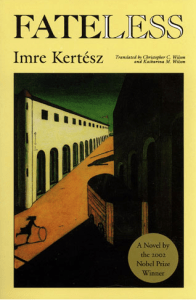
Imre Kertész: Fateless – Sorstalanság (1975) Literature and War Readalong September 2015

Fateless

Imre Kertész novel FatelessSorstalanság tells the story of fifteen-year old Gyuri Köves, a Jewish boy who lives in Budapest. It starts in 1944, on the day on which Gyuri’s father is sent to a labour camp. What strikes the reader from the beginning is the narrator’s voice and his cluelessness. He’s a young boy, interested in girls and puzzled by his parents strange arrangements (he lives with his father and his stepmother and his parents often quarrel because his mother wants him to live with her). He notices everything that goes on around him but his interpretations are always slightly off. He finds logic in many shocking things, like the yellow star they have to wear, the way they are being treated by non-Jews and many other things. Why? Because they seem logical, from a certain point of view. And because he doesn’t feel like a Jew. His family isn’t religious. They even eat porc during the last dinner with his father. He feels that the star and being ostracized hasn’t really anything to do with him. It’s not personal.

A little later Gyuri is sent to work in a factory and then, one morning, has to get off the bus and wait endlessly for a train to take him and others to another “work place”. Of course, the reader knows it’s a concentration camp. He’s first sent to Auschwitz, then to Buchenwald and later to Zeitz.

He still finds logic in everything he sees. In the way they are forced to work, in the way they are punished. That doesn’t mean he doesn’t suffer. He’s cold, dirty and constantly hungry. He witnesses executions and is afraid of being sent to the gas chambers.

Towards the end of the book, he falls ill and is sent back to Buchenwald until the day the camp is freed and he can return to Budapest.

Reading a novel, set to large parts in a concentration camp, filtered through the consciousness of a narrator like this, was a peculiar and eerie experience. It could have gone wrong. It could have felt sensationalist and dishonest like The Boy in the Striped Pyjamas (I’m referring to the movie not the book), but it didn’t. It’s chilling because we know what he’s talking about but he doesn’t. When Gyuri tells us how everyone stepping off the train is inspected and then either sent to one group or the other, we know that it means that they will either be sent to a labour camp or to the gas chambers. Reading Gyuri’s assessment of what happens, his feeling of being chosen and found worthy – without knowing the real logic behind it all – is almost creepy.

The best novels don’t just follow a character from the beginning to the end but they show a change. And Gyuri does change. The boy who’s leaving the concentration camp is bitter and full of hatred. The days of his admiration for a system that runs,logically, smoothly, and mercilessly are long gone.

I’ve seen this novel called “shocking” and, if you’ve read my review until now, you may think, you know why. Because of the distortion. But that’s not the shocking part. What may seem odd is the end of the book. It’s not a plot element, therefore, I don’t consider it to be a spoiler to reveal the end. When Gyuri returns to Budapest, people refer to the horrors he must have seen or ask him whether it was like hell. He tells them that he hasn’t seen hell and therefore he doesn’t know how to compare. And  he finds it absurd when people tell him to start a new life, leave what has happened behind. But it’s not likely he will ever forget. What he doesn’t tell them is, that there were moments of great happiness in the concentration camp. And that’s the shocking thing of the novel. It shows us that we cannot imagine something we haven’t experienced. Whether we think, like some,  it wasn’t all that bad or whether we assume it was “hell” – we have no clue. Both assumptions are equally faulty. And there’s a certain arrogance in a assuming that we can picture what we don’t know.  And there can always be happiness. This reminded me of one of my favourite books – Solzhenitsyn’s One Day in the Life of Ivan Denisovich.

The end also reveals the meaning of the title. The novel describes many instances in which the Jews let the oppressor handle them like cattle. They never fight back. This, as Gyuri says, was a choice. Everything was a choice. There’s no such thing as “fate” – everybody is ultimately free, free to choose how to act. Always.

I wish this review was more eloquent but I’ve got the flu since Monday and my head is fuzzy. I’m sorry for that. It’s a book that would have deserved a careful review because it’s stunning. I really liked it a great deal and, for once, “like” isn’t a badly chosen word, even though I’m writing about a Holocaust novel.

I have watched the movie as well and found it powerful. It stay’s close to the novel, with the exception of the last parts. In the movie Gyuri is offered to go to the US when the camp is freed by the Americans. Going back to Hungary means going to the Russian sector. Nothing to look forward to. This isn’t a topic in the book.

The book is based on Kertész’s own experience. As a fourteen-year old he was sent to Auschwitz and from there to Buchenwald. Interestingly he says that the book is far less autobiographical than the movie.


Other reviews

Emma (Book Around the Corner)


*******

Fateless is the third book in the Literature and War Readalong 2015. The next book is the German novel A Time to Love and a Time to Die – Zeit zu leben und Zeit zu sterben by Erich Maria Remarque. Discussion starts on Friday 27 November, 2015. Further information on the Literature and War Readalong 2015, including the book blurbs can be found here.

Kristina Carlson: Mr Darwin’s Gardener (2009)

Mr Darwin's Gardener

Mr Darwin’s Gardener is a novella by Finnish author Kristina Carlson. In her native Finland, she’s a popular children’s book author but has also written three highly acclaimed books for adults, one of which is Mr Darwin’s Gardener.

The blurb calls this novel “A postmodern Victorian novel about faith, knowledge and our inner needs.” The main character is Thomas Davis, Darwin’s gardener. A loner and widower whose faith and trust in life are tested. Not only has he lost his wife but his children are sickly. Since he shuns religion, he can’t even find solace in the church. When the book begins he’s not sure life is still worth living. This sounds conventional enough but the way this novella is presented is anything but. The “story” is told by multiple narrators. The effect is that of a chorus. Kristina Carlson dips in and out of various POVs, often switching from first to third within a paragraph. I could have gotten used to that if the 1st and the 3rd POV had been that of the same person, but very often, that wasn’t the case. The transitions were blurred most of the time and since there were so many characters it was confusing at times. It would have helped, if there had been a change in voice and tone, but Kristina Carlson used the same voice and tone throughout the novel. The way the narrators spoke about faith and destiny, was the only way to distinguish one person from another.

Nonetheless, I enjoyed large parts of the book, because of the descriptions. This book contains some of the most exquisite and precise nature descriptions I’ve come across. And they do serve a purpose. This is a novel about faith, and about a very specific point in time. Darwin’s books challenges the Bible, contradicting it, questioning it. What did a person have when the person lost his/her faith?— nature. Those detailed descriptions reminded me of some very detailed religious paintings. A believer would find much solace in their minutiae. And so, Thomas Davis finds solace in contemplating nature, following its change through the seasons. Its never-ending cycle is a consolation.

Here’s a quote to illustrate her writing

A shadow flits across one of the dark windowpanes of Down House and Thomas is startled. He straightens up, shoves his hands into his pockets and stools to the back gate. Herbs and cabbages grow in a bed where Mr Darwin once cultivated yellow toadflax. The villagers thought it was a mere weed, and of course dahlias and asters are more beautiful, though the nature of beauty is mysterious. By the footpath grow hazel, alders, elms, birches, hornbeam, privet, dogwood and holm oak. Mr Darwin had them planted decades ago. Thomas turns and wanders across the meadow. When the heels of his boots sink into wet earth, the smell of mould wafts out of the long flattened grass.


A book about faith, religion, destiny, bigotry and hope, with accurate and gorgeous nature descriptions. Not a breezy book by any means, but one that’s exquisitely crafted.

This is book five of my 20 under 200 project.

Hélène Gestern: The People in the Photo – Eux sur la photo (2013)

The People in the PhotoEux sur la photo

I came across the novel The People in the PhotoEux sur la photo by French author Hélène Gestern on Danielle’s blog (here) and immediately had to get the French paperback. (I know – book buying ban and all that).

The People in the Photo is an epistolary novel which gave it a charming old-fashioned feel although it’s set in 2007. Hélène has placed an ad in a newspaper asking if anyone knows the names she has found on a photo, showing her late mother in 1971, in a tennis tournament in Switzerland, alongside two men. Hélène never knew her mother who “disappeared” when she was only three years old. Her father and her stepmother only told her that she died in an accident. Hélène’s many questions were never answered. Her father didn’t want his former wife mentioned.

After the death of her father and while she slowly loses her stepmother to Alzheimer, Hélène finds the photo showing her mother and decides to use it to find out more about her. Stéphane writes to her because he’s recognized the name of one of the two men on the photo—it’s his father.

Hélène and Stéphane begin to write to each other regularly. Both want to find out more about their parents. Stéphane, who describes his father as broody and taciturn, just as much as Hélène. Using photos and correspondences, tracking down people, they begin to put together the pieces of the puzzle. A first their interest in solving a mystery guides them, but soon they become friends and there’s even the possibility of love.

The book is as much about how harmful family secrets can be as it is about loss and grief, identity and love, errors of judgement and guilt. It delicately shows that uncovering a secret may have consequences that cannot be undone. You can’t “unknow” something. There are many moments of hesitations in the book – whenever new information is found, photo collections (Stéphane’s father was a photographer), letters and a diary are discovered. Should they read it? What if they are not strong enough to face the truth? And what will it mean for their present lives, their relationship? Some truths might be too hard to bear.

I believe it’s always better to know the truth but one has to be prepared—it can be unpleasant and tragic like in the case of Hélène’s mother and Stéphane’s father. The beginning of the novel is quite sober. The tone is inquisitive and polite but the closer they get to the truth, the more they open up to each other, the more the books gets emotional. The final revelations are made via a letter from Hélène’s stepmother and the diary of a friend of their parents. I expected a sad story but never imagined finding out what happened would move me as much as it did.

While family secrets are a major theme, the power of photos is just as important. Each chapter begins with the description of a photo, leaving out any interpretations at first. Only later, in the following letters, do we learn the background information. This illustrates how misleading photos can be. And that absences are just as telling as what the photo shows.

History is another important theme. Hélène does not only uncover her family’s history but pieces of Russian and French history. And she appeals to Stéphane not to judge their parents as if their story had taken place in our time, but to keep in mind that they were people of another era.

Hélène Gestern has achieved to write a book that is very emotional but never soppy nor melodramatic. The structure is tight, the writing smooth, the themes are complex and the characters feel authentic. It’s entertaining and profound and has the charm of old black and white photos.

The People in the Photo is Hélène Gestern’s first book. She’s already published two more in French, both of which deal with the power of pictures.

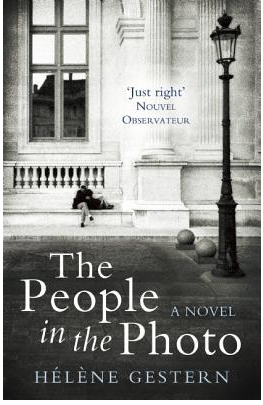
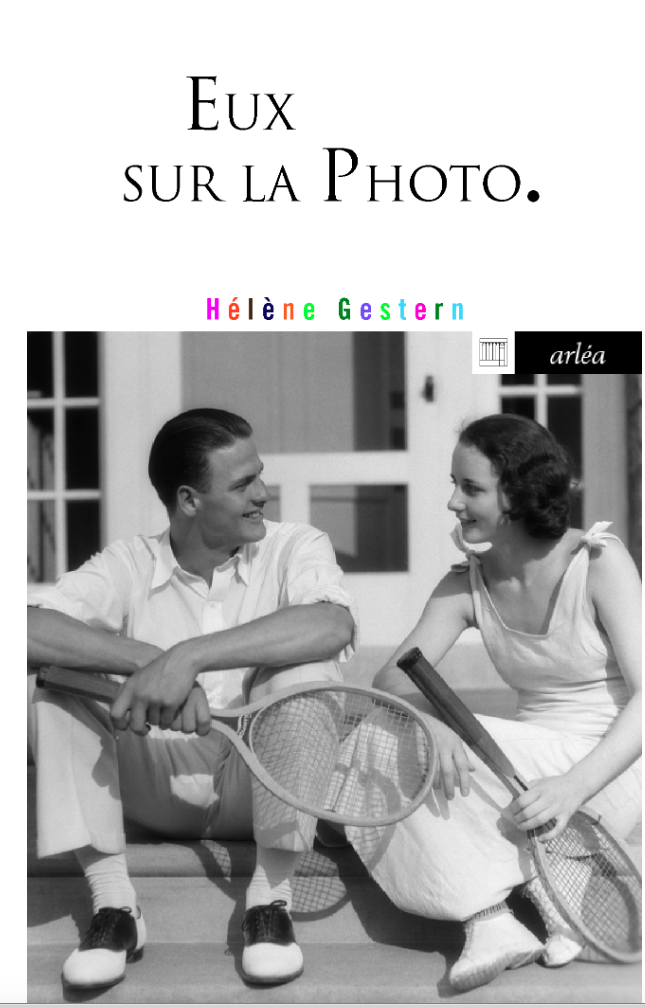
I added both covers because the French, while set during the wrong decade (the 40s), captures the spirit of the photo in the novel.

Clare Mackintosh: I Let You Go (2014)

I Let You Go

I came across Clare Mackintosh’s novel I Let You Go on Twitter. It’s another one of those psychological thrillers with a split narrative and a huge, stunning twist. But, for once, I really loved the twist and the split narrative actually added not only other POVs but another genre altogether. Unfortunately I can’t say much about the twist, only that I found it great but if I told you why, it would be utterly spoilt. But I can talk about the split narrative.

The prologue describes a horrible accident. A small child runs from his mother and is killed in a hit and run. The novel is told from several POVs – the two most important ones being Clare’s and the police’s. Adding the POV of the police was quite unusual and made this book a combination of psychological thriller and police procedural, which worked well.

Clare runs from Bristol after the accident and hides in Wales. She’s an artist but her hand has been so severely wounded that she cannot work as a potter anymore. She starts to take photographs of the beaches, where she lives. It’s out of season when she arrives and the cottage she rents is far away from any other houses. The only people she sees are the owner of a caravan park and the local vet who helps her when she finds an abandoned puppy. While Clare, who is haunted by memories of the accident and other traumatic events,  tries to heal and find new meaning in life, the police frantically look for the person who killed the little boy.

The book has a leisurely pace until the twist in the middle, but from then on it gets very fast paced and suspenseful. We find out that the accident isn’t the only horrible thing in Clare’s past and that the past she hopes she’s left behind, is catching up with her. I can’t say more.

This is a suspenseful, well-plotted, fast-paced psychological thriller with a major twist. The characters are well-drawn, the setting is atmospheric and the end doesn’t disappoint. Maybe the police parts are a tad too long, unless this is meant to be a first in a series. If it’s a standalone, then those parts could have done with some cutting because we don’t need to know that much about the private lives of the detectives. Possibly, though, it was Clare Mackintosh’s homage to her twelve years in the police force. All in all, a minor thing that doesn’t change that I enjoyed this book a lot.