Daniela Krien’s My Third Life (Mein drittes Leben)

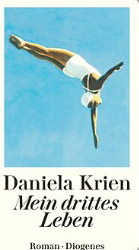
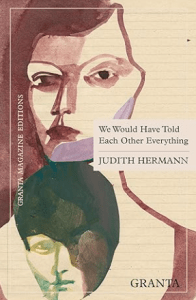
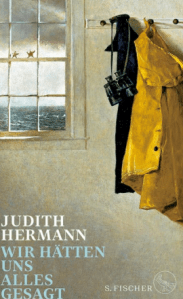
German author Daniela Krien who was born in the former G.D.R. published her first novel We Will Tell Each Other Everything (Wir werden uns alles erzählen) in 2011. Long before Kairos she told the story of a passionate love story between a very young woman and a much older man during the final months of the DDR. I found the book a little mawkish but not bad at all, especially in the parts that introduced us to a world that had already been long gone by then. Sure, Erpenbeck is the better writer but if I had to pick one of the two, I’d say I liked Krien’s novel better.

Since then, she’s published four more novels, two of which were translated – The Fire and Love in Case of Emergency (aka Love in Five Acts). While I got the latter on my piles, I haven’t read the others. When I was at the bookshop the other week, I discovered her latest Mein drittes Leben. It hasn’t been translated yet but given the success of some of her other books in translation, I wouldn’t be surprised if a UK or US publisher picked it up.

The book begins after Linda has moved away from Leipzig to the country, while her husband stayed in their flat in Leipzig. They aren’t divorced, nor are they theoretically separated but Linda needs some time on her own. The village and the house she’s staying in aren’t very appealing. But Linda doesn’t care. She’s looking after the chicken of the former owner and her dog and that’s all she seems to need. Her husband, Richard, visits her every other week and she makes a few friends, but mostly she stays on her own.

Bit by bit the reader discovers that Linda once had what she would have called the perfect life: a kind daughter, a husband she’s still in love with after almost twenty years, and a job as a curator of an art foundation that gave her a great deal of satisfaction. But then a tragedy happens. Her seventeen-year-old daughter is run over by a lorry. Linda and Richard grieve deeply but while Richard gets better, Linda doesn’t. On the contrary. It seems to get worse. When she’s diagnosed with cancer on top of that, she knows she can’t go on like before. Once the chemo is over, she moves.

I’ve read a few books about grief, fiction and nonfiction. Guilt is so often part of the grieving process. Here as well. Linda feels particularly guilty because her daughter did something that morning, she wouldn’t have done if Linda had told her not to. But the guilt runs much deeper and that’s where the strength of this book lies. It is tied into her motherhood and the way she became a mother. Richard had been married before and had two beautiful, intelligent children. He didn’t want another child and Linda had to fight very hard for him to give in. Once her daughter is born, Linda wants another child but Richard refuses. Years later, when he finally agrees, it’s too late. One of the things that weighs heavily on Linda’s consciences is the fact that she often compared her daughter to Richard’s first children or to other young people and found her lacking. She seemed too normal, too kind, not particularly beautiful, not fascinating.

Linda has a lot to come to terms with. Her struggles are intense. At times the reader fears she’s going to end it all. And then Richard loses patience. He’s been waiting two years and there is still no sign that Linda will return to Leipzig. The marriage ends when he meets another woman

It may sound like My Third Life is a very depressing book but it’s not. I found it engaging and enjoyable. The way Linda evolves after her marriage ends is uplifting and very relatable. Ultimately, My Third Life is much more than a story about grief, it’s also the story of a marriage. And an exploration of what makes life meaningful. I wouldn’t exactly call My Third Life great literature but it’s very readable. It would make an amazing book club read as it offers so many discussion points. How long should a person grieve? What is the right way to grieve? How do partners survive the loss of a child, especially when they don’t grieve the same way? What about friendships? How do friendships survive something like this?


The Trap – Die Falle by Melanie Raabe

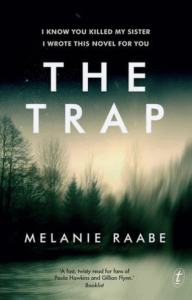
The Trap, Melanie Raabe’s debut novel, was published exactly ten years ago. Several publishers went to auction to get it and it was translated into 16 languages. Quite impressive for a German thriller. Thrillers aren’t my favourite crime genre but when done well I still enjoy them a lot. I looked forward to reading this as the premise sounded interesting.

Linda Conrads, a very famous literary novelist, hasn’t left her villa overlooking the Starnberger See near Munich, for over eleven years. Most people think she’s suffering from a mysterious illness. Nobody but her parents and some friends know the real reason behind her isolation. Linda has been deeply traumatized by the death of her sister. Not only was her sister murdered and Linda found her in a pool of blood, but she also saw the killer. Only briefly but well enough to be haunted by his face in her dreams. Even though she saw the killer of her sister, the police never found him. They even suspected Linda might have killed her. Maybe they weren’t as fond of each other as everyone said.

At the beginning of the novel, Linda is watching TV and to her shock, there he is, the killer of her sister. It looks like he’s a famous news reporter. What now? Should she involve the police? Initially she tries to but then decides against it. She will set a trap for him.

Her plan is quite elaborate so she cannot do it right away. She first has to write a novel. A novel about her sister’s murder. Once it is finished and before the book is published she contacts the newspaper for which the journalist works and offers him an exclusive interview. She knows it’s a gamble because he’s not usually reviewing books or interviewing authors, but he accepts.

The journalist arrives with a photographer and Linda’s young assistant is also in the house but once she’s gotten rid of both she begins with the execution of her plan. What follows is told in a dual narrative. Parts are describing how Linda confronts the journalist, the other parts consist of the crime novel she has written. The more the confrontation progresses, the more the reader begins to wonder who really killed Linda’s sister.

I’m sorry to say that I didn’t like this book. I hated the writing. The book is written from Linda’s point of view who is said to be a literary writer. It looks like that’s why Melanie Raabe felt the urge to use a lot of similes one worse than the other. They all came from the kitchen cupboard. The air was like gelatine, the sky like jam, . . . That sort of thing. Annoying and heavy handed. And anything but literary.

I also found the main character unbelievable and unlikable. The character is constantly imagining situations and the reader only finds out afterwards, that it isn’t real. It’s also not always clear whether this is just the way she is or whether she is truly confused. Obviously, this is done on purpose, to confuse the reader.

Why was this so successful? It’s frustrating to think that, once again, a great premise, a few good introductory pages, and great marketing were all it needed for a success.


Jan Costin Wagner – Days of Last Snow – Tage des letzten Schnees – Kimmo Joentaa Series

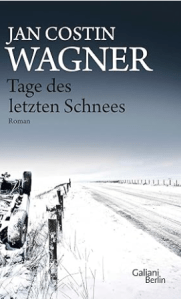
I discovered Jan Costin Wagner ten years ago during another German Literature Month and absolutely fell in love with his writing. I read and reviewed the first four novels in his Kimmo Joentaa series but never got around to read the last one, Days of Last Snow.

What made me love Wagner’s books which are all set in Finland, is the mood and the atmosphere. The mood is sombre, melancholy, reminiscent of a literary noir novel. Yes, it’s crime but on the very literary spectrum and any of his novels could also be read as meditations on loss, grief, and loneliness.

Unlike most detectives in noir novels, Joentaa isn’t so much a loner as someone who is very lonely because his wife died of cancer. It’s something we learn in book one, but it is still important in this book although he is in some sort of a relationship. I won’t say much as that would spoil other books in the series.

Days of Last Snow is a bit different from his other novels as there are different crimes. A couple is found murdered on a park bench A young girl is killed in a hit and run, and a very disturbed teenager is planning an atrocity. The story is told from different points of view which are all believable.

Strictly speaking, the Joentaa novels are police procedurals, but they feel very different from others in the genre. The story is more about why someone commits a crime than about the crime as such.

I really liked this book because of the setting, the atmosphere, and the mood. And because Joentaa is likable and relatable. I’m not too sure about the story though. There are a lot of coincidences. If I didn’t like Jan Costin Wagner’s writing so much, if he didn’t have so much to offer besides the story, I might not have been so forgiving.

Unfortunately, this seems to be the only one of the series that hasn’t been translated. If you like noirish, literary crime novels with a melancholy atmosphere, explorations of loss, grief, and loneliness, then I would highly recommend the first four in the series.

Jan Costin Wagner has written other crime novels. I think it’s about time, I had a look at those.

GLM XIV

Welcome to German Literature Month XIV November 2024

Welcome to German Literature Month XIV

Hopefully shelves have been scoured, reading material has been chosen, and everyone has a reading list for #germanlitmonth.

Remember anything that was originally written in German can be read during #germanlitmonth.  This year books written in other languages, provided they are about Franz Kafka or inspired by him can be read during Kafka Reading Week (November 15-21).

The full schedule for the month is:

Nov 1-7      Crime Week

Nov 8-14   Read as You Please

Nov 15-21  Franz Kafka week

Nov 22-30 Read as You Please

As always there will be a week’s extension to catch up with any outstanding reviews, while this year’s author index is created. The best way to share those reviews and ensure they show up on the index is to leave a comment below. Alternatively advertise your reviews on Twitter (X), Bluesky, FB or Instagram using the hash tag #germanlitmonth.

With the admin sorted, all that remains is for Lizzy and I to welcome you to German Literature Month XIV and to wish you Viel Vergnügen!

Announcing German Literature Month XIV November 2024

November is coming and you all know what that means: German Literature Month is back. Dust off the German/Austrian/Swiss books on your piles, rush to the book shop to get the latest German language publications or browse your local library to find some gems.

This year’s event will feature a Franz Kafka week, to celebrate the centenary of the man of the moment.  The focus of the week is the man and his legacy; it is a space not only for Kafka’s fictions, letters and diaries, but also works about Kafka and books/films inspired by him whatever their original language.  There are treasures waiting to be unearthed.  Let’s find them!

For the rest of the month, the one rule of GLM applies: reading material must have been originally written in German.

No readalongs are planned so you can read what you wish, when you wish or you can adopt the structure that Lizzy and I will follow:

Nov 1-7      Crime Week

Nov 8-14   Read as You Please

Nov 15-21  Franz Kafka week

Nov 22-30 Read as You Please

German Literature Month is not a challenge or a competition to read the most books. Reading one item, originally written in German, is enough to participate.

As I mentioned recently, I’m not doing too well with reading plans. My own event isn’t an exception, so I have only a vague idea of what I’m going to read. I only know I will read Kafka’s letters to Milena for our Kafka week.

What are your plans?

Whatever Happened to My 20 Books of Summer?

Goodness did I fail spectacularly at Cathy’s 20 Books of Summer. My intentions were good, my choices were excellent, and, for a while, I read one book after the other until I realized my pile had one major flaw – there were no crime novels. And once I strayed from the path, it was hard getting back to it. That said, I read seven and a half of the books on my pile before going off course.

Olivier Adam’s Passer l’hiver is a collection of short stories that hasn’t been translated which is too bad. They were outstanding. Melancholy, poignant and so evocative. They show people at their loneliest but mange not to be depressing.

Hilary Mantel’s Learning to Talk is another short story collection and my first introduction to Hilary Mantel. I liked it very much. Especially the first story in the book which reminded me a little of Joyce’s Araby.

Jenny Erpenbeck‘s Kairos. What to say about this? The writing is impressive. If it hadn’t been so great, I wouldn’t have finished it. It’s actually interesting that before this got The International Booker, it wasn’t praised much in Germany. Maybe because of the very toxic nature of the relationship of the two main characters? Or simply because the depiction of the former DDR is anything but convincing.

Willa Cather‘s A Lost Lady. Now this is a novel that will make my best of the year. I liked it so much.

Elizabeth Taylor’s The Wedding Group. I have read a lot of Elizabeth Taylor’s novels and didn’t think I’d ever read one that I didn’t find convincing. Unfortunately, The Wedding Group is not her best. There are things to admire here but overall, it felt disjointed.

Kaye Gibbons‘ Charms for the Easy Life. This is a historical novel, set after WWII. It’s very well written and entertaining but not a favourite.

Kate Zambreno‘s The Light Room is a memoir and I liked it a great deal. She describes the year after her second child is born, which is right at the beginning of Corona. The title The Light Room is an allusion to the Japanese novel Territory of Light, which I’ve read earlier this year. They both have a lot to say about motherhood.

Patricia Lockwood‘ Nobody is Talking About This was praised by so many people, but I found it annoying. It’s uncanny how well she describes Twitter or X but for some reason, it wasn’t for me.

I’m not too bothered that I didn’t manage to finish reading my pile, I’m more annoyed that I didn’t review them. Or any other of the books I read and really enjoyed this summer like Hollinghurst’s The Line of Beauty which has been on my shelves since 2005. Definitely another novel that will make my Top 10 this year.

20 Books of Summer

I just realized, I’m late to Cathy’s 20 Books of Summer. It’s my first time participating and I had no idea it didn’t start at the beginning of summer but at the beginning of June.

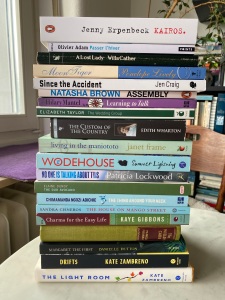
I was always tempted to participate but for some reason never could come up with a list of books. The other day, I was looking at a pile of unread books  on one of the shelves of my newest bookcase and noticed that there were almost 20 very tempting books. I added a few more to have at least one German and one French title, plus one memoir.

Normally, I don’t like to plan my reading but recently decision fatigue has kept me from actually reading and so, having a smaller pile to choose from, sounded like a great idea. It’s a bit like the capsule wardrobes that many people with too many clothes resort to.

Most of the books are rather slim with the exception of Erpenbeck’s Kairos and Edith Wharton’s The Custom of the Country. I’ve already read one book, Willa Cather’s A Lost Lady and am about halfway through Kate Zambreno’s The Light Room.

There are three books of short stories:

Olivier Adam’s – Passer l’hiver

Hilary Mantel’s – Learning to Talk

Chimamanda Ngozi Adichie’s The Thing Around Your Neck

The rest are all novels:

Jenny Erpenbecck – Kairos

Edith Wharton – The Custom of the Country

Willa Cather – A Lost Lady

Elizabeth Taylor – The Wedding Group

P. G Wodehouse – Summer Lightning

Pamela Frankau – The Willow Cabin

Janet Frame – Living in the Maniototo

Penelope Lively – Moon Tiger

Sandra Cisneros – The House on Mango Street

Kaye Gibbons – Charms for the Easy Life

Elaine Dundy – The Dud Avocado

Patricia Lockwood – Nobody is Talking About This

Natasha Brown – Assembly

Jen Craig – Since the Accident

Danielle Dutton – Margaret the First

Kate Zambreno – Drifts

One memoir

Kate Zambreno – The Light Room

I’m very pleased with my choices. There are so many books on this pile that I had wanted to read for ages like The Custom of the Country and Moon Tiger and A Lost Lady that I think, I might actually manage to stick to them.