Barbara Trapido: Sex & Stravinsky (2010)

This was my first book by Barbara Trapido but I think it will not be the last. It has flaws but I could generously overlook them as there is so much to enjoy in Sex & Stravinsky.

Sex & Stravinsky is told in alternating points of view something I usually  don’t like unless it is done as well as Barbara Trapido does it. What is really impressive is how different those voices sound. The story could be told in a few words as the book is really focussing more on the characters than on the plot.

The Australian Caroline meets Josh, a South African, in London. Josh is fascinated by opera, ballet and pantomime, dedicating his whole live to these topics. They have a daughter Zoe who would love to become a ballet dancer but since money is tight she has to make do with reading ballet books that are written by Hattie whom she doesn’t know.

Hattie is the secret love of Josh’s life. She still lives in South Africa with Hermann, the tall blond of Boer descent. They have a daughter Cat who is highly creative but hates her mother’s guts.

And there is Jack, Jacques or Giacomo, depending on the mood of the day, a young man of modest background who reinvents his own story as he moves from South Africa to Senegal, to Italy and back to South Africa.

There are a lot of coincidences in this book that seem unrealistic and still Barbara Trapido can get away with it as her characters are truly wonderful.

At the beginning of the novel, the couples are in their respective countries, at the end they all meet in South Africa, more or less by chance.

Caroline is by far the most appealing character and I could relate to her story. She was followed to London by her awful mother who exploits and abuses her whenever she can. Although Caroline is strong – she can renovate and redecorate a house like any man could, she is over six feet tall and a stunning blonde beauty, she transforms a bus into a little paradise, she knows how to cook delicious meals out of nothing, sews the most wonderful clothes out of old pieces -she cannot fight her own mother and her horrible sister. Unfortunately the description of her mother, the event of her cerebral hemorrhage including the story of the will and the unhappy discoveries linked to it felt all too familiar…

Each one of them does not live the life they had dreamt of but they will all get their chance in the end.

I really enjoyed this book. It exudes globalization and all the elements of living in a multicultural world. We hear as much about Stravinsky as about the masks of the Dogon. But, and this is my critique, it sort of flies over these cultural elements. It is a bit like standing at an enormous buffet with fingerfood from every corner of the world. A little taste of Moroccan cuisine, morsels of Northern Italian anti-pasti, a sandwich with a Caribbean spread.

Still, I liked it a lot: I loved the descriptions of the characters. Talented Caroline, Hattie the petite dancer, rebellious Cat, adopted Josh, Herman the boorish architect, little Zoe who discovers France on a school trip.

Zoe’s school trip to France is one of the best parts. Poor Zoe lands in a dysfunctional lower class family with unhealthy habits, a lot of shouting, awful driving in a smoke-filled car.

One theme that we find in the whole novel is legitimacy. There are three characters in this book who don’t know who their real parents are.

I believe Barbara Trapido just invented the genre of the  21st century multicultural fairytale.

One thing I would be interested in however, why did she choose this title? Has anyone an idea?

Mary Higgins Clark: Voices in the Coalbin (1989) A Ghost Story

This is not on my R.I.P. list but it suits just fine and I am in the mood to stray from the path. I felt like reading some Mary Higgins Clark after having visited The Book Whisperers’ Blog the other day. I remembered that I had a collection of her short stories (in German Träum süss, kleine Schwester). They  don’t exist in this combination in English but that does not matter as I think there are only two very goods ones in it and those are available as Audio Book. However That’s the Ticket does not classify for an entry in R.I.P. as it is neither fish nor fowl. No ghost story, no mystery, but it is OK.

Voices in the Coalbin is also in The Mammoth Book of 20th Century Ghost Stories (Danielle from A Work In Progress has reviewed some of them and will go on reviewing more for R.I.P.) as it is really an eery story, something  I did not expect from Mary Higgins Clark. It has all we like in her writing, great descriptions, detail, atmosphere. And it is spooky. It tells the story of a young couple, Mike and Laurie, who drive to a weekend house in the country that belonged to Mike’s grandmother. The trip is meant to help Laurie to recover from nightmares, depression and phobias. She has been seeing a psychiatrist who warned the husband to be very careful as she is fragile. She seems to be on the brink of remembering things that are linked to her own grandmother who mistreated and abused her emotionally as a child.  When they arrive at the holiday house  nothing is like he remembered it. It’s rather bleak and sad. When something happens that reminds Laurie of her childhood, she panics and then disappears. I am not revealing anything more. I already said it, it is not a mystery, it is really a ghost story and the end was creepy.

I loved to read it, cuddled up in bed, both cats close by and sipping a cup of tea. It is already quite cool over here, crows are sitting in the trees in front of the window and their cries sound already much more eery and lonelier than in summer…

E.T.A. Hoffmann: The Sandman aka Der Sandmann (1816)

The Sandman was the short story I read for this years R.I.P. challenge.

Much has been said about E.T.A.Hofmann’s The Sandman. Interpretations abound. Even Sigmund Freud used this story to illustrate some of his theories. Hoffmann was part of the so-called dark romanticism that explored the uncanny in all its forms. Be it as it may, for me this is and will always be one of the spookiest stories I have ever read. I remember that it haunted me quite  a bit when I read it for the first time years ago but I did not expect it to have the same effect after all these years. But it did.

It is a mysterious story, many interpretations are possible. Nathanael lives away from his beloved and his family in a student town when, one afternoon, he sees a person who reminds him of someone who visited their father when he was a child. These memories are very dark and scary. Whenever the old man, Coppelius, appeared the children had to go to bed as fast as they could. They were told that the Sandman was coming and that he was after their eyes. Nathanael being the most curious of the children sneaked into the study of his father one night and hid behind the curtains. Unfortunately he got caught and what followed shocked him so much that he came down with a fever that lasted for weeks. Shortly after this evening Coppelius came one last time during which they all of a sudden heard a big bang from the father’s study. Upon entering the family finds him dead, with a completely blackened face.

It is this very Coppelius that Nathanael believes to have seen. Once again he feels the same terror as in his childhood. I do not want to further spoil this story. It does get scarier and darker from then on. We never really know if these things happen or if Nathanael has gone mad. Is Coppelius the devil? Did he and Nathanael’s father do some alchemical experiments? There are a lot of mysterious elements the strangest of which is Nathanael’s falling in love with Olympia who doesn’t seem human.

Hoffmann has written quite a lot. Novels and short stories. Many are very famous and were influential. The Sandman is the most famous of his stories. In Jacques Offenbach’s opera, The Tales of Hoffmann, one part is dedicated to The Sandman. There is also a movie based on the opera including many ballet scenes. I attached a video for those who like opera or ballet.

Hoffmann who was very talented at drawing illustrated some of his tales, as you can see above.

You can find a link to the story here, if you would like to read it.

Nora Murphy: Knitting the Threads of Time Casting Back to the Heart of our Craft (2009) A Memoir

You don’t need to be a knitter to enjoy this book. I am not. Still I liked this book for many reasons. It is a memoir in which Nora Murphy takes us on a personal journey on which she starts and finishes a difficult sweater for her son and explores the manifold meanings of knitting, yarn and clothes.  Now is the perfect time to read it as the memoir starts in October and ends three months after All Soul’s Day. Her style is very evocative.

A woman sits in her comfy chair. Two needles and a ball of yarn keep her company. She is knitting away at something. Maybe a scarf? Socks? She enjoys the sound of her needles beating like a soft drum. She inhales the smell of the waxy yarn. She exhales the satisfaction of watching a single strand transform into an object of beauty. She is perfectly present, in perfect bliss. (Epilogue, Darkness Falls p. 3)

And another teaser:

October is a bit like the last dance in Minnesota. We know it’s the first month of darkness, but we don’t want to acknowledge it. We’d prefer to keep our attention on the sunlight dancing off the red and orange and yellow and gold and brown mosaic in the trees overhead. But we know better – a long winter awaits us. (Leaves p. 13)

Nora introduces us to herself, her family and her friends and the people she meets on her journey. She opens up her house and her heart for us. We are allowed to catch a glimpse of her cozy little home and the life she lives with her two sons and Diego her friend and lover. Through her we meet a woman who owns a yarn shop, an owner of a sheep farm and all of her animals, and many other people. We get to know Minnesota through several seasons. And we learn a lot about yarn. Nora Murphy combines history and cultural anthrolpogy. I did not know, for example, that King George’s Wool Act of 1699 might have been responsible for the American Revolution. England felt its wool industry was threatened by the colonies and forbid to export sheep to America. But some animals had been smuggled in and where already quite numerous by 1665. At some time, anyone found guilty of trading in wool faced severe punishment. The cutting-off of hands is mentioned. However, unlike Ireland, America was too far away from England to be threatened for long and the way to independence could not be blocked forever.

Nora’s book is also a lesson in values. Cherish the moment. Learn from the past. Try something new. Remember the simple things. In a world that spins in confusion she tries to build stability and conveys this to those around her and her readers. I felt very comforted, enchanted and energized by this book.

Nora Murphy’s Homepage

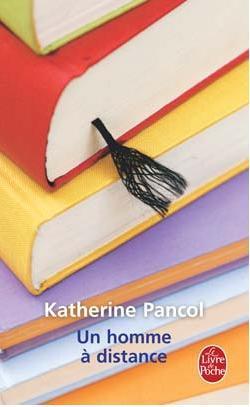
Katherine Pancol: Un homme à distance (2001) An Epistolary Novel about Books

This little book, Un homme à distance, only 160 pages long, is a real gem. I was so enchanted by it. In the evenings I could hardly wait to get back from work and go on reading. Why it has not been translated is a total mystery to me as it would find a multitude of readers in the English-speaking world.  It is also surprising since Katherine Pancol lived in the States where she took creative writing courses at the Columbia University. It is a novel in letters and a novel about books that has been compared to 84, Charing Cross Road by Helene Hanff. We find the same passion for books, the same enchantment. The story is quite simple. A young woman, owner of a book shop in Fécamp (a fishing port with an attractive seafront promenade located between Le Havre and Dieppe, in the French Normandy region), starts a correspondence with a mysterious man. They exchange their thoughts on all sorts of books, some I had never heard of before but, as a true addict, had to buy immediately since I knew the others and they are all outstanding.

The tone of this novel is quite melancholic. The young shopkeeper is heartbroken about the end of an affair which makes her live like a recluse. This correspondence brings her back to life. The end stunned me. It was not what I had expected.

Let’s hope  she will be translated or that the one or the other reader of this post does read  French.

As many of the books mentioned are absolute favourites of mine and the others seem to be must-reads too and for all those who are curious, I made a list.

Contrary to Pancol’s books they are all available as translations.

The Great Meaulnes or The Lost Estate by Henri Alan-Fournier. The Princess de Clèves by Mme de Lafayette. Wuthering Heights by Emily Brontë

The Notebooks of Malte Laurids  Brigge by Rainer Maria Rilke. The Wild Palms by William Faulkner. Three Horses by Erri de Luca

Bakunin’s Son by Sergio d’Atzeni. The House of Others by Silvio d’Arzo. What Maisie Knew by Henry James

Les liaisons dangereuses by Choderlos de Laclos. Letter from an Unknown Woman by Stefan  Zweig. The Letters of a Portuguese Nun.

Cousin Bette by Balzac. Les Diaboliques by Barbey d’Aurevilly. Doomed Love Camilo Castelo Branco. The Letters of Gustave Flaubert.

A Selection of the Chroniques by Guy de Maupassant. The Complete Poems of Emily Dickinson.

Sonnets from the Portuguese by  Elizabeth Browning. The Journal of Delacroix

The only one that has not been translated is Confidence africaine by Roger Martin du Gard.

One that would need to be rediscovered is The Lost Estate. It is probably the novel that influenced Fitzgerald in writing The Great Gatsby. But, as stated before, all the books on this list are excellent and remarkable.

Katherine Pancol has written quite a lot of books. They have all been very successful in France, even more so than this one. The most notable seem to be Les yeux jaunes des crocodiles, La valse lente des tortues and Les écureuils du Central Park sont triste le lundi.

You can visit Katherine´s French/English Homepage.

Margaret Carroll: A Dark Love (2009) A Novel of Romantic Suspense

I just recently discovered that I like Romantic Suspense. I thought I did not like any kind of romance too much, with the exception of some Paranormal Romance that is and… There are other exceptions. As a matter of fact, the genre is better than its reputation. I’m just not into the sugar-coating kind. And marriage at the end? I couldn’t care less.  And explicit sex scenes are not my thing either. When it comes to Romantic Suspense, there is quite a wide range. Keren Rose is known to write Romantic Suspense, but Tess Gerritsen, bettern known as a plain thriller writer (The Mephisto Club) has also written some books that are labelled Romantic Suspense (I read The Surgeon and found it very good). When I was still at the university I had a Victoria Holt/Jean Plaidy phase as I had no TV and needed something to unwind from the exam preparations. She is definitely the mother of Romantic Suspense or “Woman-in-Jeopardy” or Gothic Suspense as she has been labelled. When it comes to more contemporary writers, apart from Keren Rose and Gerritsen I haven’t read that many so when I recently read some enthusiastic reviews on amazon. de of Margaret Carroll who has just been translated into German I had to give it a go.

Sure this is not the height of literary perfection but is an extremely entertaining read. Even tough it is a bit predictable. Margaret Carroll’s style  has a lot in common with Mary Higgins Clark and Carlene Thompson + romance.  The romance part was quite nice actually.

Caroline Hughes is a young woman who has married the wrong man. At the beginning of the novel, we see her leave her husband. All she has taken are 4000 dollars and her Yorkshire terrier Pippin. She flees from Washington D.C. to Colorado where she wants to hide somewhere high up in the Rockies. Before she boards the Greyhound she dyes her brown hair blond. One more measure, she hopes, to not get found. Her husband, Dr. Porter Moross is a renowned psychiatrist but, as we soon understand, he is by far more deranged than any of his patients. Bit by bit, all through the novel, we see how sick he really is. A real pervert. There is a scene that made me cringe. It even haunted me at night in a dream.

How a young promising art student and aspiring painter did fall for a man like this is not a hundred percent clear. We get hints that something terrible happened in Caroline’s childhood that Porter exploited. Somehow he made her believe she was to blame.

Caroline and Pippin escape to Storm Pass Colorado. A little town in a spectacular setting. Luck is on her side and she gets an employment with an elderly woman who owns a Scotch terrier. There are quite a lot of animals in this book which gives it a very nice touch. They seem very real with individual traits like the people in the novel.

Soon after her arrival Caroline meets Ken a former football player who has been left by his wife after he’s been injured and had to abandon his career. Ken is a very appealing person. Good looking in a very masculine way but not too macho. He even seems to be a bit of an introvert and he certainly is a very sensitive man. Caroline who so far only knew contempt and ridicule feels understood for the first time in her life. She even tells Ken she hopes to be a painter once. They are both admirers of  Georgia O’Keeffe.

As the days go by, winter approaches which gives the author the opportunity of some nice descriptions. Snow flakes falling against a grey sky, a cozy fire inside the house.

Of course we know all along that Porter will track her down sooner or later. I am not giving away how he did it and what follows after he does. You need to find out for yourself.

All in all this was a satisfying and entertaining read. I found it psychologically believable even though maybe at bit stretched. It is quite suspenseful and the characters are well rendered. The descriptions of the landscape and  the weather are well done. This remote place of great beauty in the wilderness does come alive.

I wouldn’t go as far as saying I prefer Romantic Suspense to other kinds of thrillers or crime but I enjoy reading a good book of this genre for a change. Considering this was Margaret Carrolls first novel I think she did a good job and I would probably read her latest Riptide if I felt in the mood for the genre again.

Lauren Groff: The Monsters of Templeton (2008)


This is quite an unusual, hybrid book. There were passages I enjoyed a lot. The atmosphere and description of Templeton were something to savour. The idea of a monster living in the lake and the ghost in Willie’s bedroom appealed to me a great deal as well. But as much as I loved the beginning and many later parts I lost patience at times. My biggest problem was that I found it too exuberant and too artificial. It is full of great descriptions but totally lacks any psychological depth. The characters, Willie, her mother Vi, Cassandra and many others are charming but they are two-dimensional. Still I can understand that this book found his ardent fans.

At the beginning we see Willie depressed and sad. She is pregnant from her affair with her professor and comes back to Templeton where she grew up looking for refuge. She considers this to be a total failure. She has left Templeton for San Francisco a few years back. Templeton, as we read in the foreword, is actually Cooperstown, Groff’s hometown. It is also the hometown of James Fenimore Cooper. A small town with all the charm of a small town. While away in California Lauren Groff was so homesick that she decided to write about her town.

Apart from being pregnant and desperate, Willie hears from her mother,  that she is actually the daughter of someone from Templeton. After having thought she was the offspring of her mother’s casual encounters with different men during her hippie days, this comes as quite a shock. Willie being an archeologist and trained in research takes this bit of information as a challenge. She starts to investigate the story of her illustrious family, descendants of the great Marmaduke Temple (aka James Fenimore Cooper) in order to find out who her father is. She knows that one of the men in her genealogical tree is illegitimate and this information will lead her to her father.

The story of Willie is interspersed with journal entries, letters, diaries, stories of her ancestors. They are quite different in tone, some are like short stories in their own right and seem to have been written in another century, some were, for me, just tiresome diversions.

In the end, Willie knows the name of her father. She has learnt a great deal about her family and her town. The weak and depressed Willie of the beginning is strong again and able to go out into the world where a brilliant future is waiting for her.

This book deals with some heavy and important themes like illegitimacy / legitimacy / roots /origins /  parenthood/ history. In the beginning there are a lot of  signs of the insecurity of the times we live in but throughout the novel this is more and more abandoned. It is as if the author wanted to say: When you know your origins and where you belong you can never get lost and nothing can really harm you. I am not sure I agree with this.

Be it as it may, this is an original book and some parts are memorable. It’s just somewhat flawed as  a whole.

I would really like to do Lauren Groff justice so maybe I should let her speak for herself: