Welcome to German Literature Month

literatur_2015_gold-2

This is just a brief welcome post to let you know about some of my own plans for German Literature Month.

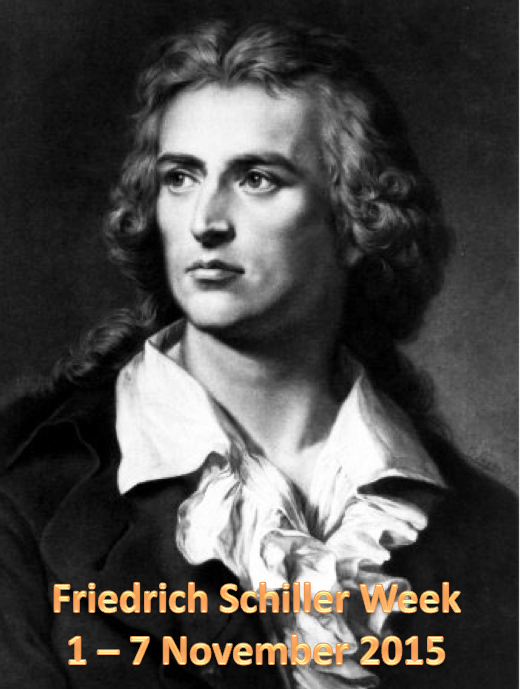
Friedrich Schiller Week

The first week is Schiller week, over at Lizzy’s blog. I won’t participate actively. I hope to review a crime novel and maybe a novella or two.

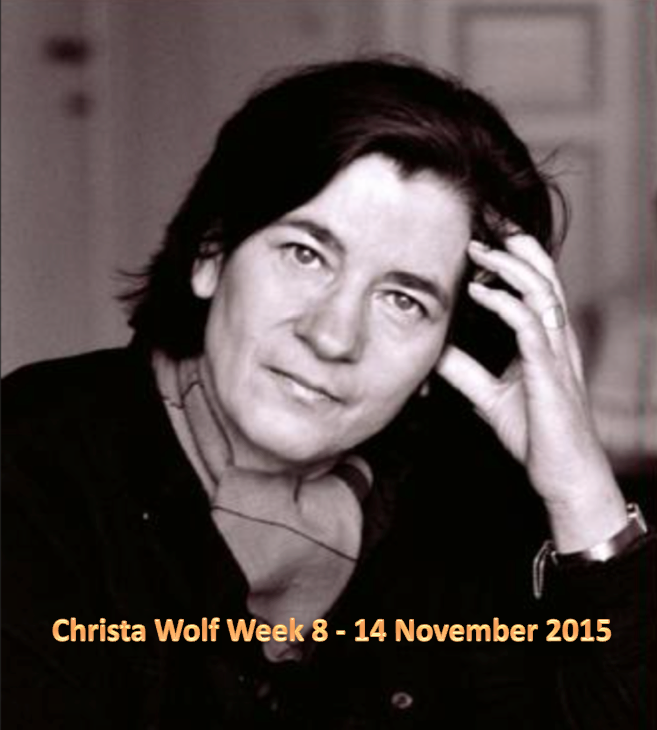
Christa Wolf Week

For Christa Wolf week I’m reading The Quest for Christa T., which is a bit of a challenge. I’m not as keen on it as I was on the her other books.

I’ve scheduled two things for week three. I’ll be posting a guest post by a writing buddy who recently revealed an interest in Irmgard Keun. I will also participate in Lizzy’s readalong of the YA novel Erebos. I’m almost finished with it and must say it’s a captivating book.

My own readlong is forthcoming in week four. Since Erich Maria Remarque’s novel A Time to Live and A Time to Die is rather chunky too, I suppose I’ll be busy reading that.

What other plans do I have?

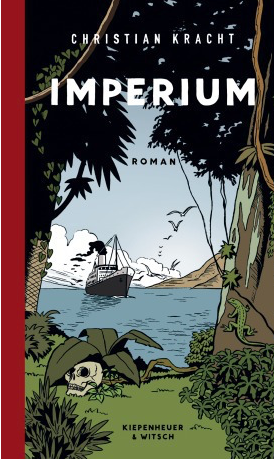
Imperium

Finally reading Christian Kracht’s recently translated Imperium.

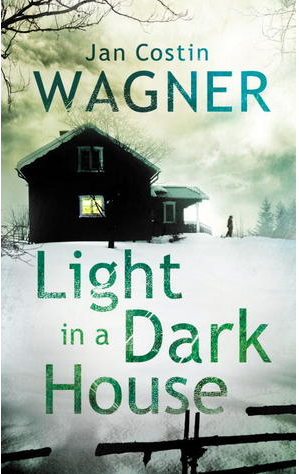
Light in a Dark House

Maybe read Jan Costin Wagner’s Light in a Dark House.

What else? Maybe some short stories.

Have you already started reading? What are your plans?

If you participate, please add your reviews to the German Literature Month Page.

Christa Wolf Giveaway – The Winners

literatur_2015_gold-2

One day left before  German Literature Month begins.

High time to announce the winners of Christa Wolf’s August – offered by Seagull Books.

And the winners are:

TJ @ MyBookStrings

Melissa Beck

Congratulations! And happy reading, TJ and Melissa.

Please send me your address via beautyisasleepingcat at gmail dot com. Lizzy will be sending your copies.


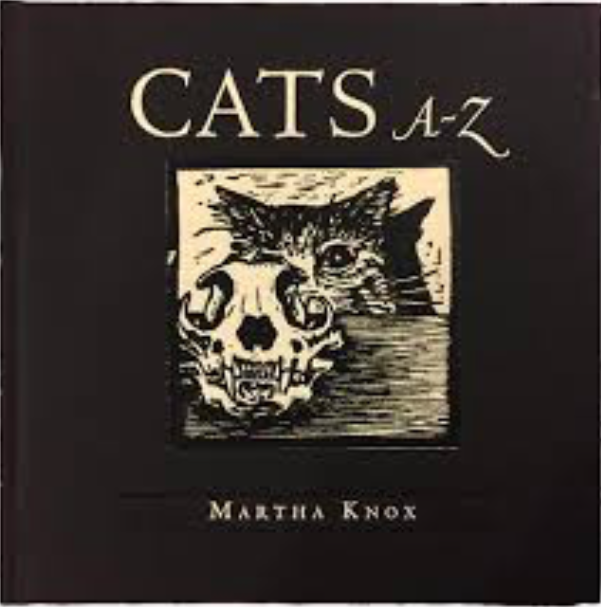
CATS A – Z by Martha Knox

CATS A - Z

A while back I received an e-mail from artist Martha Knox asking whether I’d like to review her book CATS A – Z. In recent years I’ve become wary of these requests because most of the time the cat books I’m offered are either annoyingly humourous (sorry but I’m not into Lol cats or “I haz” cats) or too mawkish. Of course, I love my cats and think they are cute but they are far more than that. They are interesting, fascinating and complex. Something told me that Martha’s book would be quite different. I was right. The book she sent me is simply amazing.

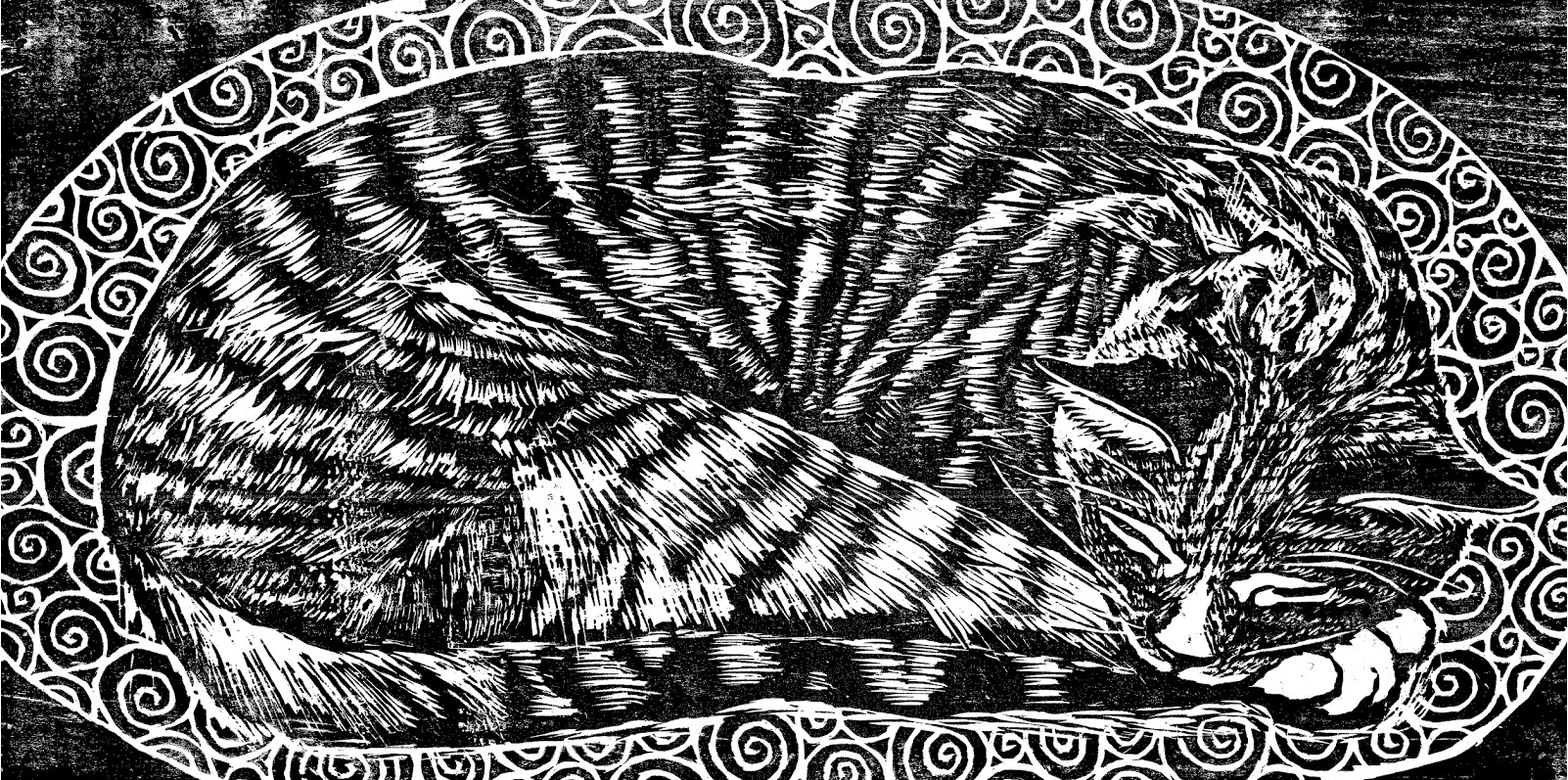
Just look at this woodcut of a sleeping cat. It serves as the end pages of the book.

Endpages Martha Knox

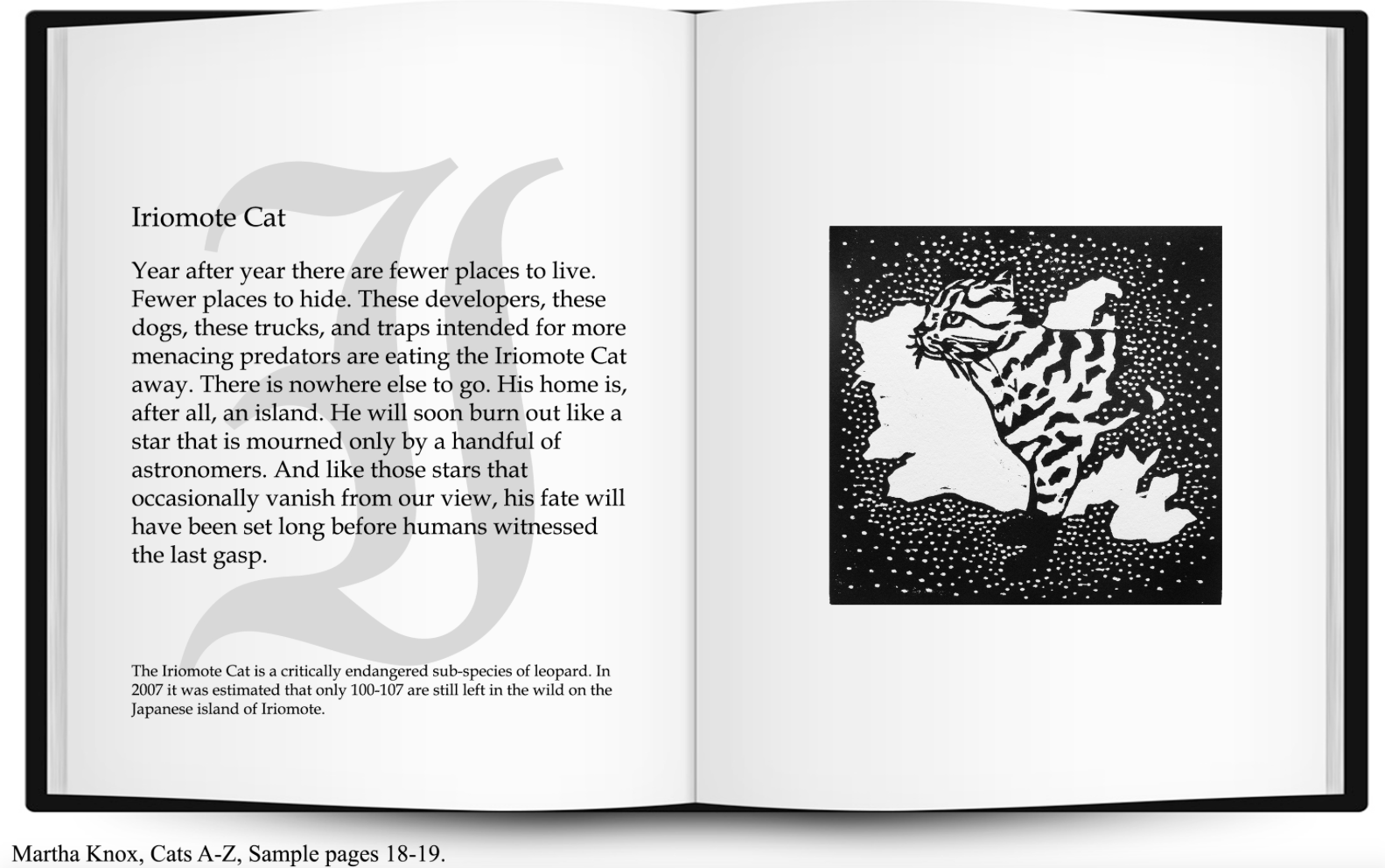
In her book Martha Knox goes through the alphabet sharing true stories and mythology, accompanied by bits of information and illustrated with gorgeous woodcuts. Some of the stories are stunning, some are sad, others are informative. Some stories are about famous cats like All Ball, a kitten adopted by a gorilla in a zoo. Others about unknown cats or literary cats like Raton from Jean de La Fontaine’s fable The Monkey and the Cat.

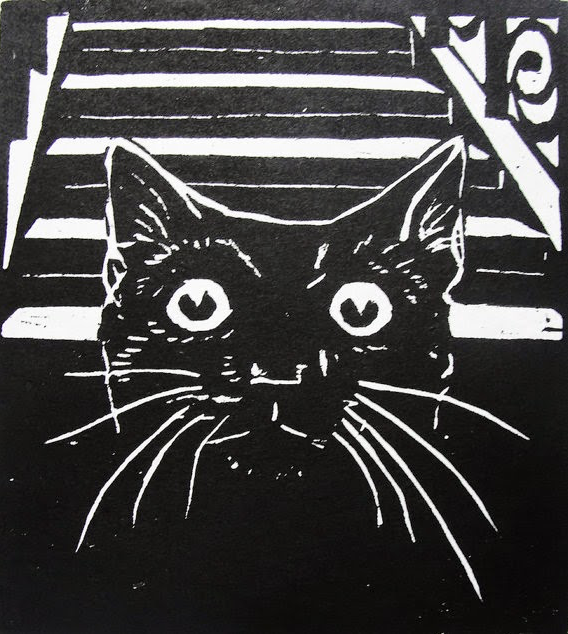
Zombi by Martha Knox

The picture above shows Zombi, the cat of British poet Richard Southey. Southey claimed in a letter that his cat saw the devil.

Martha Knox

I truly love this book and think that many poeple would enjoy it just as much. It would make a wonderful gift for any cat or art lover.

For those who want to find out more, maybe buy the book, read something about Martha or even buy a print, here are a few links:

The book’s release announcement on Martha’s blog: click here 

Wednesdays Are Wunderbar – German Literature Month Giveaway – August by Christa Wolf

literatur_2015_gold-2

It’s Wednesday again and you already know what that means. We’re hosting a giveaway. This week’s copies are from Seagull Books (University of Chicago Press).

Screen Shot 2015-10-27 at 17.02.56

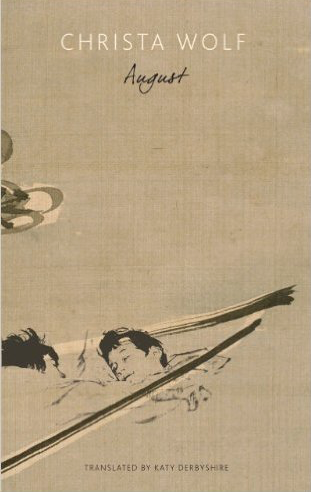
For this year’s German Literature Month I have the opportunity to give away two copies of Christa Wolf’s August, translated by Katy Derbyshire. Since I’m hosting a Christa Wolf week this year, I’m particularly pleased about this giveaway.

Christa Wolf Week

Here’s what the editor writes about August:

Christa Wolf was arguably the best-known and most influential writer in former East Germany. Having grown up during the Nazi regime, she and her family were forced to flee their home like many others, nearly starving to death in the process. Her earliest novels were controversial because they contained veiled criticisms of the Communist regime which landed her on government watch lists. Her past continued to permeate her work and her life, as she said, “You can only fight sorrow when you look it in the eye.”

August is Christa Wolf’s last piece of fiction, written in a single sitting as an anniversary gift to her husband. In it, she revisits her stay at a tuberculosis hospital in the winter of 1946, a real life event that was the inspiration for the closing scenes of her 1976 novel Patterns of Childhood. This time, however, her fictional perspective is very different. The story unfolds through the eyes of August, a young patient who has lost both his parents to the war. He adores an older girl, Lilo, a rebellious teenager who controls the wards. Sixty years later, August reflects on his life and the things that she taught him.

Written in taut, affectionate prose, August offers a new entry into Christa Wolf’s work and, incidentally, her first and only male protagonist. More than a literary artifact, this new novel is a perfectly constructed story of a quiet life well lived. For both August and Christa Wolf, the past never dies.

*******
If you are interested in winning this book, leave a comment, telling me why you’d like to read it.

The competition is open internationally. The winner will be announced on Saturday October 31 2015, around 18:00 Central European time.

I’m Back From Vienna

IMG_0070

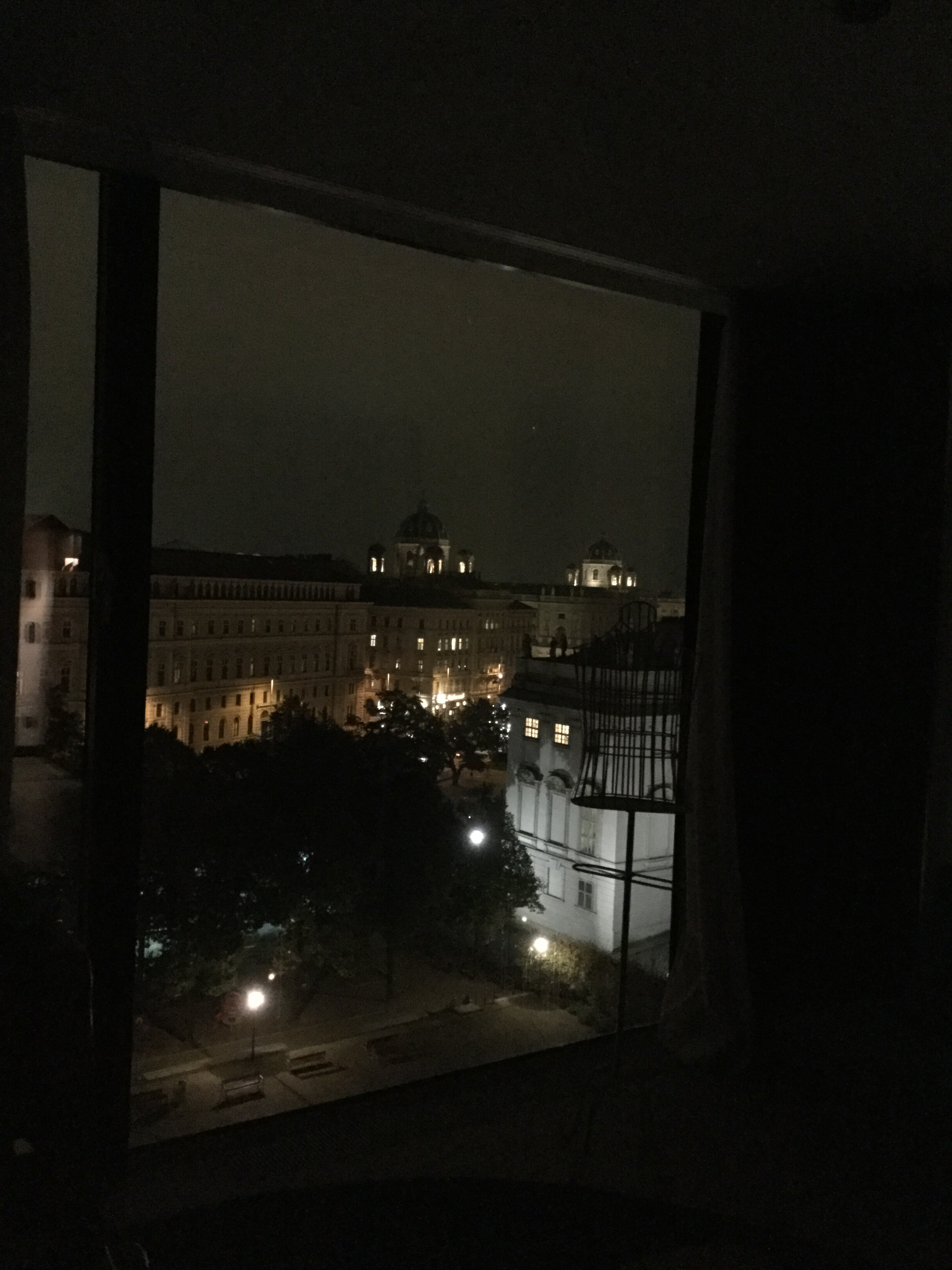
If you go on a trip and want to come back and share photos, you’d be well advised to check you’ve got the right camera card with you. Well, I hadn’t and so the only photo I can share from my recent trip to Vienna is this photo taken with my iPad. Vienna by night from my hotel room. The domes you see in the background belong to the Natural History Museum and the Museum of Fine Arts.

I was on a course, so I didn’t have as much time to explore as I would have wished but I still saw an amazing amount of great art.

Munch

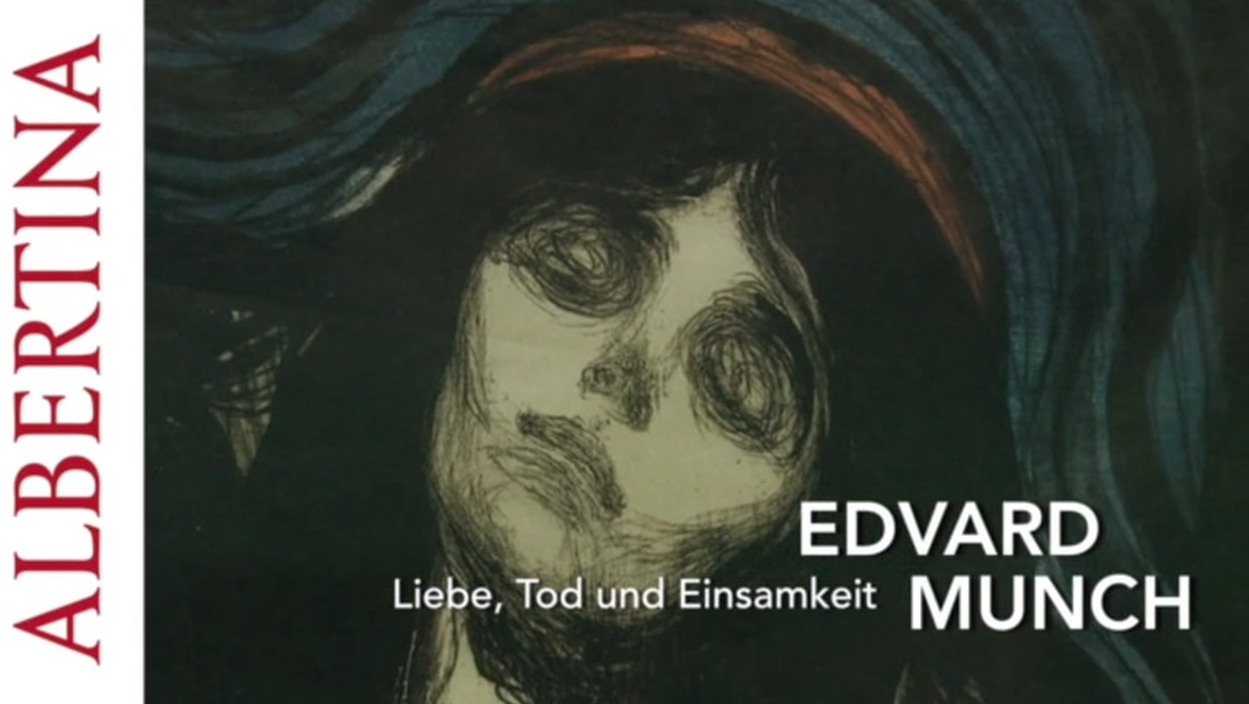
There was a Munch exhibition at the Albertina.

Kubin und Feininger

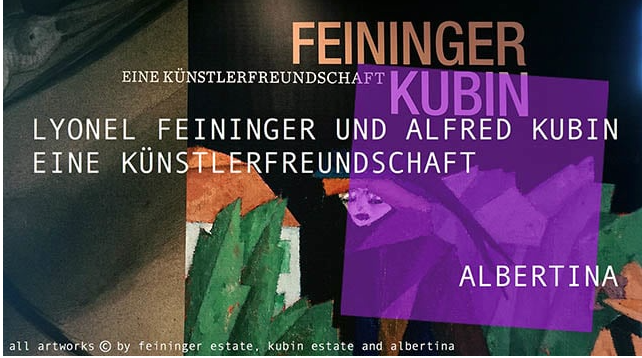
Also at the Albertina, I saw an exhibition dedicated to Alfred Kubin and Lionel Feininger.

Winterpalais

Belvedere

At the Winterpalais, I saw this Rembrandt, Tizian and Bellotto exhibition and, of course, the beautiful reception rooms of Prinz Eugen.

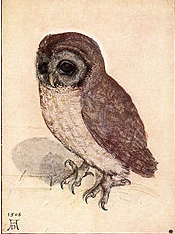
Dürer Kleine Eule

The Albertina has a nice collection of Dürer’s watercolours. I really like the little owl.

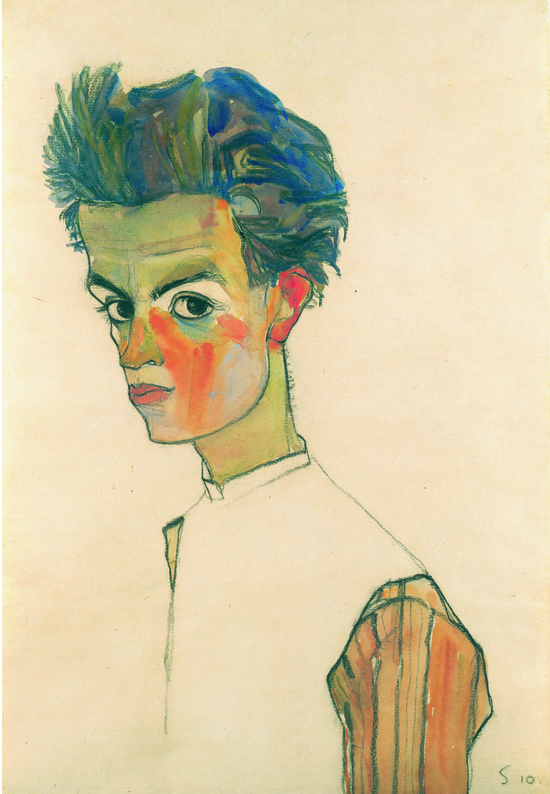
Schiele

The Leopoldmuseum owns one of the biggest Schiele collections. I’ve always admired his work but never saw so many of his paintings.

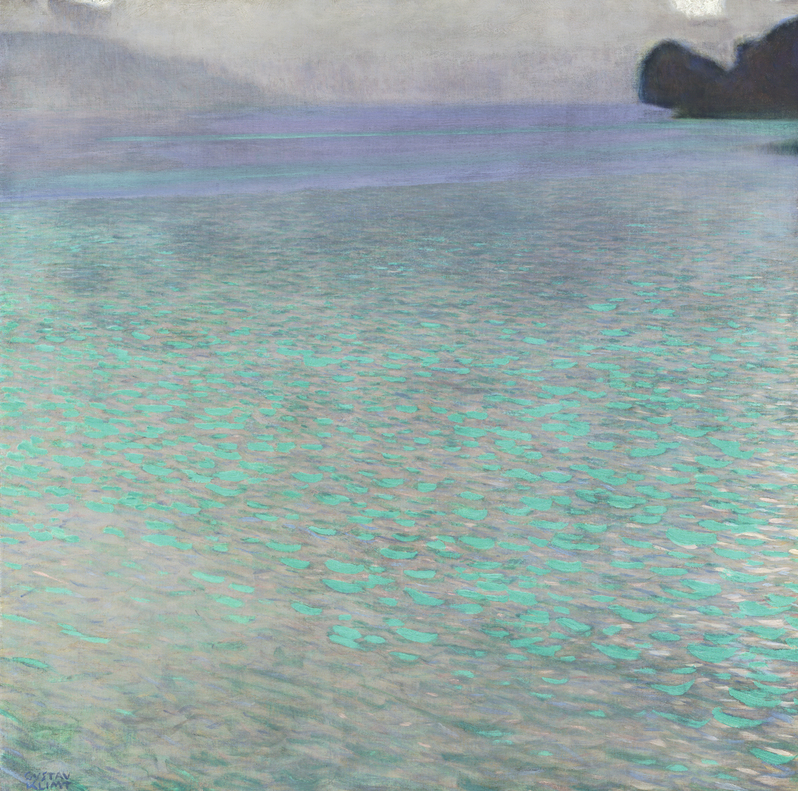
Klimt

I never appreciated Klimt because I’m not fond of his most famous painting “The Kiss”. The collection at the Leopoldmuseum showed another side of the painter, which I found beautiful and inspiring.

I could write a lot more about the trip but I’ll leave it at that. I truly enjoyed it and was glad to see that most of Vienna hasn’t changed much. There have been some unfortunate renovations in the centre, which make it cleaner, and, in my opinion, a bit sterile, but most of the city still has a shabby elegance, I find appealing. And the people are so warm and welcoming and have such a great sense of humour. If you get a chance, visit Vienna. It has such a lot to offer. I have a feeling, I’ll return soon. Also because I didn’t have enough time to go to the theater. That was unfortunate because they showed many interesting plays.

Screen Shot 2015-10-22 at 09.03.47

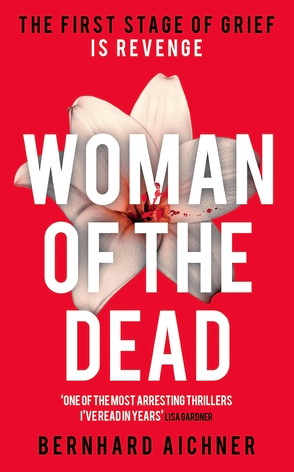
I discovered a new to me Austrian crime author. I have no idea how good he is, but since he’s been translated into English, I thought the one or the other of you might be interested to pick him up for German Literature Month. His name is Bernhard Aichner and the book is called Woman of the Dead  – Totenfrau. It’s the first in a trilogy. Book two is already out in German. Here’s some praise taken from the blurb:

One of the Financial Times‘s top summer books for 2015

One of the Telegraph‘s Best Crime Fiction Books for 2015

‘An ironclad guarantee of sleepless nights’ INDEPENDENT

‘One of the most arresting thrillers I’ve read for years’ LISA GARDNER

‘Fast, edgy and gripping…full of quirks, with a conflicted heroine as killer at its heart. Do not miss it.’ GEOFFREY WANSELL, DAILY MAIL

‘Aichner has a talent for keeping readers hooked – this is a gripping read and the character of Blum lives long in the mind’ TELEGRAPH

‘An inventive, forceful, engrossing revenge thriller’ MARCEL BERLINS, TIMES

‘Blum is a great character and when Aichner’s ghost-train plot ends in the only place it can – a crematorium – you feel like cheering’ GUARDIAN


Small Break

Strudlhofstiege

I’m off to Vienna for a course and won’t be back before Tuesday 20. I wanted to write a couple of reviews before leaving but since I had the flu, I ran out of time. I just thought I let you know that I’m not ill anymore, just travelling.

I guess I could see this as a warm up for German Literature Month. I certainly hope I’ll get the chance to visit a book shop or two.

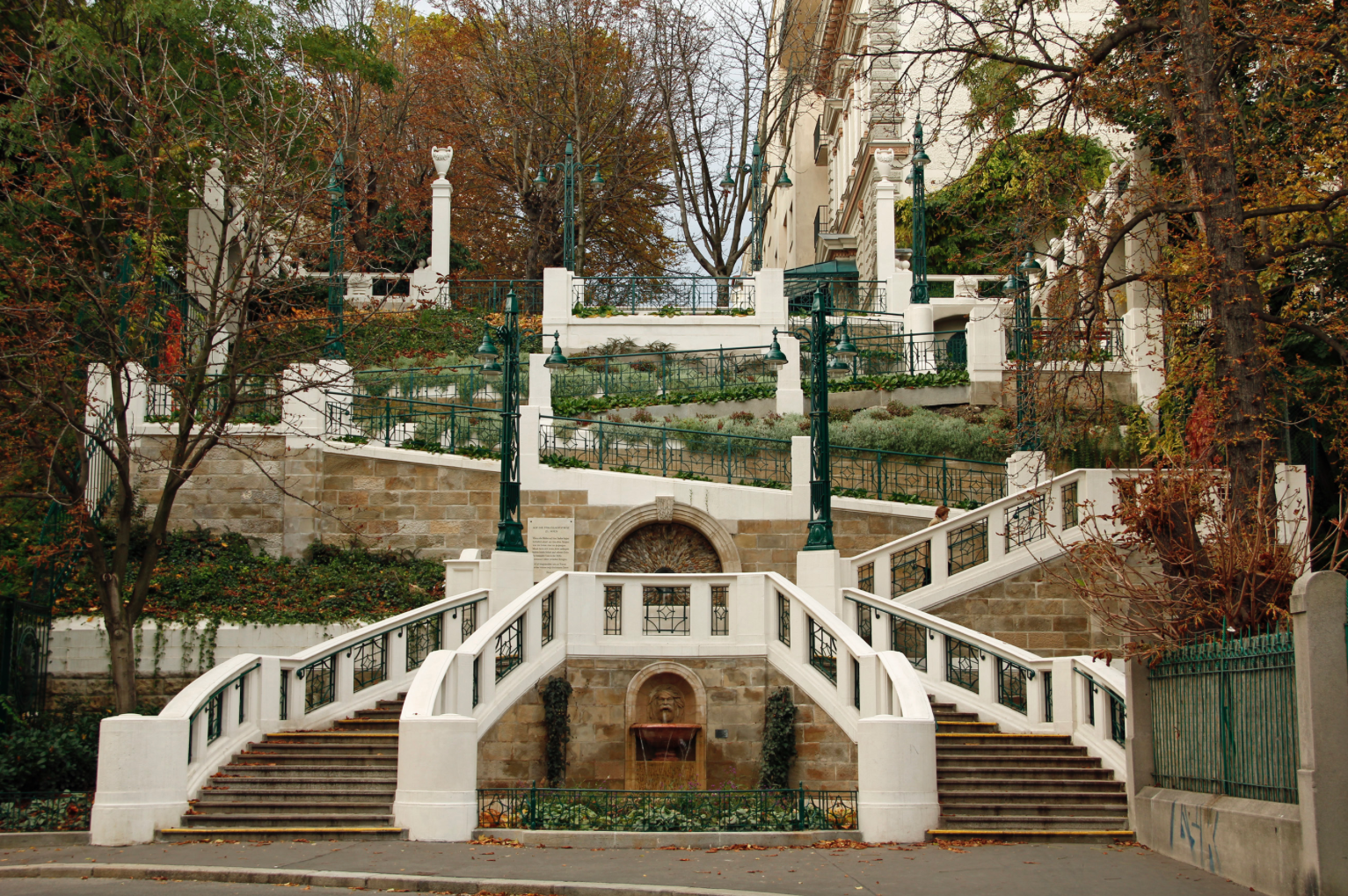
Should you wonder – the photo shows the Strudlhofstiege.

I hope you’re all doing fine. See you again in ten days.

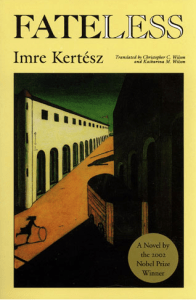
Imre Kertész: Fateless – Sorstalanság (1975) Literature and War Readalong September 2015

Fateless

Imre Kertész novel FatelessSorstalanság tells the story of fifteen-year old Gyuri Köves, a Jewish boy who lives in Budapest. It starts in 1944, on the day on which Gyuri’s father is sent to a labour camp. What strikes the reader from the beginning is the narrator’s voice and his cluelessness. He’s a young boy, interested in girls and puzzled by his parents strange arrangements (he lives with his father and his stepmother and his parents often quarrel because his mother wants him to live with her). He notices everything that goes on around him but his interpretations are always slightly off. He finds logic in many shocking things, like the yellow star they have to wear, the way they are being treated by non-Jews and many other things. Why? Because they seem logical, from a certain point of view. And because he doesn’t feel like a Jew. His family isn’t religious. They even eat porc during the last dinner with his father. He feels that the star and being ostracized hasn’t really anything to do with him. It’s not personal.

A little later Gyuri is sent to work in a factory and then, one morning, has to get off the bus and wait endlessly for a train to take him and others to another “work place”. Of course, the reader knows it’s a concentration camp. He’s first sent to Auschwitz, then to Buchenwald and later to Zeitz.

He still finds logic in everything he sees. In the way they are forced to work, in the way they are punished. That doesn’t mean he doesn’t suffer. He’s cold, dirty and constantly hungry. He witnesses executions and is afraid of being sent to the gas chambers.

Towards the end of the book, he falls ill and is sent back to Buchenwald until the day the camp is freed and he can return to Budapest.

Reading a novel, set to large parts in a concentration camp, filtered through the consciousness of a narrator like this, was a peculiar and eerie experience. It could have gone wrong. It could have felt sensationalist and dishonest like The Boy in the Striped Pyjamas (I’m referring to the movie not the book), but it didn’t. It’s chilling because we know what he’s talking about but he doesn’t. When Gyuri tells us how everyone stepping off the train is inspected and then either sent to one group or the other, we know that it means that they will either be sent to a labour camp or to the gas chambers. Reading Gyuri’s assessment of what happens, his feeling of being chosen and found worthy – without knowing the real logic behind it all – is almost creepy.

The best novels don’t just follow a character from the beginning to the end but they show a change. And Gyuri does change. The boy who’s leaving the concentration camp is bitter and full of hatred. The days of his admiration for a system that runs,logically, smoothly, and mercilessly are long gone.

I’ve seen this novel called “shocking” and, if you’ve read my review until now, you may think, you know why. Because of the distortion. But that’s not the shocking part. What may seem odd is the end of the book. It’s not a plot element, therefore, I don’t consider it to be a spoiler to reveal the end. When Gyuri returns to Budapest, people refer to the horrors he must have seen or ask him whether it was like hell. He tells them that he hasn’t seen hell and therefore he doesn’t know how to compare. And  he finds it absurd when people tell him to start a new life, leave what has happened behind. But it’s not likely he will ever forget. What he doesn’t tell them is, that there were moments of great happiness in the concentration camp. And that’s the shocking thing of the novel. It shows us that we cannot imagine something we haven’t experienced. Whether we think, like some,  it wasn’t all that bad or whether we assume it was “hell” – we have no clue. Both assumptions are equally faulty. And there’s a certain arrogance in a assuming that we can picture what we don’t know.  And there can always be happiness. This reminded me of one of my favourite books – Solzhenitsyn’s One Day in the Life of Ivan Denisovich.

The end also reveals the meaning of the title. The novel describes many instances in which the Jews let the oppressor handle them like cattle. They never fight back. This, as Gyuri says, was a choice. Everything was a choice. There’s no such thing as “fate” – everybody is ultimately free, free to choose how to act. Always.

I wish this review was more eloquent but I’ve got the flu since Monday and my head is fuzzy. I’m sorry for that. It’s a book that would have deserved a careful review because it’s stunning. I really liked it a great deal and, for once, “like” isn’t a badly chosen word, even though I’m writing about a Holocaust novel.

I have watched the movie as well and found it powerful. It stay’s close to the novel, with the exception of the last parts. In the movie Gyuri is offered to go to the US when the camp is freed by the Americans. Going back to Hungary means going to the Russian sector. Nothing to look forward to. This isn’t a topic in the book.

The book is based on Kertész’s own experience. As a fourteen-year old he was sent to Auschwitz and from there to Buchenwald. Interestingly he says that the book is far less autobiographical than the movie.


Other reviews

Emma (Book Around the Corner)


*******

Fateless is the third book in the Literature and War Readalong 2015. The next book is the German novel A Time to Love and a Time to Die – Zeit zu leben und Zeit zu sterben by Erich Maria Remarque. Discussion starts on Friday 27 November, 2015. Further information on the Literature and War Readalong 2015, including the book blurbs can be found here.