Thomas Mann – The Magic Mountain – Part I – Is The Magic Mountain a Difficult Book?

Is The Magic Mountain a difficult book?

We often see these discussions on social media about difficult books. Ulysses is mentioned. Proust’s À la recherche du temps perdu. Some of Henry James’ later novels. And Thomas Mann’s The Magic Mountain. These novels have one thing in common – they are very long. Depending on the font size, the page count of The Magic Mountain varies between 750 and over 1000 pages. If you’re a slow reader, this alone could make it difficult, but that’s usually not what people are referring to.

I personally didn’t find it difficult, but I could imagine a few things might actually be challenging for some readers. Thomas Mann is a highly intellectual writer. A master of language. I don’t know anyone who writes like him, uses language like he does. I always loved it because I find it expressive and funny but he’s not a writer who lets you identify much with his characters. You’re always at arm’s length. At times, the author will intrude. He will make fun of the story, his own writing, his characters. There’s a whole lot of telling instead of showing. For this, he’s often been called a cold writer. We don’t really know how his characters feel and if we do it’s through the lenses of satire and mockery. That’s not to everyone’s taste. The sentences are rather long, and his style is very unique. I’m sure translators didn’t have an easy time. I don’t know how many English translations there are by now, but apparently there was a new one in the 80s that was extremely different from the first translation. I read an article that I found on JSTOR and the author said that the old translation seemed to have stayed close to the original while the new one made it sound more English. In other words, the translator tried to make it more readable. I’m never sure how to feel about these attempts.

What made The Magic Mountain challenging for me is that it slows down considerably from page 500 on. The pace changes completely and only picks up again towards the very last pages. The book has 7 chapters with sub chapters and the first five are about 50% of the book. From book 6 on, the sub chapters get longer and longer. That wouldn’t exactly be a problem but the nature of the chapters change. While there’s a lot going on in the first half, in the second half philosophical and/or theoretical parts become more frequent and far longer. To be honest, those weren’t always that gripping to read. Of course, this change of pace and content has deeper meaning. After all, this is a book about time, the nature of time, the experience of time and about a specific period, the years before World War I.

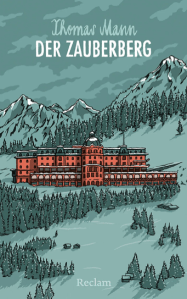
Thomas Mann – Der Zauberberg – The Magic Mountain – Intro

It is Thomas Mann week and I thought it was time to finally read one of his masterpieces, The Magic Mountain. Published in 1924, but set during the period before WWI, it tells the story of Hans Castorp who went to visit his cousin in a sanatorium above Davos, in Switzerland, for three weeks and stayed almost a decade.

Oh my goodness, what a crazy ride this was. I’ve read a lot of Thomas Mann, Dr. Faustus, Death in Venice, Felix Krull and many more but never Der Zauberberg or Buddenbrooks. I’m not drawn to large books usually and must admit, over 1000 page sounded pretty daunting, but I read it surprisingly quickly. It’s such an astonishing book and at times so incredibly funny. I really enjoyed it a great deal (minus some passages but I’ll get to that eventually).

However, writing about it is a very different story. There is so much to unpack. On top of that, probably quite fittingly, I’ve been ill since last week. I don’t normally get this ill but whatever I caught, flu or “razor blade throat” – it’s a bit debilitating. That’s also the reason why I haven’t been able to visit your blogs.

As I said before, it’s not an easy book to write about, especially not when you’re not feeling great and so I will break it down into smaller portions and write about different aspects and themes of the novel during this week.

– Is The Magic Mountain a difficult book?

– The story

– Illness and therapy

– Time

– The characters

– The humor

– The title

– The setting

– The madness/craziness

– Eroticism and homoeroticism

– The Magic Mountain as microcosm

– A world outside of the world

– Death

– War

I could go on and on.

I guess, if you haven’t read it, this list gives you an idea of how complex the book is.

Has anyone else read it for Mann week? I hope we’ll get the opportunity to discuss it.

Lucy Fricke – Das Fest/The Party (2025)

It’s city week and my choice fell on a book set in Berlin – Lucy Fricke’s Das Fest/The Party. Fricke is a very successful German author and has written a few bestsellers, one of which, Töchter/Daughters, has been translated. I was one of those who absolutely didn’t like Daughters. It was marketed as something literary, yet it was at best mediocre chick lit. Nonetheless, I felt like giving this one a chance because I liked the premise. Jakob, a once successful film director, is turning fifty. Not exactly an event he feels like celebrating. His film success is long gone. He hasn’t had a real relationship since his divorce and other than his best friend Ellen there don’t seem to be that many people in his life.

Ellen can’t accept this, can’t accept his despondency and turns up on his door step with a bottle of champagne and a secret plan, which Jakob will discover slowly during the course of the day. Unbeknownst to him, she has contacted the people who were once important to him. One after the other will “magically” turn up and together they take trips down memory lane.

Jakob has always lived in Berlin and the day is also an exploration of his old haunts, places where he used to hang out, where he used to live. Like any big or smaller city, Berlin has changed considerably during the last decades. Gentrification is rearing its ugly head everywhere but there are still places with the old magic and Jakob is happy to discover those. Those are places where people live a little differently from everyone else, adopt a more alternative lifestyle.

I had hoped that Berlin would figure a bit more prominently but I knew it wasn’t a real “Berlin novel”, just a novel set in Berlin.

The Party was praised for being realistic, melancholy, but ultimately uplifting. That’s not wrong. There’s also a love story and Jakob is able to make peace with a few complicated relationships of his past.

Sadly, I liked this even less than Daughters. Daughters had a few funny moments, bordering on slapstick, but the humor in The Party is pure slapstick and, in my opinion, not really funny at all.

I didn’t mind reading Das Fest as the idea and the themes were appealing. These big birthdays are so often not as joyful as they should or could be. At times, there’s also immense pressure to celebrate them in a big way. Not wanting to participate and just let the day go by like any other is something I can relate to. So I liked this aspect but overall the novel is just a bit to cutesy for me.

Before you tell me I should have picked THE Berlin novel, here are the links to a four part readalong of Berlin Alexanderplatz, which took place during German Literature Month 2019.

Part 1

Part 2

Part 3

Part 4

Autumn Poems by Gottfried Benn and Friedrich Hölderlin

This week is genre week and I knew from the beginning that I wanted to write about poems. I’ve read two collections that came out recently in English. One was written by Lutz Seiler, the other one by Uljana Wolf.

To be honest, I find it extremely difficult to review poetry collections and will need more time to do so.

In the meantime, I thought I’d share two older poems with you. I like to learn poems by heart and these are two of my favourites. They are perfect choices for the autumn season. Both poems are mournful and rich in imagery.

I hope you’ll like them.

Gottfried Benn – Asters/Astern (1935)

Asters

Asters—sweltering days

old adjuration/curse,

the gods hold the balance

for an uncertain hour.


Once more the golden flocks

of heaven, the light, the trim—

what is the ancient process

hatching under its dying wings?


Once more the yearned-for,

the intoxication, the rose of you—

summer leaned in the doorway

watching the swallows—


one more presentiment

where certainty is not hard to come by:

wing tips brush the face of the waters,

swallows sip speed and night.

(translated by Michael Hofmann)


Astern

Astern – schwälende Tage,
alte Beschwörung, Bann,
die Götter halten die Waage
eine zögernde Stunde an.


Noch einmal die goldenen Herden,
der Himmel, das Licht, der Flor,
was brütet das alte Werden
unter den sterbenden Flügeln vor?


Noch einmal das Ersehnte,
den Rausch, der Rosen Du –
der Sommer stand und lehnte
und sah den Schwalben zu,


Noch einmal ein Vermuten,
wo längst Gewißheit wacht:
Die Schwalben streifen die Fluten
Und trinken Fahrt und Nacht.


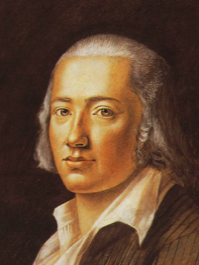
Friedrich Hölderlin – Hälfte des Lebens/Half of Life (1804)

Mit gelben Birnen hänget
Und voll mit wilden Rosen
Das Land in den See,
Ihr holden Schwäne,
Und trunken von Küssen
Tunkt ihr das Haupt
Ins heilignüchterne Wasser.

Weh mir, wo nehm ich, wenn
Es Winter ist, die Blumen, und wo
Den Sonnenschein,
Und Schatten der Erde?
Die Mauern stehn
Sprachlos und kalt, im Winde
Klirren die Fahnen.

Half of Life

With its yellow pears

And wild roses everywhere

The shore hangs into the lake,

O gracious swans,

And drunk with kisses

You dip your heads

In the sobering holy water.


Ah, where will I find

Flowers, come winter,

And where the sunshine

And shade of the earth ?

Walls stand cold

And speechless, in the wind

The wheathervanes creak.

(Translated by Richard Sieburth)

Welcome to German Literature Month XV November 2025

Welcome to German Literature Month XV

Hopefully many of you have a nice selection of books or a reading list for #germanlitmonth.

Remember  – anything that was originally written in German can be read during #germanlitmonth. You don’t have to follow Tony’s and my schedule but if you choose to do so, here’s the full schedule for the month:

November 1st-9th: Genre Week
You could choose novels or short stories, but maybe you’d like to try something different, such as poetry or a play.

November 10th-16th: City Week
Pick either a book set in a particular city, or an author from a particular city.

November 17th-23rd: Thomas Mann Week
Let’s celebrate the great man’s 150th birthday in style.

November 24th- 30th: GDR Week
Any author from the former German Democratic Republic is possible.

The best way to share those reviews and ensure they show up on the index is to leave a comment below. Alternatively advertise your reviews on Twitter (X), Bluesky, FB or Instagram using the hash tag #germanlitmonth.

This is it for now. Happy reading everyone.

Some additional information and the link to my co-hosts site can be found here.

Announcing German Literature Month XV November 2025

November isn’t far away, and you all know what that means – German Literature Month is just around the corner! For the 15th (!) time, we’ll be reading German, Austrian, or Swiss books, enjoying a whole month of German-language literature.

This year is a little different because Lizzy, of Lizzy’s Literary Life, is on a hiatus for health reasons. We hope she will still manage to participate but, sadly, she will not be able to co-host. I’m pleased to announce that Tony from Tony’s Reading List will be co-hosting this year.

If you’d like to participate, there’s only one rule to follow – read books that were originally written in German. Other than that, you can read whatever you like, or you can follow the structure Tony and I are adopting.

One special feature for this year’s event is a Thomas Mann week to celebrate his 150th birthday – you can see the full schedule below:

November 1st-9th: Genre Week
You could choose novels or short stories, but maybe you’d like to try something different, such as poetry or a play.

November 10th-16th: City Week
Pick either a book set in a particular city, or an author from a particular city.

November 17th-23rd: Thomas Mann Week
Let’s celebrate the great man’s 150th birthday in style.

November 24th- 30th: GDR Week
Any author from the former German Democratic Republic is possible.

German Literature Month is not a challenge, or a competition to read the most books, and reading one item, originally written in German, is enough to participate.

I hope that many of you will join Tony and me on our reading journeys. For those who are happy to do so, you can write blog or Instagram posts, or simply share what you’re reading on X (Twitter), BlueSky or Facebook – and don’t forget to add #GermanLitMonth so we can find you.

I’m planning on reading poetry, the city I might pick is Berlin or Hamburg. For Thomas Mann week I hope to revisit Der Zauberberg or read Tilmann Lahme’s brand new biography that just came out in German. Christa Wolf’s Medea or her short stories are my choice for GDR week.

What about you? What will you be reading?

Judith Hermann – We Would Have Told Each Other Everything (Wir hätten uns alles gesagt)

We all have authors whose every book we read. For me, Judith Hermann is one of those authors. She’s best known for her short stories but has also written novels and now, finally, her long awaited first memoir. Or rather a series of lectures on life and writing that reads like a memoir. We Would Have Told Each Other Everything will be published in English next April. Two of her short story collections, Summer House, Later and Nothing but Ghosts are available in English. Her third short story collection Lettipark, a book of five connected stories, Alice, and her two novels Aller Liebe Anfang (Tony just let me know this and Letti Park were translated) and Daheim don’t seem to have been published in English.

Hermann is a bit of a phenomenon. Her first short story collection, Summer House, Later, which came out in 1998, was published to high acclaim. Critics and readers adored it. Nobody had written quite like her before. She seemed to capture the lifestyle and mood of a whole generation – the generation of those who were in their twenties in the late 90s. She wrote about things other people didn’t write about. Young people hanging out, travelling, doing nothing, just living their life. Most of the stories are set in Berlin, Judith Hermann’s hometown. I loved that book so much, found myself in so many of the stories and have been a loyal reader ever since. Sadly, even though I liked almost everything she has written, I found, like many of her critics and readers, that she was never able to achieve again what she had achieved in her first book. Some critics were already harsh when the first book came out. Over the years the criticism got worse. I never really understood why the reviews were at times so harsh, even cruel. When her first novel came out, one critic wrote she couldn’t write and had nothing to tell. In the memoir Judith Hermann addresses this review and what she has to say is very interesting. In many ways, her response to this reproach lies at the heart of these lectures.

Judith Hermann has never spoken much about her life, her childhood, or where her inspiration came from. Her answers to certain questions were always evasive. The book explores in detail why this was the case and it also investigates what is autobiographical and how she transforms what she has experienced and turns it into literature. At the beginning of the book, she describes how she ran into her psychoanalyst, late one night in Berlin. She discovered this psychoanalyst through a friend who went to see him and then spontaneously decided to go to see him as well. It seems the friend’s therapy was already over when she began to see the therapist, nonetheless, she never told her friend, Ada, that she went to see him too. We learn that this was rather typical of her. She hardly ever spoke to people or told them anything about herself or her childhood. The more we read about her past, the better we understand why she was silent. The trauma of two world wars, mental illness, emotional abuse, were all part of her difficult childhood.

All her stories are inspired by her life, but nothing is recognizable as such. That is because of her writing technique. She writes draft, after draft, after draft, erasing every time what is closest to what happened to get to a deeper meaning and truth. Very similarly, her psychoanalyst taught her to write down a dream and then write it down again the next day and once more on day three. The thing that would be missing, would be the most essential element of the dream, the element because of which the dream was dreamt, so to speak. Talking about her writing she says that in the end she sometimes no longer knows what really happened and what didn’t.

When she read the criticism I mentioned before, she agreed with the critic. Yes, she really didn’t have anything to tell because she couldn’t really tell what was important.

A large part of the book is dedicated to her friendship with Ada and the group of friends that surrounded Ada. Many of these scenes reminded me of some of her stories. She spent a lot of time with these friends. They spent whole summers together in the house near the sea that belongs to Judith Hermann’s family. These scenes are so wonderfully evocative. The friendships she has with these people, particularly with Ada, are very intense. They experience so much together yet they don’t really talk. This chosen family, she says, showed a very familiar lack of words and speechlessness to her own.

The last part of the book is set during Corona and the early lockdowns. During that time, she moved to the countryside and made a new friend, Jon. They spent a lot of time together but this time, her silences aren’t easily accepted, almost cost her this new friendship. And that’s where the title comes from. There’s a moment during which she would have told Jon everything about her life. It doesn’t happen but she will tell him later why she is so evasive.

Many of the things she describes in this book are relatable to anyone who has suffered (childhood) trauma. So often, one can’t find a way out of silence. It’s often the whole purpose of a therapy to be able to finally tell someone everything.

I’m not entirely sure I managed to capture how much I loved this book. But I did. It will make my end of year best of. It was one of those books I didn’t want to end. She achieves something quite magical – she lets us know a lot about herself and her writing process, but she also allows us to discover ourselves more deeply. Just like she does in her best stories.

The German title of this book is interesting. During these lectures she mostly uses the word “erzählen” – “to tell a story”. For the title, however, she uses “sagen” – “to tell”. This shows, in my opinion, that she’s come full circle. She used to tell stories but left out most of what really happened in her life. Through the new friendship with Jon, and in writing these lectures, she breaks the silence and speaks about the things behind the stories. I wonder if there will be another novel or book of stories from her. In some ways it would make sense if this was her last book. I hope not though.

For those who don’t want to wait for the publication of the English book there is either a part or even the whole translation by Katy Derbyshire on the Granta website here.