Nicci French: Blue Monday (2011)

I have read a few novels by Nicci French in the past and always thought they were very entertaining. Not the height of the psychological thriller realm but nicely paced and interesting. All of their (Nicci French is the pseudonym of a married couple writing together) novels are stand-alone thrillers. When I read that they had written the first book in a new series I was very interested to read it.

Blue Monday introduces psychotherapist Frieda Klein and Detective Chief Inspector Karlsson. I suppose we will see both of them again in the next novel but Frieda Klein is the more important character of the two.

One of the problems I have with a lot of the mainstream thrillers and crime novels is what I call “dodgy psychology”. You could also call it pseudo-psychology. This type of psychological explanation was the reason why I did not like Nesbø’s The Snowman. With Blue Monday we are on the same terrain but, funny enough, I liked it anyway. This is as much a thriller as a novel about London. The descriptions of the city are very well done. Another reason why I didn’t mind reading the book was that Frieda Klein is an appealing character. At the beginning of the novel she is just breaking up with someone because he will move to the States and she doesn’t want to follow him. She is deeply rooted in London and in her little house that feels like a den to her. Frieda  is a solitary person and likes to spend a lot of time on her own. Sometimes, plagued by insomnia, she will roam the silent streets of the big city at night. I liked these parts. She used to work in a clininc but has now her own practice.

A little boy is abducted in a way that reminds Detective Karlsson of another abduction twenty years ago. At the same time a man is seeing Frieda because he is suffering of panic attacks and nightmares. The nightmares circle around a little boy whose description reminds Frieda of the one who has been abducted. Frieda cannot put her finger on it but she has a feeling that there is a connection. She reports what she has found out to the police who do not belive her in the beginning.

I’m not going to write anything more about the story, the reader knows soon enough in what direction it goes (another weakness of the book, by the way). Frieda and Karlsson will work very closely together from then on. If you want to find out who abducted the little boy and whether they will find him alive, you will have to read the book.

As I said, despite it’s flaws I found Blue Monday readable because I liked Frieda and the descriptions of London. I’m often not interested in the mystery or the solution to it and enjoy all sorts of other aspects in crime novels and thrillers but if you are someone who loves a mystery, stay away from this book. The solution is very lame, to say the least, and the explanations are far from convincing. The end however is surprising.

This was my fourth and last book contribution to  Carl’s R.I.P. VI challenge. I’m still joining the group read and have planned on doing a post for Peril on the Screen. If you want to visit the review site, you can find it here.


Literature and War Readalong October 28 2011: The Lotus Eaters by Tatjana Soli

lotus-eaters

Tatjana Soli’s The Lotus Eaters is another novel on the war in Vietnam that has received a lot of positive reviews. It cannot be called a classic as it only came out last year. So of all the books of this readalong it is by far the most recent. I really don’t know all that much about it and will therefore just add the blurb that should help you decide whether you’d like to read along or not.

As the fall of Saigon begins in 1975, two lovers make their way through the streets, desperately trying to catch one of the last planes out. Helen Adams, a photojournalist, must leave behind a war she has become addicted to and a devastated country she loves. Linh, her lover, must grapple with his own conflicting loyalties to the woman from whom he can’t bear to be parted, and his country.

Betrayal and self-sacrifice follows, echoing the pattern of their relationship over the war-torn years, beginning in the splendour of Angkor Wat, with jaded, cynical, larger-than-life war correspondent Sam Darrow, Helen’s greatest love and fiercest competitor, driven by demons she can only hope to vanquish.

Spurred on by the need to get the truth of the war out to an international audience, and the immense personal cost this carries, Sam and Helen’s passionate and all-consuming love is tested to the limit. This mesmerising novel carries resonance across contemporary wars with questions of love and heart-breaking betrayal interwoven with the conflict.

After having been so impressed by Tim O’Brien’s book I think I will explore more literature on the war in Vietnam in the future and I’m looking forward to read Soli’s novel.

Wednesdays are wunderbar – Effi Briest Group Read Giveaway

Today we are kicking off the Wednesdays are wunderbar series which will be dedicated to giveaways. As Effi Briest is one of our readalong titles this is the first book that is given away.

The actual giveaway takes place on Lizzy’s blog. So if you are interested in winning Effi Briest and taking part in the readalong, please head over via this link and leave a comment.

Don’t miss reading one of the most wonderful German novels. With a bit of luck, you get the book version for free but you could also download it. You will find the details and more information on the readalong on Lizzy’s page.

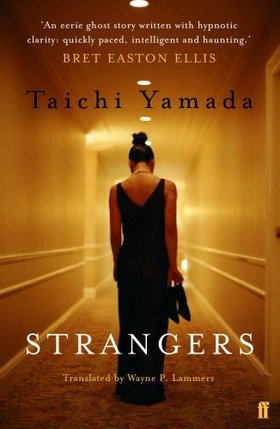
Taichi Yamada: Strangers – Ijin-tachi to no Natsu (1987)

A disconcerting, yet deeply satisfying novel: a wonderful study of grief and isolation, a moving expression of our longing for things we have lost and are unable to have again.

I’ve read about Strangers last year on Novroz’ blog (here is the review) and wanted to read it ever since. It’s a ghost story and as such a perfect choice for Carl’s R.I.P. challenge. But it is also so much more than just a ghost story. It’s a truly wonderful book with a haunting atmosphere, a melancholy depiction of solitude and loneliness with a surprisingly creepy ending.

I often think that the problem some people have with ghost stories is that they take them literally and if they do not believe in the possibility of an afterlife, they do not want to read them. But ghost stories can also be read as purely symbolical. Loneliness, longing and grief can affect a person deeply. Lonely children often start to talk with imaginary friends and also older people can start to talk to themselves which is actually rather a conversation with someone who is not present than a discussion with oneself.

I used to live in a huge apartment building for a while and remember that it could feel strange being awake at night when everyone else was obviously sleeping. All the lights were turned off, there were no noises. Coming home at night and seeing the building from afar, like a big ocean liner, with all the lights on, was also quite special.

Strangers starts in a building just like that. A huge apartment building on Tokyo’s noisy Route 8 where constant traffic keeps you awake and the density of the exhaust fumes forbids the opening of the windows. Most of the apartments are offices. Harada, a fortysomething TV script writer, has stranded here after his divorce. At first he can hardly sleep. The traffic noise is overpowering but after a few weeks he gets used to it. One night, despite the noise outside, he feels an intense loneliness. It seems as if he was the only person in this big building.  He finds out that there is only one other person, a woman, staying at the house at night. Everyone else leaves the place and lives somewhere else.

One night the woman, Kei, knocks on his door and wants to drink a bottle of champagne with Harada but he refuses. He regrets it and invites her a few days later. She is a beautiful woman but with a terrible burn mark where her breasts should be. While they start dating, Harada visits Asakusa, the downtown district in which he used to live with his parents. His parents died when he was very young. He never returned to the place but all of a sudden something attracts him magically. Many of the houses have been destroyed and replaced by modern ugly buildings. While walking around Harada meets a man who looks exactly like his dead father at the time of his death. He follows him to his house and there is his mother, she too is still young and looking exactly like she did before she died.

Harada knows that he shouldn’t return to see his parents but he cannot help himself. He has to go back again and again. His friends start to tell him that he is looking bad. Kei wants him to stop seeing them. He can’t and we understand why.

Something closely akin to the wonderful sense of security I’d felt at such times as a child had descended on me that night in Asakusa. I coul recall no such moments in all the years since my parents had died.

Yamada managed to write a ghost story that is at the same time an eerie tale and a realistic portrayal of loneliness, grief and the search for a meaning in life. Harada is at a turning point in his life. He has a hard time finding jobs, his wife got most of his money after the divorce, his son doesn’t want to see him, most women are not interested in a man like him. Falling in love with Kei seems not so much a choice as inevitable. They are both scarred in different ways. Meeting his dead parents is what infuses his days with meaning and warmth until he starts to pay a prize for it.

What did it amount to, anyway, this life I led? Busying myself with random tasks that popped up one after another, enjoying the moments of excitement each little sir brought before it receded into the distance, yet accumulating no lasting store of wisdom from any of it.

Strangers is an excellent ghost story and a melancholic depiction of the loneliness that living in a big city like Tokyo can bring. I really loved this book. I could hardly put it down and at the same time I didn’t want it to end.

German Literature Month November 2011 – The Participants

This is just a quick update to let you know I’ve added a new page to the top of my blog in which you can find the names and blog addresses of the participants of our German Literature Month. There are some more who have no blog, they have not been forgotten and are as appreciated as the others.

The list is the same as the one you can find below. All those who have been highlighted have reviewed a considerable amount of German books or already done an introductory post. You might want to visit them to find something to read and review in November. If I have forgotten or not highlighted someone, please leave a comment or send me an e-mail and I will include it as soon as possible. The list will be updated on a regular basis. Please also let us know when you do an introduction or anything else, I will include it. It might help others to find reading suggestions.

AS OF NOVEMBER 1 2011 THE LINKS TO PEOPLE’S POSTS WILL BE ADDED ON THE GERMAN LITERATURE MONTH PAGE BUT I STILL ADD THE BLOGS 

1morechapter – Michelle

50 Year Project – TBM

A Book Sanctuary – Tracey

A Common Reader – Tom C Effi Briest Review

A Hot Cup of Pleasure – Neer Introduction

Andrew Blackman – Andrew Blackman

Ardent Reader – Christina

A Work in Progress – Danielle AnnouncementIntroduction with 13 choices

Beauty is a Sleeping Cat – Caroline

Book Around the Corner – Emma – Introduction with choices

BookeyWookey – ted

Books Without Any Pictures – Grace – Introduction

Caravana de Recuerdos – Richard

Ceri

chasing bawa – sakura

Curious Incidents in the North East – Katie Introduction

Dr Ruth Martin – Ruth Martin

Dr. K  – ludogutten

Everybookhasasoul – Sara Introduction with choices

Farm Lane Books – Jackie Introduction

His Futile Preoccupations – Guy Savage Introduction with choices

in lieu of a field guide – Rise – Introduction with choices and links to older posts

Iris on Books – Iris

Leben, Kochen, Bier u. Fussball – Harvey

Leroyhunter

Lizzy’s Literary Life – Lizzy Siddal

Mar gheall ar a léim – Eibhlin – Introduction

Polychrome Interest – Novroz

Reader in the Wilderness – Judith Introduction with choices

Read, Ramble – Fay – Introduction with proposed reading

Rikki’s Teleidoscope – Rikki – Introduction

seraillon – Scott W.

sub rosa – Sigrun Introduction with choicesPreparations on HandkeWho is Thomas Bernhard?

Susanna

Susie Bookworm – Susanna P

Tabula Rasa – Priya Introduction with possible choices

The Argumentative Old Git  – Himadri

The Children’s War – Alex Baugh

The Parrish Lantern – Parrish

The Reading Lives – Mel u

Time’s Flow Stemmed – Anthony – Introduction and reading plans,  Introduction Part II

Tony’s Reading List – Tony  Introduction with choices

Tortoisebook – Liz

Vishy’s Blog – Vishy Introduction with choices

Who Killed Lemmy Caution? – Daryl – Introduction

Winstonsdad’s Blog – Stu Introduction with list and reading plans

Wuthering Expectations – Amateur Reader (Tom)  –Introduction with choices focusing on plays

AS OF NOVEMBER 1 2011 THE LINKS TO PEOPLE’S POSTS WILL BE ADDED ON THE GERMAN LITERATURE MONTH PAGE