Literature and War Readalong January 28 2011: Strange Meeting by Susan Hill

The end of the month will arrive sooner than we think and I just wanted to remind you that I am going to post on the first book in the Literature and War Readalong, Susan Hill’s Strange Meeting on January 28. I hope some of you have read it and will participate in the discussion and maybe post as well. It’s a short novel of barely 200 pages. The novel tells the story of two very different men who meet during WWI. The first four novels of this read along are all dedicated to WWI. The only one that is slightly longer (300 pages), is the April choice, Carol Ann Lee’s The Winter of the World.

To get you in the mood for Strange Meeting, here’ s a quote taken from Susan Hill’s website

My great uncle Sidney was killed on his 18th birthday at the Battle of the Somme and his photograph in uniform was on the dresser in my grandmother’s house so as a young child I always asked about him. The Great War began to haunt me from then and my interest became an obsession after I heard Benjamin Britten’s War Requiem in Coventry Cathedral. I knew I would have to write a novel about it but first I read everything I could – memoirs, biographies, history, letters. I wrote the novel in 6 weeks, at home in Warwickshire, and in my rented house in Aldeburgh, where I tramped across the marshes in the rain and mud and saw the ghosts of dead soldiers rising up in front of me.

But having finished it, my interest in the First World War was exorcised and it has never returned.

Another quote that seems important in the context is the poem Strange Meeting by Wilfred Owen which Susan Hill certainly had in mind.

It seemed that out of battle I escaped
Down some profound dull tunnel, long since scooped
Through granites which titanic wars had groined.

Yet also there encumbered sleepers groaned,
Too fast in thought or death to be bestirred.
Then, as I probed them, one sprang up, and stared
With piteous recognition in fixed eyes,
Lifting distressful hands, as if to bless.
And by his smile, I knew that sullen hall, –
By his dead smile I knew we stood in Hell.

With a thousand pains that vision’s face was grained;
Yet no blood reached there from the upper ground,
And no guns thumped, or down the flues made moan.
‘Strange friend,’ I said, ‘here is no cause to mourn.’
‘None,’ said that other, ‘save the undone years,
The hopelessness. Whatever hope is yours,
Was my life also; I went hunting wild
After the wildest beauty in the world,
Which lies not calm in eyes, or braided hair,
But mocks the steady running of the hour,
And if it grieves, grieves richlier than here.
For by my glee might many men have laughed,
And of my weeping something had been left,
Which must die now. I mean the truth untold,
The pity of war, the pity war distilled.
Now men will go content with what we spoiled,
Or, discontent, boil bloody, and be spilled.
They will be swift with swiftness of the tigress.
None will break ranks, though nations trek from progress.
Courage was mine, and I had mystery,
Wisdom was mine, and I had mastery:
To miss the march of this retreating world
Into vain citadels that are not walled.
Then, when much blood had clogged their chariot-wheels,
I would go up and wash them from sweet wells,
Even with truths that lie too deep for taint.
I would have poured my spirit without stint
But not through wounds; not on the cess of war.
Foreheads of men have bled where no wounds were.

I am the enemy you killed, my friend.
I knew you in this dark: for so you frowned
Yesterday through me as you jabbed and killed.
I parried; but my hands were loath and cold.
Let us sleep now…’

I will try from now on and post a quick note on all the books of the readalong during the first weeks of each month.

David Gilmour: The Film Club (2007) A Touching Memoir of a Father and His Teenage Son Watching Their Way Through Cinema History

It was an unconventional deal: Jesse could leave school, sleep all day, not work, not pay rent – but he had to watch three films a week … of his father’s choosing. Week by week, side by side, father and son watch the world’s best (and occasionally worst) films – from True Romance to Chungking Express, A Hard Day’s Night to Rosemary’s Baby, Showgirls to La Dolce Vita. The films get them talking – about girls, music, heartbreak, work, drugs, money, love, friendship – and they open doors to a young man’s interior life at a time when parents are normally shut out. Gradually, the son develops from a chaotic teenager into a self-assured young adult, but as the film club moves towards its bittersweet and inevitable conclusion, Jesse makes a decision which surprises even his father… The Film Club is a book that goes straight to the heart. Honest, unsparing and poignant, it is the true story of one man’s attempt to chart a course for his beloved son’s rocky passage into adulthood.

David Gilmour’s The Film Club was one of the few books that I bought following a recommendation in a book shop. You know those corners where the staff piles up the books they read during the year and liked a lot? Well, this was on one of them. It is not only a memoir – the non fiction genre I like best – but a book that speaks extensively about movies. It isn’t a literary masterpiece, it is no The Liar’s Club or The Glass Castle, but it is very, very entertaining and quite touching. Gilmour is very outspoken when it comes to feelings. He writes as easily about joy as about anxieties.

Picking movies for people is a risky business. In a way it is as revealing as writing someone a letter. It shows how you think, it shows what moves you, sometimes it can even show how you think the world sees you.

When Gilmour’s teenage son starts to show an alarming disinterest in school, Gilmour decides to let him leave school under one condition, namely watching three movies per week with his father. Three movies that his father chooses, of course. It’s an experiment and when they start Gilmour is as uncertain about the outcome as the reader.

Gilmour, a novelist and journalist, has come to a major turning point in his own life. He is out of work and desperately trying to get little TV assignments here and there. Being out of work, panics him, on the other hand it gives him a lot of time to spend with his son. Knowing very well that the boy isn’t going to stay with him forever he cherishes every moment. No wonder the book is full of nostalgia and has a very bitter-sweet tone.

I return to old movies not just to watch them again but in the hope that I’ll feel the way I did when I first saw them; not just about movies either, but about everything

During the three years that follow Gilmour’s idea of letting his son drop out of school, he shows him the greatest of filmmaking there is. They watch movies by periods, by schools, by themes, by countries. I think he lists at least some 80 movies including some from the French nouvelle vague, the New Hollywood movement, Japanese film making, Western, Horror, Comedies… The first few choices are far from succesful as Jesse, Gilmour’s son, finds them unbearably boring. He has no clue how to watch a French movie for example, doesn’t know which are crucial scenes to look out for in a Hitchcock film. Normally before showing the movie to his son, Gilmour will give some background information, a lot of it was very enlightening. He explains to him why certain actors are better than others, that the best of them are even great when they don’t even say a word, he shows him special camera angles, indicates pieces of dialogue. It takes a year until Jesse starts to see and enjoy the movies they are watching and develops a taste of his own. He loves Chungking Express.

True Romance has a eight- or nine minute encounter between Dennis Hopper and Christopher Walken that may well be, for me, the best stand-alone scene in film. (….) Christopher Walken announcing “I am the Antichrist”.

But this book isn’t only about movies. The movies also serve as basis for discussions about everything. And life goes on. Gilmour struggles to find a job, Jesse falls in love twice and both times end in disaster. The second heart-break is so intense, you have to be really hardened to not be reminded of something similar in your own life.

Showgirls,” I said to Jesse, “is something of a cinematic oddity, a guilty pleasure without a single good performance.”

It is obvious that the experiment described in the book helps them both. Jesse finds perspective. After living as a rap musician for a while, he takes a completely new direction and David Gilmour writes this book. The relationship between these two is unique. So much honesty, trust and friendship between a father and a son is wonderful. Not every parent has the chance to spend as much time with his kid, that is for sure, but every parent has certainly spent enchanted moments with his/her child and will be touched by this story. For us film lovers it’s a great way to remind us how many movies there are still to discover, how many to watch again and in how many different ways we can watch them.

Here’s a video in which they talk about the book.

David and Jesse Gilmour talk about The Film Club

Jenn Ashworth: A Kind of Intimacy (2009) A Very Noir Character Study

Annie is morbidly obese, lonely and hopeful. She narrates her own increasingly bizarre attempts to ingratiate herself with her new neighbours, learn from past mistakes and achieve a “”certain kind of intimacy”” with the boy next door. Though Annie struggles to repress a murky history of violence, secrets and sexual mishaps her past is never too far behind her, finally shattering her denial in a compelling and bloody climax. A quirky and darkly comic debut – giving readers a glimpse of a clumsy young woman who has too much in common with the rest of us to be written off as a monster.

I discovered A Kind of Intimacy thanks to a review on Danielle’s blog. It was also among her top 12 of 2010 and it was also one of the favourite reads of Guy Savage who also reviewed it.

I already jokingly “said” to Danielle in a comment that her top 2010 might become my top 2011 and,  yes, this book is certainly a candidate as it is astonishingly good. Very dark, absolutely fascinating, engrossing, and very well executed. While starting it I had forgotten Jenn Ashworth was compared to Ruth Rendell but the association immediately occurred to me as well.

A Kind of Intimacy is told by the main protagonist, obese, deluded Annie herself. She is what you call an unreliable narrator. The reader feels that something is wrong from the beginning, too many hints and little details tear apart the picture of perfection that Annie wants to draw for our and her own sake. These interfering details, as I would call them, make this a creepy read. Uncanny and creepy. It is not so much that we judge Annie as that we wish to never meet someone like her as she seems capable of doing really harmful things.

At the beginning of the novel Annie moves into a new neighbourhood. One of the first people she meets is Neil who has a natural capacity for being kind, which proves to be fatal in this relationship, as Annie doesn’t see things the way they are but the way she wants them to be. Unknown of Neil or anyone else, she is convinced, he is her soul-mate and the only thing that needs doing is getting rid of Lucy, his skinny and pretty girlfriend.

What starts like a comedy soon develops into something much darker. Bits and pieces of Annie’s past are revealed slowly. A miserable childhood, an odd marriage, a baby girl who seems to have disappeared and some really dodgy things Annie does to try to get “A Kind of Intimacy” despite her being revoltingly obese. The further you read the more you will hope to never meet anyone like Annie.

As deluded and extreme as she may seem, Annie is a character I am all too familiar with which added another dimension to my reading. However odd this may seem, I have met more than one Annie in my life. They were not always as dangerous and they were always male… Call me Neil… It’s really scary what some people can interpret into your tiniest actions.

I read somewhere that Jenn Ashworth was criticized for chosing an obese woman as her protagonist… I see Annie as a distortion, a caricature and as such the obesity did work for me. Unlike one critic I read, I did feel sorry for Annie. All through the web of lies and deceptions we catch glimpses of a very lonely and hurt soul.

Jenn Ashworth is a gifted writer. If you have ever tried to write yourself you will know that voice and point of view are always very challenging. Annie’s voice does sound so right. There is not one wrong note in this symphony of lies and self-deception. A Kind of Intimacy is one of the best character studies I have ever read. Fascinating, creepy and compulsively readable. I am sure this book will appeal to readers of crime and general fiction alike.

Just one aside, Jenn Ashworth won a prize for Best Blog Content in 2008. Here is the link to her site.

Kubrick’s Barry Lyndon (1975)

I finally watched Barry Lyndon thanks to a comment on  Guy Savage‘s review of one of Thackeray’s novels and after seeing Kubrick mentioned again the very same day on Tuulenhaiven’s blog.

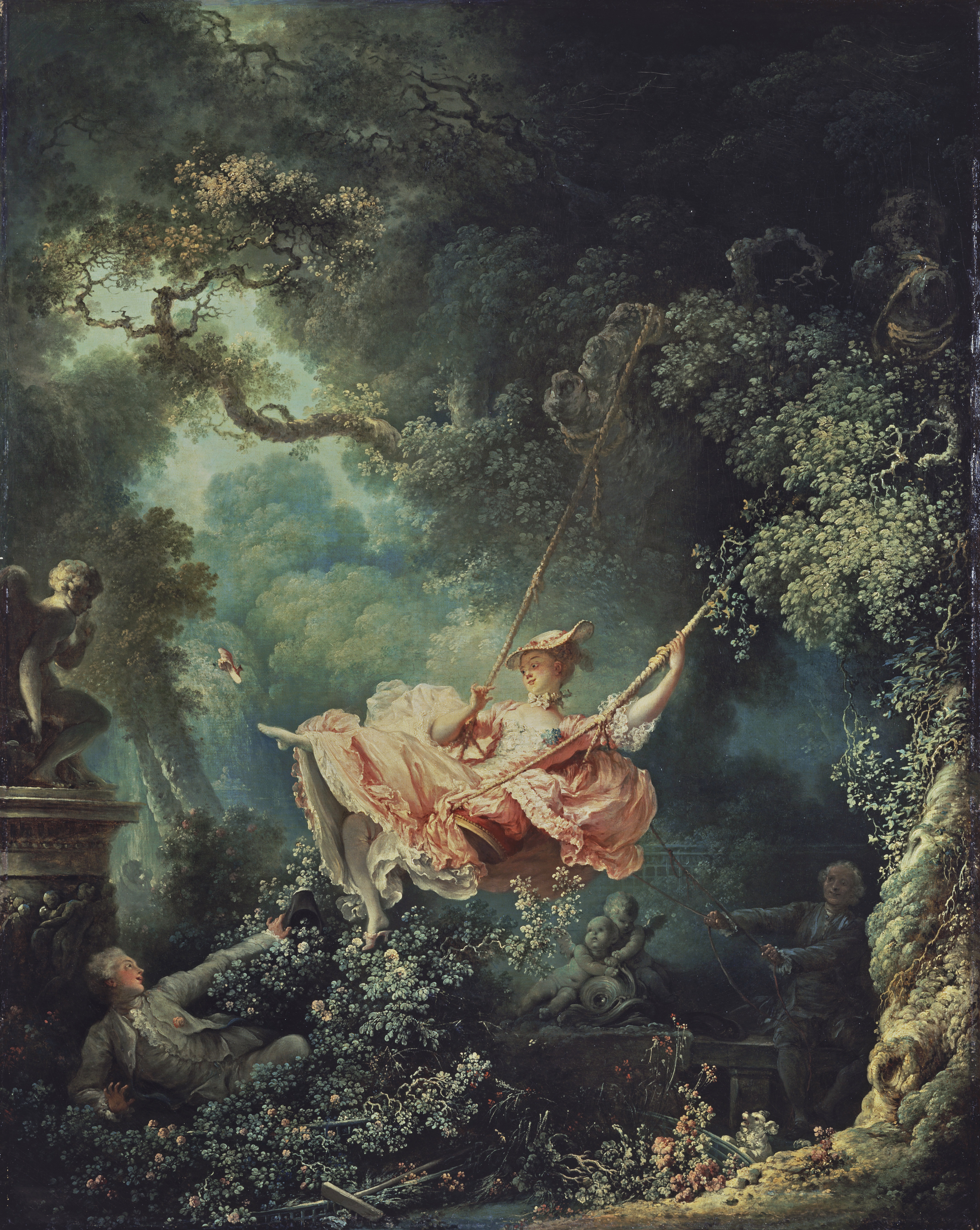
Watching Barry Lyndon is like seeing a Rococo  painting come to life. It reminded me of Fragonard and Watteau. It’s visually astonishing with a sorrowful and beautiful soundtrack (click the second YouTube link if you’d like to listen to it while reading), sumptuous costumes and a lush decor. It is a picaresque story, at least all through the first half. Redmond Barry (Ryan O’Neil), an Irishman who is neither rich nor noble, falls in love with a girl whose family is in need of some substantial financial assistance. Easy to understand that they don’t think that Redmond is a good match. Unluckily he is young and stubborn and thus provokes a duel with the future husband of the girl he loves.

File:Fragonard, The Swing.jpg

After shooting him and seeing his opponent sink down, Redmond is led to believe, he has killed him and is sent off to Dublin with the money of his mother and of a friend of the family. Unfortunately the money is stolen from him on his journey. As is typical for picaresque stories Redmond stumbles from one mishap into the other. He ends up serving with the English army in the seven-year war, deserts, serves with the German army, meets a gambler, helps him… As visually stupendous as the first half is, I wasn’t entirely interested but that changed completely with part two.

In the second half of the film Redmond meets Lady Honoria Lyndon (Marisa Berenson), fancies and seduces her and, after her geriatric husband dies suddenly, he marries her. She is a very rich woman and he will do his very best to spend her fortune. Unfortunately for him and the son she gives him,  he doesn’t automatically acquire a title as well.

The misfortunes and mishaps continue throughout the movie until the end. Redmond brings a lot of those onto himself and I never really liked him until I had time to think about he movie later on.

What made me like the second part is Honoria Lyndon. One of the crucial moments in the movie is when the newlyweds sit together in the carriage. His young wife begs Redmond not to smoke in the carriage and he not only continues but deliberately blows the smoke into her face. At that moment Honoria Lyndon reminded me of Henry James’ Isabel Archer, when she discovers that she has been trapped and that there is no real love in her marriage. The disappointment and disillusionment in her beautiful face was very moving. As said before, I started to be truly interested in what happened once Honoria was introduced. She is such a tragic figure. Redmond gets more and more hateful but in the end, after the movie was over and looking back on all that has happened to him and where he came from, I felt pity for him as well.

Barry Lyndon is a very long and very slow movie. We are meant to dwell on those pictures and – given the choice of the music, Händel’s Sarabande – we can see this movie as a meditation on hope and sorrow.

I don’t know how true the movie is to Thackeray’s novel. We often hear a voice-over commenting Redmond’s actions which sounds as if it was taken directly from the novel. Maybe anyone has read it?

Haruki Murakami Reading Challenge 2011

I am still quite new to book blogging which means I am still quite new to challenges. However I know already what type of challenge would put me under pressure and which one most likely not.

Since I wanted to dedicate some of this year’s reading to the Japanese authors I have on my TBR pile and Murakami is one of them, I decided to join the challenge hosted by Tanabata from In Spring it is the Dawn.

Please read what Tanabata says:

For a list of the books available in English, visit the Books Page.

Things to keep in mind:
*The goal is simply to read something/ANYthing by Haruki Murakami.
*Whether you’re a complete newbie, or already a huge Murakami fan, everyone is welcome to join in.
*You can join in anytime.
*Feel free to grab either of the buttons but please save them to your own computer first.
*There is no need to list your books in advance, and even if you do, you can change them any time.
*You can also change your level of participation at any time because sometimes life just gets in the way.
*You don’t have to have a blog to participate. You can also share your thoughts on Goodreads, LibraryThing, etc.
*Crossovers with other challenges are allowed. (Don’t forget that anything you read for this challenge also counts for Bellezza’s Japanese Literature Challenge).
*Books should be read between January 1st and December 31st, 2011.
(However, I welcome you to submit reviews to any of Murakami’s books or stories that you have read and reviewed previously. More on the ‘Submit a review‘ page.)
*Books can be in any format: paper, ebooks, audio.
*Rereads are allowed, and encouraged.
*There will be quarterly prizes (details to be decided).
*And most importantly, have fun!

As far as I am concerned, I will certainly read one but am not sure if I will read more.

These are the books on my TBR pile. The first two are the ones I am most likely to read.

The Elephant Vanishes (short stories)

Sputnik Sweetheart

Norwegian Wood

A Wild Sheep Chase

The Wind-Up Bird Chronicle

I am really looking forward to this challenge as it seems stressfree, fun and a good way to discover more books of this wonderful writer.

Urs Widmer: My Mother’s Lover (2011) aka Der Geliebte der Mutter (2000) One of the Finest Swiss Authors Finally Translated

It’s Switzerland in the 1920s when the two lovers first meet. She is young, beautiful, and rich. In contrast, he can barely support himself and is interested only in music. By the end of their lives, he is a famous conductor and the richest man in the country, but she is penniless. And most important of all, no one knows of her love for him; it is a secret he took to his grave. Here begins Urs Widmer’s novel “My Mother’s Lover”. Based on a real-life affair, “My Mother’s Lover” is the story of a lifelong and unspoken love for a man – recorded by the woman’s son, who begins this novel on the day his mother’s lover dies. Set against the backdrop of the Depression and World War II, it is a story of sacrifice and betrayal, passionate devotion and inevitable suffering. Yet in Widmer’s hands, it is always entertaining and surprisingly comic – a unique kind of fairy tale.

Urs Widmer is one of the finest Swiss authors of German language. He has been compared to Frisch and Dürrenmatt but that isn’t doing him any justice. I personally like him more. His novellas and novels are always very nostalgic, melancholic and bitter-sweet. There is beauty and sadness in equal doses. Recently I looked which of his works has been translated and couldn’t believe that until now there wasn’t any English translation available. Seems as if his novel Der Geliebte der Mutter aka My Mother’s Lover is the first of his books that has been translated into English. It will be out in June. That is incredibly good news. This really is an author to discover and My Mother’s Lover is a good starting point as it is one of the best novels of German language of the last decade. It is rich, it is dense, it is colourful and as powerful as a slap in the face.

My Mother’s Lover is told in first person peripheral, a point of view I like a lot. Some of the best works of literature have made use of it (Le Grand Meaulnes, The Great Gatsby… ). It is a very poetical point of view. In this novel, it is the son who tells his mother’s story. A story that spans over eighty years and begins just before the Black Thursday 1929, when Clara, the mother, is some 20 years old. Widmer tells the story of a life and a century with all the joy, sadness, madness and tragedy there was in both.

Clara is the daughter of an Italian whose great grand-father was of African descent. Her father left his Northern Italian hometown to live in Switzerland, Zürich, where Clara is born. The mother died young and Clara grew up with her father enjoying a life of ease and wealth. They loved going to concerts and that is how she met Edwin, the man who should become the love of her life and one of the most famous conductors of all time.

The Black Thursday 1929 kills her father and ruins her. She starts to work for Edwin and his orchestra and leads a life of joyful bohemianism. Together with Edwin and the orchestra they travel to Paris, sit in restaurants and bars and discuss all night long. She becomes Edwin’s lover.

The descriptions of the cities in the novel are among the best parts. Clara travels to pre-war Frankfurt that was a city full of charm and narrow medieval streets. Clara also travels to Italy where her relatives life on a vineyard, producing some of the best Italian wine. She even sees Mussolini.

Clara gets pregnant and contrary to what she expects Edwin wants her to get rid of the child. She doesn’t realize that this is the end of the affair. Edwin marries the rich daughter of an industrialist and – we never really understand why – Clara gets married to the narrator’s father who stays somewhat non existent throughout the book.

The first part of the book spans maybe 5 years, the second part almost sixty. What is told from now on is the descent of a fragile woman with a great appetite for life and a passionate love for music. She is robbed of the life she loves and the man she desires. The juxtaposition of Clara’s life and the outbreak of the second world war is incredibly masterful. We see Clara like a figure on a stage and the history of the second world war like a moving canvas in the back. Clara plants vegetables, Hitler invades Poland, Clara cooks marmalade, Hitler drives the British into the sea at Dunkirk… It is breathtaking. And so is Clara’s story. After leading a normal life at first and having a child, the narrator, all of a sudden, she slowly goes mad. She who always fantasized a lot invents a dozen ways of killing herself. Of course she thinks of taking the child with her. After a breakdown, she ends in the asylum where she stays for a long time. Although she leaves the asylum again, she returns to it all through her life until her violent death.

Apart from being the story of a life, a century, it is also an homage to classical music and art in general. You will discover many names of musicians you know and maybe a few new ones.

Widmer takes barely 140 condensed pages to tell this century long story. It has a staccato rhythm. Phrases vary considerably in length. Fragments alternate with parataxis and longer phrases with subordinate clauses. That doesn’t make for smooth reading. At least not in German. Another writer would have told this story in 300-500 pages but he would never have made you feel as if you had jumped from a cliff at the end of it. And still, and this is Widmer’s most prominent feature as a storyteller, you know you have witnessed beauty. There is always something tragic about beauty… It doesn’t last, does it? Beauty has to be captured in art. And that’s what Widmer excels at.