Sebastian Barry: A Long Long Way (2005) Literature and War Readalong February 2012

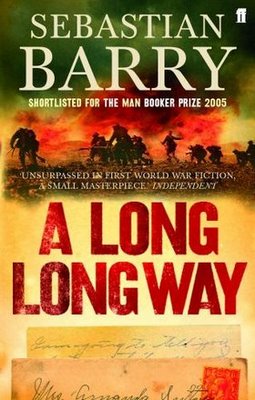
Sebastian Barry’s A Long Long Way is one of a few WWI novels told from an Irish perspective. Unlike How Many Miles to Babylon or many other WWI novels, its main theme isn’t class which was something I was glad for. Not that I think it wasn’t important but it has become one of the clichés of WWI literature. That and so many other elements. Luckily there aren’t all that many clichés in Barry’s novel.

Nineteen year-old Willie Dunne from Dublin volunteers in the early days of WWI. Like so many before or after him, he has no real reason, or they are at best quite vague and mostly personal. Maybe little Willie wants to prove himself and prove his father that he is worthy despite of his size. His father, a tall and imposing fellow, is a policeman. Something little Willie could never have become because he is barely taller than a midget. The army doesn’t care. They are in such great need of volunteers that they accept almost anyone.

We follow naive little Willie to Belgium where he spends his first months in the relative comfort of the rear camp, hardly seeing any fighting at all. Nothing really bad happens to little Willie and his company until one day, the soldiers see a yellow cloud hovering slowly over no-man’s-land. It takes them far too long to realize what that yellow cloud means, and only much too late, when many of them are already dying a cruel death or maimed for life, do they flee in horror. After this moment the novel takes a turn and becomes graphic and tragic and Willie loses his naivety at a breathtaking speed.

Although he sees many horrible things, it is only after his first leave to Ireland, that Willie is really affected. Not because he doesn’t fit in anymore – Barry doesn’t use this cliché either – but because Ireland is on the brink of the War of Independence and Willie, a compassionate man, is saddened to see the death of a young rebel and to realize that for the first time in his life, he doesn’t see things like his father.

Back in the trenches he tells the other Irish lads what he has seen at home. The newspapers write about it too and the British officers are aggressive and see them even more as cannon fodder than before. The longer the war lasts, the more intense the fighting in Ireland gets, the less the efforts and losses of the Irish are appreciated. In the end there are finally no more volunteers from Ireland. They do not want to fight for the enemy anymore and some would even gladly join the Germans. When Willie takes his second leave to Dublin, the aggression in the streets against his British uniform is open.

It is rare that I resent an author for his narrative technique but I do resent the way Barry wrote this novel. Furthermore I had a hard time with his style, I think it’s far from fluent and the overuse of adjectives at times was annoying. Just one example:

Now they rose up in the violent moonlight and entered bizarrely a huge field of high corn, the frail stems brushing gently against their faces, and because Willie was a small man, he had to grip the coat of the Sergeant-Major Moran in front or he would be lost, set adrift to wander for ever in this unexpected crop. The absurd bombs followed them religiously into the field, smashing all about the darkness, the stench of cordite and other chemicals obliterating the old dry smell of the corn.

As if the violent moonlight wasn’t enough, they have to enter the field bizarrely, followed religiously by absurd bombs? Admittedly, this was one of the worst passages but there were others, equally florid. This doesn’t explain why I resent him but it’s part of it. I felt tricked. This novel works like a trap door. You are lured into a devastated house which is bad enough but the moment you are inside, the carpet is pulled away from under you and the trap door opens. There is a building up of graphic scenes and an intensification of the tragedies that befall poor Willie that felt really mean. I was upset that the book had to end like it did, so absolutely depressing, without the tiniest little bit of hope or light. Don’t get me wrong, it’s not because the book describes graphic scenes, it’s because he intensifies them and accelerates it towards the end, when we do not see it coming anymore and, on top of that, has poor Willie experience one personal tragedy after the other.

With the exception of the dishonest structure, and an almost sadistic finishing off of the main character, the novel has a lot of elements that I thought well done. I haven’t read any WWI novel this eloquent on the use and the horrors of mustard gas. Nor any novel that showed the role of the priests so well. Father Buckley was my favourite character in this novel. A Catholic Priest with true compassion and a wide open heart. And I liked Barry’s choice of theme. His look at authority and its major representative, the father is very interesting. The father as a figure comes in many different forms, as the biological father, the King, the Priest. Coming to terms with authority and ultimately becoming a man and independent are important aspects. Little Willie isn’t a boy anymore at the end of the book, he is a man, with his own opinions, his own life. The book stays away from the usual criticism of high command but uncovers all sorts of hidden false authority.

A Long Long Way has been my second Sebastian Barry novel and I was also annoyed by the first. I just don’t like this type of artifice and manipulative writing that is so keen on effect.

I hope others have liked the book better. After all it has won many prizes. I’m looking forward to see what you thought.

Other reviews

Anna (Diary of an Eccentric)

Danielle (A Work in Progress)

Serena (Savvy Verse and Wit)

A Long Long Way is my second contribution to the War Through the Generations Challenge hosted by Anna and Serena.

*******

A Long Long Way was the second book in the Literature and War Readalong 2012. The next one will be Jean Giono’s Le grand troupeau – To the Slaughterhouse. Discussion starts on Friday March 30, 2012.
Literature and War Readalong February 27 2012: A Long Long Way by Sebastian Barry

In last year’s readalong we also read a WWI novel from the Irish perspective. It was one of my favourites and since I’m fond of Irish literature, I thought it would be great to add another one this year. I wanted to read Sebastian Barry’s novel A Long Long Way since Danielle (A Work in Progress) first mentioned it. WWI has a special meaning for the Irish. They were neutral during WWII, so, clearly, WWI has another importance. There were reasons why they remained neutral during the second World war which are tied to their own history. While some men, like the character Willie Dunne in this novel, fought for the Allies, other forces in the home country were about to erupt and would lead to the Easter Rising. WWI, the Irish War of Independence, followed by the Irish Civil War, cost the Irish too many lives for them to risk being dragged into WWII as well. I’m certainly simplifying but in a nutshell this was one of the reasons.

Some of what I just mentioned is the topic of Barry’s novel.

Here are the first sentences

He was born in the dying days.

It was the withering end of 1896. He was called William after the long-dead Orange King, because his father took an interest in such distant matters. On top of that, an old great-uncle, William Cullen, was yet living in Wicklow, across the mountains as they used to say, where his father himself had been reared.

I have read Sebastian Barry’s award-winning The Secret Scripture three years ago and I was one of a very few who didn’t like it. It had nothing to do with the writing as such which is great and one of the reasons why A Long Long Way was shortlisted for the Man Booker Prize in 2005. The reasons why I didn’t like it were timing and implausibility. I had just read The Vanishing Act of Esme Lennox before and the theme is the same, only I liked O’Farrell’s novel much better as it didn’t rely on implausible coincidences. Despite this unfortunate encounter I’m really looking forward to A Long Long Way and hope that some of you will join me.

Have you read Sebastian Barry?

*******

The discussion starts on Monday, 27 February 2012.

Further information on the Literature and War Readalong 2012, including all the book blurbs, can be found here.

Helen Dunmore: Zennor in Darkness (1993) Literature and War Readalong January 2012

Helen Dunmore’s first novel Zennor in Darkness is set on the Cornish coast in 1917. The sound of war can be heard from afar. The first young men return from France, some of them are missing limbs, others are shell-shocked like Claire Coyne’s cousin John William. Although the war is present on every page, in the suspicions of the people, the fear that all the boys will be drafted, the noise the wind blows over from France, the scarcity of money and food, this is a novel of dreamlike beauty. Dunmore conveys the soft light of the Cornish coast, the beauty of the lovely landscape, the slow pace of life. This softness is mirrored in the way she changes the point of views, blurring the edges, softening the transitions, so that it feels as if one person’s consciousness and interior monologue, was flowing gently into that of another character. Reading it made me dreamy and I felt as if I was watching a water-color come to life. I read this book very slowly. I could have finished it in a few evenings but I put it aside frequently to make it last.

Zennor in Darkness interweaves the fictional story of Claire Coyne, and her cousin John William with the story of D.H.Lawrence and his wife. Claire lives alone with her father. Her mother who died while she was still very little was from Cornwall, while her father is an outsider, just like Lawrence. He comes from a rich Londoner family and was always seen as an intruder. Claire’s maternal grandparents, her aunts, uncles and cousins live close by. The children are a tight-knit community since they were little kids. They are so close that, although it seems logical for us, nobody suspects Claire and John William to be lovers.

The war has taken its toll, hundreds of thousands are dead and a lack in officers makes it possible for someone like John William who isn’t noble, to become an officer. He returns from France for a brief visit before he will join a training camp where he will stay a few months before being sent back to France.

Before his return Claire has befriended D.H. Lawrence. She is fascinated by him and even more so by his attractive German wife, Frieda. Not everyone is happy about their stay in Zennor. Germans are suspected to be spies and people would like to see them gone. Lawrence and his wife are happy in Cornwall. Their dream of a community of like-minded people has been shattered after Katherine Mansfield and her husband have left but still they love Cornwall and their simple life. Lawrence works in the garden, befriends the villagers. It’s not as easy for Frieda but she likes it as well. To the Lawrences Cornwall means more than just a place to stay, it is a refuge, a shelter and to watch their dream being crushed is painful.

Lawrence discovers that Claire is talented at drawing and encourages her to pursue a career. She introduces him to John William and Lawrence feels, more so than Claire, that John William hides something. One evening, when the two men walk alone in the balmy Cornish night, John William lets himself go in front of Lawrence, unable to hide the signs of shell-shock any longer.

Zennor in Darkness is a very beautiful novel and if anything it made me want to read more of Helen Dunmore. And it also made me want to return to D.H. Lawrence whose books I have abandoned for too long. I’ve always liked D.H.Lawrence, his novels, short stories, essays and letters and found that she captured him and his relationship with his wife very well. Frieda was a von Richthofen. A cousin of the famous Red Baron. Abandoning her marriage, her children and her privileges must have cost her a lot. I was always fascinated by this free spirit. The end of the book moved me. I knew the part related to the Lawrences, still it made me angry, while the fictitious story of Claire and John Williams made me sad.

What I found astonishing is the combination of beauty and horror. The descriptions of the Cornish coast, its air, light, flora and fauna alternate with passages like this one.

In Flanders the struggle for the Passchendaele Ridge continues. The poppy-blowing fields are ploughed by German and English guns, and sown with a litter of lost equipment, a seeding of blood and bone. Soon it will be autumn there too, and heavy northern rains will fall. Men will be listed missing, presumed drowned – a new classification for the lists in the newspaper. They are presumed drowned in the mud in which they live and often die. The men who came ‘right away to Blighty’ with John William will return to Flanders with their new commissions soon. Their training lasts only three months, and then they are wanted back at the Front. Hammond will die on a mission described to him by a senior officer as ‘rather a tricky bit of patrol-work’. His body will not be found. Simcox, a dozen feet to the left of him, will survive.

Ultimately however Zennor in Darkness is a novel about the difficulty to know another person. Either because you see them as strangers, or because they are too close for you and you lose all perspective. Like in real life, in many instances a stranger understands another character better than his own family, while at the same time, the community projects fear on the outsider.

In any case this was an excellent start to the Literature and War Readalong 2012.

Other reviews

Danielle (A Work in Progress)

Lizzy (Lizzy’s Literary Life)

Sarah (A Rat in the Book Pile)

Zennor in Darkness is also my first contribution to the War Through the Generations Challenge hosted by Anna and Serena.

*******

Zennor in Darkness was the first book in the Literature and War Readalong 2012. The next one will be Sebastian Barry’s A Long Long Way. Discussion starts on Monday February 27, 2012.

Impressions of Bolaño’s The Savage Detectives

Caroline, in her kitchen, near the city center, Europe, January 2012. Defeat. Defeat. Defeat. I had a feeling I wouldn’t finish The Savage Detectives. 700+ pages is just a tad too long for me these days. Still, I was full of good intentions and even bought the German translation early in December thinking that if it had to be a chunky book it might be wise to read it in German and not in the Spanish original. It’s been far over a year since I’ve read my last Spanish novel and I didn’t want to tempt fate. Chunky novels have always been a huge turn off for me but these days, with so little spare time, I’m even less in the mood for a longterm reading committment.

Despite all these length related reservations and after having read the first 50 pages I thought I might finish easily. The whole of Part I was a surprisingly quick and amusing read. Admittedly, it was occasionally a bit exasperating to read the fictitious diary of a breathless, overenthusiastic and over sexed young man but it was at the same time refreshing. The reason why I didn’t manage to finish was a pure case of “wrong reader-right book ” or something like that. Listening to Juan García Madero telling the story of how he got involved with the movement of visceral realism, frantically wrote poetry and discovered the joys of sex made me feel as if I had met one of my teenage friends again. We were reading the same books as Juan Gracía; the Surrealists, Perec, Lautréamont. We were fascinated by experimental literature, the nouveau roman and anything that smelled avantgarde and nontraditional. It seems that most people who experiment with writing and literature revisit the same masters. Meeting a literary figure like Madero was almost eerie. Now, apart from not doing well with chunky books I often don’t do too well with novels about writing.  As much as I love memoirs and non-fiction books about reading and writing, I find a novel about the same topics artificial.

By the time I started part II, which consists of several dozens of short chapters, all told by another narrator who adds information and elements to the whole story, I knew I couldn’t finish. There were too many other books calling me. First Nick Hornby’s essay collection Housekeeping vs The Dirt, then I started Henry Green’s Party Going and my own readalong title Zennor in Darkness and finally I developed an obsession. All the books on my TBR pile which were written by someone named Elizabeth started calling me. First it was Elizabeth Gaskell’s Cranford, then Elizabeth Taylor’s Angel, after that Elizabeth Berridge’s Across the Common followed by Elizabeth Jane Howard’s After Julius and finally Elizabeth Bowen’s The House in Paris. I know, this sounds serious and I will have to analyze this weird obsessive compulsion at a later date. I would say the name is a pure coincidence but what is not is the size of their books, all just under 200 pages.

There is one thing that puzzled me a great deal while reading The Savage Detectives. While all these people in Bolaños novel celebrate short literary forms, like poetry, their author chose this traditional form of the long novel. Is that why part I is composed of short diary entries and part II – a 500 pages long sequence – of short chapters? To make us believe he does, after all write a short form? He is cheating, isn’t he?

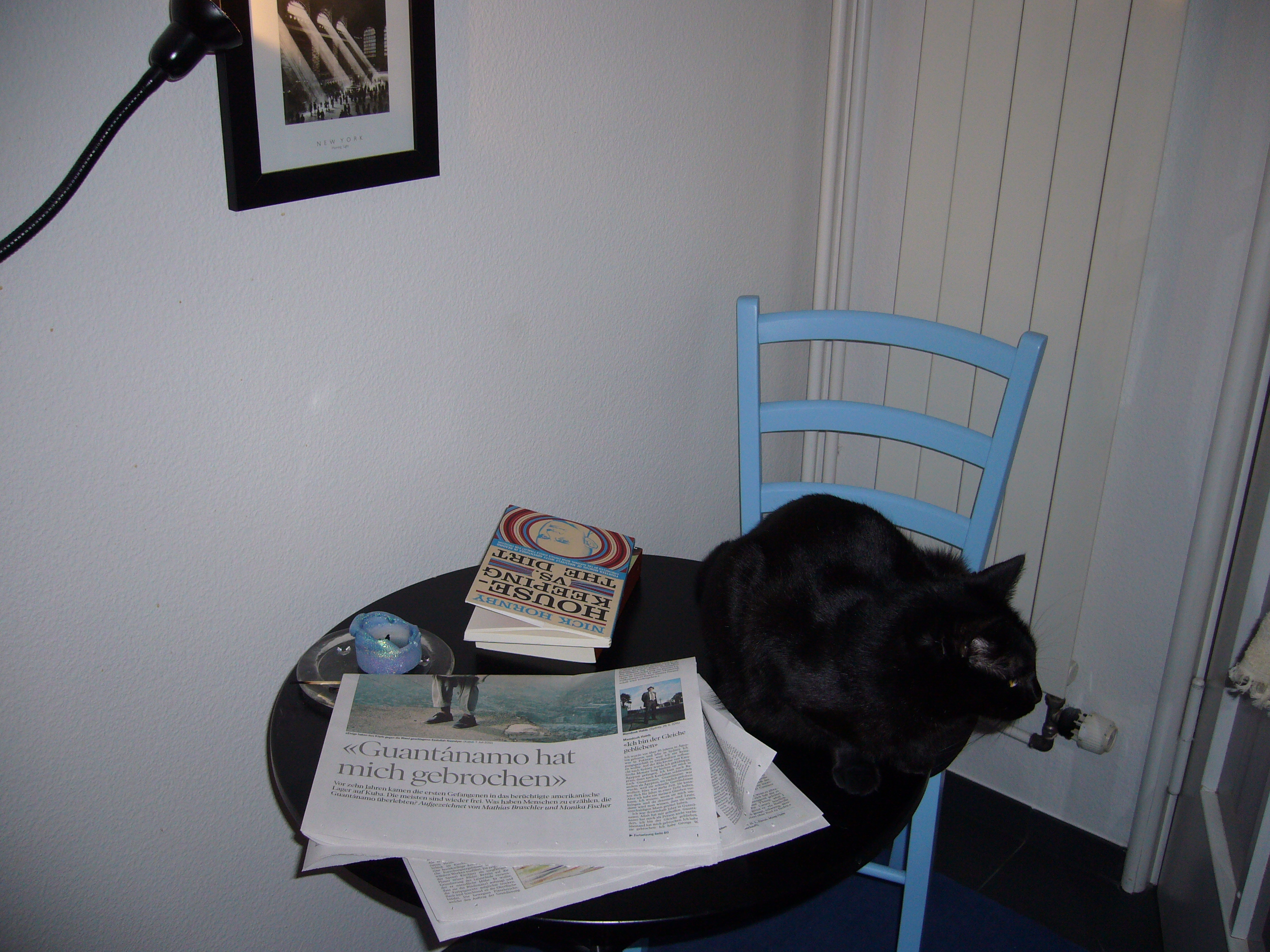
In any case, even though Mrs Cat started supervising my reading progress, I had to throw in the towel and put The Savage Detectives on the half-read chunkster pile where it’s sitting right next to Anna Karenina. A far better fate than the one that befell Dumas’ La Reine Margot. That one was disposed of.

I have not given up on Bolaño. Far from it. There are still many others of his books on my piles and one of them will be my first one in 2012. Not sure which one though. 2666, Amulet, Last Evenings on Earth or Monsieur Pain?

If you want to read a few proper reviews of The Savage Detectives, please make sure to visit the hosts of the readalong Rise and Richard and the other participants. Here is Bellezza’s post and Sarah’s.

Aussie Author Challenge 2012 – Bolaño Group Read – Henry Green Week

I discovered the  Aussie Author Challenge 2012 hosted by  Booklover Book Reviews on Tony’s Reading List. I’m not sure how many Australian authors I’ve read in my life so far, but I’m pretty sure not all that many. While browsing my piles I discovered five novels. One of them also qualifies for the War Through the Generations Challenge. Lisa from ANZ Litlovers has kindly given input and my choices seem worthy. Should you want to join the challenge, her blog offers lists where you will find a lot of reading suggestions. I have signed up for the  “beginner” level or, as the challenge terms it, “tourist”.

These are the books I’d like to read

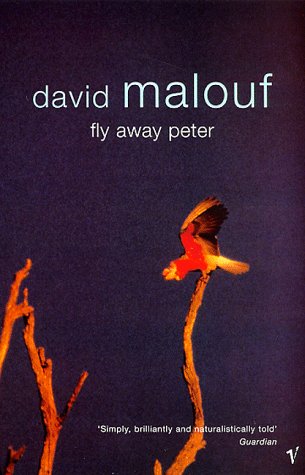
David Malouf’s Fly Away Peter

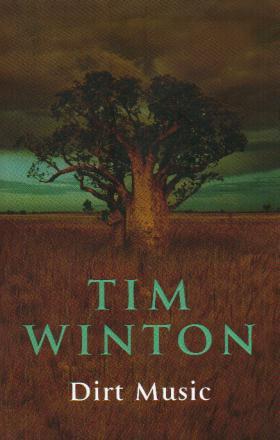
Tim Winton’s Dirt Music


Murray Bail’s Eucalyptus

Charlotte Wood’s Submerged Cathedral (OOP?)

Helen Garner’s Monkey Grip

January is a busy month but some of the events were too good. I had to join.

I signed up for the Bolaño The Savage Detectives group read hosted by Richard and Rise last year and now is the time to start reading as the novel is on the chunky side. If you’d like to read along you better get a copy soon or you will not make it through the 770 pages in time. I have a feeling I won’t but if I mange to read 2/3 I’m already pleased with myself.

The week of January 23 sees another event coming that  I absolutely had to join. Stu from Winstonsdad’s Blog is hosting a Henry Green week. Henry Green was once thought to be one of the greatest stylists of British literature but is now almost forgotten. I have never read Henry Green and think Stu’s idea is really wonderful. Penguin has issued a tome containing three of his famous novels Loving, Living and Party Going. I’m going to read Loving.

Do you have any Aussie author suggestions?

Will you join the Bolaño group  read or Henry Green Week?

Literature and War Readalong January 30 2012: Zennor in Darkness by Helen Dunmore

Two or three years ago I read Helen Dunmore’s The Siege a painfully realistic and harrowing account on the siege of Leningrad. This was such a stunning novel, one of the best WWII novels I have ever read, accurate, moving, descriptive and captivating despite the bleak topic. When I discovered that she had written a novel on WWI, Zennor in Darkness, I didn’t hesitate and put it on this year’s readalong list right away. Helen Dunmore hasn’t only written novels, but short stories, children’s books and poetry as well. I think her wonderful prose shows that.

The story is set in a Cornish coastal village in 1917 and combines fact with fiction. D.H. Lawrence and his wife have indeed stayed there but the story is invented. The core theme seems similar to Return of the Soldier and deals with shell shock. But it is also a story of artists and writers. I have a weakness for books about artists and love Cornwall as a setting.

Here are the first sentences

One faint shriek. Then another. Three girls fling themselves over the top of the last dune and skid down warm flanks of sand. Marram grass slashes their ankles and sand kicks up behind Clare and Peggy, into Hannah’s eyes. She is the heaviest and the last.

Have you read Helen Dunmore?

*******

The discussion starts on Monday, 30 January 2012.

Further information on the Literature and War Readalong 2012, including all the book blurbs, can be found here.

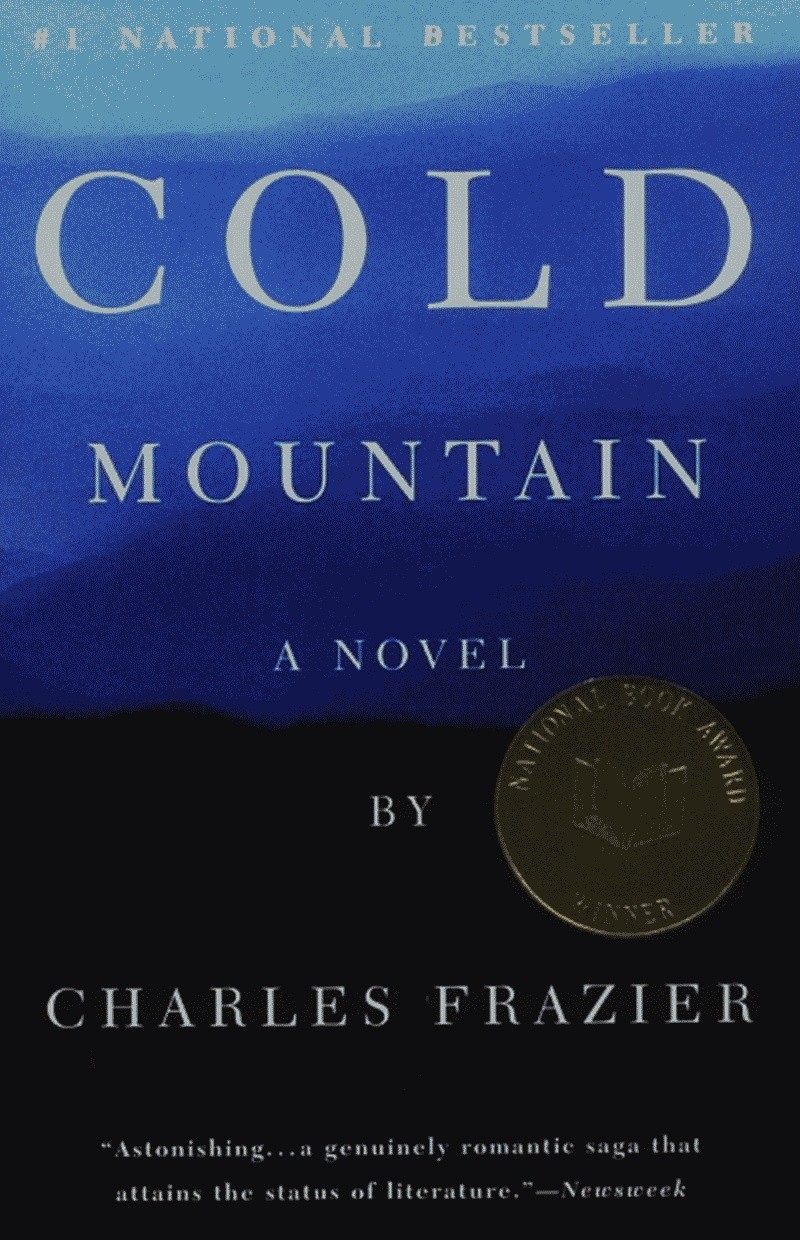
Charles Frazier: Cold Mountain (1997) Literature and War Readalong December 2011

The last book of this year’s readalong, Charles Frazier’s Cold Mountain,  is the only book on the American Civil War.

Cold Mountain juxtaposes the stories of Inman, a Confederate soldier, who was badly wounded at Petersburg, and Ada, the woman he loves, who waits for him in Cold Mountain. It describes Inman’s slow and long return to Cold Mountain and how Ada copes on her own after her father has died.

I have only just finished this book and I am still a bit stunned. This is an extraordinarily well-crafted novel. The structure is interesting from the beginning on. The chapters alternate between Inman’s and Ada’s point of view and are symmetrical. Motifs and themes that are described in one chapter will be echoed in the next. This is fascinating. At the beginning, for example, we see Inman at a hospital. He was badly wounded and most of the time he is lying in bed and watching the world through a window. The window is like the frame of a picture.

That summer, Inman had viewed the world as if it were a picture framed by the molding around the window. Long stretches of time often passed when, for all the change in the scene, it might as well have been an old painting of a road, a wall, a tree, a cart, a blind man.

In the next chapter we see how Ada struggles. Her father has died and left her nothing but a farm. The farmhands have all gone, either to war or they are hiding. Ada has lived almost all of her life in Charleston and has only lived in Cold Mountain for a few years, because her father was ill, and the mountain air was thought to be beneficial. She can sew, paint, play the piano and loves to read but never in all of her life has she worked with her hands. She doesn’t know how to keep the farm going, how to produce anything. She spends long stretches of time sitting in a chair, reading and staring through a window that starts to look like a frame, the sky outside like a painting.

There is nothing that Inman experiences, that Ada’s story doesn’t echo and vice versa. They both struggle to survive, they both find unlikely friends. I liked this structure a lot but there is more to this novel. It’s exceptionally well written. Words are chosen carefully, the prose is crystal-clear and manages to paint a picture of a breathtaking landscape that we see change with the seasons.

Maybe Ada would have starved or contracted an illness and died if Ruby hadn’t turned up at her farm. From that moment on her life is changed forever. Ruby has never read a book but she is so resourceful and attentive to every little detail of nature, one almost expects her to spin straw into gold. There is nothing she cannot use, mend, transform. And she knows how to teach Ada to become as capable as she is. All Ada knew so far was a life of leisure and that life now turns into work. It’s interesting to see how useless money has become during the war and how valuable it is to be able to produce your own food.

After a while, when plants grow and they have produced all sorts of things, the women are not only independent but almost completely self-sustaining. And they have become very close friends. They sit on the porch at night and Ada reads to Ruby. They talk and sit like an old couple. Content. At least Ruby is, Ada still longs for Inman.

After a while I started to dread his return. Their life seemed so peaceful, I couldn’t imagine how Inman would fit in. What would happen, would Ada send Ruby away, would they live together?

All this time Inman is walking and hiding. He is constantly in danger, he is a deserter after all and the country seems to have become lawless. Anyone can shoot you at any time. That’s what happens to him anyway. He is taken prisoner, shot and left for dead. He finds refuge with an old woman, who, like Ada and Ruby, lives completely on her own, with a little herd of goats.

This is a very powerful episode. The war is constantly present throughout the book. Inman remembers the battles, the dead men, the wounded. The butchery. But nowhere is this as much in the foreground as when he speaks with the old woman. I’m not very familiar with the American Civil War and the impression I got from reading Cold Mountain was that maybe initially there was a cause but very soon there were a lot of lawless people attracted who came in for the change and the freedom to go about killing people as they pleased.

While Ada and Ruby live an almost sheltered life, Inman, in crossing the country, sees the many faces of this war. The poverty, the illness, people who die for no reason, the cruelty, the violence. His own biggest fear however is that he is too damaged to live a happy life with Ada. The old woman says something that made me think and I wondered whether this is really true:

That’s just pain, she said. It goes eventually. And when it’s gone, there is no lasting memory. Not the worst of it anyway. It fades. Our minds aren’t made to hold on to the particulars of pain the way we do to bliss. It’s a gift God gives us, a sign of His care for us.

Something that struck me more than anything, besides the beauty of the language, the artful structure and the wonderful complexity of the characters, is how American Cold Mountain is. It’s a hymn to the landscape and the history of the country, that includes everything, the mythology of the Cherokee, the stories of the settlers, the possibilities that this country offers to resourceful people.

Cold Mountain is a stunning novel and I’m sorry, I feel haven’t done this book any justice. It’s a complex, rich and a very rewarding book. It’s rare that I feel envious of characters in a book but at times I thought that there could hardly be a better life than the life led by Ada and Ruby.

If you have seen the movie, it is still worth, reading the book. It is so much richer.

*******

Cold Mountain was the last book of the Literature and War Readalong 2011. The first book of the Literature and War Readalong 2012 is Helen Dunmore’s Zennor in Darkness. The discussion takes place on Monday, January 30 2012.