Elsa Morante: La Storia – History (1974) Literature and War Readalong August 2011

History was written nearly 3 decades after Morante spent a year hiding from the Germans in remote farming villages in the mountains south of Rome. There she witnessed the full impact of the war and first formed the ambition to write an account of what history does when it reaches the realm of ordinary people struggling for life and bread.

La Storia aka History is the last WWII centered book of this readalong. It’s also the most ambitious, starting before the war and ending just a few years after. It describes in minute details how the schoolteacher Ida Mancuso, her two sons and the people to whom they are connected are affected by the war. La Storia looks in great detail into the impact of war on civilians. In telling this ordinary woman’s daily life we see how precariously civilians live during a war. The constant bombing, the fear, the loss of the houses or apartments, of friends and the jobs, the lack of food and clothes, rape and brutality, fear of being transpotred to a camp, all this together is part of everyday life. What civilians endure is no less harrowing than what happens on the battlefields.

Summarizing this vast canvas of a novel that is driven forward by ebullient storytelling would be quite a challenge, that is why I decided to highlight a few points.

History starts in 19** and ends …. 19**, but the core chapters focus on the years from 1941 to 1947. Before each chapter we find detailed accounts of all the important historical facts of those years. Reading this overpowered me and that was probably the aim. One horrible event follows after another and each and every single country participated in one awful event or the other. It’s a mad circle, a maelstrom that sweeps along everything and everyone and whose impact shapes, distorts and changes the life of normal people who are unable to escape this crazy frenzy.

Following the accounts of History’s furious rage, we read about the simple, childlike Ida, whose mother was Jewish. This fact fills her with constant anxiety all through the novel and even pushes her to do crazy and dangerous things. Ida is a widowed schoolteacher, the older of her boys, Nino, is a foolhardy opportunist, while the other one, Useppe, is the child she conceived when she was raped by a German soldier at the beginning of the war. In the early chapters of the novel Ida lives in modest circumstances but she has an apartment and enough food. When the war breaks out and finally comes to Rome, their house is bombed and she must flee to the countryside where she and Useppe, the little one, live in one room together with numerous other people.

Ida’s older son Nino first joins the fascist forces, later changes over to the partisans and finally becomes a criminal after the war. His “career” seems somewhat typical and I found that in creating a character like this Morante managed to capture a lot that is wrong in Italy. Opportunism and corruption are everywhere.

Focusing on Ida, we witness the ordeal of the “ordinary people”, how much they had to endure. The hunger is unspeakable. What they have to eat is hardly imaginable. Grass, cats, rats, anything. Being homeless and having no clothes is horrible. Having to fight or steal for just a little bit of bread is hard to imagine. It’s a truly harrowing account.

One of the most interesting details is the narrator. Who tells this story? To whom belongs this voice that is audible at any time, that speaks to us directly and from the heart of this novel?  Is it History speaking to us? It seems to be, as the way Morante describes people, animals and things seems to signify that everything is animated. So why not History itself? History is such a force, it seems as if it has become a being driven to destroy.

What I loved about this novel is that everyone has a voice. Useppe is as much a person as are his dogs Blitz or Bella. Their thoughts and feelings are rendered in great detail. I think in doing so she manages to emphasize that in a war everyone is equal, everyone is threatened. I also liked the detailed in the descriptions, the exuberant storytelling.

Despite all the positive aspects I also had a few problems with the novel, especially at the beginning. I didn’t like Ida. I know, it will sound mean, but she was too simple for me. She isn’t very introspective, she is almost a simpleton, still she is touching and the tragedies she endures moved me. I understand Morante’s choice for a character like this but I didn’t always enjoy it.

While reading this novel I found myself smiling a lot. Useppe’s and his dog’s thoughts are so charming in their naivety. The end of this novel moved me a lot. Without giving away too much, I can tell that it showed that there are far more victims in wars than winners, that wars still impact people long after they have ended and that history doesn’t spare anyone. There is no escaping this force that wreaks havoc in human lives.

Before closing I would like to ask a question of anyone who might have read this novel, now or at another point in time: Isn’t it dangerous to treat History like a being? Isn’t this blurring the fact that History isn’t an undefined, independent force but, in the end, it is people who harm other people?

Other reviews:

*****

History was the eight book in the Literature and War Readalong. The next one will be Tim O’Brien’s The Things They Carried. Discussion starts on Friday September 30, 2011 .

Simone van der Vlugt: Shadow Sister – Schaduwzuster (2005) A Dutch Thriller

Married. One child. A career: Lydia has her life in perfect order – if only everyone else around her could be as organised as she is. Her unmarried twin sister Elisa is still struggling to find what she wants to do. And her colleagues at the school where she teaches often fail to reach her high standards.But one day, it all falls apart from Lydia. When she is threatened by one of her pupils, her sister is the first person she turns to. But Elisa is powerless to stop the campaign of intimidation that follows. How far will it go? Or is someone else taking advantage of the situation? And what is Elisa’s part in all of this? Twins are close. Aren’t they?

I was looking forward to reading Shadow Sister because Simone van der Vlugt’s first novel Reunion was excellent, a gripping page-turner with a surprising ending. Shadow Sister wasn’t as good but despite its flaws I couldn’t put it down and thought the ending was not foreseeable.

The story is told from a first person point of view, alternating between the two sisters. While we know early on that Lydia was killed, we still read her chapters. The chapters of the sister start after Lydia has died while hers progress slowly towards her death.

Lydia is a Dutch teacher at a school for immigrant kids. It isn’t an easy job but she loves it. She thinks she can make a difference and that is all that matters to her. The kids aren’t very disciplined and get into fights among each other but mostly they respect her. Until Bilal, a Moroccan boy, feels ridiculed by Lydia and attacks her with a knife. She has him suspended from school and from that moment on she feels threatened. Someone stands in front of her house at night, someone follows her from the school. The police take it very seriously but she just reports it. When she is killed, no one has doubts that it was the boy but Bilal has an alibi.

From her sisters point of view we start to see another side of Lydia. We realize that she was maybe not as perfect as everybody believed and we also realize that there were problems in the marriage. Her husband Raoul is a bit too good-looking and he seems to be having an affair or be in love with someone. We also find out that Elisa has feelings for her brother-in-law.

All this together makes for gripping reading. The description of the school and the problems schoolteachers face nowadays with children who are not motivated, who come from other cultures, who don’t take a woman seriously, who feel threatened in their masculinity the moment you criticize a tiny thing, is interesting. What I didn’t like is the fact that van der Vlugt uses present tense all through the book. And I wouldn’t call Shadow Sister a psychological thriller as there isn’t much in terms of character analysis. Both sisters sound exactly the same and also the other characters are a bit flat. The person that is rendered best is Lydia’s little daughter.  If you are looking for another Ruth Rendell, this isn’t your book but if you look for a gripping page-turner offering social elements, you might enjoy it.

Patricia A. McKillip: Winter Rose (1996)

They said later that he rode into the village on a horse the colour of buttermilk. But I saw him first – as a fall of light. And then as something shaping out of the light. So it seemed. There was a blur of gold: his hair. And then I blinked and saw his face more clearly.’ From that moment, Rois is obsessed with Corbett Lynn. His pale green eyes fill her thoughts and her dreams are consumed by tales of his family’s dark past. Of son’s murdering fathers, of homes fallen to ruin, and of a curse that, as winter draws in, is crawling from the frozen forest to engulf them all.

Ever since I read Patricia A. McKillip’s The Forgotten Beast of Eld, I wanted to read another of her books. She is one of those writers who quietly write one novel after the other and every new book is greeted with a lot of enthusiasm by her fans. Despite her many fans McKillip isn’t a fantasy writer with a huge commercial success, for the simple reason  – I’m guessing – that she doesn’t write trilogies and series. All of her novels are standalones or diptychs, with the exception of The Riddle Master Trilogy. Most of her books are out of print but you can easily get cheap used copies. McKillip’s books are lovely and enchanting and distinctly influenced by fairy tales.

Winter Rose is a retelling of the Scottish tale of Tam Lin. It is a peculiar book and maybe not a typical McKillip because readers either love or hate it. I liked it a lot but can see why others might not have been equally charmed.

While Winter Rose starts like a normal fantasy novel, as soon as reality starts to shift, the writing reads like a fever dream. It is never really clear whether Rois, the main character, is dreaming, has entered another reality or a sort of parallel world. If you want to enjoy this book you have to just let go and follow the flow and not try too much to understand it rationally. It is a bit like reading poetry. Try to picture the images she creates of a world in which the forest can claim people, in which winter swallows everything, in which thorns and ivy weave a web so dense that there is no escaping them. The images are lush and hypnotic, the language is flowery.

Winter Rose isn’t a love story in a conventional sense although Rois falls in love with Corbet the moment she lays eyes on him or rather the moment he materializes before her eyes. Corbet has never been seen in the village in which Rois, her father, her sister Laurel and Laurel’s fiancé Perrin live. It is said that Corbet’s father killed his own father and was cursed. Lynn Hall, the family home, has been standing empty since then and the forest has claimed it back. It is nothing more than an overgrown ruin.

Corbet starts to renovate the house and, accepting Rois’ fathers kind dinner invitations, spends many evenings in their house, talking and laughing with them. Both girls are equally fascinated by Corbet’s mysterious story and want to know everything about him. As much as Rois is infatuated, she is no fool and senses that there is something between Corbet and her sister.

The storytelling is very hypnotic and evokes different layers of reality that are interwoven. When Rois starts to spy on Corbet and follows him into the woods, the realities start to shift for good. There is a strange presence in this other world. Something is waiting in the wood. Is it the Spirit of the Forest, a Guardian, a Faerie? Whatever it is, it is a disquieting being and seems to lure people. Is this the place where Corbet’s father is?

Another mystery that Rois tries to solve is what happened to their mother who died when Rois was just a baby. It is told that Winter took her, she wasn’t ill, she just stopped living. And why has Rois “wood eyes” and sees more than other people?

One day Corbet disappears and Rois goes after him. She crosses the threshold between this world and the other one, and discovers a lot of things that no one else knows.

There really is a lot to like in this novel. The language is poetical and rich in images and Rois is a lovely girl. She is wild and free-spirited and loves to roam the forest. She knows all the medicinal herbs and plants and makes teas and potions for the people of the village.

Despite all the positive aspects, this isn’t a book for everyone. There is simply not enough in terms of story, as said, it is much more like a fever dream.

I’m still in the mood to read another of Patricia A. McKillips novels.  Does anyone have suggestions? I got The Forests of Serre here. Which is your favourite McKillip book?

Winter Rose was my second book for the Once Upon A Time V Challenge.

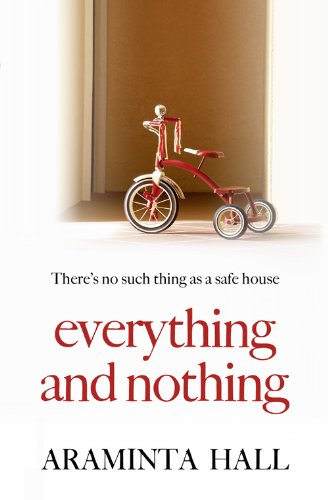
Araminta Hall: everything and nothing (2011) Social Realism and Psychological Suspense

Ruth and Christian are – just – holding their marriage together, after Christian’s disastrous affair a year ago. But chaos beckons, and when the family are suddenly left without any childcare, Agatha comes into their lives to solve all their problems. But Agatha is not as perfect as she seems and her love for the children masks a deeper secret.

I read a review of this book on Lizzy’s Literary Life and something told me I might like it. And I did. It was one of those super fast reads, a book that I could hardly put down. Really riveting. The only complaint I have is that this is labelled as a psychological thriller. Although there is a part of it reminiscent of Ruth Rendell, it is like a background story and not really very gripping. At least not for me. Still I consider this to be a real page-turner for the simple reason that it captures chaotic family life in so much detail and explores some of the questions and problems parents who work full-time would face. I often enjoy descriptions of domestic life although I don’t live anything that is even remotely comparable.

Ruth and Christian both not only work full-time but overtime many days of the week. They both have careers that seem to absorb all of their energy and when they come home in the evening they face total chaos. The place is dirty, sticky and disorderly, the little girl is screaming constantly and throws one temper tantrum after the other. The little boy, at three, still doesn’t eat properly and drinks from a bottle. The nights are nightmares too. Ruth and Christian fight and when they finally go to bed, the girl starts to scream again. She always wakes at midnight and never goes back to sleep.

At the beginning of the novel Ruth knows she isn’t capable of going on like this. She needs a new nanny. And in comes Agatha. We know from the start that something is wrong with her. She lives in daydreams and lies to her employers and to herself constantly. Something bad has happened in her past, a trauma that she cannot overcome and tries to repress with her imagination.

Family life improves considerably after she has started working for Ruth and Christian. She is super organized and makes Ruth feel deficient. To make things worse, Christian accidentally meets the woman he has had an affair with and starts seeing her for drinks.

Something bad, coming from Agatha, is lurking in the background and we know things will go very awry. But as said, this is completely toned down. I was fascinated by Ruth. Christian was not particularly interesting. Just one of those guys who thinks he has the right to have an affair when his wife is pregnant for the second time and is not that much into him during that time.  Ruth shows every sign of a severe depression and what I found interesting is the fact that this did not start right after she had the first baby but several months later. As if the bubble of enchantment that the little baby brought burst suddenly. From that moment on she struggles. I could feel the exhaustion of that woman and I know that this is very realistic. Women around me have mentioned it. If you are unlucky and have a baby that doesn’t sleep well and you need to go to work every morning… Ruth is a journalist and her work is very demanding. There is always someone waiting to jump into her position should she show signs of weakness.

I also hear the type of questioning very often that Ruth utters. Is it OK to work full-time and have children? Is it OK to have someone else looking after them? I think in the book the problem isn’t only that Ruth works full-time but that both work overtime and that she tries for too long to cope with everything else as well. She is afraid that having a nanny means defeat. And she thinks that women like Nigella Lawson are an example for the fact that it is possible to have and do it all yourself.

There is a strange fascination in seeing people at their most vulnerable, when their masks are down. That’s what made this book so riveting for me. And I think the questions it asks are very important.

I would be curious to hear from anyone who has read it.

This was Araminta Hall’s first novel. I really wouldn’t mind reading the next one too.

Haruki Murakami Reading Challenge 2011

I am still quite new to book blogging which means I am still quite new to challenges. However I know already what type of challenge would put me under pressure and which one most likely not.

Since I wanted to dedicate some of this year’s reading to the Japanese authors I have on my TBR pile and Murakami is one of them, I decided to join the challenge hosted by Tanabata from In Spring it is the Dawn.

Please read what Tanabata says:

For a list of the books available in English, visit the Books Page.

Things to keep in mind:
*The goal is simply to read something/ANYthing by Haruki Murakami.
*Whether you’re a complete newbie, or already a huge Murakami fan, everyone is welcome to join in.
*You can join in anytime.
*Feel free to grab either of the buttons but please save them to your own computer first.
*There is no need to list your books in advance, and even if you do, you can change them any time.
*You can also change your level of participation at any time because sometimes life just gets in the way.
*You don’t have to have a blog to participate. You can also share your thoughts on Goodreads, LibraryThing, etc.
*Crossovers with other challenges are allowed. (Don’t forget that anything you read for this challenge also counts for Bellezza’s Japanese Literature Challenge).
*Books should be read between January 1st and December 31st, 2011.
(However, I welcome you to submit reviews to any of Murakami’s books or stories that you have read and reviewed previously. More on the ‘Submit a review‘ page.)
*Books can be in any format: paper, ebooks, audio.
*Rereads are allowed, and encouraged.
*There will be quarterly prizes (details to be decided).
*And most importantly, have fun!

As far as I am concerned, I will certainly read one but am not sure if I will read more.

These are the books on my TBR pile. The first two are the ones I am most likely to read.

The Elephant Vanishes (short stories)

Sputnik Sweetheart

Norwegian Wood

A Wild Sheep Chase

The Wind-Up Bird Chronicle

I am really looking forward to this challenge as it seems stressfree, fun and a good way to discover more books of this wonderful writer.

Best and Worst Books 2010

After debating with myself for at least one week, whether or not I should do a Best of 2010, I finally gave in. Since I only started blogging in August many books are not reviewed here. Unfortunately some haven’t or will never be translated either. I did also add the worst books of this year. Not very nice, I know…

Most engrossing reads

These were the books where I never checked how many pages were left because I had finished them before even getting the chance to do so.

Francesc Miralles Amor en minúscula. Please find here his Spanish website. This writer needs to be translated!

Ulli Olvedi Über den Rand der Welt. Olvedi is a German Buddhist, teacher of Qi Gong and novelist.

M.C. Beaton Death of a Witch. Cozy crime in a Scottish setting with cat.

Ayelet Waldman Love and Other Impossible Pursuits. She has a style that just swipes you away and all her themes are so interesting.

Elizabeth Lupton Sister. Great thriller.

Ruth Rendell A Judgment in Stone. Fascinating psychological study of a criminal mind.

Most beautiful

You want to live in the world created by a beautiful book, jump right into it and stay there.

Harper Lee To Kill a Mockingbird. Atticus, where have you been all my life?

Rosamond Lehmann Dusty Answer. I love Rosamond Lehmann. This moved me and it is beautiful and thanks to this book I started blogging because it made me discover A Work in Progress and….

Elizabeth Taylor Mrs Palfrey at the Claremont. Just perfect.

Niccolò Ammaniti I am not scared. Childhood memories, intense pictures, such a beautiful, beautiful book.

Meg Rosoff What I Was. This has a truly dreamlike quality. Something very, very special.

Most fascinating

Books that were different, thought-provoking, engaging, not easy but worthwhile.

Sheri S. Tepper The Gate to Women’s Country. That’s what I call original. Feminist SciFi.

Audrey Nyffenegger Her Fearful Symmetry. The setting (Highgate Cemetery), the topic (ghosts), the writing. Marvelous.

Sjón The Blue Fox. Fairytale, historical, poetical.

John O’Hara Appointment in Samarra. This is a must read for aspiring writers. His writing teaches you a lot.

Most interesting

Occasionnaly you want to learn something when you read a novel. These two teach you something, are entertaining and really surprisingly good reads.

Lisa Genova Still Alice. What if you had early onset Alzheimer’s? Who would you be without your memory, without your intellectual faculties and how would others react?

Allegra Goodman Intuition. Did you ever wonder what scientists do in a lab, how researchers live? Intuition tells you this and a lot more. She kept me interested in a topic I am normally not interested in. Plus the style is limpid.

Most accomplished

This is the category of the stylists. Two of the books mentioned have been written by poets.

Jennie Walker 24 for 3. The work of a poet. I hardly found a book in which more parts were quotable than in this one.

Gerard Donovan Julius Winsome. Beautifully crafted. Sad and touching story. If you ever really loved an animal you know what he is talking about…

Jennifer Johnston The Gingerbread Woman. How to survive a tragedy? Told in compelling prose.

Andrew Sean Greer The Story of a Marriage. Puzzling, nice construction, short and efficient.

Most touching

Books that speak to you, your soul or something you experienced. In these cases everything spoke to me.

Susan Breen The Fiction Class. A teacher of creative writing, a difficult mother, a possible love story.

Maria Nurowska Jenseits ist der Tod. Death of a mother and how to bury her. Raw emotions. Incredible. I read the German translation of this book. The original is Polish.

Best Short Story

Lauren Groff Blythe (from her collection Delicate Edible Birds). If someone took the pieces of Anne Sexton’s life and wrote a short story about it, that is what would come out.

Would I have wanted to be the author?

I always ask myself this question. Occasionally I say yes.

These are this years’ choices:

Francesc Miralles Amor en minúscula

Maria Nurowska Jenseits ist der Tod

Niccolò Ammaniti I am not scared

Harper Lee To Kill a Mockingbird (why be modest?)

Non Fiction

Deepak Chopra’s The Book of Secrets. Chopra is famous but I don’t necessarily like his books. This one was different. It is one of the best introductions to Hinduism and the different yogas you can find. It combines theory with exercises. A truly great book and recommended by Ken Wilber whom I admire loads.

Paul Leyhausen Cat Behaviour: Predatory and Social Behaviour of Domestic and Wild Cats. One of the most interesting books on cats.

Georg Diez Der Tod meiner Mutter. Unfortunately this hasn’t been translated. It is an outstanding memoir about the death of a mother, the love of a son and saying goodbye.

Steven Pressfield The War of Art. You want to write or be otherwise creative? Why don’t you? Procrastination. Pressfield’s book is like dynamite…

Isabel Gillies Happens Everyday. Also a memoir. The style is simple not very engaging but I enjoyed it a lot. It is the story of the end of a marriage. But that is not the engrossing part, the engrossing part was the description of Oberlin College. Campus life in the States, something we do not have here.

The worst reads this year

Sebastian Barry’s The Secret Scripture. I hate this type of coincidence and Maggie O’Farrells’ The Vanishing Act of Esme Lennox tells a similar story only in a more appealing way.

Jo Nesbos The Snowman. Did he want to kill me through boredom? He almost achieved. Predictable and boring.

Alice Sebold The Lovely Bones. This is a bit difficult. Why did I not like it? I just didn’t. Period.

Maria Nurowska

Literature and War Readalong 2011

Since the days of Voltaire’s Candide and even before (Grimmelshausen’s Simplicissimus or Homer’s Illiad….), war has had a prominent place in literature.

I recently had a look at my TBR piles and realized I would easily come up with 12 books centering on one war or the other. I ruled out quite a few books, like Matterhorn, The Thin Red Line and Catch 22, as they were by far too long. I hope that much more people will feel like participating, if the books are not too chunky. The only really substantial one I included is Elsa Morante’s La Storia aka History. As you can see, there are always a few novels on the same war following each other.

I would like to post on the chosen books on the last Friday of every month which leaves us with the following dates.

January, Friday 28

Susan Hill: Strange Meeting (UK), WWI, 192 pages

February, Friday 25

Jennifer Johnston: How Many Miles to Babylon? (Ireland), WWI, 156 pages

March, Friday 25

Rebecca West: The Return of the Soldier (UK), WWI, 92 pages

April, Friday 29

Carol Ann Lee: The Winter of the World (UK), WWI, 316

May, Friday 27

Shusaku Endo: The Sea and Poiso aka Umi to dokuyaku (Japan), WWII, 167 pages

June, Friday 24

Primo Levi: If this is a man aka Se questo è un uomo (Italy), WWII, 180 pages

July, Friday 29

Marguerite Duras: Hiroshima, mon amour (France), WWII, 155 pages

August, Friday 26

Elsa Morante: History aka La Storia (Italy), WWII, 768 pages

September, Friday 30

Tim O’Brien: The Things They Carried (US), Vietnam, 256 pages

October, Friday 28

Tatjana Soli: The Lotus Eaters (US), Vietnam, 400 pages

November, Friday 25

Michael Shaara: The Killer Angels (US), American Civil War, 416 pages

December, Friday 30

Charles Frazier: Cold Mountain (US), American Civil War, 448 pages

I hope that  some of you will participate in reading the one or the other, or even all of them. All the books are available in English, apart from Hiroshima, mon amour. Should anyone feel like participating anyway, I suggest you watch the movie instead as the book is actually a script.

I created a page that will be accessible at all times. You can always leave comments. If you are planning on reading along and want to post as well, leave the comment in advance on the page so I can add your link to the post. Alternatively you can always add the link in the comments section.

I am really looking forward to this and hope that others might enjoy the idea as well.