Best Books 2014

mail.google.com

I had a feeling this wasn’t a good reading year, but when I went over my posts I saw that I was wrong. I’ve read some outstanding books some of which will stay with me for a long time.

Best Literary Fiction

Evening

Here’s what I wrote about Susan Minot’s Evening

It’s not easy to capture the beauty of Susan Minot’s gorgeous and ambitious novel Evening. If Virginia Woolf or Proust had written page-turners, that’s what it could look like.

In beautiful prose which explores how memory and consciousness work Evening captures the story of Ann Grant’s life. It is 1994 and Ann is terminally ill; she’s lying in her bed, drifting in and out of consciousness. Scent transports her back in time. The morphine induces hallucinations, which are rendered in brilliant stream of consciousness paragraphs. These chapters and paragraphs, are very short, fragments only; the main story however simply moves back and forth between 1994 and 1954, the summer in which she met Harris Arden.

It’s a beautiful book and strangely uplifting. Possibly because it testifies how intense an interior life can be and that nothing is really lost. Everything we’ve ever experienced, imagined or dreamed is still somewhere. In its best moments Evening reminded me of Virgina Woolf’s The Voyage Out, in which we often see people or houses from outside. They are motionless or sleeping, but we catch a glimpse of their inner lives, which are rich and deep and passionate.
My review

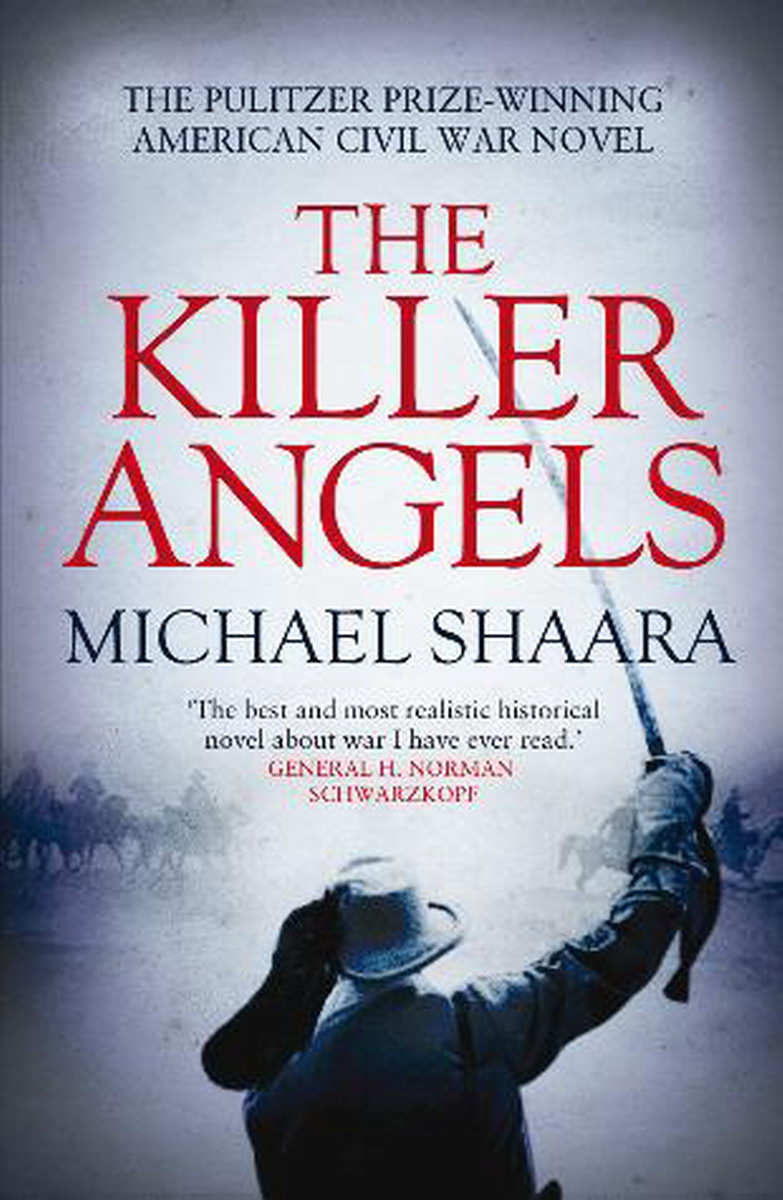
The Killer Angels

Michael Shaara’s Killer Angels is the only Literature and War Readalong title that made the list.

Here’s what I wrote:

Books are not always the way we expect them to be. Still, I’ve only rarely been this wrong. I was afraid Michael Shaara’s Pulitzer Prize winner would be dry, heavy on tactics and military jargon. It wouldn’t have been too surprising if it had been like that, after all, Shaara tells the story of the three-day battle at Gettysburg. But The Killer Angels is anything but dry or heavy. It’s a beautiful, lyrical novel, which focusses much more on the moods and emotions of the main characters than on tactics.

I don’t know what other books the year will bring, but I have a feeling this one could make it on the Best of List. I love books which are rich in atmosphere, capture quiet, introspective moods and manage to bring the most different characters to life. I certainly didn’t expect to find all that in a war novel. The Killer Angels is a gorgeous book on an awful subject, reading it felt like seeing all the major participants of the battle during their most intimate moments. I’m grateful to Kevin who said I would be missing out, if I didn’t read it. He was right.
My review

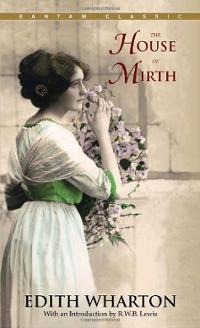
The House of Mirth

Edith Wharton’s The House of Mirth 

Here’s what I wrote:

It took me far over two months to decide whether I wanted to review The House of Mirth or not. For some reasons, I found this book profoundly disturbing.

While reading  The House of Mirth I felt like I was watching a fly getting trapped in a spider’s web. At first, when they notice that they are trapped, they wiggle frantically, hoping to be able to free themselves but, in doing so, entangle themselves even more. Comparing the stunningly beautiful Lily Bart to a fly isn’t doing her any justice, but the way she’s trapped by the society she lives in, and the way in which she tries to free herself, is not much different from the poor fly. I’m still a bit shocked. I knew nothing about The House of Mirth and to find that Lili Bart is just as tragic – maybe even more so – as Effi Briest or Mme Bovary (only without the adultery), came as a huge surprise.
My review

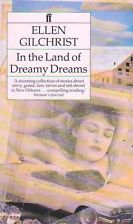
In the Land of Dreamy Dreams

Ellen Gilchrist’s In the Land of Dreamy Dreams is the best short story collection I’ve read this year and one I want to read again some day.

Here’s what I wrote:

I came across Ellen Gilchrist by chance. I was looking for books set in New Orleans and saw one of her short stories Rich in an anthology. I wasn’t familiar with her and looked her up and finally ordered a used copy of her first collection In the Land of Dreamy Dreams. It’s very rare that I read a whole short story collection in a few days, but I did in this case. There was a unity of setting, mood and atmosphere, and even one returning character that it read almost like a novel in stories.

I haven’t read anyone quite like Ellen Gilchrist but she still reminded me of a few authors. Tennesse Williams came to mind – A Streetcar Named Desire as much as The Roman Spring of Mrs. Stone – because of the setting and some of the older characters. But she also reminded me of Julie Orringer whose intricately woven sentences and lush descriptions are similar and there’s some of Yoko Ogawa’s cruelty in this collection as well. Funny enough Ogawa’s last short story collection has the English title Revenge. One of Gilchrist’s best stories is called Revenge as well. Coincidence? Who knows.

If you like rish, complex short stories, full of allusions and sensual descriptions, sometimes mean, sometimes dreamy – then do yourself a favour and get a copy of this wonderful book.
My review

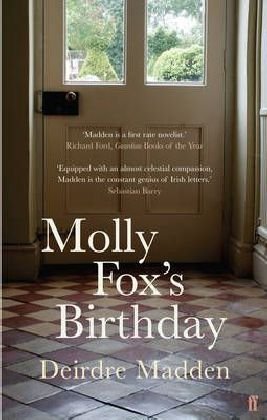
Molly Fox's Birthday

Deirdre Madden was another great discovery this year. I absolutely loved. Molly Fox’s Birthday 

Here’s what I wrote:

It’s been a while since I’ve read a book by a new-to-me author and felt like reading everything she’s ever written.

Molly Fox’s Birthday is a wonderful celebration of the interior life, art, theatre, friendship and it’s an exploration of how daily life, despite the struggles, doesn’t have to turn into something dull and devoid of authenticity. There’s always meaning, you just have to look for it.
My review

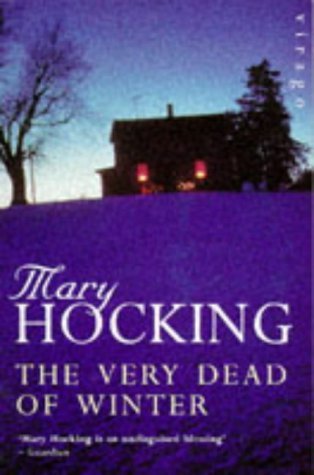
The Very Dead of Winter

I hadn’t heard of Mary Hocking before and have to thank heavenali who hosted a Mary Hocking Week for the discovery.

Here’s what I wrote:

I really liked The Very Dead of Winter are great deal. Not only for its wry humour and psychological insight, but also for some lovely descriptions. It’s not a flawless novel, there are a few instances of shifty point of view, but that didn’t diminish the experience one bit. I’ll certainly read more of Mary Hocking, might even re-read The Very Dead of Winter.
My review

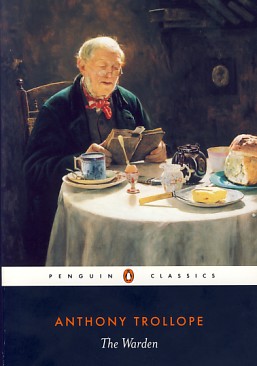
The Warden

After reading Trollope’s The Warden I wasn’t sure whether it would make it on the list but I must admit- it’s a memorable book.

Here’s what I wrote:

Memory is a funny thing. For years I have been haunted by a sensual impression of a place. I remember being in England and walking along a row of houses. It’s a very peaceful, mild, warm autumn afternoon. The houses are part of a larger compound, overshadowed by a huge cathedral. I remember walking away from the cathedral close and coming to a small river that was flowing through the grassy meadow, on the same level as the soil. There were weeping willows and sheep. Walking around that place was like visiting a time long gone. These haunting images returned periodically. The light outside of my windows sometimes triggered the memory. It was always nice to go back in my mind, the only trouble was – I couldn’t remember where this had been. I’ve been in England many times, stayed there for a couple of months or weeks. I’ve visited many places and many cathedrals, but as much as I thought about it – I had no clue where I’d been on that warm autumn afternoon. Not until reading The Warden. The moment I opened the book and read the description of Barchester I knew – this is where I had been. But how could that be? Barchester doesn’t exist. Although I like to keep the introduction of a book until I’ve finished it, I had to read it to find out more. In the introduction I learned that Trollope based Barchester on Salisbury and Winchester. I immediately went online and looked up photos of Salisbury cathedral, the cathedral close and the meadows around and, yes, indeed, that’s where I’ve been some years ago. I found it pretty uncanny that Trollope was so capable at describing a place. I still don’t know why I forgot that the images were images of Salisbury. I’ve never forgotten a place like that. Maybe because it was so dreamlike?

I’m glad I read The Warden. It made me remember my stay at Salisbury and I loved the descriptions. I liked his choice of themes and think they are just as important today as they were then. I also think he’s a wonderful satirist.
My review

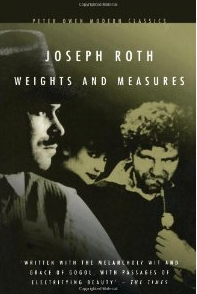
Weights and Measures

This too will stay with me. Joseph Roth’s Weights and Measures – Das falsche Gewicht is such a powerful short novel.

Here’s what I wrote:

How does an upright, steadfast man survive among corruption, hypocrisy, and crime? Roth’s answer to this question, which lies at the heart of Weights and Measures – Das falsche Gewicht, is pretty simple: he doesn’t. Either he is tainted or he will go down.

What I liked most is how Roth used the descriptions of the place and the weather to show Eibenschütz’s emotions and to underline the wild remoteness of this region. There were many beautiful small scenes and episodes. Eibenschütz is upright and stiff, but he’s also very emotional and feels deeply. His life as a soldier sheltered him emotionally; experiencing heartache and passion, unhinges him. When he falls in love he discovers nature. Before his “awakening” nature is just a phenomenon he sees but barely notices. The changing seasons bring rain or snow, breaking ice or sunshine, but that doesn’t affect him. Once he’s “awake” he feels the seasons, feels he’s part of it.
My review

Screen Shot 2014-11-26 at 09.12.22

Elizabeth Taylor’s A Game of Hide and Seek was another winner.

I often read the best books of the year in December. Sometimes they don’t make it on the Top 10 list because I read them so late in the year. Luckily I’ve read Elizabeth Taylor’s fifth novel  A Game of Hide and Seek  just in time. This is my third Elizabeth Taylor novel and every time I read her I’m amazed to find out again how good she is. As much as I liked Blaming and Mrs Palfrey at the ClaremontA Game of Hide and Seek is even better. It’s larger in scope, richer in themes, with many more protagonists, and stretches over decades. The mood and atmosphere reminded me a lot of Rosamond Lehmann’s Dusty Answer and David Lean’s movie Brief Encounter, both of which are favourites of mine.

I’m aware I wasn’t able to capture this book because it contains so many themes (childhood, first love, passion, married life, women’s rights, work, education, memory, growing older . . .) and is so rich— there’s a wonderful, bitter-sweet love story, accurate descriptions of a period, lifelike, flawed characters, and humourous observations. It’s one of the best books I’ve read this year. I even added it to my list of all-time favourite books.

My review

Best Mainstream Fiction

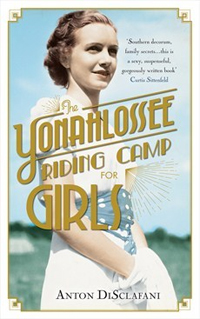
The Yonahlossee Riding Camp for Girls

I read  Anton DiSclafani’s The Yonahlossee Riding Camp for Girls in January but it’s still present as if I’d read it a couple of weeks ago. It’s such a lovely book.

This is what I wrote then

I’m not sure what exactly made me love this book so much. Was it the elegant writing, the dreamy mood, the sense of seeing a long-gone world, the tragedy of the story or the characters?

I loved the way DiScalafani captured the setting and the period. I liked how she showed the end of an era without turning this into a mournful book, but into one that shows that people can free themselves from their stifling upbringing if they are true to themselves. Thea is a character who is true to herself at all times. This comes at a cost but one she’s aware of and willing to pay.

If you like a rich, beautifully told story, with mystery and a lush setting, if you are fascinated by the Great Depression and big Southern Families and enjoy a coming-of-age story, which is at times quite steamy, then I’m pretty sure you’ll love The Yonahlossee Riding Camp For Girls.

Best Crime

It was a great crime reading year. I can’t say I’ve read anything that I didn’t like to some extent, so the choice wasn’t easy but my two favourite books this year were
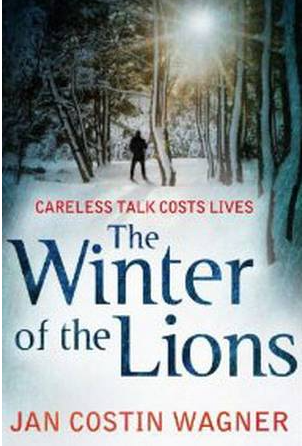
The Winter of the Lions

Jan Costin Wagner was a real discovery this year. I’ve read his first three. They are all good but I only reviewed this one.

Here’s what I wrote:

What made me love Wagner’s books even more was his writing style. This is crime at the literary end of the spectrum. The sentences are short, spare, and very precise.

As if all of this wasn’t enough there’s a haunting atmosphere in every book and the Finnish setting is another bonus, especially since each book takes place during another season. I loved to read about the long nights in winter and the endless days in summer.

Should you wonder why a German author chose to set his books in Finland —Wagner is married to a Finnish woman and spends half of the year in Finland.

This is one of the best crime series I know. Haunting, atmospherical, with philosophical depth and impeccable writing.
My review

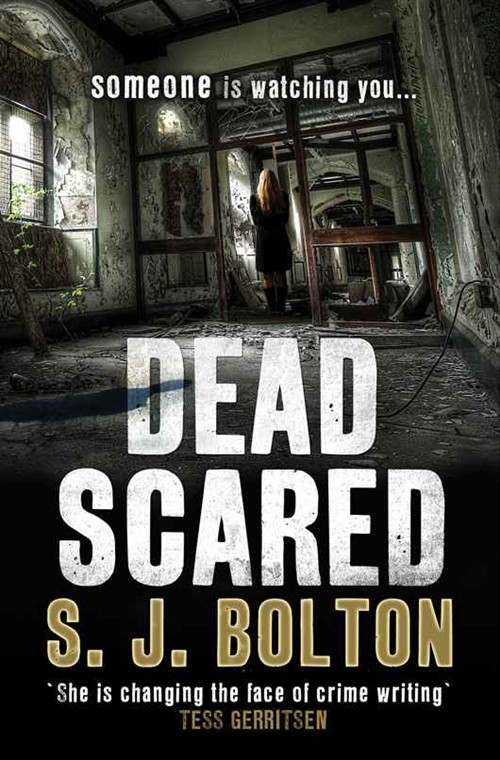
Dead Scared

S.J.Bolton is certainly one of my favourite crime writers and I’ll read all of her books eventually. Still, this was the best so far. I loved it.

Here’s what I wrote

Dead Scared was my third novel by S.J. Bolton. It’s the second novel featuring Lacey Flint and DI Mark Joesbury. I liked Sacrifice and Now You See Me a lot, but I really loved Dead Scared. I think it’s one of my all-time favourite crime novels. It’s got everything I like in a plot-driven crime novel. Great setting, evocative atmosphere, appealing characters, a well-paced plot and a really great story. For once she didn’t even stretch believability all that much.

My review

Best Sci-Fi

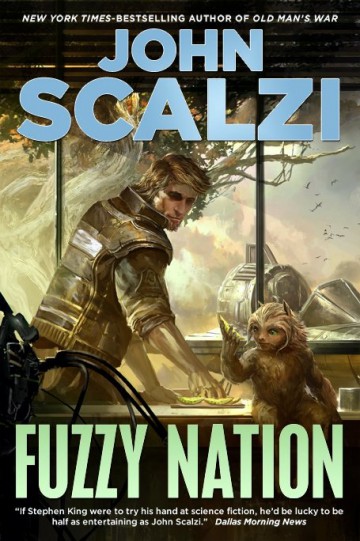
Fuzzy Nation

I loved John Scalzi’s Fuzzy Nation. Funny, entertaining and thought-provoking with one of the best beginnings ever.

Here’s what I wrote:

Fuzzy Nation isn’t only an adventure story, in which cute little animal-people are suddenly in great danger and other people have to make some tough decisions, it’s also an exploration of what makes a human. Is it understanding, intelligence, dexterity, the aptitude to use machines or language? In any case, once you’re declared a sentient being, you have the right to possess things. Before that, everything you own can be taken and destroyed.

 Here’s the review

Best Children’s Book

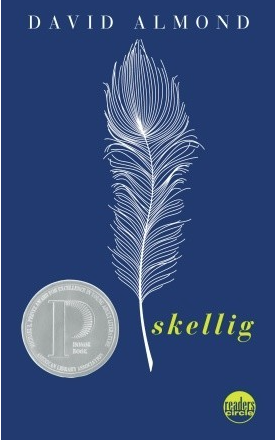
Skellig

I’ve read so many children’s books this year that I didn’t even get the time to review them. Two stood out Diana Wynne Jones’s Fire and Hemlock and David Almond’s Skellig.

Here’s what I wrote about Skellig:

I often think that the best books for children are not just books for a particular age group but timeless tales for any age. Just think of Antoine de St Exupéry’s The Little Prince. It’s a children’s book but it is so much more. And so is Skellig, David Almond’s wondrous, lyrical novel of love and healing.

Skellig is such a magical book. Lyrical, spiritual and philosophical, but very realistic too. It’s an elusive book, that is hard to describe without breaking its spell. It’s a story of love and loss, grief and joy, inspired by tales of angels, the evolution of birds and William Blake. Every reader interprets Skellig in another way. After I finished it I’m still not sure what Skellig is but it doesn’t matter. It’s enough to feel how inspired David Almond was when he wrote this novel. Skellig is pure magic; an image, a deeply haunting feeling, that carries a truth that predates words. I think it took courage to write a book like this and to leave so many questions unanswered. David Almond seems to have been sure that even if we didn’t “get it” intellectually, we would still be able to understand it on an emotional level. I really love that.

And the review

Best Non-Fiction

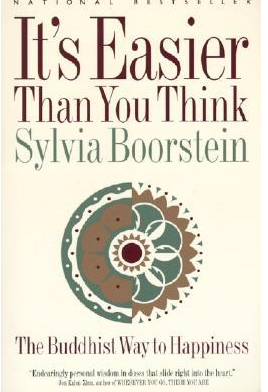
It's Easier Than You Think

It’s Easier Than You Think by Sylvia Boorstein.

I didn’t review it but it made a huge impression on me. Especially the parts about impermanence. I told all of my friends about it, urging them to read it.
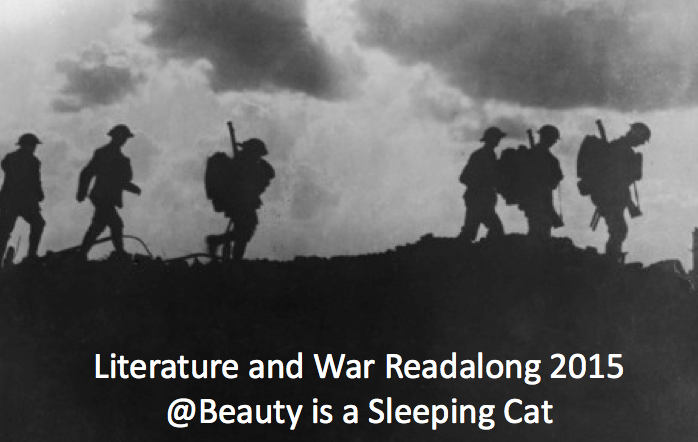
 

Literature and War Readalong 2015 – Mini Edition

Literature and War Readalong 2015

For some of you it may come as a surprise that next year’s Literature and War Readalong contains only four titles, but I felt we needed a change. That’s why I chose only four books, from four different countries, focussing on three different wars. The list should appeal to those interested in international literature, books by prize winners, novels on international conflict, modern classics, books that have been made into movies and a lot more.

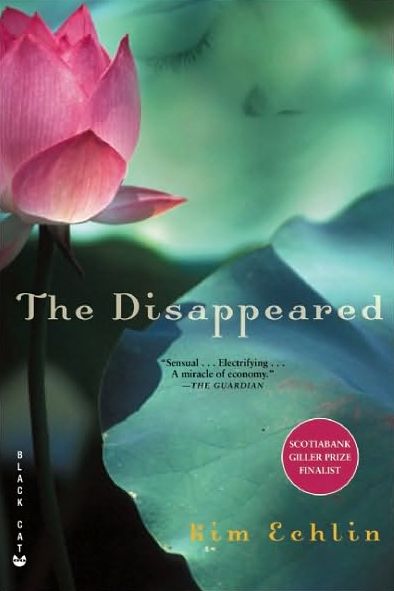
The Disappeared

March, Tuesday 31 2015

The Disappeared by Kim Echlin (Canada 2009), War in Cambodia, Novel, 336 pages.

Here’s the blurb:

After more than 30 years Anne Greves feels compelled to break her silence about her first lover, and a treacherous pursuit across Cambodia’s killing fields. Once she was a motherless girl from taciturn immigrant stock. Defying fierce opposition, she falls in love with Serey, a gentle rebel and exiled musician. She’s still only 16 when he leaves her in their Montreal flat to return to Cambodia. And, after a decade without word, she abandons everything to search for him in the bars of Phnom Penh, a city traumatized by the Khmer Rouge slaughter. Against all odds the lovers are reunited, and in a political country where tranquil rice paddies harbour the bones of the massacred, Anne pieces together a new life with Serey. But there are wounds that love cannot heal, and some mysteries too dangerous to know. And when Serey disappears again, Anne discovers a story she cannot bear.

Haunting, vivid, elegiac, The Disappeared is a tour de force; at once a battle cry and a piercing lamentation, for truth, for love.

Literary fiction of the highest order, this is an unforgettable novel set against the backdrop of Cambodia’s savage killing fields.
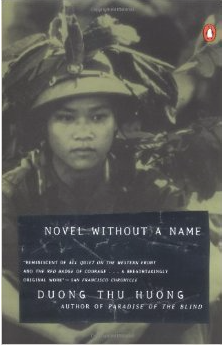
Novel Without A Name.
May, Friday 29 2015

Novel Without a Name – Tiêu thuyêt vô dê by Huon Thu huong (Vietnam 1995), War in Vietnam, Novel, 304 pages.

Here is the blurb:

Vietnamese novelist Huong, who has been imprisoned for her political beliefs, presents the story of a disillusioned soldier in a book that was banned in her native country.

A piercing, unforgettable tale of the horror and spiritual weariness of war, Novel Without a Name will shatter every preconception Americans have about what happened in the jungles of Vietnam. With Duong Thu Huong, whose Paradise of the Blind was published to high critical acclaim in 1993, Vietnam has found a voice both lyrical and stark, powerful enough to capture the conflict that left millions dead and spiritually destroyed her generation. Banned in the author’s native country for its scathing dissection of the day-to-day realities of life for the Vietnamese during the final years of the “Vietnam War, ” Novel Without a Name invites comparison with All Quiet on the Western Front and other classic works of war fiction. The war is seen through the eyes of Quan, a North Vietnamese bo doi (soldier of the people) who joined the army at eighteen, full of idealism and love for the Communist party and its cause of national liberation. But ten years later, after leading his platoon through almost a decade of unimaginable horror and deprivation, Quan is disillusioned by his odyssey of loss and struggle. Furloughed back to his village in search of a fellow soldier, Quan undertakes a harrowing, solitary journey through the tortuous jungles of central Vietnam and his own unspeakable memories.

Fateless

September, Wednesday 30 2015

Fateless – Sorstalanság by Imre Kertész (Hungary 1975), Holocaust,  Novel, 272 pages.

Here is the blurb:

The powerful story of an adolescent’s experience of Auschwitz by Holocaust survivor and Nobel Prize winner, Imre Kertész.

Gyuri, a fourteen-year-old Hungarian Jew, gets the day off school to witness his father signing over the family timber business to the firm’s bookkeeper – his final business transaction before being sent to a labour camp. Two months after saying goodbye to his father, Gyuri finds himself assigned to a ‘permanent workplace’, but within a fortnight he is unexpectedly pulled off a bus and detained without explanation. This is the start of his journey to Auschwitz.

On his arrival Gyuri finds that he is unable to identify with other Jews, and in turn is rejected by them. An outsider among his own people, his estrangement makes him a preternaturally acute observer, dogmatically insisting on making sense of everything he witnesses.

A Time To Love and a Time to Die

November, Friday 27

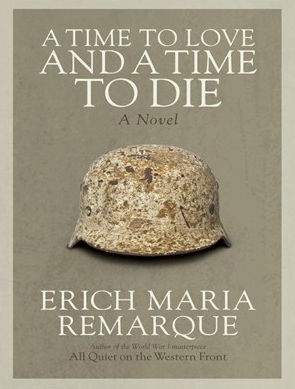
A Time to Love and a Time to DieZeit zu leben und Zeit zu sterben by Erich Maria Remarque (Germany, WWII, Novel, 384 pages.

It’s interesting to note that the German title isn’t as corny as the English one. It means “A Time to Live and a Time to Die” not Love and Die.

Here is the blurb:

From the quintessential author of wartime Germany, A Time to Love and a Time to Die echoes the harrowing insights of his masterpiece All Quiet on the Western Front.

After two years at the Russian front, Ernst Graeber finally receives three weeks’ leave. But since leaves have been canceled before, he decides not to write his parents, fearing he would just raise their hopes.

Then, when Graeber arrives home, he finds his house bombed to ruin and his parents nowhere in sight. Nobody knows if they are dead or alive. As his leave draws to a close, Graeber reaches out to Elisabeth, a childhood friend. Like him, she is imprisoned in a world she did not create. But in a time of war, love seems a world away. And sometimes, temporary comfort can lead to something unexpected and redeeming.

“The world has a great writer in Erich Maria Remarque. He is a craftsman of unquestionably first rank, a man who can bend language to his will. Whether he writes of men or of inanimate nature, his touch is sensitive, firm, and sure.”—The New York Times Book Review


I will anounce each title with some additional information about six weeks before the discussion date. I hope you like the choices and will join me whenever you can.

Joseph Roth: Flight Without End – Die Flucht ohne Ende (1927) Literature and War Readalong November 2014

Screen Shot 2014-10-19 at 10.18.51

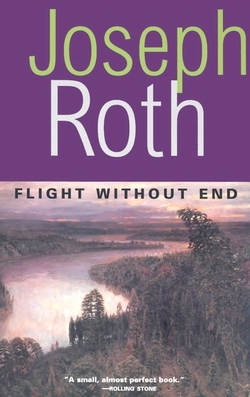
I’ve read a few novels by Joseph Roth now and every time I’m surprised how different they are. Die Flucht ohne EndeFlight Without End is no exception. This is a Roth I’ve not encountered so far, or only in snippets. Flight Without End clearly shows the mark of the journalist, but it’s also the book of someone who cannot take the society he lives in seriously. Rarely have I seen him this sarcastic, mocking individuals and groups of people. And rarely have I come across a Roth that was this funny. I had to laugh out loud more than once and truly wish the translator was able to capture this. Roth’s wit and humour is very subtle and although a translation could be literal, the humour might get lost in translation as it’s often tied to one word that changes the meaning. Mostly he uses it when describing someone. Here’s just a short example.

Eine junge Schauspielerin, die zwar mit dem dicken Zweiten Bürgermeister geschlafen hatte, aber unbeschädigt aus seiner Umarmung wieder herausgekommen war und teilweise sogar erfrischt.

A young actress, who indeed slept with the fat second mayor but came out of this embrace undamaged, partially even refreshed.

I take just one element of the sentence to explain what I mean. It’s entirely possible to choose the word unharmed instead of undamaged but it would remove a lot of the fun. “Unbeschädigt” means both unharmed or undamaged, but normally you’d use it for an object, while unharmed would rather mean a person. Roth chose undamaged very consciously.

What struck me too in this book was how cosmopolitan Roth was. The book starts in the Russian steppe, moves to Baku, from there to Vienna, then to a unamed city on the Rhine, and ends in Paris. Each place is described masterfully, its essence captured, its character laid bare.

The story is a bit more problematic. I’ve seen this book mentioned as one of Roth’s weakest works, which would have needed some editing. I agree to some extent. I didn’t mind the lack of plot. What we find here is basically the story of a quest. Franz Tunda, former officer, then captive of the Russian army, escapee, revolutionary, drifter and private tutor, lacks one thing – a home. What is home for a man like Tunda? If he can be of some use, he’s adopted everywhere, but never really welcome. He stays an outsider and this makes him a keen observer. He sees behind everyone’s masks, doesn’t buy any of the big theories on progress and wealth. He’s as wary of the communists as he is of the socialist’s and the bourgeoisie. They all have a hidden agenda. That’s why his flight is without end because, as vast as the world may be, society ultimately makes it very small and there’s no home for those who don’t play along. When I get so much insight and analysis of people and countries I don’t mind a lack of plot. My reservation has something to do with the structure of the book. It’s presented as if we were reading an account of someone who is Tunda’s friend. At the same time there are accounts that are directly made by Tunda and it switches occasionally from third to first person. I think this would have needed editing but it’s a minor flaw.

One of the most poignant scenes is when Tunda visits the grave of the unknown soldier, under the Arc de Triomphe, in Paris.

The blue flame burned not to honor the dead soldiers, but to reassure the survivors. Nothing was more cruel than the blissfully ignorant devotion of a surviving father at the grave of his son, whom he had sacrificed without knowing it. Tunda sometimes felt as if he himself lay there in the ground, as if we all lay there, all those of use who set out from home and were killed and buried, or who came back but never came home. For it doesn’t really matter whether we’re buried or alive and well. We’re strangers in this world, we come from the realm of shadows.

Flight Without End doesn’t show us a poetic or lyrical Roth. It’s not elegiac or nostalgic. It’s sarcastic and ironic. It’s the work of someone who saw the downside of globalisation long before anyone else and who was no fool when it came to human beings. There are a few good ones out there but they hardly ever occupy the big stages; they might be hidden somewhere in the Taiga, doing their thing quietly and unseen.

I thoroughly enjoyed this book. It’s witty, irreverent, unflinching and astute. It may not be the best book for someone who hasn’t read Roth yet, but it’s a must-read for those who already like him.


Other reviews

Vishy (Vishy’s Blog) 


*******

Flight Without End is the eleventh book in the Literature and War Readalong 2014. The next book is Letters from a Lost Generation by Vera Brittain and four of her friends. Discussion starts on Monday 29 December, 2014. Further information on the Literature and War Readalong 2014, including the book blurbs can be found here.

Michael Kumpfmüller: Die Herrlichkeit des Lebens (2011) – The Glory of Life (2014)

Die Herrlichkeit des LebensThe Glory of Life

There are two types of historical novels: those which are pure fiction and those in which real people are brought to life. I’m fond of the latter, so I was interested in Michael Kumpfmüller’s Kafka novel  Die Herrlichkeit des Lebens – The Glory of Life.

What a sad and moving book this is. The last Kafka book I’ve read was Brief and den Vater – Letter to My Father, and with that in mind, Kumpfmüller’s novel was even more moving. There’s this future giant at of German literature, who, at forty, is still afraid to face his father, to make decisions for himself, and to allow himself to live a happy, fulfilled life. And then, on a holiday with his sister, he meets Dora Diamant, a young Eastern Jewish woman who works as a cook in a holiday home for Jewish children. It’s the year 1923, Kafka has been ill for many years by then and is retired. A year later, in 1924, he will be dead.

Dora Diamant falls in love with him instantly. She loves this sensitive, delicate man. He too, falls in love. She’s good for him and for the first time in his life he makes plans for the future. They want to live together in Berlin. He will not return to his family home in Prague. It takes a lot of courage for him to oppose his parents, but they finally give in. Of course, they don’t know that he will live with Dora.

The months in Berlin are some of the happiest in Kafrka’s life, but they are difficult too. Kafka and Dora are not married and landlords aren’t keen on having them in their house. And there’s the hyperinflation. Money’s devalued constantly. Life in Berlin is incredibly expensive. The winter is harsh and the apartments are cold. It doesn’t take a lot for a frail man like Kafka to fall ill again. This time it will be fatal.

The book tells us how he has to return to Prague, from there to a sanatorium in Austria, and to another one, near Vienna. Dora follows him eventually. Kafka’s parents have accepted her. Possibly they sense it’s the end anyway.

It’s incredibly sad to read how Kafka suffered. How painful it was to write his final short stories, but it’s also interesting to read about some of those stories and what they meant. In his last year, for the first time, he stood up against his father; for the first time he’s almost free. Too late though. He dies in June 1924, after long and intense suffering.

Kumpfmüller alternates between Dora’s and Kafka’s point of view which enlarges the book. The dialogue is rendered in indirect speech which is the only way this could have been done. Anything else would have been tacky. Besides, he had to invent most. The notebooks and letters of Kafka’s last years are lost. Dora took them and in 1933 they were confiscated by the Nazis.

I never pictured Kafka to be a ladies’ man nor that there was a true joy of life hidden in him. It’s horrible to see to what extent his father crushed him.

Anyone interested in Kafka should read this. Preferably, in parallel with some of his short stories and The Letter to My Father.

Daniel Glattauer: Forever Yours (2014) – Ewig Dein (2012)

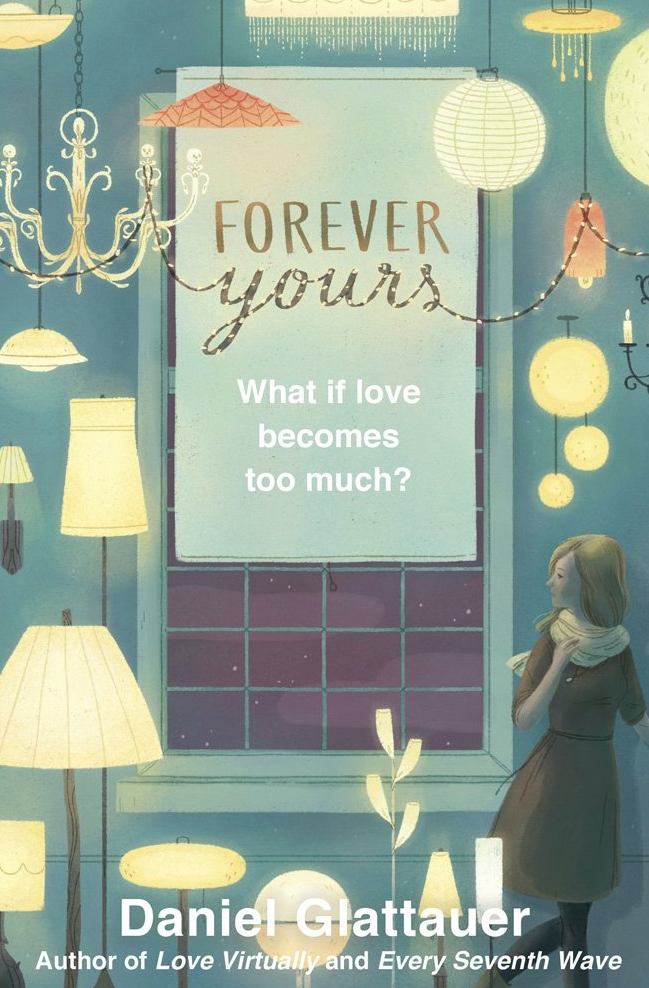
Ewig DeinForever Yours

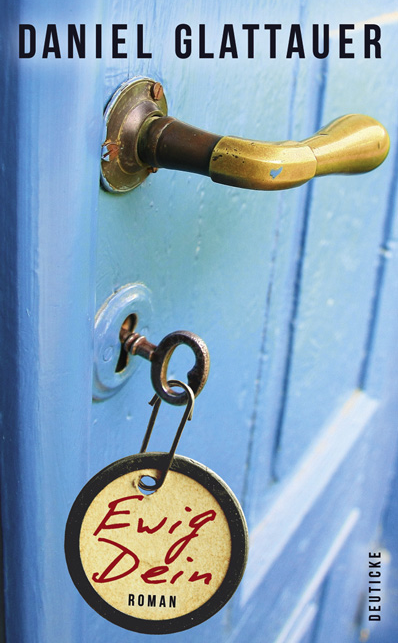
I’ve read two of Glattauer’s books Love Virtually and Every Seventh Wave and enjoyed them both. When Forever Yours – Ewig Dein came out two years ago I got it but didn’t get a chance to read it. Now that the English translation just came out, seemed to be a good time to pick it up. As you can see I added the German and the English cover. I find the German one so much better.

What a peculiar book. Not so much because of the story but because of the way it was written. The distanced and highly ironic style that Glattauer uses here made me wonder “What is this meant to be?”. I still have no clue. Is this a psychological thriller? A satirical analysis of a relationship that goes more than a little wrong? The combination of the two? A mix between parody and realistic story?

It starts simple enough. Judith, a 30-something single woman, owner of a shop that sells lamps, located in the heart of Vienna, meets Hannes while shopping. He accidentally tramples on her heel. Not exactly a great way to chat someone up but Judith accepts to meet him for a coffee. Hannes is a 42-year-old architect, specialized in designing pharmacies.

At no time does the reader get the impression that Judith fancies Hannes but he seems to be so besotted with her that she sort of slides into a relationship with him. Mostly because she’s flattered. While she’s not into him, she’s into the way he sees her. In spite of this, she soon feels suffocated and tries to end it. That proves much more difficult than she would ever have imagined.

At this point the book turns into an accurate and scary depiction of stalking. Hannes doesn’t let go. He follows her, smothers her with signs of affection, and, slowly Judith starts to lose her mind.

The book doesn’t end there and many twists and turns follow until the chilling ending.

It’s very rare that I like the beginning and the end of a book but not the middle. Many of the chapters that Glattauer calls phases are too far-fetched and far from realistic. I also found many of Judith reactions questionable. And at the same time the way Glattauer wrote about this made me question his intentions.

This isn’t Glattauer’s best book, it’s even dubious at times. It was still readable, had a lot of pertinent observations and the end was good. It’s a rather unusual psychological thriller, but for me it was rather a disappointment. I’m not sure stalking should be the topic of a parody.

David Almond: Skellig (1998)

Skellig

I often think that the best books for children are not just books for a particular age group but timeless tales for any age. Just think of Antoine de St Exupéry’s The Little Prince. It’s a children’s book but it is so much more. And so is Skellig, David Almond’s wondrous, lyrical novel of love and healing.

Skellig combines a mundane story with something magical and mysterious. Michael is ten years old when his family moves into a new house. His baby sister is very ill and there’s no telling whether she will survive.

One afternoon Michael enters the dilapidated garage at the end of the garden and discovers a strange being. It looks like a shrivelled man, covered in spiders and cobwebs. Is it an old man? Is it a bird? Is it an angel?

Michael is traumatized by the events at home, by the constant fear his baby sister might die, and his parent’s decide to keep him at home. One day, after he has discovered the strange being, he meets Mina. Mina shows him a world he didn’t know. Her mother, a free-spirit who doesn’t believe in schools, teaches Mina at home. Mina knows a lot about evolution and birds and painting; she loves to draw and quotes William Blake.

Her mother teaches her many things other children learn at school but she also teaches her a sense of wonder Together the two children find out who or what Skellig is.

Skellig is such a magical book. Lyrical, spiritual and philosophical, but very realistic too. It’s an elusive book, that is hard to describe without breaking its spell. It’s a story of love and loss, grief and joy, inspired by tales of angels, the evolution of birds and William Blake. Every reader interprets Skellig in another way. After I finished it I’m still not sure what Skellig is but it doesn’t matter. It’s enough to feel how inspired David Almond was when he wrote this novel. Skellig is pure magic; an image, a deeply haunting feeling, that carries a truth that predates words. I think it took courage to write a book like this and to leave so many questions unanswered. David Almond seems to have been sure that even if we didn’t “get it” intellectually, we would still be able to understand it on an emotional level. I really love that.

Even if you don’t normally pick up children’s books – don’t miss Skellig.

Here’s a quote that will give you an idea of the writing:

“Let me sleep,” squeaked Skellig. “Let me go home.”

He lay facedown and his wings continued to quiver into shape above him. We drew the blankets up beneath them, felt his feathers against the skin on the backs of our hands. Soon Skellig’s breathing settled and he slept. Whisper rested against him, purring.

We stare at each other. My hand trembled as I reached out toward Skellig’s wings. I touched them with my fingertips. I rested my palms on them. I felt the feathers, and beneath them the bones and sinews and muscles that supported them. I felt the crackle of Skellig’s breathing.

I tiptoed to the shutters and stared out through the narrow chinks.

“What you doing?” she whispered.

“Making sure the world’s still really there,” I said.

German Literature Month – Some Plans and Suggestions

Screen Shot 2014-09-24 at 07.23.25

Although I don’t really stick to my plans these days, I was still tempted to make a list of possible choices for German Literature Month because in the past years my lists helped others find books. I’ll attempt to read a mix of translated and not yet translated books but all by authors known in the English-speaking world.

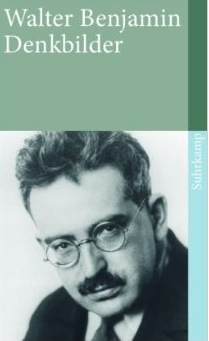
Walter Benjamin

I started to read Walter Benjamin’s essay collection Denkbilder. Many of the essays can be found in the collection Reflections. Benjamin was a philosopher, essayist, memoirist and modernist writer, who tragically took his own life in 1940, in France, when he knew he wouldn’t be able to escape the Nazis. He has written a lot of influential books like The Work of Art in the Age of Mechanical Reproduction

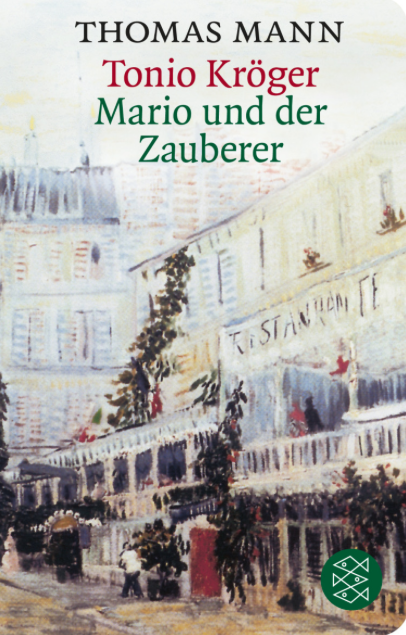
Tonio Kröger

Another classic, Thomas Mann’s novella of a young artist, Tonio Kröger.

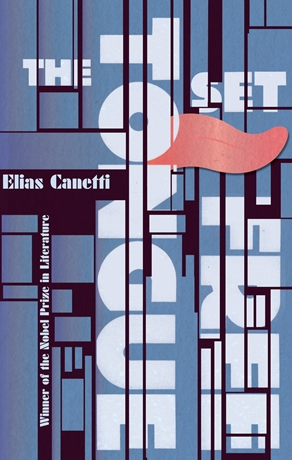
The Tongue Set Free

Another modernist writer and memoirist, just like Walter Benjamin. Elias Canetti’s The Tongue Set Free is a childhood memoir, written in a dense poetic prose.

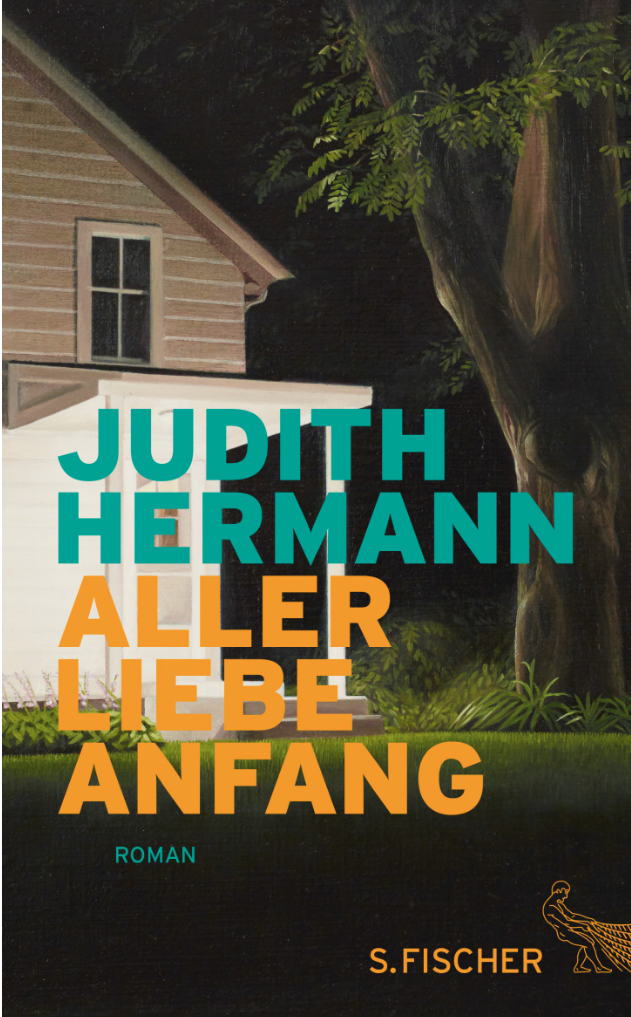
Aller Liebe Anfang

Judith Hermann has just published her fourth book. I loved her two short story collections and appreciated Alice and now I’m curious to find out how much I’ll like her novel which just came out in Germany.

The Giraffe's Neck

I bought Judith Schalansky’s The Giraffe’s Neck when it was published in Germany, two years ago. Now it has finally been  translated.

Here’s the blurb

Adaptation is everything, something Frau Lomark is well aware of as the biology teacher at the Charles Darwin High School in a country backwater of the former East Germany. It is the beginning of the new school year, but, as people look west in search of work and opportunities, its future begins to be in doubt.

Frau Lohmark has no sympathy for her pupils and scorns indulgent younger teachers who talk to their students as peers, play games with them, or (worse) even go so far as to have ‘favourites’. A strict devotee of the Darwinian principle of evolution, Frau Lohmark believes that only the best specimens of a species are fit to succeed. But now everything and everyone resists the old way of things and Inge Lohmark is forced to confront her most fundamental lesson: she must adapt or she cannot survive.

Written with cool elegance and humane irony, The Giraffe’s Neck is an exquisite revelation of a novel, and what the novel can do, that will resonate in the reader’s mind long after the last page has been turned.

The Glory of Life

Michael Kumpfmüller has already published a few novels to high acclaim. Some have been translated. The Glory of Life is his latest book and tells the story of Kafka’s last year, during which he fell in love with Dora Diamant. I started reading it and the writing is luminous and lyrical.

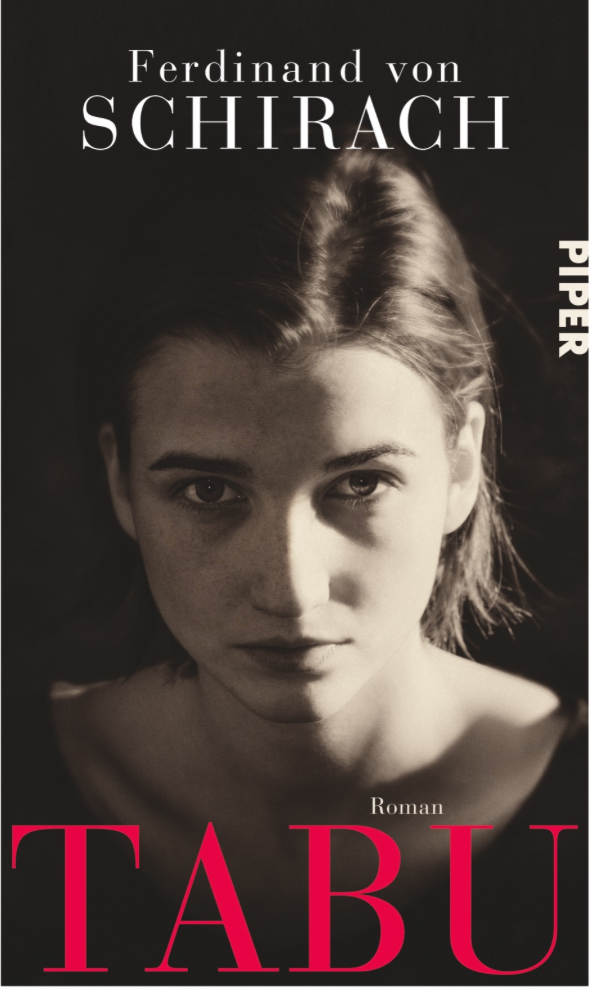
Tabu

The translation of Ferdinand von Schirach’s latest novel Tabu – The Girl Who Wasn’t There will be published in January. He’s another author whose every book I tend to read.

Sebastian von Eschburg, scion of a wealthy, self-destructive family, survived his disastrous childhood to become a celebrated if controversial artist. He casts a provocative shadow over the Berlin scene; his disturbing photographs and installations show that truth and reality are two distinct things.

When Sebastian is accused of murdering a young woman and the police investigation takes a sinister turn, seasoned lawyer Konrad Biegler agrees to represent him – and hopes to help himself in the process. But Biegler soon learns that nothing about the case, or the suspect, is what it appears. The new thriller from the acclaimed author of The Collini CaseThe Girl Who Wasn’t There is dark, ingenious and irresistibly gripping.

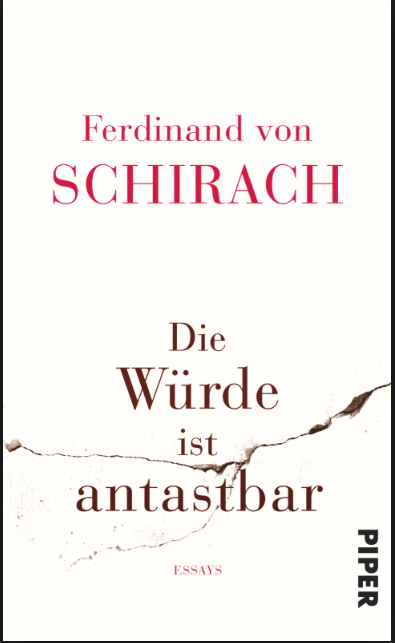
Essays

I’ve almost finished this collection of Ferdinand von Schirach’s essays. Some are interesting, some, like the one of smoking, annoyed me quite a bit, but overall they are worth reading.

Screen Shot 2014-10-19 at 10.18.51

Since I’m hosting a Joseph Roth Week I’ll be reading at least two of his novels. One of them is our readalong title Flight Without End.

Flight Without End, written in Paris, in 1927, is perhaps the most personal of Joseph Roth’s novels. Introduced by the author as the true account of his friend Franz Tunda it tells the story of a young ex-office of the Austro-Hungarian Army in the 1914- 1918 war, who makes his way back from captivity in Siberia and service with the Bolshevik army, only to find out that the old order, which has shaped him has crumbled and that there is no place for him in the new “European” culture that has taken its place. Everywhere – in his dealings with society, family, women – he finds himself an outsider, both attracted and repelled by the values of the old world, yet unable to accept the new ideologies.

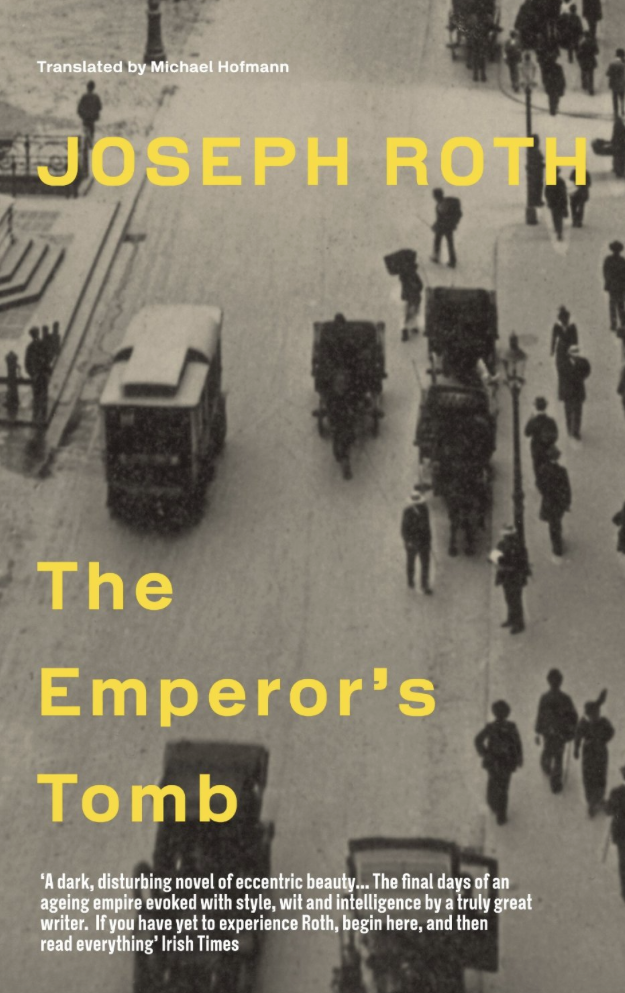
The Emperor's Tomb

The Emperor’s Tomb might be the second choice.

The Emperor’s Tomb is a magically evocative, haunting elegy to the vanished world of the Austro-Hungarian Empire, and to the passing of time and the loss of youth and friends. Prophetic and regretful, intuitive and exact, Roth’s acclaimed novel is the tale of one man’s struggle to come to terms with the uncongenial society of post-First World War Vienna and the first intimations of Nazi barbarities.

The Winter of the Lions

Jan Costin Wagner is a German crime author whose books are set in Finland. A very unique mix. I’m reading the third in his Kimmo Joentaa series The Winter of the Lions and like it so much, I already got another one. I’m particularly fond of the writing. It’s so sparse and dry. Decidedly more literary than mainstream.

Every year since the tragic death of his wife, Detective Kimmo Joentaa has prepared for the isolation of Christmas with a glass of milk and a bottle of vodka to arm himself against the harsh Finnish winter. However, this year events take an unexpected turn when a young woman turns up on his doorstep.

Not long afterwards two men are found murdered, one of whom is Joentaa’s colleague, a forensic pathologist. When it becomes clear that both victims had recently been guests on Finland’s most famous talk show, Kimmo is called upon to use all his powers of intuition and instinct to solve the case. Meanwhile the killer is lying in wait, ready to strike again…

In Kimmo Joentaa, prizewinning author Jan Costin Wagner has created a lonely hero in the Philip Marlowe mould, who uses his unusual gifts for psychological insight to delve deep inside the minds of the criminals he pursues.

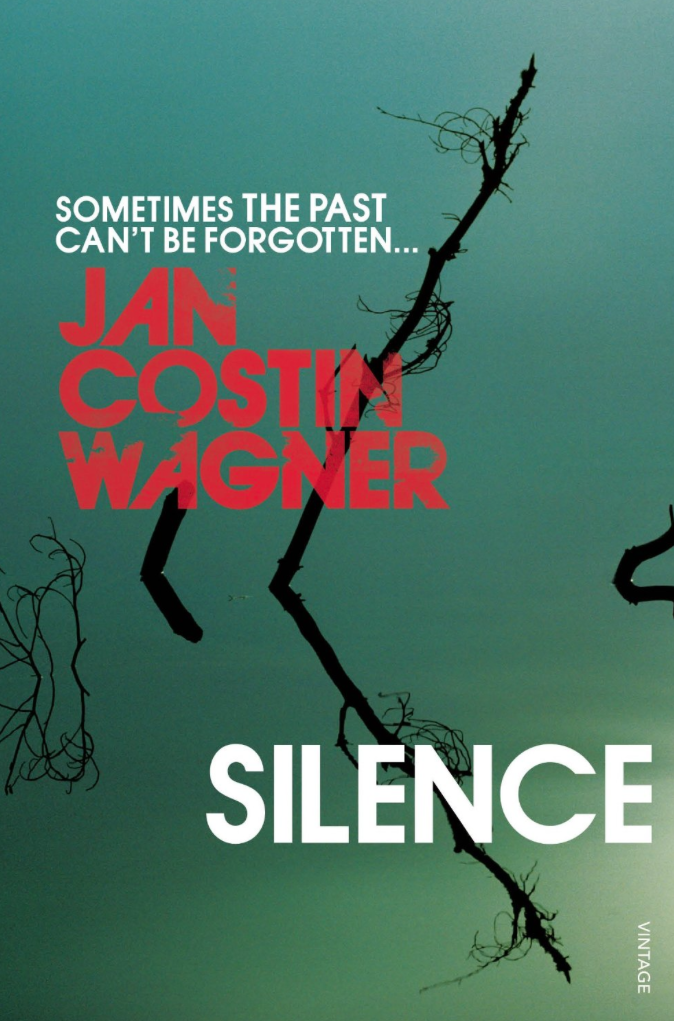
Silence

Silence is Wagner’s second Kimmo Joentaa novel.

A young girl disappears while cycling to volleyball practice. Her bike is found in exactly the same place that another girl was murdered, thirty-three years before. The original perpetrator was never brought to justice – could they have struck again? The eeriness of the crime unsettles not only the police and public, but also someone who has been carrying a burden of guilt for many years…

Detective Kimmo Joentaa calls upon the help of his older colleague Jetola, who worked on the original murder, in the hope that they can solve both cases. But as their investigation begins, Kimmo discovers that the truth is not always what you expect.

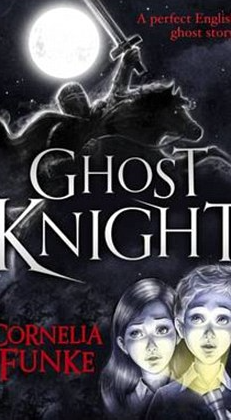
Ghost Knight

I’m also tempted by Cornelia Funke’s ghost story Ghost Knight, set in and around Salisbury Cathedral.

Eleven-year-old Jon Whitcroft never expected to enjoy boarding school. He never expected to be confronted by a pack of vengeful ghosts either. And then he meets Ella, a quirky new friend with a taste for adventure…

Together, Jon and Ella must work to uncover the secrets of a centuries-old murder, while being haunted by ghosts intent on revenge. So when Jon summons the ghost of the late knight Longspee for his protection, there’s just one question – can Longspee really be trusted? A thrilling tale of bravery, friendship – and ghosts!

Screen Shot 2014-10-19 at 09.59.49

These are the plans for the translated authors/books, but I might also read some of those that haven’t been translated yet, like Keto von Waberer.

Have you read any of these books? What are you’re plans?