Alexander Maksik: You Deserve Nothing (2011)

Set in an international high school in Paris, YOU DESERVE NOTHING is told in three voices: that of Will, a charismatic young teacher who brings ideas alive in the classroom in a way that profoundly affects his students; Gilad, one of Will’s students who has grown up behind compound walls in places like Dakar and Dubai, and for whom Paris and Will’s senior seminar are the first heady tastes of freedom; and Marie, the beautiful, vulnerable senior. 

You Deserve Nothing was certainly one of the most entertaining reads this year. It offers an interesting mix of alternating and very realistic sounding voices, a Parisian setting and a wide range of themes.

The story is told by three people, Will, a charismatic teacher at an international school in Paris, Gilad, one of his students and Marie, a younger student who goes to another class. Will teaches literature in a very unorthodox way, challenging his students to think for themselves and provoking them as well. There are no taboo topics in his courses, religion, ethics, philosophy, they are equally discussed. Not every student feels comfortable to be challenged like this and while some admire Will as if he was a pop star, others resent him.

Those three voices tell the story four years after it has taken place. We see what happened from three different angles and point of views. I really liked those voices, they sounded authentic, very different from each other.

Since they tell the story four years after it occurred, we know from the beginning that something bad must have happened and we watch the story unfold slowly.

In the beginning we are amazed by Will and his unique teaching style. But after a while he does sound like a self-help book. In one class he teaches them about fear and his slogan is “Feel the fear and do it anyway” which is the title of a bestselling self help book by Susan Jeffers. There are many such instances. At first he sounds profound in his analysis of Sartre and Camus but when he tells his students to trust their feelings and follow their dreams, his concepts start to unravel.

Different incidents slowly show us another side of Will, a side that he would probably rather hide but funnily enough, he doesn’t really try to go on pretending. He seems a bit tired and the things he left in his past and which he tried to forget are resurfacing with force.

It’s not difficult to imagine what causes the downfall but I’m not going to reveal it.

I liked a lot of things in this book. It’s quite suspenseful and the characters are captivating and even more than that I liked the story and the themes. I always feel that school, teachers and teaching are some of the most fascinating topics and certainly topics we can all relate to. We have all gone or go to school and some of us have been or are teachers. We know both sides. The importance and influence, I would even say the power, that teachers have is almost frightening. Being a charismatic teacher can be dangerous.

The question of how far a teacher can and should go, is one of the core questions, another one being the discrepancy between theory and practice. Will knows how influential he is, yet he isn’t fully aware of his responsibility to be who he pretends to be. It’s a catastrophe for his students to find out that a lot of what he preaches may just be empty words.

I read about this book first on Guy’s blog (here is his review) and was already very interested in reading it. Some weeks later Jackie reviewed it as well (here is her review). It even made her best of 2011 and will also make mine. Jackie compared the book to Notes on a Scandal (and two other novels that I have not read) which is very accurate.

After having finished the book, I returned to Jackie’s blog and saw that someone had left an intriguing comment and a link to an article about Maksik. It seems as if Maksik’s novel was based on his own story. I’m not sure what to think now but while I was reading the book, I sympathized a lot with Will.
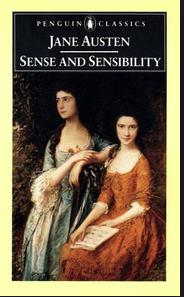
On Jane Austen’s Sense and Sensibility and Why I Love Marianne

sense-and-sensibility

At the beginning of December I was in the mood to read a lot of classics and that’s why I decided to participate in Advent with Austen. I didn’t manage to read or watch anything else that is Austen related apart from Sense and Sensibility  (1811). Today is the last day of the readalong. If you would like to read more enthusiastic takes on the book it might be good to visit Reading, fuelled by Tea.

What about my impression of Sense and Sensibilty? Boy, this was painful. Babushka-like reading. You know, the little doll inside of the little doll, inside of the little doll… Every time I peeled off a layer of pages, the book got magically longer and longer.

I suffered especially all through the first 100 pages. Yes, there were many witty sentences but all in all it was about money, marriages and talk, talk, talk. We could watch a bunch of nasty, fairly rich and scheming characters trying to kill time, marry right, secure their income and avoid at all times introspection and spending time on their own.

But then Marianne fell in love and started to suffer so terribly when Willoughby left for London, that I couldn’t help but being interested.

In many of the comments and posts I read, people state they like Elinor but not Marianne. Why? I think Elinor is a likable character but I love Marianne. She is the only truly honest person in this phony world and that’s why she falls so violently ill. She knows that there is a fine line between politeness and hypocrisy and her body reacts strongly to all the rules and laws of this society.

Some of the scenes in this novel made me cringe. I cannot picture myself in them. At 17, like Marianne, I would have fallen stupidly in love and ill as well. Nowadays, as a saner version of myself, I would just smash a few windows and ruffle whole bagloads of feathers.

Gossip and small-talk, insipid conversations and endless games is the essence of how the society in this book spends its time. People have to be glued to each other constantly. They can’t bear to be on their own. Although they are constantly around each other, they hardly ever connect. The only person who openly disregards this, is Marianne. She is often perceived as impolite, yet all she is, is honest.

I really liked her more and more. Whenever they arrive at a new place, she doesn’t participate in the tedious chit-chat that is soon to follow but walks off, looking for the library.

Elinor, however little concerned in it, joined in their discourse, and Marianne, who had the knack of finding her way in every house to the library, however it might be avoided by the family, soon procured herself a book.

Pretending and lying gives her headaches and she retires to her rooms. Realizing that she has been betrayed by Willoughby affects her so deeply, there is no more behaving or pretending, on the very contrary, she litterally screams, cries and gets very ill.

Despite her psychosomatic ailments after Willoughby’s departure and his breaking up with her, the most critical illness is still to come.

After she hears what Elinor had to endure without being able to talk about it, she is so shocked about having been so self-centered that she develops some late reaction and falls even more seriously ill.

Reading his I was amazed how audacious this really is and how modern but then comes the final part and Jane Austen spoils it. When Marianne has recovered and speaks about her illness, all she sees in it is an experience that helped her better herself, make her more fit for society. It’s not surprising then, that Jane Austen marries the tamed Marianne to the man she thought so ridiculous at the beginning of the novel.

I really didn’t like the book as a whole but Marianne will from now on be one of my favourite heroines of all time and I would have wished for another ending.

As I wrote earlier, the book is witty. Language has always a prominet place in Jane Austen’s novels. The differences between Marianne and Elinor are never as eloquent as when they speak about things they like. This is one of my favourite quotes and one that made me like Marianne even more:

“Dear, dear Norland, ” said Elinor, “probably looks much as it always does at this time of the year. The woods and walks thickly covered with dead leaves.”

“Oh!” cried Marianne, ” with what transporting sensations have I formerly seen them fall! How have I delighted, as I walked to see them driven in the showers about me by the wind! What feelings have they, the season, the air altogether inspired! Now there is no one to regard them. They are seen only as a nuisance, swept hastily off, and driven, as much as possible from the sight.”

“It is not every one, ” said Elinor, ” who has your passion for dead leaves.”

This was my fourth Jane Austen novel and it was the only one I didn’t like. So far Pride and Prejudice is still my favourite. But I haven’t read Persuasion yet. I have a feeling I will like it.

How about you, do you like Sense and Sensibility and Jane Austen in general? Do you have a favourite novel?

And what about the movies? I have seen Sense and Sensibility and liked the movie well enough although I thought Emma Thompson was far too old as Elinor. I liked the BBC version of Pride and Prejudice but I liked the film with Keira Knightley even better. Yesterday I discovered that I have a TV version of Mansfield Park on one of my DVD shelves.

Fyodor Dostoevsky: Poor People/Poor Folk – Бедные люди [Bednye lyudi] (1846)

Presented as a series of letters between the humble copying-clerk Devushkin and a distant relative of his, the young Varenka, Poor People brings to the fore the underclass of St Petersburg, who live at the margins of society in the most appalling conditions and abject poverty. As Devushkin tries to help Varenka improve her plight by selling anything he can, he is reduced to even more desperate circumstances and seeks refuge in alcohol, looking on helplessly as the object of his impossible love is taken away from him.

Poor People – or Poor Folk, depending on the translation – was Dostoevsky’s first novel. Published in 1846 it was highly acclaimed by fellow writers and critics alike. At only 24 Dostoevsky became a literary celebrity. It is generally not considered to be his best book, his masterpieces were still to come, but it already contains many of the elements that made Dostoevsky famous.

I must admit this was not an easy read. The style is simple and descriptive but the story was unsettling and depressing and it did ring unbearably true.

Poor People is an epistolary novel set in St.Petersburg among the very poor. The letters are exchanged between a young orphaned woman, Varenka,  and an elderly distant relative, the copy-clerk Devushkin, who loves her very much.

Those two poor people live very close to each other but have to hide their friendship as it could be misunderstood. The descriptions of Varenka’s past, how her parents died and mean people pretended to take care of her while in reality there was only abuse, are paired with Devushkin’s descriptions of the way he is living. Although he is very poor himself he tries to help the fragile young woman and sends her what little money he has. In order to save money he left his old apartment after his landlady died and moved into another place. In this apartment he lives with a great number of equally poor people together in close quarters. He really only occupies a little corner of the kitchen that is separated from the rest by a piece of fabric.

He doesn’t even mind living like this at first as he can see Varenka’s windows from his room but after a while it gets harder for him. In their letters they try to comfort each other and describe in great detail how they live. The tone is very emotional, there isn’t much they hold back. On some days they are cheerful and will write about nice things they have seen or experienced but on most other days they are in despair and very sad. Varenka is often ill and can’t work while Devushkin has a hard time to hide his poverty at work. His clothes are shabby and would need mending, he loses his buttons, his shoes have holes and the soles are coming off. The poorer they get, the worse they are treated by others, also from those who are as poor as they are.

As if matters were not bad enough, Devushkin spends what little money he has on alcohol. He invariably pays his escapades with fear and shame. One misfortune follows another as they have little or no means to prevent them.

Varenka is a very intelligent young woman. Unlike Devushkin she is educated and likes to read. She loves Pushkin and Gogol. In some of the letters and a little notebook that she sends to Devushkin, she describes her childhood. These are wonderful passages that capture the life in the country, the changing of the seasons. She describes with great detail how golden the autumn was in the country, how wonderful winter could be because they would sit around a fire and tell stories. These passages show how masterful a writer Dostoevsky is.

Devushkin on the other hand tells her what he sees when he goes out in Petersburg. It makes him sad to see beautiful rich women and to know how arbitrary it is to be either born poor or rich.

One of the themes of the novel is the arbitrariness of poverty and how prejudiced the rich are. They treat the poor as if they were contagious. On the other hand they like to see them because it makes them feel superior. For that very same reason they  like to give them alms. The lack of privacy makes matters worse. Living with so many or being stuffed into a tiny office space with many other clerks exposes you constantly to the prying of others.

It seems as if one should never undergo a certain level of poverty, once you fall below there is no getting up anymore. There are numerous little stories of other poor people who fall ill and of children who die because no medicine is available.

Devushkin and Varenka are amazing characters. Despite their destitution they always think of each other first and if they receive just a little bit of money from somewhere they will give to those who have even less.

Reading this in winter, when the days are getting shorter and it is getting colder was really not easy. It’s depressing and sad. I thought of a documentary that I watched not long ago about Russian pensioners and some of those people lived in the same dirty, shabby and unhealthy tiny apartments. I remember one old woman, sitting in a box-like room, crying all through the interview. She had hardly any food, no heating, her clothes were rags. And this in Europe in 2011.

I didn’t enjoy reading this but on the other hand I felt very bad for thinking like this. Those who live under such conditions cannot just decide to walk away from them. Who am I to want to shelter myself from reading about such things?

I accidentally landed in a slum once, in Fort-de-France, Martinique. I felt really miserable, not because I thought it was dangerous, (maybe it was, no clue) but because it felt like prying. By walking between the shacks I could see into the homes of these people, they had no windows or doors and I felt like a voyeur. I was then asked angrily what the heck I thought I was doing but they understood, that I had lost my way and once they realized it wasn’t curiosity, they were very helpful.

It is really in bad taste but apparently it is part of many a guided tour in Brazil to pay a visit to the favelas.

I have read a few of Dostoevsky’s books, Crime and Punishment, The Gambler, Memoirs from the House of the Dead, with the exception of the last, they didn’t seem this depressing and I liked them very much.

I still got White Nights, Notes From Underground and The Brothers Karamazov to read. But not just yet.

I didn’t include any quotes as I’ve read this in a German translation. I like the German cover a lot.

The Winners of the Giveaway of The Sorrows of Young Werther

Thanks to Music Box Films two people will soon be able to read The Sorrows of Young Werther, Goethe’s famous first novel.

The movie Young Goethe in Love,that has just been released by Music Box Films and can be watched in cinemas in the US right now, is based on the novel and Goethe’s own story.

The winners of our giveaway are

Michelle from booksandboston and

Professor Batty from Flippism is the Key

Happy reading to both of you!

Please send me your address via beautyisasleepingcat at gmail dot com

Last Hurrah – Wednesdays are Wunderbar – US Only Giveaway of The Sorrows of Young Werther

Although German Literature Month is over, Wednesdays are Wunderbar has a last installment. During German Literature Month we were contacted by Music Box Films to make us aware of the German movie Young Goethe in Love which is currently shown in US theaters. The movie is based on Goethe’s early years and his first novel The Sorrows of Young Werther.

You can find the details for the movie here Young Goethe in Love.

To get you in the mood for the film, we are able to give away three copies of Goethe’s famous heartbreaking novel in the Vintage Classics Edition, courtesy of Music Box Films.

A major work of German romanticism in a translation that is acknowledged as the definitive English language version. The Vintage Classics edition also includes NOVELLA, Goethe’s poetic vision of an idyllic pastoral society.

If you would like to win one of the books, please levae a comment on this or Lizzy’s blog. Lizzy and I will collect all the entrants on both of our blogs and then draw the winners.

The giveaway is US only. The winners will be announced on Sunday 11 December – 18.00 European time.

S.J. Bolton: Sacrifice (2008)

Danielle recently wrote about S.J. Bolton’s book Now You See Me and I really liked the tone of it and wanted to read one of her books. I got her first novel Sacrifice instead because I liked the idea of a book set on The Shetland Islands. I know some of the islands off the Scottish coast and I find the landscape incredibly beautiful.

Tora, an obstetrician from London, is married to a man from The Shetland Islands. Duncan hasn’t been living on the islands for over twenty years but now he wants to return and Tora follows him. She has found a job in a local clinic. They live in a house in the country, quite far away from any other houses or farms which doesn’t bother Tora too much as she grew up on a horse farm.

The novel opens with Tora trying to bury her beloved horse Jamie. While digging in the field she finds something utterly disturbing, namely a corpse wrapped in fabric. Whether the dead person has been lying in its peat grave since the earliest days of Shetland Civilization or been buried recently isn’t sure at first but the police soon find out, the body hasn’t been dead for longer than two years. When they unwrap the corpse they discover something quite grisly. The dead womans heart has ben cut out and there are runic symbols carved into the skin of her back. On top of that the dead woman must have given birth right before she was killed.

Tora is a very determined woman and the shock to find a body on her land triggers an urge to help find the killer. Being a doctor allows her to have access to much more information than even the police. She teams up with a police woman, Dana, also a foreigner, who has a hard time being accepted by the locals. The two women start to dig quite deep into some mysterious things. Tora’s investigation isn’t entirely legal but she can’t stop it, even less when she discovers that the dental records of a woman who has died of cancer two years ago match the records of the dead body in her peat field.

From the early moments in the novel, it’s obvious that Tora endangers herself with this investigation. And when she wakes one night and thinks that someone is in her bedroom, she is sure her life is threatened.

The fact that Tora lives in this lonely house on her own most of the time, because Duncan is away for work, heightens the feeling of threat. She and Dana stumble from one eerie discovery to the next and I really speeded through the 550 pages because I wanted to find out what was going on.

This is a book to read in almost one sitting, if you break the speed for a while, which I did, you lose momentum and the end might not go down so well. I saw Danielle reviewed Sacrifice here as well and there is a comment from the author saying that she herself wasn’t too sure about the ending (if you intend to read this book don’t read the authors’ comment it does give away a lot).

I can only say, this is a great read, if you rush through it but a part of the explanation was a disappointment for me. It’s too unbelievable. Still, the book works well on many levels. It’s very suspenseful and has a great atmosphere. Something I really liked was the description of the friendship between Tora and Dana. They both do not easily trust other people but they soon feel quite close. Also these are not your typical “women in jeopardy”, they are threatened but they are gutsy and can fight for themselves. Being threatened worries them but doesn’t keep them from going on. I might very well read another S.J. Bolton. Judging from the comment she left on Danielle’s blog, I could imagine, she did in her more recent books stay away from stretching believability too much.

German Literature Month – Effi Briest Group Read Week III

The picture is taken from the latest film version Effi Briest (2009) starring Julia Jentsch and Sebastian Koch as Effi and Instetten. Here is more about the movie including trailers and pictures.

This is the final week of our Effi Briest Group Read. The questions have been provided by Lizzy. Please, if you haven’t read the book, don’t read the answers. They are not spoiler free.

Why do you think Effi kept Crampas’s letters?

I was wondering exactly this the whole time. Why did she keep those letters? On the other hand it is understandable. They were probably full of flatteries and compliments that she enjoyed re-reading. Knowing Instetten it was very unlikely he would search her things. It was a pure accident that he found them. I think it clearly shows that she thought he really wasn’t too interested in her or she wouldn’t have been so careless. If she’d been married to a man who seemed to have been in love with her and very jealous, I doubt, she would have kept them.

Did Innstetten have a choice?

Yes, I really think he did have a choice. The man he called, who would be his second, advised against it as well. Hee could just have pretended he never found those letters. In the end, I believe, he doubts his own choice. If he had found out while it happened, I think one could debate, whether or not, he had a choice, but six years later…

Are there any events in this final section that make you feel outraged?  Is that how Fontane wants you to feel?

I was not outraged, it made me very sad. My feeling for Effi was stronger than a feeling of outrage. I thought it was utterly pointless. Wasted lives, for nothing else but pride.

Is there a villain in this piece?

The mother is the worst character, closely followed by Instetten. I could imagine that her decision to be so hard on Effi was because she wondered how Effi could have cheated on a husband she would have loved to have. But precisely this history between her and Instetten might have been part of the source why Instetten never really opened up to Effi. I think that a lot of social injustice could have been stopped earlier if the members of a given society didn’t tacitly endure the rules – or even reinforce them – and I find it especially horrible when mothers think their daughters or sons should go through the same experiences they had to go through, no matter how bad they were. It’s as if the mother was thinking “If I was able to endure it, you should be able too.”     

The lot of the real-life Effi, Elizabeth von Plotho, was a much happier one. Why do you think Fontane made the outcome for Effi much harder?

To prove a point, I guess. He clearly condemns the ways of Prussian society, the regulations and rules. To make it crystal clear the ending had to be more drastic.

Were you surprised by the ending?

The first time I read it I was shocked. I don’t know how I thought it would end but not the way it did. Not after such a long time. I’m outraged to think what consequences adultery had for women in these days.

Where would you place Effi in the pantheon of C19th fictional adulteresses?

I found Mme Bovary very annoying and never really had any feeling for her. In the case of Anna Karenina I thought the book was so much more about Vronsky and Lewin than about her but to a certain degree she is more tragic as she loves Vronsky. Effi doesn’t love Crampas. The tragedy in Effi is very different. I think what makes it so harrowing is that it seems so pointless. More than 6 years have passed since the affair and if Instetten hadn’t found the letters accidentally, nothing would have happened.

Do you think you would ever reread Effi Briest?

Yes, I think so. In a few years, I can see myself re-read it.