Chris Pavone: The Expats (2012)

I saw Chris Pavone’s The Expats at the local book shop and the blurb sounded interesting. It said the novel was about a young married American woman, Kate, mother of two, who followed her husband to Luxembourg and reinvented her life as an expat mom. They meet another expat couple, become friends and some weeks into the friendship Kate starts to doubt that Julia and Bill are really who they say they are. As a matter of fact none of the people in this novel are who they say they are.

I’m not a fan of spy novels and if I had realized that’s what this was supposed to be, I wouldn’t have bought it but the blurb was misleading. It sounded much more like the story of a woman who reinvents herself, gives her life new meaning, which is a topic I love. Despite the fact that it’s a genre I’m not fond of and a very long novel, I was still willing to give it a try and finished it rather quickly. Unfortunately this doesn’t mean I liked it.

I wrote above that this was supposed to be a spy novel but I’m not sure it really is. It’s the story of a woman who had a secret she didn’t even tell her husband and that secret was, that she used to work for the CIA. Later, when she finds out that all the people around her have secrets, she tries to uncover them but that’s not really spying, is it? It’s rather a crime novel without murder, a thriller without danger. Still it’s quite suspenseful as there are many twists and turns or rather manipulative cutting and withholding of information. If you don’t mind that, you will find it gripping. Unfortunately I hate it when the twists and turns in a novel are not achieved in a natural way but simply through the cutting up of the story. Every time some question arose, some mystery was hinted at and about to be resolved, the author jumped back or forth in time. Annoying.

Another thing that I found hard to take is that Kate’s husband is called Dexter. How can you write a genre novel and call your main protagonist Dexter? Maybe Dexter isn’t as iconic as Ripley but he is not far from it.

Some other thing that bugged me – big time – were the cobblestones. Pavone spent some time as an expat in Luxembourg and clearly he wanted to share his insider information of Europe. Or rather what an American expat would call his insider information. I suppose one of the things that must have really made an impression on Pavone were the cobblestones. Sure, there are cobblestone roads in European cities but not everywhere. And why all his protagonists had to stand, walk, drive on cobblestones and not on roads, streets, alleys… I have no clue. I live in a very old European city, one with a big medieval old-town center and I can guarantee you, there aren’t all that many cobblestone roads and certainly not in the newer parts of the town or the roads on which cars drive.

I also really didn’t care for the country clichés. So Switzerland is just a rich ski resort? Everybody eats ham sandwiches in Luxembourg all the time? Paris… yeah well, Paris has sordid clubs and food, food, food. Amsterdam has prostitutes in windows (who knew?).

Still, as I said, I finished this quickly, as the first secret which concerns the identity of Julia and Bill is interesting. After that the novel was quite predictable. Maybe a forgiving reader might like it but I thought the construction was annoying and the whole novel was full of trite clichés and one-dimensional characters. Last but not least who wants to read a book in which people with an annual salary of 300.000$ have a hard time to make ends meet?
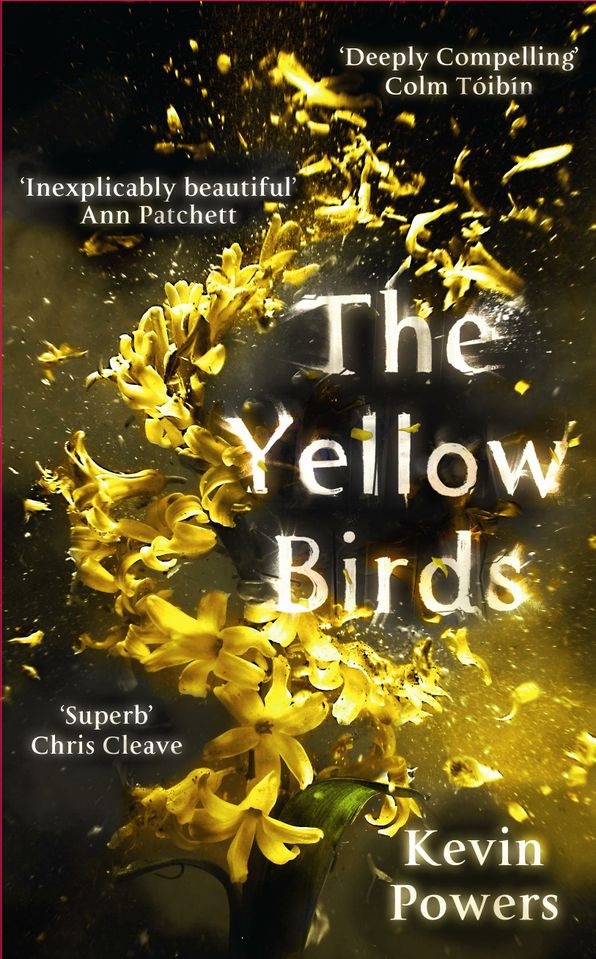
Literature and War Readalong January 28 2013: The Yellow Birds by Kevin Powers

The Yellow Birds


I decided to include The Yellow Birds after having seen a few reviews which made it sound interesting. I wanted to branch out and include literature on other wars than just WWI, WWII and Vietnam. Iraq seemed an excellent choice and I’m very curious to see what we will think of this novel.

Kevin Powers is a veteran of the Iraq war. The Yellow Birds is his first novel.

Here are the first sentences

The war tried to kill us in the spring. As grass greened the plains of Niniveh and the weather warmed, we patrolled the low-slung hills beyond the cities and towns. We moved over them and through the tall grass on faith, kneading paths into the windswept growth like pioneers.

*******

The discussion starts on Monday, 28 January 2013.

Further information on the Literature and War Readalong 2013, including all the book blurbs, can be found here.

The Winner of the Dickens in December Giveaway – Tom-All-Alone’s

Random org has determined the winner of the second Dickens in December giveaway.

The winner of a copy of  Tom-All-Alone’s, including a book-plate signed by the author is

Séamus Duggan (Vapour Trails).

Congratulations Séamus.

Please send me your address via beautyisasleepingcat at gmail dot com

Dickens button 01 resized

Dickens in December – Giveaway – Tom-All-Alone’s

It’s time for the second Dickens in December giveaway. Delia and I are both giving away a book but the choices are quite different. Don’t miss to visit her blog and find out what she has to offer.

Lynn Shepherd’s novel Tom-All-Alone’s is one in a long tradition of books which have been inspired by Dickens. While I must honestly admit that I haven’t had the chance to read it yet, I decided to give away a copy of this novel as I think it sounds excellent. More than one blogger I appreciate has written a favorable review of this book (here and here and here)  and I think it’s safe to assume it will be a great read.

And there is even an additional treat included in this giveaway – Lynn has offered to send the winner a signed book-plate. Thank you so much, Lynn! 

Here’s the blurb

The story of Tom-All-Alone’s takes place in the ‘space between’ two masterpieces of mid-Victorian fiction: Bleak House and The Woman in White – overlapping with them, and re-imagining them for a contemporary reader, with a modern understanding of the grimmer realities of Victorian society. Charles Maddox, dismissed from the police force, is working as a private detective and can only hope to follow in his uncle’s formidable footsteps as an eminent thief-taker. On a cold and bright Autumn morning, a policeman calls on Charles at his lodgings with information that may be related to a case he is working on. He goes to a ruined cemetery to find a shallow grave containing the remains of four babies has been discovered. After examining them he concludes they are not related to his investigation, which is to find a young girl abandoned in a workhouse 16 years before, when her mother died. But all is not as it first appears. As he’s drawn into another case at the behest of the eminent but feared lawyer, Edward Tulkinghorn, London’s sinister underbelly begins to emerge. From the first gruesome murder, Charles has a race against time to establish the root of all evil. Tom’s-All-Alone is ‘Dickens but darker’ – without the comedy, without the caricature, and a style all its own. The novel explores a dark underside of Victorian life that Dickens and Collins hinted at – a world in which young women are sexually abused, unwanted babies summarily disposed of, and those that discover the grim secrets of great men brutally eliminated.

*******

If you would like to win a copy of this book, just leave a comment and tell my why you think you’d like to read it.

The giveaway is open internationally and ends on December 25. The winner will be announced on December 26. 

Dickens in December will end that same week and we wanted to let you know that we will wrap up the event on December 30. Please make sure all of your contributions and reviews have been added to the link list on my Dickens in December page. We would like to make sure that we have included all of you in the wrap up.

Dickens button 01 resized

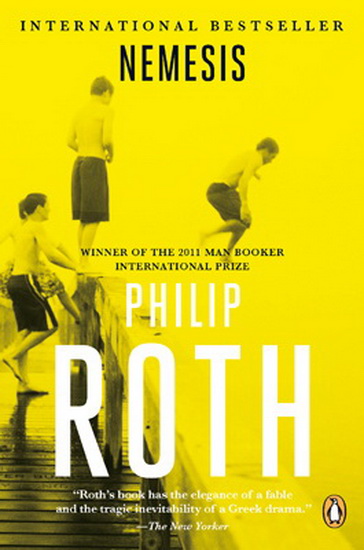
Philip Roth: Nemesis (2010)

Nemesis

There have been a few reviews of Philip Roth books recently (on Babbling Books here and here and on Book Around the Corner here) and because I commented on the one or the other posts saying that I didn’t like him, Leroy suggested I read Nemesis. The premise of the book sounded very interesting and so I finally read it. While I cannot say I’m a convert, I can still say that this is a very fine book and one that’s topical, well written and thought-provoking too.

The first thing I noticed, was that you can feel that this is an assured writer. You can feel it for many reasons. The most important one was that the writing seemed so effortless. It’s free of artificiality, flows nicely, contains many well captured scenes and the way it is told is quite wonderful. The book is told by a first person narrator, who appears only very briefly and then disappears and blends into the background of the story he tells. It isn’t his story and we will have to wait almost until the end of the book to find out who tells it and why. This is artful, and that’s why Nemesis is a great example that it’s worth to finish books because some really need all the pages to become a whole and to fully reveal their meaning.

It’s the summer of 1944. A scorching summer in Newark, New Jersey. Bucky Cantor is a young man, a physical education teacher who just graduated and starts his first job as a playground supervisor in the Jewish neighbourhood of Newark. It’s a summer job to which he has been looking forward to and which he executes with a lot of energy, enthusiasm and passion. Bucky is a small but strong and muscular man and if he wasn’t so terribly short-sighted he would be off fighting against the Germans like his best buddies Jake and Dave.

Bucky lives with his grandmother. His mother died in childbirth, his father, a thief, disappeared and the beloved grandfather has just passed away. But Bucky is by no means lonely as he has a fiancé, Marcia,  who comes from a rich Jewish family who accepts him and loves him just as much as Marcia herself does. Things look promising for Bucky if it wasn’t for a nasty, evil God, as Bucky sees it,  who decides to send the plague, in form of a polio epidemic, on Newark and the Jewish neighbourhood in which Bucky lives and works.This is 11 years before the vaccine is invented and Polio is a devastating disease. It’s not entirely clear how you contract it and while some forms are mild, most are not only crippling but can lead to death.

Roth does a great job at describing the panic, sadness, shock and horror that follow the outbreak of this epidemic. It has an absolutely devastating effect on the community of Newark and underlying racial and social tensions break out with a horrifying force.

While Nemesis tells the story of a disaster which strikes a whole community it also tells one man’s story and how he copes with disaster.

What I found amazing is the way Roth showed that in the end it’s far less important what befalls us but what really counts is how we deal with it. I can’t reveal too much or the book would be spoilt, let’s just say, that when guilt and blame come into the equation a bad situation can turn into a nightmare.

Disaster and how we cope with it isn’t the only theme in the novel. There are others like loss, regret and guilt which are all equally well illustrated.

Nemesis is a book which takes a while to develop its full aroma. I could imagine that the one or the other reader would find it a bit slow at first but it’s worth reading until  the end. While I’m still no Philip Roth enthusiast, I really liked this book and think I might pick up another of his novels some day.

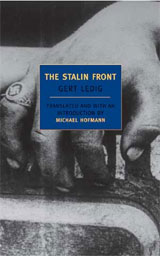
Gert Ledig: The Stalin Front – Die Stalinorgel (1955) Literature and War Readalong Meets German Literature Month November 2012

The Stalin Front is one of the most unsparingly honest accounts of the Eastern Front. It’s accurate and graphic in its depiction of the horrors of the battle field. The wounds, the cold, the fear and the utter uselessness of it all is captured in spare prose. It’s hard to find another novel which is as explicitly anti-war as this book. Interestingly it is exactly this unpolitical but strong anti-war statement for which Ledig would be criticized later. In his book there are no beastly Nazis or inhuman Russians, but living, breathing, suffering humans, some German, some Russian. At the end of the day, it’s not important. What is important is to show that war is awful, that it saves nobody, literally rips apart the “good” and the “bad” alike and turns each party into a suffering mess.

Ledig chose a rather impersonal way to tell his story. Most of the people in this novel have no name – with the exception of the Russian officers – but are introduced with their ranks. This makes it easier to follow them and also helps to keep the story at arm’s length at first. Later in the story, with little remarks here and there, which reveal the men’s unique stories and characters, we start to see them not only as ranks but as individuals. There is for example the Major whose every hope is crushed when he is informed that his wife and only child have died.

The central story, set during two days, somewhere near Stalingrad, focuses on the defense of a hill. This is a totally futile and senseless thing to do. The Germans can’t keep the hill, their lines have been broken through by the Russian tanks but the orders are clear; they have to stay. The losses on both sides are equally heavy, morales are low everywhere.

I was afraid The Stalin Front would be hard to read but it wasn’t. It was a surprisingly quick read and although it is very graphic it was bearable because Ledig isn’t a manipulative writer. It’s much more as if he had painted with words and I was often reminded of the work of Anselm Kiefer.

Ledig’s book was successful when it came out but soon forgotten because it was considered too dark, too bleak. There is no hope in this book, no heroic figures, there isn’t even right or wrong, just suffering and futility. The absurdity is underlined by small things. Seeing the tanks approach and knowing there would be certain death, many of the men try to escape. Some cross the line and flee to the Russians, others desert or simply look for an outpost which is farther away from the front line. Doing this without explicit order is like deserting. Although everything collapses, the hill is lost, most of the men will die, the high command gives stupid orders like fighting to the last moment and has people who try to save their lives courtmartialled.

The Stalin Front has been compared to All Quiet on the Western Front and I agree, it is equally good but even less sentimental as Ledig chose to have more than a handful of main characters and did not just focus on one person. This makes identification more difficult but I was glad for that. It may sound weird but I really liked this book. I think it’s important and should be much more widely read. No matter what reasons contribute to starting it, ultimately, war is ugly for all the parties involved. The Stalin Front exemplifies this eloquently and forcefully.

Other reviews

Danielle (A Work in Progress)

Lizzy (Lizzy’s Literary Life)

Richard (Caravana de recuerdos)

Rise (in lieu of a field guide) – not part of the readalong per se but worth reading all the same.

*******

The Stalin Front was the eleventh book in the Literature and War Readalong 2012. The next one will be Michael Herr’s Dispatches. Discussion starts on Friday 28 December, 2012.

Ray Bradbury: Fahrenheit 451 (1953) Folio Society Edition

Yes, I know, it’s November and I should be reading German literature but…. After having read Bradbury’s The Halloween Tree in October I was so in the mood to read Fahrenheit 451 which was one of the few famous Bradbury novels I hadn’t read so far. What a coincidence that Jackie reviewed it a few weeks later. While she wasn’t too keen on the book I was still very tempted to read it right away and luckily someone saw my comment and a few days later I had a stunning Folio Society edition in my letterbox. It’s my first Folio Society book and it will not be my last. I love the nice paper and the illustrations by Sam Weber.

And the book? It’s not what I had expected. It’s so different from The Halloween Tree which is rich in descriptions and warm atmosphere. But I loved it anyway. It’s such a strange book, reading it felt a bit like walking around in a surreal dream.

Fahrenheit 451 is set in a dystopian future in which books are forbidden. If anyone is in possession of books, the firemen come to his home at night and burn it down. The job of the firemen in this novel is not to extinguish fire but to start it. They are feared but that doesn’t mean people let go of their books easily.

Montag is a fireman who secretly hides a few books. He doesn’t even read them and why he keeps them isn’t clear. It is something in his unconscious that pushes him to act this way. One evening when he returns home he meets Clarisse, a young girl. She is like nobody else he knows; she speaks with him, sees him, shows interest. What she tells him of her family is most unusual too. They sit together in the evenings and talk. Meeting her changes Montag in subtle ways and when she disappears he changes even more.

The society depicted in Fahrenheit 451 is a society in which real relationships are substituted by fake ones with people who are projected on walls in the living rooms of the houses. Giant TV screens replace real life, real experiences. It’s like a collective trance. Montag’s wife spends more time in front of those screens than she spends with her husband.

“Stuff your eyes with wonder, ” he said, “live as if you’d drop dead in ten seconds. See the world. It’s more fantastic than any dream made or paid for in factories. Ask no guarantees, ask for no security, there never was such an animal. and if there were, it would be related to the great sloth which hangs upside down in a tree all day every day, sleeping its life away. To hell with that, ” he said, “shake the tree and knock the great sloth down on his ass.”

I liked this book a lot for many reasons. I liked the haunting atmosphere and the images it created.  I also liked some of the characters like Clarisse. And there are other amazing elements. Most of the novel takes place at night, the people of this society are all isolated from each other, nobody shares anything, still they feel strongly but live life vicariously through the people on the screens. I’m not much of a TV watcher but I’ve heard people talk about things they saw on TV, series or reality TV, which made me think they were talking about real people. Depicting a society like this was very perceptive in 1953.

Fahrenheit 451 is not my favourite Bradbury but it’s an amazing book, one that is really worth reading.

Thanks again to the Folio Society for this lovely book.